
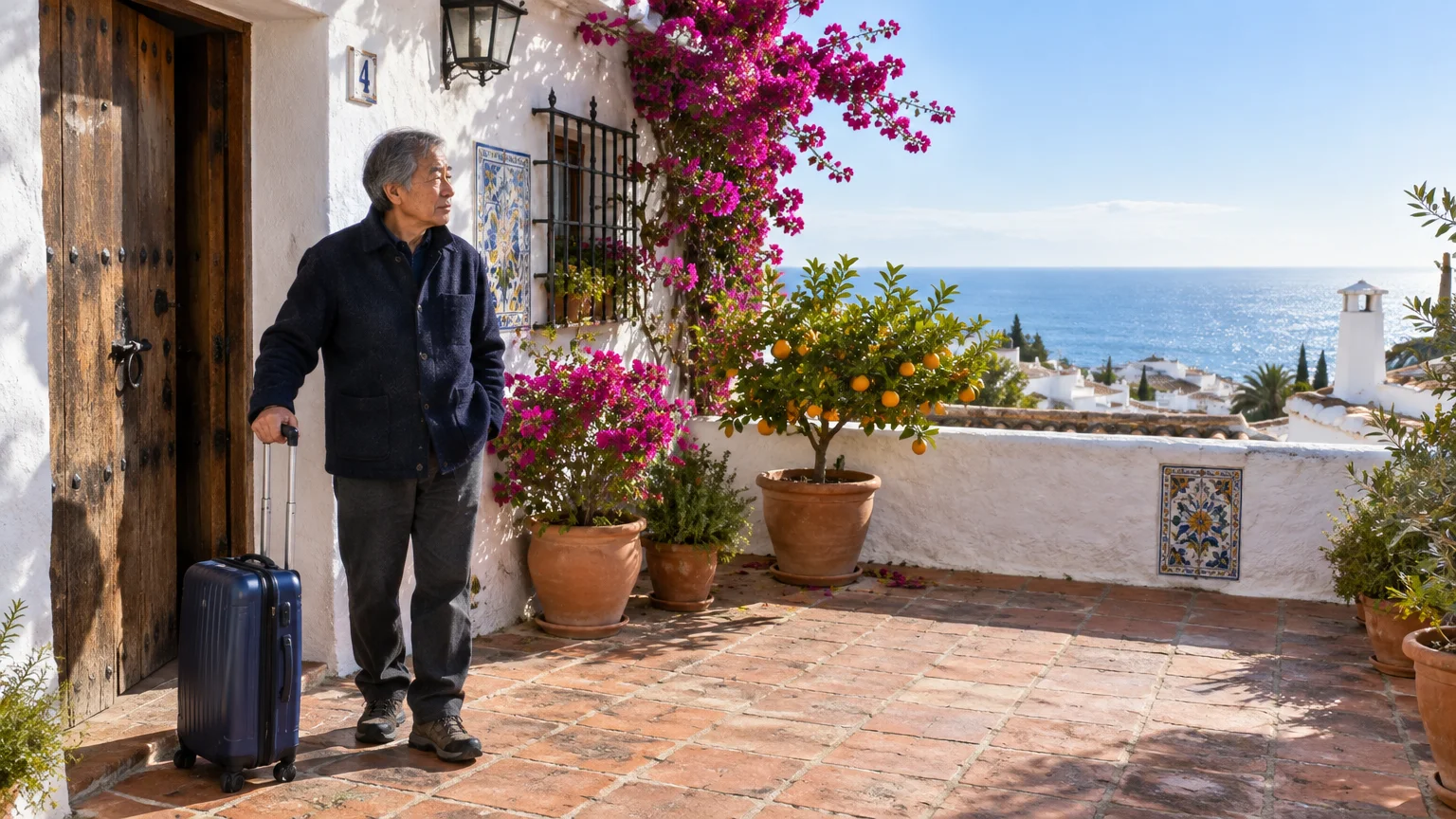
You can trade freezing Chicago snowdrifts for mild Mediterranean breezes on the Andalusian coast without buying property or paying inflated resort rates. Booking a 30-day winter stay directly with licensed local property managers secures wholesale residential pricing instead of tourist markups.
Setting aside regular savings in advance with a retirement travel sinking fund ensures your seasonal trip is fully funded well before departure.
Adopting these extended-stay strategies is one of the most effective ways to master off-season European travel on a fixed income without sacrificing quality.
A thirty-day off-season agreement shifts your booking from a daily holiday rental into a temporary seasonal lease. This straightforward switch slashes overhead costs while keeping your retirement budget completely intact.
This guide details rental contracts, heating requirements, transit options, and essential healthcare steps for your extended Spanish getaway.
In this guide8 sections
- Understanding the 30-Day Lease Model in Andalusia
- Selecting Your Andalusian Base: Rail Corridors vs. Quiet Coastal Towns
- Schengen Rules, Border Systems, and Local Guest Registration
- Managing Winter Indoor Heating and Utilities
- Healthcare Coverage and Prescription Planning Outside Medicare
- Local Transportation: Renfe Tarjeta Dorada and Regional Rail
- Worked Budget Example: A 30-Day Winter Stay in Nerja
- Frequently Asked Questions
Understanding the 30-Day Lease Model in Andalusia
Booking a coastal stay for a full calendar month changes your legal status as a renter in Spain. Stays booked by the night fall under tourism lodging rules, which add platform fees and commercial margins.
Another popular method for low-cost lodging is learning how to house-sit for free travel lodging while taking care of local pets.
Those looking to eliminate accommodation expenses entirely might also explore home exchange vacations in retirement as an alternative way to secure extended lodging abroad.
Much like the process of renting a villa in Tuscany for two months, negotiating off-season rates directly with managers delivers enormous savings compared to standard short-term holiday rates.
A continuous 30-day stay qualifies under Spain’s Urban Leases Act as a seasonal lease, known locally as a contrato de arrendamiento de temporada. This arrangement treats you as a temporary resident rather than a high-turnover tourist.
Third-party travel platforms frequently add 14% to 20% in guest service fees on top of the host’s base rate. Contacting local property agencies directly eliminates that intermediary fee entirely.
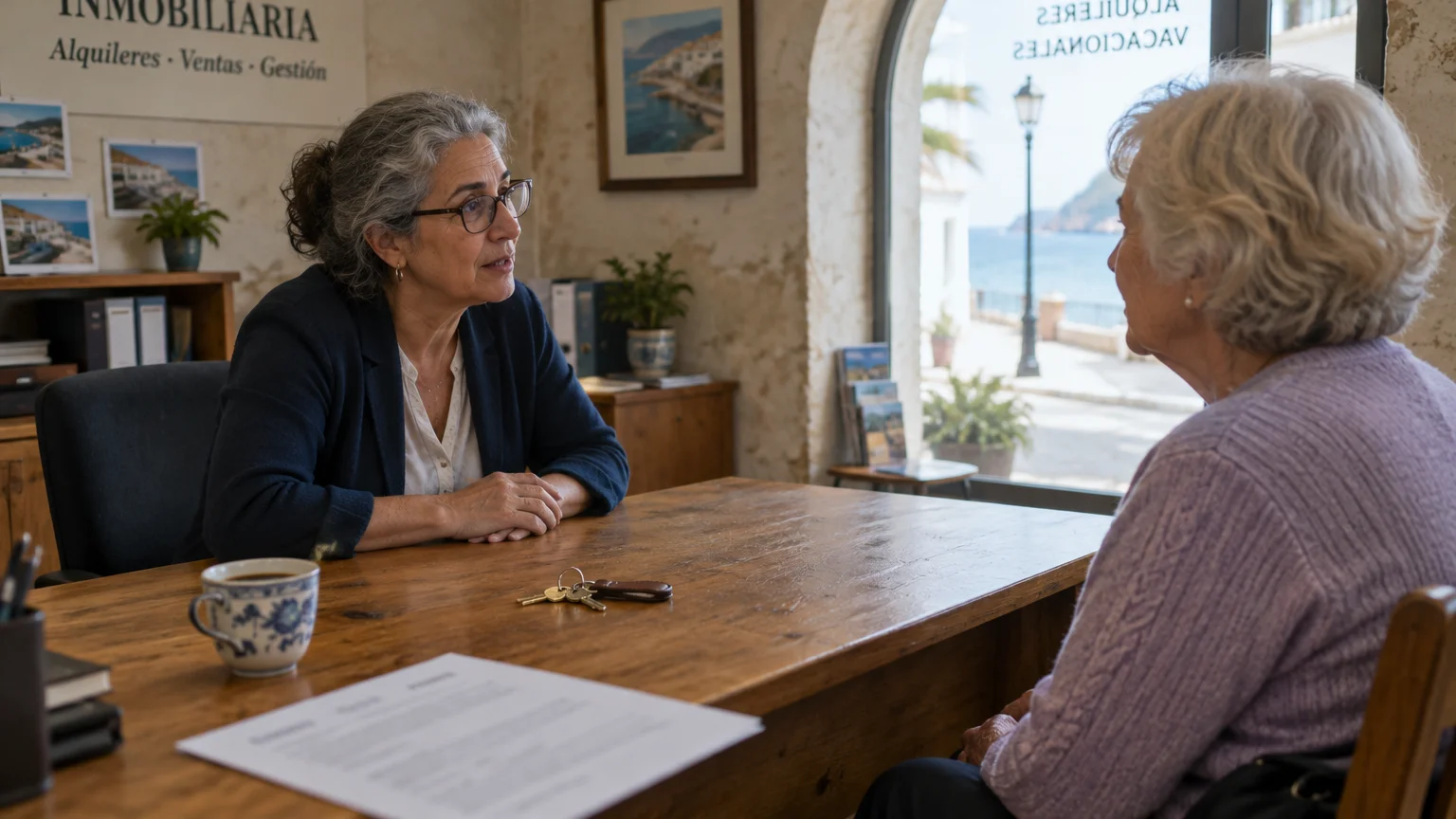
Local real estate agencies, known as inmobiliarias, manage hundreds of seaside apartments in towns like Nerja, Torre del Mar, and Fuengirola. These agencies keep their rental inventory occupied during low season by offering flat monthly rates.
Under Andalusia Decree 31/2024, residential holiday properties must register with the regional tourism board and display an official license number. Always verify that a listing shows a regional registration code before sending payment.
Ask these specific questions when contacting a property manager for an extended winter stay:
- Does your advertised monthly rate include Spain’s standard 10% value-added tax?
- Are water, Wi-Fi, and electricity included, or billed by meter readings at checkout?
- Can you provide the property’s official regional tourism registry number?
- What security deposit is required for a 30-day seasonal tenancy?
- Does the property management office handle emergency maintenance in English?
Securing a direct contract provides legal protection under Spanish contract law. It also gives you a local office to visit if a key breaks or plumbing fails.

Selecting Your Andalusian Base: Rail Corridors vs. Quiet Coastal Towns
The Costa del Sol stretches across distinct microclimates and transit corridors. Choosing where to unpack for a month depends on whether you prefer train convenience or quiet village atmosphere.
Many travelers who fall in love with Spain’s regional rail routes later plan more active northern adventures like walking the Camino de Santiago over 65.
Retirees who enjoy this relaxed Mediterranean rhythm often also consider planning a winter slow-travel stay in Portugal’s Algarve for comparable coastal weather and laid-back towns.
Towns west of Málaga sit directly along modern rail transit lines. You can walk off your flight at Málaga-Costa del Sol Airport (AGP) and board a commuter train directly to your seaside neighborhood.
Towns east of Málaga, such as Nerja, offer traditional whitewashed buildings and dramatic mountain backdrops. However, reaching them requires an airport shuttle, local taxi, or intercity bus.
Review this comparison of popular retirement winter bases along the southern coastline:
| Destination Town | Transit Link to Málaga Airport (AGP) | Average Monthly Winter Rent (1-Bed) | Primary Terrain and Walkability Feature |
|---|---|---|---|
| Fuengirola | Direct train via Cercanías C-1 (34 minutes) | €950 – €1,300 | Flat 7-kilometer beachfront promenade |
| Torremolinos | Direct train via Cercanías C-1 (10 minutes) | €900 – €1,200 | Elevated center connected by public elevators |
| Nerja | ALSA express bus or shuttle (55 minutes) | €1,050 – €1,450 | Gentle coastal bluffs; pedestrianized old town |
| Estepona | Direct express bus from airport (70 minutes) | €1,100 – €1,500 | Flat center; renovated cobblestone flower streets |
For retirees who want to avoid driving entirely, Fuengirola and Torremolinos offer unmatched convenience. Their direct rail links put medical facilities, supermarkets, and cultural day trips within effortless reach.
If you value dramatic scenery and traditional charm, Nerja offers a slower pace. The town remains vibrant through the winter without the heavy summer tourist crowds.
“He who travels much and reads much, sees much and knows much.” — Miguel de Cervantes
Consider your daily walking comfort when picking an apartment location. Coastal towns often feature steep hillsides as you move inward from the shoreline.
Schengen Rules, Border Systems, and Local Guest Registration
American citizens can travel in Spain without a visa for short periods under the Schengen Agreement. The rule permits stays up to 90 days within any rolling 180-day window.
An extended month abroad also provides the perfect immersion setting if you are exploring how to learn Spanish after age 60 through daily interactions at local markets.
A 30-day winter retreat fits well within this legal ceiling. However, you must confirm that your U.S. passport remains valid for at least three full months past your departure date.
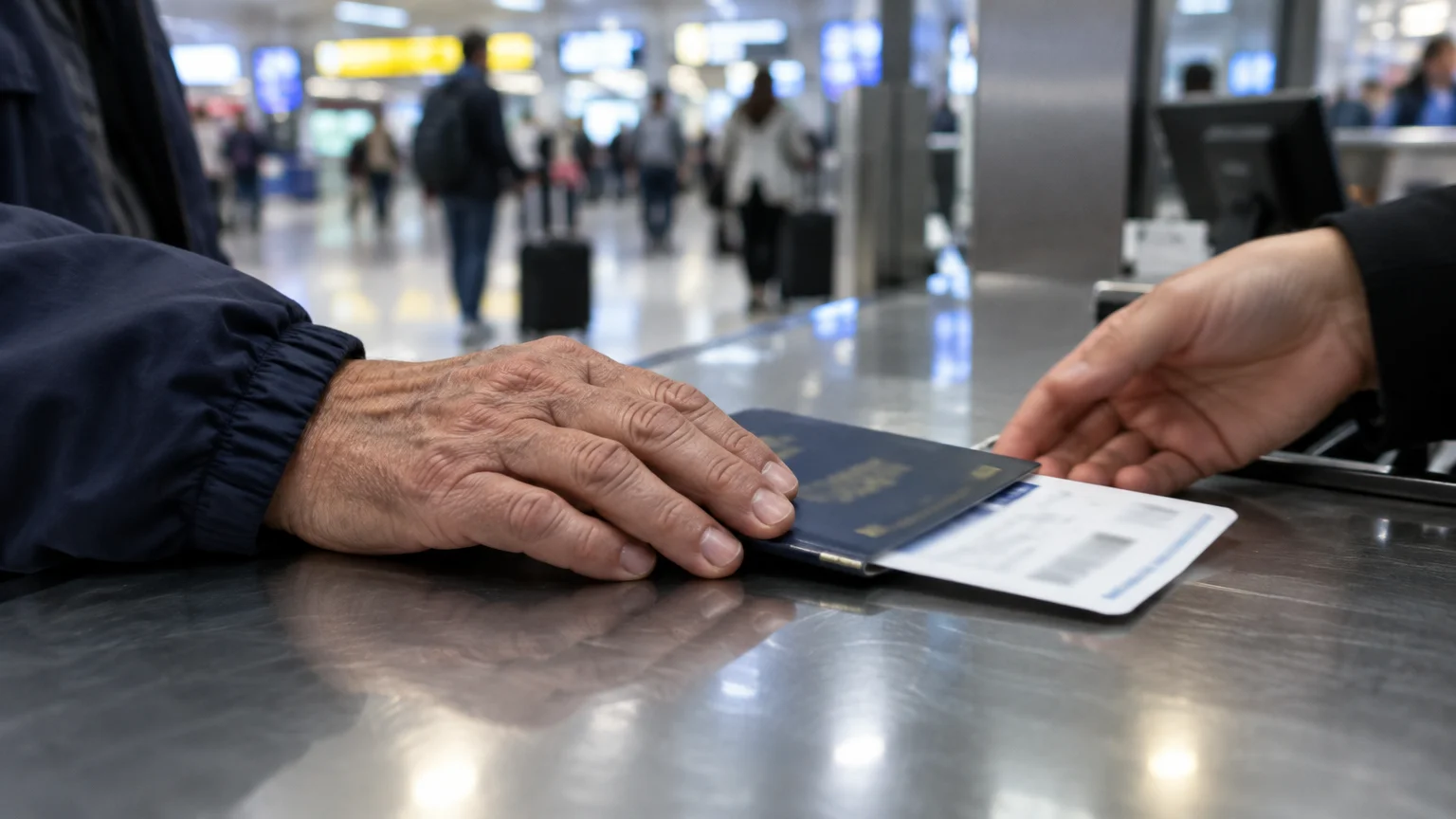
The European Union has upgraded its border control with the automated Entry/Exit System (EES). This system captures digital facial scans and fingerprints at border control booths instead of stamping paper passports.
The European Travel Information and Authorisation System (ETIAS) launches in late 2026. Once active, Americans must submit an online authorization form costing €20 before boarding European flights.
Spanish law also enforces strict security logging for foreign visitors. Under Royal Decree 933/2021, all accommodation hosts must collect identity details and submit them to the Ministry of the Interior.
This reporting happens through a centralized platform known as SES Hospedajes within 24 hours of arrival. Do not be alarmed when your property manager requests passport scans and home address details before handing over keys.
Organize these required documents before leaving the United States:
- Valid U.S. passports for all travelers with six months remaining validity for safety.
- A printed copy of your signed 30-day apartment lease agreement.
- A return flight itinerary showing departure from the Schengen Area within 90 days.
- Proof of adequate financial resources to cover your stay, such as recent bank statements.
- A printed certificate of private travel health insurance with medical evacuation coverage.
Keep physical photocopies of these documents in your carry-on luggage. Having paper records makes your airport arrival and apartment check-in smooth and fast.
Managing Winter Indoor Heating and Utilities
Southern Spain enjoys over 300 days of sunshine each year. Winter afternoons on the Costa del Sol typically reach comfortable temperatures between 61°F and 66°F (16°C to 19°C).
Managing energy expenses while escaping northern cold shares many similarities with budgeting for an RV snowbird season across the southern United States.
Just as with budgeting for winter heating on a fixed income back home, accounting for seasonal utility costs prevents unexpected surprises on your final statement.
Nighttime temperatures tell a very different story. Evening lows regularly fall into the 46°F to 50°F (8°C to 10°C) range between December and February.
Traditional Spanish apartments are built to keep heat out during scorching summer months. They feature ceramic tile flooring, thick masonry walls, and minimal thermal insulation.
Without adequate heating, indoor rooms hold damp, cold air through the night. Walking across bare tile floors can feel chilly if you pack only light clothing.
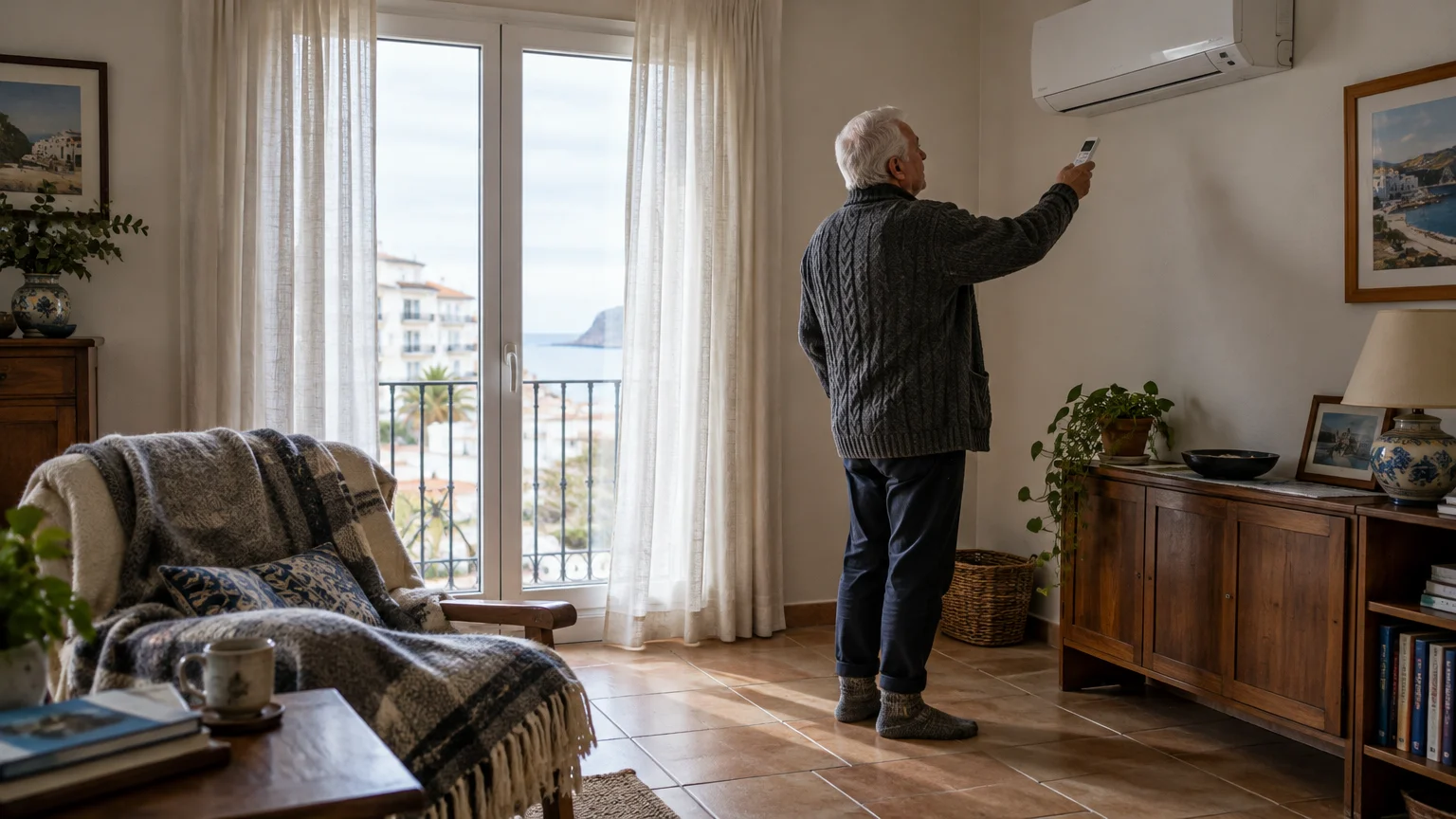
Andalusia Decree 31/2024 requires licensed vacation properties to provide heating in all bedrooms and living spaces between October and April. This requirement is usually fulfilled with reverse-cycle heat pumps built into ductless wall units.
Check the contract details regarding utility billing before signing your lease. Some monthly leases include a set electrical allowance, such as 150 kilowatt-hours per month.
If you exceed that base usage, the manager bills extra consumption at current market rates, typically €0.15 to €0.25 per kilowatt-hour. Clarifying this threshold prevents unexpected bills when you check out.
Take these practical steps to guarantee a warm apartment during your winter stay:
- Verify in writing that the heating system operates via a wall-mounted reverse-cycle heat pump (bomba de calor).
- Ask the agency whether utility costs are capped or billed via meter readings taken at check-in.
- Pack warm indoor footwear, such as hard-soled slippers or wool socks, to handle tile floors.
- Confirm that the master bedroom includes extra duvet blankets or winter-weight bed coverings.
Running a reverse-cycle heat pump on a moderate setting warms a coastal apartment efficiently. Keeping it set around 68°F (20°C) maintains warmth without running up high utility surcharges.

Healthcare Coverage and Prescription Planning Outside Medicare
Understanding medical coverage rules is essential when spending an extended period overseas. Many American retirees assume their domestic health coverage travels with them.
Standard U.S. Medicare Parts A and B do not pay for healthcare services outside the United States. You can review standard geographic boundaries directly through Medicare coverage guidelines.
Most Medicare Advantage plans and standard supplement policies offer limited or zero international emergency benefits. Therefore, securing private travel medical insurance is necessary for a 30-day overseas stay.
Look for policies providing at least $100,000 in emergency medical coverage and $250,000 in emergency medical evacuation. Evacuation coverage pays for transport back to medical facilities in the United States if severe illness strikes.
Managing prescription medications requires advance coordination with your American physician. Ask your doctor for a 90-day maintenance supply before departure to ensure you do not run short in Spain.
Spanish pharmacies, marked by illuminated green crosses, are staffed by knowledgeable pharmacists. However, brand names in Spain often differ from American pharmacy labels.
Ask your doctor to write a medication summary letter listing the active ingredient (principio activo) for each prescription. This chemical name allows a Spanish pharmacist to identify the exact European medication equivalent.
Complete this medical checklist four weeks before boarding your flight:
- Request early 90-day medication refills from your health insurance provider for travel abroad.
- Obtain a signed letter from your physician detailing all prescribed treatments and medical conditions.
- Purchase a standalone travel medical policy that includes emergency medical evacuation.
- Pack all critical medications in original pharmacy bottles inside your carry-on luggage.
- Locate the nearest private hospital or urgent care clinic (centro de salud) to your rental apartment.
Emergency medical care in Spain is accessible and modern. Knowing where to go ahead of time ensures you handle minor health issues without unnecessary delays.
Local Transportation: Renfe Tarjeta Dorada and Regional Rail
Traveling across southern Spain does not require renting a car. The national rail network offers fast, comfortable transit between major cultural centers.
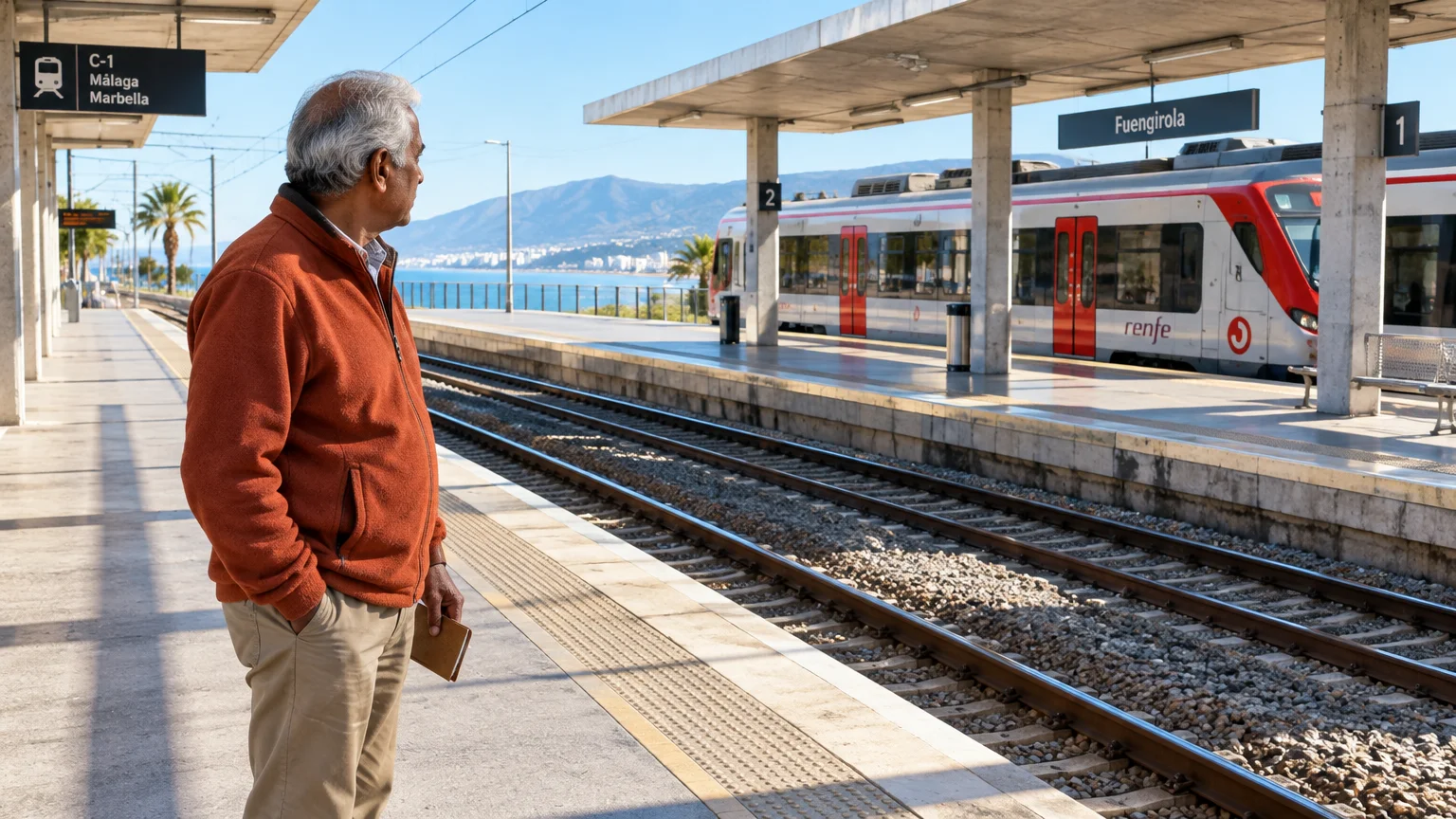
Retirees aged 60 and older can access generous discounts through Spain’s national rail operator, Renfe. The discount card is called the Tarjeta Dorada, or Gold Card.
Foreign visitors qualify for this card regardless of residency. You can purchase the card for €6 at any staffed train ticket office or licensed travel agency in Spain by presenting your passport.
The Tarjeta Dorada grants a 25% discount on high-speed AVE trains Monday through Thursday, and 40% on standard regional and Media Distancia lines. The card pays for itself on a single day excursion.
Helpful retirement travel guidance from AARP travel resources emphasizes using regional transit to lower vacation costs. Taking trains eliminates parking fees, fuel costs, and rental car insurance surcharges.
From Málaga’s María Zambrano station, high-speed rail lines connect you directly to world-class historical cities:
- Córdoba: Reached in 50 minutes on the AVE line to explore the world-famous Great Mosque-Cathedral.
- Seville: Reached in two hours aboard direct regional express trains to tour the royal Alcázar palace.
- Granada: Reached in 75 minutes via Avant trains to visit the historic Alhambra complex.
- Madrid: Reached in under three hours for an easy overnight cultural excursion.
For local travel between coastal towns west of Málaga, use the Cercanías C-1 commuter line. Trains run every 20 minutes from 6:00 AM until midnight.
A single one-way ticket on the commuter rail line costs under €4.00. Stations feature elevators and level boarding platforms, making travel easy with luggage.

Worked Budget Example: A 30-Day Winter Stay in Nerja
To see how the numbers come together, review this worked budget for a retired couple from Chicago. This scenario tracks actual expenses for a 30-day stay running from January 8 to February 7 in Nerja.
Setting aside regular savings into a dedicated retirement travel sinking fund makes it easy to finance an annual overseas winter getaway without dipping into emergency reserves.
The couple rented a furnished one-bedroom apartment with a balcony and heat pump located 300 meters from the beach. By booking directly with a local management office instead of a booking app, they avoided $285 in platform charges.
Their Social Security retirement benefits deposited directly into their U.S. bank account as scheduled. You can verify direct deposit rules through the Social Security Administration international services page.
Examine the detailed expense breakdown for their 30-day Andalusian stay:
- Apartment Rental: €1,150 ($1,242) for 30 nights under a seasonal lease agreement.
- Security Deposit: €300 ($324), returned in full to their checking account at checkout.
- Electricity Overages: €45 ($49) beyond the 150 kWh baseline included in the base lease.
- Airport Transfers: €72 ($78) total for two passenger round-trips on the ALSA airport express bus.
- Groceries and Household Goods: €410 ($443) shopping at local markets and the Mercadona supermarket.
- Dining and Coffee: €520 ($562) including daily morning coffees and weekly midday set menus (menú del día).
- Renfe Train Excursions: €135 ($146) including two Tarjeta Dorada cards and day trips to Córdoba and Granada.
- Travel Health Insurance: €165 ($178) for a joint 30-day medical policy with medical evacuation.
The entire 30-day winter retreat cost €2,497, or approximately $2,698 based on standard exchange rates. This total covers all lodging, food, transport, and insurance for two people.
For comparison, heating a multi-story Chicago home, buying groceries, and maintaining winter vehicles often costs a comparable amount during January. This practical strategy lets you enjoy mild sunny days while keeping everyday household spending level.
Frequently Asked Questions
Do American citizens need a visa for a 30-day winter stay in Spain?
No, U.S. citizens do not need a visa for stays under 90 days within the Schengen Area. Your U.S. passport must remain valid for at least three months beyond your scheduled departure date.
Why do Spanish property managers ask for my passport details upon arrival?
Spanish Royal Decree 933/2021 legally requires all accommodation providers to register guest identification into the Ministry of the Interior’s SES Hospedajes system within 24 hours of check-in.
Does Medicare pay for medical emergencies while traveling in Spain?
Standard Medicare Part A and Part B provide no coverage outside the United States. You must purchase private travel health insurance that includes medical evacuation coverage.
What is the Renfe Tarjeta Dorada and who can buy it?
The Tarjeta Dorada is a discount card for travelers aged 60 and older. It costs €6 per year and provides discounts between 25% and 40% on Spanish passenger trains.
How does heating work in off-season coastal Spanish rentals?
Most coastal apartments rely on electric heat pumps built into air conditioning wall units rather than central radiators. Verify that your rental listing includes heating before booking.
Disclaimer: This article is for informational purposes only. Benefits, programs, and regulations can change.
We encourage readers to verify current information with official government sources and consult with qualified professionals for personalized advice.



2 Comments