
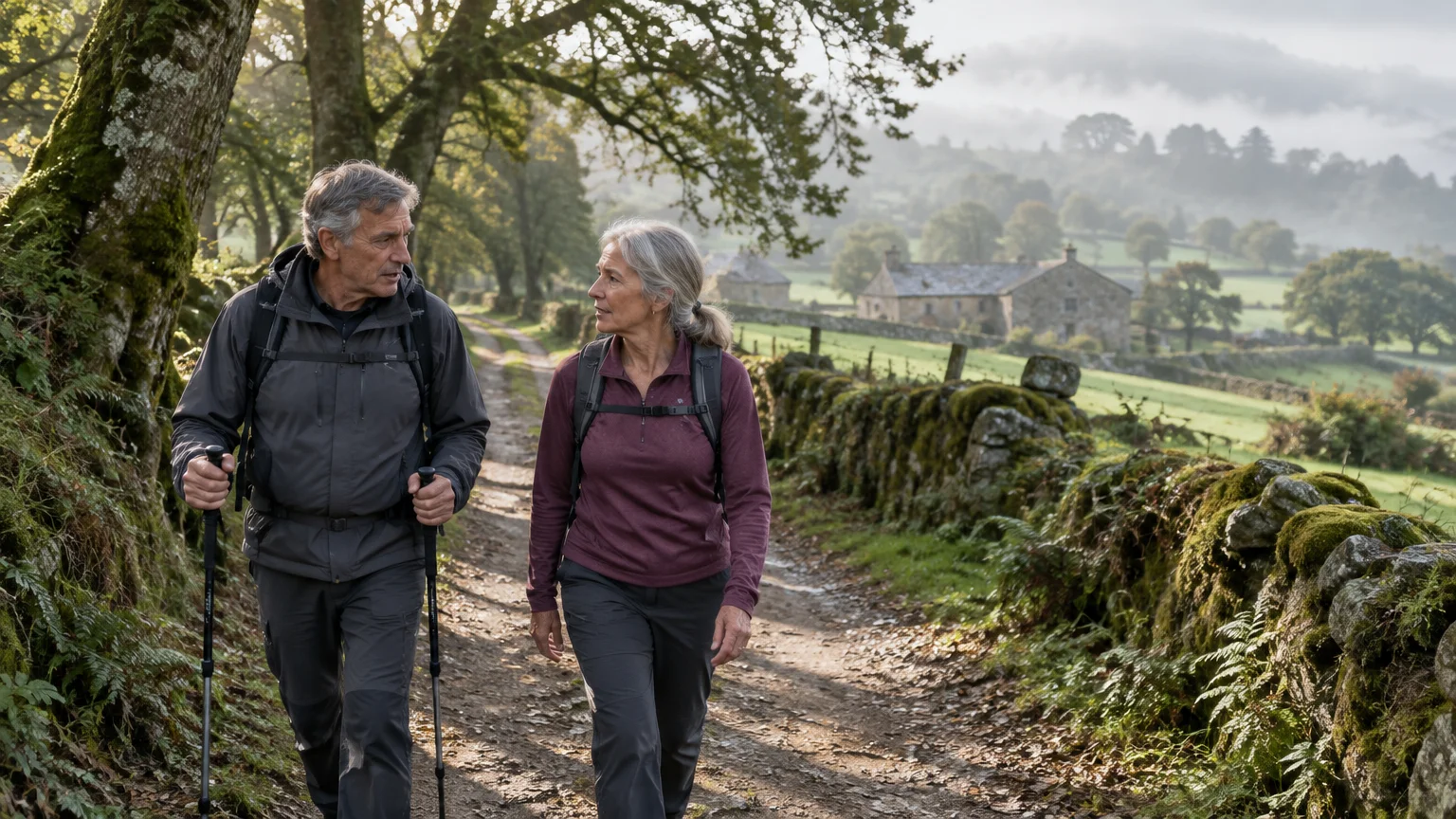
You can walk the historic Camino de Santiago in your late sixties without carrying a heavy rucksack or sleeping in crowded bunkhouses. Modern door-to-door transfer services and private village guesthouses make this journey accessible and physically sustainable.
While traditional guidebooks focus on bare-bones hostel travel, our approach secures your daily comfort while earning the official Compostela certificate. Walking the Camino over 65 simply requires smart pacing and reliable logistics.
In this guide9 sections
- Why Walking the Camino Over 65 Is Thriving
- The Sarria Route: The Ideal 100-Kilometer Option
- How Camino Luggage Transfer Services Work
- Choosing Private Lodging Over Communal Bunks
- The Gentle 7-Stage Sarria Itinerary
- Physical Conditioning and Essential Gear Checklist
- Complete Budget Breakdown: Worked Financial Example
- Healthcare, Insurance, and Trail Safety
- Frequently Asked Questions
Why Walking the Camino Over 65 Is Thriving
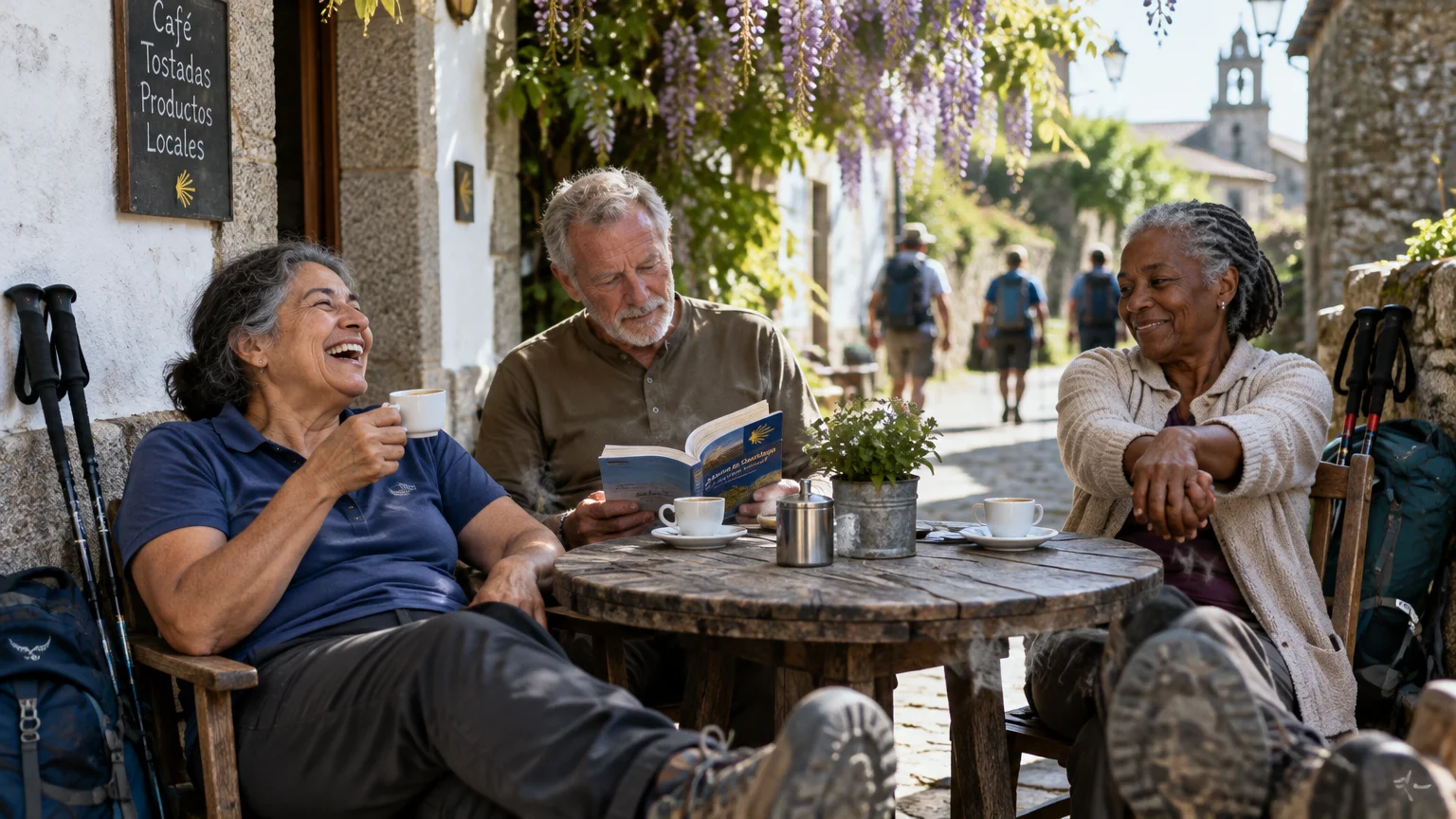
Retirement gives you the gift of unhurried time. Rather than rushing through long stages, older hikers can savor local food and regional architecture at an enjoyable pace.
Many participants combine independent walks with educational tours funded in part by Road Scholar travel grants.
Picking up essential phrases before your trip is surprisingly easy, especially if you explore practical guides on how to learn Spanish after age 60.
According to annual data from the Pilgrim Reception Office in Santiago de Compostela, walkers aged 60 and older represent nearly 20% of all certified finishers. That equates to more than 85,000 mature walkers finishing the trail each year.
American travelers make up the single largest non-European group on the trail. You will encounter retired teachers, engineers, nurses, and business owners walking the path every morning.
Modern trail infrastructure has replaced the Spartan conditions of past decades. Upgraded footpaths, regular medical clinics, and reliable baggage transport allow older walkers to complete the pilgrimage in comfort.
The Sarria Route: The Ideal 100-Kilometer Option
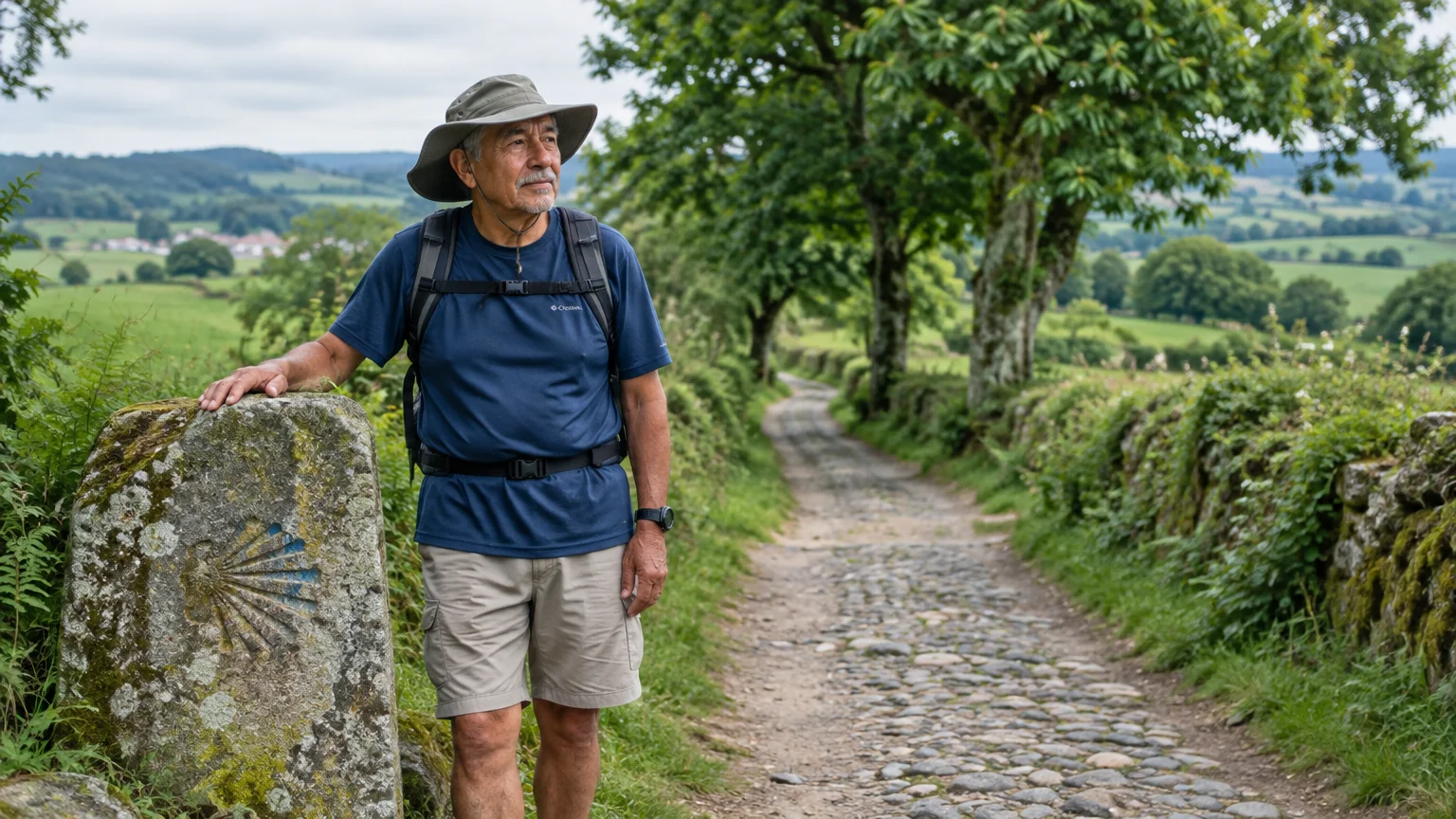
The cathedral authorities require walkers to complete a verified minimum of 100 kilometers on foot to receive the official Latin certificate, known as the Compostela. That equals approximately 62 miles.
If you prefer scenic travel that does not require daily trekking, small-ship river cruises for solo seniors offer an equally relaxing way to see Europe.
If you are venturing out alone and want community support, look into solo female travel groups for retirees before embarking on long international treks.
The town of Sarria sits at kilometer 115 on the Camino Francés. This starting location provides the shortest official route required to earn your certificate without unnecessary alpine ascents.
The landscape across Galicia features rolling green pastures, oak groves, and quiet rural hamlets. The terrain avoids the steep mountain passes found along the French border.
To record your journey, purchase a Pilgrim Credential booklet for three euros at the Church of Santa Mariña in Sarria. You must collect two official stamps per day from cafes, churches, or hotels.
- The Sarria segment totals 71 miles divided across rural Galicia.
- Support services line the path, offering cafes and resting benches every few miles.
- Paved country roads and packed dirt trails dominate this final stretch.
- Local taxis can transport you between waypoints if joint fatigue occurs.
How Camino Luggage Transfer Services Work
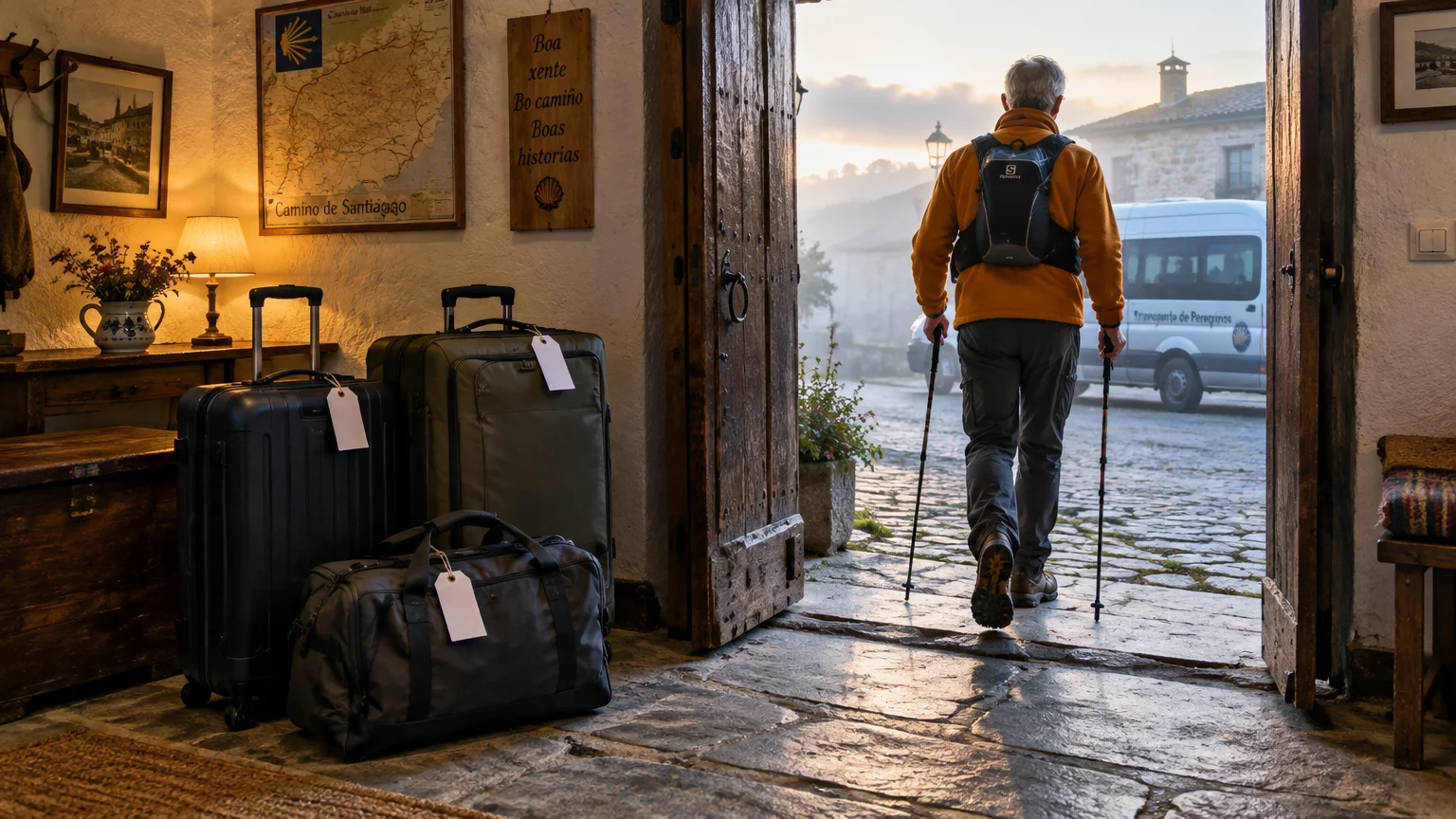
Using a camino frances luggage transfer service changes the nature of your walk. Instead of hauling 20 pounds on your back, you walk with a light daypack containing water and snacks.
Spain’s national postal service, Correos, runs the popular Paq Mochila service. Private operators like Jacotrans and Camino Fácil offer identical daily transfers across Galicia.
These companies charge between five and eight euros per bag for each daily stage. Your bag must weigh under 20 kilograms, which equals roughly 44 pounds.
You leave your labeled suitcase in the lobby of your guesthouse by 8:00 AM. The transport driver picks it up and delivers it to your next reserved lodging by 2:30 PM.
- Book your bag transfers online or arrange them directly through your hotel front desk.
- Attach a sturdy luggage tag showing your name, phone number, and destination address.
- Place your baggage in the designated pickup area before having breakfast.
- Walk your daily trail stage unburdened by heavy sleeping gear or spare clothes.
- Collect your bag inside your private room upon arriving at your afternoon destination.
Choosing Private Lodging Over Communal Bunks
Traditional municipal hostels, known as albergues, cost between 8 and 15 euros per night. However, these facilities house dozens of travelers in noisy rooms with shared hall bathrooms.
If you plan an extended stay in northern Spain before or after your hike, you can offset accommodation costs by learning how to house-sit for free travel lodging.
Most municipal albergues do not accept advance reservations or forwarded luggage. Arriving late risks finding full dormitories, forcing tired walkers to search for another bed.
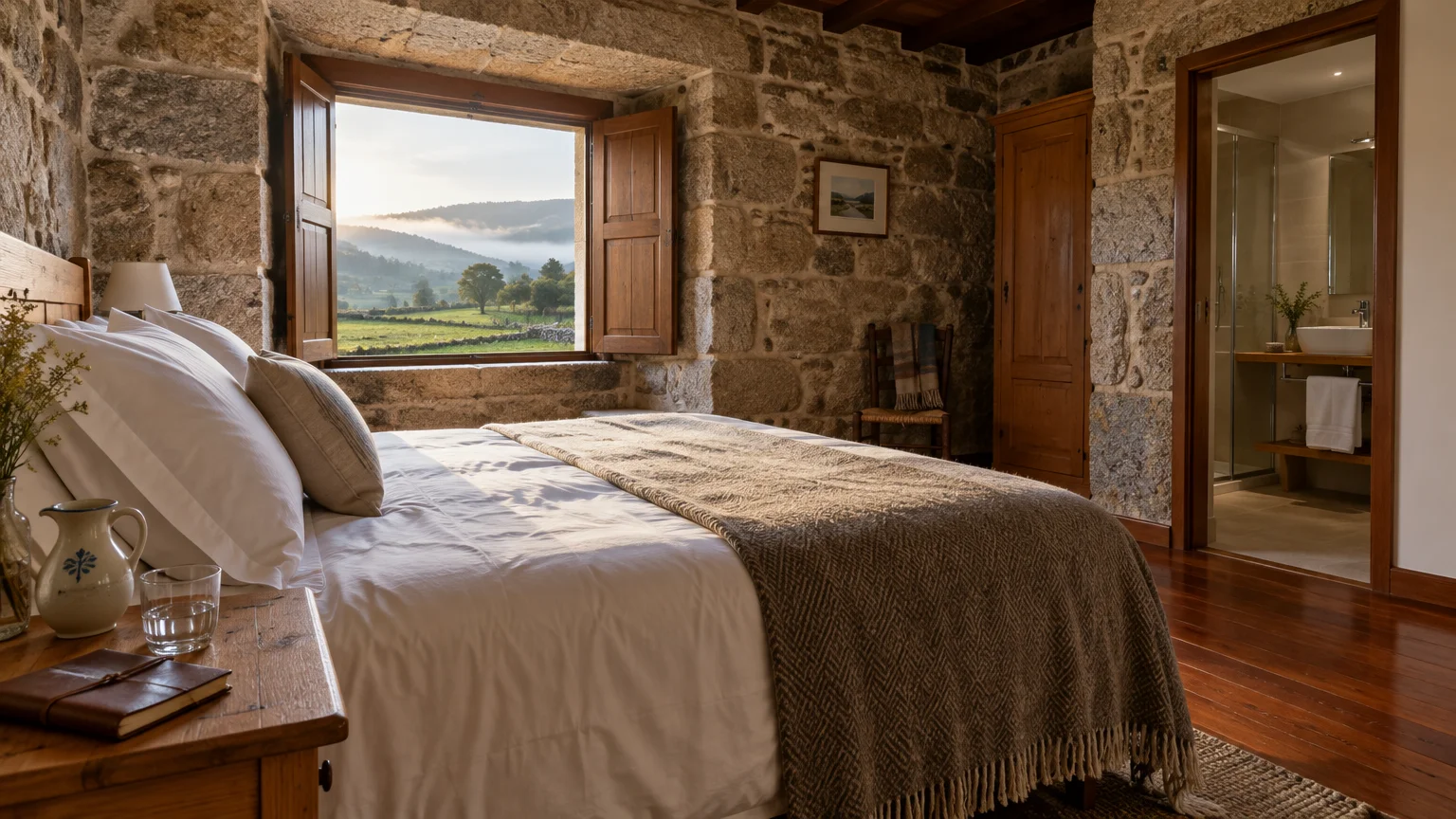
Private pensions, country manors, and small family hotels offer quiet nights and en-suite bathrooms. A solid night of sleep ensures joint recovery and muscle repair for the next morning.
Reserving private accommodations in advance eliminates afternoon arrival stress. Your room remains secured regardless of what time you cross the day’s finish line.
| Accommodation Type | Average Cost | Advance Booking | Luggage Transfer Accepted | Rest Quality |
|---|---|---|---|---|
| Municipal Albergue | €8 to €15 | No | No | Poor (Bunks, Noise) |
| Private Albergue | €15 to €25 | Yes | Varies | Moderate (Dorms) |
| Pensión / Hostal | €45 to €75 | Yes | Yes | High (Private Room) |
| Casa Rural (Country Manor) | €70 to €110 | Yes | Yes | Superior (En-suite) |
The Gentle 7-Stage Sarria Itinerary
Standard guidebooks suggest walking from Sarria to Santiago in five days. That pace requires covering 14 to 18 miles every day, which stresses mature hips and knees.
For those heading south into the Iberian Peninsula after Santiago, consider a slow-travel stay in Portugal’s Algarve to relax in warmer weather.
Many pilgrims combine their walk with extended regional exploration, such as planning a 30-day winter stay in Spain to unwind after reaching Santiago.
Spreading the 115 kilometers across seven stages reduces daily walking distances to manageable segments. This relaxed schedule leaves plenty of afternoon hours for rest and sightseeing.
- Stage 1: Sarria to Morgade (7.5 miles): A short opening walk through shaded oak forests that lets you settle into a comfortable walking rhythm.
- Stage 2: Morgade to Portomarín (6.2 miles): A gentle descent toward the Miño River leading across the bridge into historic Portomarín.
- Stage 3: Portomarín to Ventas de Narón (8.3 miles): A steady, gradual climb past the Sierra de Ligonde with frequent roadside cafe stops.
- Stage 4: Ventas de Narón to Palas de Rei (7.2 miles): Rolling paved paths through rural Galician farming hamlets and quiet stone villages.
- Stage 5: Palas de Rei to Melide (9.3 miles): Forest trails that lead straight into the town famous for traditional Galician octopus restaurants.
- Stage 6: Melide to Arzúa (8.7 miles): Shaded river valleys and eucalyptus groves connecting two historic market towns.
- Stage 7: Arzúa to O Pedrouzo (11.8 miles): Flat rural pathways through pine woods providing an easy approach toward the final stretch.
- Stage 8: O Pedrouzo to Santiago de Compostela (12.4 miles): The emotional arrival at Monte del Gozo followed by entry into the grand Plaza del Obradoiro.
Physical Conditioning and Essential Gear Checklist
Consistent walking represents the most effective training for your pilgrimage. Begin preparation twelve weeks before departure by walking three days each week on varied terrain.
Joining beginner pickleball leagues for over 60s can also build the agility and stamina needed for multi-day walking trips.
Maintaining trail-ready fitness is also easy through outdoor community activities like organic farm volunteering for active seniors.
Gradually increase your distance until you can complete eight continuous miles without joint pain. Incorporate gentle hills and uneven park paths to build ankle stability.
You can find functional training tips for older walkers through wellness programs at AARP. Adding basic bodyweight squats and calf raises protects aging knees from downhill stress.
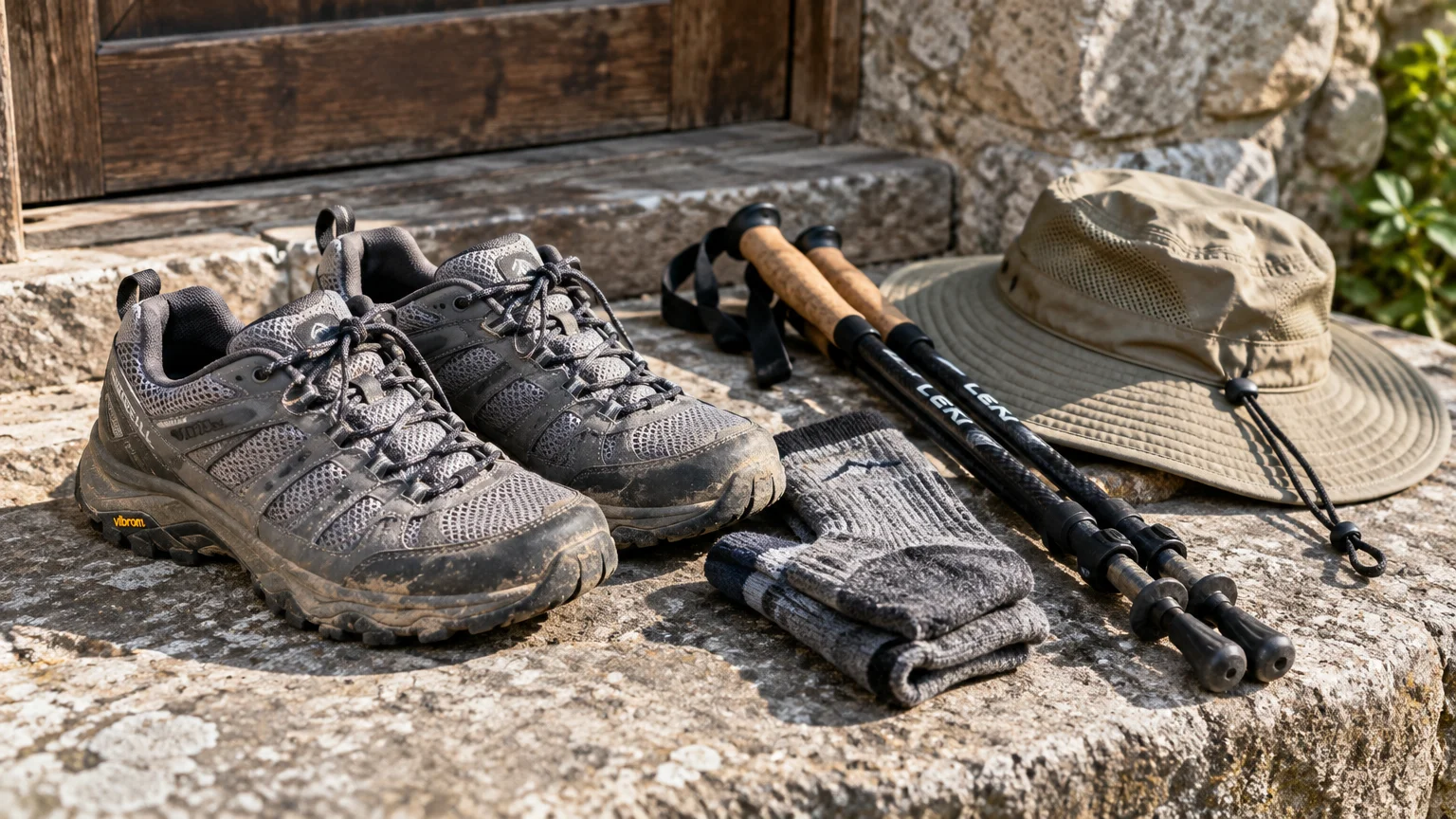
Footwear choice determines trail success. Heavy leather boots cause blisters and fatigue; lightweight trail running shoes like the Altra Lone Peak or Brooks Cascadia perform far better.
- Footwear: Low-cut trail runners paired with Darn Tough Light Hiker merino wool socks.
- Trekking Poles: Adjustable poles such as Black Diamond Trail Back to absorb up to 20% of knee impact.
- Daypack: An 18-to-24 liter pack with a supportive hip belt, such as the Osprey Talon 22.
- Outerwear: A lightweight breathable rain jacket like the Patagonia Torrentshell 3L.
- Sun Protection: Broad-spectrum SPF 50 sunscreen and a wide-brimmed UPF sun hat.
- Hydration: Two 750ml water bottles or a hydration bladder cleaned daily.
Complete Budget Breakdown: Worked Financial Example
Walking the Camino independently with private comforts costs significantly less than booking organized tour groups. Commercial agencies often charge $2,500 or more per person for identical itineraries.
For more strategies on keeping grand international adventures affordable, see our advice on budgeting for travel in retirement.
Timing your trip for spring or autumn also aligns well with principles for off-season European travel on a fixed income.
Here is an exact budget scenario for a single 67-year-old traveler completing our eight-day itinerary from Sarria to Santiago.
- Private Rooms (8 nights): Booking family-run pensions averaging €60 per night equals €480 ($520 USD).
- Luggage Transport (7 stages): Correos Paq Mochila delivery at €6 per transfer equals €42 ($46 USD).
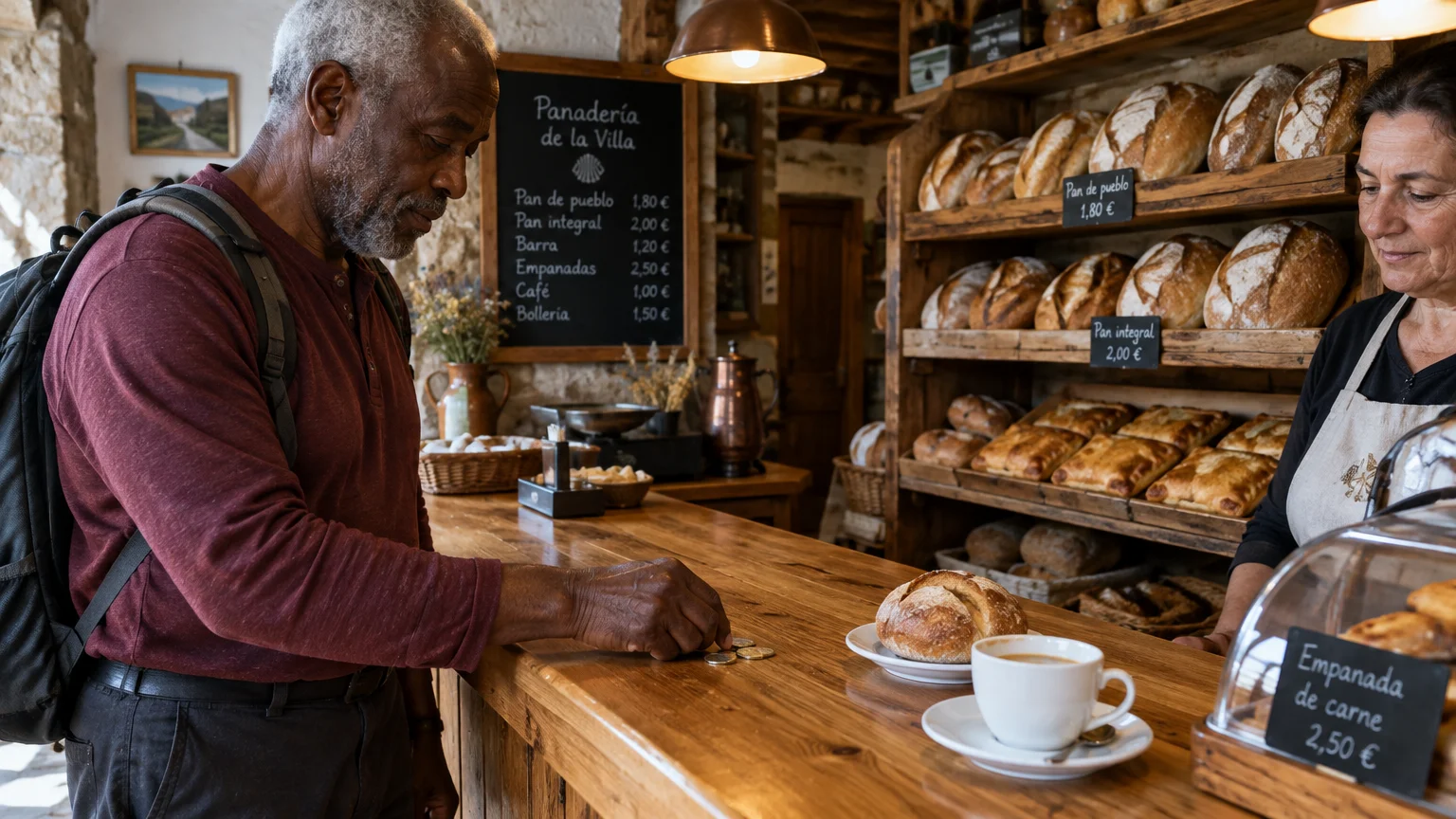
- Breakfasts (8 days): Morning cafe stops for cafe con leche and toasted bread with tomato at €4 per day equal €32 ($35 USD).
- Lunch and Trail Snacks (8 days): Fresh fruit, local cheese, and sandwiches from markets at €8 per day equal €64 ($70 USD).
- Pilgrim Dinners (8 days): Three-course evening meals including wine and bread at €15 per night equal €120 ($130 USD).
- Credential and Souvenirs: Official credential book and stamps equal €10 ($11 USD).
- Total Trail Operational Cost: This independent journey totals €748 (approximately $812 USD).
By organizing your own bookings directly through local guesthouses, you save over $1,600 compared to commercial travel packages. The process gives you full control over your daily schedule.
Healthcare, Insurance, and Trail Safety
American retirees must understand their healthcare limitations when traveling in Spain. The rules published by Medicare.gov state clearly that standard Medicare Parts A and B do not cover medical care outside the United States.
Most Medicare Advantage policies also exclude overseas medical treatment. You must purchase dedicated international travel medical insurance with medical evacuation benefits before departing.
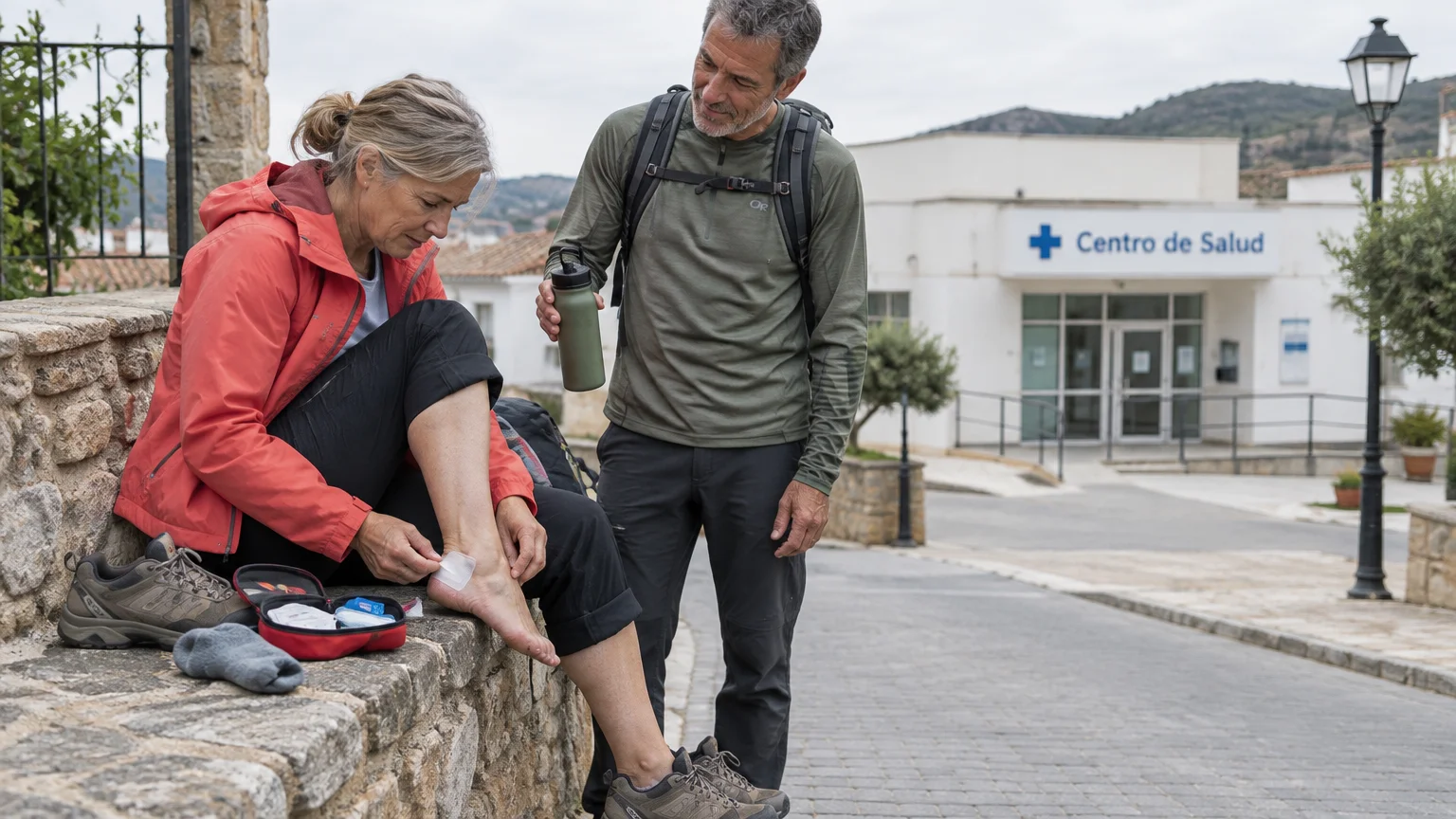
Spanish pharmacies, identifiable by glowing green crosses, serve as an outstanding first stop for minor trail ailments. Spanish pharmacists can evaluate blister problems, muscle strains, and gastrointestinal issues directly.
Spain permits visa-free tourist stays for United States passport holders for up to 90 days within any 180-day window. This generous timeframe allows you to rest thoroughly before and after your walk.
Carry your primary prescription medications in original labeled bottles inside your daypack. Keep an index card in your wallet listing your medical history and emergency contacts written in Spanish.
Frequently Asked Questions
How far do you have to walk each day on the Camino?
Most seniors cover between 8 and 14 miles per day. You can customize your stages by booking private guesthouses in smaller hamlets along the route.
Can you send luggage ahead every day on the Camino?
Yes. Services like Correos Paq Mochila transfer your bag between private accommodations daily for five to eight euros per stage.
Does Medicare cover medical emergencies in Spain?
Standard Medicare Parts A and B do not pay for healthcare outside the United States. You must purchase dedicated travel medical insurance before departure.
What is the best month for seniors to walk the Camino?
May, June, September, and October offer the best conditions. These shoulder months avoid the sweltering summer heat and peak trail crowding.
How far in advance should seniors book Camino private lodging?
Book private rooms three to four months in advance for spring or autumn treks. Popular Galician villages have limited private rooms that sell out quickly.
Disclaimer: This article is for informational purposes only. Benefits, programs, and regulations can change.
We encourage readers to verify current information with official government sources and consult with qualified professionals for personalized advice.



1 Comment