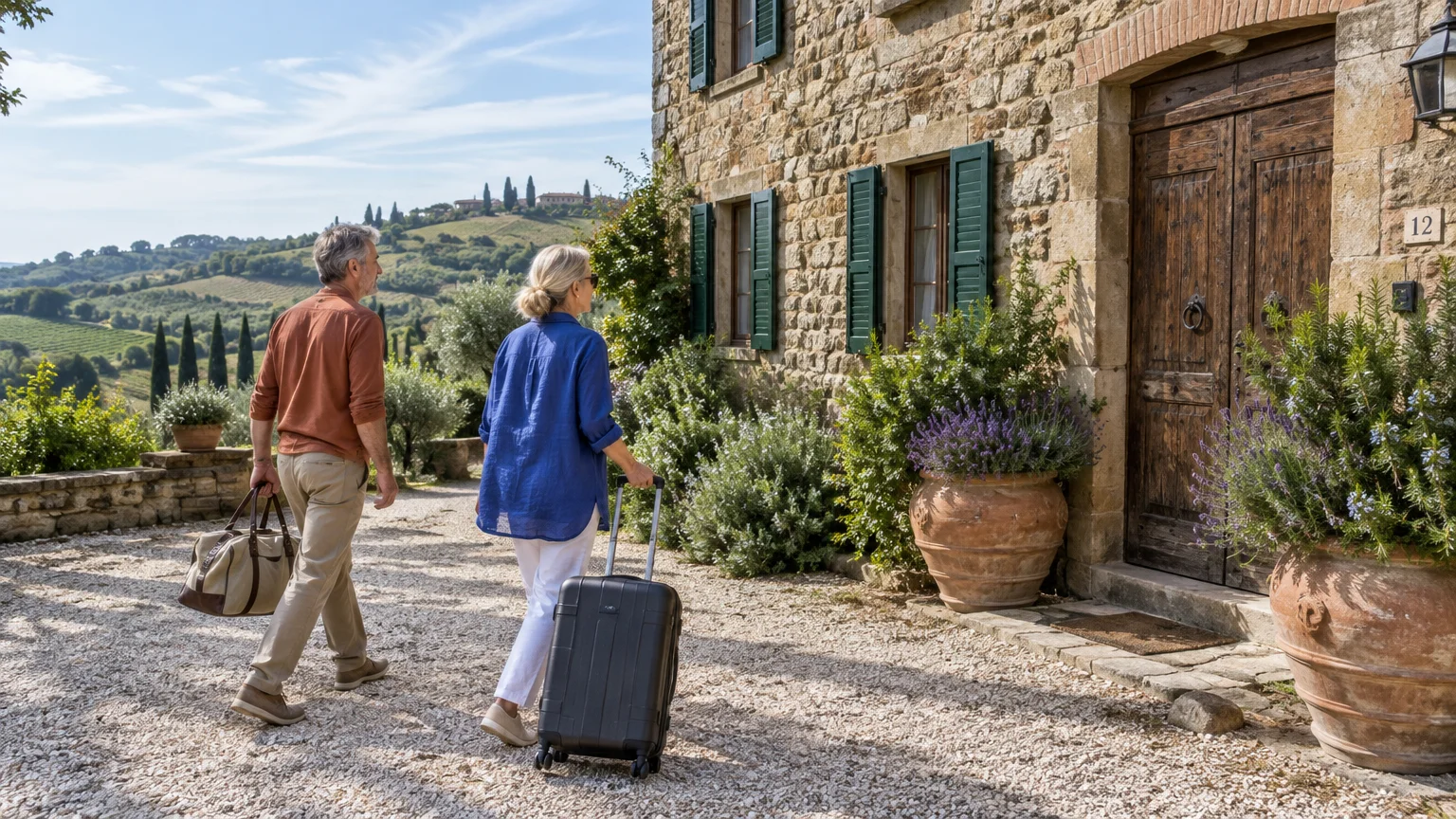
You can spend sixty days living in the Tuscan countryside without facing the bureaucratic maze of an Italian long-stay visa. A mid-April through mid-June stay captures mild weather and blooming landscapes before summer crowds arrive.
Extended journeys like this mirror the appeal of a 60-day winter slow-travel stay in Portugal’s Algarve for retirees wanting an immersive European experience.
Most guides overlook that rental stays beyond thirty days legally require formal Italian tax registration and separate utility meter tracking. Understanding these municipal obligations protects your retirement savings from unexpected surcharges.
This planning guide outlines the exact paperwork, heating mechanics, rail connections, and seasonal budgets necessary for your extended stay.
In this guide8 sections
- Schengen Visa Rules for Two-Month Stays
- Rental Contracts and Italian Legal Requirements
- Tuscany Heating Regulations and Utility Metering
- Tuscany Shoulder Season Costs and Worked Budget
- Regional Trains Versus Rental Cars in Rural Tuscany
- Healthcare, Medicare, and Medical Needs Abroad
- Step-by-Step Checklist for Your Two-Month Stay
- Frequently Asked Questions

Schengen Visa Rules for Two-Month Stays
American retirees do not need a consulate-issued visa for a sixty-day Italian escape. U.S. citizens can visit the European Schengen Area for up to 90 days within any rolling 180-day window.
Many active travelers combine an Italian villa stay with other European adventures, such as walking the Camino de Santiago, while remaining well within the Schengen threshold.
Those who prefer shorter, sunnier visits can also consider planning a 30-day winter stay in Spain under the same Schengen entry guidelines.
A sixty-day stay fits comfortably beneath this limit. You avoid the paperwork of Italy’s Elective Residence Visa, which requires proof of high passive income and in-person consulate interviews.
Your ninety-day allowance applies across all twenty-nine Schengen nations together. If you spend five days in Paris before arriving in Italy, those days count against your ninety-day ceiling.
The European Union plans to launch the European Travel Information and Authorisation System (ETIAS) in late 2026. Once operational, you must complete an online pre-travel form before boarding your flight.
ETIAS costs €20 for adults aged 18 to 69; it is free for travelers aged 70 and older. The authorization remains valid for three years or until your passport expires.
“Twenty years from now you will be more disappointed by the things that you didn’t do than by the ones you did do.” — Mark Twain
To avoid border entry issues during your arrival in Rome or Florence, gather your travel documentation early:
- A U.S. passport valid for at least three months beyond your scheduled departure date from Europe.
- A printed return flight itinerary confirming your departure from the Schengen Area within sixty days.
- A printed copy of your registered Tuscan rental agreement showing your physical address.
- Proof of international emergency medical coverage valid across the European Union.
Rental Contracts and Italian Legal Requirements
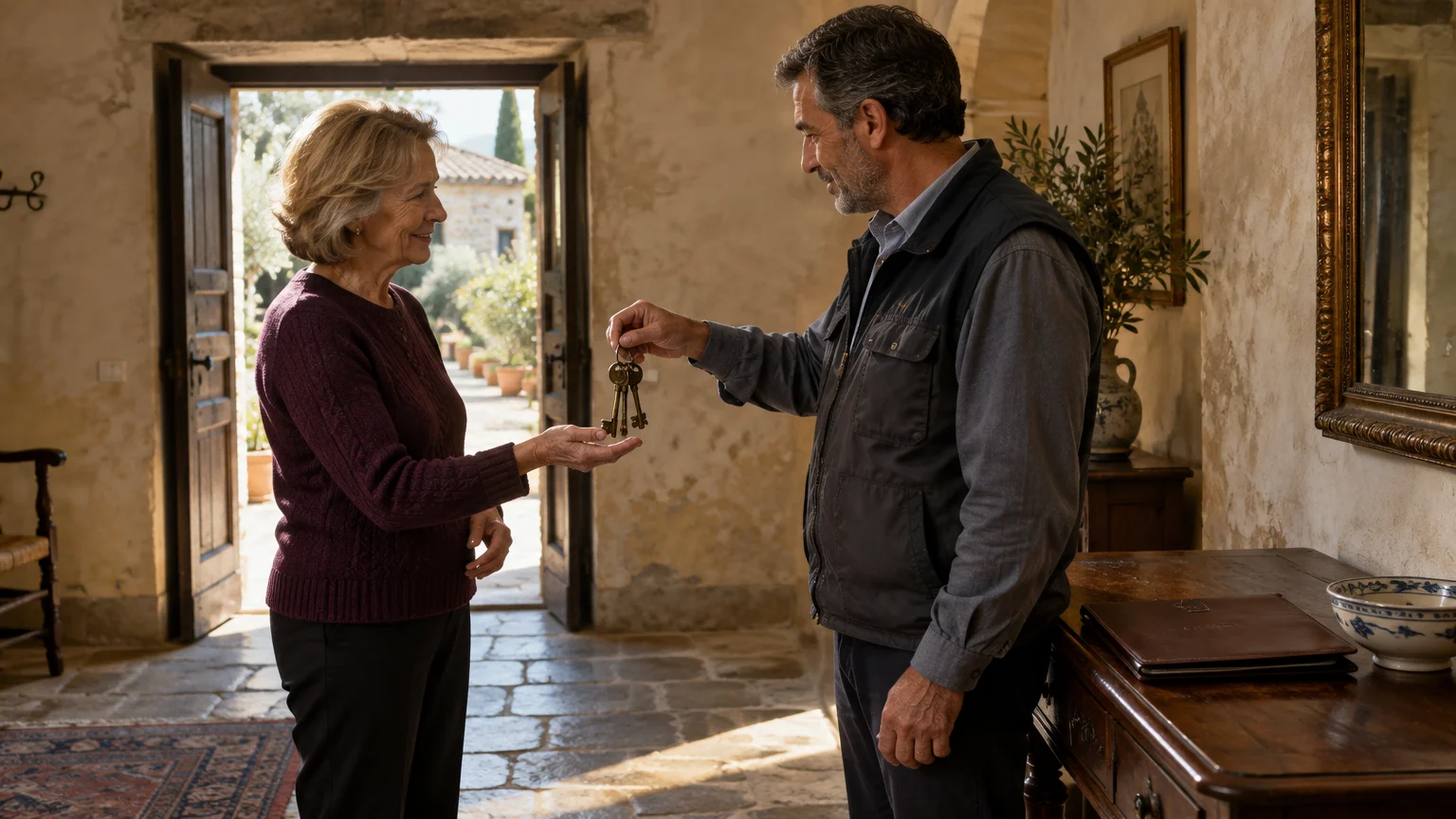
Italian property law treats tenancies over thirty days differently than typical weekly holiday rentals. Any residential rental exceeding thirty consecutive days requires a registered written lease.
Retirees looking to bypass leases and security deposits entirely can also explore how to house-sit for free travel lodging across European destinations.
If long-term lease administration feels overly complex, exploring home exchange vacations in retirement provides a flexible alternative without traditional rental contracts.
Your property owner must register this transitional contract with the Italian Revenue Agency within thirty days of signing. This registration protects your tenant occupancy rights while protecting the owner from tax evasion penalties.
Contract registration requires both parties to hold an Italian tax identification number, known as a Codice Fiscale. You can obtain this free alphanumeric code through your nearest Italian consulate in the United States before departure.
Under Italian Decree-Law 145/2023, all tourist properties must display a National Identification Code. Verify that your villa listing displays this code to confirm the home operates legally under regional safety laws.
Under Italian public safety regulations, hosts must also submit all guest passport details to local police. Your host will upload your information through the official police portal within 48 hours of check-in.
Confirm these specific administrative items with your host before transferring any security deposits:
- The property’s official National Identification Code on the written agreement.
- A written lease clause stating who submits the contract to the tax agency.
- Clear itemization of the registration tax, which the landlord and tenant split equally.
- Confirmation of mandatory guest check-in reporting to the local police department.
Tuscany Heating Regulations and Utility Metering
Centuries-old stone villas offer picturesque scenery, but their thick walls retain winter chill well into spring. Mid-April mornings in rural valleys frequently drop into the mid-forties.
Italian federal law strictly controls home heating according to municipal climate zones. Most inland Tuscan towns fall into Climate Zone E, where central heating can legally operate until mid-April.
Authorities permit heating systems in Zone E to run for a maximum of 14 hours per day. Warmer valley zones, classified as Zone D, restrict furnace operation after late March.
Rural Tuscan homes rely heavily on liquefied petroleum gas stored in outdoor tanks. Liquid gas costs substantially more per heating unit than American residential natural gas.
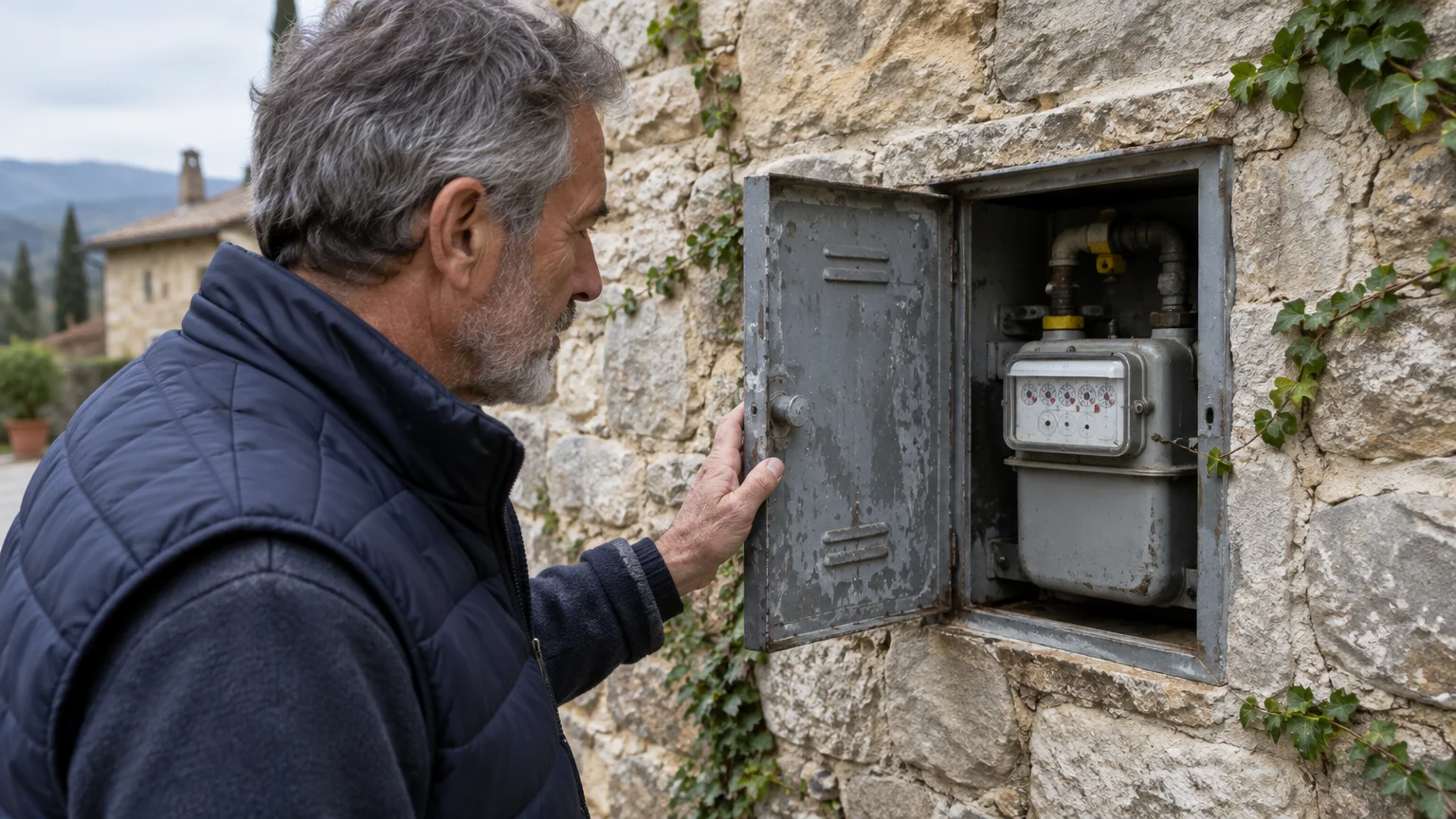
Long-term villa agreements routinely exclude gas and electricity from the headline rental price. Uninformed renters who run stone-house radiators continuously can face monthly utility bills exceeding €600.
Protect your utility budget by checking these terms before signing a rental agreement:
- A baseline meter reading documented in writing alongside photos during check-in.
- The exact contractual price per cubic meter of gas and kilowatt-hour of power.
- The presence of pellet stoves or wood fireplaces to supplement warmth economically.
- A provision requiring mid-stay meter checks to prevent end-of-trip billing shocks.

Tuscany Shoulder Season Costs and Worked Budget
Scheduling a two-month stay from mid-April to mid-June cuts accommodation expenses drastically. Shoulder-season rental rates in Tuscany run forty to sixty percent below July and August prices.
Mapping out these extended trip costs aligns closely with proven principles for budgeting for travel in retirement without putting your financial security at risk.
Setting up dedicated savings using a retirement travel sinking fund makes managing these multi-month international expenses seamless.
Booking sixty continuous nights often triggers agency discounts between 15% and 35%. Landlords welcome mature couples who provide stable occupancy during early spring.
Carefully review payment terms when transferring large sums for overseas lodging. Review Consumer Financial Protection Bureau guidance on wire transfers before wiring funds to individual bank accounts abroad.
The following worked example details the exact expenses for two retirees staying 60 nights outside Cortona from April 15 to June 14.
- Villa Rent: €4,200 per month for a 2-bedroom stone farmhouse (€8,400 total).
- Contract Registration Fee: €33.50 for your half of the standard municipal filing tax.
- Gas Heating: 60 cubic meters of fuel at €5.50 per unit during cold April weeks (€330 total).
- Electricity and Water: Standard household usage across 60 days (€280 total).
- Car Rental: Compact automatic wagon for 60 days with full insurance (€1,950 total).
- Vehicle Fuel and Tolls: Rural driving and expressway fees (€420 total).
- Groceries and Farm Stands: Fresh weekly market produce and home cooking (€1,350 total).
- Dining and Espresso: Midday trattoria lunches and village cafe visits (€1,200 total).
- Regional Train Fares: Day trips to Florence, Orvieto, and Lucca (€180 total).
- International Health Coverage: Comprehensive medical policy for two travelers (€380 total).
- Total Projected Outlay: €14,523.50 (approximately $15,700 USD).
This worked budget reflects independent living rather than fast-paced tourism. Shopping at village butcher shops and weekly open-air markets keeps your daily nourishment costs modest.

Regional Trains Versus Rental Cars in Rural Tuscany
Rural Tuscan life requires an automobile for grocery shopping, medical appointments, and exploring hilltop hamlets. Public buses in remote countryside zones run infrequently outside morning school schedules.
Retirees who enjoy spending time in rural communities might also appreciate opportunities like organic farm volunteering for active seniors to immerse themselves in local agricultural traditions.
Italian law mandates that non-EU motorists carry an International Driving Permit alongside their U.S. license. You can secure this permit at any AAA branch for a $20 fee before departure.
Historic Tuscan town centers enforce strict Limited Traffic Zones monitored by automated cameras. Driving past these camera gates without a municipal permit brings fines between €80 and €300 per pass.
Car rental companies pass municipal camera citations directly to your credit card months later. Pair your vehicle with regional rail travel when visiting crowded art centers like Florence or Siena.
You can leave your rental car at an outer valley station and board a comfortable regional train. Regional rail tickets between Tuscan towns cost between €4 and €12 each way.
| Town Base | Hourly Rail Access | Hospital Drive Time | Center Traffic Restrictions | Weekly Market Day |
|---|---|---|---|---|
| Cortona (Camucia) | Direct line to Florence and Rome | 12 minutes (Fratta Hospital) | Strict upper historic center cameras | Saturday morning |
| Chiusi | Direct line to Florence and Siena | 20 minutes (Nottola Hospital) | Minimal cameras outside old center | Tuesday morning |
| Lucca Periphery | Direct line to Pisa and Florence | 8 minutes (San Luca Hospital) | Active enforcement inside Renaissance walls | Wednesday and Saturday |
| San Gimignano Rural | No station (Poggibonsi is 15 min drive) | 18 minutes (Campostaggia Hospital) | Absolute vehicle ban inside town gate | Thursday morning |
Camucia and Chiusi offer ideal bases for retirees seeking a balance between country seclusion and train access. Both stations provide free parking lots where you can leave your vehicle for day trips.

Healthcare, Medicare, and Medical Needs Abroad
Managing routine prescriptions and unexpected injuries requires upfront planning before leaving home. Standard U.S. healthcare plans stop coverage at the national border.
Official Medicare.gov guidelines confirm that Medicare Part A and Part B provide no coverage outside the United States. Medicare Advantage programs rarely cover medical costs abroad beyond basic emergency stabilizing care.
You must purchase a standalone travel medical insurance policy that includes emergency medical evacuation. Ensure your selected policy provides at least $100,000 in emergency medical treatment and $250,000 for medical repatriation.
Italian community pharmacies, marked by illuminated green crosses, handle minor illnesses and non-urgent conditions. Pharmacists hold extensive training and can dispense common medications without an immediate physician visit.
If you experience illness outside pharmacy hours, visit the local emergency doctor service, known as the Guardia Medica. For immediate life-threatening medical emergencies, dial 112 from any mobile phone.
Consult senior wellness resources such as AARP travel resources to prepare your medical paperwork effectively. Prepare your healthcare logistics using these practical steps:
- Request a sixty-day medication override from your domestic health insurer before departure.
- Pack medications in original prescription bottles alongside letters from your doctors using generic chemical names.
- Carry a printed summary of your medical history, allergies, and emergency family contacts.
- Identify the nearest public emergency hospital to your villa before unpacking your bags.
Step-by-Step Checklist for Your Two-Month Stay
Organizing an extended European retreat requires methodical preparation across several months. Following a sequential timeline keeps administrative tasks manageable and prevents last-minute oversights.
- Five Months Out: Secure your Italian tax code through the nearest Italian consulate in the United States.
- Four Months Out: Finalize your villa lease agreement, ensuring it includes the host’s National Identification Code and clear utility pricing.
- Three Months Out: Reserve an automatic rental vehicle and purchase round-trip flights that keep you within the ninety-day limit.
- Two Months Out: Obtain your International Driving Permit through AAA and verify your passport has three months of validity remaining.
- One Month Out: Secure travel medical insurance with evacuation coverage and arrange your 60-day prescription medication overrides.
- Arrival Day: Photograph utility meters with the property host and verify your passport data submission for police reporting.
Completing these steps systematically ensures your sixty-day stay unfolds smoothly. You can then focus your energy on learning regional recipes, walking olive groves, and enjoying Italian countryside living.
Frequently Asked Questions
Do U.S. citizens need a visa to rent a villa in Italy for 60 days?
No. U.S. citizens can stay in Italy and the European Schengen Area for up to 90 days within any 180-day window without a visa.
What legal registration is required for rentals over 30 days in Italy?
Italian law mandates that tenancies exceeding 30 consecutive days must be drawn up in writing and registered with the national tax agency within 30 days of signing.
Does U.S. Medicare cover doctor visits or hospital stays in Italy?
No. Original Medicare provides no coverage for medical treatments received outside the United States, making a private international travel health insurance policy necessary.
Why do Italian villa rentals charge separately for heating?
Rural Italian stone properties run on liquefied petroleum gas, which carries high market costs. Owners bill fuel usage by the cubic meter to prevent excessive consumption.
What is an Italian ZTL and how do I avoid fines?
A ZTL is a limited traffic zone located in historic town centers. Drive only outside these zones, as unauthorized vehicles passing camera gates receive steep automated fines.
Disclaimer: This article is for informational purposes only. Benefits, programs, and regulations can change.
We encourage readers to verify current information with official government sources and consult with qualified professionals for personalized advice.