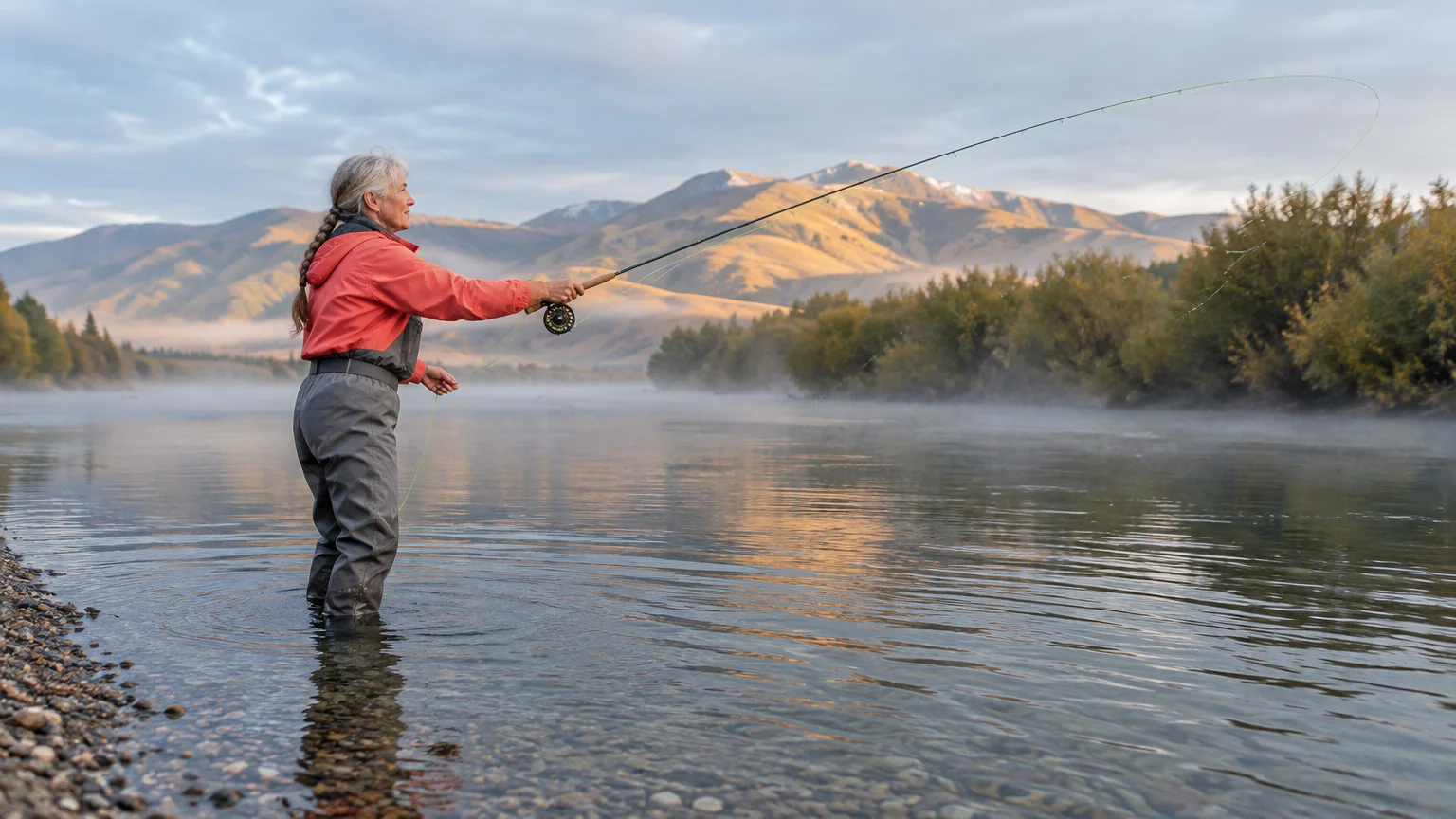
Rocky Mountain fly fishing gives you an accessible, low-impact way to spend quiet mornings on cold mountain water. You do not need to hike remote backcountry canyons or wrestle heavy gear to catch wild trout.
Similar to senior-friendly gardening, casting on moving water keeps you connected to nature without placing undue physical strain on your joints.
Much like taking up bird watching, fly fishing allows you to slow down, observe wildlife patterns, and appreciate riparian environments at an unhurried pace.
This guide focuses on a balanced physical approach designed for your sixties: pairing featherweight graphite rods with gentle tailwater access points in Montana and Colorado.
By avoiding punishing freestone boulder fields and optimizing for manageable river currents, you can protect your rotator cuffs and knees while building lifelong angling skills.
In this guide9 sections
- Why Tailwaters Provide the Safest River Access for Seniors
- Essential Lightweight Rods to Prevent Shoulder and Wrist Fatigue
- River Footwear and Wading Safety Gear for Mountain Streams
- Top Accessible Montana and Colorado Tailwaters for Beginners
- Complete Beginner Gear Setup and Cost Breakdown
- Mountain Hatch Basics and Simple Fly Selection
- Reading River Currents and Gentle Casting Mechanics
- Regulations, Licenses, and Senior Recreation Passes
- Frequently Asked Questions
Why Tailwaters Provide the Safest River Access for Seniors
Fly fishing in retirement works best when you select rivers that match your physical comfort. Natural mountain freestone rivers rely on unchecked melting snowpack, filling riverbeds with slick boulders and unstable currents.
Many retired fly fishers pair seasonal river trips with public land stays, similar to BLM boondocking along the western flyways.
Tailwaters flow directly below bottom-release dams. Engineers control the water discharge, creating stable flow rates and predictable river depths throughout the summer.
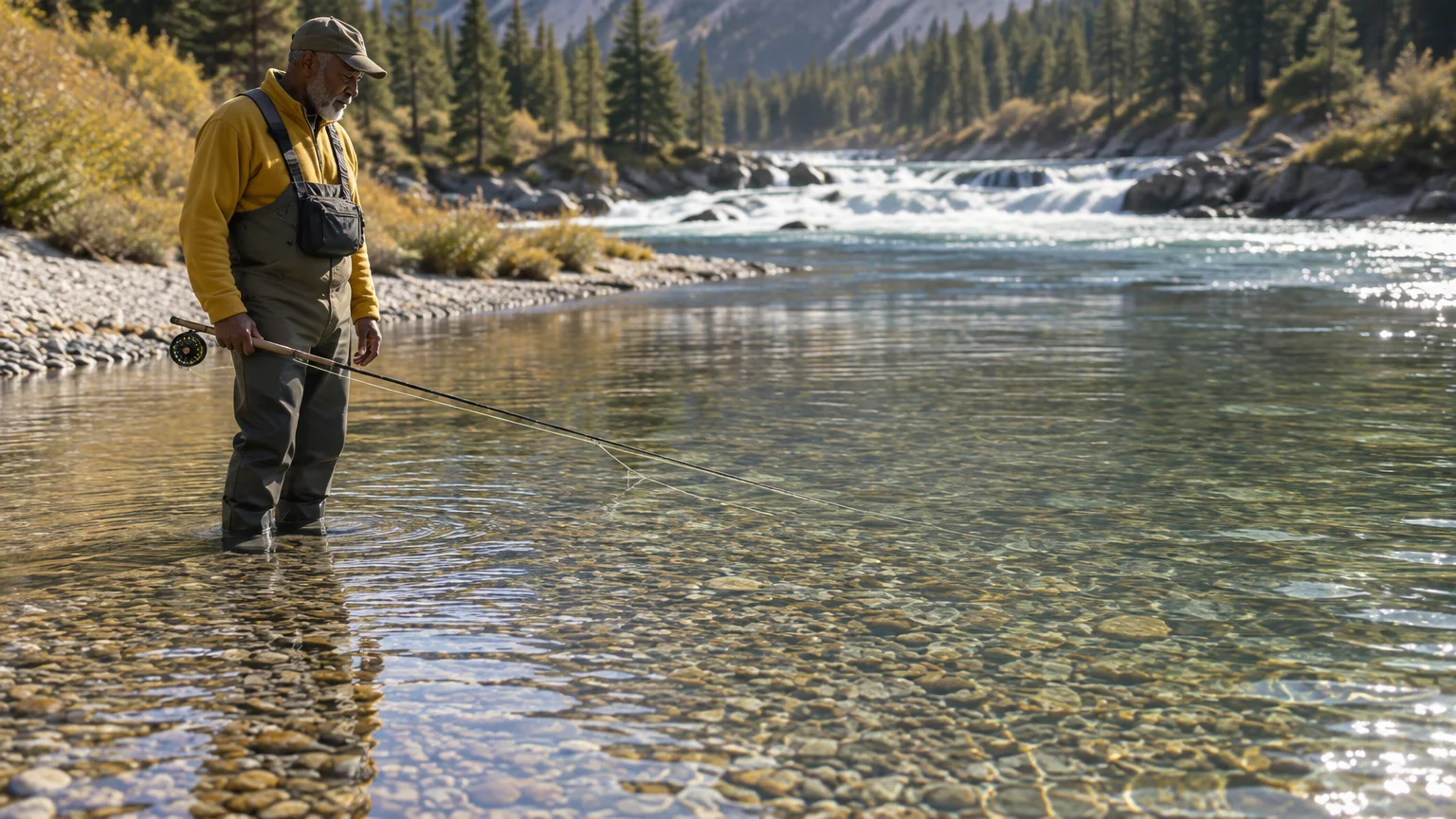
Tailwater riverbeds typically feature fine gravel, small pea-gravel bars, and consistent gradients. These flat underwater surfaces reduce your slip risk and allow you to plant both feet firmly without balancing on greased bowling balls.
Tailwaters release deep, cold reservoir water that maintains constant temperatures between 42 and 54 degrees Fahrenheit. This climate supports dense insect populations, meaning trout feed actively along shallow shoreline shelves.
You rarely need to wade past your calves on an established tailwater. You can make short casts directly from dry gravel banks or ankle-deep water into deep holding pools.
- Controlled dam releases eliminate unexpected flash rises in water levels.
- Uniform gravel bottoms reduce ankle twisting and knee impact.
- Consistent insect hatches keep feeding fish close to gentle banks.
- Well-maintained public access parking areas sit close to the water.
- Steady water temperatures support reliable dry fly and nymph feeding windows.
Essential Lightweight Rods to Prevent Shoulder and Wrist Fatigue
Casting a heavy, unbalanced fly rod for four hours can inflame rotator cuffs and wrist tendons. When targeting trout in western rivers, a modern 9-foot, 5-weight (9ft 5wt) graphite rod provides ideal versatility.
Much like joining beginner pickleball leagues, selecting ergonomic gear ensures you maintain proper form without aggravating persistent joint problems.
A bare 5-weight carbon rod blank weighs between 2.8 and 3.4 ounces. Modern high-modulus graphite delivers crisp recovery without demanding aggressive, high-speed arm motions.
Medium-fast action rods flex deeply into the mid-section of the blank. This deeper bend lets the mechanical weight of the fly line load the rod, requiring minimal muscular effort from your shoulder.
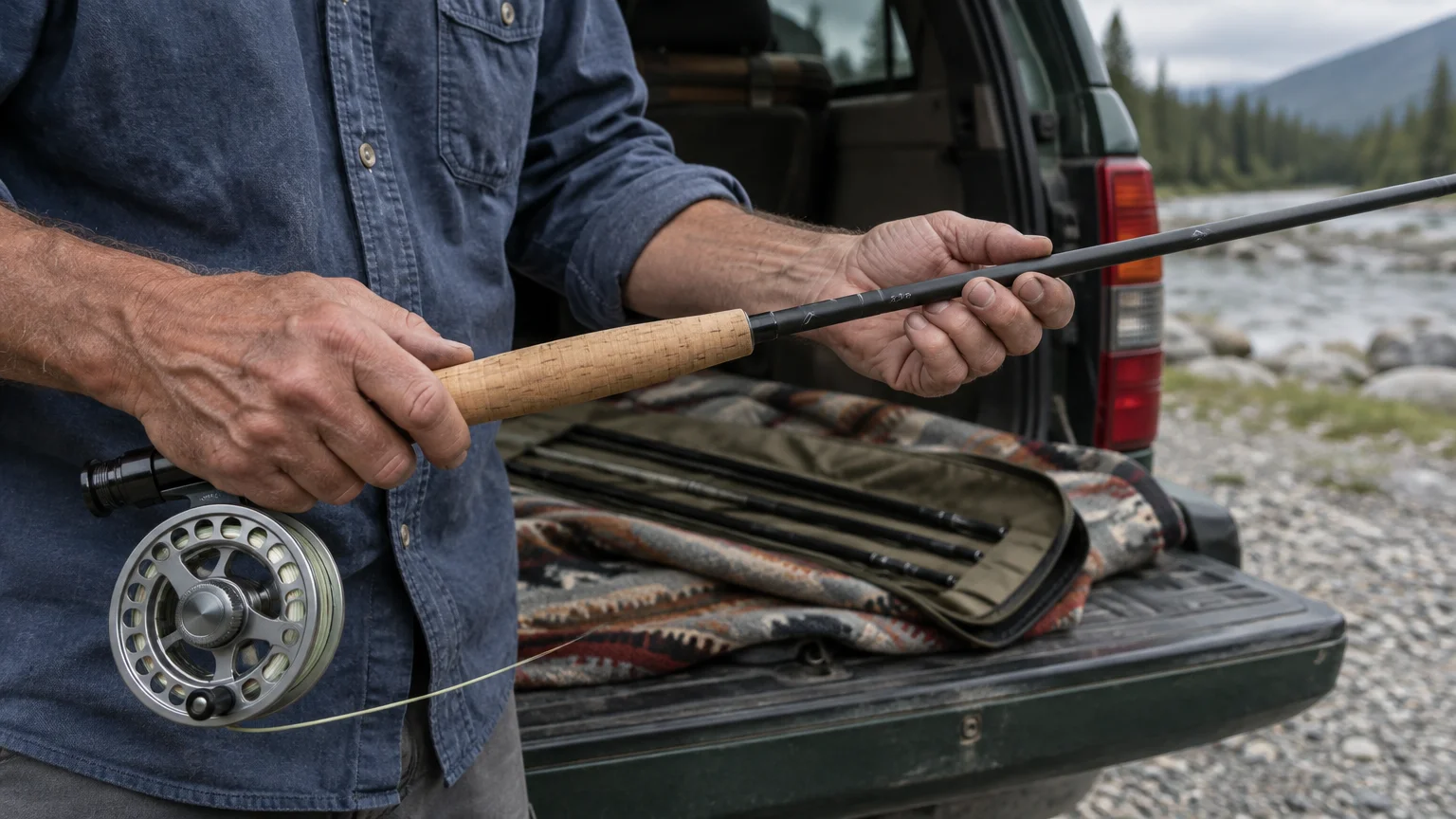
Pairing your rod with a lightweight aluminum reel featuring a smooth disc drag keeps the setup balanced directly at the cork grip. When the balance point rests right under your index finger, you eliminate forearm strain.
According to physical activity guidelines promoted by AARP, low-impact outdoor recreation supports joint mobility when participants utilize lightweight, ergonomically sound tools.
- Orvis Clearwater 905-4: Weighs 3.1 ounces, features a medium-fast flex, and dampens casting vibrations efficiently.
- Echo Carbon XL 905: Weighs 3.4 ounces, offers a forgiving timing window, and carries a true-to-weight swing profile.
- Redington Crosswater 590-4: Weighs 3.2 ounces, provides an economical carbon blank, and loads smoothly at short distances.
Avoid stiff, fast-action saltwater rods designed for heavy wind. Those rigid rods demand high line speed, causing rapid muscle fatigue during repetitive presentations.
River Footwear and Wading Safety Gear for Mountain Streams
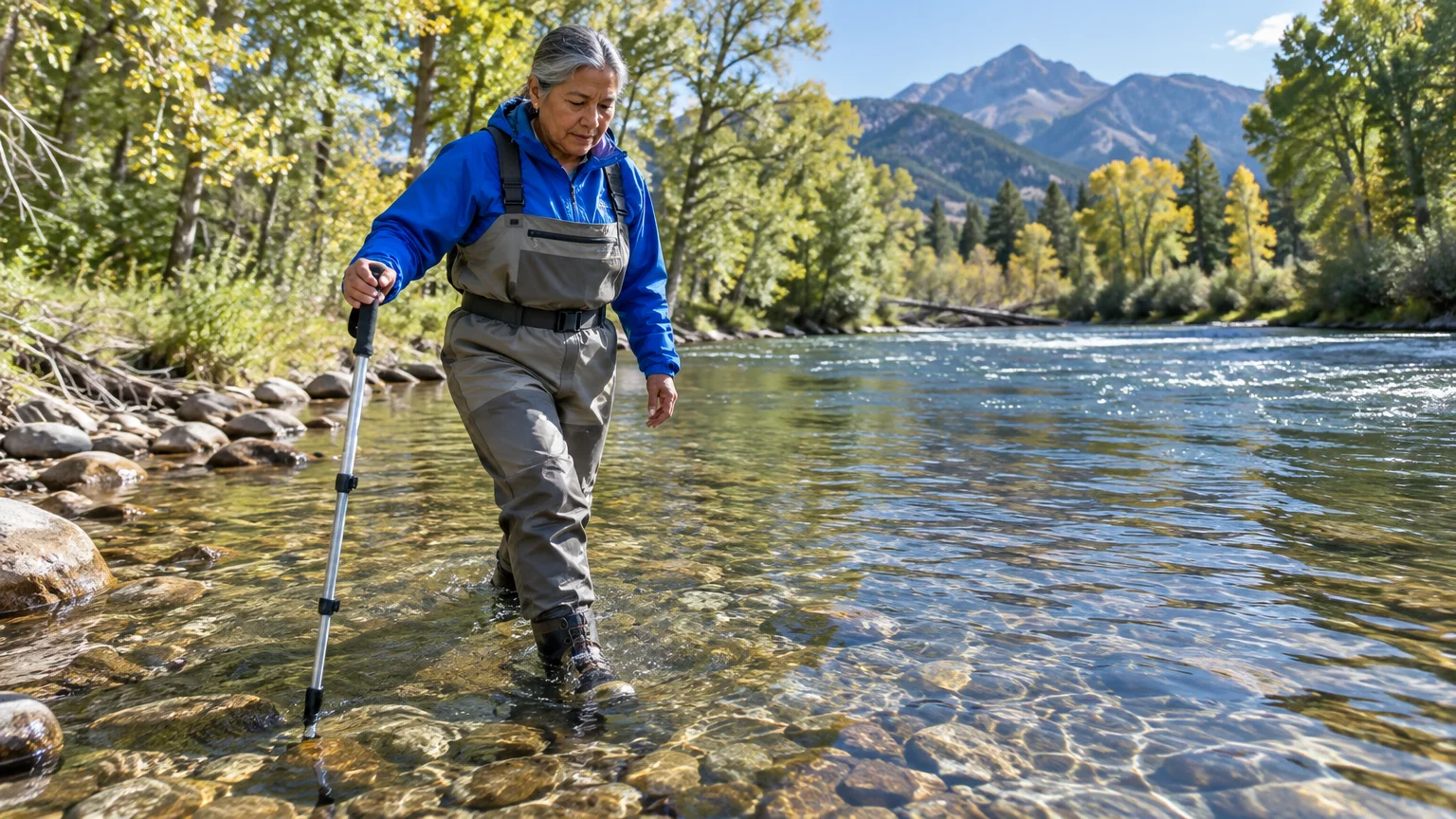
Wading safely on mountain rivers requires specialized physical support and proper friction underfoot. A sturdy, height-adjustable wading staff serves as your third point of contact on any riverbed.
Anglers exploring public access points often find that budget camper van travel offers the ideal blend of riverfront mobility and dry gear storage.
Many visiting anglers pair autumn river outings with renting an RV for a road trip, providing a warm mobile base to dry off waders and store gear.
Collapsible four-section aluminum wading staffs deploy instantly with an internal tension cord. Keep the staff attached to your wading belt using a coiled lanyard so it floats beside your hip when handling fish.
Always maintain a tripod stance when moving through current. Plant the rubber- or carbide-tipped staff firmly upstream before lifting either foot off the river bottom.
Select wading boots built with sticky Vibram rubber lug soles. Adding ten to twelve screw-in carbide cleats per boot provides biting traction into mossy underwater rocks.
Never rely on felt-soled wading boots when traveling between Rocky Mountain watersheds. Multiple public waters, including Yellowstone National Park, ban felt soles entirely to prevent spreading invasive didymo algae and mud snails.
- Cinch a wide nylon or neoprene wading belt snugly around your waist over your breathable waders to prevent water filling the legs if you stumble.
- Adjust your folding wading staff so your elbow rests at a 90-degree angle when the carbide tip touches the river bottom.
- Take small, sliding shuffles across gravel beds rather than taking wide, high steps against moving current.
- Face your chest slightly upstream when walking across current to minimize surface drag on your thighs.
- Keep your knees slightly flexed to lower your center of gravity while reading bottom depth changes.
“Eventually, all things merge into one, and a river runs through it.” — Norman Maclean
Top Accessible Montana and Colorado Tailwaters for Beginners
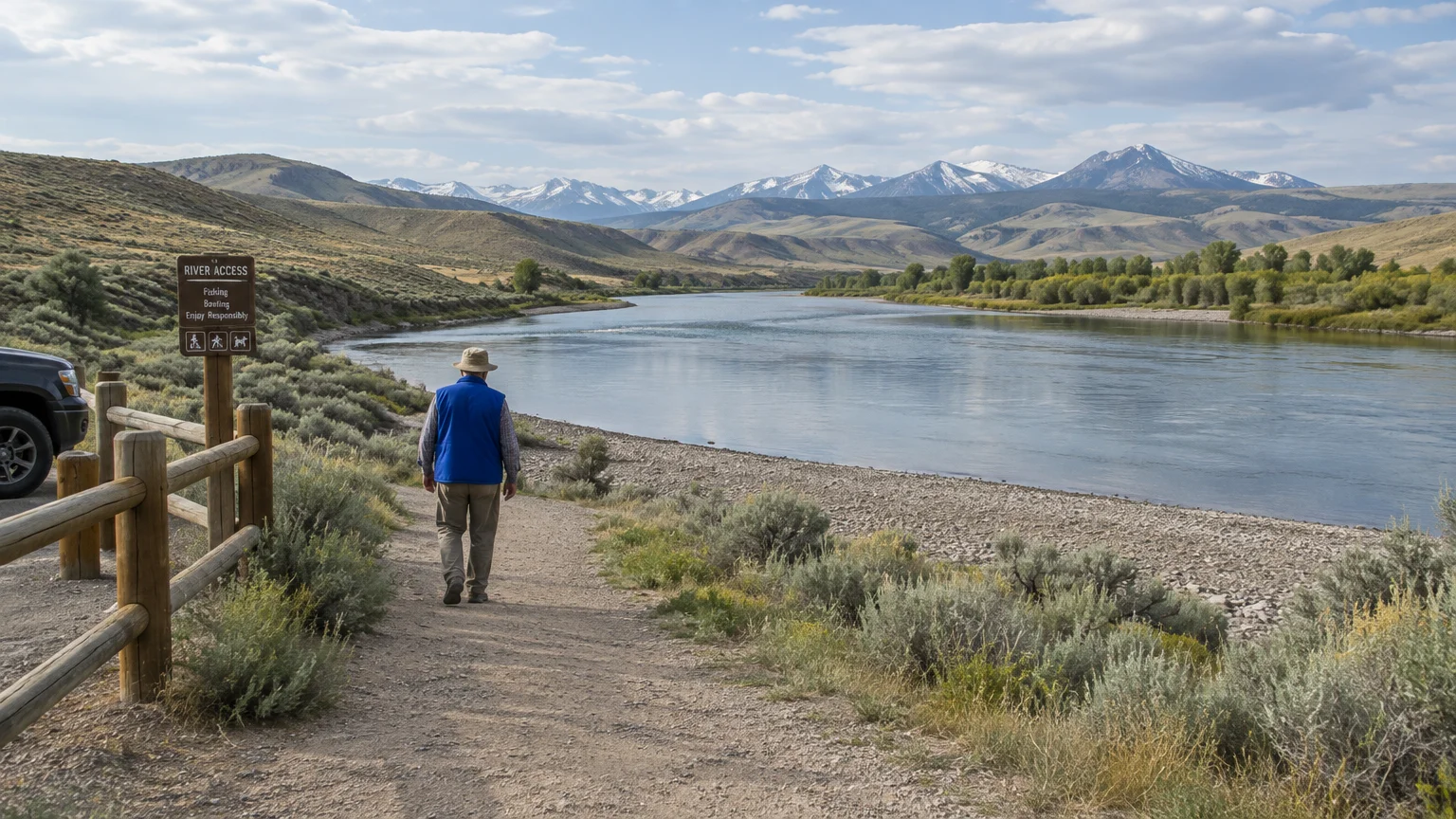
Beginner fly fishing seniors benefit from access points featuring gentle river gradients and short walks from paved parking. Tailwaters in Colorado and Montana provide exceptional infrastructure for comfortable day trips.
Before heading out, be sure to check our National Park Senior Pass guide to save money on entrance fees near federal river basins.
If you plan multi-day fishing trips along these river corridors, take advantage of state park camping discounts for seniors to keep your accommodation costs minimal.
In Colorado, the Blue River below Dillon Reservoir runs through Silverthorne with paved footpaths running parallel to the water. Anglers can park within 40 yards of shallow gravel bars holding feeding rainbow trout.
The South Platte River along Waterton Canyon offers wide dirt access lanes and gentle bank fishing. Anglers can target wild brown trout in gentle pocket water without entering deep channels.
In Montana, the Missouri River downstream of Holter Dam near Craig features broad, wide gravel bars. The river resembles a giant spring creek, offering miles of ankle-deep wading along shallow riffles.
The Bighorn River below Yellowtail Dam in Fort Smith provides stable, predictable flows over uniform pea-gravel bottoms. Side channels and braided banks allow you to spot fish without battling heavy mid-river hydraulics.
| River & State | Target Flow Rate | Riverbed Substrate | Walk to Water |
|---|---|---|---|
| Blue River (Silverthorne, CO) | 100–300 cfs | Small cobble & pea gravel | 20–50 yards |
| Missouri River (Craig, MT) | 3,500–5,500 cfs | Uniform fine gravel | 30–75 yards |
| South Platte (Waterton, CO) | 75–250 cfs | Granite gravel & flat slate | 15–40 yards |
| Bighorn River (Fort Smith, MT) | 2,000–3,500 cfs | Soft pea gravel | 25–60 yards |
Always inspect streamflow data using United States Geological Survey gauges before driving to any river. Avoid wading mountain rivers when flows exceed typical seasonal medians during the spring snowmelt window.
Complete Beginner Gear Setup and Cost Breakdown
Starting fly fishing does not require emptying your retirement savings on boutique hand-crafted tackle. You can equip yourself with reliable, lightweight equipment on an accessible budget.
Planning your fishing excursions in advance is an effective strategy for budgeting for travel in retirement while pursuing outdoor passions.
Adopting outdoor hobbies without financial stress fits neatly alongside other simple lifestyle adjustments that cut retirement expenses.
Federal financial literacy tools hosted on Consumer Financial Protection Bureau emphasize categorizing upfront recreational investments to prevent retirement budget strain.
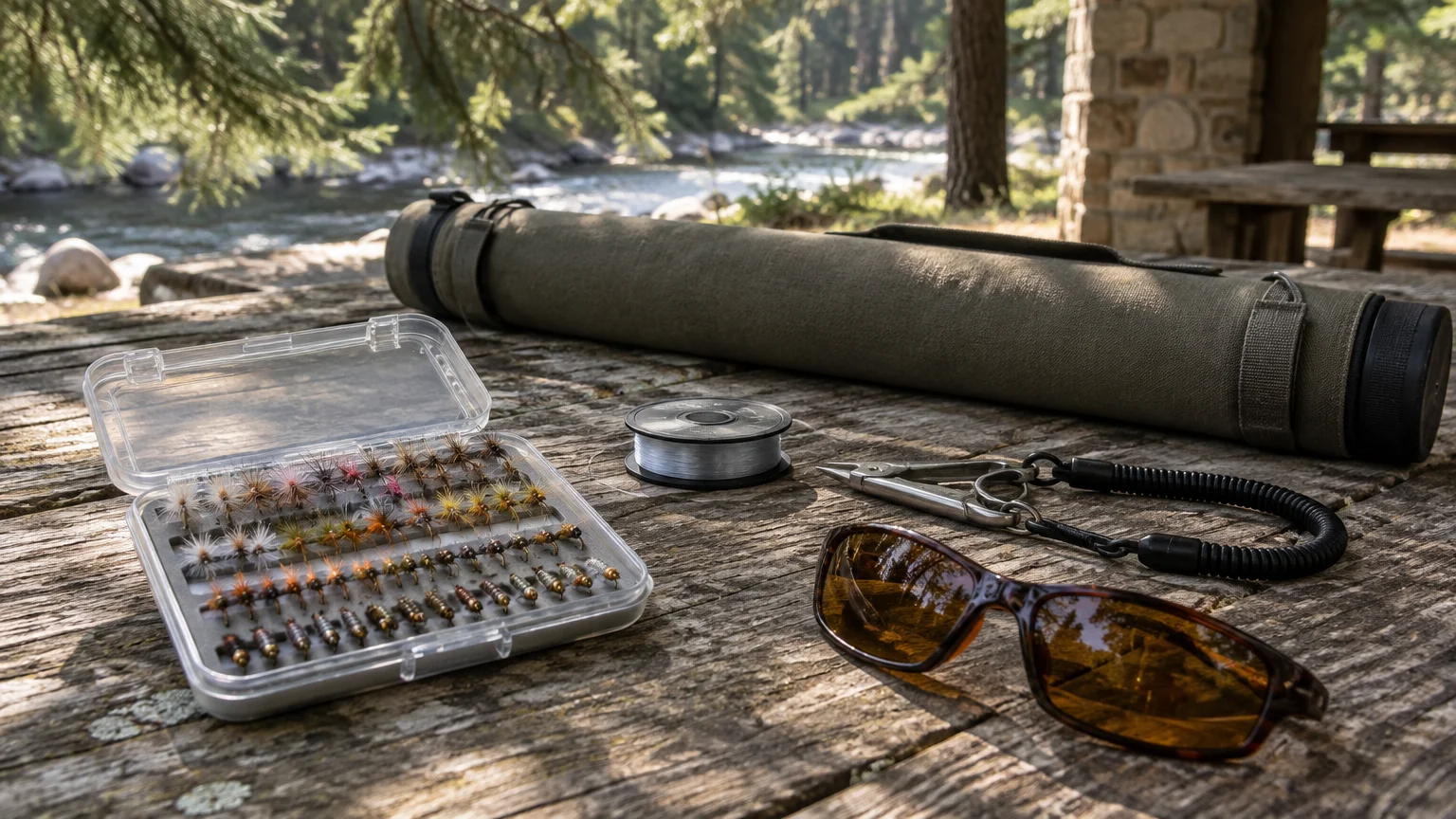
Here is a complete worked equipment budget for a new angler preparing for their first season on Rocky Mountain tailwaters:
- Rod and Reel Package ($199.99): Redington Crosswater 5-weight combo, including pre-spooled weight-forward floating fly line, backing, and a durable hard travel tube.
- Stockingfoot Breathable Waders ($149.95): Frogg Toggs Hellbender waders, featuring 4-ply breathable nylon, neoprene booties, and an integrated wading belt.
- Sticky Rubber Wading Boots ($119.99): Korkers Greenback boots with Kling-On rubber soles, sized one full size above street shoes to accommodate neoprene booties.
- Folding Wading Staff ($44.95): Hammers four-section folding aluminum wading pole with lanyard and neoprene storage pouch.
- Terminal Tackle & Tools ($52.50): Two 9-foot 4X monofilament leaders ($12.00), one spool of 5X fluorocarbon tippet ($14.50), line nippers ($8.00), and dry fly paste floatant ($8.00), plus locking forceps ($10.00).
- Curated Mountain Fly Box ($48.00): Assortment of twenty-four proven Rocky Mountain nymphs, midges, and dry flies ($2.00 average per fly).
- Colorado Resident Senior Annual Fishing License ($13.00): Discounted state sport fishing credential for anglers age 65 and older.
- Colorado Wildlife Habitat Stamp ($12.15): Required state conservation stamp added to the license purchase.
The total investment for this comprehensive, safe outfit equals $640.53. This gear package delivers durable service for multiple river seasons without requiring premature upgrades.
Mountain Hatch Basics and Simple Fly Selection
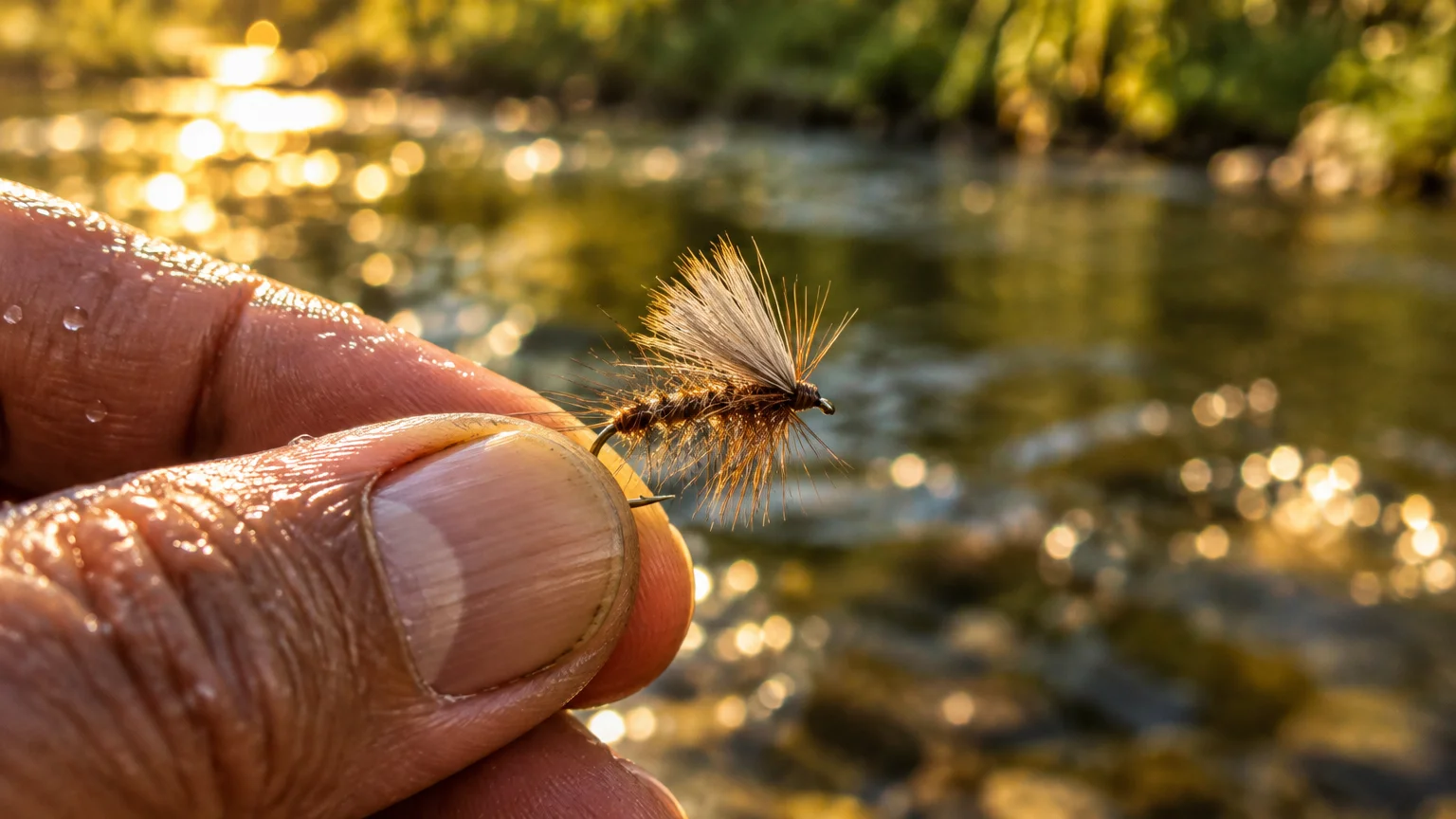
You do not need an entomology degree to match insect hatches across Montana and Colorado waters. Rocky Mountain trout consume three primary insect orders throughout the fishing season.
Midges hatch twelve months a year and provide the majority of tailwater trout nutrition. These minute dipterans cluster in slow eddies and backwaters, where trout sip them near surface seams.
Mayflies hatch steadily from spring through autumn, emerging as Blue-Winged Olives in cool weather and Pale Morning Duns during summer. Their upright wings resemble small sailboats riding down the current.
Caddisflies flutter erratically across surface riffles during warm summer afternoons and evenings. Their tent-shaped wings skitter along the current, provoking aggressive surface strikes from resident trout.
- Parachute Adams (Size 16): A buoyant, high-visibility dry fly mimicking adult mayflies across varied lighting conditions.
- Elk Hair Caddis (Size 14): A buoyant deer-hair dry fly that skates along surface chop without drowning.
- Zebra Midge (Size 18): A simple beadhead fly wrapped with silver wire that imitates diving midge pupae along the riverbed.
- Pheasant Tail Nymph (Size 16): A classic subsurface silhouette that mimics emerging immature mayflies.
- Gold-Ribbed Hare’s Ear (Size 14): A buggy, rough nymph body that imitates general aquatic insect life.
- Beadhead Woolly Bugger (Size 10): A black or olive streamer pattern representing small sculpins, leeches, and baitfish.
Rigging a dry-dropper setup allows you to fish both the water surface and the subsurface column simultaneously. Tie a buoyant Elk Hair Caddis to your primary leader, then attach eighteen inches of 5X tippet to the hook bend supporting a Zebra Midge.
Reading River Currents and Gentle Casting Mechanics
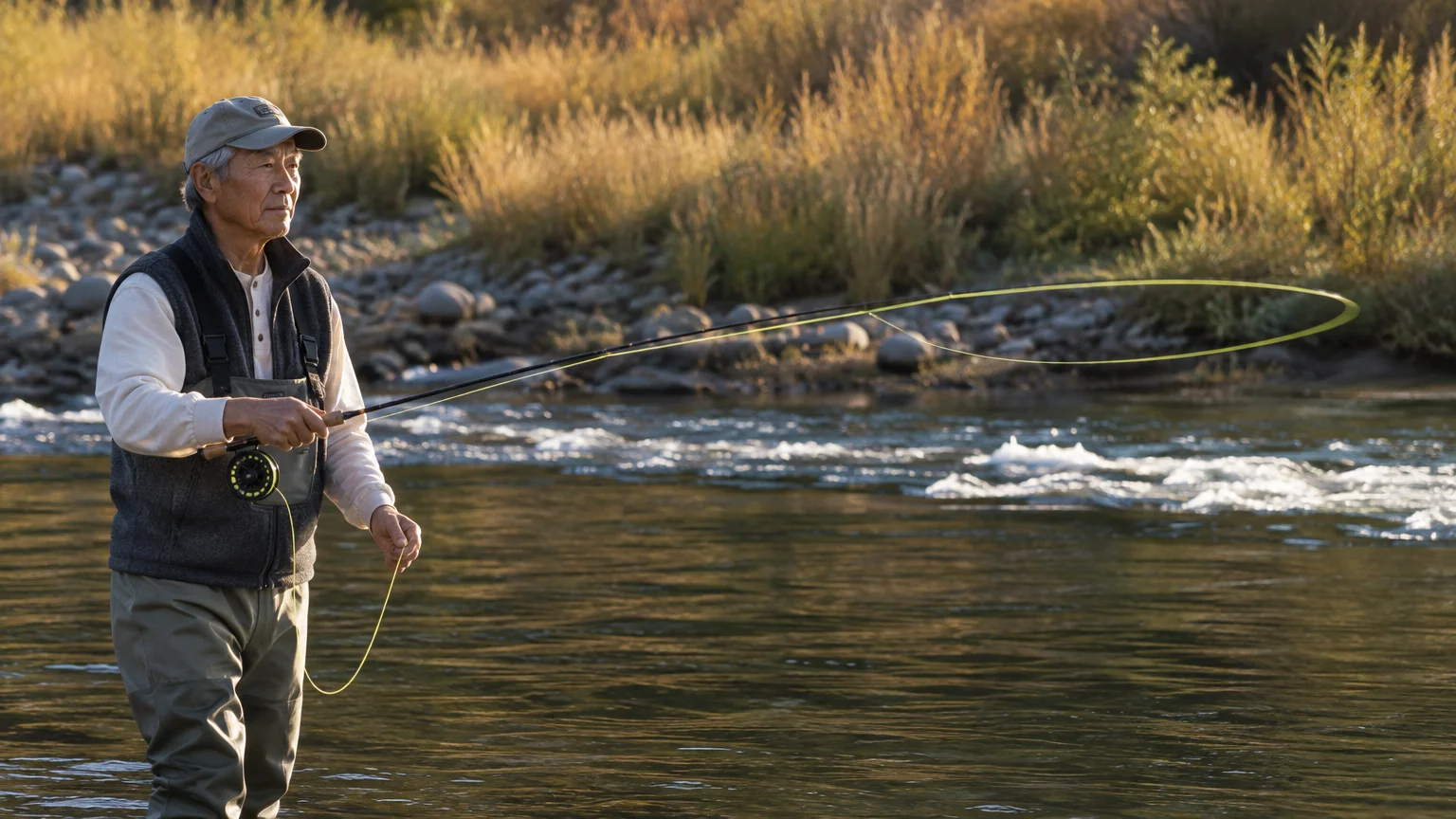
Effective fly casting relies on rhythm and leverage rather than brute muscle power. Pushing your arm hard through the air ruins loops and inflames shoulder tendons.
Position your elbow close to your ribcage to establish a steady mechanical fulcrum. Confine your casting motion between the ten o’clock and two o’clock positions on an imaginary clock face.
Stop the rod tip abruptly at both ends of the stroke to transfer energy cleanly into the fly line. Allow the line to straighten completely behind you before beginning your forward delivery.
Roll casting provides an effortless technique that eliminates the overhead backcast entirely. It protects your shoulder and prevents your hook from snagging trees or willow bushes along the bank.
- Draw the fly line slowly across the river surface toward your body until the rod tip reaches your shoulder.
- Allow a gentle loop of fly line (the “D-loop”) to hang motionless behind the rod blank and slightly downstream.
- Look directly at your target seam along the river current.
- Drive the rod tip forward with a crisp downward chop of your wrist, stopping the tip at eye level.
- Watch the line roll smoothly across the water surface, landing your fly softly without splashing.
Trout hold along current seams where fast water borders slow water. They sit in the slow cushion of water while watching the fast current carry drifting insects directly past their mouths.
Regulations, Licenses, and Senior Recreation Passes
Managing licenses and federal recreation passes properly keeps your retirement trips affordable and fully compliant with state conservation laws. State regulations vary significantly between Colorado, Montana, and Wyoming.
Federal recreation sites offer substantial cost savings for older Americans through dedicated programs. The America the Beautiful Senior Pass costs $20 annually or $80 for a lifetime credential for U.S. citizens age 62 and older.
Information on senior federal recreation benefits can be reviewed directly through Benefits.gov, which details pass qualification rules across public lands. This pass covers entrance fees at national parks, national wildlife refuges, and national forests.
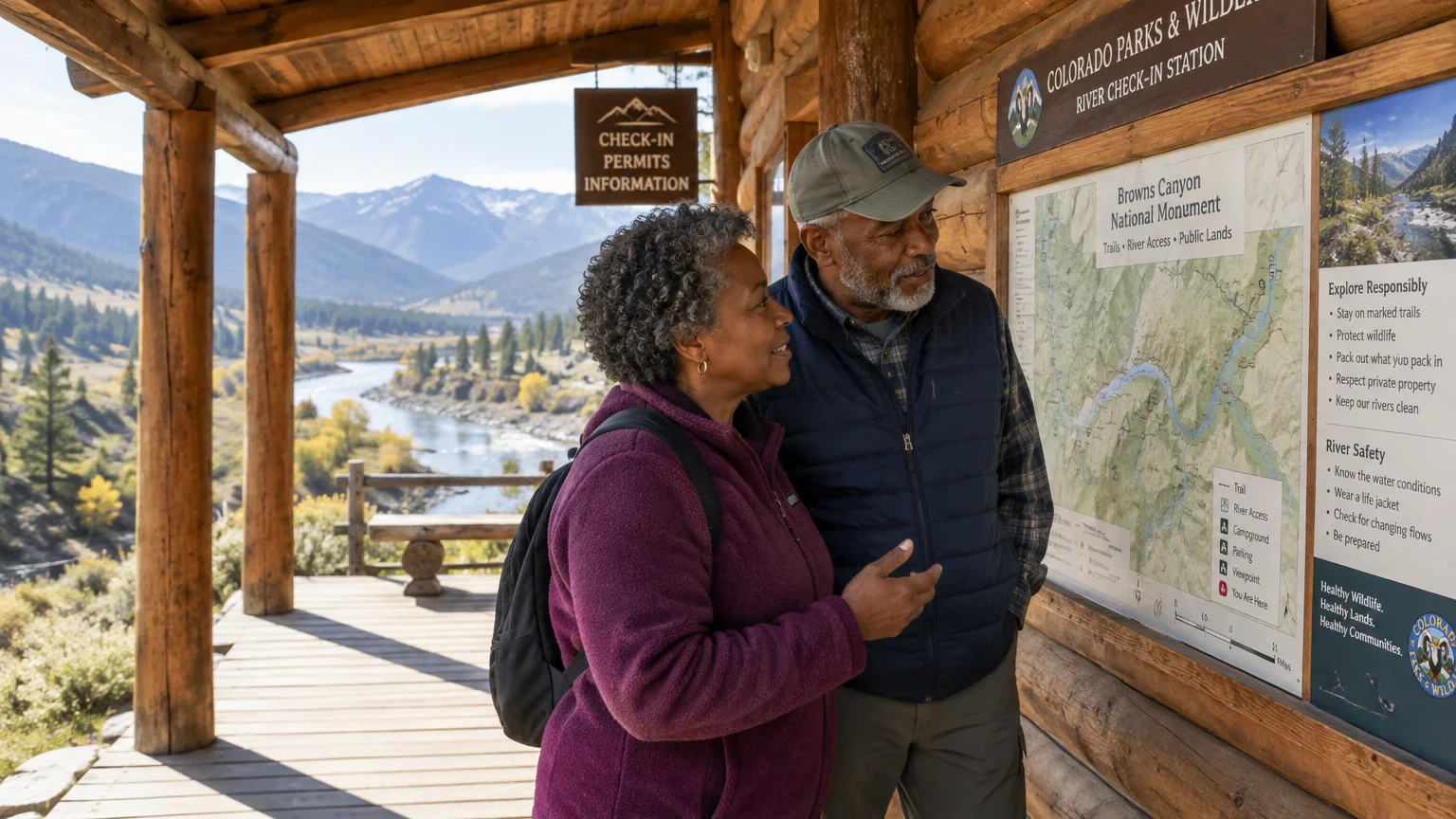
Fishing inside Rocky Mountain National Park requires a valid standard Colorado state fishing license from Colorado Parks and Wildlife (CPW). The park does not charge a separate fishing permit fee, but anglers must use single barbless hooks.
Yellowstone National Park requires its own dedicated fishing permit. State fishing licenses from Montana, Wyoming, or Idaho carry no legal validity inside Yellowstone National Park boundaries.
- Colorado Senior License: Colorado residents age 65 and older pay approximately $13.00 annually plus the state Wildlife Habitat Stamp.
- Montana Senior Package: Montana residents age 62 and older pay $16.50 total for their combined Conservation, AISPP, and fishing license.
- Wyoming Pioneer License: Wyoming provides a free Lifetime Pioneer Fishing License to residents age 65 and older who maintain 30 years of state residency.
- Yellowstone National Park Permits: Anglers age 16 and older pay $40 for a 3-day permit, $55 for a 7-day permit, or $75 for an annual permit via Recreation.gov.
Always crush hook barbs flat using smooth-jawed pliers before stepping into the water. Barbless hooks allow fast fish releases and pull free effortlessly if an errant cast catches your clothing.
Frequently Asked Questions
What fly rod weight is best for beginner fly fishing in the Rocky Mountains?
A 9-foot, 5-weight graphite rod is the premier all-around choice for western mountain trout. It possesses enough backbone to cast into gentle canyon breezes while remaining light enough to eliminate shoulder strain.
Is river wading safe if I have knee replacements or balance limitations?
Yes, provided you choose dam-regulated tailwaters with flat pea-gravel bottoms and avoid swift freestone rivers. Utilizing a height-adjusted folding wading staff and rubber-lug boots with carbide studs provides stable three-point balance.
Do I need a separate park permit to fish inside Rocky Mountain National Park?
No separate national park permit is required inside Rocky Mountain National Park. You only need a standard Colorado state fishing license and an active Colorado Habitat Stamp, following park rules on barbless artificial flies.
When is the best time of year for a senior to begin fly fishing in the Rockies?
July through early October provides the most reliable wading conditions. Mountain snowpack runoff subsides by early July, stabilizing water visibility and lowering heavy spring currents to safe, manageable depths.
Are felt-soled wading boots permitted in Rocky Mountain trout rivers?
While felt is legal in parts of Colorado, it is strictly banned inside Yellowstone National Park and discouraged across Montana. Sticky rubber soles fitted with carbide studs offer safe traction without spreading aquatic invasive parasites.
Disclaimer: This article is for informational purposes only. Benefits, programs, and regulations can change.
We encourage readers to verify current information with official government sources and consult with qualified professionals for personalized advice.