

You can spend 60 sun-filled winter days in Portugal’s southern Algarve region for less than the monthly cost of living back home. Off-season coastal rentals drop prices by up to 70 percent from peak summer rates.
Taking advantage of lower rates in winter is one of the smartest ways to enjoy off-season European travel on a fixed income.
Standard tourist rules allow an independent 90-day European stay without visa paperwork, retainers, or guided tour fees. Booking monthly furnished rentals directly allows a solo 66-year-old retiree to live comfortably along the Atlantic for under $2,550 per month.
This guide explains how to secure off-season housing, manage unheated coastal apartments, use senior transit discounts, and handle healthcare abroad.
In this guide8 sections
- Understanding the 90-Day Schengen Rule Without a Visa
- Best Algarve Towns for Solo Winter Stays
- How to Book Affordable Monthly Apartment Rentals
- Winter Weather and Apartment Heating Realities
- Transportation: Trains, Buses, and Toll Roads
- Healthcare: Medicare Limits and Medical Costs
- A Complete 60-Day Sample Budget: Worked Example
- Frequently Asked Questions

Understanding the 90-Day Schengen Rule Without a Visa
You do not need a residence visa to spend two winter months in Portugal. U.S. citizens can stay in the Schengen Area for up to 90 days within any rolling 180-day window.
Many retirees split their time between multiple warm spots across the border by planning a winter stay in Spain during the same 90-day window.
A 60-day stay leaves a comfortable 30-day buffer on your legal allowance. This margin eliminates the need for Portugal’s D7 passive income visa, FBI background checks, and consulate visits.
Keep your U.S. passport valid for at least three months beyond your scheduled departure date. Border officials strictly enforce this expiration buffer upon European arrival.
European border authorities are implementing the digital Entry/Exit System (EES). This biometric system records your entry and exit digitally, replacing traditional ink passport stamps.
The European Travel Information and Authorisation System (ETIAS) launches in late 2026. This pre-travel registration will cost €20, remain valid for three years, and be free for travelers aged 70 and older.
Several Algarve municipalities charge a municipal tourist tax (*Taxa Municipal Turística*). Between November and February, towns like Faro, Portimão, and Tavira charge €1.00 per night per adult.
This tax is capped at seven consecutive nights per municipality. You will pay a maximum of €7.00 per person for your entire two-month stay in a single rental.

Best Algarve Towns for Solo Winter Stays
Choosing the right coastal base determines your daily comfort as a solo traveler. Some resort towns shut down completely in November, while working Portuguese communities remain lively all year.
If you are venturing out on your own for the first time, exploring solo female travel groups for retirees can provide helpful safety tips and community support.
You want a town with open grocery stores, flat walking paths, an active train station, and an accessible health clinic. The table below compares three prime winter hubs based on these key attributes.
| Town | Walkability & Transit Access | Average Monthly T1 Rent (Nov–Feb) | Nearest Private Hospital |
|---|---|---|---|
| Lagos | High; flat marina and old town, western terminus for regional train line. | €1,100 – €1,450 | Hospital Particular do Algarve (Alvor, 20 min drive) |
| Portimão | Moderate; hilly riverside, excellent municipal bus network and rail depot. | €950 – €1,250 | Hospital Particular do Algarve (Portimão central branch) |
| Tavira | High; flat terrain along the Gilão River, centrally located train stop. | €1,000 – €1,300 | Hospital Particular do Algarve (Gambelas/Faro, 30 min drive) |
Lagos offers an ideal mix of historic charm, safe residential streets, and an established English-speaking expat community. You can walk from the town center to several ocean beaches within twenty minutes.
Portimão functions as a major working city rather than a tourist enclave. Its year-round amenities provide access to large shopping centers, fresh fish markets, and lower rental prices.
Tavira sits in the eastern Algarve and delivers an authentic Portuguese atmosphere. Its flat streets suit retirees who want to avoid steep hills while remaining close to coastal nature reserves.
Look for these features when selecting a rental location in any Algarve town:
- Proximity to a major supermarket like Pingo Doce, Continente, or Intermarché within an 800-meter walk.
- Level walking access to the municipal produce market for fresh fish, fruit, and vegetables.
- A maximum 15-minute walk to the local train station or regional bus depot.
- Streets with active residential lighting and open neighborhood cafés during evening hours.
How to Book Affordable Monthly Apartment Rentals
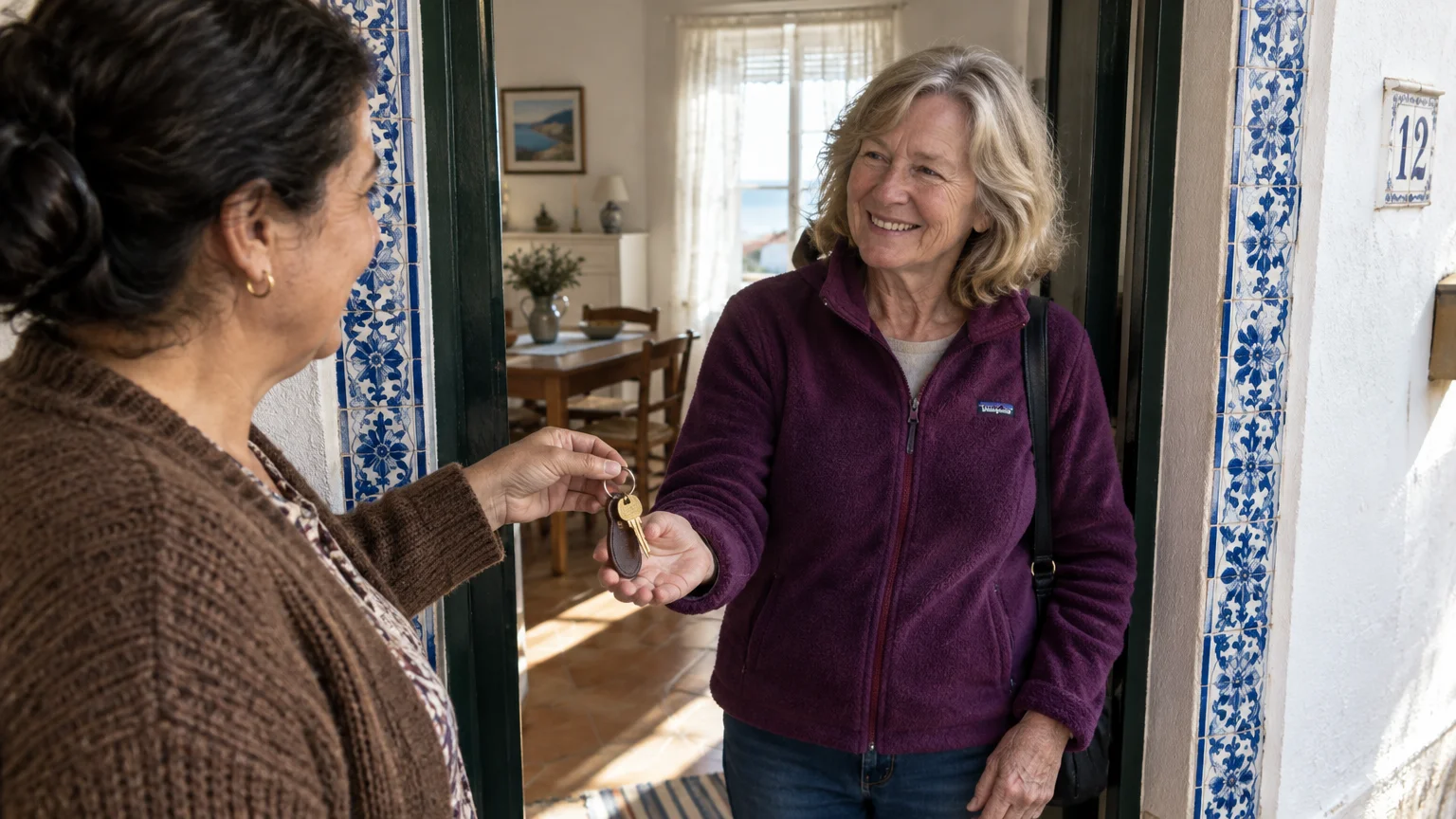
Standard nightly hotel rates will ruin a two-month travel budget. Instead, search for off-season monthly lets (*arrendamento de inverno*) that cater to winter travelers.
Those looking to cut lodging expenses even further might also consider home exchange vacations in retirement as a creative alternative to monthly rentals.
Platforms like Airbnb and VRBO automatically apply substantial discounts for stays of 28 nights or longer. Portuguese property owners frequently discount off-season rates by 30 to 50 percent to prevent winter vacancies.
A furnished one-bedroom apartment with a full kitchen is designated locally as a “T1.” Expect to pay between €1,000 and €1,500 per month for a quality T1 during the winter.
You can also contact licensed local property management agencies in Lagos, Tavira, or Portimão directly. Inquiring about winter rentals avoids third-party platform service fees.
Always clarify energy costs before signing an agreement or paying a deposit. Inquire about these details before confirming any multi-week rental:
- Confirm whether electricity, water, and high-speed Wi-Fi are included in the quoted monthly price.
- Ask if the owner imposes a monthly utility cap, such as €100, billing any excess usage separately.
- Verify the exact heating equipment installed, confirming whether the unit uses electric space heaters or a heat pump.
- Request an interior video showing natural sunlight exposure, which helps keep apartments warm during winter days.
Winter Weather and Apartment Heating Realities
The Algarve boasts over 300 days of sunshine each year. Winter months typically deliver five to six hours of bright daily sunshine, offering relief from harsh North American freezes.
Navigating utility quirks and indoor drafts is also a key factor when renting a villa in Tuscany for two months or in other Mediterranean regions during winter.
Expect average daytime highs between 61°F and 64°F (16°C to 18°C) from December through February. Nighttime temperatures drop to between 46°F and 50°F (8°C to 10°C), with only five to seven rainy days per month.
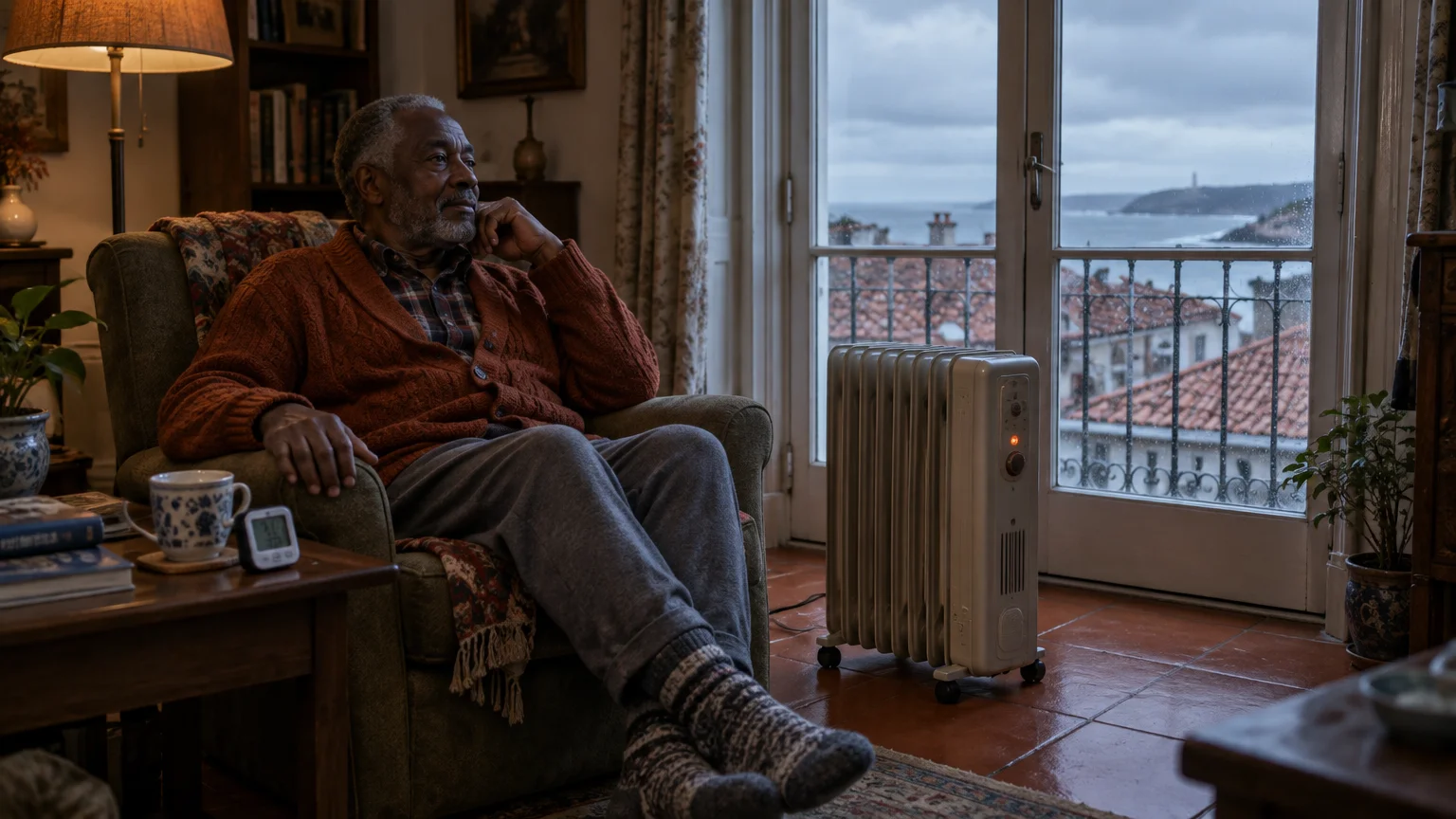
Outdoor winter weather is pleasant, but indoor conditions can feel unexpectedly chilly. Portuguese coastal homes are built with thick masonry to deflect summer heat, and they often lack wall insulation.
Central heating with water radiators is rare in holiday apartments. Many rental units rely solely on portable heaters or wall-mounted mini-split air conditioners that double as heat pumps.
Portugal maintains some of the highest residential electricity rates in the European Union. Running inefficient space heaters all day can add €150 to €250 to your monthly utility tab.
Pack warm indoor clothing alongside your light daytime layers. Prepare for cooler indoor evenings with these practical essentials:
- A pair of thick wool slippers or fleece-lined house shoes to insulate your feet from cold ceramic tile floors.
- Two sets of thermal base layers or heavy fleece loungewear for relaxing indoors after dark.
- A compact hot water bottle to pre-warm your bed before sleeping.
- A request for an oil-filled radiator (*aquecedor a óleo*), which distributes gentle heat more efficiently than open fan heaters.

Transportation: Trains, Buses, and Toll Roads
You do not need to rent an expensive car for a two-month stay. The regional rail line, known as the *Linha do Algarve*, links coastal towns from Lagos in the west to the Spanish border.
Preparing for these transit and everyday living expenses is much easier when you know how to build a retirement travel sinking fund well before departure.
Portugal’s national rail operator, Comboios de Portugal (CP), offers a 50 percent fare reduction for passengers aged 65 and older. This senior discount applies to regional and intercity tickets across the country.
Present your original U.S. passport at any staffed train station counter to receive your discounted ticket. A one-way ticket from Lagos to Faro costs less than €4.50 with this discount.
The regional bus service, Vamus Algarve, connects inland villages and coastal communities that sit beyond the train tracks. Clean, modern buses accept contactless bank cards and inexpensive reloadable passes.
You can follow these steps to use the public transit network efficiently:
- Download the official CP app to your smartphone to track live rail departures and platform updates.
- Show your passport at the ticket window and ask for a senior fare (*bilhete com desconto de terceira idade*).
- Purchase a rechargeable Vamus transit card at local bus terminals to save money on regional bus routes.
- Use ride-hailing services like Uber or Bolt for late-night transit or carrying heavy bags from the supermarket.
If you choose to rent a car, you can drive legally with a valid U.S. state driver’s license for up to 185 days. Portugal does not require an International Driving Permit for short tourist stays.
The Algarve’s primary highway, the A22 (*Via do Infante*), uses automated electronic toll gantries without cash booths. Always ensure your rental car includes a registered *Via Verde* transponder to pay tolls automatically and avoid fines.

Healthcare: Medicare Limits and Medical Costs
Healthcare planning is critical for an extended stay abroad. Standard U.S. Medicare does not cover medical treatment outside the United States.
Review the official Medicare coverage rules to understand these foreign travel exclusions. You will be responsible for all medical bills abroad unless you arrange proper supplement riders or private travel health insurance.
Purchase a comprehensive 60-day travel health insurance policy before leaving the United States. Ensure the plan includes emergency medical evacuation and direct payment guarantees for hospital stays.
Portugal features an exceptional network of private medical centers alongside its public health service. The Hospital Particular do Algarve (HPA) operates modern hospitals and outpatient clinics across the region, featuring fluent English-speaking doctors.
Out-of-pocket costs at private clinics remain modest compared to American medical bills. A standard consultation with a general practitioner typically costs between €50 and €90 without insurance.
Follow these medical preparation steps before your departure:
- Ask your primary doctor for a full 90-day supply of your maintenance medications.
- Carry all prescription drugs in their original pharmacy containers inside your carry-on luggage.
- Obtain a physician letter listing your chronic conditions, allergies, and the generic chemical names of your drugs.
- Save local emergency numbers: dial 112 for Portuguese emergency services, identical to 911 in the United States.

A Complete 60-Day Sample Budget: Worked Example
Independent slow travel keeps costs low by spreading transport expenses over a longer period. Shopping at local markets and cooking at home cuts typical vacation expenses significantly.
Here is an itemized budget for a solo 66-year-old retiree staying 60 days in a Lagos apartment. This example assumes an exchange rate of $1.08 per €1.00.
Housing forms your largest expense. A furnished one-bedroom apartment near the Lagos marina costs €1,100 per month, totaling €2,200 ($2,376) for the 60-day stay.
Electricity during cooler winter months averages €125 per month, totaling €250 ($270). The municipal tourist tax adds €7 ($7.56), capped after the first week.
Buying groceries at Pingo Doce and municipal markets costs roughly €85 weekly, totaling €680 ($734.40). Enjoying a weekday *prato do dia* lunch out for €11 twice a week adds €176 ($190.08).
Train and bus travel using senior discounts runs roughly €45 per month, totaling €90 ($97.20). A 60-day travel medical insurance policy costs approximately $175.
A round-trip off-season flight from the U.S. East Coast to Lisbon runs about $820. An overseas mobile phone eSIM providing 15 GB of data costs roughly $35.
The total cost for this two-month stay comes to $4,705.24, or roughly $2,352.62 per month. This total covers all lodging, food, transit, medical insurance, and flights.
Review AARP retirement travel planning resources for practical strategies on pacing your itinerary and keeping trip costs manageable. Careful pacing helps you live comfortably while protecting your savings.
Your Social Security payments will continue uninterrupted while traveling. The Social Security Administration international direct deposit system transfers your monthly benefits directly into your U.S. bank account.
Consult Consumer Financial Protection Bureau guidance on credit fees to protect your money overseas. Using a credit card with zero foreign transaction fees saves you roughly 3 percent on every international purchase.
Frequently Asked Questions
Do I need a visa to stay 60 days in Portugal?
No, U.S. citizens do not need a visa for stays up to 90 days. You enter under standard Schengen tourist rules, provided your passport remains valid for at least three months beyond your stay.
Is English widely spoken in the Algarve during winter?
Yes, English is spoken across the Algarve in medical facilities, supermarkets, pharmacies, and train stations. Many resident expatriates live in the area year-round, making daily errands manageable for English speakers.
Can I get my regular U.S. prescriptions filled in Portugal?
Portuguese pharmacies cannot directly honor U.S. paper prescriptions. You must bring an adequate 90-day medication supply from home, or visit a local private doctor to convert your prescription into an authorized Portuguese format.
Do I need to rent a car for a two-month stay?
No, a rental car is unnecessary if you base yourself in walkable towns like Lagos, Portimão, or Tavira. The regional train line, local buses, and affordable ride-hailing services handle standard daily transit easily.
How do I manage my Social Security payments while overseas?
Your Social Security benefits continue to deposit directly into your American bank account without interruption. Notify your bank of your travel dates and use local ATMs to withdraw cash with a debit card that waives international ATM fees.
Disclaimer: This article is for informational purposes only. Benefits, programs, and regulations can change.
We encourage readers to verify current information with official government sources and consult with qualified professionals for personalized advice.



3 Comments