

You can spend an entire month in the Colorado Rockies without paying thousands of dollars in commercial lodging or platform booking fees. Traditional vacation rentals add cleaning surcharges, occupancy taxes, and service fees that quickly drain a fixed retirement budget.
Home exchange networks let you trade residential space with another homeowner, effectively dropping your lodging expenses to zero. Rather than coordinating simultaneous trips, you can bank guest points by hosting visitors while you visit relatives out of state.
This guide breaks down how suburban homeowners can turn empty dates into flexible travel credits and bypass rental overhead entirely.
In this guide8 sections
- The Economics of Swapping Homes in Retirement
- How GuestPoint Mechanics Work for Non-Simultaneous Stays
- Leveraging Empty Mid-Week Dates While Visiting Family
- Comparing the Major Home Exchange Networks
- A Worked Example: Cary, North Carolina to Silverthorne, Colorado
- Insurance, Taxes, and Legal Protections
- Step-by-Step Preparation for Your First Exchange
- Frequently Asked Questions

The Economics of Swapping Homes in Retirement
Lodging accounts for the largest share of discretionary spending during extended travel. Data from the U.S. Bureau of Labor Statistics Consumer Expenditure Surveys shows lodging consumes 25% to 35% of overall vacation budgets for older adults.
For retirees who do not wish to open their primary home to guests, exploring how to house-sit for free lodging offers another reliable way to eliminate nightly accommodation costs.
Commercial booking channels inflate those costs further. Platforms like Airbnb and Vrbo assess guest service fees ranging from 14% to 16%, plus local lodging taxes and mandatory cleaning surcharges.
A retiree living on Social Security and investment drawdowns faces steep trade-offs when paying commercial rates for multi-week getaways. Research from AARP reveals that managing recurring travel expenses helps older Americans take longer trips without depleting retirement balances.
Home exchange eliminates the nightly room rate entirely. You substitute hospitality for currency, exchanging the asset you already own for an equivalent property in your destination.
- Eliminates platform booking surcharges that add hundreds of dollars per week
- Bypasses state and county occupancy taxes averaging 10% to 15%
- Removes inflated professional turnover fees by relying on mutual guest cleanliness
- Provides a fully equipped kitchen to cut restaurant dining expenses by half
- Includes free residential laundry, avoiding laundromat trips or hotel valet costs
By removing lodging overhead, you convert a standard vacation allowance into weeks of local exploration. Your monthly living expenses away from home match what you spend while staying in your primary residence.

How GuestPoint Mechanics Work for Non-Simultaneous Stays
Traditional house swapping required an exact calendar match between two homeowners. If you lived in North Carolina and wanted to visit Colorado, you had to find a Colorado homeowner who wanted to visit your exact town at the exact same time.
While larger footprints generate more guest points, retirees weighing whether downsizing your home makes broader financial sense should evaluate overall carrying costs first.
Pairing swap points with a dedicated retirement travel sinking fund ensures you have dedicated cash reserves ready for transit and leisure.
Modern platforms solve this bottleneck through non-simultaneous credit systems, most notably HomeExchange GuestPoints. A point-based currency decouples your departure date from your partner’s arrival date.
When you host an approved network member in your home, you earn a set allocation of points per night. You can immediately redeem those accumulated points for a stay at an unrelated home anywhere in the world.
Platforms calculate your home’s nightly point valuation based on specific objective attributes. You cannot arbitrarily inflate your rate, which keeps the network economy stable and fair.
- Number of bedrooms and dedicated sleeping surfaces
- Total bathrooms and plumbing capacity
- Neighborhood location and proximity to public transit or regional attractions
- Key amenities, including air conditioning, private patios, fenced yards, and high-speed internet
- Overall living square footage and private parking availability
If your suburban home earns 135 points per night, a five-night host stay generates 675 points. You can spend those 675 points on a five-night stay in a destination valued at the same rate, or spread them across a cheaper property.
Points do not expire as long as your platform membership remains active. This system gives retirees the freedom to host during local peak seasons and spend credits months later.
Leveraging Empty Mid-Week Dates While Visiting Family
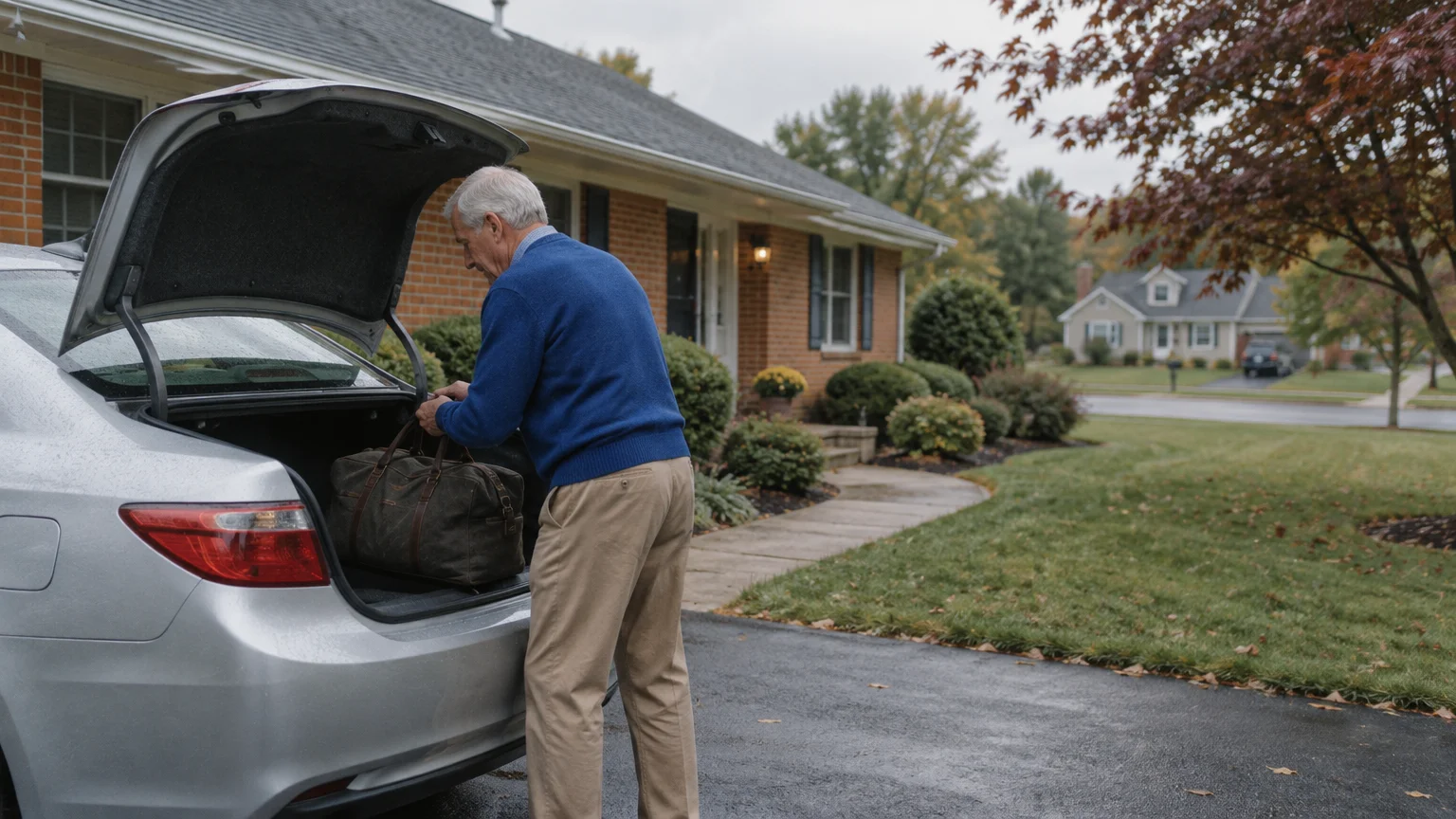
Retirees enjoy schedule flexibility that working homeowners lack. You can leave home on a Tuesday morning and return on a Friday afternoon without requesting vacation leave or rushing through weekend highway traffic.
Before welcoming visiting guests while you are away, setting up dependable home security measures gives you peace of mind throughout the exchange.
Suburban retirees frequently travel short distances to visit adult children and grandchildren. If your home in central North Carolina sits vacant while you spend three days in Charlotte or Wilmington, that empty house represents unused credit.
You can open your primary residence on an exchange platform specifically for mid-week windows. Traveling retirees, remote workers, and visiting family members of your neighbors constantly search for quiet suburban accommodations during standard business days.
- List Tuesday through Friday availability whenever you plan regional family visits
- Target visiting medical professionals or university lecturers needing quiet accommodation
- Host grandparents visiting nearby relatives who lack sufficient guest room space
- Block weekends for your own local activities while keeping mid-week days open for point accumulation
- Coordinate with your adult children so you can confirm swap inquiries within 24 hours
Hosting just two mid-week visits per month generates substantial point reserves over a season. You convert an empty house into future travel currency while spending time with relatives nearby.
Because you return home between visits, you inspect and reset your house personally. You avoid paying professional housekeepers while keeping your home clean for the next exchange.

Comparing the Major Home Exchange Networks
Different platforms cater to distinct traveler priorities, property tiers, and swapping methods. Selecting the right platform depends on whether you prefer pure reciprocal trades, point flexibility, or luxury properties.
For retirees who prefer maritime journeys over home stays, booking repositioning cruise deals serves as another highly discounted travel strategy.
These platforms also unlock extended international getaways, such as spending a month in Spain during the mild winter months.
Membership models typically charge an annual subscription that grants unlimited exchanges without nightly lodging fees. Some specialized networks also assess per-booking administrative fees.
| Platform | Annual Fee | Swap Mechanism | Damage Guarantee Included | Best Use Case |
|---|---|---|---|---|
| HomeExchange | $220 USD | Points and Reciprocal | Up to $1,000,000 | Suburban homes and flexible dates |
| HomeLink | $125 USD | Pure Reciprocal | Basic host mediation | Traditional simultaneous trades |
| People Like Us | $115 USD | Reciprocal and Community | Member deposit system | Long-term stays and community focus |
| ThirdHome | $295 USD | Club Keys plus booking fees | $5,000,000 structural guarantee | Retirees with high-value second homes |
HomeExchange provides the largest global inventory with more than 200,000 active members. Its proprietary GuestPoint system suits suburban homeowners who need flexibility outside strict simultaneous swaps.
HomeLink represents the oldest continuous swap network in the world, operating since 1953. It attracts experienced retirees who prefer traditional one-to-one swaps and direct communication with exchange partners.
People Like Us charges approximately $115 per year and emphasizes personal hospitality. Its member base frequently arranges extended exchanges lasting two to three months.
ThirdHome restricts membership to high-value properties, typically requiring a minimum valuation of $500,000. It assesses mandatory booking fees ranging from $495 to $1,995 per week, making it less practical for budget-focused retirees.

A Worked Example: Cary, North Carolina to Silverthorne, Colorado
Consider a practical scenario involving a retired homeowner in Cary, North Carolina. The homeowner owns a three-bedroom, two-bathroom single-story ranch home near the Research Triangle.
Staying near mountainous outdoor hubs also complements visiting national parks on a tight budget by keeping major regional attractions within day-trip distance.
Applying similar flexible date strategies across the Atlantic makes off-season European travel exceptionally affordable for retirees on fixed pensions.
The goal involves spending 30 nights in Silverthorne, Colorado during September to view fall foliage and hike mountain trails. A comparable two-bedroom condominium in Summit County, Colorado carries substantial commercial rates during this transition season.
The commercial rental pricing structure reveals where rental platform fees accumulate over a month-long reservation.
- Base lodging rate: 30 nights at $185 per night equals $5,550
- Mandatory cleaning and turnover fee: $320
- Platform guest service surcharge (14.2%): $788
- Colorado state and local lodging taxes (11.75%): $652
- Total commercial rental expenditure: $7,310
Now examine the home exchange alternative using HomeExchange GuestPoints. The Cary homeowner registers on the platform for an annual fee of $220 and lists their property at an assessed rate of 135 points per night.
The Silverthorne condominium lists at 130 points per night. Securing the 30-night Colorado stay requires 3,900 points.
The Cary homeowner banks the required points throughout spring and summer by scheduling visits around family commitments.
- Profile verification and initial listing completion bonus: 750 points
- Stay 1: Four mid-week nights hosted while visiting grandchildren in Charlotte (4 x 135 = 540 points)
- Stay 2: Five nights hosted during a regional golf tournament (5 x 135 = 675 points)
- Stay 3: Seven nights hosted while vacationing at the North Carolina coast (7 x 135 = 945 points)
- Stay 4: Eight mid-week nights hosted across two short family visits (8 x 135 = 1,080 points)
- Total accumulated travel credits: 3,990 points
The Cary homeowner redeems 3,900 points to book the Silverthorne condominium for September. The entire month of Rocky Mountain lodging costs only the $220 annual platform membership fee.
The homeowner saves $7,090 in out-of-pocket lodging expenses. That capital remains in retirement savings accounts earning interest instead of flowing to rental management corporations.

Insurance, Taxes, and Legal Protections
Financial clarity requires understanding how the IRS and standard insurance carriers treat home exchanges. Because money does not change hands during pure reciprocal swaps, the legal and tax framework differs fundamentally from commercial short-term rentals.
Under federal tax guidelines detailed by the IRS, pure home exchanges involving primary residences do not generate taxable imputed rental income. You are not running a commercial hospitality business or collecting cash rent.
Special rules apply if you swap a secondary residence or investment vacation home. Under Internal Revenue Code Section 280A, every day another individual occupies your second home under a swap arrangement counts as a personal-use day for you.
This personal-use classification limits rental expense deductions if your personal use exceeds 14 days or 10% of total fair-market rental days. Retirees using a second home for exchanges must track occupancy days carefully.
Property insurance requires equal diligence. Standard homeowner insurance policies (HO-3 contracts) typically treat exchange partners as invited house guests rather than commercial tenants.
- Contact your homeowner insurance carrier to verify coverage parameters for guests staying longer than 30 consecutive days
- Rely on platform guarantees, such as HomeExchange’s $1,000,000 structural and property damage coverage
- Check vehicle insurance policies for permissive use clauses before agreeing to swap automobiles
- Verify foreign driver license rules with your auto carrier if hosting international guests
- Document property conditions with date-stamped video walkthroughs before departure
Permissive use clauses generally allow occasional drivers to operate your insured vehicle with your explicit consent. However, you should secure written confirmation from your auto carrier before including vehicles in your swap agreement.
For contracts and consumer protections, guidance from the Consumer Financial Protection Bureau encourages keeping written records of all terms, dates, and platform agreements to avoid misunderstandings.

Step-by-Step Preparation for Your First Exchange
Preparing your suburban residence for an exchange partner requires clear organization rather than expensive renovations. Exchange partners look for clean, functional homes with transparent operating instructions.
A systematic setup routine protects your private property and provides your guests with an easy stay. Complete these tasks before activating your listing for visitor requests.
- Designate one closet or storage room as a private owner zone and install a simple keyed or combination lock.
- Place tax files, personal financial records, medical documents, and sentimental heirlooms inside the locked storage area.
- Empty two clothing drawers in each bedroom and clear half the master closet hanging space for guest use.
- Install a programmable electronic deadbolt so guests can enter using a dedicated four-digit PIN code.
- Write a comprehensive three-page home manual explaining HVAC settings, trash collection days, and internet passwords.
- Leave clear written operating instructions for complex appliances, including smart televisions and irrigation systems.
- Provide clean mattress protectors, two sets of fresh bed linens per room, and matching bath towels.
- Stock basic pantry staples, including olive oil, salt, pepper, coffee filters, and cleaning supplies.
- Conduct a short video introduction with confirmed exchange partners to establish expectations and build mutual rapport.
A detailed home manual reduces incoming text messages and phone calls during your trip. When guests understand your home’s mechanical systems, they operate them safely without disruption.
Frequently Asked Questions
Is home exchange safe for older adults living alone?
Home exchange platforms verify member identities through passport validation, utility bill checks, and mutual community reviews. Because both parties open their private homes to one another, mutual respect and property accountability remain exceptionally high across networks.
What happens if an exchange guest damages something in my home?
Established platforms provide built-in host protection plans that cover accidental property damage up to specified limits, often $1,000,000. Minor mishaps are usually settled directly between exchange partners or covered through the platform’s refundable security deposit system.
Can I swap cars with my exchange partner to avoid rental car fees?
Many exchange partners include vehicle swaps in their arrangements to eliminate car rental costs. Standard U.S. auto insurance policies typically cover permissive use by guest drivers, but you must confirm international license rules with your insurer before agreeing.
Do I have to clean my house myself between guest stays?
Most home exchangers agree to leave properties in the exact clean condition in which they found them. However, you can choose to hire a local independent cleaner between non-simultaneous stays using the savings generated from your eliminated lodging bills.
What if my exchange host cancels my reservation at the last minute?
Major platforms maintain emergency host replacement guarantees that help find alternative local accommodations. Networks like HomeExchange provide emergency backup coverage of up to $500 per night if a host cancels without reasonable cause shortly before arrival.
Disclaimer: This article is for informational purposes only. Benefits, programs, and regulations can change.
We encourage readers to verify current information with official government sources and consult with qualified professionals for personalized advice.


