

Flexible retirement schedules let you turn seasonal ship movements into the most affordable long-term ocean voyages available. October transatlantic crossings routinely deliver private staterooms and full daily meals for under $60 per person per day.
Learning how to manage budgeting for travel in retirement lets you take bucket-list journeys without draining your nest egg.
While traditional Caribbean sailings charge peak holiday rates, repositioning voyages leverage empty corridors between continents. This operational quirk cuts your daily lodging and dining expenses below average domestic living costs.
This guide explains the per-diem math, booking tactics, and legal rules your household needs to secure budget one way cruises without sacrificing comfort.
In this guide8 sections
- Why Ships Reposition and How Seniors Save
- The October Eastbound Math: Under $60 Per Day
- Comparing Transatlantic Itineraries and Cabin Economics
- Navigating Cabotage Rules and the PVSA Penalty
- Managing Healthcare and Medicare Gaps at Sea
- Budgeting Real Hidden Costs: Gratuities, Return Flights, and Visas
- Step-by-Step Booking Strategy for Flexible Retirees
- Frequently Asked Questions

Why Ships Reposition and How Seniors Save
Commercial cruise lines move their fleets twice every calendar year to follow passenger demand and seasonal weather. Vessels sail north toward Alaska and Europe during spring, then return toward Florida, the Gulf Coast, and the Caribbean each autumn.
While ocean crossings cater to large vessels, travelers seeking intimate inland waterways can also look into small-ship river cruises for solo seniors.
Because operators want to offset marine fuel expenses rather than sail empty staterooms, they discount these transit tickets heavily. Working professionals cannot spare two weeks for a slow crossing, which leaves empty inventory for flexible retirees.
You can capture these repositioning cruise discounts simply because your schedule is completely open. You trade frantic multi-port itineraries for rest, open ocean views, and remarkably low nightly rates.
“Beware of little expenses; a small leak will sink a great ship.” — Benjamin Franklin
These long passages offer specific operational advantages that lower the net bill for budget-conscious seniors:
- Lower aggregate passenger port charges, since the ship docks at fewer foreign harbors during ocean transits.
- Uncrowded onboard amenities and lecture schedules designed for older, experienced travelers rather than summer family crowds.
- Consistent nightly entertainment and three meals daily included in a single fixed base price.
- Gradual time-zone adjustments across the ocean, which softens the physical impact of international jet lag.
The October Eastbound Math: Under $60 Per Day
Evaluating an ocean voyage requires calculating the true per-diem expense rather than looking only at headline stickers. October crossings from the East Coast to Mediterranean ports show how low these daily numbers can drop.
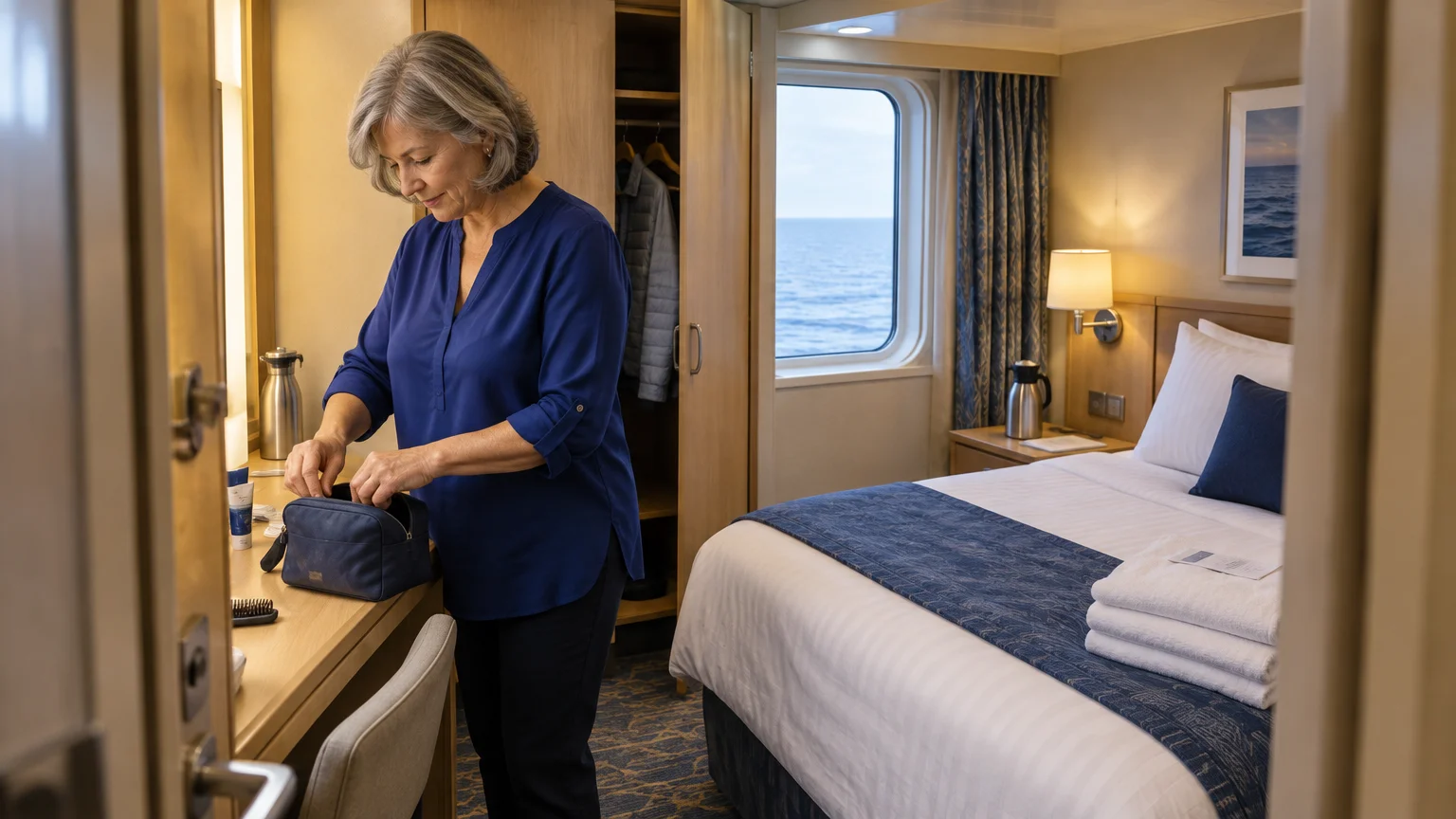
Consider a 15-night crossing from Port Everglades in Fort Lauderdale to Barcelona on a major carrier like Royal Caribbean or Norwegian. A standard interior stateroom for two passengers often lists at an entry base rate of $825 per traveler.
That base ticket works out to exactly $55 per person per day. That daily sum covers your private cabin, housekeeping, fitness access, and all daily meals in main dining rooms.
To understand the total out-of-pocket investment, examine the complete ledger for this worked scenario:
- Base cruise fare: $1,650 for two passengers ($825 per person, or $55.00 per day).
- Mandatory port expenses and taxes: $330 combined ($165 per person, or $11.00 per day).
- Onboard service gratuities: $540 combined ($18.00 per person per day across 15 nights).
- Total core voyage cost: $2,520 for both travelers combined.
Dividing that $2,520 grand total across two passengers yields $1,260 per person for more than two weeks at sea. The all-inclusive daily rate equals $84 per passenger per day, including all tips and government port levies.
When you isolate the stateroom and dining expense from unavoidable taxes, the living cost remains strictly under $60 per night. Many American households spend far more on residential utility bills, groceries, and local entertainment during an identical two-week window.

Comparing Transatlantic Itineraries and Cabin Economics
Not every repositioning route delivers the same financial yield or daily pace. The table below outlines major seasonal corridors to help you match crossing routes with your personal budget targets.
Arriving in ports like Barcelona also offers a cost-effective gateway for planning a 30-day winter stay in Spain once you disembark.
| Itinerary Route | Typical Duration | Base Rate Per Person / Night | Port Taxes Range | Key Regulatory Note |
|---|---|---|---|---|
| Miami to Barcelona (Fall Eastbound) | 14 Nights | $45 – $65 | $140 – $180 | Direct foreign transit; PVSA rules do not restrict passenger disembarkation. |
| Rome to Tampa (Fall Westbound) | 16 Nights | $50 – $75 | $160 – $210 | Westbound crossings add one hour of sleep on several nights as clocks roll back. |
| Galveston to Southampton (Spring Eastbound) | 15 Nights | $55 – $80 | $150 – $190 | Crosses the North Atlantic; requires preparation for cooler open-water temperatures. |
| Fort Lauderdale to Seattle (Spring Northbound) | 21 Nights | $85 – $130 | $380 – $490 | Must visit a distant foreign port to satisfy federal cabotage requirements. |
Finding a cheap transatlantic cruise seniors can enjoy comfortably depends heavily on cabin category selection. Interior staterooms offer the lowest per-diem rates and provide complete darkness, which many retirees find ideal for restful sleeping.
Oceanview cabins add natural daylight through a porthole or picture window for roughly $15 to $25 more per day. Balcony staterooms command a larger markup, often pushing the per-diem fare past $110 per day on long open-water runs.
Because repositioning routes involve extended sea days, public areas like ship libraries and observation lounges become your living room. Choosing an interior cabin preserves your cash reserve for shore excursions once you reach Europe.
Navigating Cabotage Rules and the PVSA Penalty
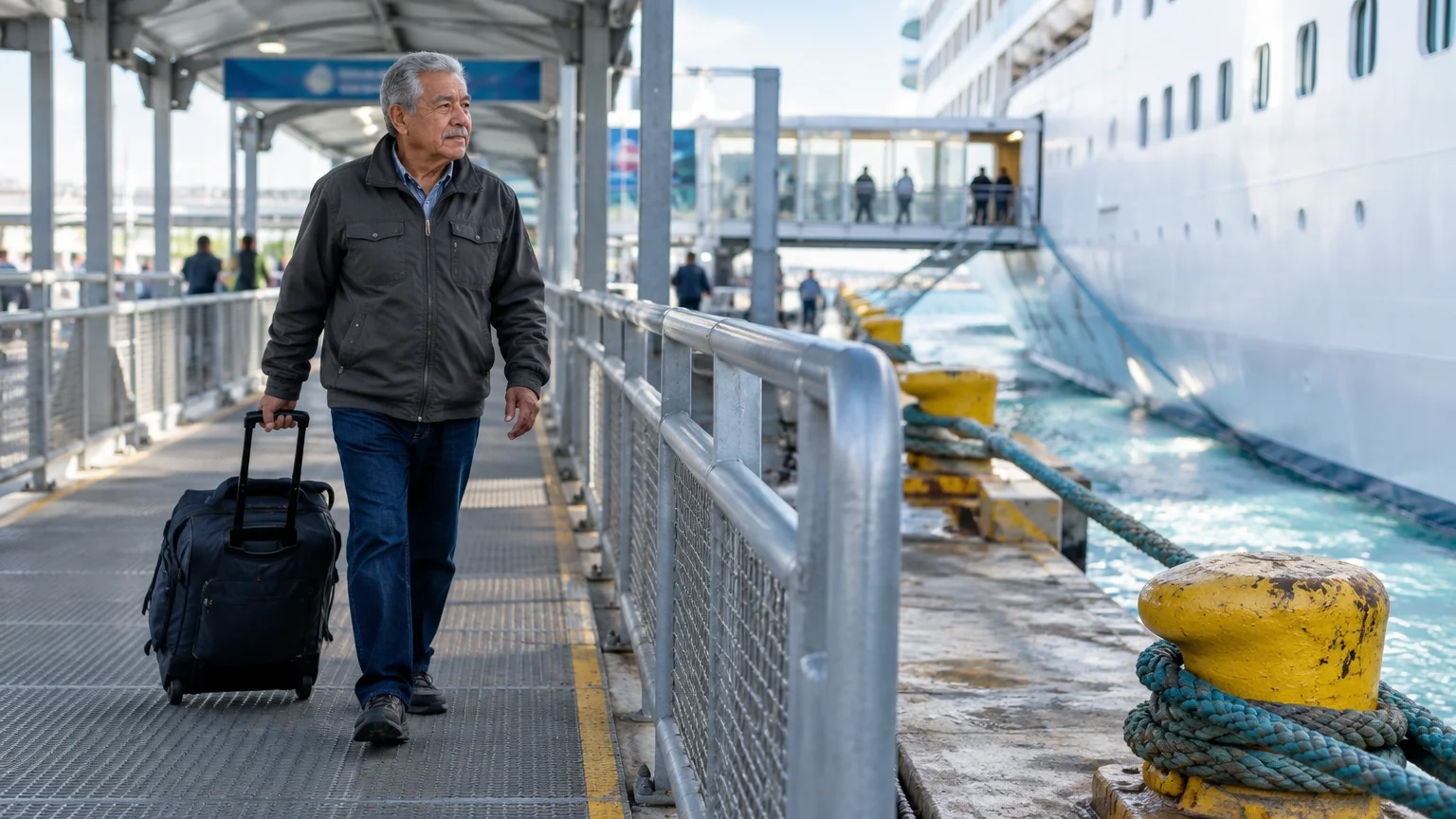
American travelers booking domestic one-way passages must understand federal cabotage laws before finalizing their plans. The Passenger Vessel Services Act, enacted under 46 U.S.C. § 55103, controls foreign-flagged vessels sailing between United States ports.
The law states that foreign-flagged ships cannot transport passengers between two different domestic ports without stopping at a distant foreign port. Harbors in Canada, Mexico, Bermuda, and the Bahamas do not qualify as distant ports under federal rules.
If an itinerary violates this federal statute, U.S. Customs and Border Protection assesses a strict fine of $996 per passenger. Cruise lines pass this civil penalty directly to any traveler who disembarks early in an unauthorized domestic harbor.
Understanding these maritime boundaries keeps your vacation legally compliant and prevents unexpected penalties:
- Transatlantic passages ending in European ports carry zero PVSA exposure because the voyage concludes outside American territory.
- Panama Canal repositioning runs between California and Florida must call at Aruba, Curaçao, or South America to satisfy the distant-port rule.
- A one-way voyage between Seattle and Alaska must end in Canada or begin in Vancouver to avoid illegal point-to-point carriage.
- You cannot intentionally leave a foreign-flagged cruise early at an intermediate domestic port without triggering the $996 fine.

Managing Healthcare and Medicare Gaps at Sea
Healthcare logistics require careful coordination when you spend consecutive weeks away from domestic medical networks. Many retirees assume their existing domestic coverage follows them onto international waters, which is a dangerous assumption.
According to official coverage rules published on Medicare.gov, Original Medicare Parts A and B provide no medical benefits outside the fifty states. Onboard infirmaries operate as private maritime clinics, meaning they bill treatment directly to your folio at private rates.
Certain Medicare Supplement policies, specifically Plans C, D, F, G, M, and N, do feature limited foreign emergency travel provisions. However, this Medigap benefit applies only during your first 60 days abroad and carries a strict lifetime cap of $50,000.
Medigap pays 80% of emergency costs after you satisfy a $250 deductible, but it never pays for medical evacuations. Emergency helicopter transfers from an ocean vessel to shore facilities routinely cost between $50,000 and $100,000.
Smart health management during an extended ocean voyage requires clear preparation before departure:
- Purchase a standalone travel medical insurance policy that contains at least $100,000 in primary emergency evacuation coverage.
- Carry a 90-day supply of all maintenance prescriptions in original pharmacy bottles inside your carry-on luggage.
- Obtain written summaries from your physician outlining active chronic conditions and generic medication names.
- Consult resource guides from AARP regarding supplemental international medical riders designed for senior travelers.

Budgeting Real Hidden Costs: Gratuities, Return Flights, and Visas
A successful travel plan accounts for the full financial picture rather than solely the cruise line invoice. Repositioning voyages create unique ancillary expenses that can quietly inflate your vacation budget if ignored.
Onboard service gratuities represent an automatic daily fee charged to your room account. Major cruise lines assess between $16 and $21 per person each day, adding roughly $240 to $315 per passenger on a 15-night sailing.
Because the ship terminates abroad, you must finance a one-way return journey back to your home city. Traditional one-way transatlantic commercial airfares can cost more than round-trip tickets if purchased without careful comparison.
Financial guidance from the Consumer Financial Protection Bureau encourages tracking total travel liabilities before signing contracts. Evaluating all line items helps ensure your ocean crossing remains fully inside household spending limits.
Factor these real-world variable costs into your long-range travel ledger:
- One-way transatlantic economy airfare, which typically runs between $350 and $650 per traveler on major carrier routes.
- Airline frequent flyer redemptions, which often provide excellent single-direction value for international return trips.
- Consular entry fees or European travel authorization forms required for entering foreign terminal ports.
- Hotel lodging for one or two nights in the arrival city while you coordinate return flight schedules.
- Cellular international roaming fees or onboard satellite internet packages needed to monitor household affairs.

Step-by-Step Booking Strategy for Flexible Retirees
Securing the lowest rates on long passages requires a structured approach to booking schedules and inventory tracking. Cruise lines release seasonal schedules up to eighteen months in advance, but price drops happen on distinct timetables.
Major operators like Carnival, Celebrity, and Royal Caribbean maintain senior rate categories starting at age 55. While these specific promotions do not always beat standard promotional discounts, you should always check the box during fare searches.
Follow this practical sequence to reserve your repositioning crossing at the lowest possible per-diem rate:
- Monitor cruise aggregation search engines between six and nine months prior to the October or April departure windows.
- Filter specifically for one-way voyages labeled as transatlantic, transpacific, or repositioning routes.
- Lock in an interior cabin during final-payment windows, approximately 75 to 90 days before departure, when unpaid reservations drop.
- Check airfare availability through the cruise line private air desk, which frequently provides deeply discounted one-way international flights.
- Request any qualifying shareholder onboard credits or military discounts to lower your net shipboard spending.
- Review the cancellation policy and purchase private trip interruption insurance before submitting non-refundable deposits.
By following this methodical approach, you turn open retirement days into world-class travel adventures. You cross the ocean in comfort while keeping your retirement nest egg firmly intact.
Frequently Asked Questions
What is a repositioning cruise?
A repositioning cruise occurs when an ocean liner moves from one seasonal homeport to another, such as shifting from Europe to the Caribbean in the fall. These one-way itineraries feature more consecutive sea days and offer lower nightly cabin rates.
Do cruise lines offer special senior discounts on repositioning voyages?
Most major lines offer senior rates starting at age 55, but these promotional codes rarely stack on top of base repositioning discounts. The primary savings come from the deeply discounted base fare rather than age-specific coupons.
Does Original Medicare cover medical treatment while sailing across the Atlantic?
Original Medicare does not cover medical treatment outside the United States or in international waters. Travelers must carry supplemental policies or private travel medical insurance with evacuation coverage to protect against onboard infirmary fees.
How do one-way flights impact the overall cost of a repositioning voyage?
Because repositioning cruises end in a different port from where they begin, you must buy a one-way return flight. Booking through cruise air programs or using airline frequent flyer miles prevents expensive standard one-way international airfares.
Why are port taxes lower on transatlantic repositioning sailings?
Port charges reflect docking fees, harbor pilots, and local passenger taxes assessed by foreign governments. Transatlantic crossings spend five to eight consecutive days at sea, which eliminates multiple port assessments and reduces the total fee bill.
Disclaimer: This article is for informational purposes only. Benefits, programs, and regulations can change.
We encourage readers to verify current information with official government sources and consult with qualified professionals for personalized advice.


