
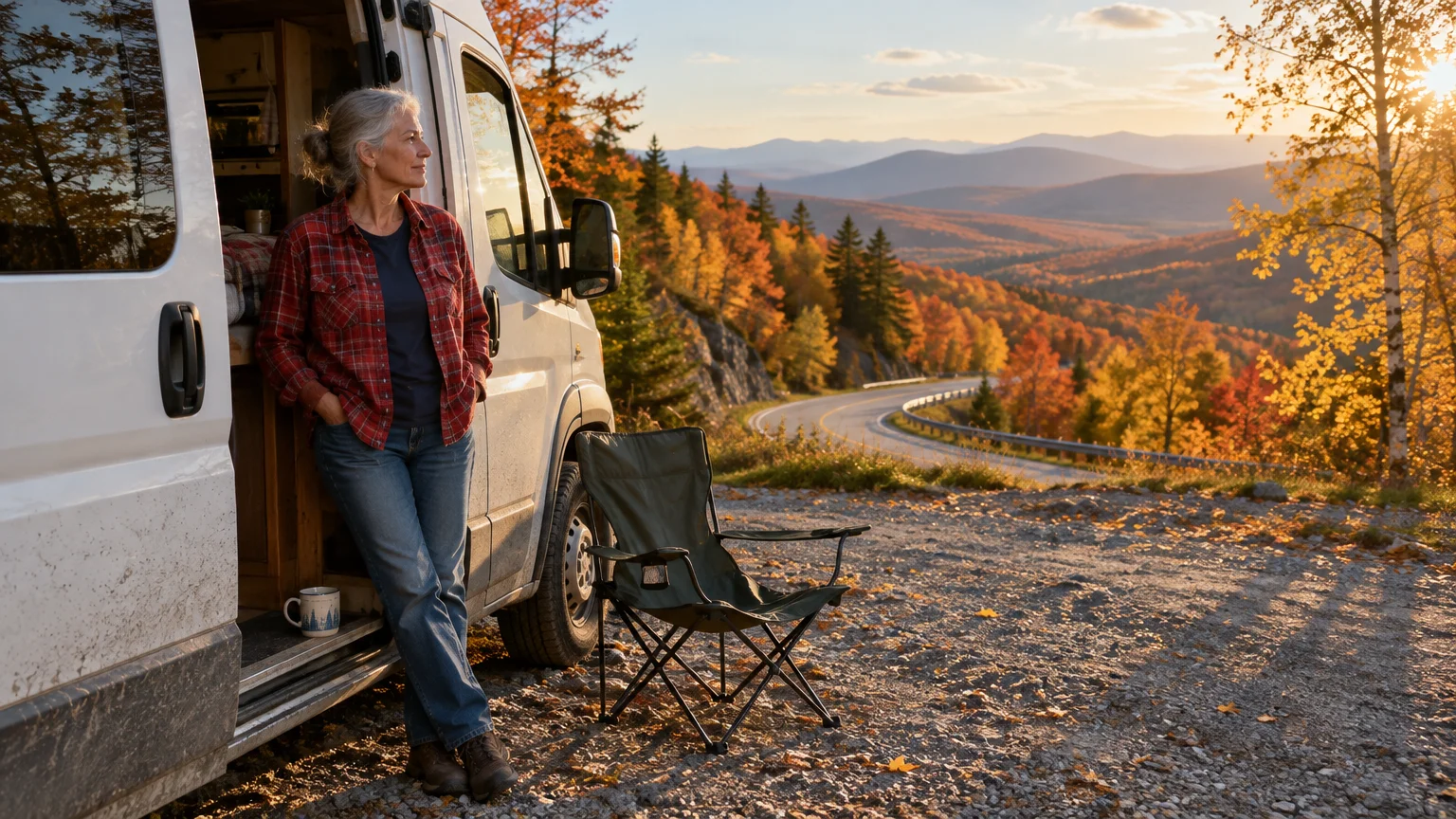
You can experience peak New England foliage from your campervan without fighting gridlocked interstates or booked-out state campgrounds. This three-week route coordinates real-time foliage progression with private farm stays to keep your journey quiet and affordable.
Driving north from Virginia, you will track autumn color across Vermont’s Route 100 and New Hampshire’s Kancamagus Highway. Pairing elevation data with Harvest Hosts agricultural sites guarantees reliable overnight parking while state park campsites close for winter.
Our schedule synchronizes early October mountain turns with lower valley drives, giving you front-row autumn scenery on a predictable budget.
In this guide7 sections
- Timing Your Foliage Route by Elevation and Latitude
- The Three-Week Itinerary: Route 100 to the Kancamagus
- Overnight Logistics: Managing State Park Closures and Farm Stays
- Mountain Clearances, Vehicle Length Limits, and Pass Discounts
- Three-Week Expense Breakdown: A Worked Budget Example
- Cold-Weather Preparation and Van Readiness
- Frequently Asked Questions
Timing Your Foliage Route by Elevation and Latitude
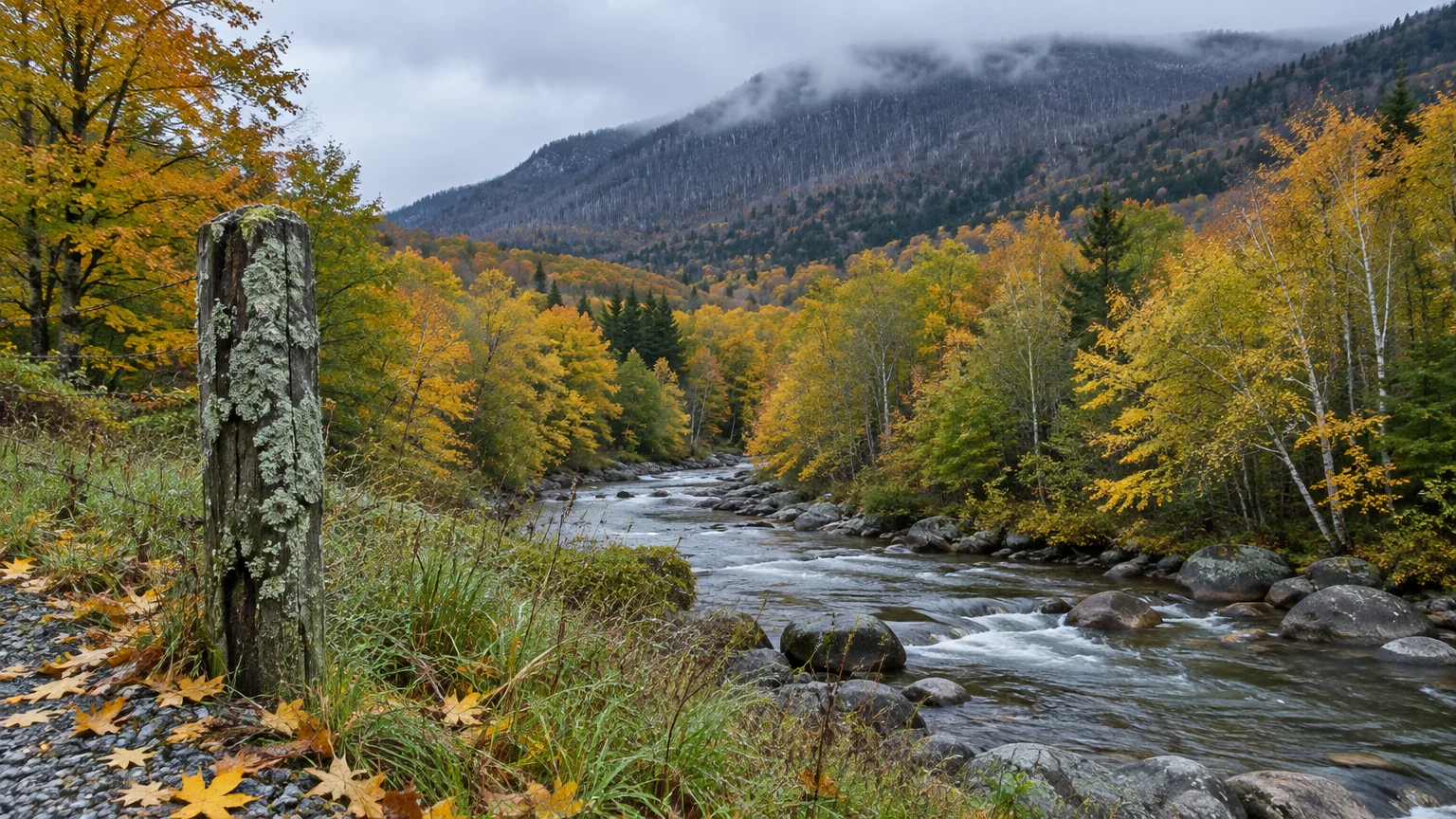
Autumn foliage does not arrive simultaneously across New England. Colors descend from northern latitudes to southern valleys, and from high mountain peaks to river bottoms.
Chasing peak color requires tracking elevation contours rather than arbitrary calendar dates. A cold front can turn high ridges overnight while trees three hundred feet lower remain green.
State forestry agencies monitor canopy shifts through live forest reports and aerial observation. Align your travel days with these three primary biological windows:
- Northern Tier and High Elevations: Northern Maine, the Great North Woods of New Hampshire, and Vermont’s Northeast Kingdom peak between September 25 and October 5.
- Central Mountain Corridors: Stowe, Vermont Route 100, and New Hampshire’s Kancamagus Highway crest between October 5 and October 15.
- Southern Valleys and Coastal Plains: Southern Vermont, southern New Hampshire, and Massachusetts reach peak color from mid-to-late October.
Elevation drops temperature roughly 3.5 degrees Fahrenheit per one thousand feet of ascent. This lapse rate accelerates chlorophyll breakdown on mountain passes several days ahead of adjacent towns.
When tracking reports indicate past-peak conditions along ridgelines, move your daily drives down into adjacent valleys. You will find brilliant sugar maples along river banks long after mountain crowns drop their leaves.
The Three-Week Itinerary: Route 100 to the Kancamagus
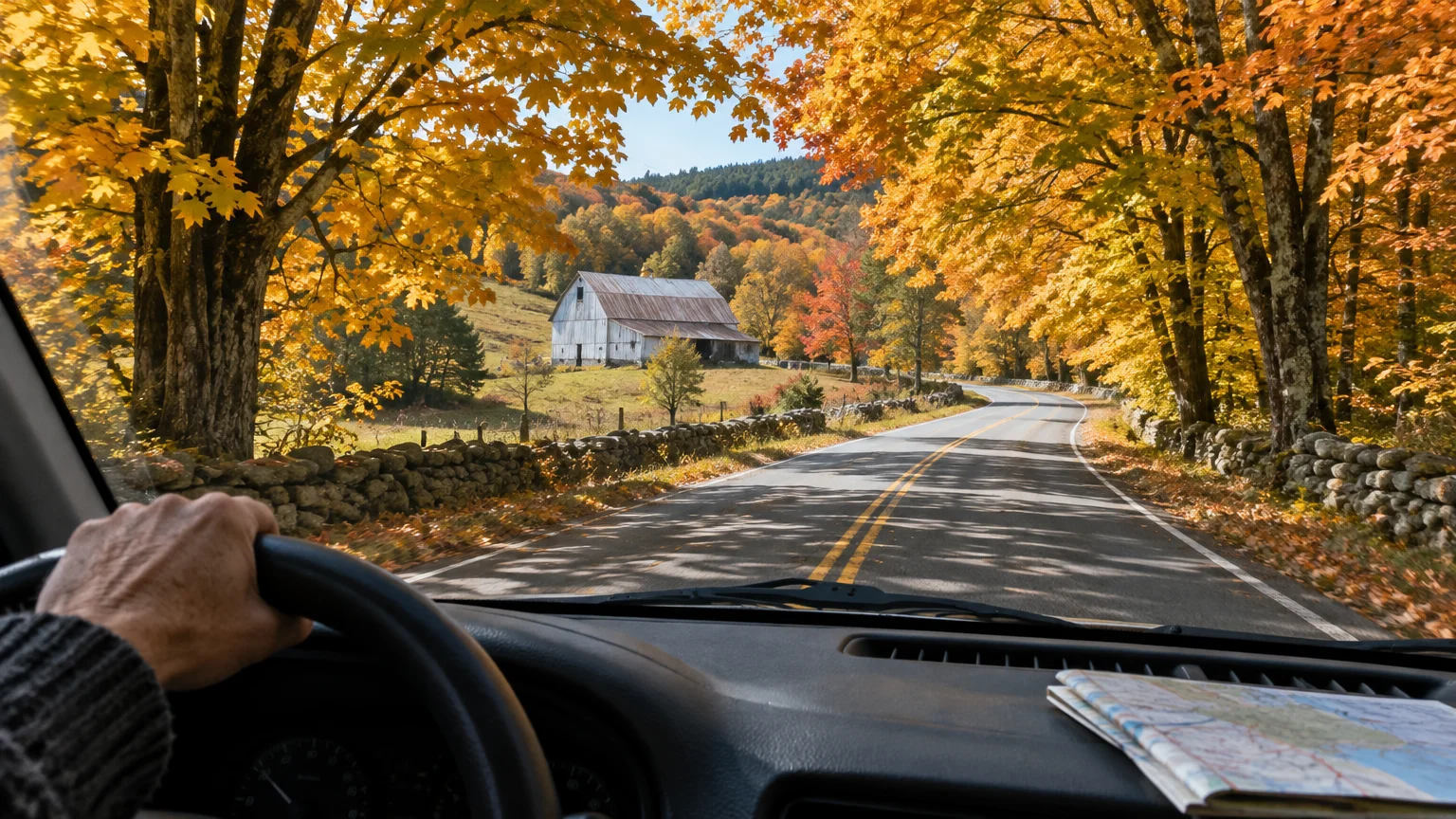
Starting your journey from Virginia in late September positions you to intercept color as it sweeps southward. This three-week campervan route new england avoids crowded interstates by following historic two-lane corridors.
Before setting out across multiple states, ensure your health plan covers out-of-network care by reviewing the best Medicare coverage for full-time RVers.
If you don’t own your vehicle yet, look into renting an RV for a fall road trip to test out living in a compact layout before buying.
The routing keeps driving days between two and four hours. This leaves ample daylight for cooking, hiking, and exploring local farm markets.
- Days 1 to 3: Virginia to Southern Vermont: Travel north across eastern Pennsylvania and upstate New York. Enter Vermont via Route 7 near Bennington before picking up Route 100 in Wilmington.
- Days 4 to 8: The Route 100 Spine to Stowe: Drive north along scenic Route 100 through Plymouth, Rochester, and Waterbury. Explore cider mills and dairy farms while foliage peaks in central Vermont.
- Days 9 to 14: White Mountains and the Kancamagus Highway: Cut east through Montpelier on Route 2 into New Hampshire. Cross the White Mountains on Route 112, known as the Kancamagus Highway, to Conway.
- Days 15 to 18: Lakes Region and Southern Foothills: Turn south toward Lake Winnipesaukee along Route 16 and Route 28. Foliage peaks here just as mountain passes begin thinning out.
- Days 19 to 21: Massachusetts Byways and Southern Return: Follow Massachusetts Route 2 through the Mohawk Trail. Connect back through the Hudson Valley to complete your leaf peeping road trip south to Virginia.
Route 100 runs 216 miles along the spine of the Green Mountains. It connects historic villages without a single billboard or commercial strip mall.
The Kancamagus Highway climbs to 2,855 feet at Kancamagus Pass. It offers 34 miles of continuous forest canopy without gas stations, stores, or cell towers.
Plan your fuel stops before entering these mountain segments. Top off your water tank in towns like Waterbury or Lincoln before driving into high passes.
Overnight Logistics: Managing State Park Closures and Farm Stays
Public camping in northern New England changes dramatically during the second week of October. State parks in Vermont, New Hampshire, and Maine routinely shut down after the second Monday of October.
If you enjoy connecting with local growers, consider organic farm volunteering for active seniors as an extended way to travel and stay active.
Park rangers disconnect municipal water hookups and blow out plumbing lines to prevent freeze damage. While select parks allow primitive dry camping after this date, bathhouses and dump stations remain locked.
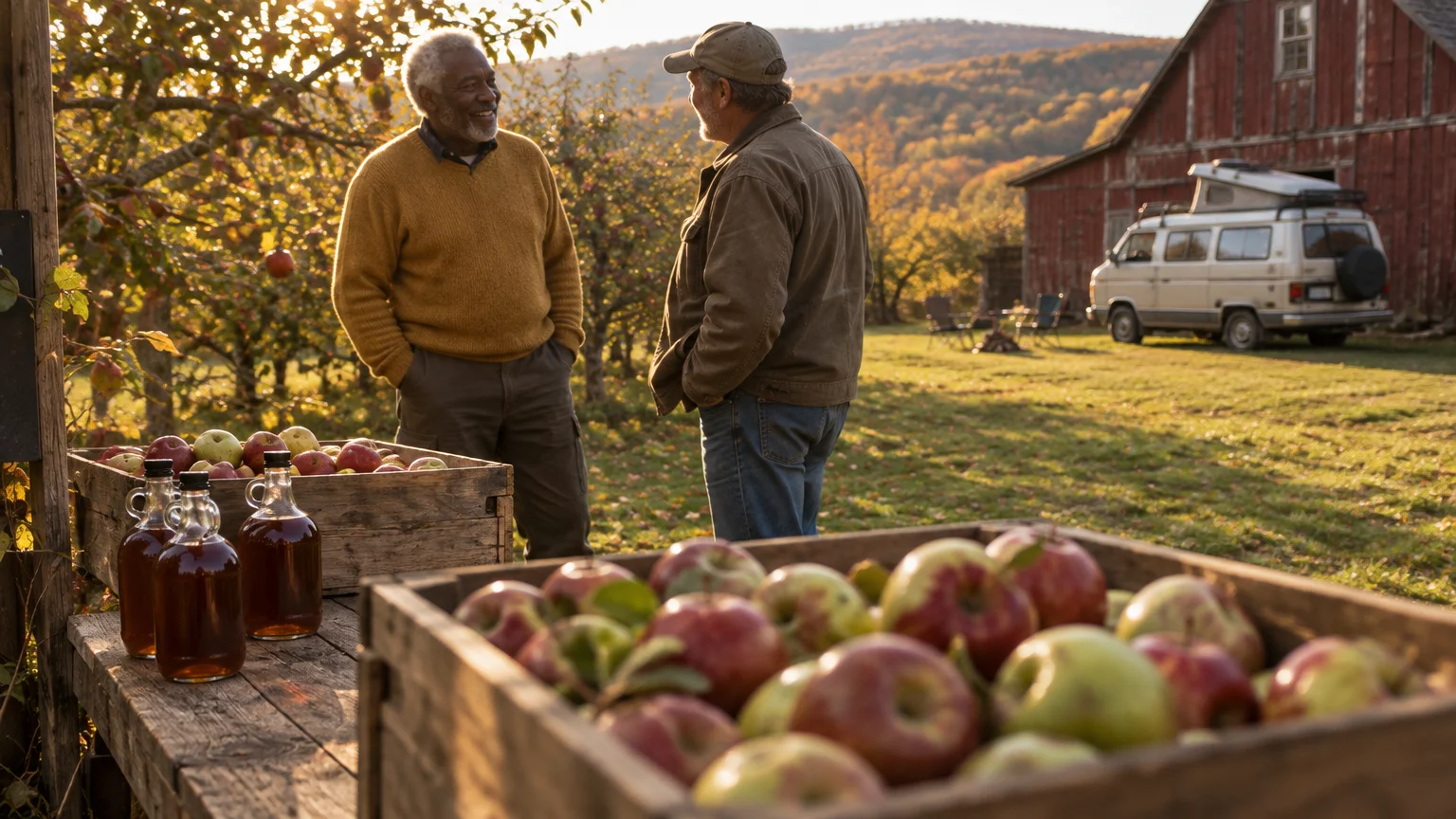
Harvest Hosts agricultural stays solve this seasonal shutdown. Working apple orchards, cider mills, and alpaca farms welcome self-contained campervans long after state campgrounds close.
These private farm stays keep you away from crowded commercial RV parks along Interstate 89 and Interstate 93. You park on level gravel or mowed pastures right beside autumn fields.
Always verify your campervan meets self-containment requirements before booking agricultural properties. Hosts require an interior toilet, built-in gray water holding, and interior cooking facilities.
| Accommodation Type | Nightly Cost | Seasonal Operating Cutoff | Utility and Dump Status | Booking Window |
|---|---|---|---|---|
| Vermont State Parks | $20 to $32 | Second Monday of October | No sewer hookups; central dump station; water shut off post-cutoff | Up to 11 months in advance |
| White Mountain National Forest | $20 to $25 (50% off with Senior Pass) | Select loops open year-round; water shut off mid-October | Primitive dry camping; vaulted toilets; no hookups | First-come, first-served and 6 months out |
| Harvest Hosts Farm Stays | $0 per night ($99 annual fee; $20-$30 farm purchase) | Varies by farm; many open through November | Dry camping only; no public water or dumping allowed | 1 to 14 days in advance via member app |
| Commercial RV Resorts | $65 to $110 | Late October to mid-November | Full hookups (water, 30-amp electric, sewer) | 6 to 12 months in advance for peak fall |
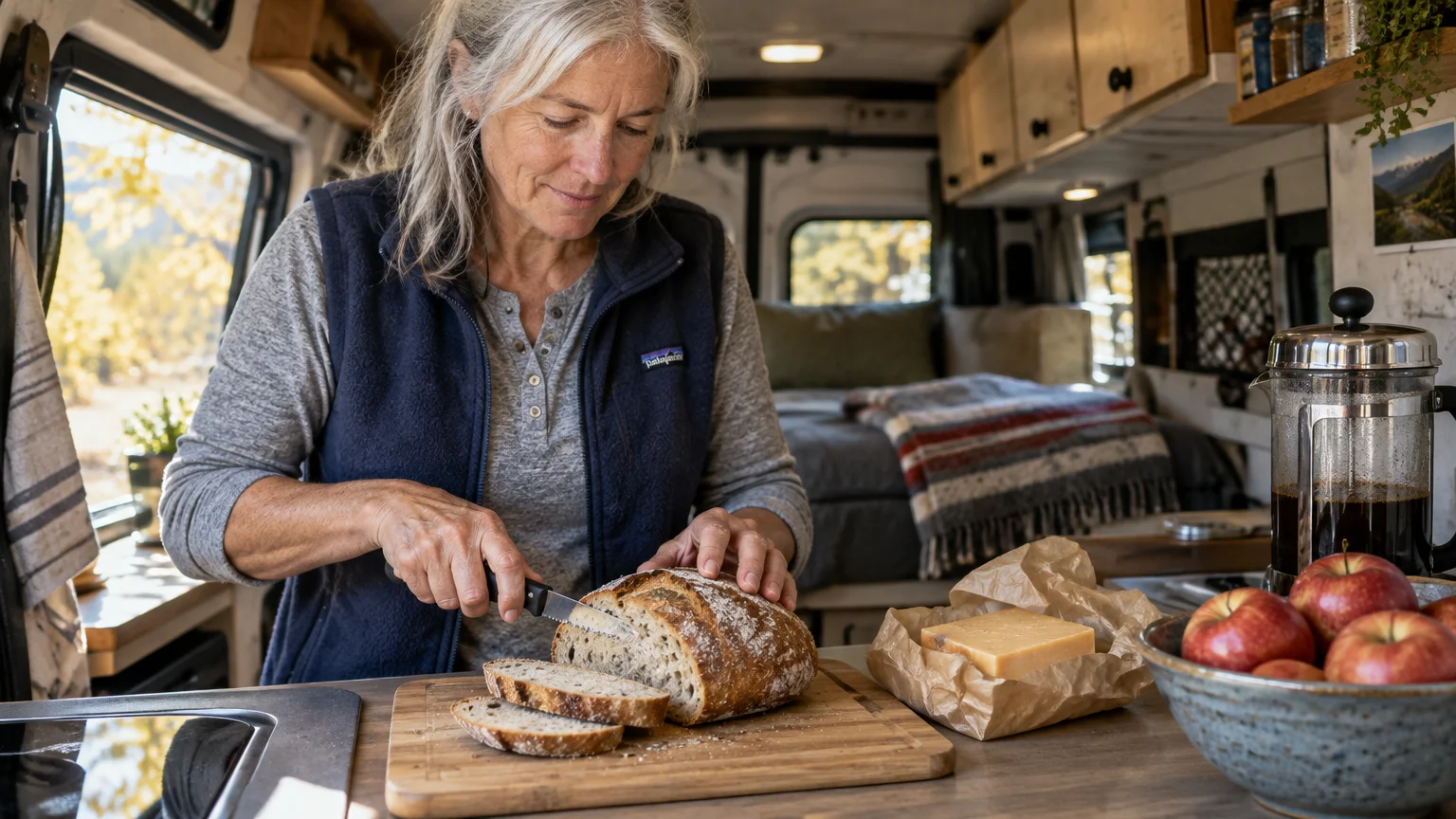
Support your agricultural hosts by buying local provisions directly from their farm stands. Pick up fresh apple cider, artisan cheese, and maple syrup for meals inside your van.
For additional budget travel guidance and regional senior recreational benefits, review federal resources on the USA.gov benefits portal. Coordinating public and private stops keeps trip overhead manageable.
Mountain Clearances, Vehicle Length Limits, and Pass Discounts
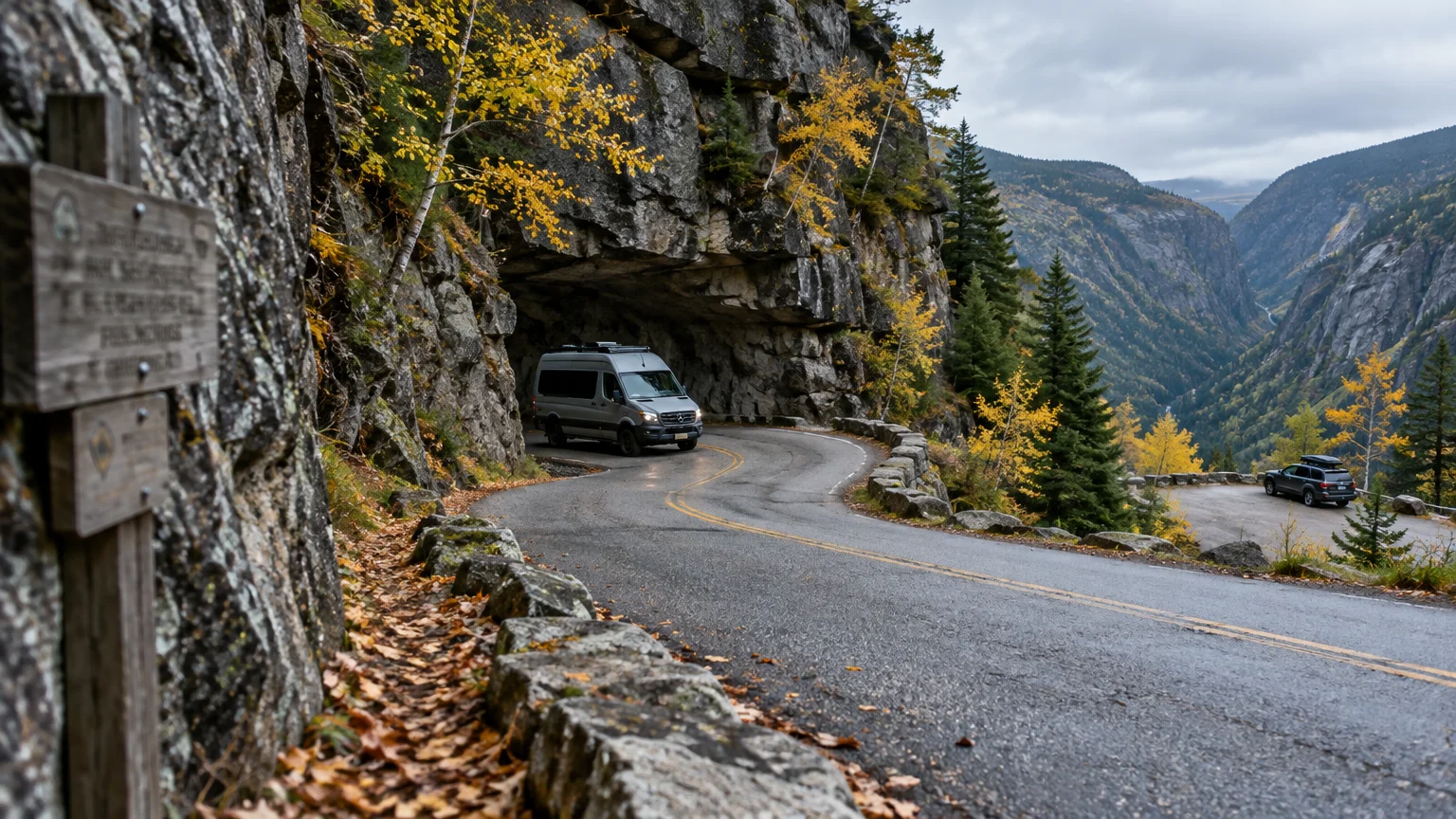
Driving a campervan along historic mountain corridors requires careful attention to road geometry. Tight turns, low stone bridges, and strict vehicle limits protect fragile mountain ecosystems.
Vermont Route 108 through Smugglers’ Notch features narrow gaps between massive boulders. Single vehicles over 40 feet and vehicle combinations over 45 feet are barred from this pass by Vermont statute.
State law imposes fines between $1,000 and $2,000 on drivers who ignore these restrictions. Even driving a compact Class B campervan requires slow speeds and mirrors pulled inward on blind curves.
If you drive an extended campervan or tow a trailer, avoid Route 108 entirely. Bypass the notch by taking Route 100 north to Route 15 around the mountain.
Acadia National Park also enforces strict physical vehicle standards on its mountain roads. If you extend your new england fall foliage road trip east to Mount Desert Island, plan ahead.
- Vehicle Length Limit: Cadillac Summit Road bars any vehicle exceeding 21 feet in total length. This measurement includes rear bumper bike racks and hitch cargo boxes.
- Timed Entry Permits: Driving Cadillac Summit Road between late May and late October requires a $6 vehicle reservation. Tickets drop on Recreation.gov at 10:00 a.m. Eastern Time: 30% release 90 days out, and 70% release two days prior.
- Entrance Passes: Standard entry requires an America the Beautiful Pass or individual park pass alongside your timed summit ticket.
Travelers aged 62 and older can unlock substantial federal savings with an America the Beautiful Senior Pass. The pass costs $80 for a lifetime credential or $20 for an annual credential.
Federal rules grant pass holders a 50 percent discount on basic campsite fees at federally operated campgrounds. This applies at Hancock and Russell Pond campgrounds in White Mountain National Forest.
Displaying the pass on your campervan windshield also waives the $5 daily parking fee at trailheads along the Kancamagus Highway. Check program rules on Benefits.gov before departure to confirm current pass processing procedures.
State biosecurity rules prohibit transporting untreated firewood across state borders into Vermont, New Hampshire, or Maine. Invasive species like the emerald ash borer threaten northern hardwood canopies.
Purchase your firewood within 10 to 20 miles of your overnight stop. Alternatively, buy packaged bundles certified as heat-treated by the United States Department of Agriculture.
Three-Week Expense Breakdown: A Worked Budget Example
A three-week autumn campervan journey requires clear budget tracking. Fuel prices, campground reservations, and farm purchases add up quickly without advance planning.
Strategic spending habits make extended road trips feasible alongside other strategies for budgeting for travel in retirement to take dream trips on a dime.
Transitioning from autumn touring to winter travel requires similar forethought, much like budgeting for an RV snowbird season in warmer southern climates.
Planning seasonal getaways well in advance is simple when you build a dedicated travel sinking fund to cover fuel and campsite reservations.
Consider this worked budget scenario for a retired couple driving a 19.5-foot diesel campervan from Richmond, Virginia. This model covers 1,850 miles across 21 days during peak foliage season.
Their van achieves an average fuel efficiency of 18 miles per gallon on mixed mountain roads. At an average diesel cost of $3.85 per gallon, fuel expenses total $395.78.
Their overnight strategy combines private farm stays with discounted national forest sites. They avoid high-cost commercial RV parks entirely.
- Harvest Hosts Annual Membership: $99.00 flat registration fee.
- Farm Stand Purchases: 7 nights at agricultural stops, averaging $25.00 per night in local goods ($175.00 total).
- White Mountain National Forest Camping: 8 nights at Hancock Campground with Senior Pass discount at $12.50 per night ($100.00 total).
- Vermont State Parks Camping: 6 nights prior to the seasonal cutoff at $24.00 per night ($144.00 total).
- America the Beautiful Senior Lifetime Pass: $80.00 pass fee plus $10.00 online processing ($90.00 total).
- Acadia Cadillac Summit Permit: $6.00 vehicle reservation.
- Trailhead Parking: Waived by Senior Pass across six stops (saving $30.00).
- Campervan Propane Heating: Refilling two 20-pound onboard tanks at $19.74 each ($39.48 total).
- Groceries and Meal Supplies: $45.00 per day for home cooking inside the van ($945.00 total).
Adding these categories produces a grand trip expense of $1,994.26 for three full weeks of travel. Comparing this against autumn hotel rates of $300 per night in Stowe highlights the savings.
You can discover additional auto club fuel discounts and route savings through AARP travel resources. Keeping fixed costs low lets you spend more on authentic local experiences.
Cold-Weather Preparation and Van Readiness
Autumn weather in northern New England shifts rapidly. Daytime temperatures hovering in the crisp sixties often plummet into the twenties at high mountain elevations.
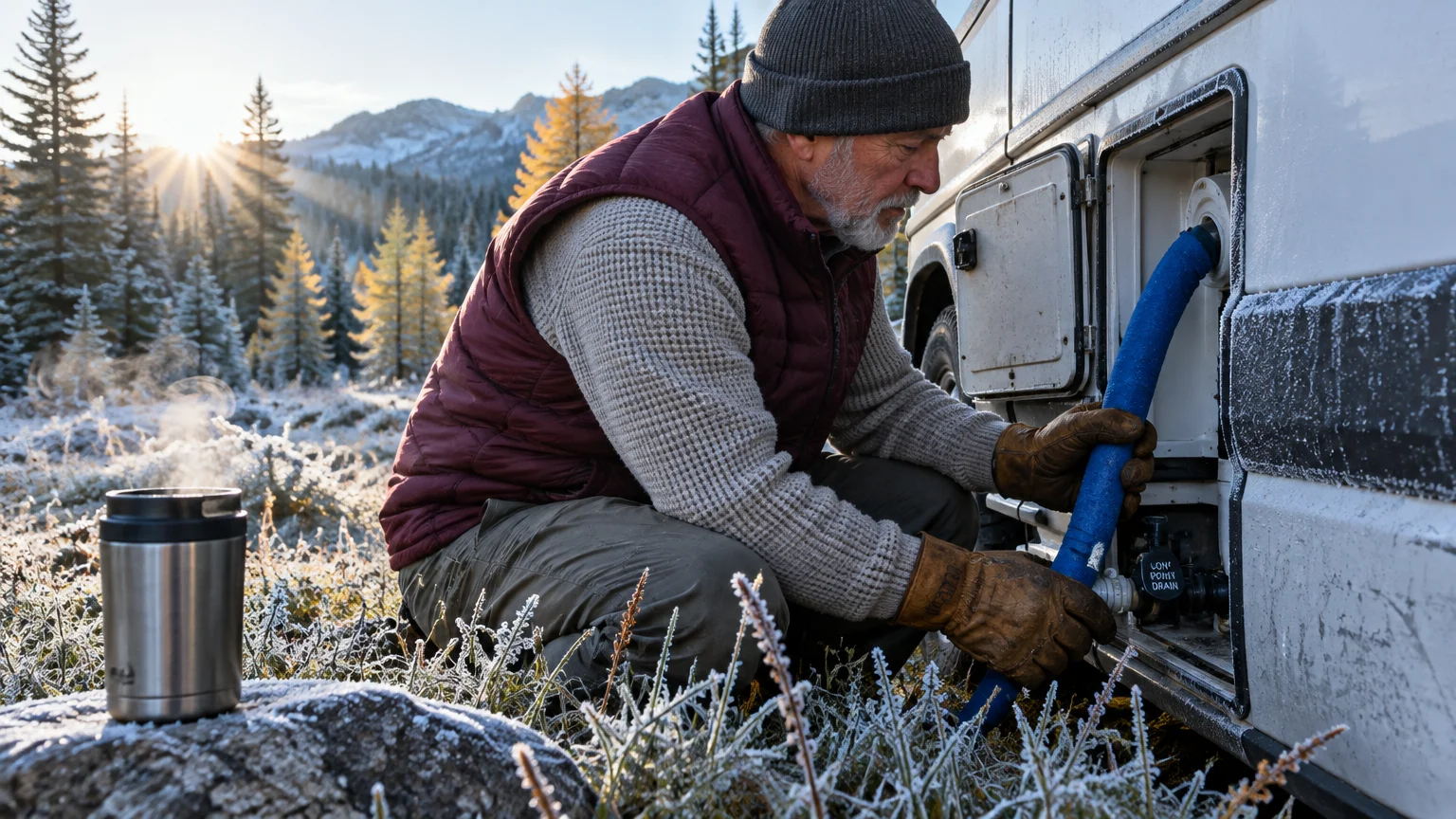
Uninsulated plumbing lines and external water tanks can freeze solid during overnight stops. Preparing your campervan for freezing conditions protects expensive onboard systems.
Complete this preparation checklist before heading up Vermont Route 100 or crossing the White Mountains:
- Service Auxiliary Heaters: Run your diesel or propane furnace before leaving home. Clean air intake filters and ensure exhaust tubes remain clear of debris.
- Protect Water Lines: Drain external rinse stations and under-chassis water filters. If temperatures drop below 28 degrees Fahrenheit, switch to onboard interior fresh tanks.
- Install Insulated Window Covers: Campervan windshields and cab door glass radiate immense heat. Place reflective thermal covers on all glass surfaces at dusk.
- Monitor House Batteries: Cold temperatures reduce lithium and AGM battery capacity. Keep house batteries above fifty percent charge to power your heater blower all night.
- Inspect Tire Pressures: Cold morning air drops tire pressure by roughly one pound per square inch for every ten-degree temperature drop. Check pressures when tires are cold.
Interior moisture control requires constant attention during cold autumn nights. Cooking soup and breathing inside a sealed campervan creates heavy condensation on metal window frames.
Crack your rooftop ventilation fan open half an inch while running your dry heat system. This slight airflow pushes humid air outside and keeps your living space dry and comfortable.
Frequently Asked Questions
Can a campervan drive through Smugglers’ Notch on Vermont Route 108?
Compact campervans under 40 feet can legally drive Vermont Route 108, but caution is mandatory. Vermont law strictly prohibits vehicles over 40 feet and combinations over 45 feet, imposing fines between $1,000 and $2,000.
If driving mountain routes feels taxing in your later retirement years, budgeting a cross-country train trip provides an alternate way to take in seasonal scenery without navigating narrow passes.
When do New England state park campgrounds close for the season?
Most state park campgrounds in Vermont, New Hampshire, and Maine close staffed facilities and shut off running water after the second Monday of October. Camping afterward shifts to primitive, walk-in, or off-season sites without hookups.
Does the Senior Pass cover day-use fees along the Kancamagus Highway?
Yes. Displaying the America the Beautiful Senior Pass waives the standard $5 daily parking fee at White Mountain National Forest trailheads and scenic overlooks along New Hampshire Route 112.
Can I bring my own firewood on a New England campervan trip?
No. Vermont, New Hampshire, and Maine enforce strict firewood transport bans to prevent pest infestations. You must buy firewood harvested locally within 10 to 20 miles of your campsite or purchase certified heat-treated bundles.
How does vehicle length affect driving up Cadillac Summit Road in Acadia?
Vehicles exceeding 21 feet in total length, including rear bike racks and hitch cargo trays, are barred from Cadillac Summit Road. You also need an advance $6 vehicle reservation between late May and late October.
Disclaimer: This article is for informational purposes only. Benefits, programs, and regulations can change.
We encourage readers to verify current information with official government sources and consult with qualified professionals for personalized advice.



1 Comment