
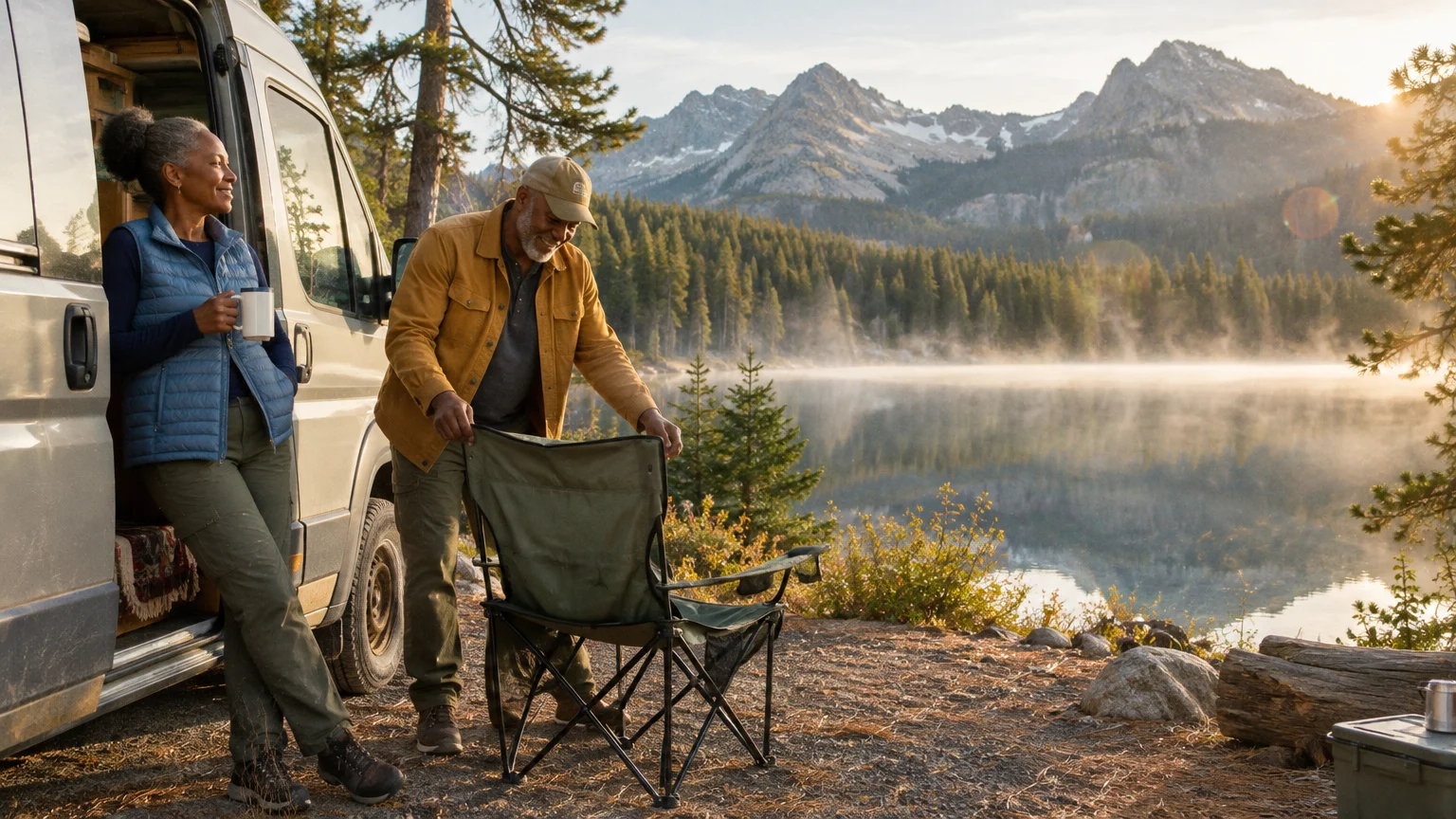
Turning 62 gives you immediate access to federal recreation lands through the America the Beautiful senior pass. Purchasing the lifetime senior pass for 80 dollars saves camper van travelers hundreds of dollars on federal campground fees.
Most travelers view the pass merely as an entrance ticket for crowded national park gates. In reality, its largest financial return comes from 50 percent discounts at U.S. Forest Service and Army Corps of Engineers campsites across the country.
Whether you dry camp along national riverways or drive your camper van across public land, this pass pays for itself within days.
In this guide8 sections
- Eligibility Requirements and Documentation
- Lifetime Versus Annual Pass Economics
- Day-Use Access Across Six Federal Agencies
- The 50 Percent Camping and Amenity Discount
- Van Life Route: A Worked 14-Night Cost Example
- How to Book Campsites on Recreation.gov
- Concessionaire Exclusions and Pass Restrictions
- Frequently Asked Questions
Eligibility Requirements and Documentation
You qualify for the senior pass starting on your 62nd birthday. Federal agencies do not offer early enrollment or grace periods before that exact date.
Applicants must be United States citizens or lawful permanent residents. Temporary visa holders and foreign tourists cannot purchase this specific recreation pass.
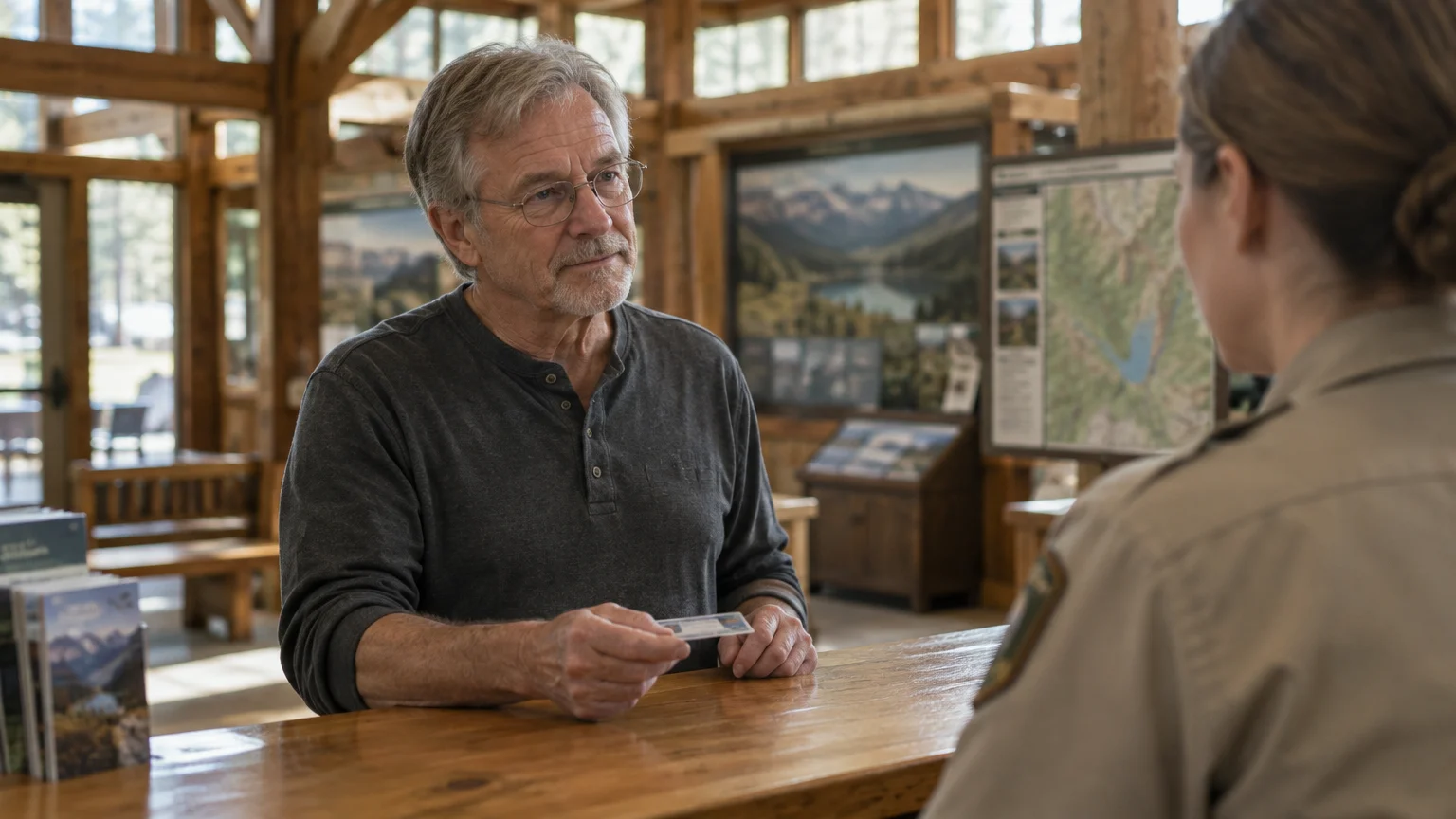
You must present government-issued identification proving both your age and residency when applying. Staff inspect these documents whether you apply in person or submit digital scans online.
The issuing agency accepts several standard forms of identification at recreation stations:
- Valid state-issued driver’s license showing your birth date
- Official state identification card
- United States passport or passport card
- Permanent Resident Card, commonly known as a Green Card
If you manage a fixed income, tracking federal travel perks helps protect your monthly cash flow. You can review broader assistance options through Benefits.gov to coordinate retirement savings programs alongside travel plans.
Always inspect the expiration date on your driver’s license before heading to a remote ranger station. Rangers cannot accept expired identification cards under federal guidelines.

Lifetime Versus Annual Pass Economics
Federal recreation rules offer two tiers for older travelers: an annual pass and a lifetime pass. Choosing the correct pass depends on your travel schedule and initial equipment budget.
The annual pass costs $20 and remains valid for one full year from the purchase month. It serves travelers who want minimal upfront spending while testing out camper van travel.
The lifetime senior pass costs a one-time fee of $80 when purchased in person. It provides entrance access and camping discounts for the rest of your life.
Federal guidelines include an upgrade credit policy for annual pass buyers. You can exchange four expired annual senior passes in person for a lifetime senior pass at no added cost.
Buying either pass online through the official USGS store adds a mandatory $12.50 administrative surcharge. That fee combines a $5 document processing fee and a $7.50 shipping and handling charge.
Purchasing your pass at an entrance station eliminates that $12.50 administrative surcharge entirely. The following table illustrates the true costs and fulfillment rules across both pass options.
| Pass Option | In-Person Cost | Online Total Cost | Validity Window | Upgrade Eligible |
|---|---|---|---|---|
| Senior Annual Pass | $20.00 | $32.50 | 12 full months | Yes; exchange 4 for lifetime |
| Senior Lifetime Pass | $80.00 | $92.50 | Lifetime of passholder | Not applicable |
| Standard Annual Pass | $80.00 | $85.00 | 12 full months | No; general public rate |
If your travel budget is tight after outfitting a van, plan your purchases carefully. You can monitor fixed living expenses through guidance from the Consumer Financial Protection Bureau to keep recreation costs aligned with retirement income.
Buying in person saves money and provides immediate access. Ordering online requires waiting several business days for postal delivery before you can use the physical card.
Day-Use Access Across Six Federal Agencies
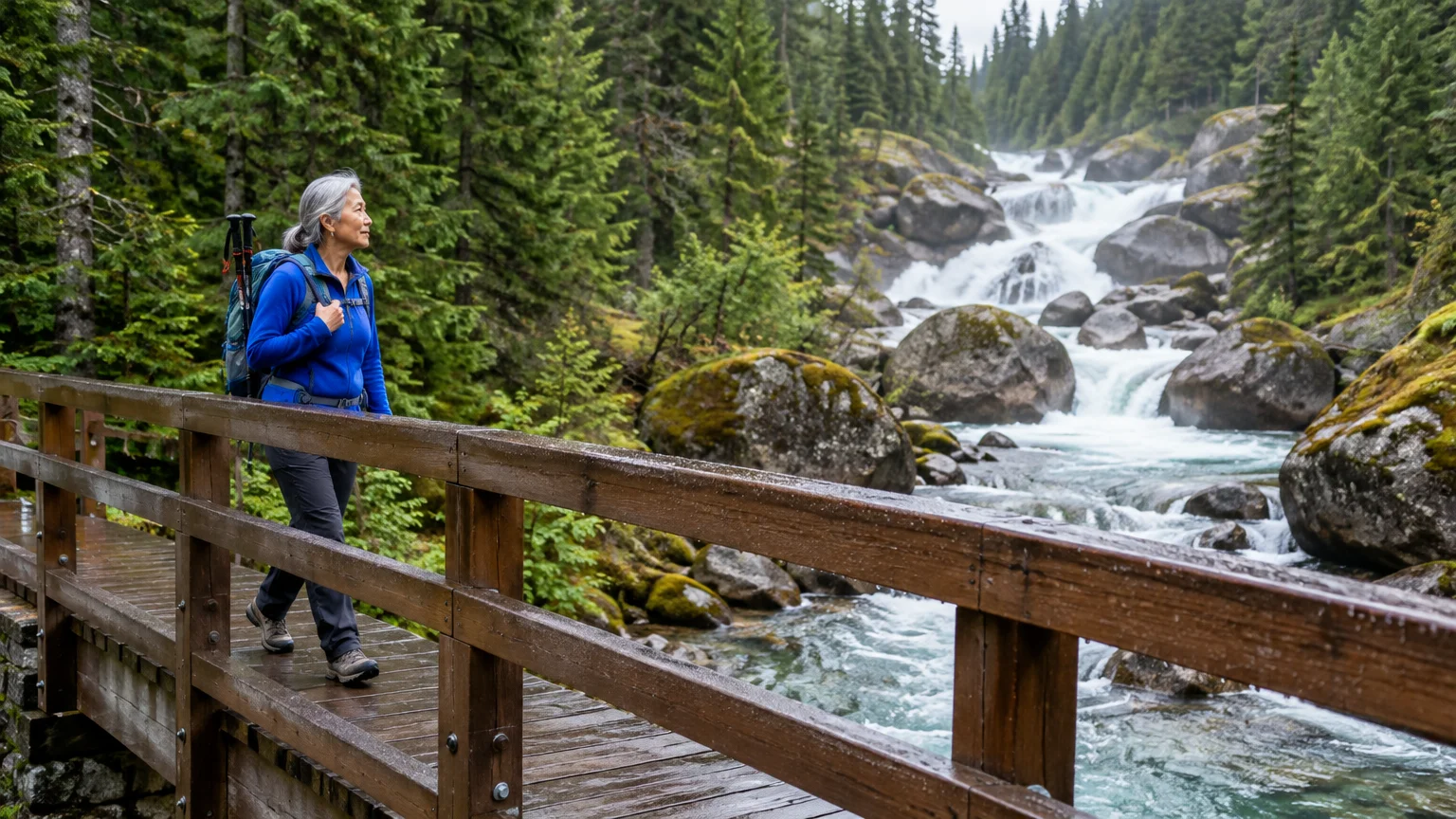
The America the Beautiful pass operates across more than 2,000 recreation sites managed by the federal government. Many van travelers incorrectly assume the card only works at premier national parks.
Six distinct federal agencies recognize your senior pass at day-use areas and fee stations across the nation:
- National Park Service (NPS)
- United States Forest Service (USFS)
- Bureau of Land Management (BLM)
- United States Fish and Wildlife Service (USFWS)
- United States Army Corps of Engineers (USACE)
- Bureau of Reclamation (USBR)
Admission rules vary depending on how an individual recreation site assesses its entry fees. Understanding these rules ensures your travel companions avoid unexpected gate charges.
At sites charging per-vehicle entrance fees, the pass admits you and all occupants inside your camper van. This rule covers non-commercial vehicles regardless of passenger count.
At locations charging per-person entry fees, the pass covers you plus up to three additional adults. Any traveling children aged 15 and under receive free admission under federal rules.
BLM trailheads and Forest Service day-use sites often operate unstaffed fee tubes rather than gated booths. Display your physical card on your driver’s side dashboard or hang it from your rearview mirror using an approved display tag.
The 50 Percent Camping and Amenity Discount
Entrance gate waivers represent only a minor portion of the senior pass’s true monetary value. The primary savings engine for van owners is the 50 percent discount on expanded amenity fees.
While federal passes provide substantial value on national lands, travelers can also explore state park senior camping discounts to reduce nightly costs at state-managed campgrounds.
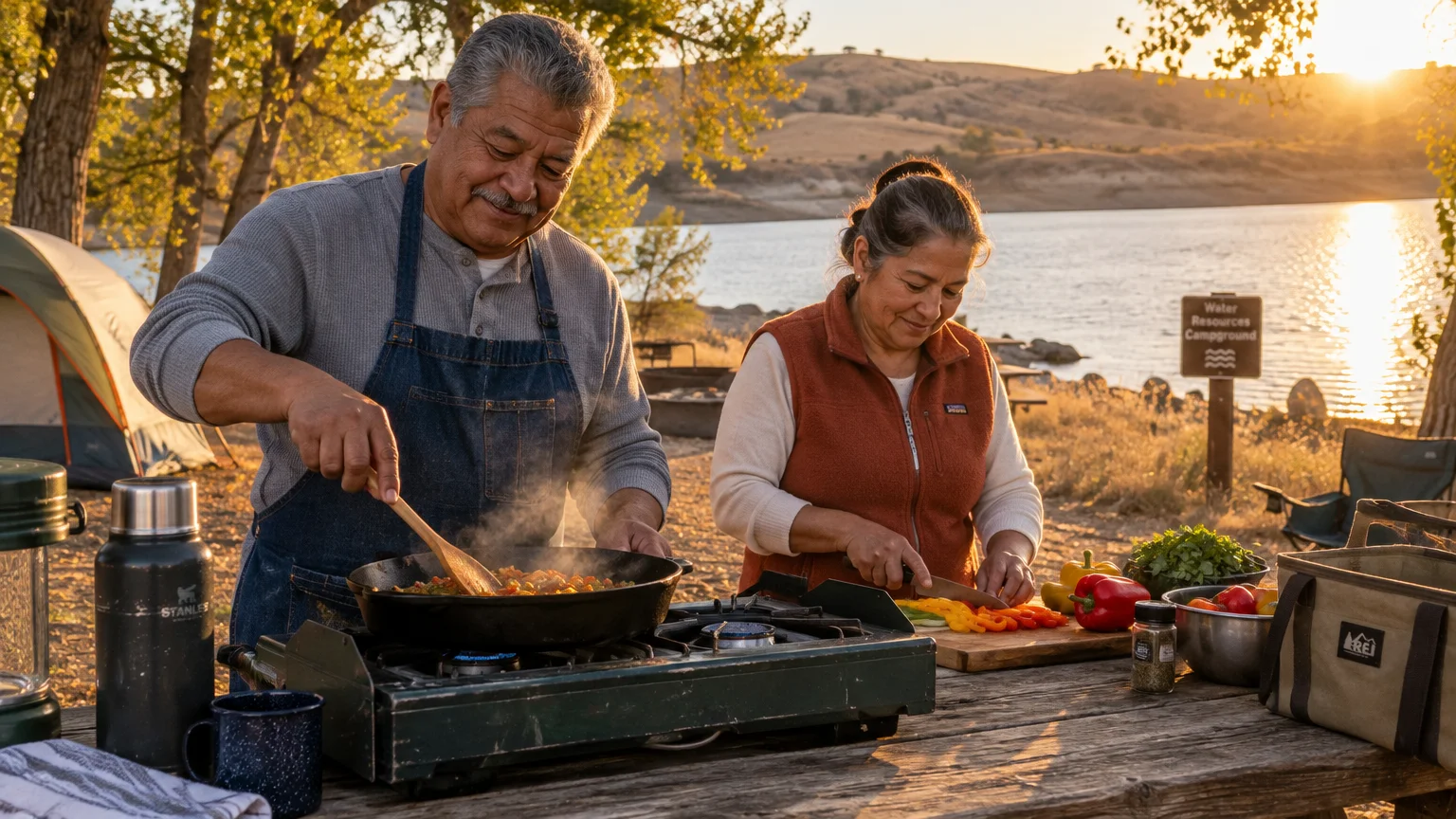
Federal law cuts your nightly fees in half at basic, agency-operated campgrounds. That discount applies to standard nonelectric campsites, dry-camping loops, and designated tent spaces.
The United States Army Corps of Engineers manages hundreds of lake and river projects across America. Most USACE facilities feature well-maintained paved sites, scenic shoreline access, and modern restrooms at deeply discounted rates.
The senior pass provides half-price savings on several specific recreation amenities:
- Standard campsites operated directly by federal agency personnel
- Boat ramp launching fees at federal reservoirs and lakes
- Day-use swimming beaches and picnic facilities
- Ranger-led cave tours and interpretive walks operated by park staff
You can discover additional travel strategies and discounts through publications from AARP to supplement federal recreation savings. Pairing federal discounts with private club memberships stretches van travel budgets significantly.
The campground discount applies to the single site occupied by the passholder. You cannot purchase multiple campsites for friends traveling in separate vans under a single senior pass.
Van Life Route: A Worked 14-Night Cost Example
To see how rapidly the lifetime pass returns your investment, consider a 14-night camper van journey through the American West. This scenario tracks real-world campsite and entry fees across multiple agency jurisdictions.
Our hypothetical route begins at Grand Canyon National Park for three nights of dry camping at Mather Campground. The standard gate entry costs $35, and the non-electric campsite fee is $30 per night.
Next, the route travels into Coconino National Forest for four nights at standard Forest Service campgrounds. Campsites in this national forest typically cost $26 per night without utility hookups.
The trip continues to Lake Mead National Recreation Area for three nights of dry camping. Lake Mead charges a $25 vehicle entry fee and a $20 nightly campsite fee.
The journey concludes with four nights at an Army Corps of Engineers recreation lake. Standard USACE waterside campsites cost an average of $24 per night.
Without the senior pass, this 14-night journey incurs the following standard retail charges:
- Entrance fees: Grand Canyon ($35) + Lake Mead ($25) = $60
- Grand Canyon camping: 3 nights at $30 = $90
- Forest Service camping: 4 nights at $26 = $104
- Lake Mead camping: 3 nights at $20 = $60
- USACE lake camping: 4 nights at $24 = $96
- Total out-of-pocket travel cost: $410
With an in-person America the Beautiful Senior Lifetime Pass, your accounting changes dramatically:
- One-time pass purchase cost: $80
- Entrance fees: Grand Canyon ($0) + Lake Mead ($0) = $0
- Grand Canyon camping: 3 nights at $15 = $45
- Forest Service camping: 4 nights at $13 = $52
- Lake Mead camping: 3 nights at $10 = $30
- USACE lake camping: 4 nights at $12 = $48
- Total cost including pass purchase: $255
On this single 14-night trip, the senior pass saves you $155 in cash after covering its purchase price. Every federal campsite reserved in future years delivers pure 50 percent savings.

How to Book Campsites on Recreation.gov
Most federal campgrounds process their campsite reservations through the centralized Recreation.gov web portal. Applying your pass discount online takes only seconds during checkout.
Follow these exact operational steps when reserving your camper van sites on Recreation.gov:
- Log in to your Recreation.gov account before selecting campground dates.
- Select your preferred standard campsite and add the dates to your cart.
- Locate the “Need Discounts?” prompt on the booking details screen.
- Check the box for “America the Beautiful Senior Pass.”
- Verify that the nightly base rate drops by exactly 50 percent before submitting payment.
You must carry your physical pass card and matching photo identification when checking into the campground. Camp hosts inspect physical passes to confirm cardholder identity before issuing site permits.
If you fail to produce your signed pass card upon arrival, staff will charge you the remaining full balance. In some locations, failure to prove eligibility can result in the cancellation of your reservation.
Concessionaire Exclusions and Pass Restrictions
While the senior pass delivers dramatic savings, clear legal boundaries limit its scope. The federal government does not own or operate every service located on public lands.
Commercial concessionaires operate many popular federal campgrounds under long-term federal contracts. These private hospitality companies are legally exempt from providing the 50 percent camping discount.
Utility hookups also fall outside the mandatory statutory discount rules. If you reserve a full-hookup RV site with water and electric service, the pass only discounts the basic site portion, leaving utility surcharges intact.
Your senior pass excludes the following standard fees and retail charges:
- Private concessionaire campgrounds and commercial RV parks on public land
- Utility add-on fees, such as electric, water, and sewer connections
- Sanitary dump station fees operated by private concession companies
- Special recreation permit lottery application fees and processing costs
- Commercial shuttle tickets, gear rentals, and boat moorage slips
Federal passes are non-transferable and legally tied to your personal signature on the plastic card. If your spouse travels in the camper van without you, they cannot present your pass at checkpoints.
Federal agencies cannot replace lost, stolen, or damaged physical senior passes. If you misplace your card while traveling, you must purchase a brand new pass at full price.
Frequently Asked Questions
Can my spouse use my America the Beautiful Senior Pass if I am not traveling?
No. The senior pass is strictly non-transferable and requires the named passholder to be present in the vehicle. Camp hosts and entrance rangers require photo identification matching the signature on the back of the card.
Does the 50 percent discount apply to campsites with full electric and water hookups?
The discount applies only to the basic site utility fee, not additional service surcharges. Concessionaires and agencies usually charge full price for utility connections, meaning your net discount will be less than 50 percent on full-hookup sites.
What happens if I lose my physical senior pass while on a road trip?
The National Park Service and USGS cannot replace lost or stolen passes under any circumstances. You must repurchase the pass at full price at an entrance booth or through the online ordering portal.
Can I use my federal senior pass to enter state parks?
No. The America the Beautiful pass applies exclusively to federal recreation lands managed by the six participating federal agencies. State park systems operate under state authority and require their own admission permits and camping fees.
Can I turn in annual passes toward a lifetime pass?
Yes. You can trade four valid or expired $20 Senior Annual Passes in person at a federal recreation site for a Senior Lifetime Pass at no additional charge.
Disclaimer: This article is for informational purposes only. Benefits, programs, and regulations can change.
We encourage readers to verify current information with official government sources and consult with qualified professionals for personalized advice.



1 Comment