
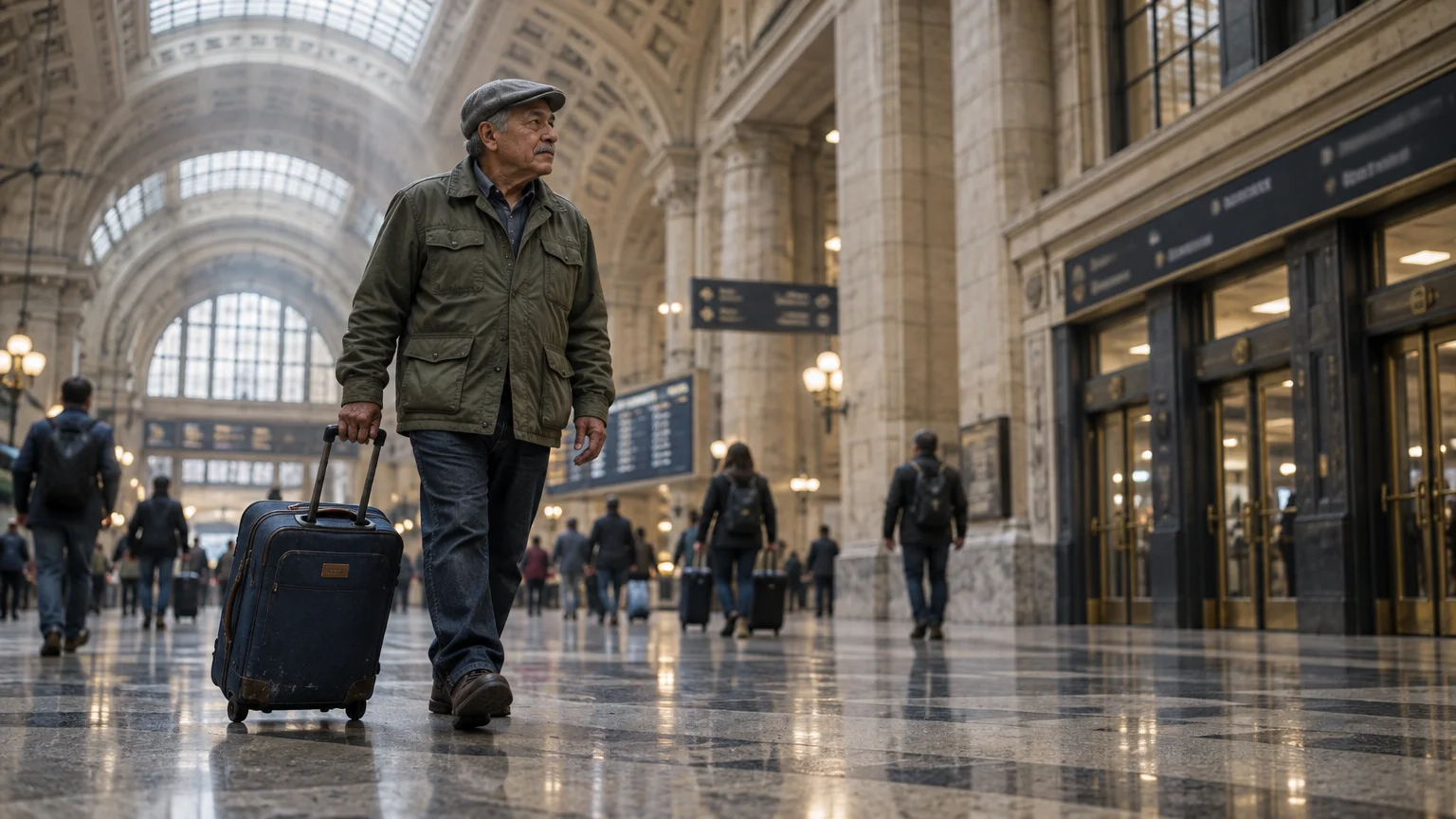
You can cross the American Rockies on Amtrak’s Empire Builder without spending thousands on a sleeper car. A solo retiree living on a fixed monthly income can easily afford this iconic journey by swapping continuous rail travel for strategic depot stops.
Splitting the 46-hour route into daytime coach segments paired with historic depot hotels eliminates four-figure roomette surcharges while providing a real bed every night.
This blueprint outlines an exact line-item budget to take you from Chicago to Seattle comfortably for under $850 total.
In this guide10 sections
- The Depot Hotel Strategy: Dodging Roomette Markups
- Senior Fares, Passes, and Booking Rules
- Scenic Route Analysis: Daylight Highlights Across the West
- Strategic Empire Builder Itinerary and Overnight Stops
- Line-Item Cost Breakdown and Worked Example
- Food and Dining Budget for Coach Travel
- Managing Physical Mobility and Comfort in Coach
- Essential Gear and Packing Checklist
- Step-by-Step Ticket Booking Action Plan
- Frequently Asked Questions
The Depot Hotel Strategy: Dodging Roomette Markups
Amtrak markets private Roomettes as the premier way to see the American West. However, Roomette tickets often run between $600 and $1,800 for a one-way trip between Chicago and Seattle.
For a solo traveler living on a fixed monthly retirement budget, that single accommodation fee can consume several months of leisure savings.
Coach seats on the same route typically cost between $150 and $250. That represents a direct savings of over $1,000 on transportation alone.
Continuous coach travel across 46 hours presents genuine physical strain. Sitting upright for two straight nights leaves most travelers over 65 stiff and exhausted.
The depot hotel strategy solves this dilemma by breaking the 2,205-mile journey into manageable daytime rail segments.
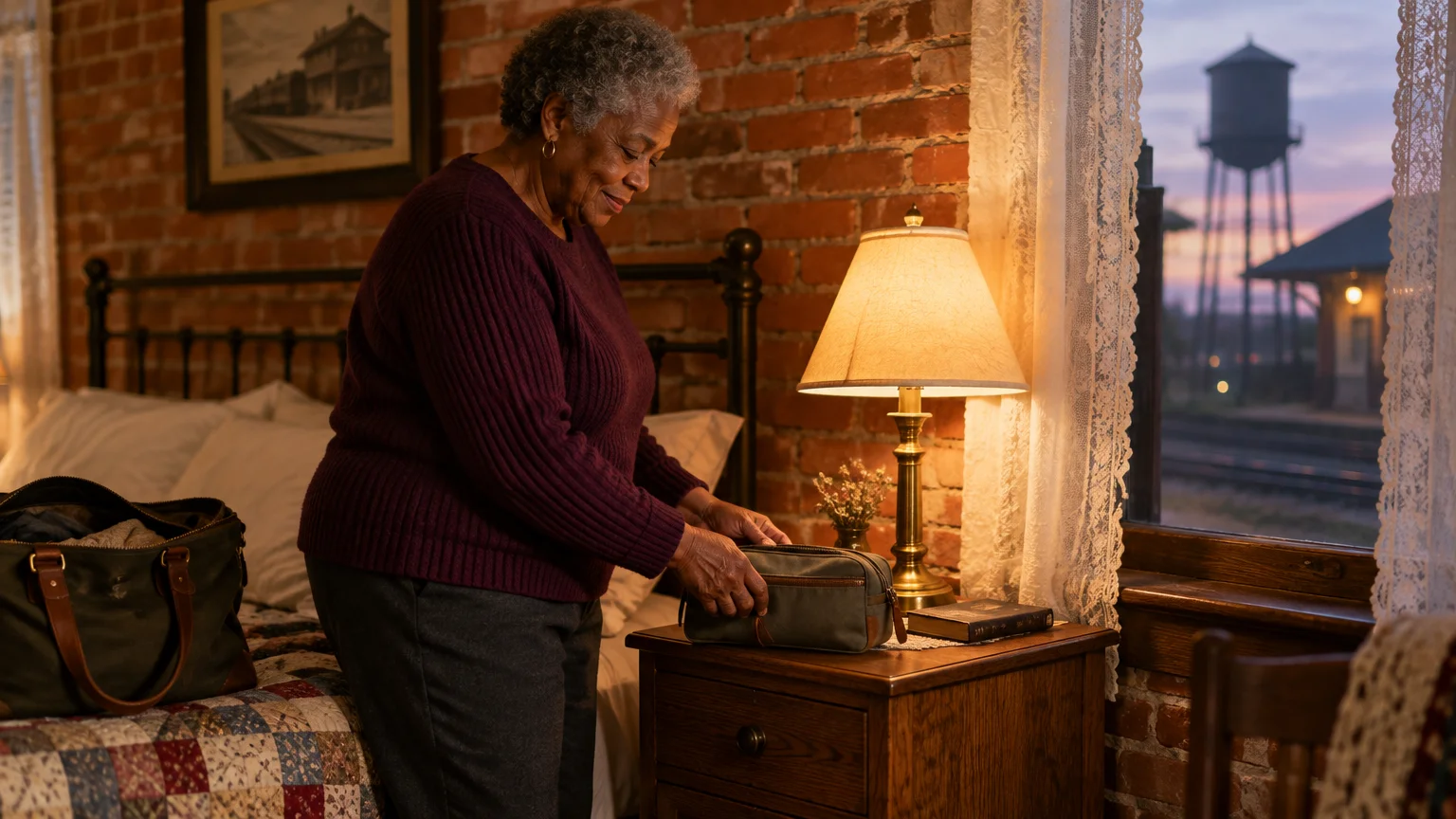
You ride through the scenic high plains and Rocky Mountains during daylight hours. Then, you step off at a historic depot town for a hot shower and a firm mattress.
Mid-route historic depot hotels often charge between $110 and $160 per night. Adding two nights of comfortable lodging to your coach fare still costs hundreds less than a single Roomette.
You wake up refreshed, explore a classic railway town, and board the next scheduled train with full energy.
Senior Fares, Passes, and Booking Rules
Every dollar counts when managing retirement finances. You should leverage every structural discount Amtrak provides to lower your baseline travel expenses.
Because seasonal ticket rates fluctuate constantly, factoring rising costs into your retirement budget guarantees unexpected price jumps will not derail your trip.
Amtrak offers a 10% discount on the lowest available rail fare for passengers aged 65 and older. This discount applies directly to Coach seats on the Empire Builder.
Remember that Amtrak eliminated the old AAA discount in 2018; they also raised the senior qualifying age from 62 to 65 at that time.
According to consumer resources from the Consumer Financial Protection Bureau, auditing small travel expenses helps protect your emergency reserves on a fixed income.
You must book your senior ticket in advance to secure the lowest coach inventory tiers. Amtrak uses dynamic pricing, meaning coach seats rise in price as departure dates approach.
You can also evaluate the standard Amtrak USA Rail Pass, which costs $499. This pass grants you 10 travel segments over a 30-day window.
However, the rail pass restricts you strictly to Coach travel with no direct sleeper upgrades permitted. Pass segments also require specific seat inventory that fills up fast during peak travel months.
If you only plan a simple segmented journey with two or three stops, buying individual senior coach tickets usually costs less than the pass.
Amtrak also operates an upgrade program called BidUp. This system allows booked coach passengers to submit blind bids for unsold Roomettes up to 36 hours before departure.
While BidUp offers potential discounts on sleeper cars, you should treat it as an optional bonus rather than your primary plan.
Scenic Route Analysis: Daylight Highlights Across the West
The Empire Builder covers 2,205 miles between Chicago and the Pacific Northwest. Running nonstop, the train spends roughly 46 hours on the tracks across two full nights.
Retirees extending their Pacific Northwest stay can combine rail segments with state park senior camping discounts to keep ongoing accommodation costs remarkably low.
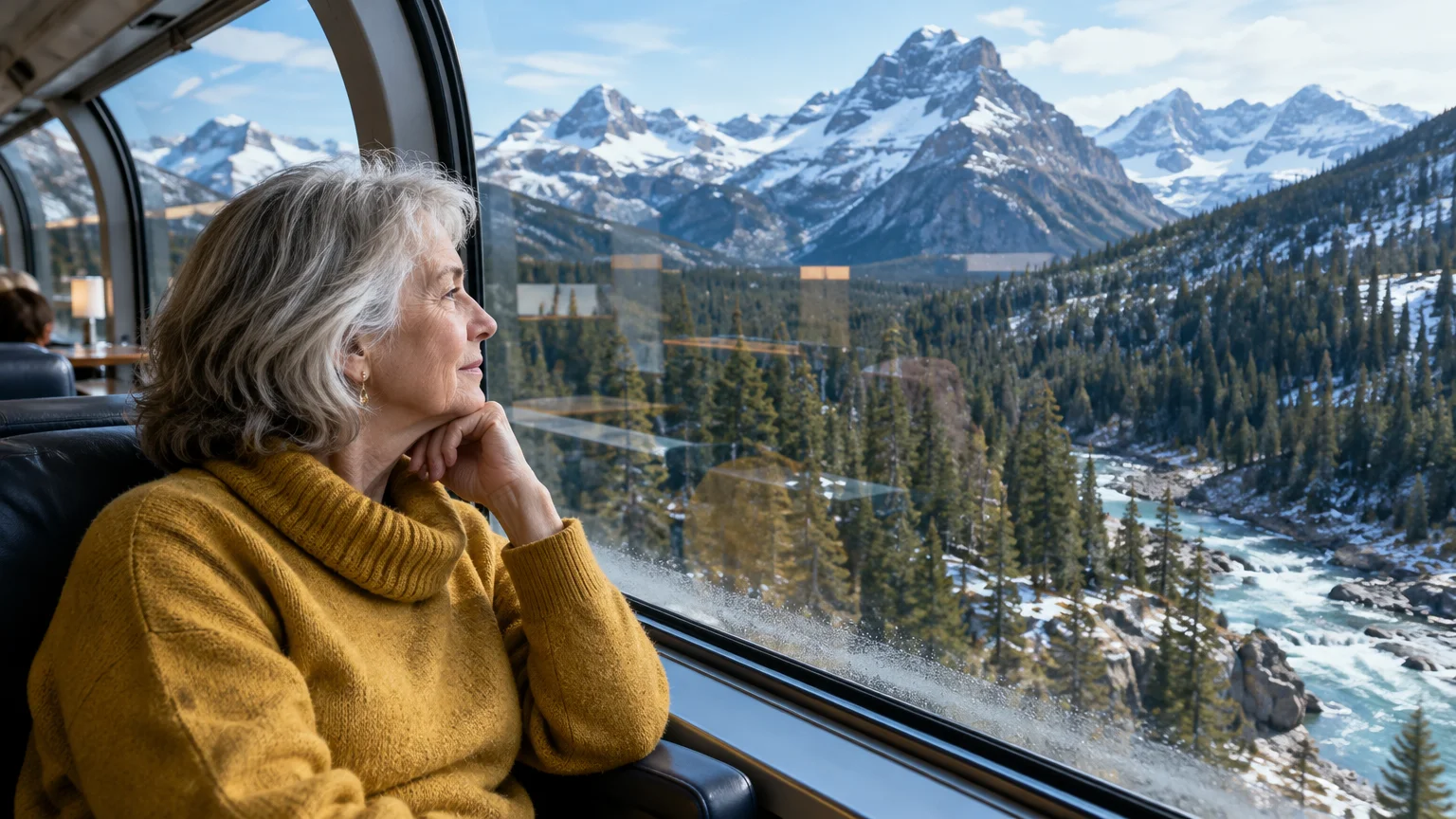
When you ride nonstop in coach, darkness hides massive sections of dramatic landscape. Scheduling depot layovers ensures you pass through the most breathtaking geography during peak daylight hours.
Here is what you encounter across the major daylight corridors of the route:
- Upper Mississippi River Valley: Train 7 follows the river bluffs along Wisconsin and Minnesota, offering dramatic water and wildlife views during late afternoon.
- North Dakota Prairie: Golden wheat fields and rolling grasslands stretch toward the horizon during morning travel west of Fargo.
- Glacier National Park Boundary: The rail line hugs the southern border of Glacier National Park, tracking the Middle Fork of the Flathead River.
- Cascade Mountains: Approaching Puget Sound, the train rolls through evergreen forests and descends into western Washington during afternoon daylight.
Westbound trains often pass through the Rocky Mountain foothills near Marias Pass during morning hours. If the train suffers freight delays, nonstop passengers risk crossing this pass after sunset.
Breaking your journey in Montana guarantees you experience the Rocky Mountain crossing in vibrant morning sunlight.
Strategic Empire Builder Itinerary and Overnight Stops
The Empire Builder runs daily as Train 7 westbound and Train 8 eastbound. The train departs Chicago Union Station at 2:15 PM and reaches Seattle 46 hours later.
Once you arrive at your destination in Seattle, arranging to house-sit for free travel lodging eliminates big-city hotel prices entirely.
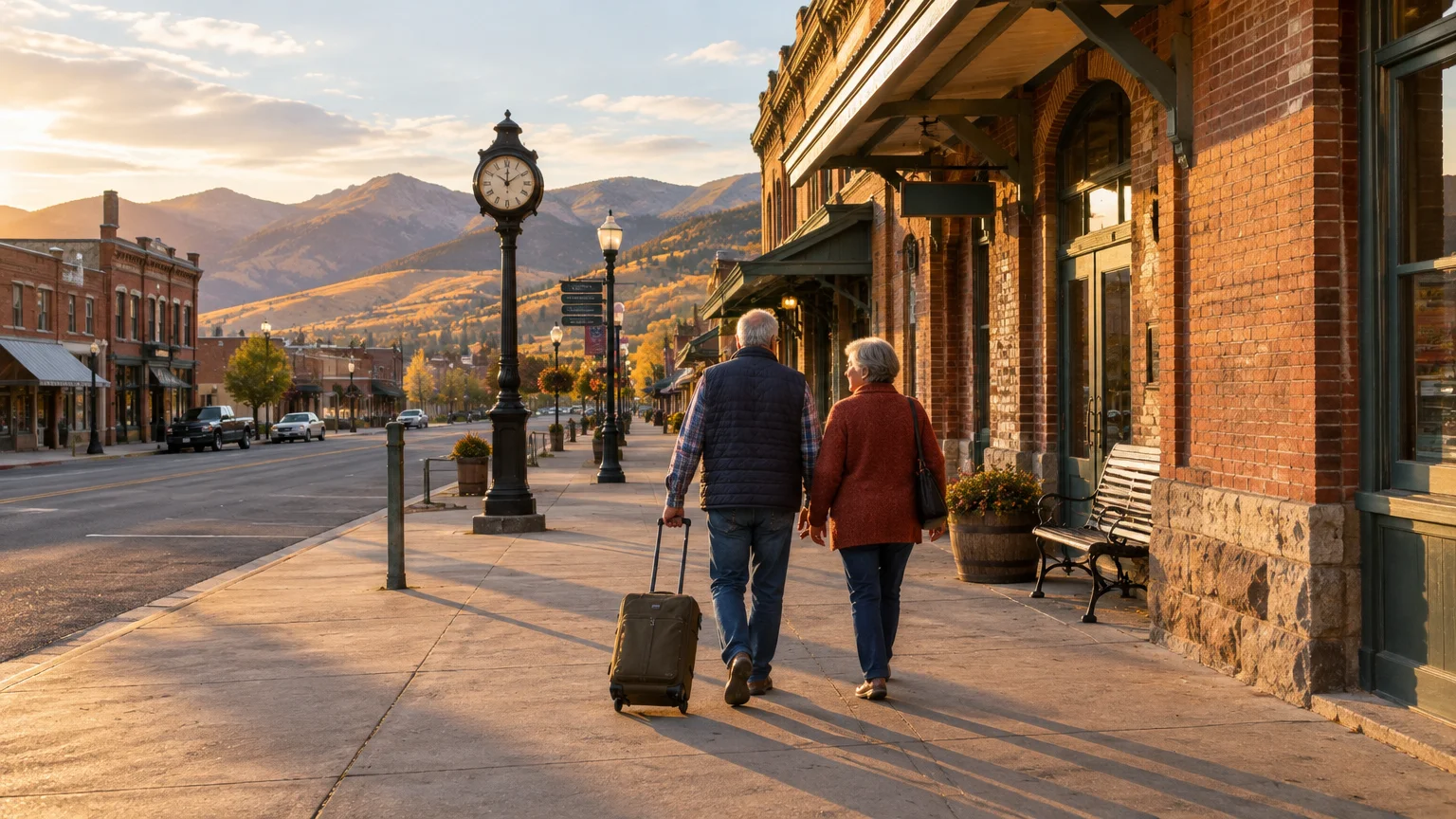
To avoid spending nights sitting in a coach seat, plan your layovers around historic stations that offer immediate walking access to lodging.
Here are the four best depot layover stations along the route:
- Red Wing, Minnesota: Located just one hour downriver from St. Paul, the depot sits steps from the historic St. James Hotel, which dates to 1875.
- Minot, North Dakota: A central prairie crew-change point with multiple budget hotels within a five-minute cab ride of the station platform.
- Whitefish, Montana: An alpine depot in the northern Rockies featuring a 1928 Great Northern Railway station within easy walking distance of downtown motels and inns.
- East Glacier Park, Montana: A seasonal summer stop where the historic 1913 Glacier Park Lodge sits directly across the platform from the tracks.
Westbound Train 7 departs Chicago at 2:15 PM. You ride past Wisconsin farmlands and cross the upper Mississippi River before twilight sets in.
If you break your trip in Whitefish, Montana, you reach the Rocky Mountains right during peak morning light on day two.
This scheduling ensures you witness the dramatic climb over Marias Pass through your window instead of sleeping through the scenery.
You can explore the town of Whitefish for an entire afternoon, eat a relaxed dinner, and sleep in a quiet hotel room.
The next morning, you board the westbound train toward Spokane, the Cascade Range, and Puget Sound fully rested.
Line-Item Cost Breakdown and Worked Example
Let us examine a real-world scenario for a 69-year-old solo traveler with an $850 monthly travel budget.
Logging these segmented ticket and room prices into free budgeting spreadsheets for retirees keeps your exact transit numbers organized before you start booking.
Applying simple lifestyle adjustments to reduce routine spending makes it much easier to fund domestic adventures like this throughout the year.
In this scenario, you travel one-way from Chicago to Seattle in early autumn using the depot hotel strategy.
You break the journey with one night in Minot, North Dakota, and one night in Whitefish, Montana.
Here is how the segmented ticket pricing breaks down with your 10% senior discount applied:
- Segment 1: Chicago to Minot (Coach): $82.80 (regular $92.00)
- Segment 2: Minot to Whitefish (Coach): $64.80 (regular $72.00)
- Segment 3: Whitefish to Seattle (Coach): $52.20 (regular $58.00)
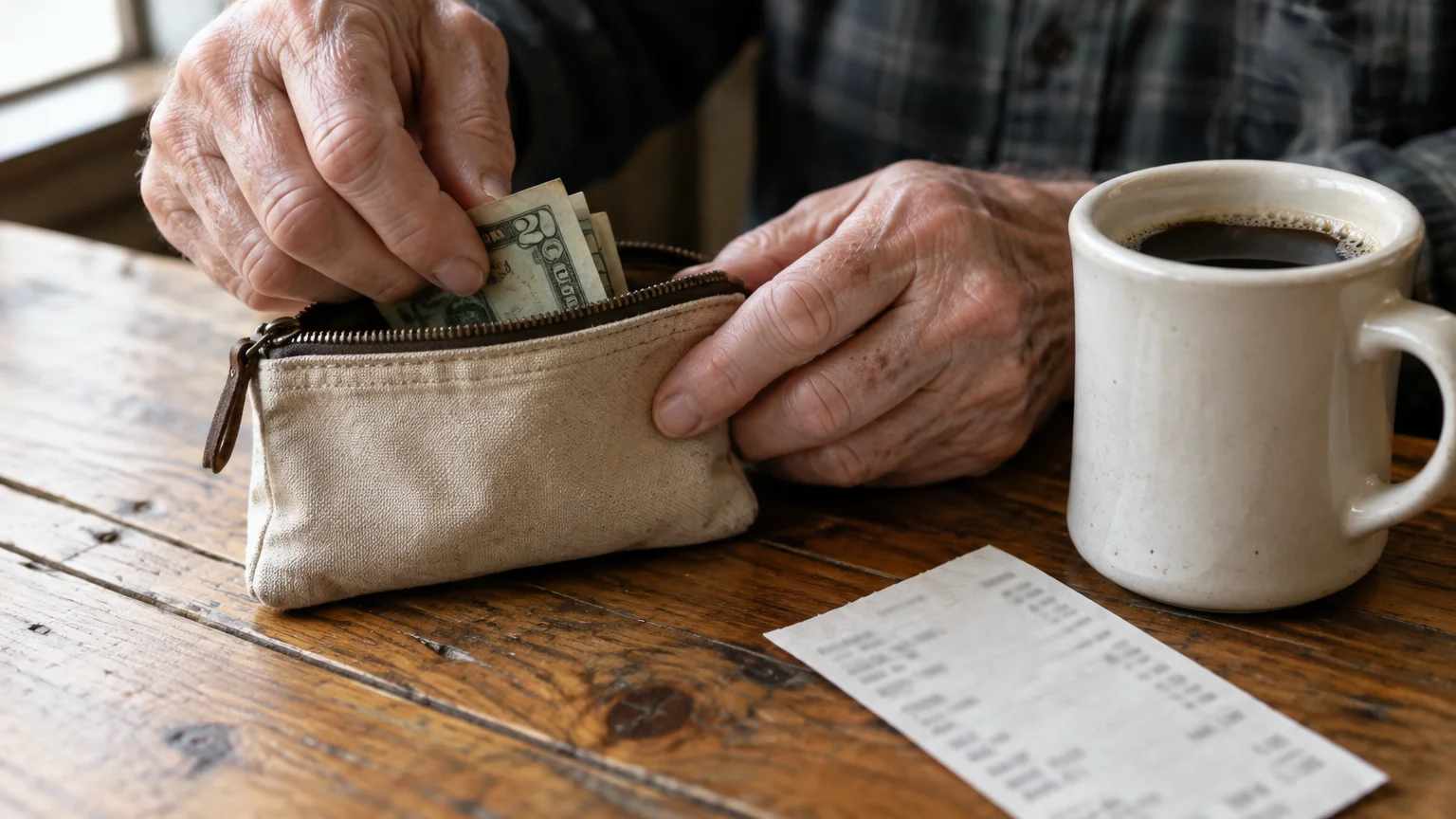
Your total rail transportation costs come to exactly $199.80 for the entire cross-country transit.
Next, calculate your lodging expenses for the two overnight depot stops along the rail line:
- Minot depot hotel (1 night, mid-scale room): $115.00
- Whitefish downtown inn (1 night, off-peak senior rate): $145.00
- Local lodging taxes and utility fees: $32.50
Your combined lodging expense across both mountain and prairie stops totals $292.50.
Compare this targeted strategy against the typical nonstop alternatives available on the Empire Builder:
| Travel Option | Transit Fare | Hotel Lodging | Estimated Food | Total Expense |
|---|---|---|---|---|
| Continuous Coach (Nonstop) | $185.00 | $0.00 | $95.00 | $280.00 |
| Direct Roomette (Nonstop) | $1,140.00 | $0.00 | $0.00 (Included) | $1,140.00 |
| Depot Hotel Strategy (Segmented) | $199.80 | $292.50 | $135.00 | $627.30 |
The depot hotel approach costs $512.70 less than booking a Roomette sleeper car.
At the same time, it shields your body from the physical exhaustion of sitting upright for 46 consecutive hours.
Travel spending guidelines from organizations like AARP highlight that splitting long trips helps seniors maintain mobility without overspending.
Food and Dining Budget for Coach Travel
Dining costs on long-distance trains can quietly wreck your budget if you rely solely on Amtrak food services.
Allocating cash in advance through envelope budgeting methods can keep spontaneous snack and drink purchases from exceeding your daily allowance.
Amtrak includes all formal meals for sleeper passengers, but coach riders must pay full retail prices out of pocket.
Coach passengers may enter the Traditional Dining car only when open tables remain after sleeper passengers eat.
Traditional Dining prices follow fixed menus: $20 for breakfast, $25 for lunch, and $45 for dinner.
Purchasing three sit-down meals in the dining car costs $90 per day, totaling $180 across two days.
The onboard Café car on the lower level of the Sightseer Lounge offers a cheaper alternative with simple grab-and-go options.
Standard Café car pricing averages $3.25 for drip coffee, $6.50 for hot breakfast sandwiches, and $8.00 for deli sandwiches.
To protect your wallet, combine smart grocery shopping with selective Café purchases.
Resources from NCOA BenefitsCheckUp remind older adults that managing daily expenses begins with controlling routine food costs.
Amtrak provides generous baggage allowances: two free personal items up to 25 pounds each, plus two carry-on bags up to 50 pounds each.
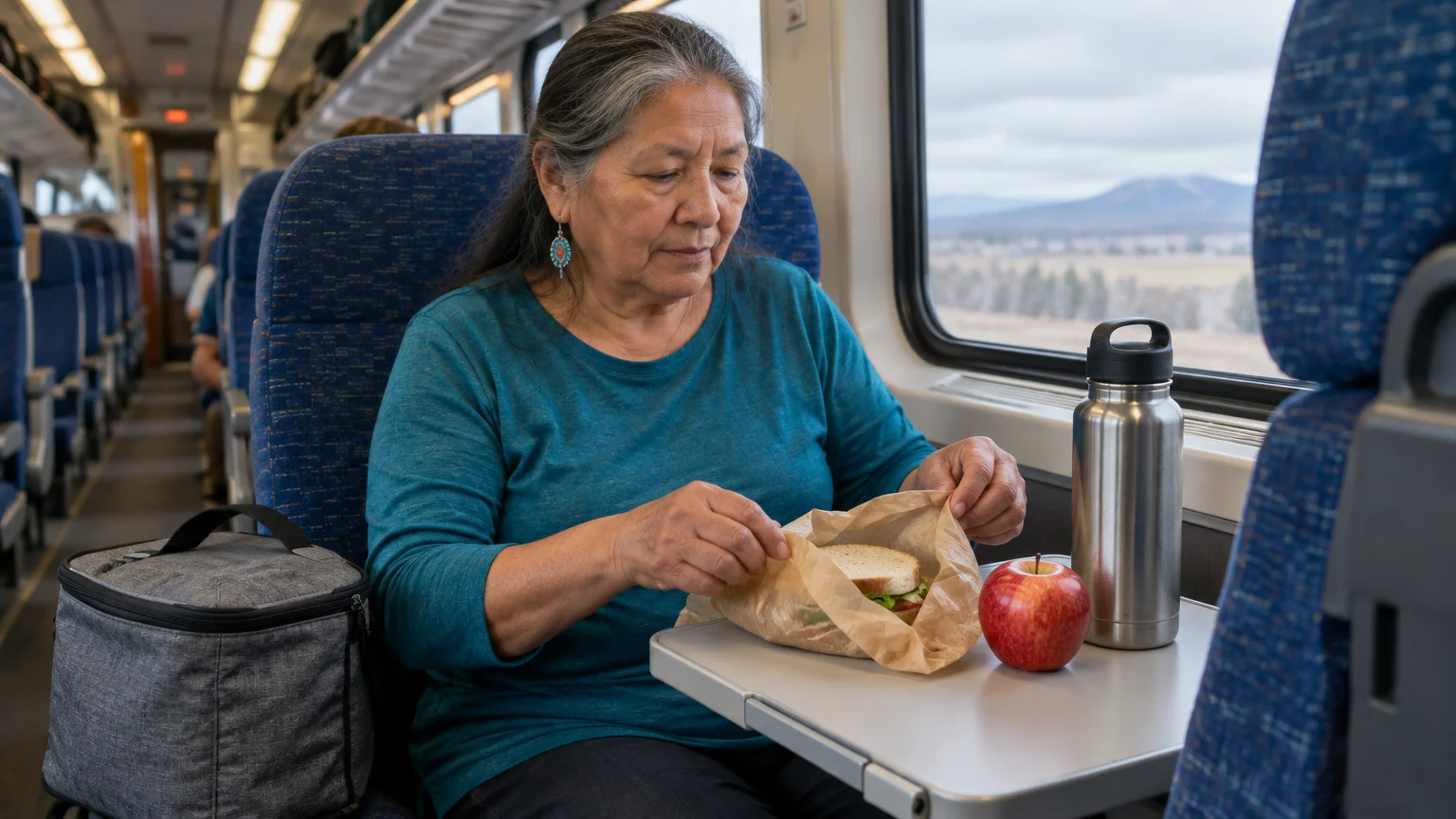
Pack a dedicated soft-sided cooler bag with shelf-stable groceries before leaving Chicago Union Station.
Here is an affordable grocery list for your daytime coach segments:
- Bagels and individual peanut butter packets: $6.50
- Apples, oranges, and seedless grapes: $7.25
- Roasted almonds and trail mix packs: $5.80
- Tuna salad lunch kits with crackers: $8.40
- Electrolyte drink tablets and instant oatmeal cups: $6.00
You can ask the Café car attendant for free hot water to prepare your own oatmeal, tea, or soup cups.
Limiting your onboard spending to one daily hot Café item keeps your food expenses under $25 per day.
Managing Physical Mobility and Comfort in Coach
Amtrak Superliner trains feature bi-level rail cars with distinct passenger configurations. Most passenger seating sits on the upper level, offering elevated sightseeing through panoramic windows.
However, navigating the train requires climbing a narrow, curved interior staircase between levels.
If you experience joint stiffness or balance issues, take advantage of specific train features to safeguard your mobility:
- Lower-Level Coach Seating: Amtrak reserves lower-level coach seats for travelers with mobility limitations, keeping you on the same floor as the restrooms.
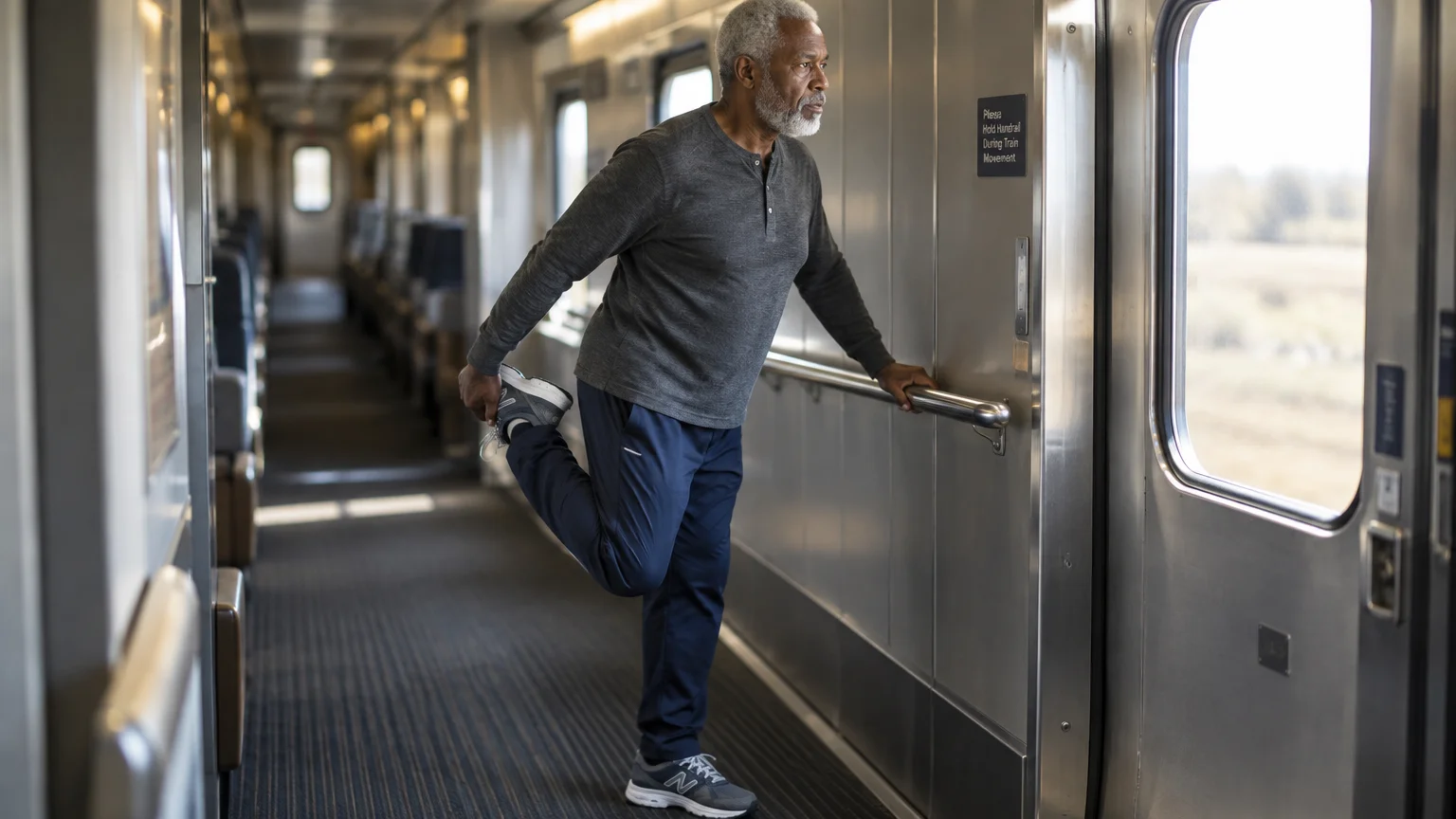
- Scheduled Fresh-Air Stops: Trains stop for 15 to 20 minutes at service stations like Minot and Havre; step onto the platform to stretch your legs.
- The Sightseer Lounge: Walk to the lounge car during mid-day stretches to sit in swiveling armchairs and change your posture.
- Conductor Assistance: Request red-cap boarding assistance at staffed stations like Chicago Union Station for complimentary golf-cart transport to your train car.
Moving between rail cars requires stepping across metal threshold plates while the train rolls at high speeds.
Always hold the overhead safety handrails firmly with both hands when walking down the center aisle.
Essential Gear and Packing Checklist
Coach seating on Amtrak Superliner train cars is substantially more spacious than commercial airline seating.
Seats recline roughly 40 degrees, feature fold-down leg rests, and offer generous legroom exceeding 50 inches.
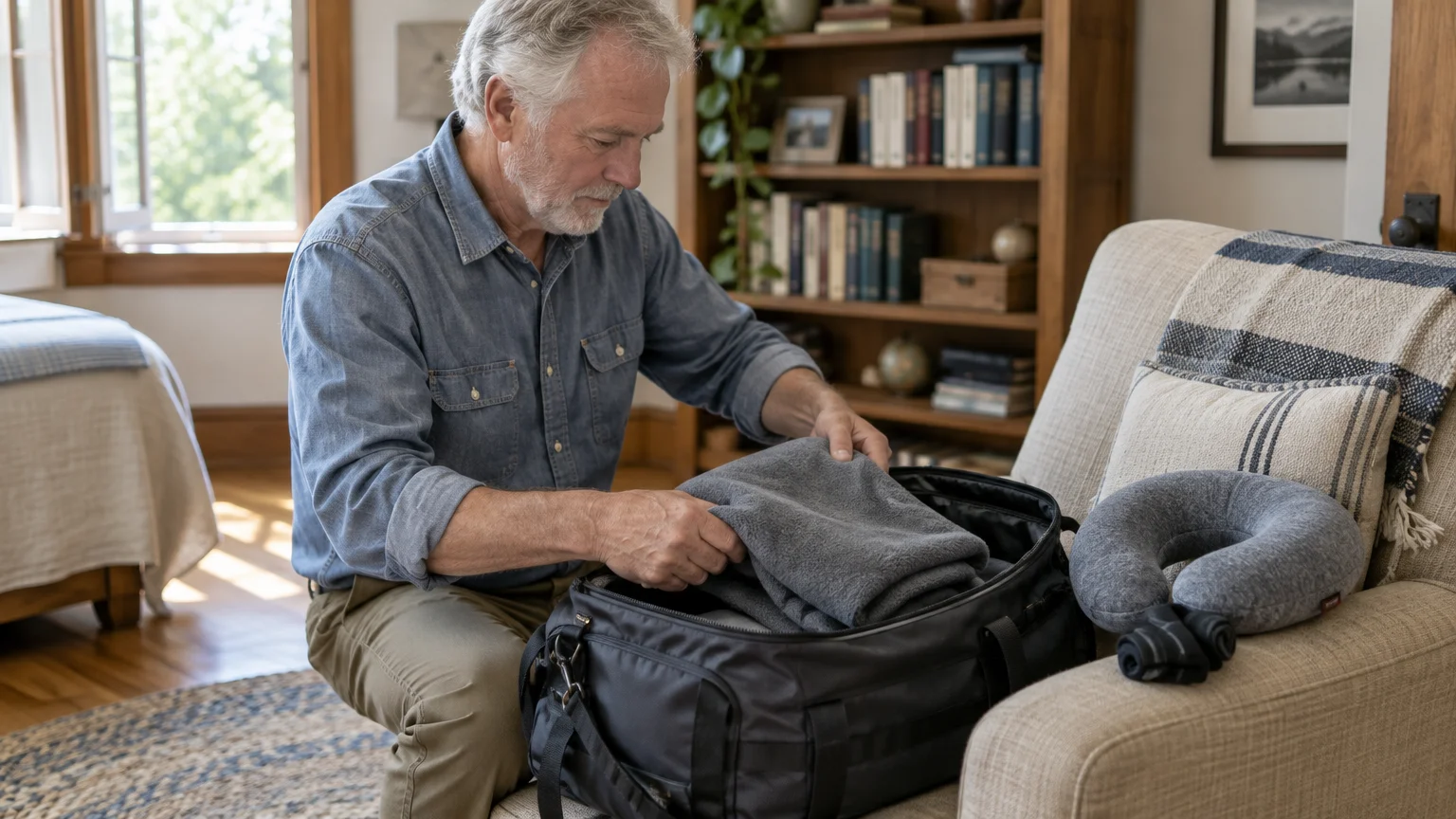
Even with ample space, maintaining comfort over several daytime hours requires the right gear in your personal bag.
Train interiors fluctuate in temperature, often becoming quite chilly across the northern plains and mountain passes.
Pack the following essentials inside your primary under-seat carry-on item:
- High-density seat cushion: A compact memory foam cushion relieves tailbone pressure during extended seating stretches.
- Fleece travel blanket: Superliner air conditioning runs cold; keep a lightweight washable throw within arm’s reach.
- Three-prong power strip: Most coach rows have only two shared electrical outlets along the window wall.
- Contoured eye mask and silicone earplugs: Block out station platform lights and overnight maintenance announcements during early morning stops.
- Compression socks: Graduated 15-20 mmHg socks encourage healthy circulation while seated during daytime rail stretches.
- Refillable insulated water bottle: Fill up at station water fountains to stay hydrated without paying high bottle prices onboard.
Keep your daily medications and valuable identification in your smaller personal bag at all times.
Never pack prescription medicines in checked luggage or leave them unattended in overhead storage racks.

Step-by-Step Ticket Booking Action Plan
Booking multi-segment rail itineraries requires careful execution to lock in lowest-tier coach pricing.
Follow these concrete steps to structure your cross-country trip without paying booking agency fees:
- Select your target travel dates at least 60 to 90 days in advance to capture the cheapest coach inventory buckets.
- Open the official Amtrak booking portal and choose the “Multi-City” trip option instead of “One-Way.”
- Enter your individual segments (Chicago to Minot, Minot to Whitefish, and Whitefish to Seattle) with your planned layover dates.
- Select the “Senior (65+)” traveler profile to apply your automatic 10% fare discount across all rail segments.
- Confirm that your depot hotels have vacancies within walking distance or brief shuttle access before finalizing your train purchase.
- Review your luggage allowance to ensure your bags match Amtrak’s 50-pound carry-on limit per piece.
- Print physical boarding passes or store digital QR codes in your smartphone digital wallet prior to station arrival.
Booking directly through Amtrak allows free trip modifications if your schedule changes prior to departure day.
Frequently Asked Questions
Can I shower on Amtrak if I travel in coach?
Coach passengers cannot access onboard showers on the Empire Builder. Those facilities are reserved exclusively for sleeper car guests.
Taking overnight depot hotel layovers guarantees you a private bathroom and hot shower at the end of each travel day.
What happens if the westbound train arrives late at my depot stop?
Amtrak long-distance trains can face freight rail delays across North Dakota and Montana.
Contact your depot hotel ahead of time to confirm late-arrival check-in procedures and request ground-floor room access.
Can I leave my heavy luggage on the train during a hotel layover?
No, you must take all baggage off the train when you disembark at your scheduled layover station.
Amtrak does not hold or store luggage onboard between separate ticketed segments.
Is coach seating assigned when booking the Empire Builder?
Amtrak conductors assign coach seats as passengers board based on their destination station.
Arrive at Chicago Union Station early to request a window seat on the scenic right-hand side.
How does the senior discount apply to sleeper roomettes if I choose to upgrade?
The 10% senior discount applies only to the rail fare component of your ticket.
It does not discount the sleeper accommodation surcharge fee.
Disclaimer: This article is for informational purposes only. Benefits, programs, and regulations can change.
We encourage readers to verify current information with official government sources and consult with qualified professionals for personalized advice.



1 Comment