
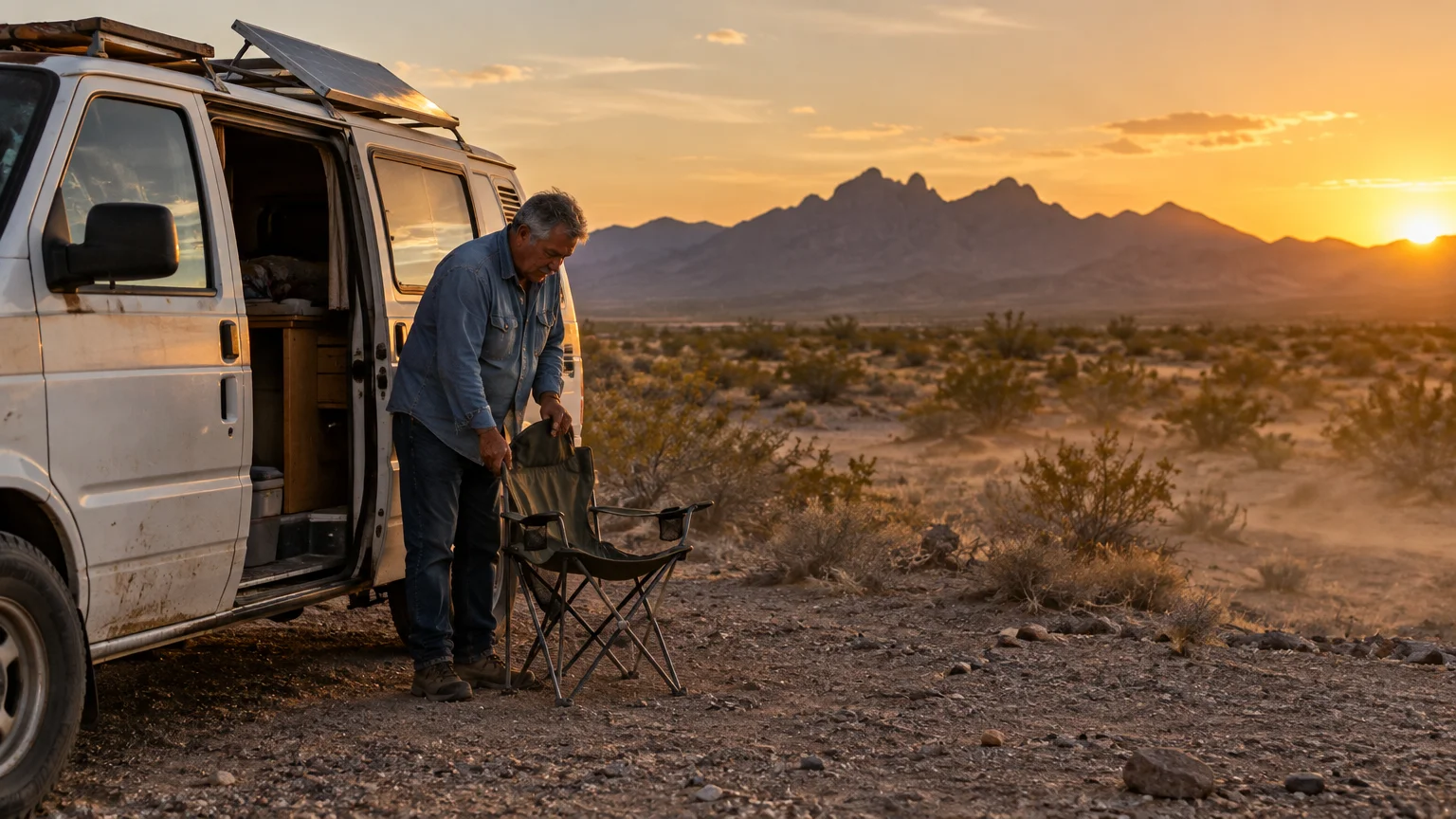
You can test desert campervan retirement without spending thousands of dollars on crowded private RV parks. Quartzsite, Arizona provides an affordable proving ground on Bureau of Land Management public acreage.
Most published guides assume you drive a forty-foot motorhome with massive holding tanks. This guide demonstrates how a retired couple can thrive in a standard campervan by using the BLM 500-foot toilet rule and tactical power budgeting.
You will learn permit options, off-grid battery management, and water hauling routines to live comfortably on desert public land.
In this guide9 sections
- Understanding BLM Land Options: LTVA vs. Free Dispersed Camping
- The 500-Foot Rule: Meeting Self-Containment Regulations in a Campervan
- Power and Energy Budgeting for Desert Campervan Living
- Water Hauling and Waste Management Step-by-Step
- Managing Desert Weather, Heating, and Daily Comfort
- Healthcare Logistics, Supplies, and Emergency Preparedness
- Community, The Big Tent RV Show, and Social Connection
- Sample Seven-Day Budget and Supplies for a Retired Couple
- Frequently Asked Questions
Understanding BLM Land Options: LTVA vs. Free Dispersed Camping
The Bureau of Land Management manages millions of acres surrounding Quartzsite. Retirees choose between fee-based Long Term Visitor Areas and free dispersed desert parcels.
If you plan to break up long stretches of boondocking with developed public campgrounds, check out state park senior camping discounts to keep fees low on travel days.
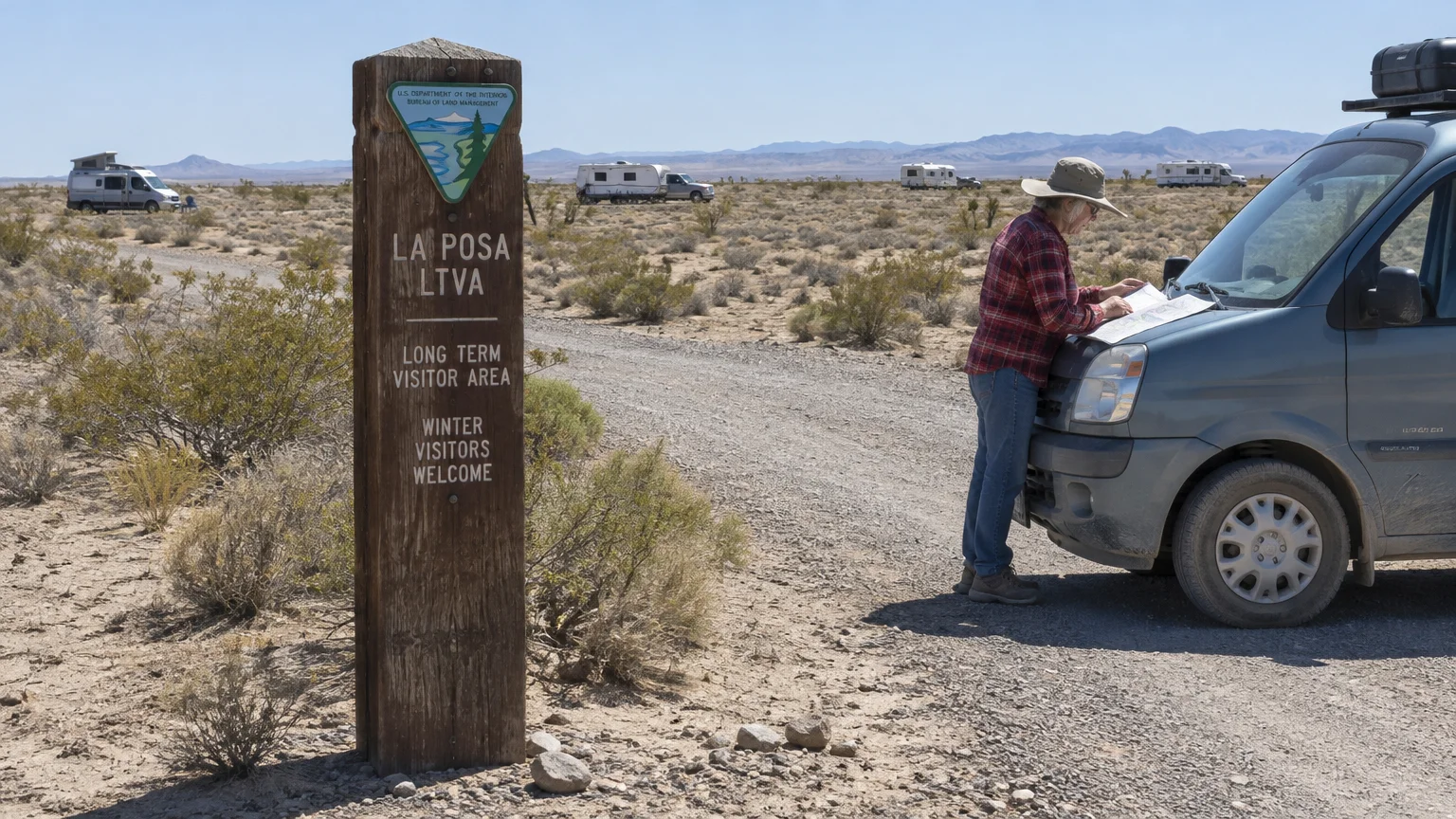
The La Posa Long Term Visitor Area spans approximately 11,400 acres divided into four distinct sections: North, South, West, and Tyson Wash. The official winter season runs from September 15 through April 15 annually.
A seasonal LTVA permit costs $180 and covers your stay for the entire seven-month window. This single permit grants access to all seven designated BLM LTVAs across southern Arizona and southeastern California.
If you prefer a shorter trial run, you can purchase a short-visit permit for $40. This option grants 14 consecutive days of access and allows unlimited consecutive renewals.
Free dispersed camping areas lie directly outside the LTVA borders, including Dome Rock Road, Hi Jolly, Scaddan Wash, and Plomosa Road. These dispersed sites cost nothing but enforce strict operational limitations.
Federal regulations restrict dispersed camping to 14 days within any 28-day window. Once your 14 days expire, you must relocate your campervan at least 25 miles away.
Dispersed zones offer zero amenities, requiring complete self-sufficiency. In contrast, your LTVA permit includes access to centralized dump stations, fresh drinking water faucets, dumpsters, and vault toilets.
| Camping Location | Permit Fee | Maximum Stay Limit | Included Utility Services | Distance to Central Quartzsite |
|---|---|---|---|---|
| La Posa LTVA (North, South, West, Tyson Wash) | $180 seasonal or $40 per 14 days | Up to 7 months (Sept 15 – Apr 15) | Fresh water stations, dump stations, trash dumpsters, vault toilets | 0.5 to 3.5 miles |
| Dome Rock Road Dispersed | $0 (Free public access) | 14 days within a 28-day period | None (pack-it-in, pack-it-out) | 5.2 miles west |
| Hi Jolly Dispersed | $0 (Free public access) | 14 days within a 28-day period | None (pack-it-in, pack-it-out) | 3.1 miles north |
| Plomosa Road Dispersed | $0 (Free public access) | 14 days within a 28-day period | None (pack-it-in, pack-it-out) | 6.4 miles north |
The 500-Foot Rule: Meeting Self-Containment Regulations in a Campervan
Federal supplementary rules mandate that campers inside the La Posa LTVA occupy a self-contained vehicle. The BLM defines self-contained vehicles as rigs containing permanently mounted black and gray water tanks.
Pairing BLM boondocking with day trips across the Southwest is made even more affordable when carrying a pass outlined in our National Park senior pass guide.
Most standard Class B campervans and converted cargo vans lack large permanent black tanks. Fortunately, the BLM provides an explicit regulatory exception for smaller rigs.
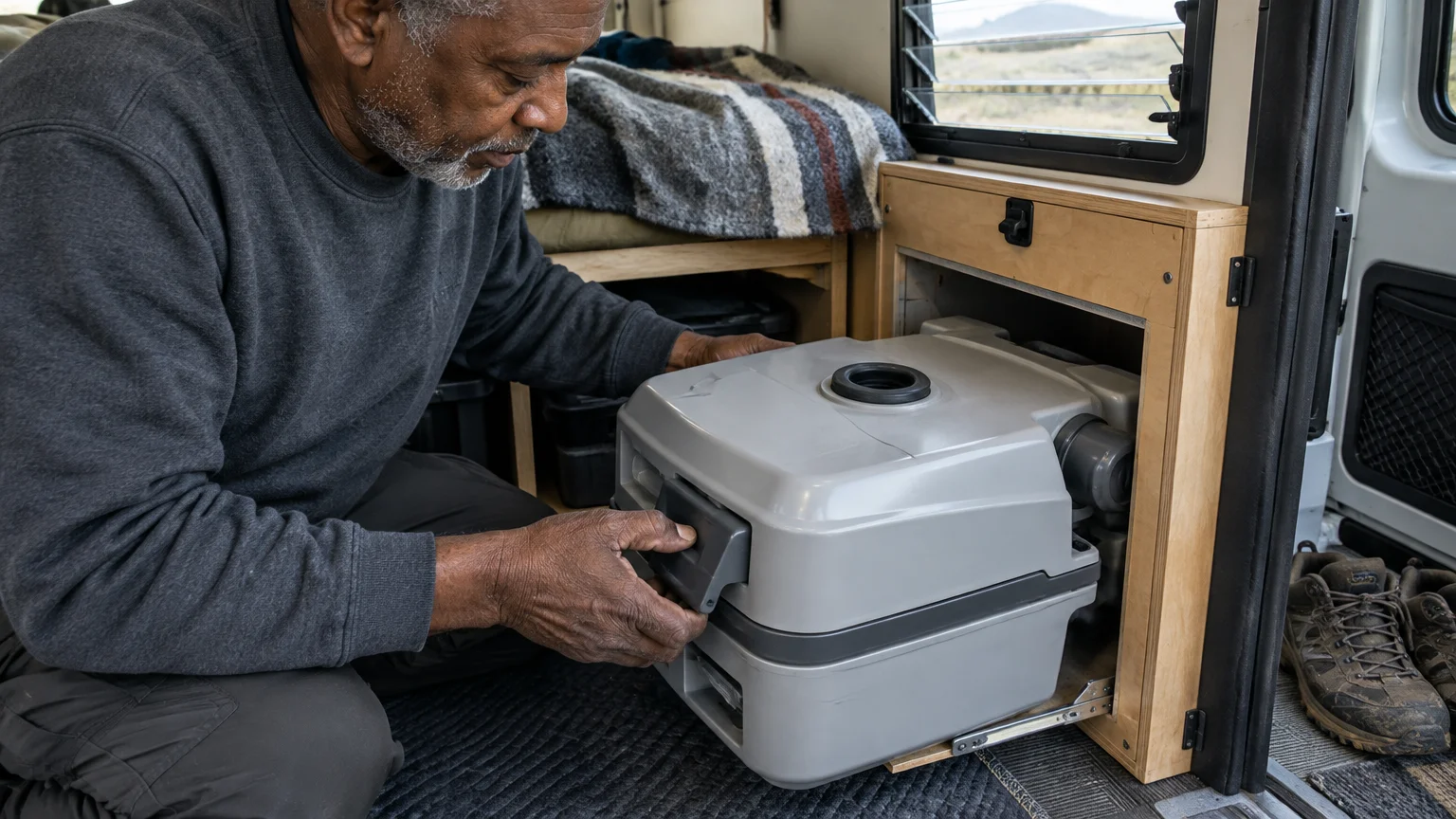
You can camp legally without built-in tanks if you park within 500 feet of an official BLM vault toilet. This exception allows campervan retirees with portable cassette toilets to enjoy LTVA amenities safely.
Rangers patrol the camping zones regularly and verify compliance using laser rangefinders. You should verify your parking spot during initial setup to avoid citations.
An average adult walking stride covers approximately 2.5 to 3 feet. You can pace out 165 steps from the entrance of the vault toilet structure to your van’s bumper to verify your position.
- Locate the vault toilets on the BLM map near La Posa South or the Tyson Wash contact station before parking.
- Pace your camp boundary immediately after pulling off the graded gravel access path.
- Ensure your portable cassette toilet remains secured inside your vehicle for overnight personal use.
- Never empty portable toilet cassettes into desert wash washes or surface soil.
- Transport portable toilet waste exclusively to official dump station receptacles or designated vault facilities.
Gray water disposal falls under identical strict environmental regulations. Emptying dishwater or sink basins onto the open desert floor violates federal conservation laws.
Store your sink drainage inside an onboard tank or a sealed five-gallon portable container. Transport this gray water directly to the centralized disposal station at La Posa South.
Power and Energy Budgeting for Desert Campervan Living
Boondocking requires managing your electrical needs without an electrical hookup. Retirees must balance daily electrical loads against seasonal solar energy harvest.
Medical equipment, interior lighting, and food preservation create the primary electrical demand for couples. A CPAP machine running all night requires careful daily battery budgeting.
Consider this worked scenario for a retired couple spending January in a campervan equipped with a 12-volt electrical system. The daily load breakdown requires specific calculations:
- 12-volt compressor refrigerator (Dometic CFX3 55 set to 36°F): 35 Amp-hours (420 Watt-hours) per day.
- ResMed AirSense 11 CPAP machine (DC converter, humidifier off): 24 Amp-hours (288 Watt-hours) per 8-hour night.
- Overhead LED lighting and 12-volt water pump: 8 Amp-hours (96 Watt-hours) per day.
- Charging two smartphones and one tablet computer: 12 Amp-hours (144 Watt-hours) per day.
- Diesel parking heater fan operation (running 7 hours on low): 11 Amp-hours (132 Watt-hours) overnight.
Summing these individual loads yields a total daily consumption of 90 Amp-hours, or approximately 1,080 Watt-hours. To maintain safety margins, you must avoid draining lead-acid batteries past 50 percent capacity.
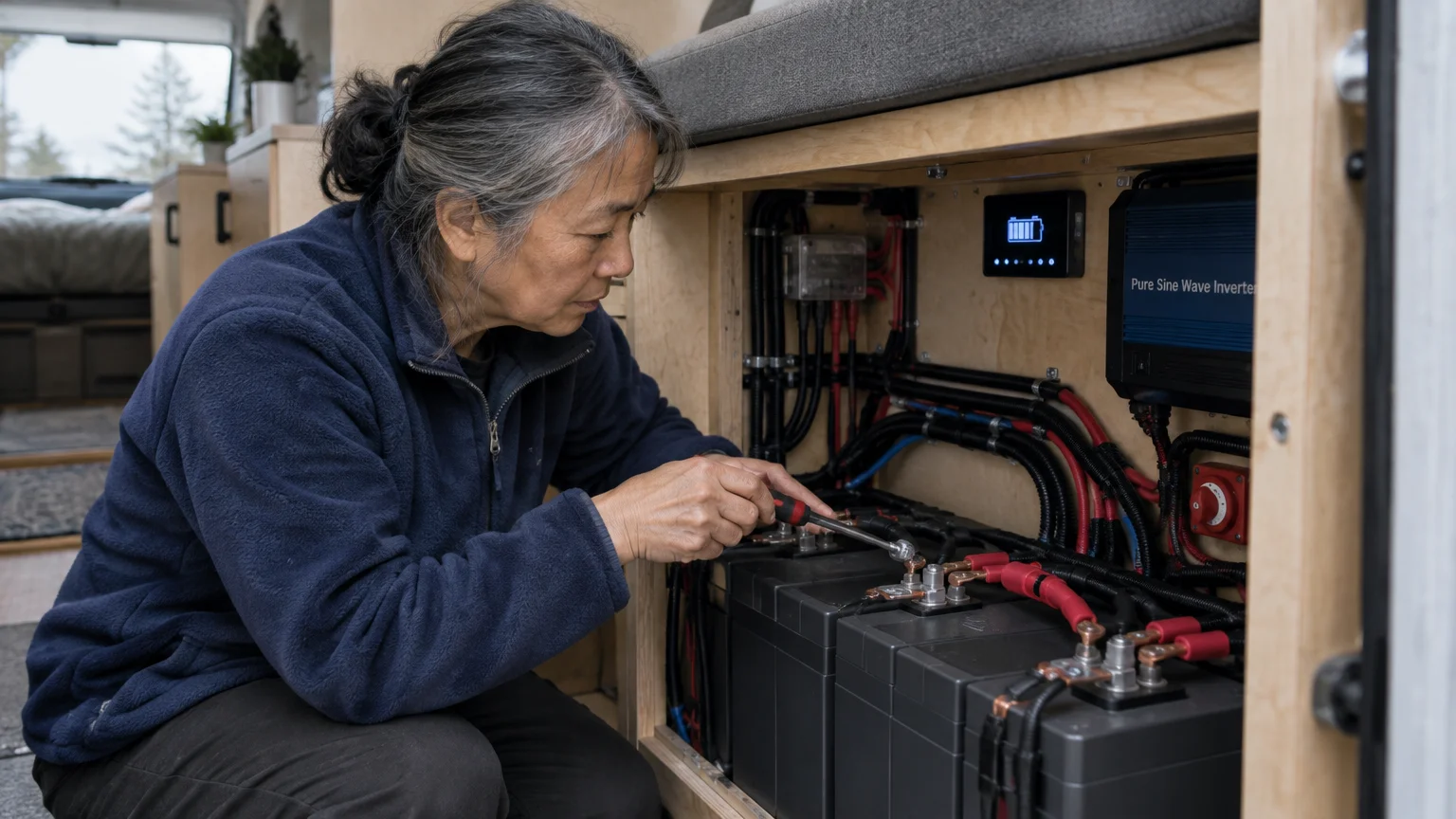
A 200 Amp-hour lithium iron phosphate (LiFePO4) battery bank suits this specific consumption pattern perfectly. A 200Ah lithium battery delivers 160 usable Amp-hours safely, granting nearly two full days of reserve power.
Quartzsite experiences an average of 4.5 peak sun hours per day during December and January. Flat rooftop solar panels lose roughly 25 percent efficiency due to the low winter sun angle.
A 300-watt rooftop solar array generates roughly 1,012 Watt-hours daily under clear skies (300 watts × 4.5 hours × 0.75 efficiency). This generation matches your 1,080 Watt-hour daily draw closely.
Adding a portable 100-watt ground-mounted solar panel that tilts directly toward the southern horizon secures your energy balance. That additional tilted panel adds 360 Watt-hours daily, easily covering overcast periods.
- Check your battery monitor voltage and state of charge every morning at 7:00 AM.
- Angle your portable solar panel directly south toward the sun by 8:30 AM.
- Run high-draw items, such as laptop chargers and rechargeable tool batteries, between 11:00 AM and 2:00 PM.
- Adjust the tilt of your portable solar panel to catch afternoon sun rays around 2:30 PM.
- Stow portable panels and switch your CPAP machine to 12-volt direct current before bedtime.
Water Hauling and Waste Management Step-by-Step
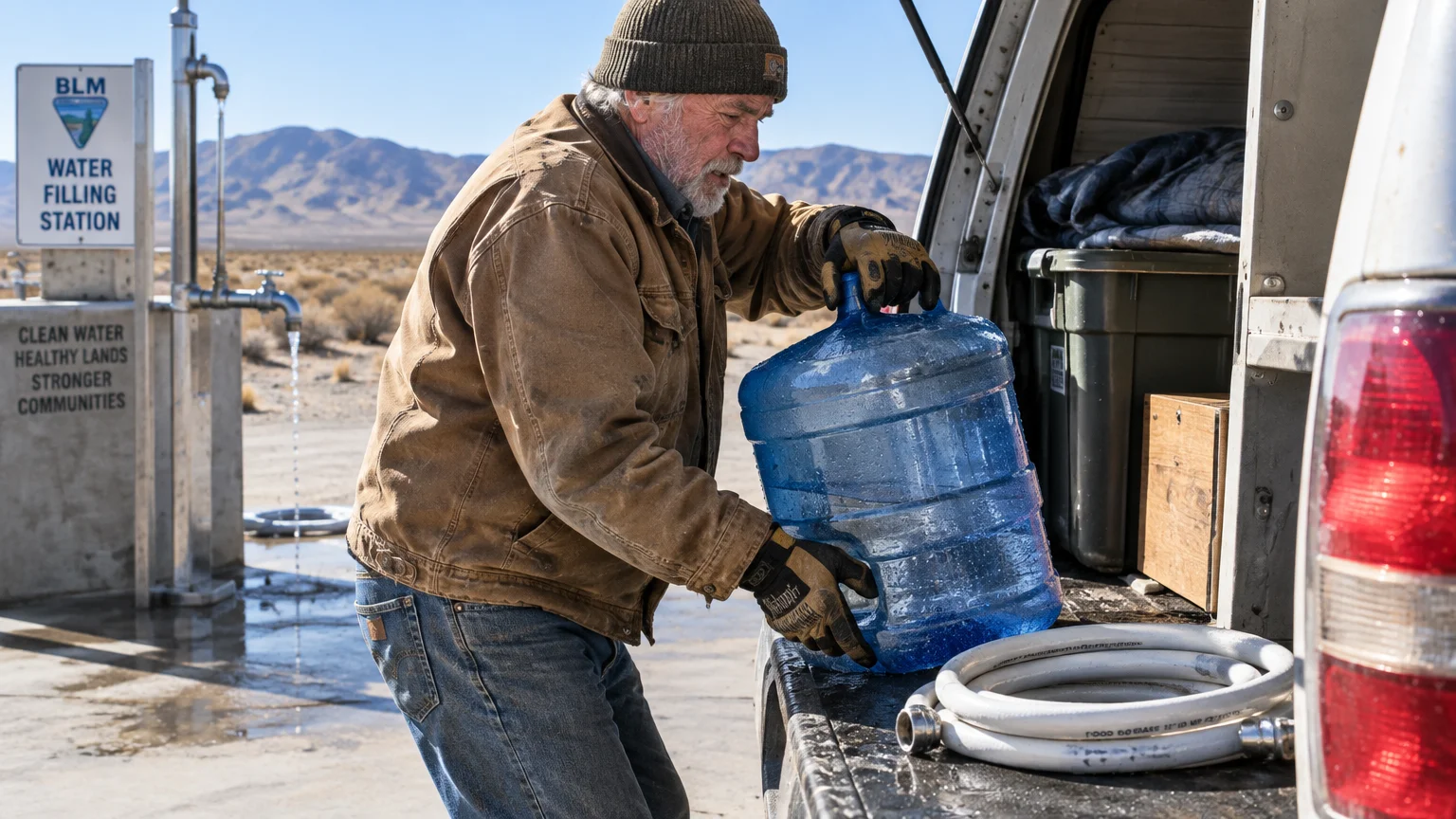
Most campervans feature small fresh water tanks holding between 15 and 25 gallons. A retired couple practicing sensible conservation uses approximately four gallons of fresh water daily.
At four gallons daily, a 20-gallon fresh tank requires refilling every five days. Packing camp to drive your campervan to the water station can disrupt your established site.
Experienced campervan retirees keep their van stationary by using secondary water hauling containers. You can haul potable water using rigid portable containers without moving your campervan.
- Purchase two food-grade, six-gallon water jugs (such as Reliance Aqua-Tainers) and store them inside your van garage.
- Drive your secondary towed vehicle, ride an electric bicycle, or walk the jugs to the potable spigots at La Posa South.
- Sanitize the water spigot threads with an alcohol wipe before connecting your drinking hose.
- Fill your containers using a dedicated drinking water hose marked specifically for potable water use.
- Transfer the water into your campervan’s exterior gravity-fill port using a clean 12-volt portable transfer pump.
Emptying gray water requires similar planning to avoid breaking camp every few days. A wheeled ten-gallon waste tote allows you to drain gray water smoothly.
Dump stations experience significant congestion during mid-day hours throughout January. Plan your utility visits between 7:00 AM and 8:30 AM, or after 4:00 PM, to avoid waiting in long lines.
Managing Desert Weather, Heating, and Daily Comfort
Quartzsite winter weather features pleasant afternoons but surprisingly cold nights. High temperatures range between 65°F and 75°F under intense desert sunshine.
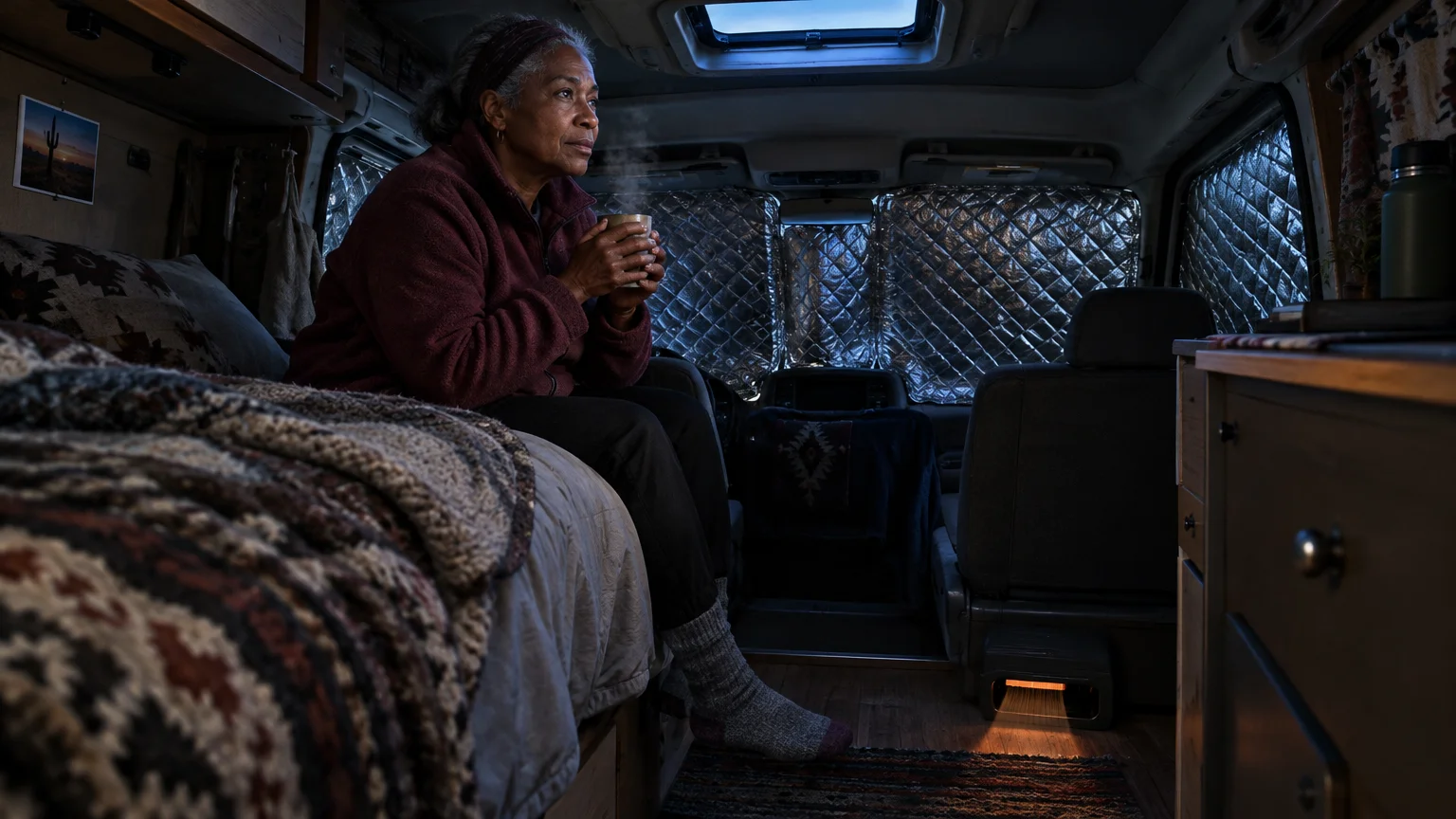
Once the sun drops behind the Dome Rock Mountains, temperatures plummet rapidly. Dry desert air causes nighttime lows to dip routinely into the mid-30s and low-40s.
Relying on electric space heaters will drain an off-grid campervan battery bank within three hours. You must install a dedicated fuel-based heat source to stay comfortable.
Vented diesel air heaters (such as Webasto or Espar units) or sealed propane furnaces (such as Propex) provide dry, safe warmth. These heaters vent all combustion exhaust and moisture outside the vehicle cabin.
Avoid unvented portable propane heaters like standard catalytic units inside tight campervan spaces. Unvented heaters release water vapor that condenses on cold metal van walls, accelerating mold growth.
- Install an active carbon monoxide detector at bed level and test its batteries every month.
- Place a reflective thermal curtain between the front cab seats and the rear living quarters to block glass heat loss.
- Fit custom insulating covers into rooftop fan openings and rear window frames before dusk.
- Layer your bed with a high-loft down comforter and a 12-volt heated mattress pad drawing under 40 watts.
- Clean fine desert dust off your rooftop solar panels twice weekly using a soft microfiber squeegee.
Windstorms present another notable winter desert hazard in the La Paz Valley. Sustained gusts can exceed 40 miles per hour, lifting loose sand and damaging campervan awnings.
Roll up and latch your exterior awning whenever you leave camp or retire for the evening. Park your campervan nose into the prevailing westerly wind to minimize vehicle sway during nocturnal gusts.
Healthcare Logistics, Supplies, and Emergency Preparedness
Quartzsite maintains a small permanent population of around 2,400 year-round residents with a median age near 73. During winter, hundreds of thousands of retirees arrive, stretching local medical resources.
Before heading out into remote desert areas, ensure you have the best Medicare coverage for full-time RVers so your healthcare needs and prescription refills remain covered away from home.
The town hosts walk-in clinics for basic triage and prescriptions, including La Paz Medical Services on Central Street. However, the town lacks an acute care hospital or emergency trauma facility.
If you experience a severe medical crisis, emergency services must transport you out of town. Palo Verde Hospital in Blythe, California sits approximately 22 miles west along Interstate 10.
La Paz Regional Hospital in Parker, Arizona sits approximately 35 miles north on State Route 95. You should map driving routes to both regional hospitals before your arrival.
Crossing the state border into California for emergency medical care can impact your insurance network. You should verify your out-of-network emergency coverage rules through Medicare.gov before traveling west.
- Refill all 90-day maintenance prescriptions before arriving in Quartzsite to avoid supply chain shortages.
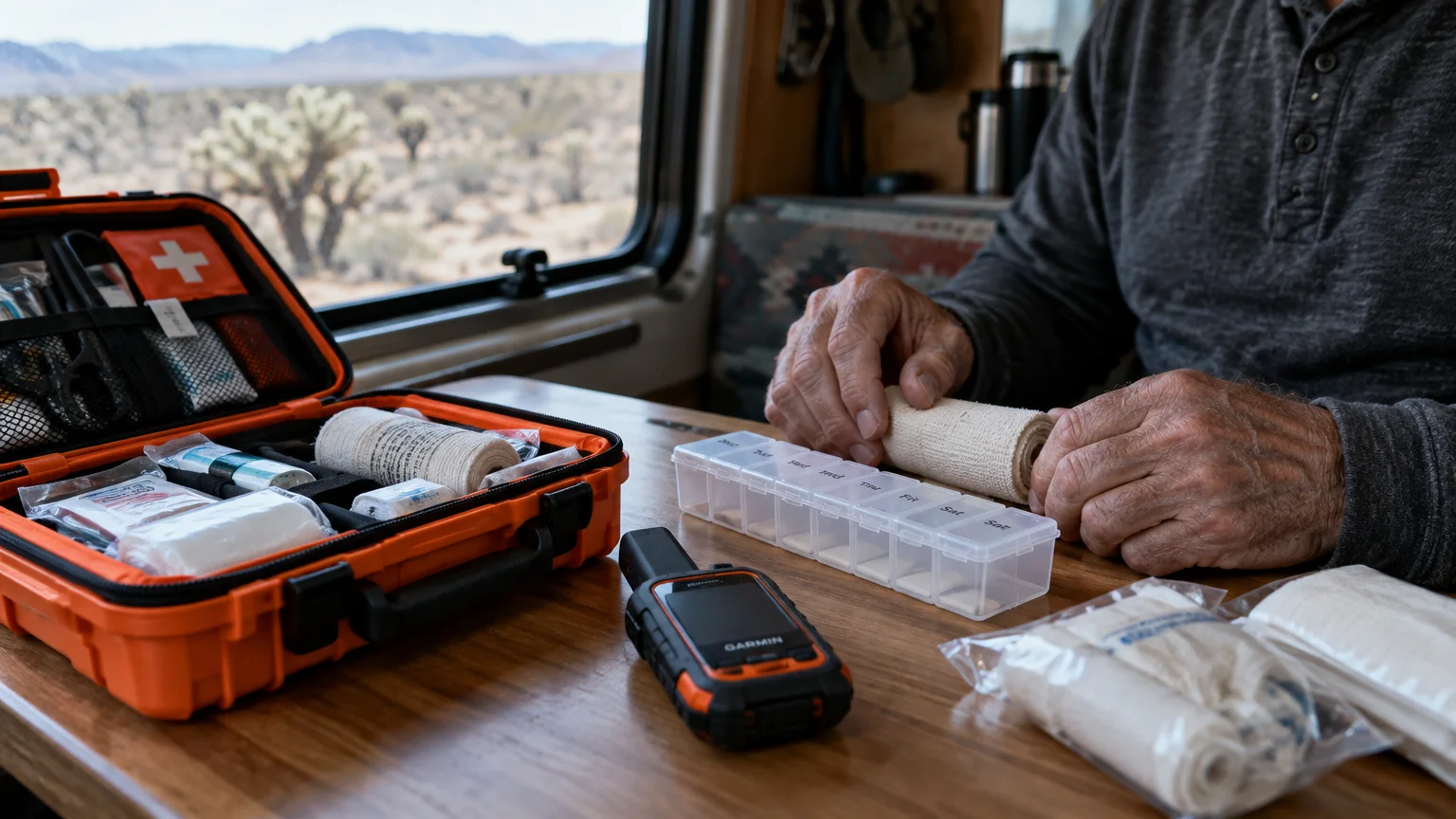
- Carry physical copies of your medical history, current medication lists, and emergency contact numbers in your glovebox.
- Store an emergency paper map in your van, as regional cellular towers frequently experience overload during January.
- Enroll in a reputable medical air evacuation membership program designed for traveling snowbirds.
- Keep your vehicle fuel tank at least half-full in case an emergency requires immediate transit to Parker or Blythe.
Cellular data speeds fluctuate significantly based on crowd density across the camping zones. Signal boosters help maintain connectivity for medical monitoring devices and telehealth calls.
Community, The Big Tent RV Show, and Social Connection
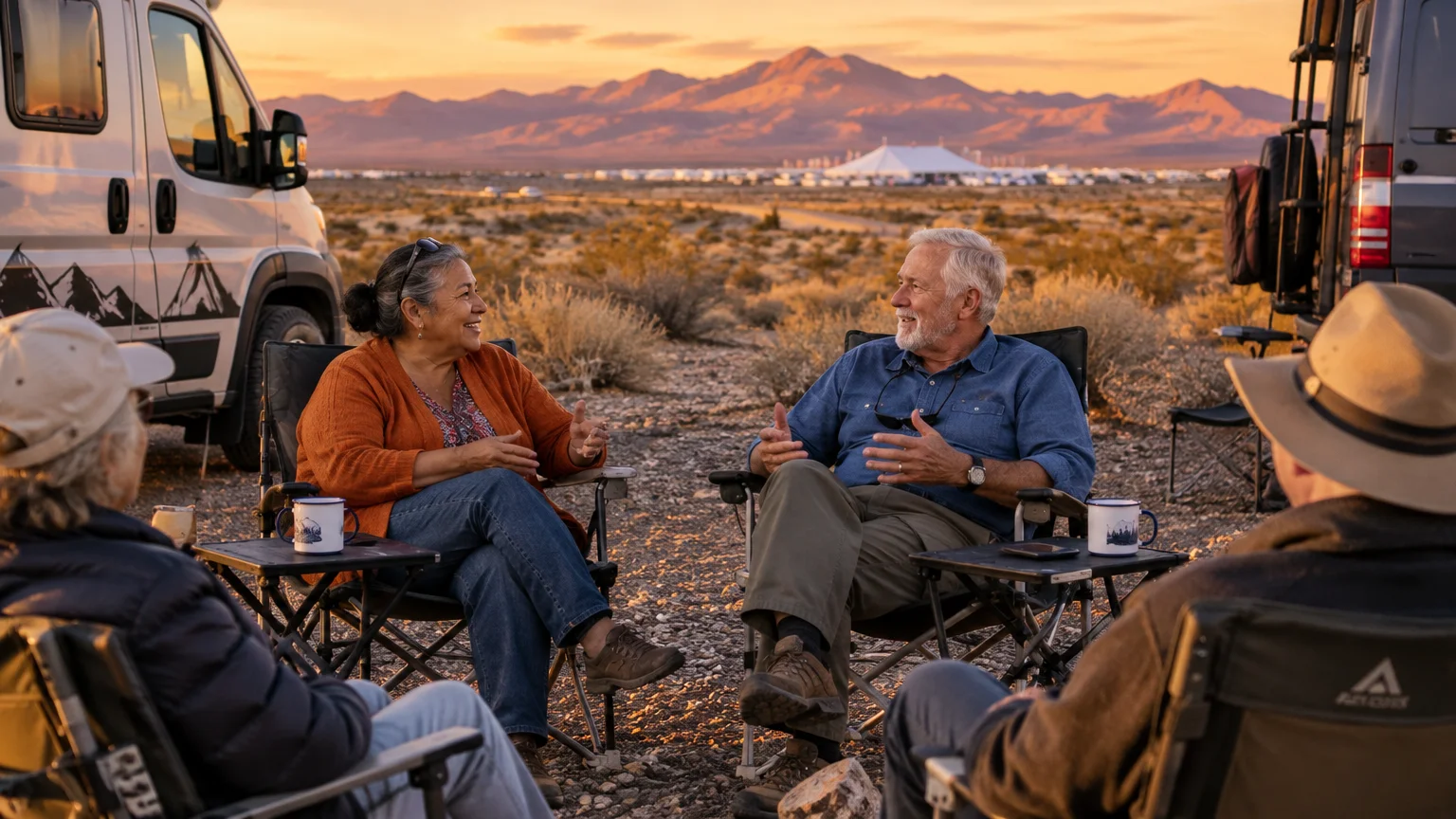
Boondocking in Quartzsite provides access to a welcoming, active community of retired travelers. Thousands of retirees gather here specifically to escape social isolation during winter months.
The centerpiece of the winter season is the Quartzsite Sports, Vacation & RV Show, known locally as “The Big Tent.” The event runs for nine consecutive days in mid-to-late January under a 70,000-square-foot structure.
Over 150,000 people attend the show to inspect off-grid electronics, specialized campervan hardware, and mobile living accessories. Admission and parking are free, making it an accessible gathering for budget-conscious snowbirds.
You do not need to attend commercial shows to find social connection in the desert. Specific campervan, regional, and hobby clubs organize informal gatherings across the public lands every week.
You can locate active retiree groups focused on outdoor recreation and travel through community resources provided by AARP. These gatherings host campfire seminars covering solar installation, van maintenance, and public land preservation.
- Attend the morning Quartzsite flea markets along Main Street and Tyson Drive to meet fellow campervan travelers.
- Join organized morning desert walking groups that depart from the La Posa South contact station daily at 8:00 AM.
- Tune your portable AM/FM radio to local bulletin stations to track free pancake breakfasts and craft fairs.
- Participate in community book exchanges located inside local laundromats and visitor centers.
Respect neighboring campers by observing established desert etiquette. Maintain a buffer of at least 150 feet between vehicles when parking in open dispersed zones, and observe quiet hours from 10:00 PM to 6:00 AM.
Sample Seven-Day Budget and Supplies for a Retired Couple
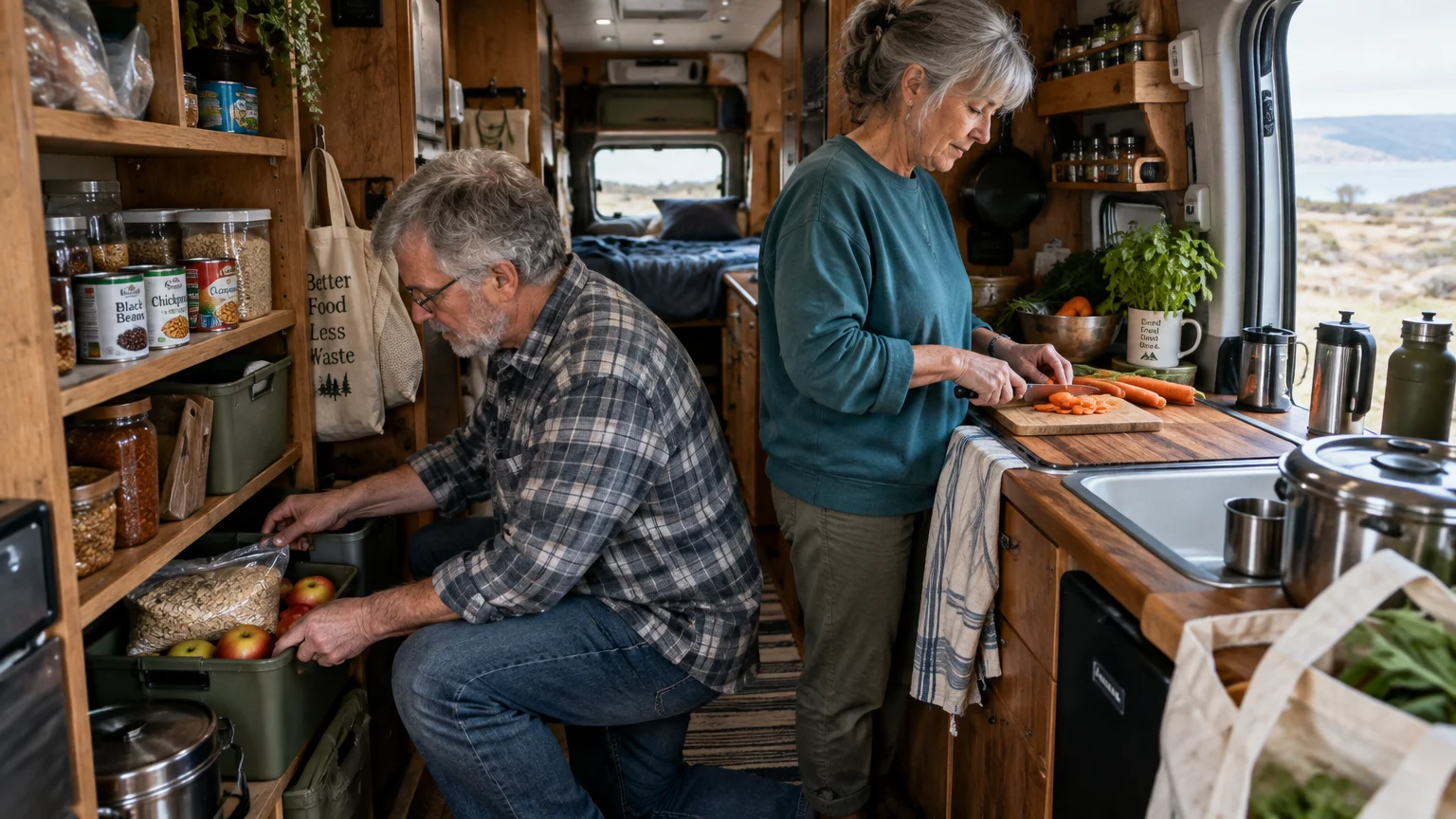
Boondocking on BLM land offers a sensible way to protect your fixed retirement income. Eliminating commercial RV park fees allows you to stretch your monthly resources effectively.
Couples budgeting their monthly distributions from the Social Security Administration can control variable living expenses by cooking onboard and utilizing public lands.
The following worked expense breakdown outlines the total living costs for two retirees spending seven days in Quartzsite. This scenario assumes you hold a two-week LTVA short permit:
- BLM LTVA Permit: $20 (half of a $40 fourteen-day permit allocated across seven days).
- Groceries and provisions (purchased at Blythe or Parker supermarkets): $135.
- Heating fuel (diesel or propane refills): $14.
- Potable water refills and dump station fees: $0 (included fully with LTVA permit).
- Laundromat (washing two loads at Main Street laundromat): $12.
- Van fuel for local errands (50 miles total driving): $18.
The total cost for the entire week equals $199. That equals an operating expense of approximately $28.43 per day for two people.
To keep grocery costs predictable, purchase bulk dry staples before entering La Paz County. Quartzsite maintains small general stores, but larger supermarkets in Blythe and Parker charge substantially lower prices.
Frequently Asked Questions
Can I legally dump my campervan gray water directly on the ground at Quartzsite?
No. BLM regulations prohibit discharging gray water onto public land. You must dispose of all gray water at designated dump stations within the LTVA.
Do I need a generator if I have solar panels on my campervan?
A small 2,000-watt inverter generator provides reliable backup power during consecutive cloudy winter days. However, a properly sized 300-watt solar array handles basic CPAP and refrigeration demands without a generator under normal sunny conditions.
Is cellular phone service reliable for remote telehealth visits in Quartzsite?
Major carriers provide cellular coverage, but network congestion peaks during mid-January when crowds arrive. Telehealth visits work best when scheduled before 9:00 AM or after 7:00 PM when cellular traffic declines.
Can I leave my campervan unattended while exploring the surrounding area?
Yes, you can leave your campervan unattended during daytime hours. Ensure you lock all doors, stow loose outdoor gear, roll up awnings, and leave your valid BLM permit clearly displayed in your vehicle window.
Disclaimer: This article is for informational purposes only. Benefits, programs, and regulations can change.
We encourage readers to verify current information with official government sources and consult with qualified professionals for personalized advice.



2 Comments