
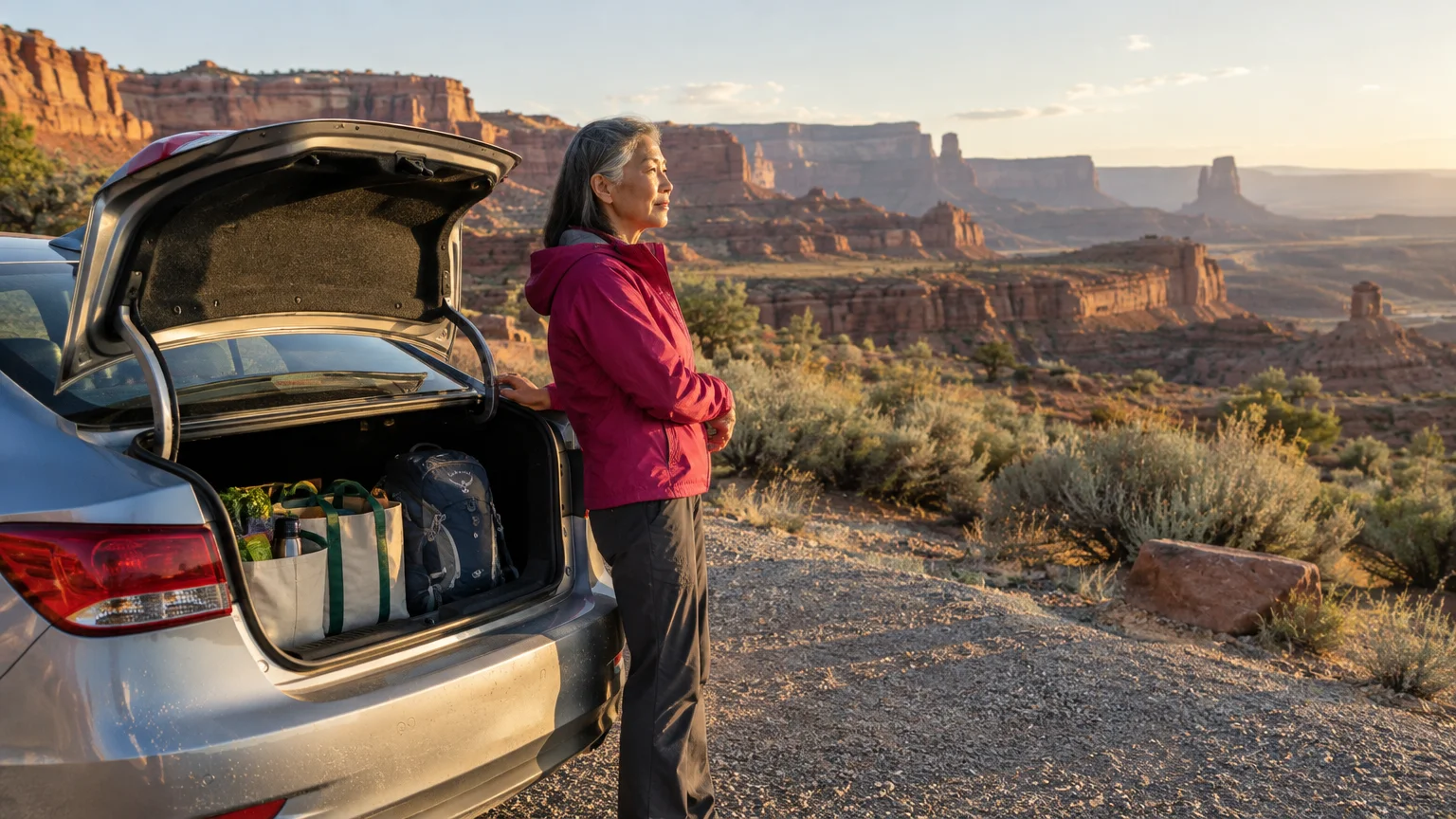
You can tour Utah’s Mighty 5 in a standard sedan on a modest retirement budget without paying $250 each night at crowded gateway motels.
Choosing peripheral staging towns 40 miles outside federal park boundaries cuts nightly lodging rates by more than half. Pairing those rooms with thermal grocery totes slashes daily food bills.
This targeted blueprint details exact lodging hubs, grocery strategies, and entrance fee rules to help you execute an affordable national parks travel route for two under $95 daily.
In this guide8 sections
- The 40-Mile Rule: Choosing Peripheral Base Towns
- Maximizing the America the Beautiful Senior Pass
- Thermal Grocery Totes: Slashing Meal Overhead in a Sedan
- Lodging and Dining Cost Breakdown: Gateway vs. Peripheral
- Worked Example: A 7-Day Utah Mighty 5 Itinerary Under $670
- Sedan Fuel Efficiency and Scenic Driving Tactics
- Fixed-Income Travel Resources and Federal Benefits
- Frequently Asked Questions
The 40-Mile Rule: Choosing Peripheral Base Towns
Gateway towns directly outside national park gates charge premium rates for basic amenities. Springdale sits at the entrance of Zion Canyon, where chain hotels routinely charge $280 to $350 per night.
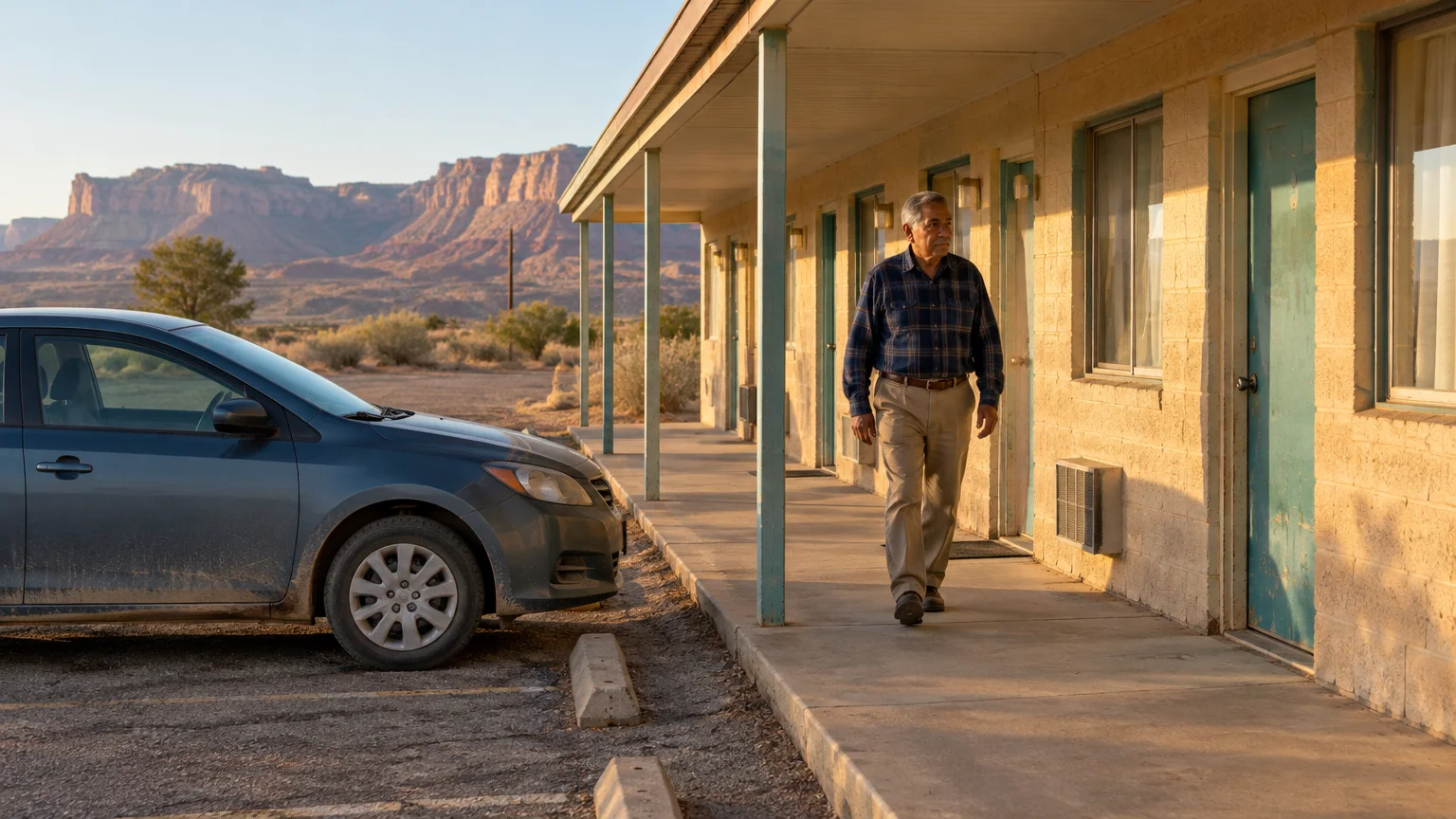
Driving 23 miles west on Utah State Route 9 brings you to Hurricane and La Verkin. Nightly rates in these towns drop to $85 to $115 for clean, traditional roadside motels.
The 40-mile radius creates dramatic savings across the entire southern Utah corridor. You trade approximately 35 to 45 minutes of morning driving for hundreds of dollars in weekly savings.
Moab operates on identical tourist economics, charging over $240 nightly for budget lodging near Arches and Canyonlands. Staging 52 miles north in Green River on Interstate 70 cuts those lodging bills in half.
When planning a cheap national park trip, use these strategic staging towns instead of expensive park gateways:
- Zion National Park: Base in Hurricane or Cedar City instead of Springdale or Rockville.
- Bryce Canyon National Park: Base in Panguitch (24 miles west) instead of Bryce Canyon City.
- Capitol Reef National Park: Base in Loa or Richfield instead of Torrey.
- Arches and Canyonlands National Parks: Base in Green River or Monticello instead of downtown Moab.
Peripheral towns offer additional financial advantages beyond cheaper beds. Fuel prices in working agricultural or transport hubs stay 20 to 40 cents cheaper per gallon than at park entrances.
These larger communities also house regional supermarkets rather than high-priced tourist convenience marts. This difference allows you to stock supplies at standard neighborhood prices.
Maximizing the America the Beautiful Senior Pass
The America the Beautiful Senior Lifetime Pass represents one of the strongest federal values available to older Americans. It costs $80 and covers lifetime access to more than 2,000 federal recreation sites.
If you prefer an annual option, the Senior Annual Pass costs $20 per year. You can trade four consecutive annual passes in for a lifetime pass at no additional fee.
You qualify if you are a United States citizen or permanent resident aged 62 or older. You must present valid government identification, such as a state driver’s license, to prove age.
Always buy your pass directly at a park entrance station or federal agency field office. Purchasing in person carries a $0 processing fee, whereas ordering online through the USGS store incurs an extra $10 charge.
Standard vehicle entrance fees at Zion, Bryce, and Arches run $35 each, while Capitol Reef charges $20 for the scenic drive. Buying individual entries across the Mighty 5 totals $160.
The $80 Senior Lifetime Pass cuts that fee burden immediately on your first multi-park vacation. It covers the pass owner and all passengers in a single non-commercial vehicle.
Retirees managing permanent physical impairments qualify for the America the Beautiful Access Pass. This pass is entirely free and provides the same lifetime entry privileges as the senior credential.
Learn more about how federal recreation benefits align with other retirement supports through the federal benefit programs cataloged on Benefits.gov.
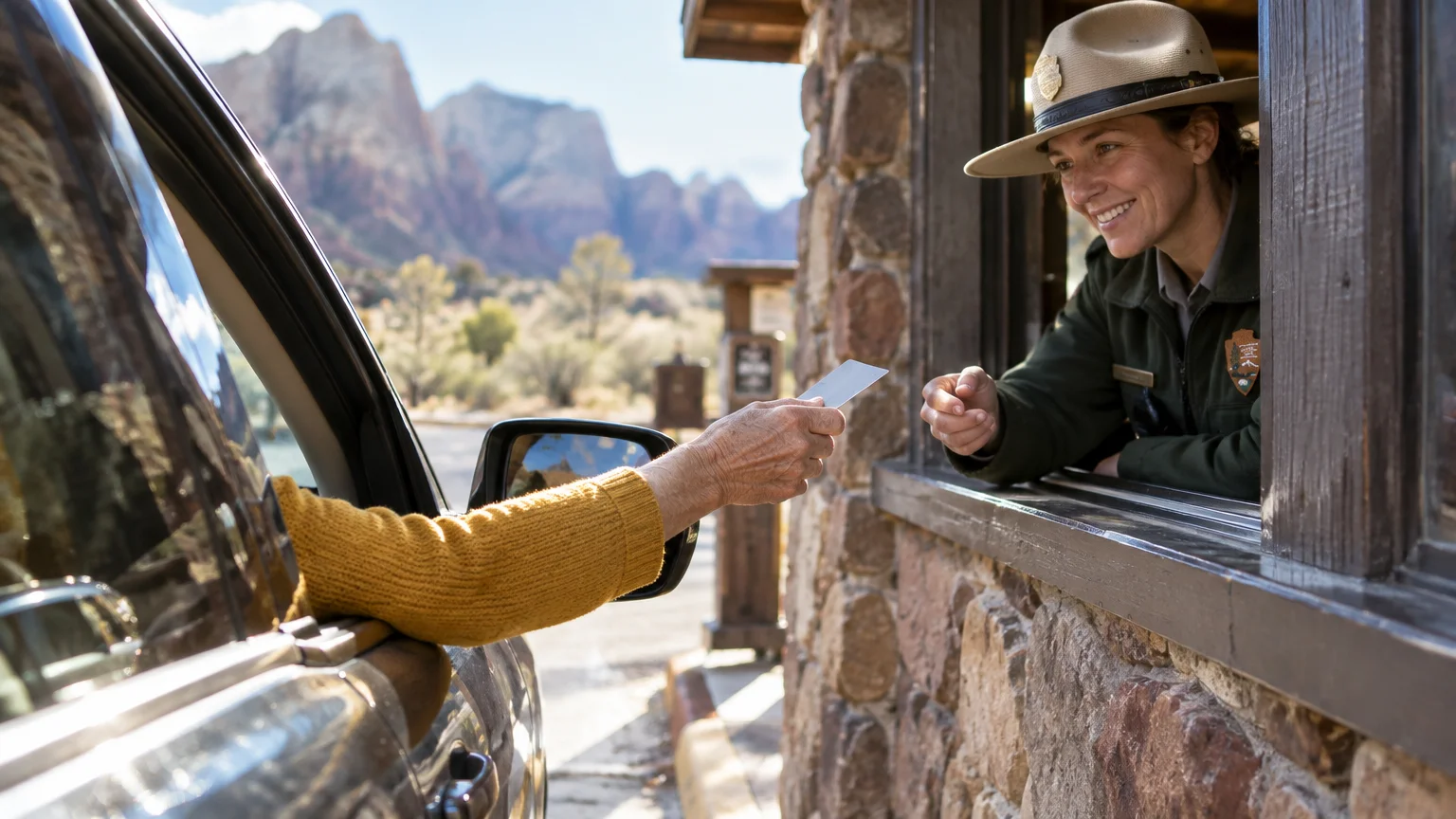
- Physical Card Requirement: Rangers require the physical plastic card and matching photo identification at every fee booth.
- Digital Receipts Not Accepted: Entrance booths cannot verify smartphone photos or digital order receipts.
- Federal Camping Discounts: Pass holders receive a 50 percent discount on basic campsite fees managed directly by federal agencies.
- Amenity Exclusions: The 50 percent discount excludes private concessionaire services, hookup utilities, and independent dump station fees.
Thermal Grocery Totes: Slashing Meal Overhead in a Sedan
Dining out near national parks quickly erodes a retirement travel budget. Casual diners in gateway communities charge $16 to $24 for basic sandwiches, burgers, or breakfasts.
Managing your daily food and supply costs is even simpler when using envelope budgeting to control retirement spending during extended road journeys.
Feeding two people at sit-down restaurants twice a day adds $70 to $90 to daily trip costs. Over a seven-day journey, restaurant dining adds more than $500 in food overhead alone.
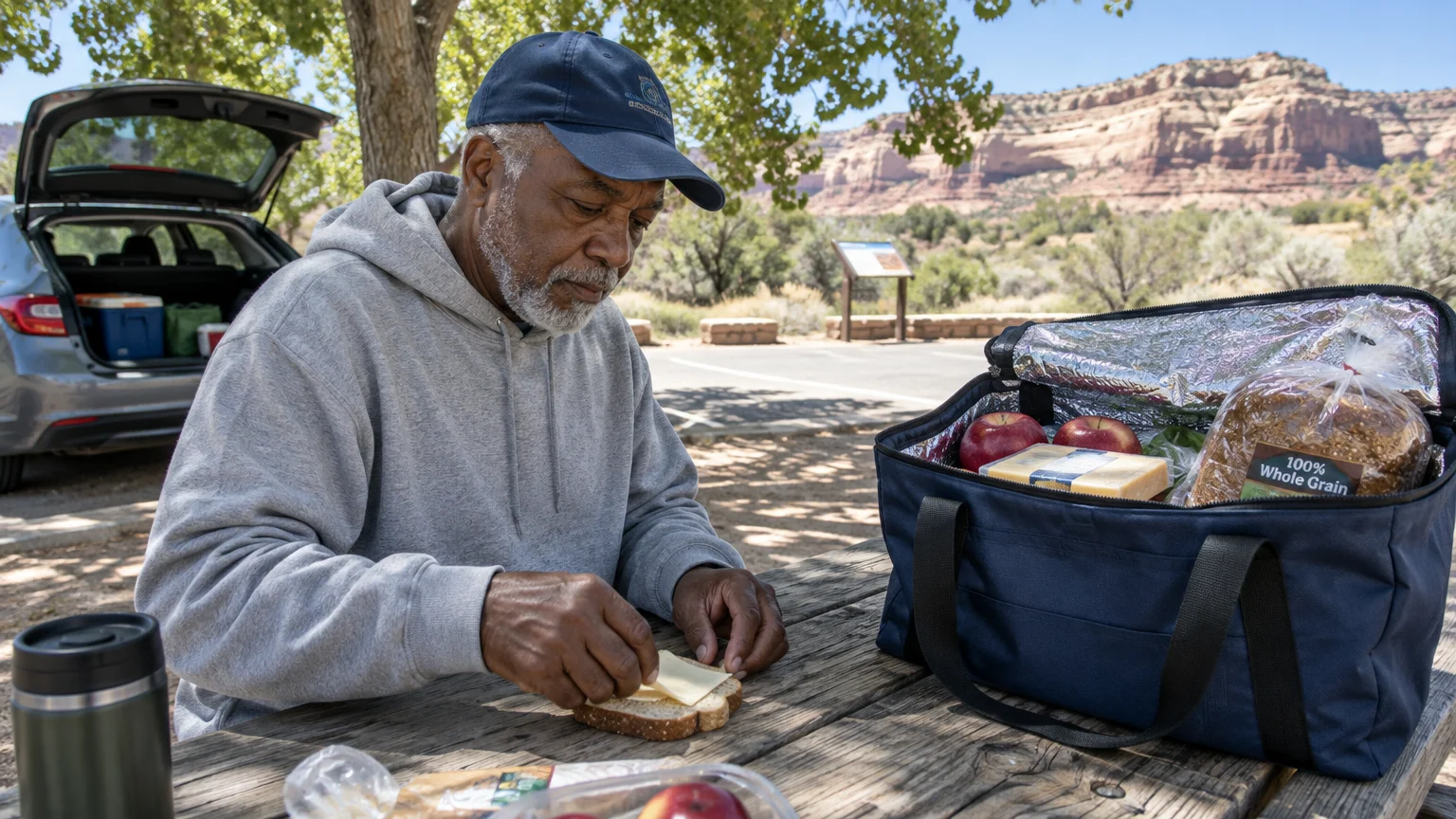
Mid-sized sedans lack the cargo capacity for giant hard-sided fiberglass coolers. Two 30-can soft-sided thermal grocery totes solve this challenge by fitting easily on rear floorboards.
These insulated totes collapse when empty and fit flat inside standard luggage. Once at your base town, they expand to hold two full days of perishable picnic foods.
Never pay $3 per bag for commercial convenience store ice. Fill gallon-sized zipper storage bags with ice from your motel’s complimentary ice dispenser each morning.
Sealed zipper bags keep meltwater completely contained. This simple habit keeps your deli meats, fruit, and cheeses cold without soaking bread or produce.
“Keep close to Nature’s heart… and break clear away, once in a while, and climb a mountain or spend a week in the woods. Wash your spirit clean.” — John Muir
Pack shelf-stable staples and fresh ingredients from regional supermarkets to assemble balanced, low-cost lunches at scenic roadside pullouts:
- Sturdy Carbohydrates: Pita flatbreads and whole-wheat tortillas resist crushing better than sliced sandwich bread in soft totes.
- Pre-Sliced Cheeses and Meats: Hard cheddars, provolone, turkey, and lean ham hold temperature safely next to sealed ice bags.
- Fresh Fruit and Vegetables: Apples, mini bell peppers, and baby carrots require no cutting boards and withstand daytime heat.
- High-Calorie Trail Snacks: Bulk almonds, walnuts, and dried apricots provide lasting trail energy for pennies per serving.
- Reusable Eating Kits: Pack two lightweight camping plates, stainless flatware, and a travel bottle of biodegradable dish soap.

Lodging and Dining Cost Breakdown: Gateway vs. Peripheral
Evaluating lodging options requires looking at real prices across regional travel corridors. The table below compares typical shoulder-season pricing between gateway hubs and peripheral staging towns.
If you want to bypass motels altogether, renting an RV for a fall road trip offers another practical way to combine transportation and accommodations on federal public lands.
Travelers who prefer sleeping at recreation sites instead of roadside motels can also explore budget camper van travel as an alternative way to eliminate nightly lodging fees.
| Staging Location | Target Park | Distance to Visitor Center | Average Motel Nightly Rate | Full Grocery Access |
|---|---|---|---|---|
| Springdale, UT | Zion | 1.2 miles | $285 | Limited tourist marts |
| Hurricane, UT | Zion | 23.5 miles | $92 | Full supermarket (Lin’s) |
| Bryce Canyon City, UT | Bryce Canyon | 2.8 miles | $220 | General store only |
| Panguitch, UT | Bryce Canyon | 24.1 miles | $79 | Full grocer (Family Dollar/Local) |
| Torrey, UT | Capitol Reef | 11.0 miles | $195 | Small specialty market |
| Richfield, UT | Capitol Reef | 62.0 miles | $84 | Major supermarkets (Walmart/Lin’s) |
| Moab, UT | Arches & Canyonlands | 5.1 miles | $245 | Regional grocer (City Market) |
| Green River, UT | Arches & Canyonlands | 51.8 miles | $88 | Local grocer & dollar stores |
Staying in Hurricane, Panguitch, and Green River drops average nightly room costs from $236 down to $86. Over six nights of lodging, you preserve $900 in household retirement savings.
The extra driving adds roughly 40 to 60 miles per round trip to park gates. In a sedan earning 32 miles per gallon, that detour burns less than two gallons of fuel daily.
Spending $7 on extra daily gasoline to save $150 on motel rooms represents exceptional arithmetic for any household on fixed Social Security income.
You can verify lodging discounts through AARP membership savings programs to reduce peripheral hotel chains by an additional 10 percent.
Worked Example: A 7-Day Utah Mighty 5 Itinerary Under $670
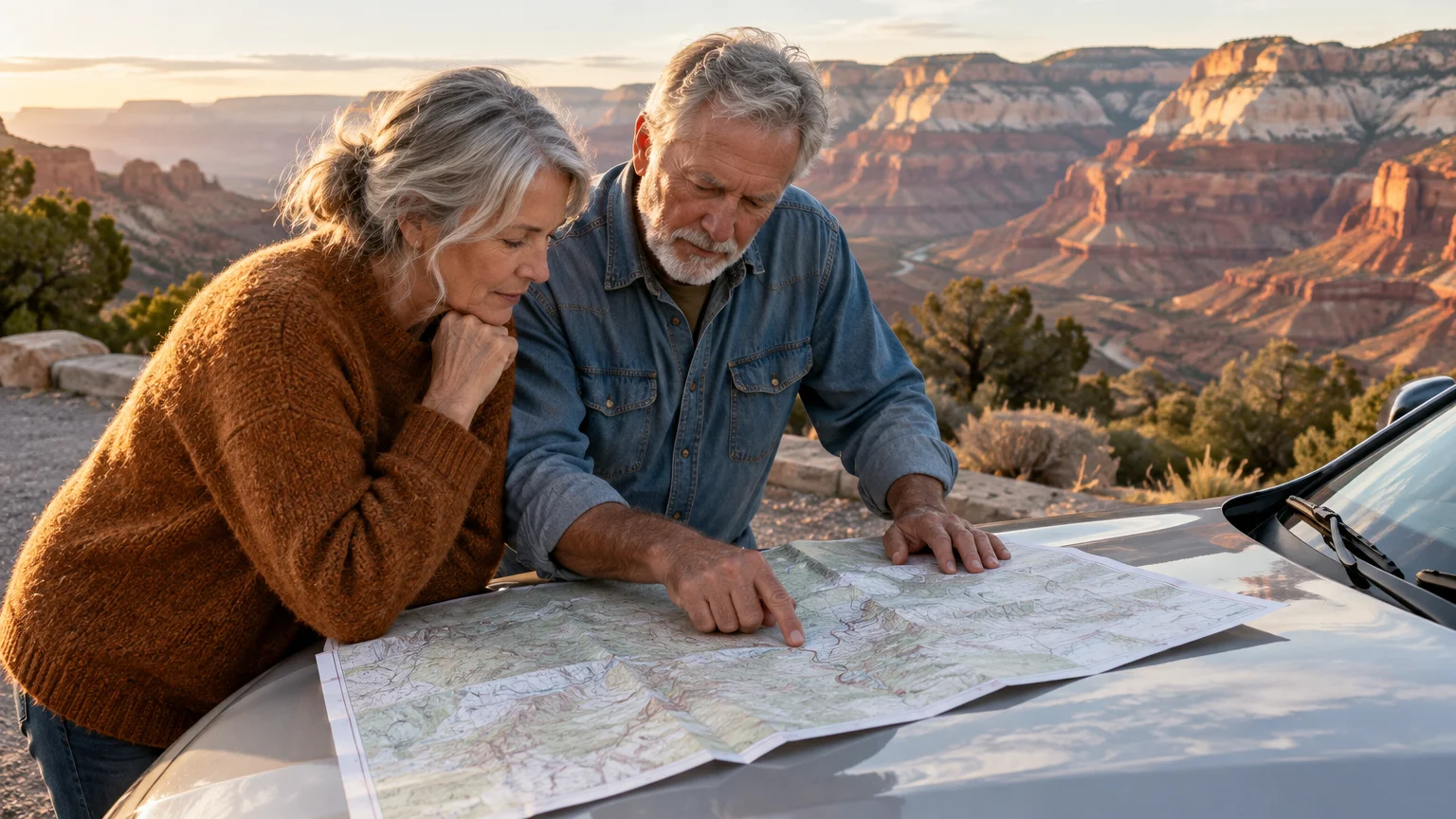
This worked example follows two retirees driving an eight-year-old mid-sized sedan on a seven-day tour of Utah’s Mighty 5. All numbers reflect actual shoulder-season rates and conservative fuel prices.
Setting aside small monthly contributions into a retirement travel sinking fund ensures road trip costs are fully covered well before departure.
The entire circuit spans 880 total road miles, beginning and ending in Las Vegas or Salt Lake City. The vehicle achieves an average efficiency rating of 32 highway miles per gallon.
Total fuel consumption equals 27.5 gallons of regular unleaded fuel. At an assumed price of $3.65 per gallon, overall gasoline expenditure reaches exactly $100.38.
Lodging relies entirely on peripheral, budget-friendly motel franchises booked two to three weeks in advance:
- Nights 1 and 2 (Hurricane, UT): Staging for Zion National Park at $89 per night plus tax ($203 total).
- Night 3 (Panguitch, UT): Staging for Bryce Canyon National Park at $79 per night plus tax ($90 total).
- Night 4 (Richfield, UT): Staging for Capitol Reef National Park at $82 per night plus tax ($93 total).
- Nights 5 and 6 (Green River, UT): Staging for Arches and Canyonlands at $85 per night plus tax ($194 total).
Total lodging expense across six nights equals $580. Combined with $100.38 in fuel, your hard transit and roof overhead totals $680.38.
The entrance pass adds an initial one-time fee of $80 for the America the Beautiful Senior Lifetime Pass. If you already own this pass from earlier travel, this line item drops to $0.
Grocery shopping across two supermarket visits supplies all breakfasts, trail lunches, snacks, and simple motel room dinners for $140 total. Compare that to the $550 minimum needed for dining out.
By bypassing gateway tourist hubs, this complete seven-day desert circuit costs two people roughly $900, or $450 per person including the lifetime national park pass.
Subsequent road trips across federal lands drop below $750 total because your entrance fees remain permanently covered.
Sedan Fuel Efficiency and Scenic Driving Tactics
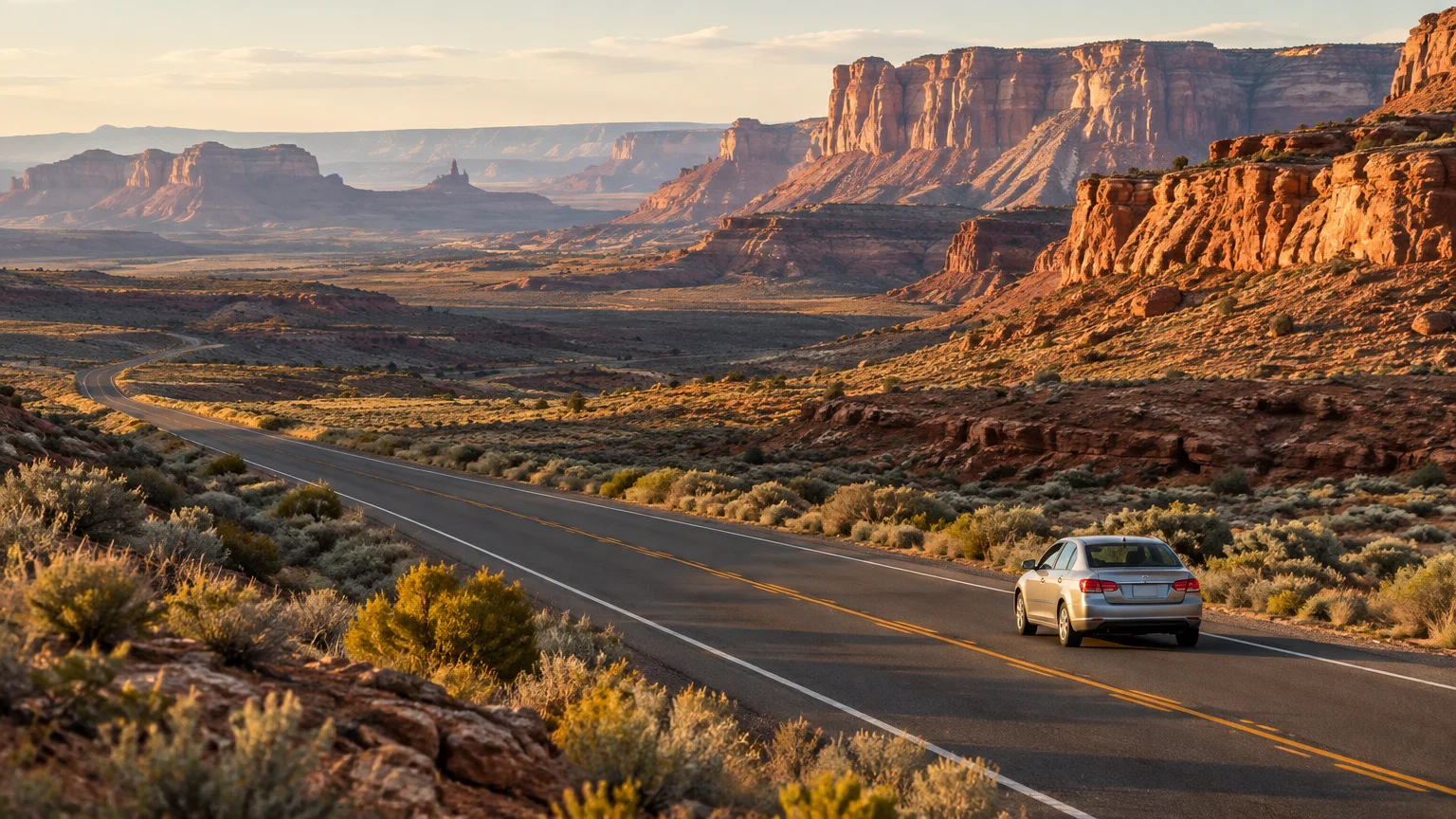
Touring in a four-door sedan offers major financial advantages over driving large recreational vehicles or heavy trucks. Sedans deliver superior highway efficiency, lower tire wear, and easier parking.
Those looking to see western landscapes without driving at all can compare costs by budgeting a cross-country train trip to regional gateway cities.
Western highway corridors feature high posted speed limits, with stretches of Interstate 15 posted at 80 miles per hour. Cruising at 80 miles per hour increases aerodynamic drag substantially compared to 68 miles per hour.
Maintaining a steady speed of 68 miles per hour preserves highway mileage near 34 miles per gallon in modern sedans. That small driving adjustment saves roughly half a gallon of fuel every 100 miles.
Park roads present steep grades and elevation changes, particularly along Utah State Route 12 between Bryce Canyon and Capitol Reef. This spectacular roadway tops 9,600 feet over Boulder Mountain.
Climb mountain passes using steady, moderate throttle rather than aggressive acceleration to prevent wasteful engine downshifts. On descents, shift your automatic transmission into a lower gear range to control speed without overheating brake pads.
Follow these essential vehicle packing and operating steps to protect your budget national park road trip from unexpected mechanical bills:
- Check Cold Tire Pressures: Set front and rear tires precisely to door-jamb specifications each morning to optimize fuel economy.
- Balance Rear Cargo Weight: Place heavy dry goods and water jugs forward against the rear seatback to maintain balanced vehicle handling.
- Pack a Portable Air Compressor: A $25 12-volt tire inflator avoids towing calls for minor pressure drops caused by cool desert morning temperatures.
- Monitor Daytime Heat: Check engine coolant levels and wiper washer fluid before departing each morning, especially when driving arid desert stretches.
Fixed-Income Travel Resources and Federal Benefits
Planning extended road trips on fixed incomes requires clear financial guardrails. Track vehicle wear, food expenses, and lodging deposits using straightforward household budget sheets.
Retirees seeking educational guided excursions should also explore how to get Road Scholar travel grants to offset program costs.
Review spending guidance from the Consumer Financial Protection Bureau fixed-income budgeting guides to plan your recreational travel accounts without dipping into emergency savings.
Target shoulder seasons to maximize both monetary savings and personal comfort. Desert temperatures in July and August routinely exceed 100 degrees, straining cooling systems and limiting safe hiking hours.
Visiting southern Utah in late April, May, September, or October yields daytime highs between 65 and 78 degrees. Lodging rates drop 20 to 35 percent outside peak summer vacation surges.
Federal fee-free days offer another pathway to savings for pre-retirees who have not yet reached the 62-year threshold for the senior credential. The National Park Service waives entrance fees on several holidays each calendar year:
- Martin Luther King, Jr. Day (third Monday in January)
- First day of National Park Week (mid-April)
- Juneteenth National Independence Day (June 19)
- Great American Outdoors Act Anniversary (August 4)
- National Public Lands Day (fourth Saturday in September)
- Veterans Day (November 11)
Remember that while fee-free days waive basic entry costs, they do not waive campsite fees, reservation charges, or concessionaire expenses. Arrive at gates before 8:00 AM on these dates to avoid lengthy entrance lines.
Frequently Asked Questions
Can I buy a Senior Pass at park gates to avoid shipping fees?
Yes. You can purchase the pass directly from a uniformed ranger at any staffed entrance station or visitor center with zero administrative fees.
Bring a valid state driver’s license or passport to confirm your age and citizenship.
Many regional heritage centers and visitor sites outside park borders also honor museum admission discounts for seniors to keep sightseeing expenses minimal.
Do peripheral towns have reliable fuel and medical services?
Yes. Hubs like Hurricane, Richfield, and Cedar City are established regional trade centers with regional medical clinics, urgent care centers, tire repair shops, and national retail pharmacies.
How do timed-entry reservations work when staying 40 miles away?
Arches National Park and certain popular corridors require vehicle entry reservations during peak daylight hours. Book your timed slot on Recreation.gov several weeks ahead, and budget 50 minutes of driving from your staging motel to clear park gates comfortably.
Can I use the Senior Pass for discounts on Utah state parks?
No. The America the Beautiful pass applies exclusively to federal recreation lands managed by the NPS, US Forest Service, BLM, and Army Corps of Engineers. Utah State Parks, such as Dead Horse Point or Goblin Valley, require separate state entry fees.
What is the most affordable month for a Utah national parks trip?
Late October and early November offer the strongest combination of cheap motel pricing, clear desert weather, and manageable traffic. Most peripheral motels transition into low winter pricing by mid-October.
Disclaimer: This article is for informational purposes only. Benefits, programs, and regulations can change.
We encourage readers to verify current information with official government sources and consult with qualified professionals for personalized advice.



1 Comment