
You can return to active court sports after a twenty-year break without risking your knees or facing intense competition. Beginner pickleball leagues for over 60s offer low-impact cardiovascular exercise tailored specifically to your body and schedule.
Unlike hyper-competitive tennis ladders, community non-elimination round-robins rotate partners every twelve minutes so nobody sits on the bench or faces elimination. You gain steady social exercise without sprinting across a giant baseline.
This guide reveals how local community leagues run, how to protect your joints, and how to start playing without spending a fortune.
In this guide9 sections
- How Non-Elimination Round-Robin Leagues Work
- Understanding Age Brackets and Skill Ratings
- Low-Impact Court Footwork and Joint Safety
- Essential Starter Gear for Beginners Over 60
- Budget Breakdown: A Real-World First-Season Scenario
- League Venue Options: Municipal, YMCA, and Private Clubs
- Supportive Court Culture and Basic Etiquette
- How to Find and Join Your First Local League
- Frequently Asked Questions
How Non-Elimination Round-Robin Leagues Work
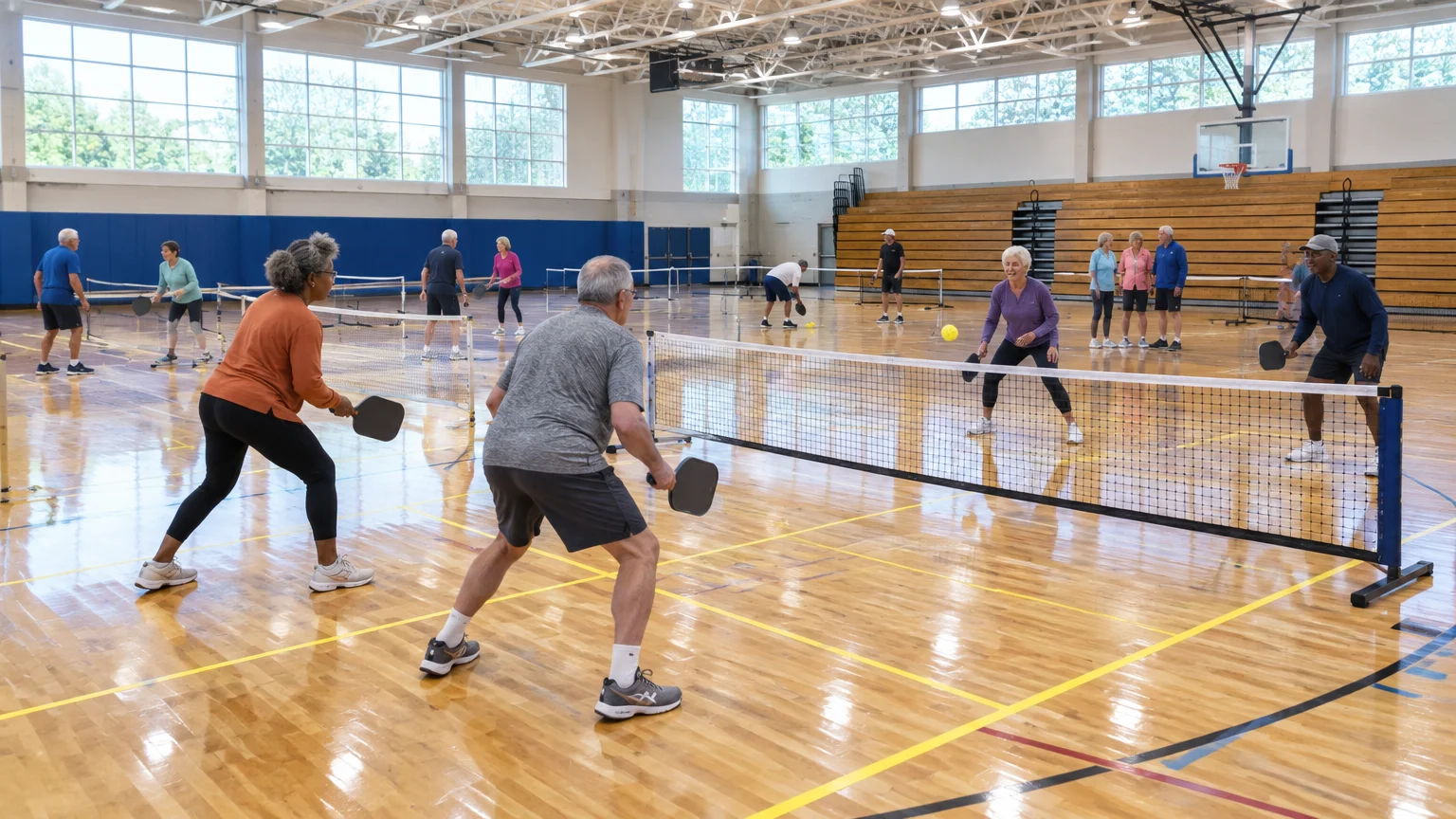
Most community centers organize senior beginner play as non-elimination round-robins. This structure guarantees that you play multiple games during each session regardless of whether you win or lose.
Traditional tournaments send losers home after a single defeat. In contrast, senior round-robins emphasize equal court time, lighthearted rallies, and consistent movement.
A typical weekly beginner league session follows a simple, repeatable operational schedule:
- Players arrive fifteen minutes early to complete light dynamic stretching and warm up their wrists.
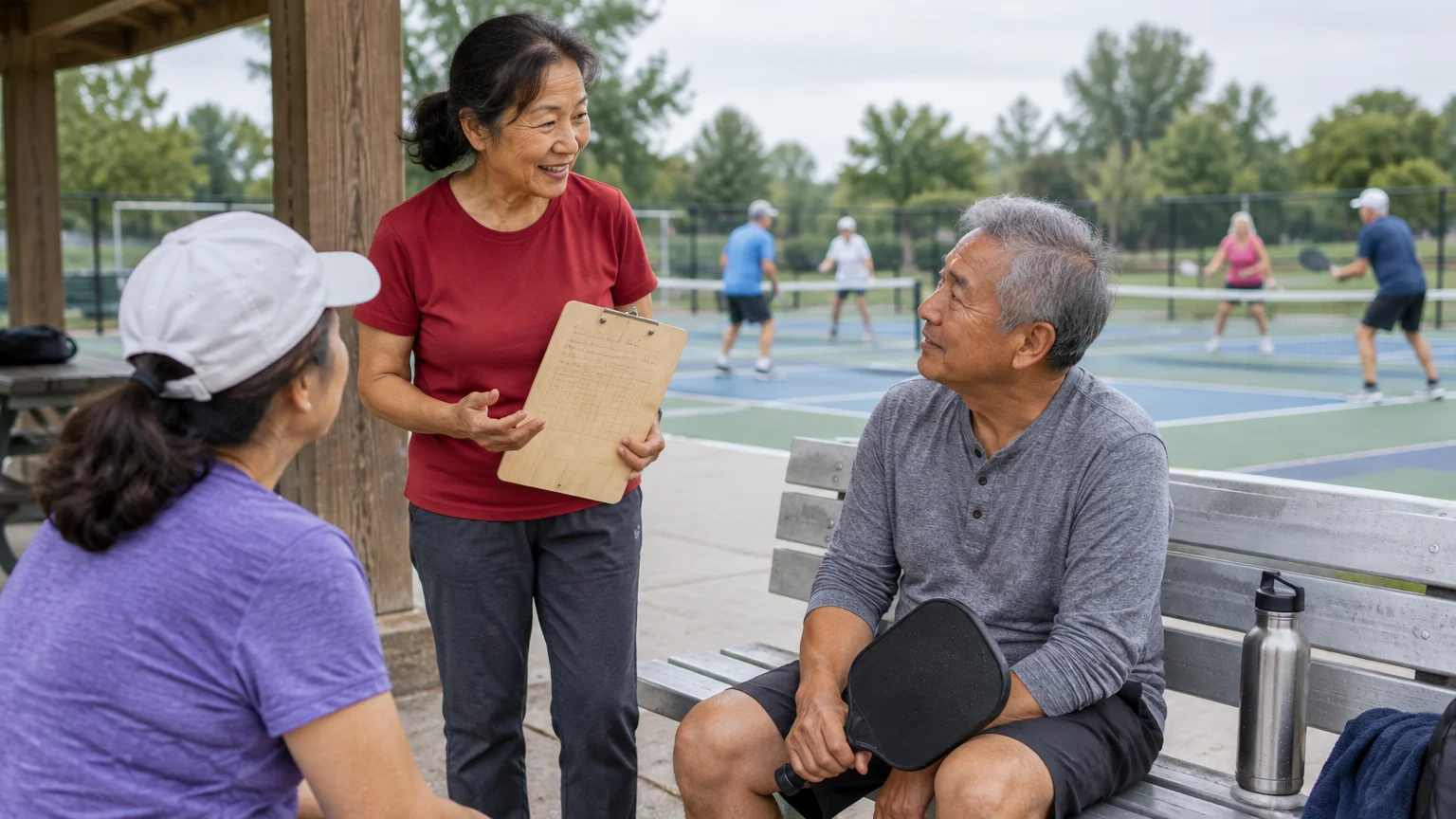
- The league coordinator assigns four players to each available court using a rotating clipboard or whiteboard schedule.
- You play a doubles match up to 11 points, winning by 2, or complete a continuous 12-minute timed mini-game.
- All players rotate after each round, switching partners and opponents so everyone mingles across different skill levels.
- At the end of ninety minutes, players record individual points scored to balance matchups for the following week.
Doubles play forms the foundation of senior leagues. Sharing the court with a partner cuts your physical court coverage in half, preventing exhaustion.
Because you rotate partners every round, you do not need to register with a friend. You show up as an individual, and the league organizers handle all rotation logistics.
Understanding Age Brackets and Skill Ratings
Recreational pickleball relies on clear skill and age tiers to keep games balanced and safe. According to the Sports & Fitness Industry Association (SFIA), over 15% of all active pickleball players are 65 or older.
USA Pickleball and U.S. Senior Pickleball officially designate senior divisions starting at age 50. These governing bodies break official senior competition into five-year brackets: 50+, 55+, 60+, 65+, 70+, 75+, and 80+.
Local community leagues often combine these age brackets into general “60 and over” social morning divisions. This clustering matches players with peers who share similar mobility levels and athletic goals.
Organizers also categorize players using the USA Pickleball and DUPR rating scales:
- Rating 1.0 to 1.5: An absolute newcomer who has never held a paddle and is learning court boundary lines.
- Rating 2.0: A novice player who understands the underhand serve, basic scoring rules, and the two-bounce requirement.
- Rating 2.5: A developing beginner who sustains four-shot rallies, attempts soft drop shots, and navigates the kitchen line.
- Rating 3.0: An intermediate player demonstrating directional ball control, backhand consistency, and aggressive baseline drives.
True beginner leagues welcome players in the 1.0 to 2.5 brackets. You do not need to master complex spin serves or high-speed volleys to join these introductory groups.
If you have not swung a racquet in twenty years, starting in a designated 2.0 novice league protects you from fast-paced, high-impact spikes.
Low-Impact Court Footwork and Joint Safety
A pickleball court measures 20 feet wide by 44 feet long. This footprint is roughly one-third the size of a standard tennis court, which drastically reduces long-distance running.
Fueling your recovery after a session is just as important, and preparing nutritious retirement recipes helps sustain your energy for weekly play.
Much like pacing yourself with senior-friendly gardening, managing your physical strain on the court ensures you stay active pain-free.
Even on a smaller court, improper footwork can strain your lower back or cause ankle twists. Modifying how you move preserves joint cartilage while providing steady aerobic exercise.
Physical fitness research published by AARP emphasizes that regular low-impact agility exercises support senior bone density and balance. Safe footwork habits protect those gains on the court.
Protect your joints by following these essential movement rules during novice play:
- Never backpedal straight backward: If an opponent lobs a ball over your head, turn your entire body, pivot your shoulders, and track the ball moving forward.
- Use lateral side-shuffles: Slide your feet side-to-side without crossing your legs to prevent accidental trips and falls.
- Stop before striking: Plant both feet to establish balance before you hit the ball instead of swinging while sprinting.
- Hold your ground at the kitchen: Position yourself two inches behind the non-volley zone line so you never step forward while volleying.
The non-volley zone, commonly called the kitchen, extends 7 feet on both sides of the net. The rules forbid hitting balls out of the air while standing inside this space.
This kitchen rule keeps opponents from charging the net to smash balls violently at your chest. It rewards gentle tapping, patient positioning, and soft touch over pure physical power.
Essential Starter Gear for Beginners Over 60
You do not need high-end carbon equipment to begin playing recreational pickleball. However, wearing the wrong shoes or swinging an improperly weighted paddle can lead to avoidable injuries.
Before purchasing footwear or gear, consider checking for senior discounts at major retailers to keep initial equipment costs low.
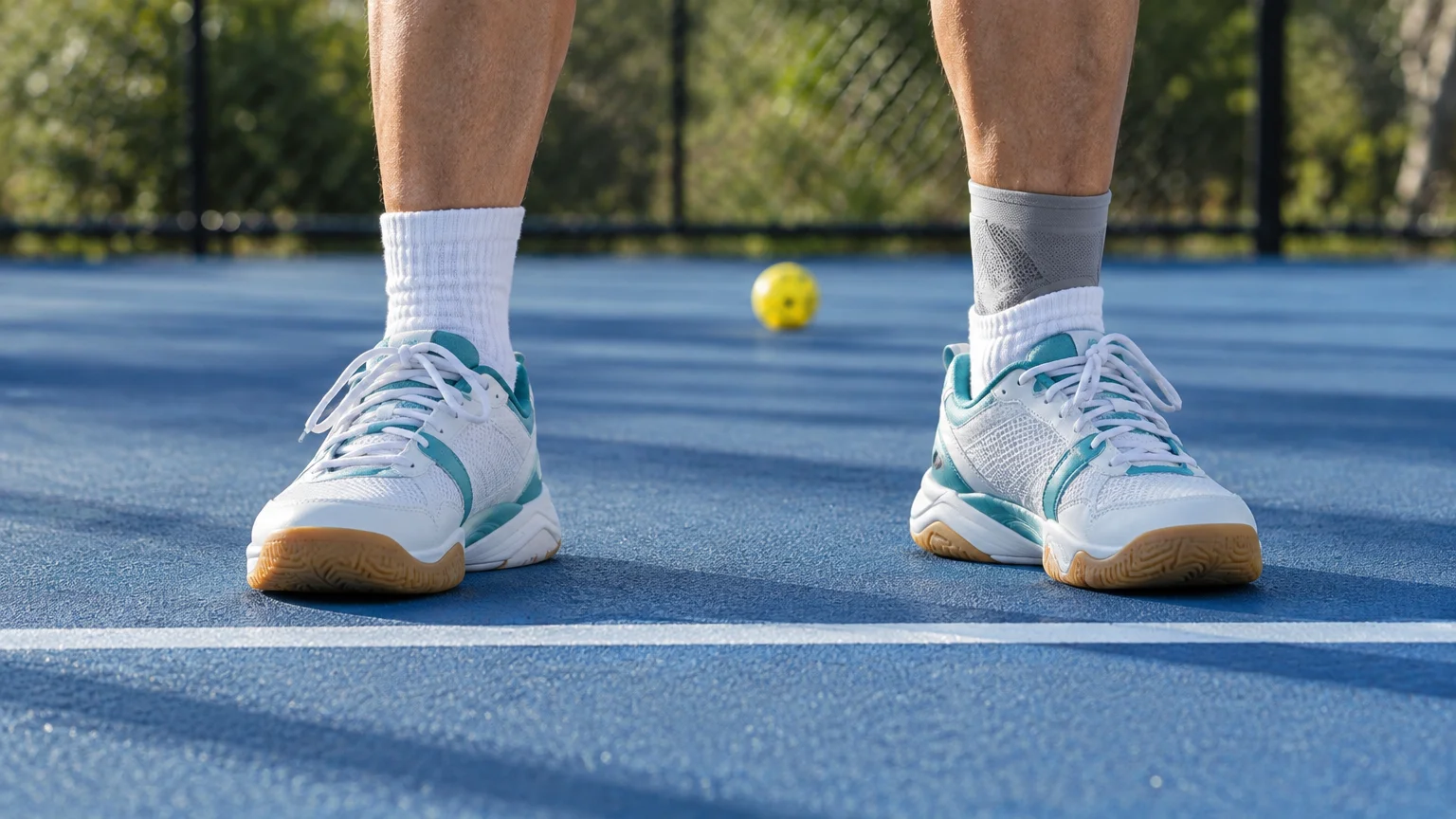
Running shoes pose a genuine hazard on pickleball courts. Running shoes feature elevated heels and forward treads designed exclusively for straight-line jogging, which easily roll ankles during quick sideways cuts.
Invest in dedicated court shoes engineered for tennis or pickleball. Models like the Asics Gel-Dedicate 8 or K-Swiss Express Light provide reinforced lateral outsoles and flat herringbone grip.
When selecting your first paddle, evaluate these specific physical features:
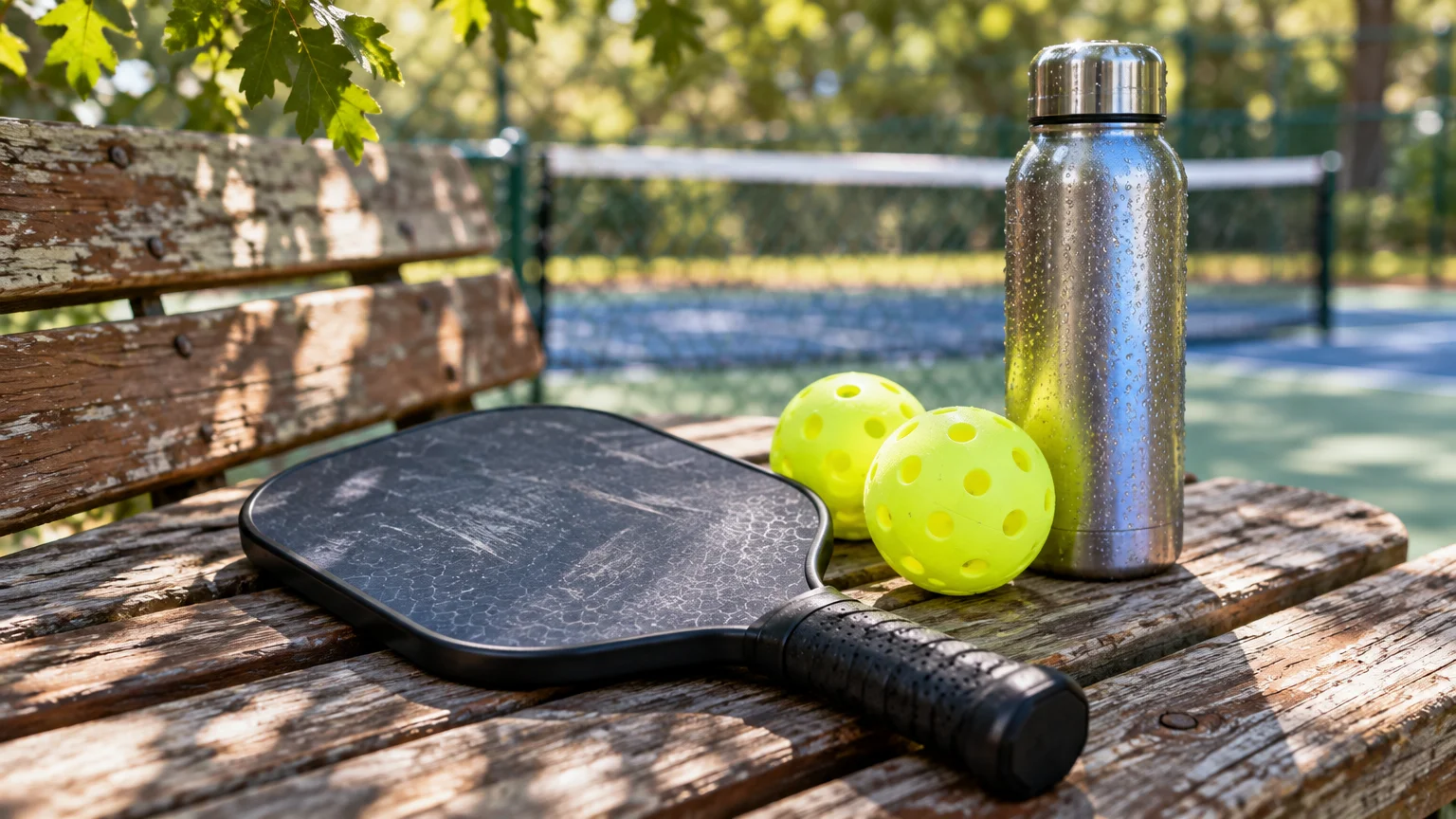
- Total weight: Select a mid-weight paddle weighing between 7.8 and 8.2 ounces to balance power and swing speed.
- Core material: Choose a 13mm to 16mm polymer honeycomb core to absorb vibrations that cause elbow soreness.
- Grip circumference: Pick a smaller grip size, typically 4 inches to 4.25 inches, to reduce strain on arthritic fingers.
- Face texture: Opt for a composite fiberglass face to provide soft touch on drop shots without extra arm effort.
Ball selection also matters depending on your league location. Indoor leagues use softer plastic balls with 26 larger holes, such as the Onix Fuse Indoor, which bounce predictably on gym floors.
Outdoor leagues use firmer composite balls with 40 smaller machine-drilled holes, like the Dura Fast 40, to slice through outdoor breezes.
Budget Breakdown: A Real-World First-Season Scenario
Let us look at a realistic financial scenario for David, a 64-year-old retiree joining his first local beginner pickleball league. David wants quality safety gear while keeping overall startup expenses reasonable.
Finding affordable hobbies is one of the easiest lifestyle adjustments for cutting costs while staying physically engaged.
David registers for an eight-week autumn league operated by his municipal Parks and Recreation department. The league meets every Tuesday morning for ninety minutes of guided round-robin doubles.
Here is David’s exact, itemized spending breakdown for his first season:
- Starter paddle set: $59.99 (includes two USAPA-approved composite paddles, four indoor/outdoor balls, and a carry bag).
- Court shoes: $68.00 (one pair of Asics Gel-Dedicate 8 court shoes with lateral outsoles).
- Protective eye guard: $19.95 (shatterproof polycarbonate sports glasses to shield against deflected balls).
- League registration fee: $65.00 (covers court reservations, loaner balls, and coordinator staffing for eight weeks).
- USA Pickleball Casual membership: $0.00 (the official zero-dollar tier providing rules access and community updates).
David’s total out-of-pocket startup investment equals exactly $212.94. His equipment will last through multiple upcoming seasons without requiring replacements.
Over the eight-week season, David plays thirty-two individual matches during twelve hours of court time. His direct league activity cost breaks down to just $2.03 per match.
This worked example demonstrates that entry-level pickleball remains one of the most cost-effective recreational sports available to retirees today.
League Venue Options: Municipal, YMCA, and Private Clubs
Beginner leagues operate across three primary venue categories: municipal parks, non-profit fitness centers, and private indoor racquet facilities. Each environment offers distinct benefits regarding climate control and financial cost.
If your chosen facility is across town, exploring senior transportation options can provide reliable rides to morning matches without driving.
Checking a directory of state-specific senior benefits can help you discover municipal recreation discounts and community health subsidies in your area.
Municipal park programs offer affordable outdoor play, but weather disruptions can cause cancellations. Private commercial clubs offer climate-controlled courts, but their monthly dues run substantially higher.
Review this comparison of popular beginner league venues before submitting your registration:
| Venue Option | Average 8-Week Fee | Playing Surface | Weather Control | Insurance Subsidy |
|---|---|---|---|---|
| Municipal Parks & Rec | $40 to $75 | Outdoor asphalt or coated concrete | Uncovered; subject to heat, wind, and rain | None (taxpayer funded) |
| YMCA / Community Center | $50 to $90 | Indoor hardwood gym floor or polyurethane | Fully climate-controlled with indoor heating/air | Commonly 100% covered by senior wellness plans |
| Private Pickleball Club | $130 to $220 | Cushioned indoor acrylic surface | Climate-controlled with specialized glare-free LED lighting | Rarely eligible for Medicare fitness subsidies |
If you hold a Medicare Advantage policy, investigate supplemental gym benefits like SilverSneakers, Renew Active, or Silver&Fit. You can confirm available gym benefits directly at Medicare.gov before registering.
These wellness programs frequently cover your base YMCA or community center membership at zero out-of-pocket cost. That coverage leaves you responsible only for small league activity fees.
Hardwood gymnasium floors also deliver significantly more shock absorption than outdoor asphalt. Playing on indoor wood reduces pressure on hips and knees if you have mild joint stiffness.
Supportive Court Culture and Basic Etiquette
Senior beginner leagues focus on mutual encouragement rather than intense confrontation. You will find that players cheer for solid rallies regardless of which side wins the point.
Many players extend court camaraderie off the court by organizing a monthly neighborhood supper club with fellow league members.
Understanding basic court etiquette helps you integrate smoothly into your new community group. Simple habits show respect for your fellow players and keep matches flowing efficiently.
Follow these standard court etiquette practices during every league session:
- Call the score loudly before serving: State your score, the opponent score, and your server number (such as “3, 2, 1”) so all four players agree before the ball moves.
- Make honest line calls: If a ball touches any fraction of the boundary line, call it in. Always give the benefit of the doubt to your opponents.
- Never coach unsolicited: Avoid giving technical swing advice to your partner during a match unless they specifically ask for your input.
- Halt play for stray balls: Yell “ball on court” immediately if an errant ball rolls onto your court from an adjacent game, and replay the point safely.
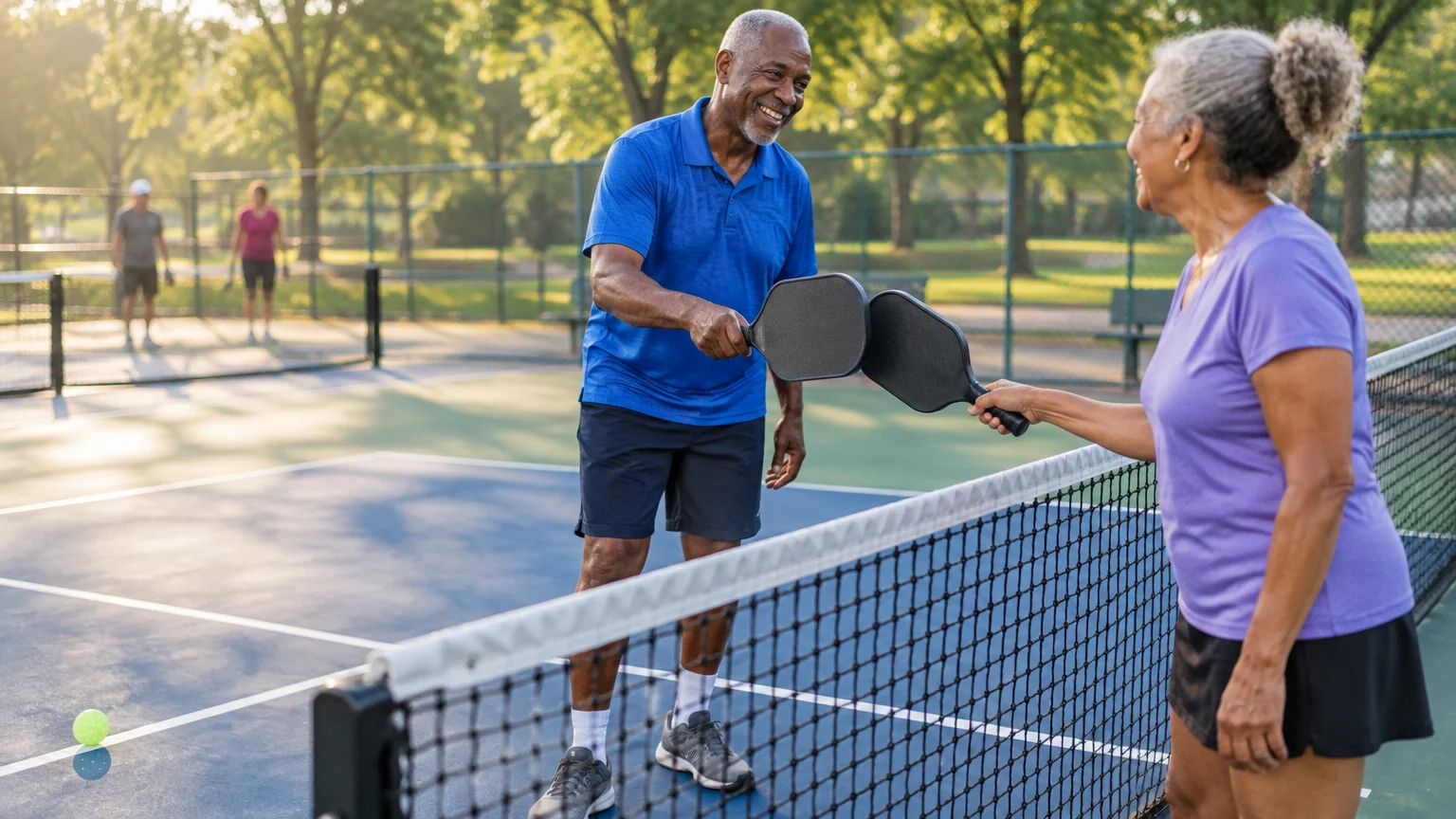
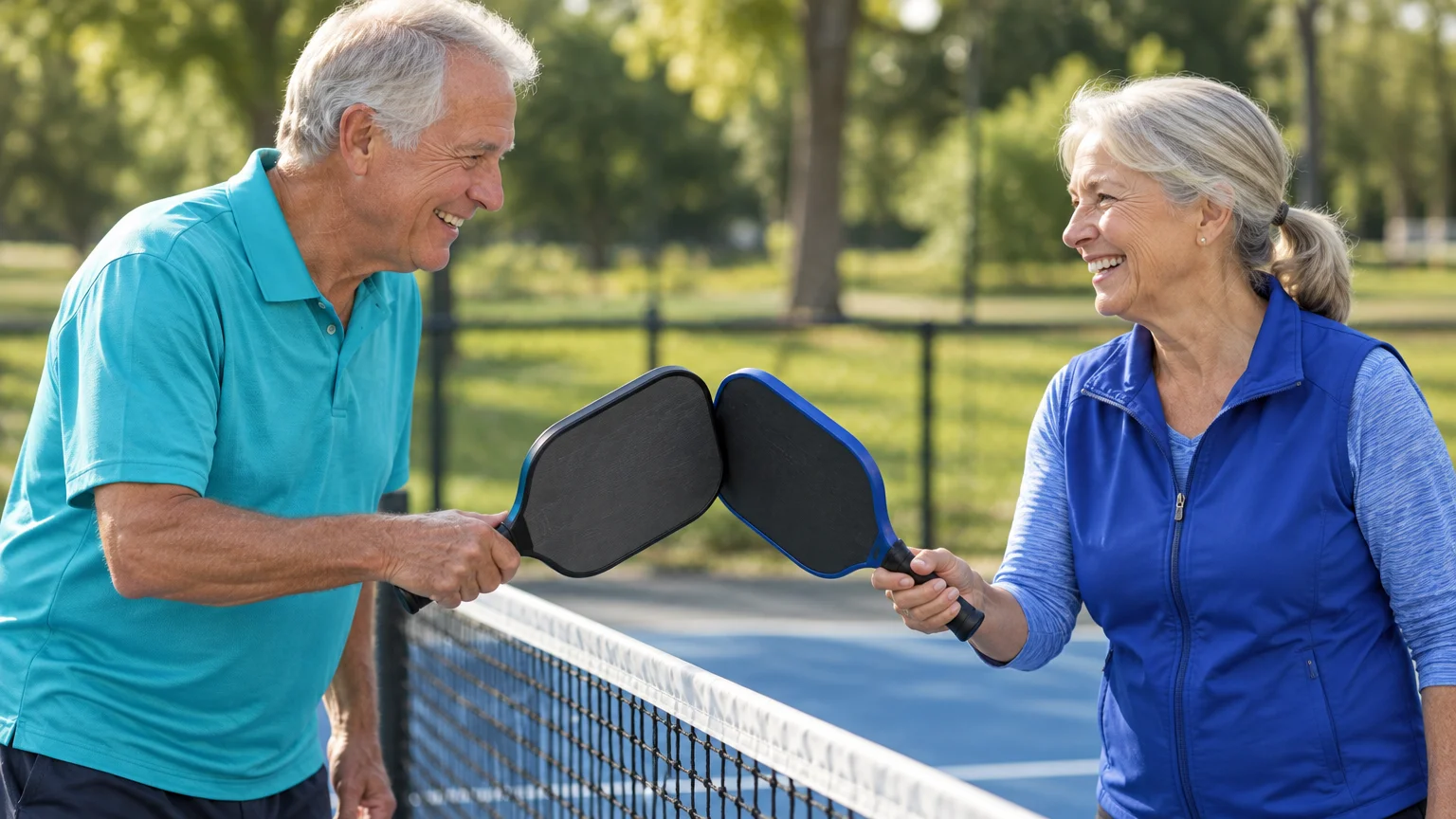
- Tap paddle handles at the net: Walk to the net at the conclusion of every game and tap paddle handles with opponents to celebrate an active match.
Prioritize personal safety over scoring a point. Never lunge recklessly into the net or dive onto hard concrete to chase an unreachable ball.
Your peers will respect you for playing with steady control. Taking a brief water break when feeling fatigued represents responsible play, not weakness.
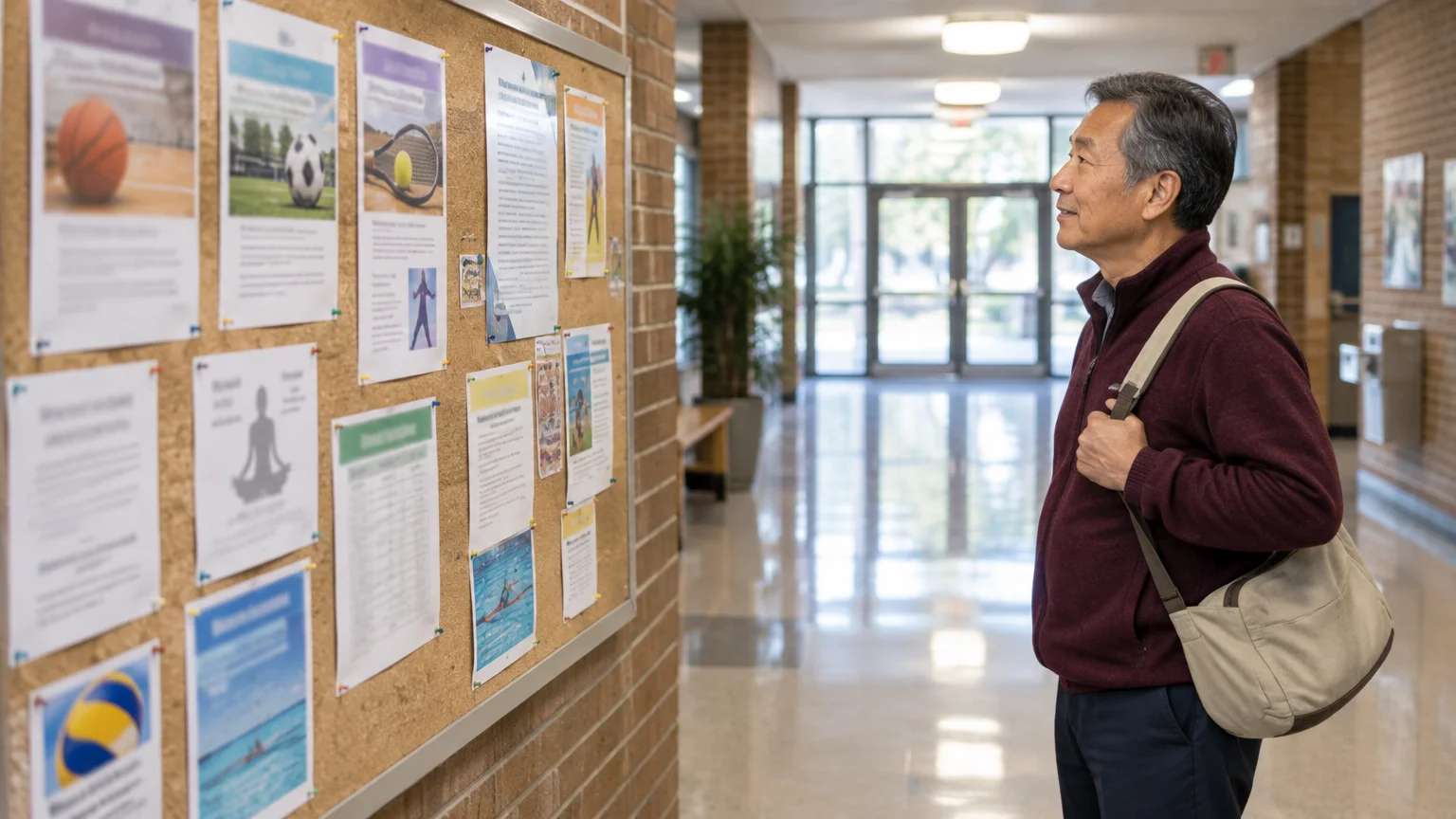
How to Find and Join Your First Local League
Beginner pickleball sessions fill up rapidly due to surging national demand. Securing a roster spot requires proactive research before seasonal registration windows open.
If you enjoy outdoor recreation alongside league play, exploring bird watching in retirement is another peaceful way to spend active mornings.
Most community recreation departments publish their fall, winter, and spring catalogs online several weeks before registration starts. Setting calendar reminders helps you claim an open slot.
Take these practical steps to locate and join a novice league in your area:
- Download your city or county Parks and Recreation seasonal activity guide and locate the “Adult 50+” athletic section.
- Contact your local YMCA branch to ask if their gymnasium hosts morning non-elimination pickleball leagues or novice drop-in round-robins.
- Search the Places2Play database maintained by USA Pickleball to discover nearby indoor facilities organizing novice brackets.
- You can also connect with local recreation services through the Eldercare Locator directory.
- Attend an open morning session as an observer to assess the group tempo and confirm that the skill level feels comfortable.
- Register on the first day sign-ups open to secure your place before novice divisions reach their player caps.
If official leagues are full, ask the coordinator to place your name on the substitute list. Beginner leagues frequently call substitutes to cover for vacationing players.
Serving as a substitute allows you to experience league play without committing to every single week. It serves as an easy, low-pressure entry point to court sports.
Frequently Asked Questions
Can I join a beginner pickleball league if I have mild arthritis?
Yes, many retirees with mild arthritis play comfortably in beginner leagues. Choosing a lightweight paddle with a thick polymer core absorbs shock, and indoor wood courts reduce impact on knee joints.
What is the difference between open play and a structured league?
Open play operates on a first-come, drop-in basis where players rotate using court paddle racks. A structured league reserves dedicated courts, establishes balanced pairings, and tracks scheduled matches over several weeks.
Do I need to sign up with a partner for a beginner round-robin league?
No, you do not need a partner. Senior beginner round-robin leagues register individuals and rotate doubles partners after every match so everyone plays with multiple peers.
What should I do if a ball rolls onto my court during play?
Call “ball on court” immediately in a loud voice to stop play. Stopping the point protects players from stepping on the rolling ball and twisting an ankle; you then replay the point from the start.
Are USA Pickleball memberships required for local community center leagues?
Most municipal community center leagues do not require paid memberships. Players can register for USA Pickleball’s Casual membership tier at no cost to access official rulebooks and resources.
Disclaimer: This article is for informational purposes only. Benefits, programs, and regulations can change.
We encourage readers to verify current information with official government sources and consult with qualified professionals for personalized advice.


