

If you are a solo woman approaching age 70, you do not need to accept overpriced private room fees or rigid, non-stop tour schedules.
Most commercial travel guides focus on scenic destinations, but your day-to-day comfort actually hinges on enforceable roommate dispute rules, transparent physical pacing tiers, and guaranteed autonomous afternoon hours.
By vetting senior travel clubs against these concrete operational rules, you can enjoy confident international trips alongside peers of similar fitness while preserving your personal boundaries and retirement savings.
In this guide8 sections
- Roommate-Matching Policies and Dispute Procedures
- Evaluating Daily Physical Activity and Pacing
- Balancing Communal Dinners and Autonomous Exploration
- Operator Comparison: Single Supplements, Group Sizes, and Costs
- Worked Financial Example: Free Single Spaces vs. Roommate Pairs
- Medical Coverage and Identification Requirements Abroad
- Questions to Ask Tour Directors Before Booking
- Frequently Asked Questions
Roommate-Matching Policies and Dispute Procedures
Women account for over 75 percent of all solo leisure travelers globally. Tour operators serving mature adults report an even higher concentration of independent female travelers.
Solo adventurers who enjoy ocean voyaging can also look into repositioning cruise deals for retirees, which frequently provide deep discounts on extended international routes.
If overland tours feel too rigid, consider small-ship river cruises designed for solo seniors as a comfortable alternative featuring dedicated single cabins.
Educational operator Road Scholar notes that solo participants make up 20 to 30 percent of total bookings. Approximately 85 percent of those solo participants are women, representing roughly 19,000 travelers each year.
Overseas Adventure Travel reports that solo women comprise 50 percent of its total customer base. These figures demonstrate that you will travel alongside peers who share your independent lifestyle.
When you select roommate matching, you eliminate the standard single supplement that often inflates tour costs by 20 to 50 percent. However, you must evaluate how an operator manages roommate screening before signing a booking contract.
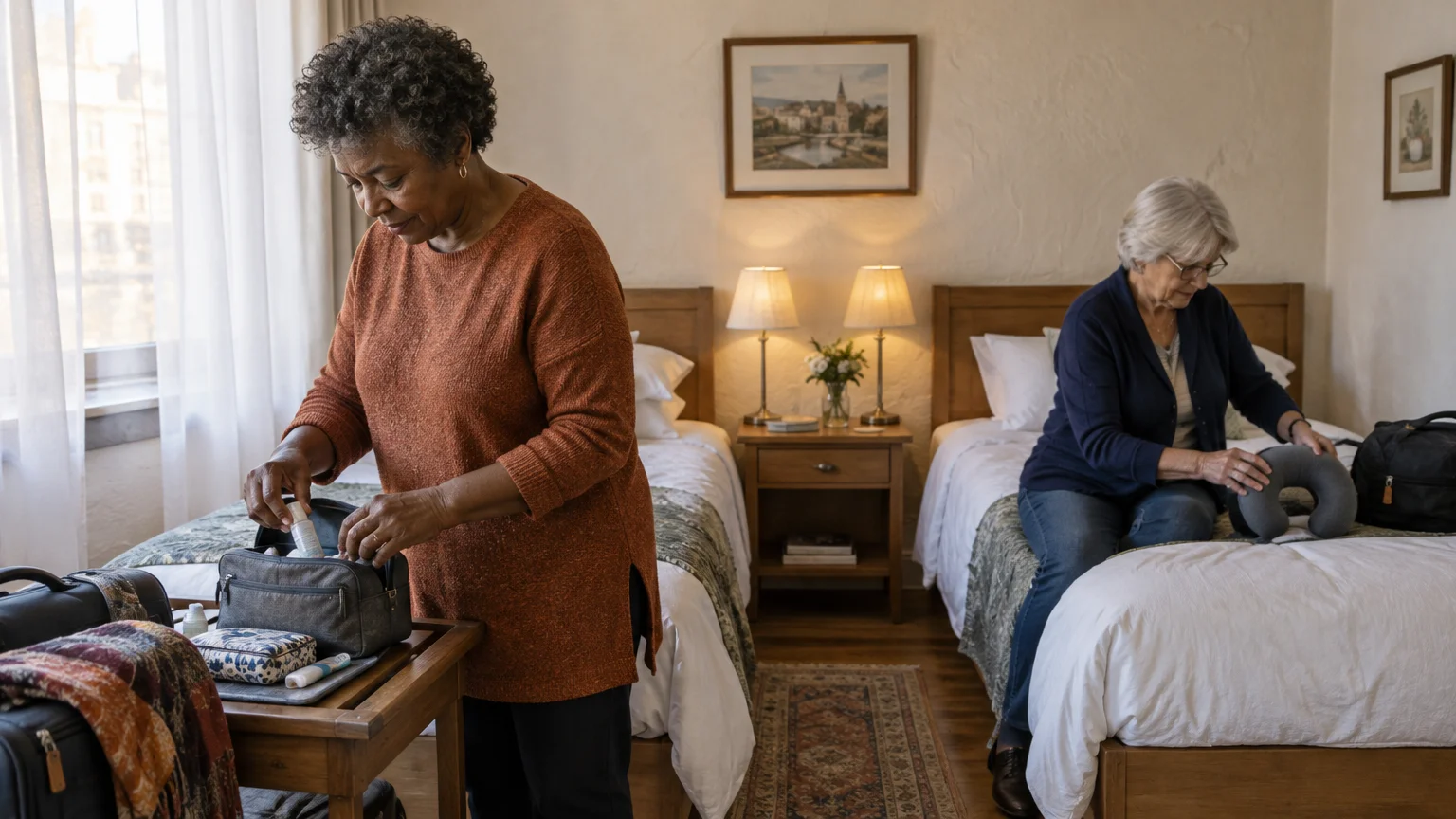
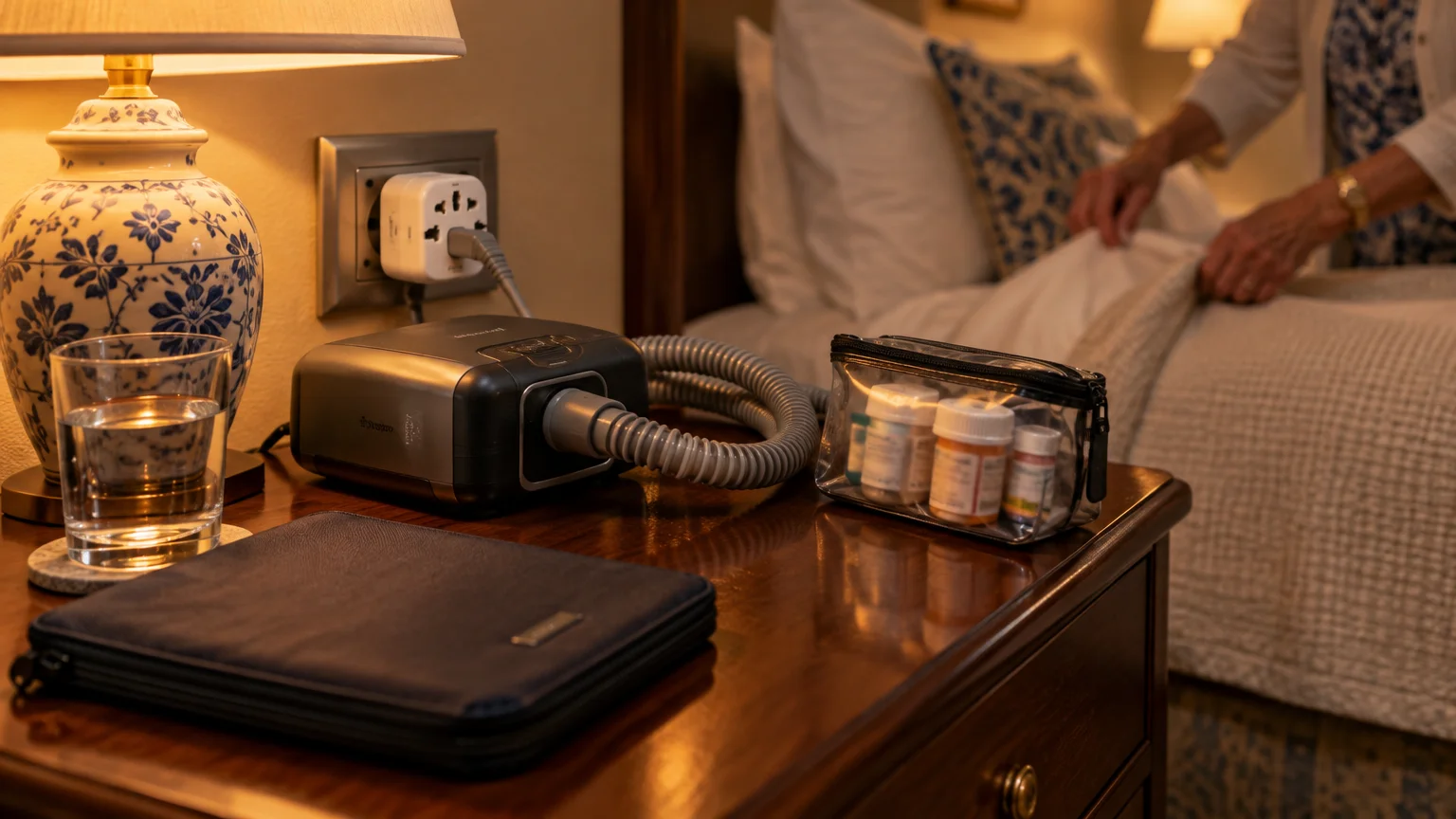
Reputable clubs require detailed compatibility forms covering your wake-up time, light sensitivity, and nocturnal habits. They also document whether you use a continuous positive airway pressure machine for sleep apnea.
You must understand what occurs if severe roommate conflict arises during a trip. Certain operators reserve emergency hotel rooms or split existing room charges to separate incompatible travelers.
Other companies leave room conflicts to the travelers themselves unless one party purchases an expensive private room upgrade on-site. Always request the provider’s written conflict clause before paying your initial deposit.
- Mandatory intake questions covering medical device usage and CPAP power requirements.
- Clear policy terms detailing who pays for separate rooms if a severe roommate dispute occurs.
- Guaranteed single room placement at no extra cost if the company cannot find a compatible roommate match.
- Advance exchange of contact information so roommates can converse before departure.
Evaluating Daily Physical Activity and Pacing
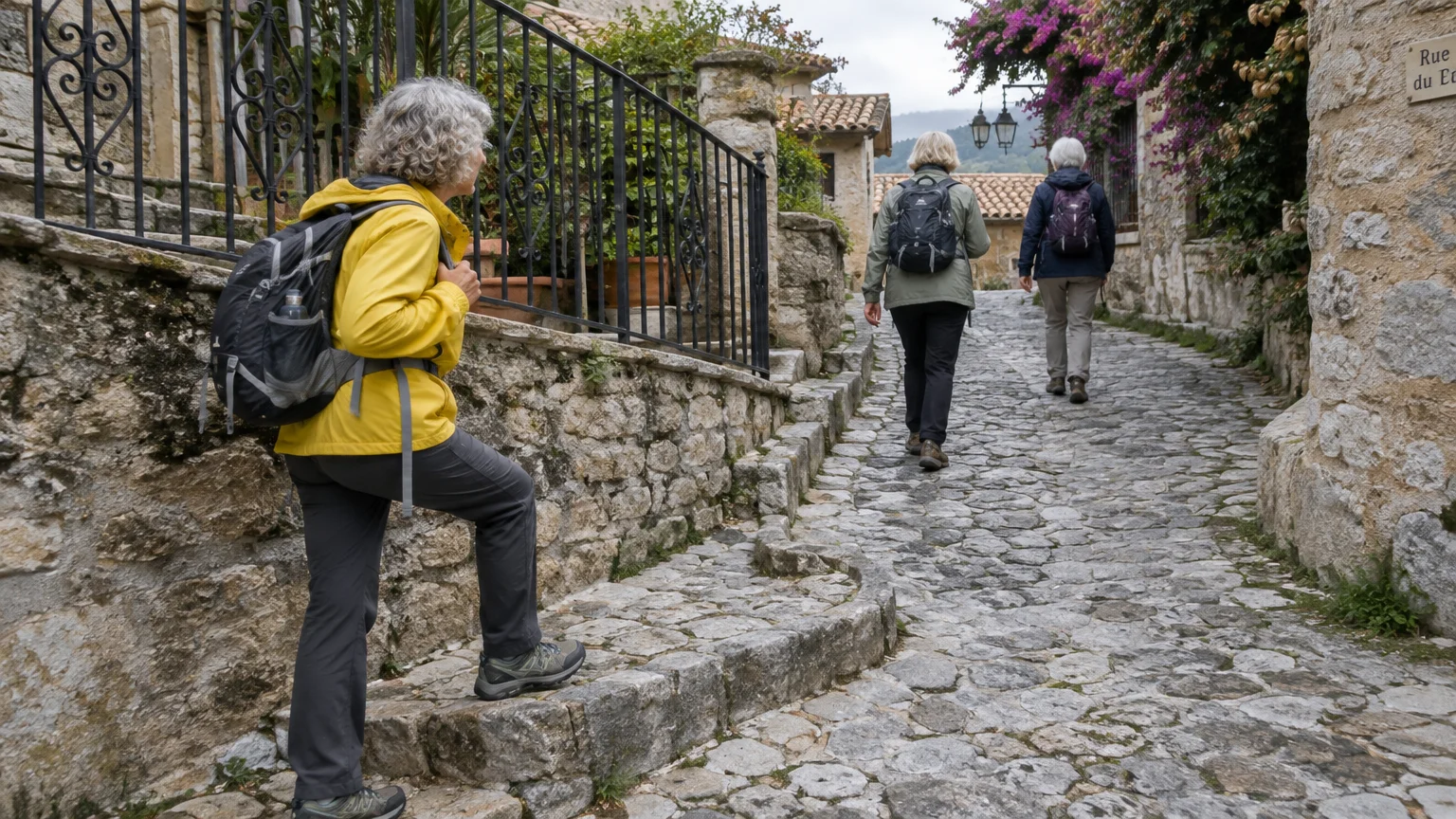
International walking conditions differ significantly from walking on a paved neighborhood trail. Historic European centers feature uneven cobblestones, steep inclines, and minimal public benches for resting.
Travelers seeking a self-paced walking journey might also look into walking the Camino de Santiago after 65, where daily distances can be customized entirely to your endurance.
Many group itineraries require walking three to six miles per day across medieval city centers. A long morning walking tour without afternoon recovery time can lead to joint fatigue or trip injuries.
Review the operator’s physical grading scale to confirm realistic daily demands. High-quality operators provide exact daily mileage, step counts, and the total flights of stairs you will climb.
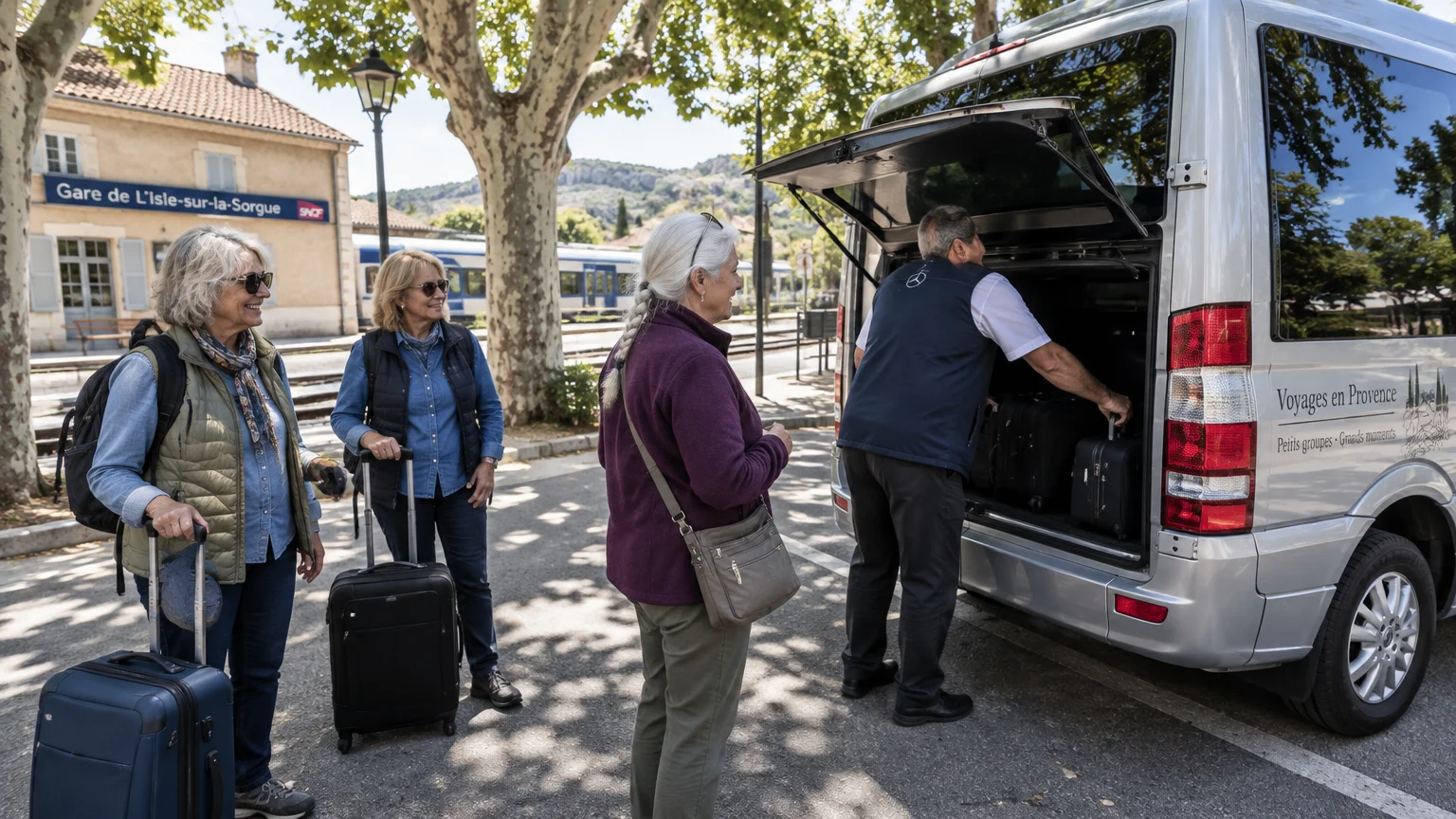
Luggage handling is an equally vital physical factor that many catalogs fail to clarify. Some operators guarantee full porterage from the bus to your hotel bedroom door.
Budget-conscious clubs often require participants to haul a 24-inch suitcase across railway platforms and up historic staircases. That physical burden can strain your back before daily sightseeing even begins.
- Daily walking thresholds measured in concrete miles or steps rather than vague adjectives like moderate.
- Clear counts of stair flights and information on whether hotels feature working elevators.
- Detailed luggage transport rules specifying whether staff or travelers carry bags into hotel rooms.
- Itinerary designs that schedule at least two consecutive nights in each destination to minimize packing stress.

Balancing Communal Dinners and Autonomous Exploration
Constant group togetherness can feel restrictive after several days on the road. The most rewarding tours establish a functional rhythm between structured education and personal downtime.
If you crave hands-on outdoor enrichment rather than traditional sightseeing, consider organic farm volunteering for active seniors as a community-oriented travel alternative.
If you eventually prefer extended independent living over fast-paced group movement, exploring a 60-day winter slow-travel stay in Portugal’s Algarve offers a relaxing alternative.
Look for operators that schedule guided cultural excursions in the morning and leave afternoons open from 2:00 PM to 6:30 PM. This schedule allows you to visit a local museum, sit at a café, or rest in your room.
Autonomous afternoons allow you to pursue personal interests without feeling tethered to a large group. You can read, sketch, or browse local boutiques at your own natural pace.
Shared evening meals then provide a warm social environment where everyone reassembles to discuss the day. This balance keeps social interactions enjoyable and prevents group exhaustion.
Tour managers often coordinate independent afternoon movement using group messaging tools like WhatsApp. You can explore a neighborhood alone while staying connected to the tour director if transit issues arise.
- At least three unscheduled afternoon hours between guided activities and evening dining.
- Optional participation in group dinners so you can enjoy a quiet room-service evening whenever you choose.
- Hotel locations situated inside historic town cores rather than remote highway business parks.
- Group text messaging channels that allow solo walkers to coordinate shared taxis or request safety advice.
Operator Comparison: Single Supplements, Group Sizes, and Costs
Selecting the right travel club requires comparing financial policies alongside group size limitations. Small groups move efficiently through historic sites and foster deeper conversations among travelers.
Scheduling group departures during shoulder months can also lower expenses, similar to general strategies for off-season European travel on a fixed income.
Overseas Adventure Travel caps land journeys at 16 travelers to maintain small-group agility. The company allocates approximately 25,000 single spaces annually, offering 92 percent of those spaces with a waived single supplement.
Women Traveling Together books exclusively solo women, maintaining small groups averaging 14 to 18 participants. Their trips range between $3,000 and $6,500, supported by an optional multi-year membership model.
Road Scholar delivers deep educational value with expert lectures and structured learning itineraries. They provide guaranteed roommate pairing on select trips to protect solo travelers from single room surcharges.
Researching membership organizations like AARP can also reveal discounted operator partnerships and travel planning resources tailored to older adults.
| Tour Operator | Maximum Group Size | Solo Female Traveler Base | Roommate-Matching Policy | Single Supplement Structure | Annual Membership Fee |
|---|---|---|---|---|---|
| Overseas Adventure Travel (O.A.T.) | 16 travelers | 50% of total travelers | Free matching available | Waived on 92% of single spots | None ($0) |
| Women Traveling Together (WTT) | 14–18 travelers | 100% solo bookings | Guaranteed matching program | Roommate match or private upgrade | $45 (1 yr), $80 (2 yrs), $110 (3 yrs) |
| Road Scholar | 18–24 travelers | 85% of solo travelers | Guaranteed pairing on select trips | Standard supplement without match | None ($0) |
Worked Financial Example: Free Single Spaces vs. Roommate Pairs
To evaluate these options, consider a 69-year-old traveler booking a 13-day cultural tour through northern Italy. The published base double-occupancy price for the tour is $4,200.
To prepare for these deposits and fees without disturbing your monthly budget, learn how to build a retirement travel sinking fund well before departure.
Under a standard commercial tour operator, a solo traveler faces an average 40 percent single room supplement. That private room surcharge adds $1,680, pushing your total land cost to $5,880.
If you secure one of the free single spaces through Overseas Adventure Travel, your single supplement fee is $0. Your final cost remains $4,200 for a private room, saving you $1,680.
If you book through Women Traveling Together, you join their roommate-matching program to share accommodations at the double-occupancy rate. Adding a one-year membership fee of $45 results in a total price of $4,245.
If the operator fails to find you a roommate on a guaranteed match booking, they absorb the difference. You receive a private room while paying only the baseline $4,245 fee.
- Standard commercial tour with single supplement: $4,200 base + $1,680 surcharge = $5,880.
- Waived fee program (private room): $4,200 base + $0 surcharge = $4,200 (Total savings: $1,680).
- Roommate-matched booking (shared room): $4,200 base + $45 membership = $4,245 (Total savings: $1,635).
- Unmatched guaranteed booking (private room): $4,200 base + $45 membership = $4,245 (Total savings: $1,635).
Medical Coverage and Identification Requirements Abroad
Healthcare planning requires rigorous attention before leaving the country. Traditional Medicare Part A and Part B provide no coverage for medical treatments or hospital stays outside the United States.
Before packing your bags, review your health policy guidelines since traveling with Medicare outside the U.S. typically provides little to no emergency medical protection overseas.
Official guidance on Medicare.gov confirms that domestic Medicare benefits stop at the border. You must arrange supplementary health coverage before boarding an international flight.
Select Medigap policies—specifically Plans C, D, F, G, M, and N—offer foreign emergency travel benefits. These plans cover 80 percent of billed emergency care after a $250 annual deductible.
This Medigap emergency benefit carries a strict $50,000 lifetime maximum and applies only during your first 60 consecutive days abroad. Crucially, Medigap plans do not pay for international medical evacuation to the United States.
A specialized medical evacuation membership can transport you to your home hospital if you break a hip or fall ill. Commercial emergency transport from Europe back to the United States can easily cost $75,000 to $150,000 without insurance.
For domestic flights connecting to international departures, remember federal identification rules. The Department of Homeland Security enforces REAL ID requirements, meaning domestic airport checkpoints require a REAL ID driver’s license or a valid passport.
When paying for overseas tours, review credit card fraud rules from the Consumer Financial Protection Bureau. Paying trip deposits by credit card provides legal dispute mechanisms that debit cards and wire transfers lack.
- Carry a primary travel medical policy that covers emergency medical evacuation up to at least $250,000.
- Confirm your passport expiration date extends at least six months past your scheduled return date.
- Carry a state-issued REAL ID or valid passport book for all domestic flight connections.
- Pack prescription medications in original pharmacy bottles inside your carry-on bag with paper doctor prescriptions.

Questions to Ask Tour Directors Before Booking
Before placing a non-refundable deposit on any guided tour, contact the tour provider’s booking office. Asking precise operational questions reveals how well the company supports older solo women on the ground.
Do not accept vague sales assurances about easy days or relaxed pacing. Request specific policies regarding daily logistics, unexpected illness, and schedule flexibility.
- What specific questionnaire do you use to assess roommate habits, sleep schedules, and medical device usage?
- What is your exact written procedure if roommates experience irreconcilable conflict on day two?
- How many walking miles and flight stairs are required on the most physically demanding day of the itinerary?
- Are afternoon hours between lunch and dinner completely free, or does the group remain together?
- What happens if I catch a respiratory virus and need to quarantine in the hotel during the tour?
- Does the tour director coordinate daily porterage, or do travelers transport their own bags across platforms?
Frequently Asked Questions
What happens if my assigned roommate snores loudly or uses a CPAP machine?
Most reputable senior travel groups screen for snoring and medical equipment on pre-trip intake questionnaires. If severe sleep disruption occurs, the tour director attempts to reassign travelers to open rooms, though single room surcharges may apply.
Can I skip scheduled group excursions to explore a city on my own?
Yes, small-group tour operators welcome autonomous exploration. You simply inform your tour director at breakfast that you plan to step away for the afternoon, then reconnect with the group for dinner.
Does original Medicare cover medical care while traveling overseas?
No, original Medicare Part A and Part B provide no coverage outside the United States. You must carry supplemental travel health insurance or a Medigap plan with foreign emergency benefits to cover overseas care.
How do tour groups handle travelers with minor mobility issues?
Small-group operators publish clear physical rating levels for every itinerary. Tour directors can often arrange a taxi to bypass steep climbs, but you must ensure your baseline stamina matches the published trip level.
Is an annual membership required to book women-only travel clubs?
Certain specialized companies, such as Women Traveling Together, require modest annual memberships ranging from $45 to $110. Other major providers, including Overseas Adventure Travel and Road Scholar, charge no membership fees to book.
Disclaimer: This article is for informational purposes only. Benefits, programs, and regulations can change.
We encourage readers to verify current information with official government sources and consult with qualified professionals for personalized advice.



1 Comment