
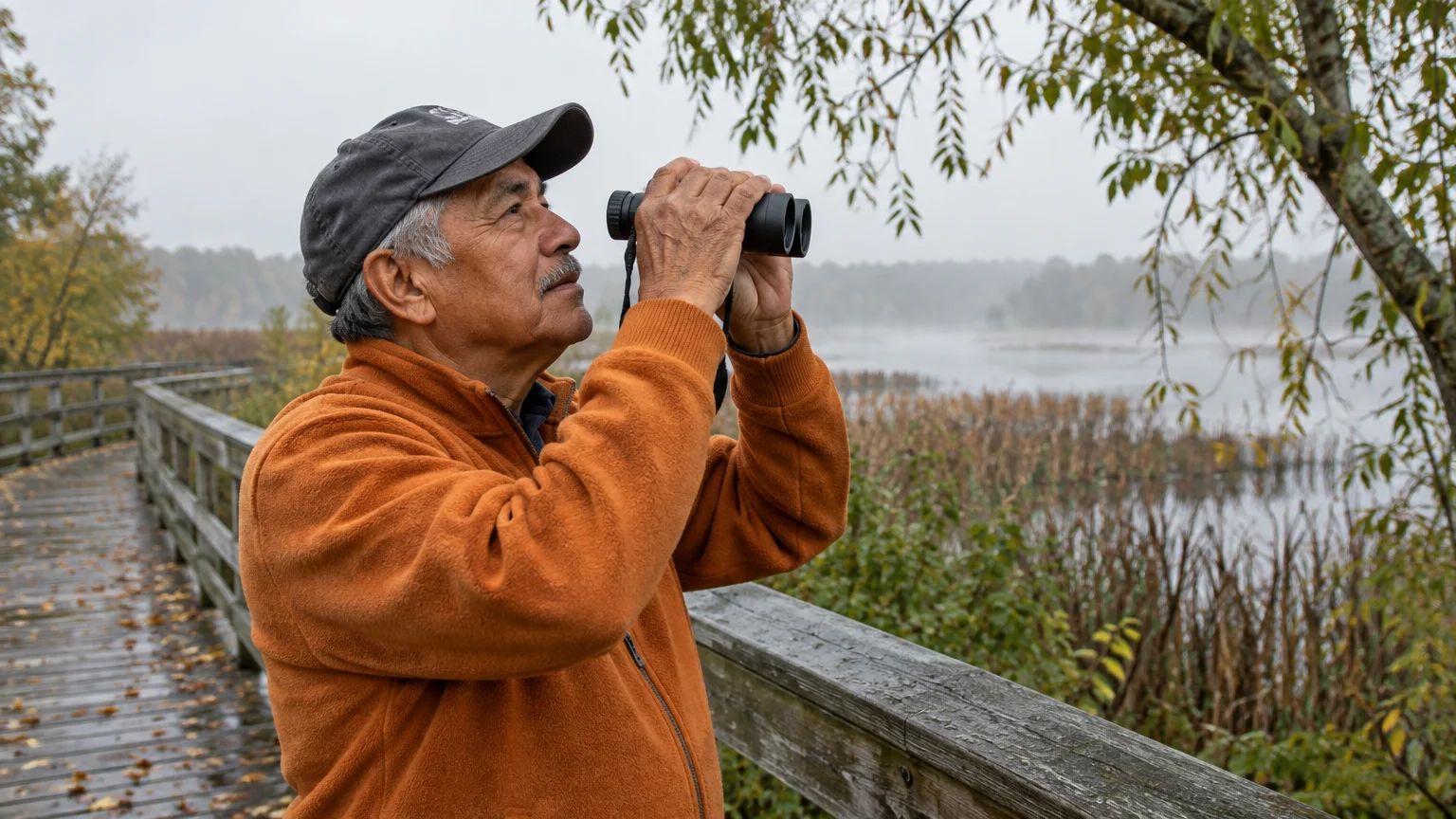
Bird watching transforms a routine morning walk into an active sensory exercise that sharpens observational focus and mobility. At age 68, you do not need heavy telephoto equipment or remote backcountry treks to catalog dozens of avian species.
A modest setup of lightweight 8x magnification optics paired with free sound-identification apps turns your immediate neighborhood into an expansive wildlife preserve.
This guide details exact optical dimensions for aging hands, demonstrates zero-cost mobile logging tools, and outlines actionable routines that fit fixed retirement budgets.
In this guide9 sections
- Why Birding Supports Physical and Cognitive Health After 60
- Choosing Birding Optics for Seniors and Aging Eyes
- Comparing Senior-Friendly Binoculars: Weight and Specifications
- Setting Up Your Free Digital Field Kit with Merlin and eBird
- A Step-by-Step Daily Birding Walk Routine
- Worked Budget Example: Starting Out on a Fixed Income
- Joining Citizen Science Projects and Local Naturalist Groups
- Designing an Accessible Backyard Observation Station
- Frequently Asked Questions
Why Birding Supports Physical and Cognitive Health After 60
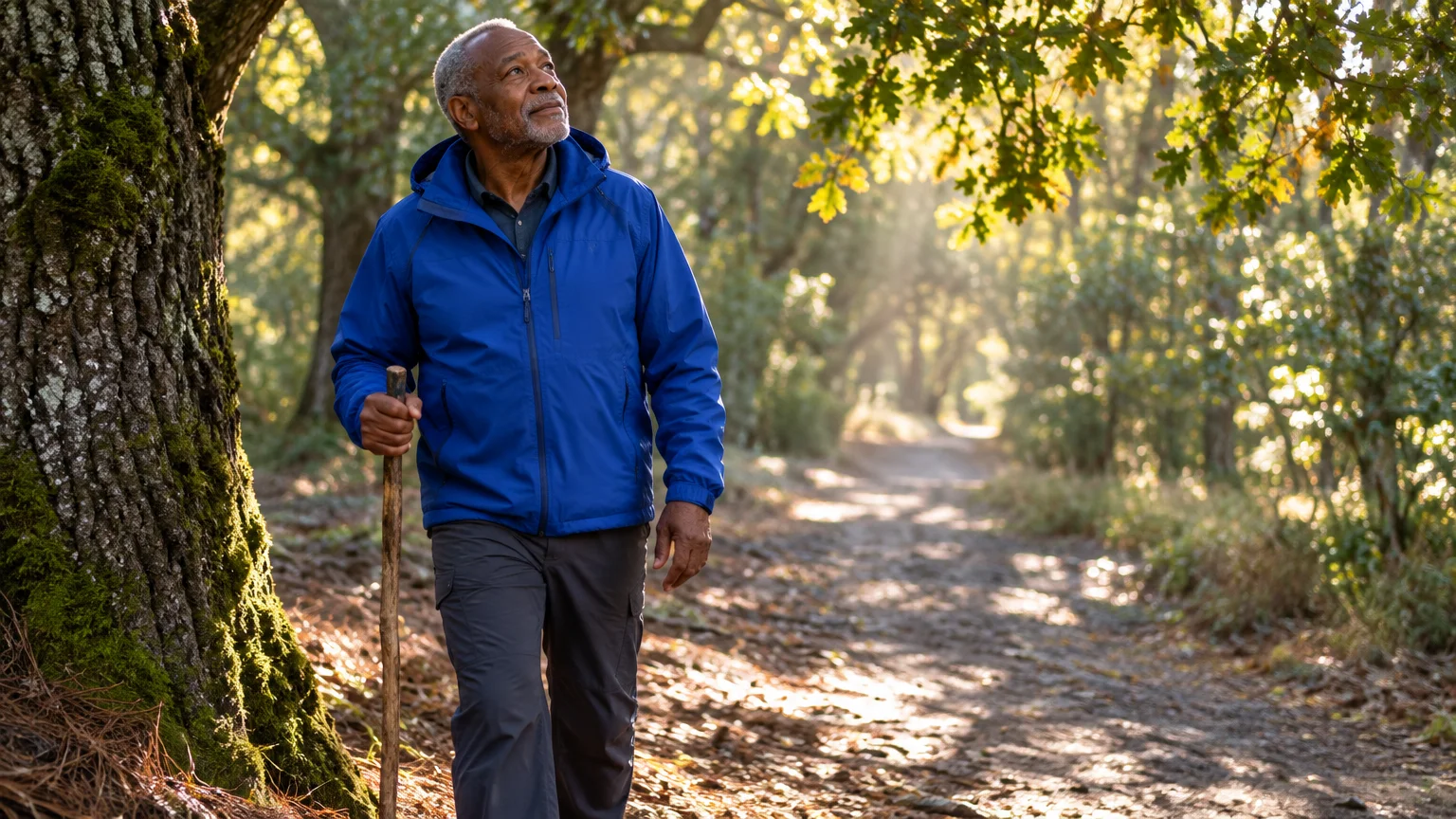
Bird watching provides low-impact cardiovascular activity without the joint strain of running or high-intensity aerobics. Walking at an exploratory pace of 1.5 to 2.0 miles per hour keeps your heart rate in a gentle aerobic zone.
Pairing regular walks with social activities like beginner pickleball leagues can provide a well-rounded weekly routine for physical fitness.
Much like senior-friendly gardening, spending time observing wildlife allows you to connect with nature without placing painful stress on your joints.
According to the U.S. Fish and Wildlife Service National Survey of Fishing, Hunting, and Wildlife-Associated Recreation, approximately 96.3 million Americans actively watch birds. Over 91 million observe wildlife around their own homes.
Healthy aging initiatives published by the Administration for Community Living emphasize daily purposeful walking to preserve balance and lower fall risks in older adults.
Beyond physical movement, field identification exercises visual acuity and memory processing. Your brain works continuously to isolate acoustic patterns, analyze flight silhouettes, and distinguish subtle plumage variations.
Tracking bird behavior also encourages mindfulness and reduces cortisol levels. Tuning your attention to tree canopies pulls your focus outward, promoting calm mental clarity.
“To find birds, you must become a part of the landscape.” — John Burroughs
Choosing Birding Optics for Seniors and Aging Eyes
When selecting optics for aging eyes and hands, magnification power is the most critical decision. While novice birders often assume 10x magnification is superior, 8x magnification remains the gold standard for older adults.
Higher magnification amplifies minor hand tremors, creating a shaky image that leads to eyestrain and headaches. An 8x binocular delivers a wider field of view, making it far easier to track erratic warblers in thick brush.
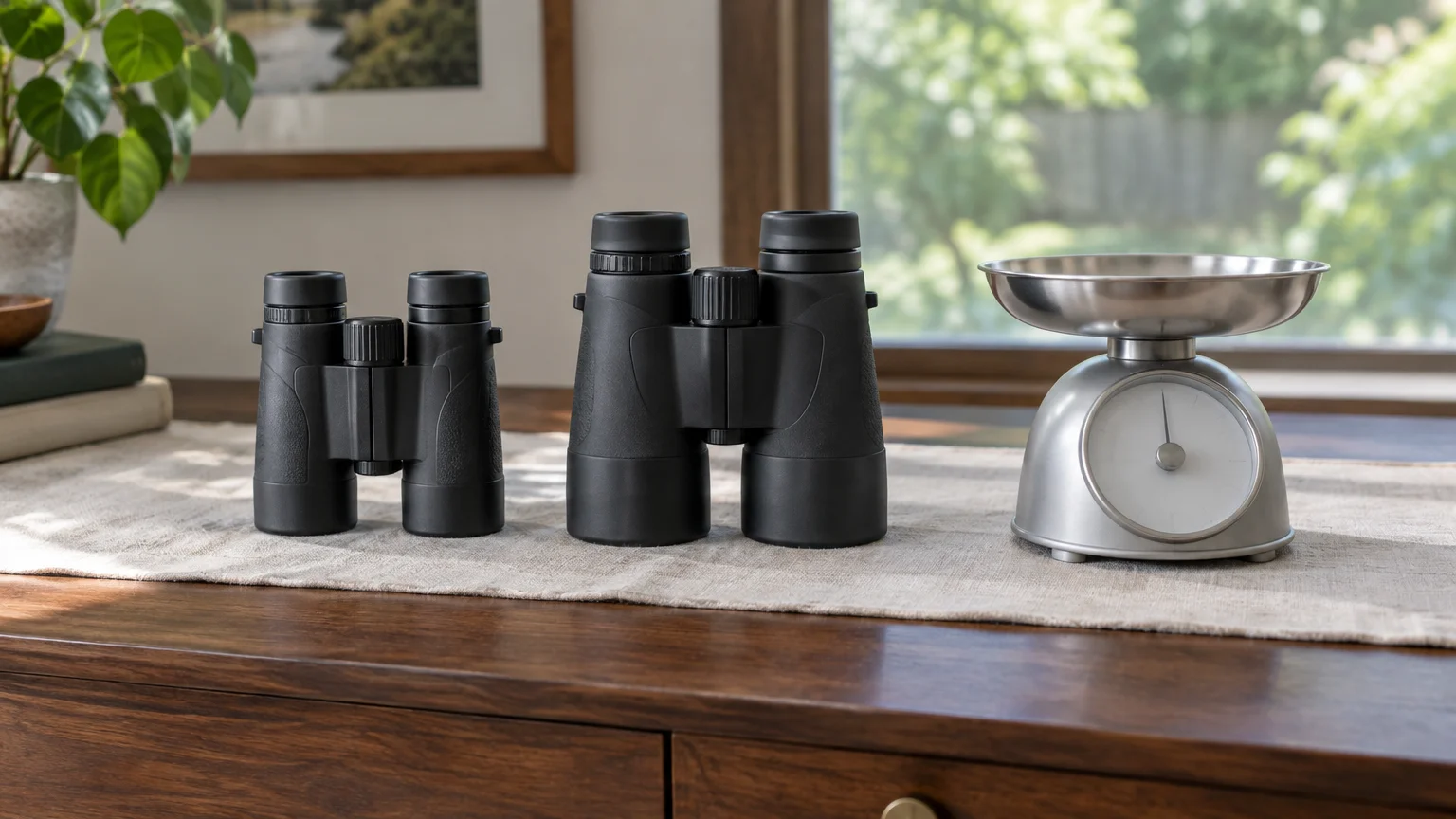
Lens weight directly impacts your comfort during extended field sessions. Full-size 8×42 binoculars weigh between 21 and 24 ounces, while mid-size 8×32 models weigh only 16 to 18 ounces.
If you experience arthritis or shoulder fatigue, shaving 5 to 7 ounces off your optics makes a noticeable difference. Modern phase-coated 32 mm objective lenses admit plenty of morning light for crisp observation.
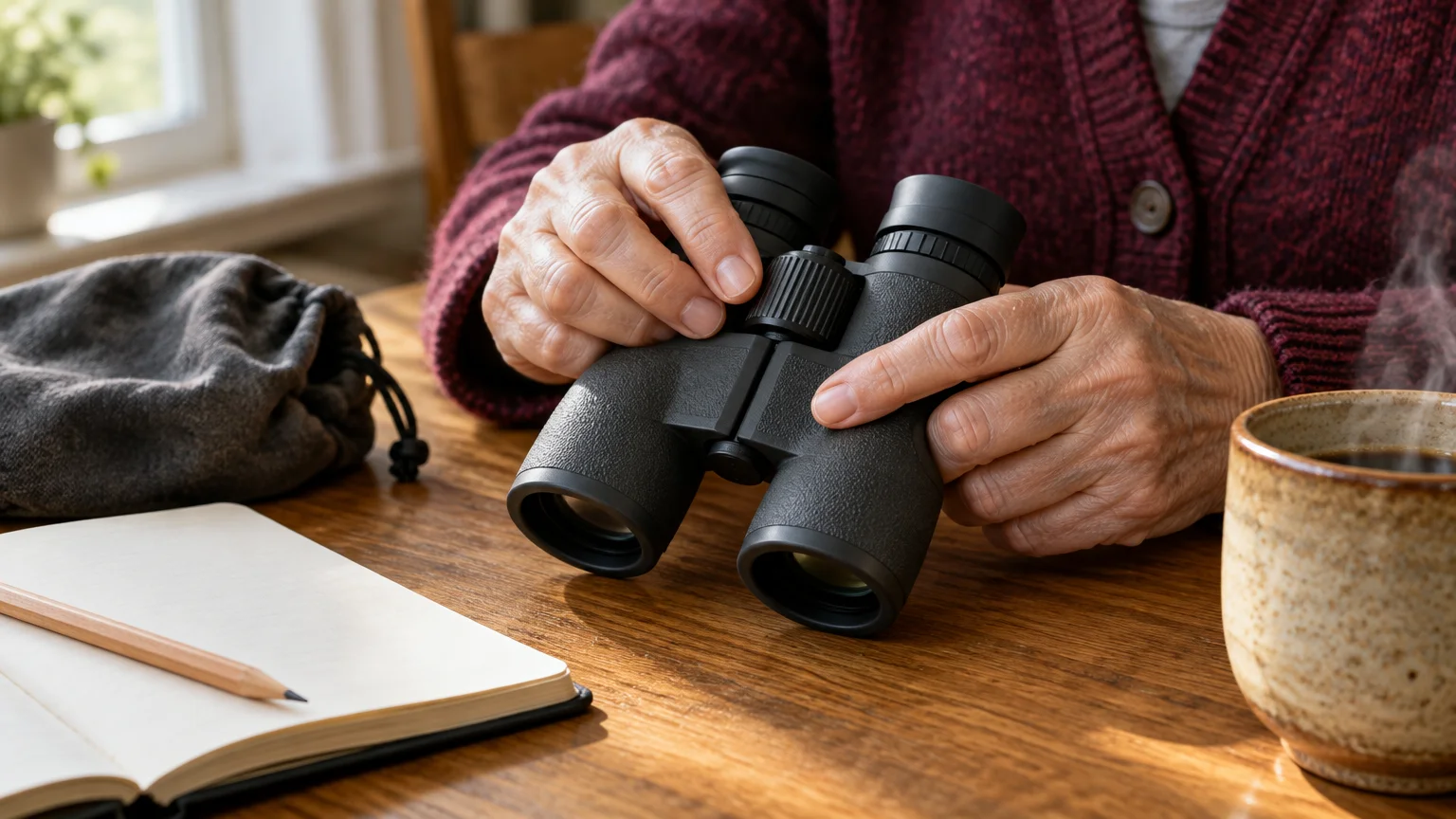
Eyeglass wearers must verify eye relief before purchasing any optic. Eye relief is the distance your eye can sit behind the ocular lens while still viewing the complete circular image.
Look for an eye relief measurement of at least 15 mm to 16 mm. Pair this with twist-up eyecups that lock securely in the down position so your eyeglasses do not scratch the glass.
- Magnification: Choose 8x to minimize hand shake and maintain a broad field of view.
- Objective Lens Diameter: Select 32 mm for reduced carrying weight or 42 mm for maximum brightness at dusk.
- Eye Relief: Require 15 mm or greater to accommodate prescription lenses and bifocals.
- Focus Wheel Action: Select a large, ribbed central wheel that turns smoothly without stiff resistance.
- Weatherproofing: Verify nitrogen purging and O-ring sealing to prevent internal lens fogging.
Comparing Senior-Friendly Binoculars: Weight and Specifications
Reliable entry-level binoculars range from $130 to $280. You do not need four-figure European glass to achieve sharp optical clarity and dependable mechanical durability.
Before making an optical purchase, check outdoor stores for senior retail discounts that can lower the upfront cost of your equipment.
The following table compares five top-performing models evaluated by weight, eye relief, close focus distance, and price.
| Model | Configuration | Weight (oz) | Eye Relief (mm) | Close Focus (ft) | Approximate Price |
|---|---|---|---|---|---|
| Nikon Prostaff P3 | 8×30 | 16.8 | 15.4 | 8.2 | $129.95 |
| Celestron Nature DX | 8×42 | 22.2 | 17.5 | 6.5 | $169.95 |
| Vortex Crossfire HD | 8×42 | 23.8 | 17.0 | 6.0 | $149.99 |
| Vortex Diamondback HD | 8×32 | 15.9 | 16.0 | 5.0 | $229.99 |
| Nikon Monarch M5 | 8×42 | 22.2 | 19.5 | 8.2 | $279.95 |
For individuals with grip weakness or wrist stiffness, the Nikon Prostaff P3 8×30 and Vortex Diamondback HD 8×32 represent exceptional ergonomic choices.
If you wear thick eyeglasses, the Nikon Monarch M5 provides 19.5 mm of eye relief. That extra clearance ensures you see no dark vignetting rings around the image edges.
Setting Up Your Free Digital Field Kit with Merlin and eBird
Heavy paper field guides often remain closed in a daypack because cross-referencing birds in the field takes too long. Modern smartphone technology simplifies field identification at zero cost.
Just as birders rely on mobile apps to spot wildlife, many seniors use free digital budgeting tools to streamline monthly tracking from their smartphones.
The Cornell Lab of Ornithology produces two complementary mobile applications: Merlin Bird ID and eBird. Both tools are completely free to download and contain no subscription fees or advertisements.
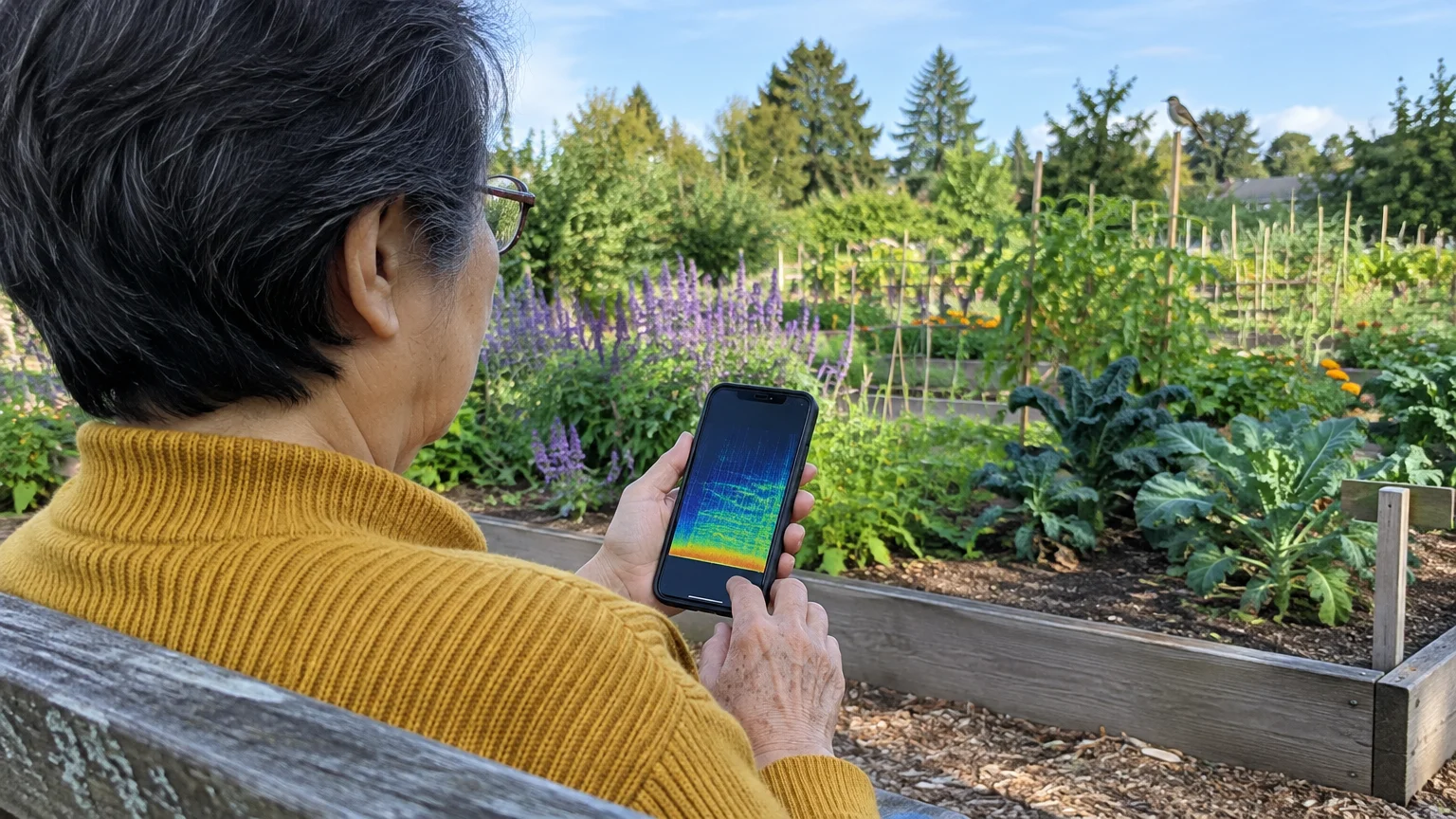
Merlin Bird ID functions as an automated digital field companion. Its Sound ID feature listens to bird vocalizations in real time, displaying name matches on your screen instantly.
This feature proves valuable for older adults experiencing age-related high-frequency hearing loss. The app picks up subtle cedar waxwing or brown creeper calls before human ears detect them.
- Install Merlin Bird ID from the Apple App Store or Google Play Store on your smartphone.
- Download the regional bird pack for your home state while connected to your home Wi-Fi network.
- Open the app and grant permission for microphone access when prompted.
- Tap “Sound ID” when you hear an unfamiliar song during your morning walk.
- Watch the live spectrogram highlight species matches as the bird sings nearby.
After identifying birds, use eBird to catalog your sightings. The app tracks the date, location, and species tally, building your personal life list automatically over time.
A Step-by-Step Daily Birding Walk Routine
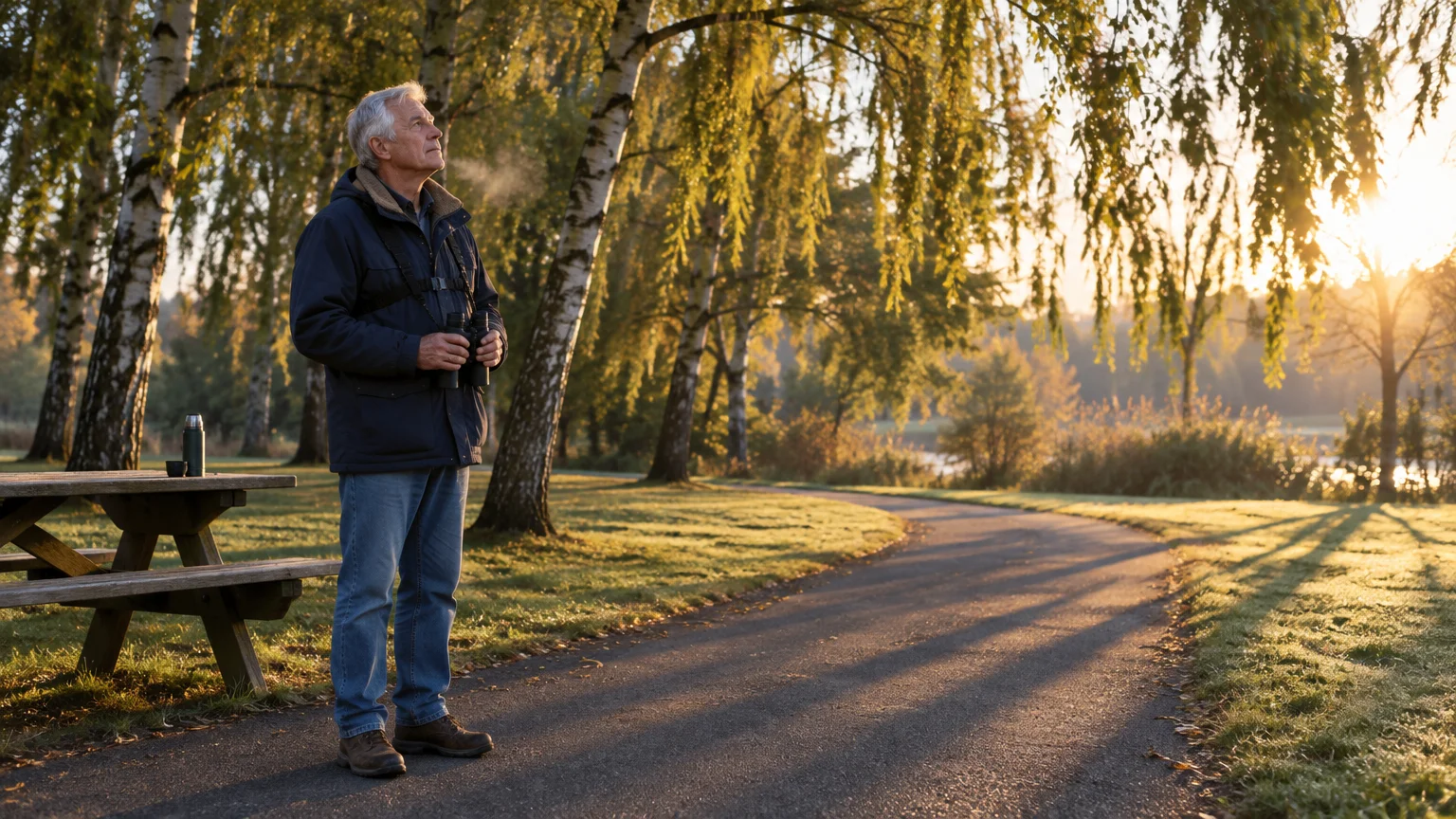
Establishing a consistent walking routine builds observational skills while helping you reach daily step goals. A 45-minute outing covers roughly 1.0 to 1.5 miles at a relaxed pace.
If you enjoy slow-paced nature exploration near quiet waterways, exploring fly fishing for beginners offers another peaceful outdoor hobby to complement birding.
If you plan to visit state parks or regional preserves beyond your neighborhood, explore tips on budgeting for travel in retirement to keep your outings economical.
Morning hours offer the best viewing conditions. Songbirds feed actively during the first three hours after sunrise when insects are sluggish and temperatures remain cool.
Use a binocular chest harness instead of a traditional neck strap. A harness distributes the optic’s weight across your shoulders and back, eliminating cervical neck fatigue entirely.
- Depart between 7:00 AM and 8:30 AM: Step out during peak territorial singing and feeding periods.
- Implement the micro-pause method: Walk 100 paces, stop in place for 90 seconds, and scan the mid-canopy before advancing.
- Follow the horizontal edge: Walk along habitat boundaries, such as where woodland edges meet open park turf or residential lawns.
- Listen before raising your glass: Identify the direction of bird calls with your ears, locate motion with your naked eyes, then lift your binoculars.
- Log your checklist: Close your eBird checklist at the end of the walk to preserve your location data and species count.
This structured sequence prevents physical overexertion while dramatically increasing your detection rate. Pausing quietly allows shy woodland birds to emerge from dense cover.
Check the outdoor recreation resources curated by AARP for additional tips on walking programs and staying active after retirement.
Worked Budget Example: Starting Out on a Fixed Income
Many older adults live on fixed Social Security incomes and must allocate discretionary hobby spending carefully. You can launch a complete birding setup for under $265 in initial gear.
Allocating cash with envelope budgeting methods is a straightforward way to fund new outdoor gear without dipping into essential living expenses.
Consider a 68-year-old retiree purchasing high-utility gear designed for longevity. Buying quality equipment once prevents the frustration of cheap optics that break or strain your vision.
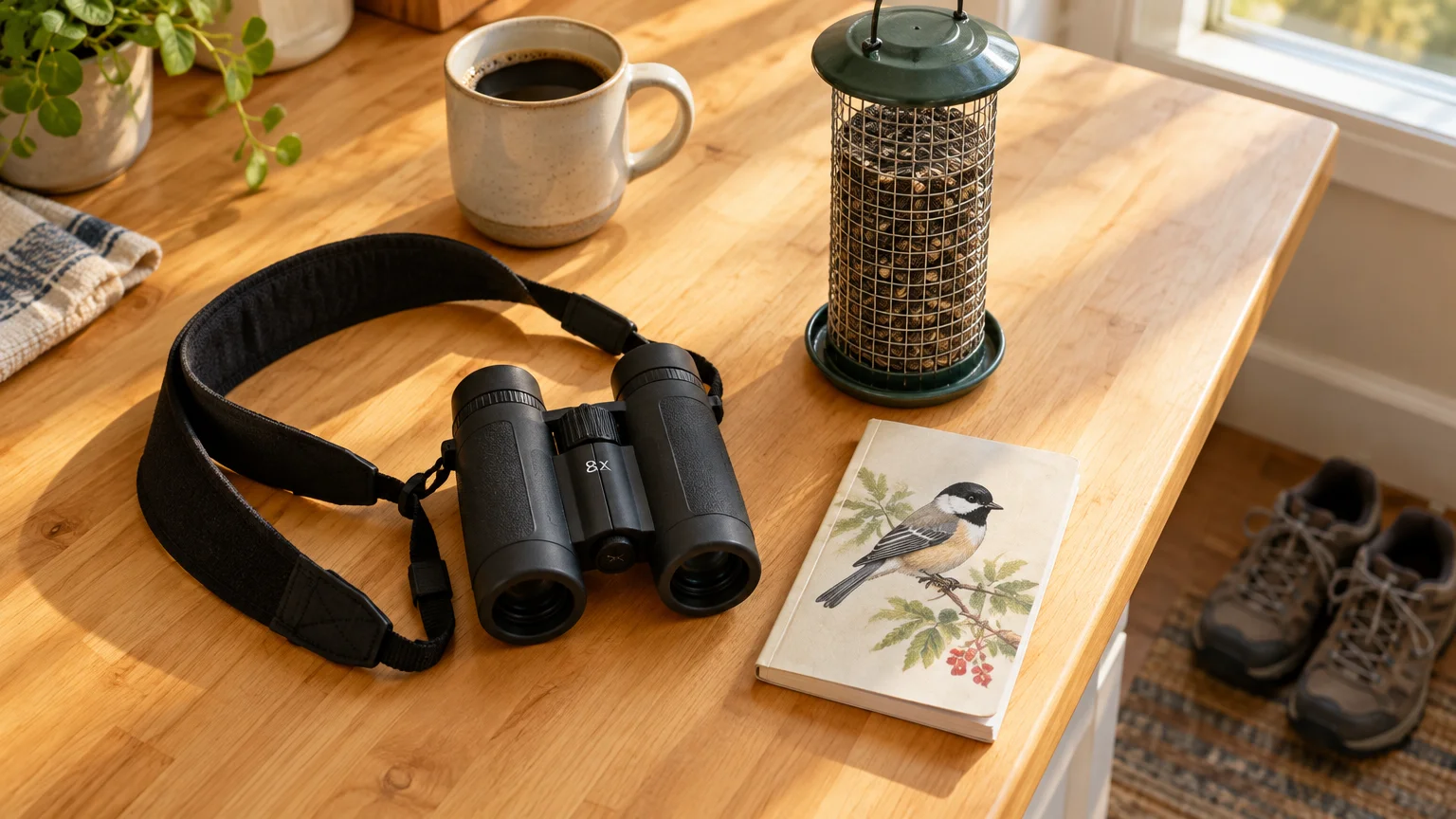
- Mid-size optic: Nikon Prostaff P3 8×30 binoculars — $129.95
- Support accessory: Elastic four-point chest harness — $18.50
- Recreation access: America the Beautiful Senior Lifetime Pass — $80.00
- Mobile software: Merlin Bird ID and eBird apps — $0.00
- Backyard station: Squirrel-resistant tube feeder and 10 lb black oil sunflower seed — $32.00
- Total Initial Investment: $260.45
Purchasing the federal Senior Pass provides access to more than 2,000 national wildlife refuges and national parks for life. U.S. citizens or permanent residents aged 62 or older qualify.
To avoid extra administrative fees, buy your pass in person at a federal recreation site. Purchasing online or by mail adds a processing fee of $10.00 to $12.50.
Consulting USA.gov Benefits helps you review federal discount programs and confirm recreation pass requirements in your state.
Joining Citizen Science Projects and Local Naturalist Groups
Retirement often disrupts social routines, making hobby-based community groups a great source of camaraderie. Bird watching connects you with regional naturalist networks that welcome beginners.
Contributing your sightings to local conservation groups also opens doors to broader volunteer opportunities in retirement that keep you socially connected.
Participating in local wildlife monitoring is a meaningful way of volunteering in retirement that keeps you socially connected.
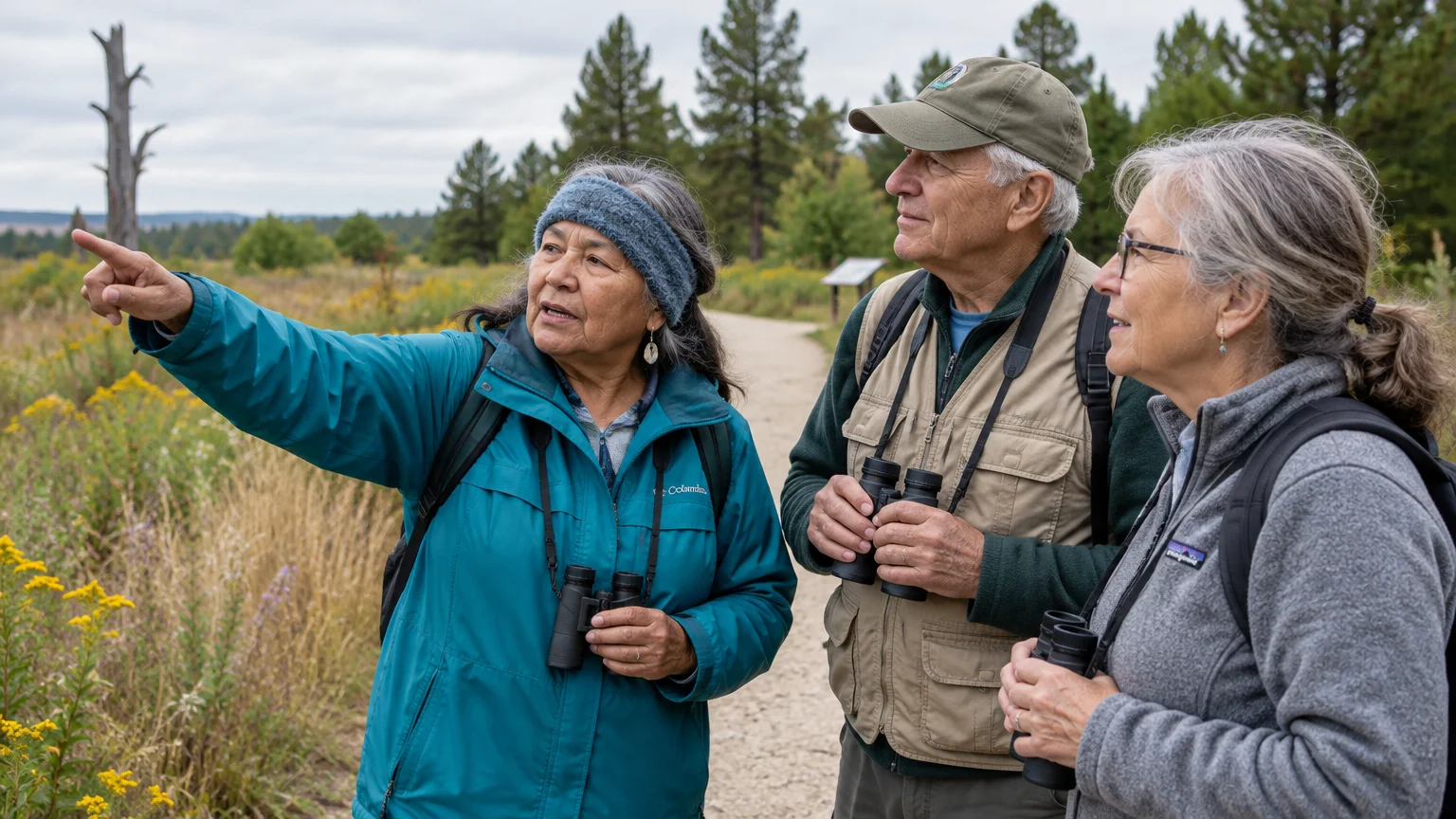
Local Audubon chapters host free weekend field trips led by experienced birders. These outings provide direct mentorship on bird vocalizations and field identification techniques.
Participating in citizen science lets your recreational sightings contribute to global conservation databases. Professional ornithologists rely on volunteer data to track population shifts and migration changes.
- Audubon Christmas Bird Count: Runs annually from December 14 through January 5. Volunteers survey designated 15-mile circle zones alongside experienced team leaders.
- Great Backyard Bird Count: Takes place over Presidents’ Day weekend in mid-February. You count birds from your yard or local park for as little as 15 minutes.
- eBird Global Big Day: Held every May. Birders worldwide unite to log as many distinct avian species as possible within a 24-hour window.
These organized census events require no advanced biological degrees. Beginners pair with experienced spotters who confirm identifications and handle data logging.
Designing an Accessible Backyard Observation Station
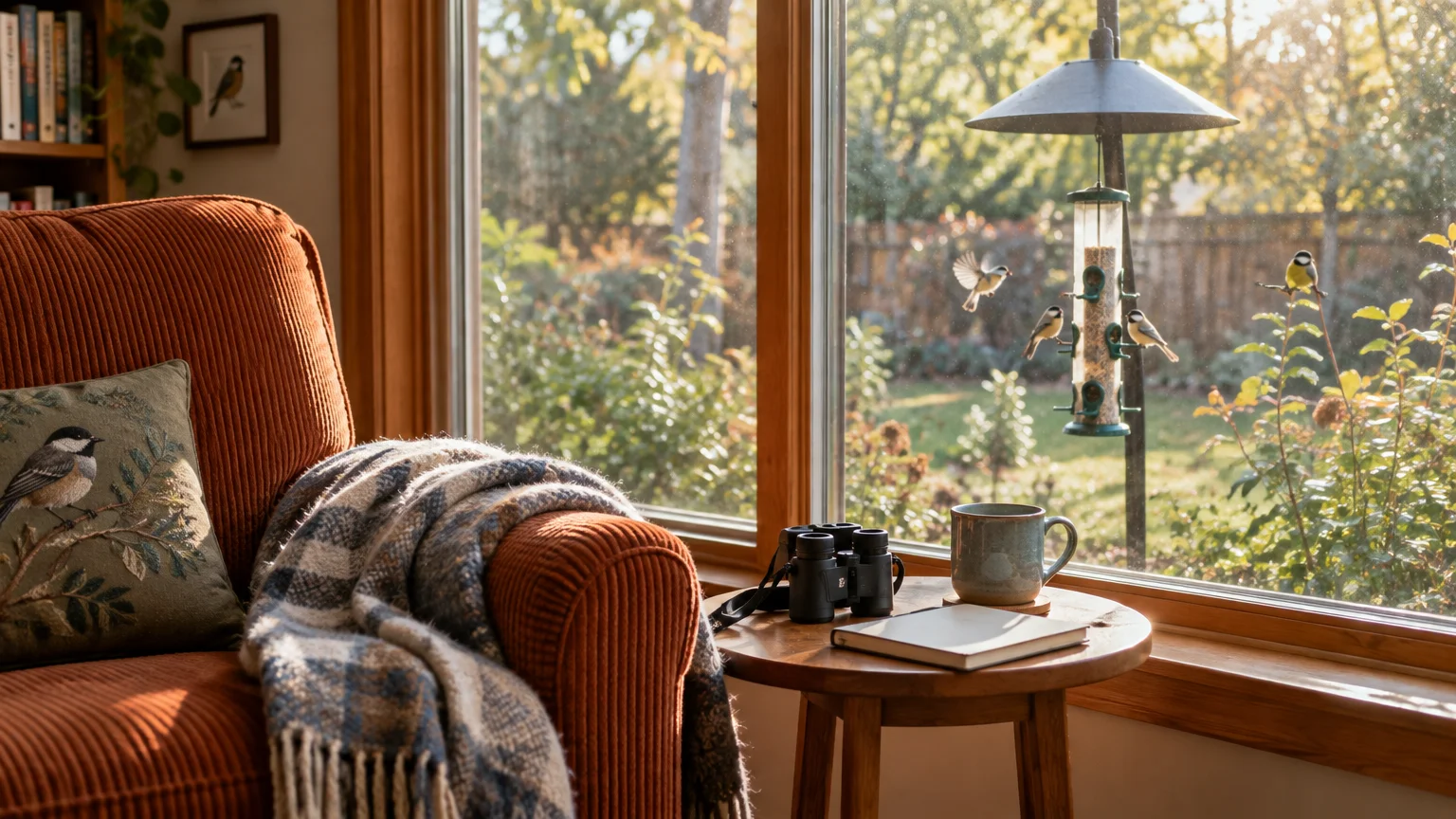
Joint flare-ups, seasonal allergies, or inclement winter weather can occasionally limit your ability to walk community trails. A well-designed backyard station ensures you never miss birding opportunities.
Position your primary feeding station roughly 10 to 15 feet from your favorite indoor armchair. This distance allows clear optical focus while keeping birds calm when you move inside.
Black oil sunflower seed offers the highest nutritional value for backyard songbirds. Its thin outer shell allows chickadees, titmice, and finches to crack seeds with minimal effort.
- Feeder Selection: Hang a polycarbonate tube feeder with metal perches to resist chewing damage from squirrels.
- Suet Station: Install a wire suet cage nearby to attract downy woodpeckers, nuthatches, and wrens.
- Water Feature: Add a shallow birdbath with a solar dripper; moving water attracts species that do not eat seed.
- Window Safety: Place feeders within three feet of glass or beyond 15 feet to prevent fatal flight collisions.
- Sanitation Schedule: Clean feeders monthly with a 9:1 water-to-bleach solution to prevent avian disease transmission.
Setting up a comfortable viewing station guarantees continuous access to nature. You can practice logging neighborhood visitors into eBird without leaving the comfort of your kitchen table.
Frequently Asked Questions
Do I need 10x magnification binoculars to see songbirds clearly?
No, 8x magnification is better for most older adults. It provides a wider field of view, brighter images, and minimizes the image shaking caused by hand tremors.
Can I use birding apps if I am not experienced with smartphones?
Yes, Merlin Bird ID requires only a single tap on the Sound ID button to begin listening. The interface uses large text and simple icons designed for effortless navigation.
How does the America the Beautiful Senior Pass benefit bird watchers?
The Senior Pass grants lifetime admission to over 2,000 federal recreation sites, including National Wildlife Refuges. At age 62 or older, you can purchase a lifetime pass for $80 in person.
What can I do if holding binoculars hurts my neck or shoulders?
Replace your standard neck strap with a four-point elastic binocular harness. A harness transfers the optic’s weight evenly across your torso, relieving cervical spine tension.
Is bird watching safe to practice alone on local walking trails?
Yes, provided you choose paved municipal park paths, carry your phone, and stay alert to trail conditions. Many retirees also join free local Audubon walks to explore trails in groups.
Disclaimer: This article is for informational purposes only. Benefits, programs, and regulations can change.
We encourage readers to verify current information with official government sources and consult with qualified professionals for personalized advice.



1 Comment