
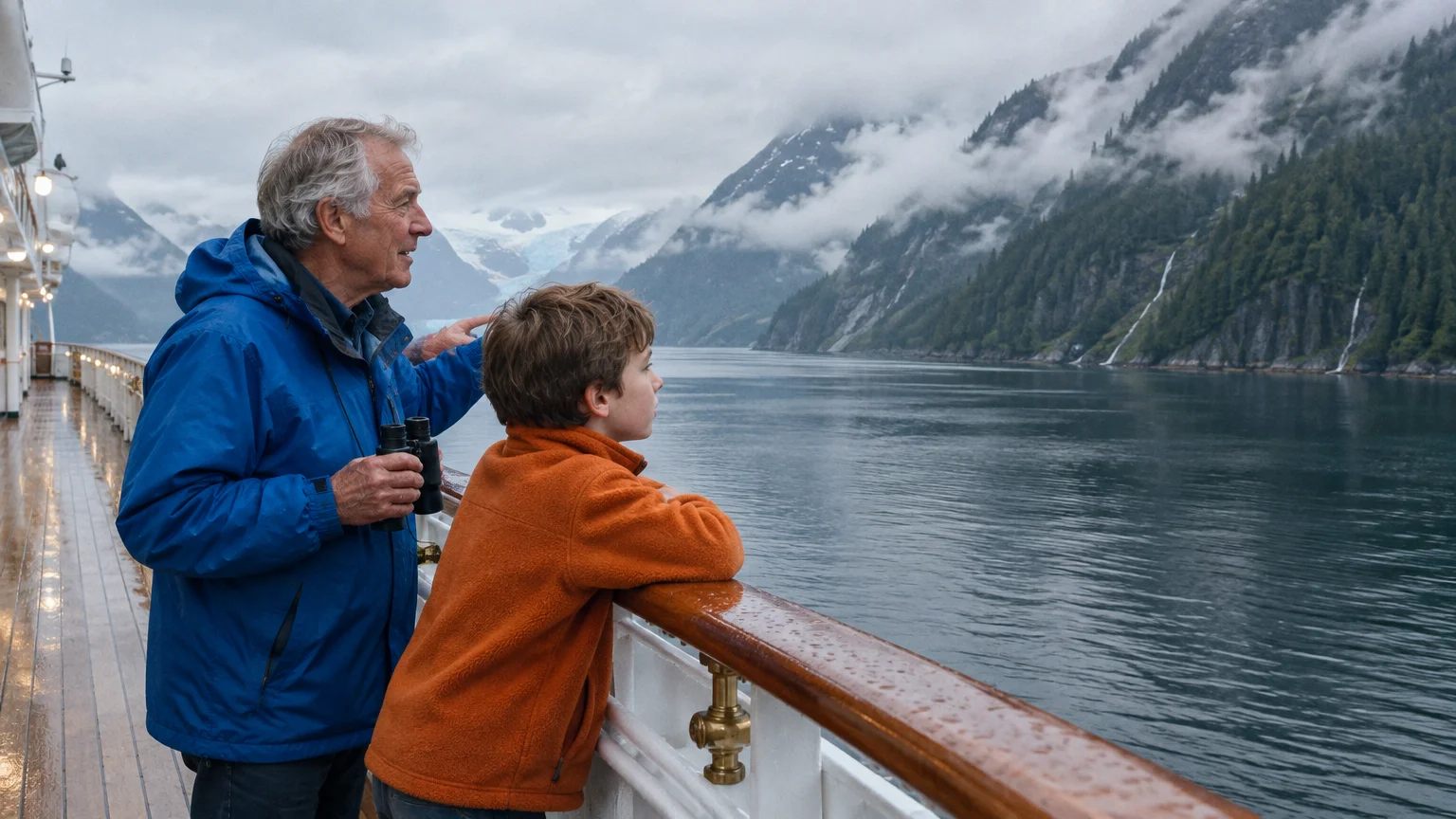
Taking your pre-teen grandchildren on an Alaska Inside Passage voyage gives them front-row access to calving glaciers and humpback whales before teenage schedules take over. Planning this milestone trip in your early 70s requires balancing shipboard physical ease with real wildlife engagement.
Setting digital boundaries before departure also helps, drawing on lessons from grandparenting in the digital age so screens do not detract from the stunning landscape.
With practical planning strategies, budgeting for travel in retirement allows you to fund memorable multigenerational vacations without compromising your everyday security.
While mega-ships offer go-karts and video arcades, mid-sized heritage vessels deliver direct access to National Park Service rangers and quiet viewing decks that prevent grandparent exhaustion. This guide compares both vessel styles to help you build the right itinerary.
In this guide9 sections
- Choosing Your Ship: Mega-Ship Fun vs. Mid-Sized Expedition Realism
- Glacier Bay and Onboard Junior Ranger Programming
- Route Selection: Seattle Round-Trip vs. Vancouver One-Way
- Mandatory Documentation for Grandparents Traveling Without Parents
- Cabin Configurations: Connecting Staterooms vs. Quad Suites
- Port Excursions That Balance Mobility Limits and Pre-Teen Energy
- Real-World Budget Breakdown for a Grandparent-Grandkid Alaskan Cruise
- What to Pack for Variable Weather and Deck Safety
- Frequently Asked Questions
Choosing Your Ship: Mega-Ship Fun vs. Mid-Sized Expedition Realism
Selecting your vessel sets the physical pace of your daily cruise experience. You must weigh shipboard walking distances against the entertainment preferences of pre-teens.
Before purchasing cold-weather layers and footwear for the journey, taking advantage of senior discounts at major retailers can significantly cut your upfront gear costs.
While cruising with family requires accommodating high-energy youth, older adults who later want an intimate, quiet voyage may appreciate exploring small-ship river cruises for solo seniors on their next vacation.
Retirees seeking discounted fares on premier lines can also look into seasonal repositioning cruise deals as vessels migrate toward Alaska each spring.
Mega-ships carrying over 4,000 passengers offer go-kart tracks, laser tag arenas, and sprawling teen zones. Vessels like Royal Caribbean’s Quantum of the Seas keep pre-teens stimulated from sunrise to midnight.
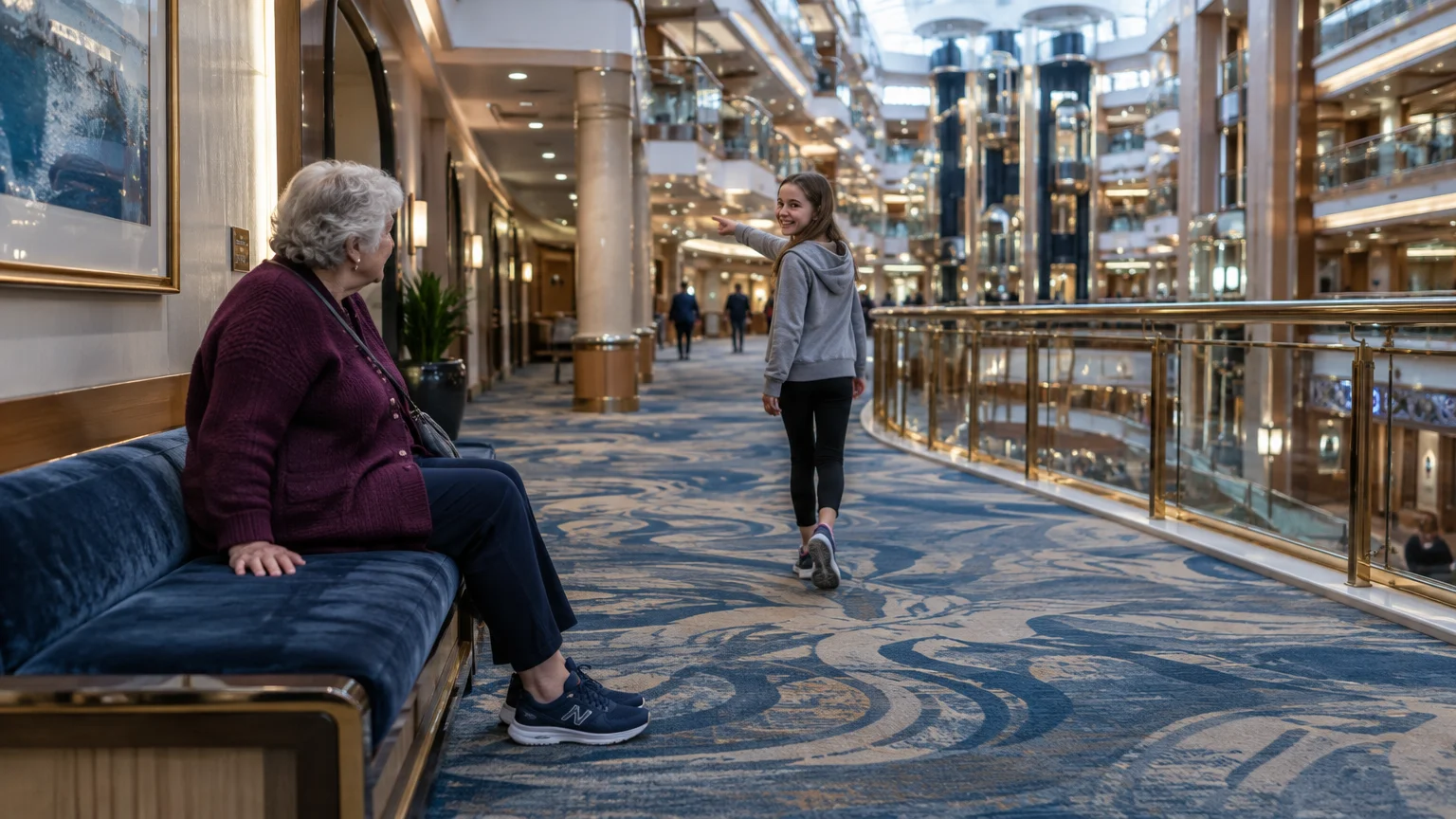
However, mega-ships measure nearly 1,140 feet in length. Walking from an aft stateroom to the forward theater can require navigating two football fields of carpeted hallways multiple times daily.
For travelers in their 70s, this walking volume adds up to four or five miles of daily foot travel. That level of exertion leaves little stamina for shoreside walking tours.
Mid-sized heritage vessels, such as Holland America’s Koningsdam or Princess Cruises’ Grand Princess, carry roughly 2,000 to 2,600 passengers. These ships measure 900 to 980 feet long, reducing transit strain significantly.
Mid-sized ships focus heavily on destination education. Naturalists lead bow watches, while wrapping teak promenade decks give you unobstructed views of marine wildlife without battling crowded observation decks.
Expedition vessels, such as Lindblad Expeditions’ 100-guest National Geographic Venture, take travelers directly to remote fjords via inflatable Zodiac crafts. They feature zero pool slides or Broadway shows, focusing purely on field biology.
While expedition cruising provides unforgettable science engagement for active 11-year-olds, these ships lack elevators and feature steep gangways. Travelers with mild joint stiffness or balance issues will find expedition boarding challenging.
| Vessel Class | Representative Vessel | Walking Distance (Bow to Stern) | Pre-Teen Enrichment Focus | Grandparent Physical Demand |
|---|---|---|---|---|
| Mega-Ship (4,000+ guests) | Royal Caribbean Quantum of the Seas | 1,141 feet | Bumper cars, indoor skydiving, video arcades | High; long corridors, busy elevators, loud pool decks |
| Mid-Sized Heritage (2,000–2,600 guests) | Holland America Koningsdam | 975 feet | NPS Junior Ranger labs, BBC Earth screenings | Moderate; manageable layout, thermal suites, covered promenades |
| Small Expedition (60–100 guests) | Lindblad National Geographic Venture | 238 feet | Daily Zodiac tours, undersea video microscopes | High; steep ladders, wet landings, lack of elevators |
For an intergenerational trip pairing grandparents in their 70s with pre-teens, mid-sized heritage ships strike the most dependable balance. They offer comfortable elevators and quiet lounges alongside structured youth programs.
Mega-ships risk splitting your travel party entirely. Grandchildren often vanish into windowless arcade basements while you spend hours traversing crowded decks to find them.
Glacier Bay and Onboard Junior Ranger Programming
Glacier Bay National Park provides the definitive glacier-viewing experience in the Inside Passage. The National Park Service strictly limits motorized access to protect humpback whales, sea otters, and harbor seals.
If you extend your Pacific Northwest journey to camp near regional trailheads, checking state park senior camping discounts can trim your lodging expenses even further.
If your family plans to explore regional public lands before or after embarkation, visiting national parks on a tight budget helps keep your total travel expenses in check.
Only select cruise lines hold federal concession contracts to enter Glacier Bay. Holland America Line and Princess Cruises hold the highest volume of permits, followed by select Norwegian Cruise Line sailings.
Mega-ships operating without Glacier Bay permits visit Dawes Glacier in Endicott Arm or Hubbard Glacier instead. While Hubbard Glacier is massive, it lacks the multi-glacier variety and historical ranger narration of Glacier Bay.
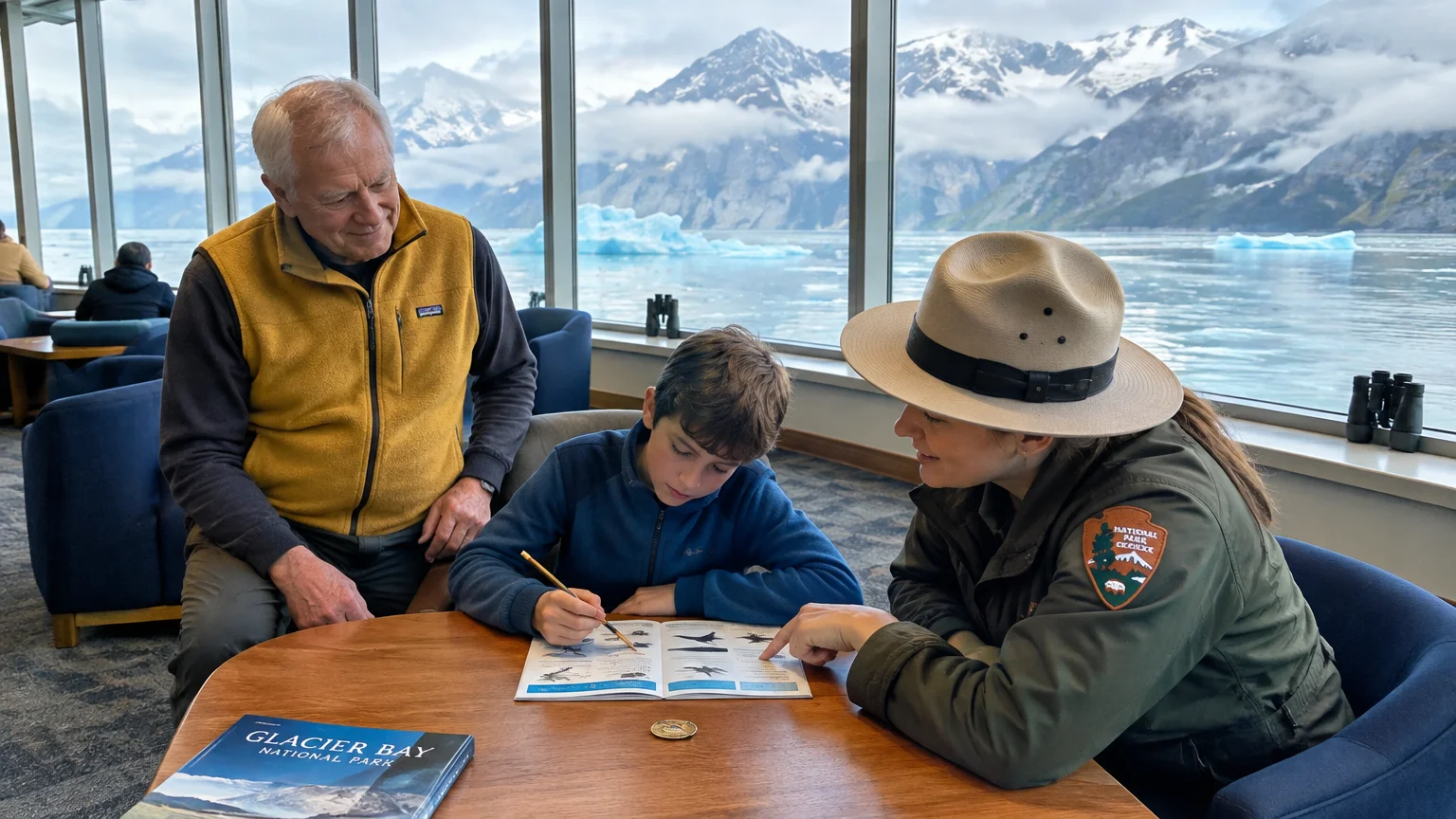
During a Glacier Bay transit, uniformed National Park Service rangers board your ship directly from a small pilot boat while the vessel remains underway. They stay aboard for eight to nine hours.
Rangers set up information stations in the main observation lounge, broadcast live wildlife commentary over the shipboard public address system, and run the Glacier Bay Junior Ranger program. Pre-teens complete customized activity booklets detailing glacial geology, Tlingit heritage, and coastal ecology.
- Grandchildren attend hands-on ranger workshops held directly inside the youth activity centers.
- Rangers review the completed field booklets one-on-one with your grandchildren on the promenade deck.
- Children take an official pledge and receive real wooden Junior Ranger badges during a public ceremony.
- You can listen to the park ranger’s narration from heated indoor observation lounges without standing in cold rain.
This ranger programming allows your grandchildren to engage with authentic field science without requiring you to hike across wet glacial moraines. You can sit comfortably together with binoculars as tidewater glaciers calf into the sea.
Route Selection: Seattle Round-Trip vs. Vancouver One-Way
Choosing your embarkation port impacts both your travel logistics and water smoothness. The two primary options are Seattle round-trip routes and Vancouver open-jaw or round-trip sailings.
For families who enjoy overland rail adventures before heading to the embarkation port, budgeting a cross-country train trip provides an unforgettable prelude to sailing north.
For travelers connecting between Seattle and Vancouver pre-cruise, leveraging the Amtrak senior discount offers an affordable, scenic rail transfer along the Pacific coast.
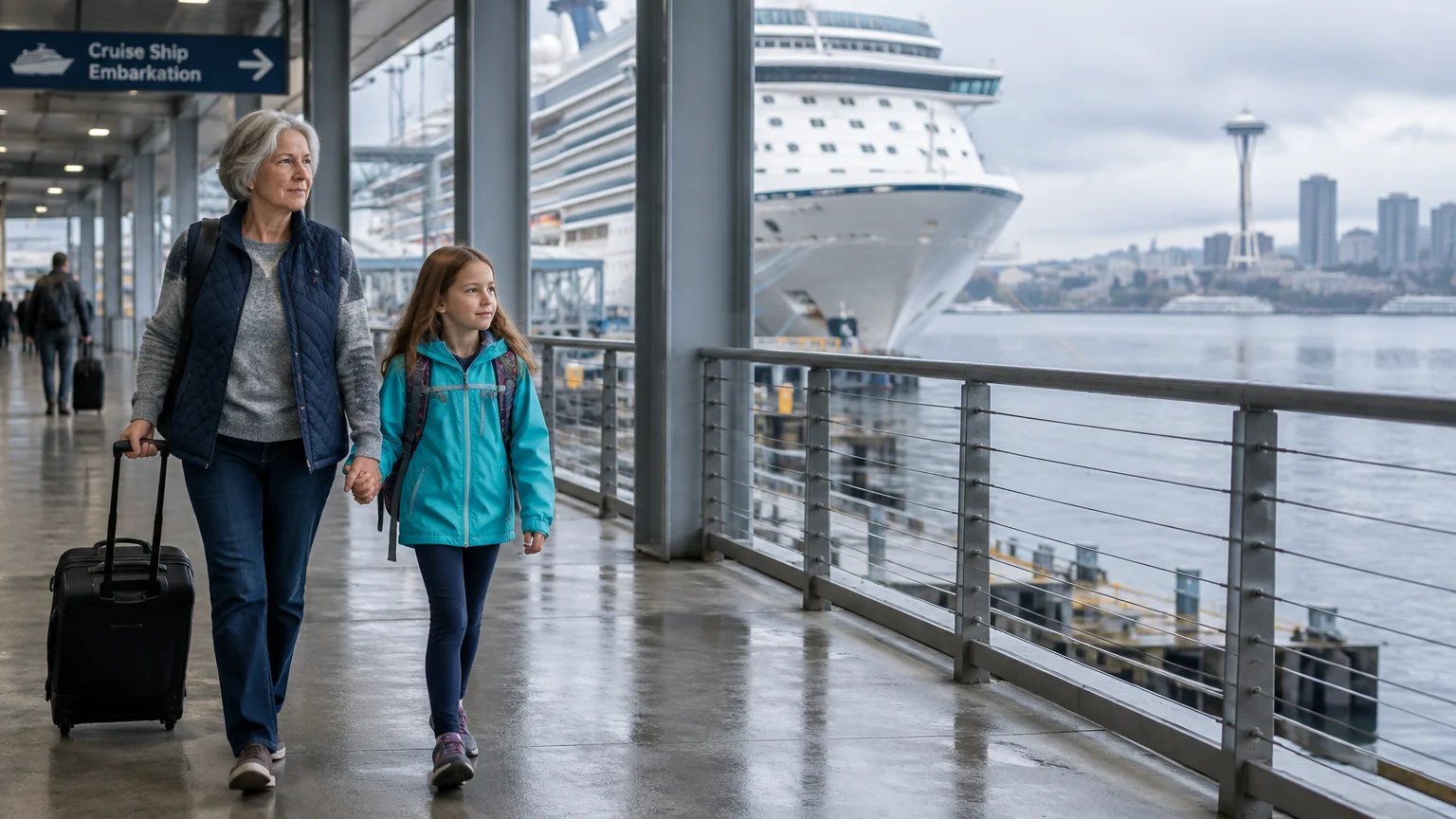
Seattle round-trip sailings operate on a “closed-loop” schedule. They appeal to American families because domestic flights into Seattle-Tacoma International Airport are straightforward to book.
However, federal maritime law requires foreign-flagged ships departing Seattle to make a foreign port stop. Ships typically make a brief four-hour evening stop in Victoria, British Columbia, late at night.
Seattle itineraries must also transit the open Pacific Ocean west of Vancouver Island on the first and final sea days. That open ocean stretch exposes your ship to ocean swells that trigger motion sickness.
Vancouver departures sail through the Canadian Inside Passage on the protected eastern side of Vancouver Island. The water remains calm, resembling a lake rather than an ocean.
For older adults prone to vestibular dizziness or equilibrium issues, Vancouver departures offer a noticeably smoother ride. Pre-teens also experience fewer bouts of seasickness in protected channels.
You must also monitor municipal port restrictions in Southeast Alaska. The city of Juneau enforces a strict cap of five large cruise ships per day.
Juneau also enforces an industry-negotiated limit of 16,000 lower-berth passengers per day from Sunday through Friday, and 12,000 on Saturdays. These limits mean local tour operators sell out weeks in advance.
- Book summer school-break sailings between mid-June and late August at least eight months early.
- Avoid Saturdays in Juneau if you plan to book private catamaran whale-watching excursions.
- Verify whether your itinerary docks at Juneau’s main piers or relies on tender boats, which require stepping down into bobbing transfer craft.
- Check tender port requirements in Sitka, where rough morning swells can cancel shore access for passengers with balance concerns.
Mandatory Documentation for Grandparents Traveling Without Parents
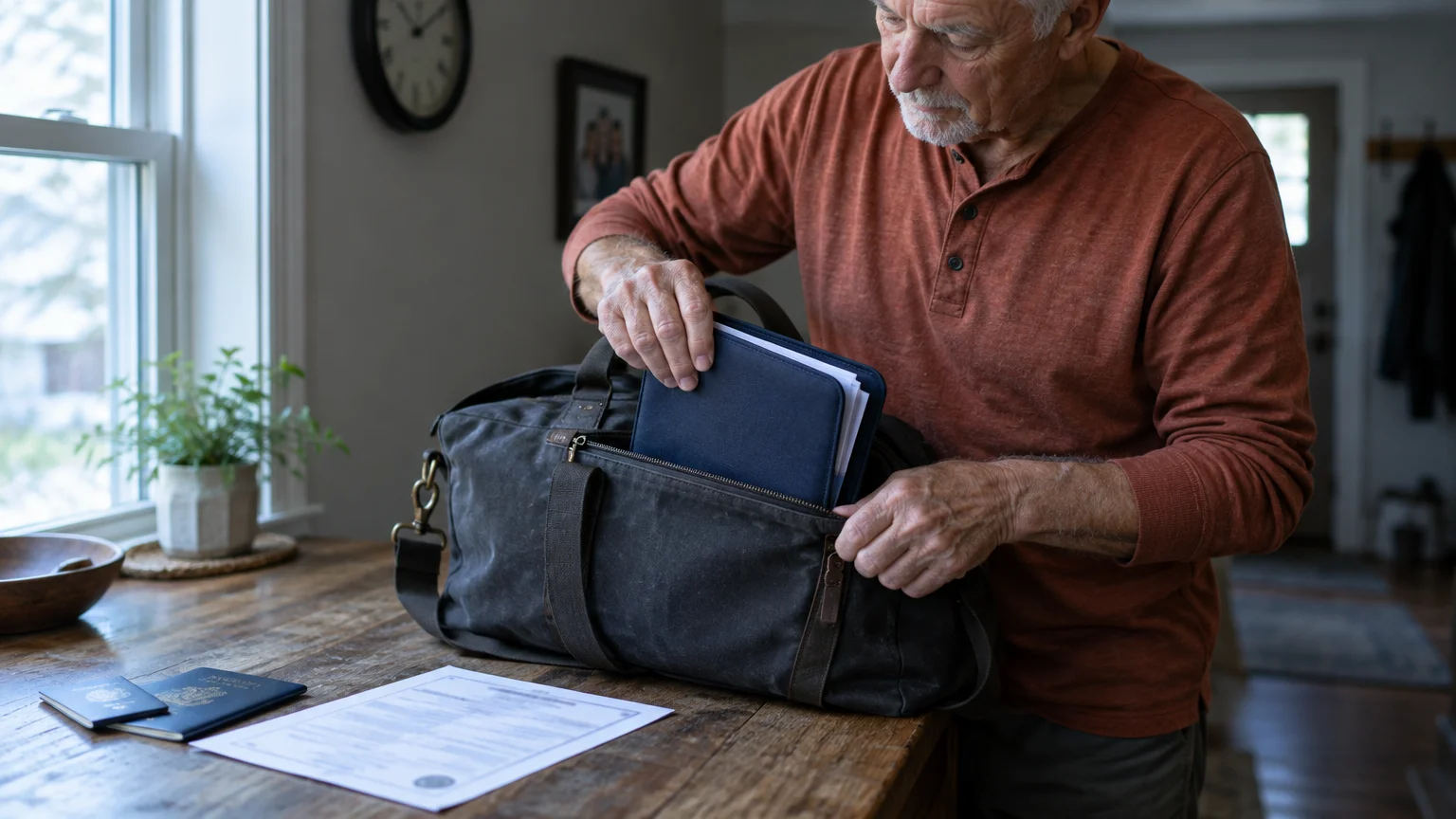
Taking grandchildren across international boundaries without their parents requires specific legal clearance. Boarding agents at cruise terminals turn away families lacking verified paperwork.
Retirees looking for structured, educational journeys with grandchildren might also explore how to get Road Scholar travel grants to offset program fees for future learning trips.
Budgeting ahead for emergency medical riders and travel policies is simple when you know how to build a retirement travel sinking fund in the months leading up to your departure.
Under the Western Hemisphere Travel Initiative (WHTI), U.S. minor children under age 16 on closed-loop cruises starting and ending in the same U.S. port may present an original or certified state birth certificate.
Adults 16 and older must present an approved government ID and proof of citizenship.
However, if your cruise starts or ends in Vancouver, Canada, every traveler must carry a valid passport book. Even on Seattle round-trips, emergency diversions into Canadian ports can occur, making passport books the safest option.
Cruise lines strictly require a notarized Minor Travel Consent form signed by both biological parents or legal guardians. This document proves you are not crossing borders during a parental custody dispute.
You must also carry a comprehensive Medical Power of Attorney for both children. Standard domestic medical policies do not grant automatic decision-making authority to grandparents during an emergency.
Original Medicare does not cover healthcare services outside the United States, including medical care delivered in international waters or Canadian ports. Review these coverage limitations directly on Medicare.gov before departure.
- Obtain a notarized Parental Consent for Minor Travel form signed by both parents, explicitly naming you as legal guardians for the voyage dates.
- Secure a notarized Medical Authorization for Minors form granting you authority to approve surgery, diagnostics, and medications.
- Gather physical copies of both parents’ driver’s licenses and both children’s primary health insurance cards.
- Purchase specialized third-party travel medical and evacuation insurance covering all four travelers.
- Pack hard copies of these authorizations in your carry-on luggage, never in your checked stateroom baggage.
Presenting these notarized forms prevents boarding delays at check-in. It also ensures shipboard medical staff can treat minor injuries without waiting for international phone contact.
Cabin Configurations: Connecting Staterooms vs. Quad Suites
Stateroom configuration makes or breaks your onboard sleep quality. Sharing tight quarters with two energetic pre-teens challenges your daily recovery.
Setting healthy boundaries for screen time in close quarters is much smoother when you embrace connecting with your grandchildren in the digital age before setting sail.
A quad stateroom places four guests in a single 180-square-foot cabin. Two guests sleep in twin or queen beds, while the grandchildren sleep in Pullman bunks that fold down from the ceiling or wall.
Pullman bunks require climbing steep metal ladders. Having active 10- and 12-year-olds climbing over your bed in the dark creates a clear fall hazard and disrupts your sleep.
Quad cabins also contain a single split bathroom. Managing four showers and morning routines in a three-by-four-foot bathroom leads to significant friction before early port departures.
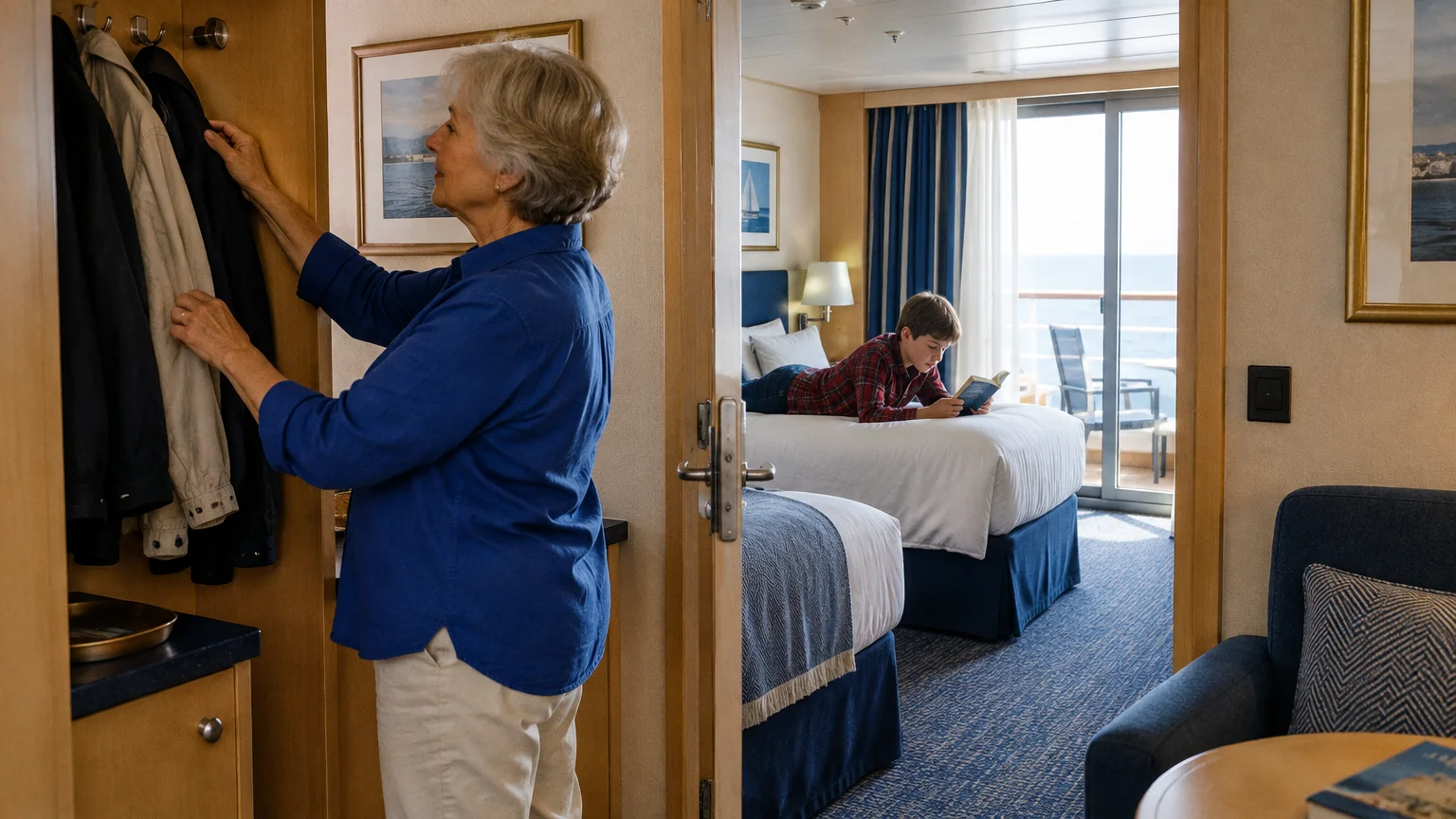
Connecting staterooms solve this challenge cleanly. You book two separate staterooms connected by a private interior door that remains unlocked throughout the voyage.
- Connecting rooms provide two completely independent bathrooms, cutting morning preparation time in half.
- You can enforce an early 9:30 PM lights-out for yourself while grandchildren read or watch movies quietly next door.
- Grandparents retain private closet storage and separate vanity spaces for medications and personal care.
- Cruise line booking engines usually require one adult over age 21 or 25 listed in each room on the official reservation.
- Visit Guest Services immediately upon boarding to obtain blank door keycards allowing access between both rooms.
If budget allows, book one Verandah (balcony) stateroom connected to an Interior stateroom across the hall. You gain scenic balcony viewing while keeping the grandchildren close at a lower overall fare.
Port Excursions That Balance Mobility Limits and Pre-Teen Energy
Successful intergenerational shore excursions avoid long, exhausting hikes while preventing boredom for pre-teens. Focus on excursions offering comfortable transit paired with dynamic viewing.
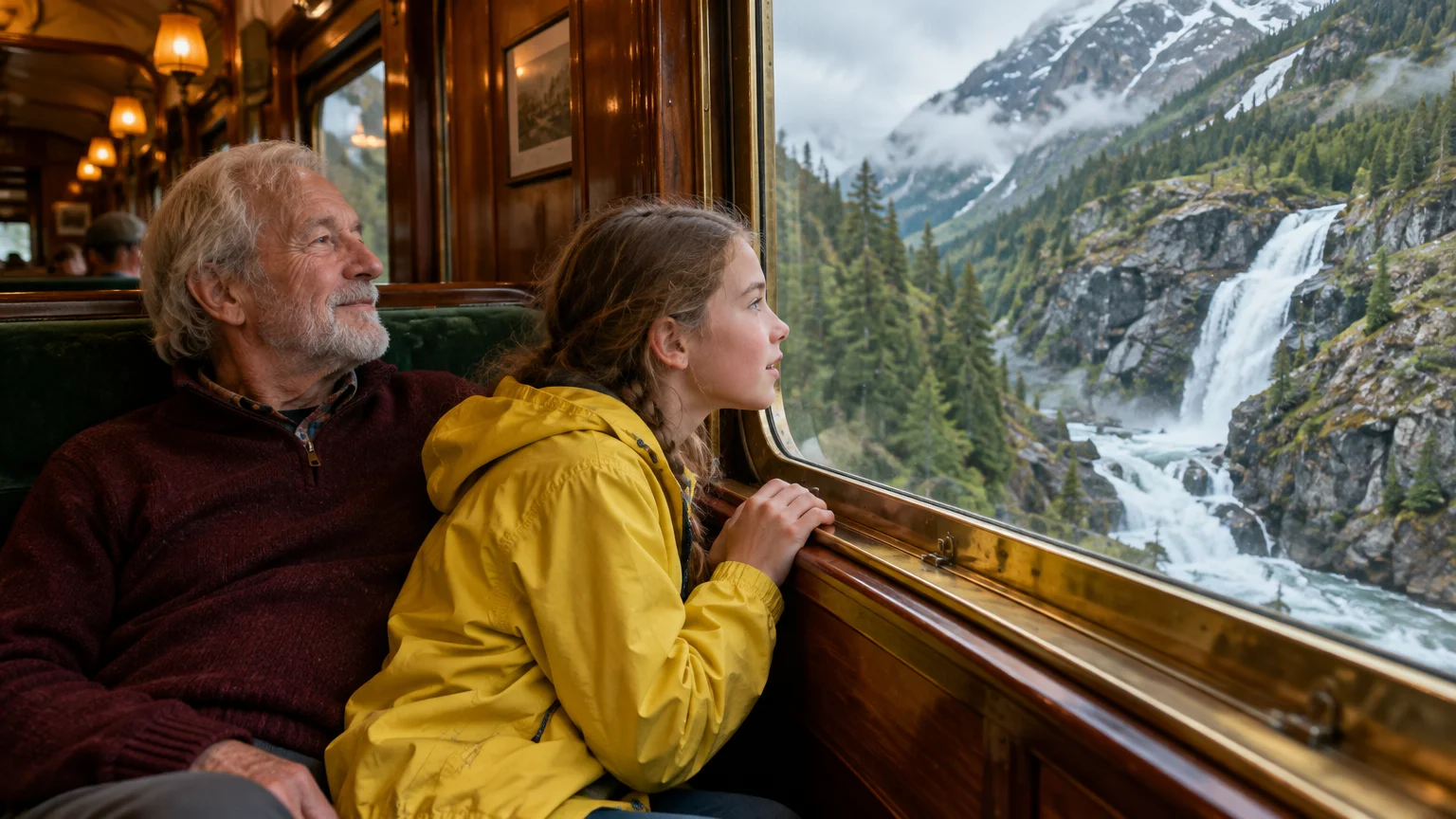
In Skagway, the White Pass & Yukon Route Railroad provides ideal multi-generational sightseeing. You board vintage parlor cars directly from the cruise dock, eliminating steep walking transfers.
The train climbs nearly 3,000 feet past waterfalls, trestles, and mountain peaks over a three-hour journey. Pre-teens love riding on the outdoor viewing platforms between cars, while grandparents enjoy plush interior seats.
In Juneau, avoid strenuous hiking trails to the Mendenhall Glacier terminus. The trail involves uneven, slippery rock surfaces that test joint stability in damp conditions.
Instead, book an Auke Bay catamaran whale-watching excursion. These catamarans feature heated, carpeted cabins with wrap-around picture windows and padded bench seating.
When naturalists spot orca pods or bubble-net-feeding humpbacks, pre-teens can step out onto the walk-around deck rails while you watch in warmth from the cabin. Many vessels also lower hydrophones into the water to let children listen to real-time whale vocalizations.
- Skagway: White Pass & Yukon Route Railroad (Summit Excursion, dockside boarding, zero strenuous walking).
- Juneau: Jet-powered catamaran whale-watching charters departing from Auke Bay Harbor.
- Ketchikan: The Great Alaskan Lumberjack Show (covered grandstand seating, high-energy competition featuring axe-throwing and log-rolling).
- Icy Strait Point: Covered wildlife tram tours or low-impact whale watches near Point Adolphus.
Always review pier walking distances before booking. Some ports, such as Ketchikan, dock directly downtown, while others require long walks down exposed industrial docks to reach excursion buses.
Real-World Budget Breakdown for a Grandparent-Grandkid Alaskan Cruise
Planning an intergenerational cruise requires accounting for hidden costs that appear beyond the headline cruise fare. Peak-season sailings between mid-June and mid-August carry higher price tags due to family demand.
The following worked budget tracks the true expenses for a family of four—two grandparents in their early 70s and two grandchildren aged 10 and 12. This scenario covers a 7-night round-trip Seattle voyage on a mid-sized heritage ship departing in mid-July.
To balance comfort and privacy, this scenario uses two connecting staterooms: one Verandah cabin and one Interior cabin directly across the corridor.
| Expense Category | Itemized Details | Cost Calculation | Category Total |
|---|---|---|---|
| Cruise Base Fares | 1 Verandah Stateroom (grandparents) + 1 Interior Stateroom (grandkids) | $3,600 (Verandah) + $2,400 (Interior) | $6,000 |
| Taxes, Fees & Port Expenses | Government fees, pilotage, and Glacier Bay entry permits | $295 per person × 4 travelers | $1,180 |
| Mandatory Crew Gratuities | Standard shipboard service charge | $17.00 per person per day × 4 travelers × 7 nights | $476 |
| Airfare & Transfers | Round-trip domestic flights into Seattle (SEA) plus airport transfers | $450 per flight ticket × 4 + $160 transfer shuttles | $1,960 |
| Pre-Cruise Hotel | 1 night at a downtown Seattle hotel with two queen beds | $320 per night + $64 local lodging taxes | $384 |
| Skagway Excursion | White Pass Railroad Summit Excursion | $145 per adult (×2) + $95 per child (×2) | $480 |
| Juneau Excursion | Auke Bay Catamaran Whale Watch | $185 per person × 4 travelers | $740 |
| Ketchikan Excursion | Great Alaskan Lumberjack Show | $55 per adult (×2) + $40 per child (×2) | $190 |
| Travel Medical & Trip Insurance | Third-party primary medical, evacuation, and cancellation coverage | $130 per person × 4 travelers | $520 |
| Onboard Expenses & Gear | Pre-teen soft drink packages, thermal suite day passes, souvenirs | $115 per person average | $460 |
| Total Projected Investment | Complete 7-Night Summer Voyage for Four | All-Inclusive Real-World Cost | $12,390 |
This worked example demonstrates that shore excursions, port fees, and travel insurance add substantial out-of-pocket costs to your initial deposit. Budgeting $12,000 to $13,000 ensures you can book quality excursions without cutting corners on comfort.
When booking independent excursions or third-party travel packages, pay with a major credit card that provides robust transaction security. You can review dispute procedures and billing error rights outlined by the Consumer Financial Protection Bureau to understand your protections if an operator cancels a tour.
What to Pack for Variable Weather and Deck Safety
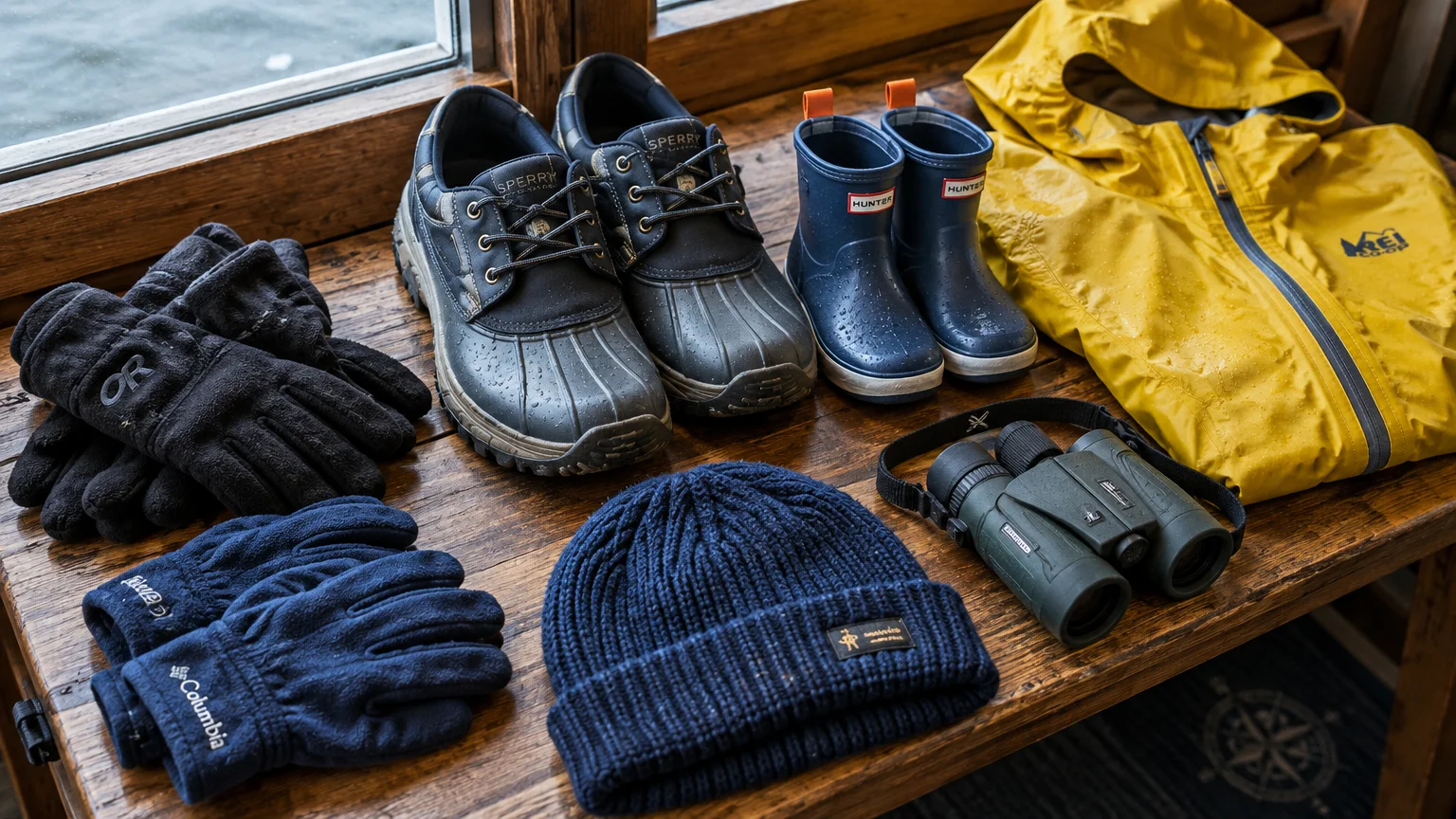
Alaskan maritime weather shifts rapidly between clear sunshine, chilly ocean winds, and driving coastal drizzle. Dressing for the Inside Passage requires versatile layers rather than heavy winter parkas.
Non-slip footwear is critical for deck walking. Cruise ship exterior decks become slick with sea spray and mist, increasing the risk of slips or falls for older adults.
Equip each grandchild with their own personal optical gear. Sharing a single pair of binoculars causes missed wildlife sightings and unnecessary squabbles when whales surface unexpectedly.
- Pack two pairs of sturdy walking shoes with rubberized tread soles for both yourself and your grandchildren.
- Bring breathable, waterproof rain jackets with hoods rather than disposable vinyl ponchos that tear in harbor winds.
- Pack lightweight thermal base layers (merino wool or polypropylene) that fit under standard clothing without bulk.
- Provide two compact pairs of 8×32 or 8×42 waterproof binoculars—one for each child.
- Bring non-surge-protected multi-plug power adapters, as standard staterooms often provide only two electrical outlets.
- Pack magnetic hooks to hang damp jackets and hats on your stateroom’s steel cabin walls.
- Bring motion-sickness remedies, including meclizine tablets and acupressure wristbands, starting use before departure.
You can also explore senior travel planning resources and lodging discounts available through AARP when arranging your pre-cruise hotel stays in gateway cities like Seattle or Vancouver.
Frequently Asked Questions
Can grandparents take grandchildren on an Alaska cruise without the parents?
Yes, grandparents can travel with grandchildren, provided they carry a notarized Minor Travel Consent form signed by both biological parents. Cruise lines and border officials require this documentation to confirm permission for international border crossings.
Do pre-teen grandchildren need passports for a round-trip Seattle Alaska cruise?
Under Western Hemisphere Travel Initiative rules, U.S. minor children under age 16 on closed-loop cruises departing and returning to Seattle can travel using an original or certified state birth certificate. However, carrying valid passport books is strongly recommended in case of medical diversions into Canada.
Which cruise line offers the best ranger program for kids in Glacier Bay?
Princess Cruises and Holland America Line offer the most integrated Glacier Bay programs. National Park Service rangers board their ships directly from pilot boats to lead the official Glacier Bay Junior Ranger program in the youth centers and narrate scenic glacier viewing.
Are mega-ships or mid-sized ships better when traveling with grandchildren?
Mid-sized ships typically work better for grandparents in their 70s traveling with pre-teens. They provide shorter corridor walking distances and calm observation areas while still offering dedicated youth centers and park ranger programming.
How far in advance should we book an Alaska cruise with pre-teens?
You should book nine to twelve months in advance for summer sailings. The peak school-break window between mid-June and late August fills quickly, especially for high-demand connecting staterooms and Glacier Bay permits.
Disclaimer: This article is for informational purposes only. Benefits, programs, and regulations can change.
We encourage readers to verify current information with official government sources and consult with qualified professionals for personalized advice.


