
A retiree using a rolling walker on a home patio often gives up gardening when low beds turn simple weeding into a fall risk. Adjusting bed height, turning space, tools, and plant habits keeps fresh greens within steady reach.
Standard advice to build deep, oversized planter boxes backfires for walker users by blocking knee clearance, forcing dangerous lateral reaching, and creating unmanageable soil weight. Matching each setup to how you stand, sit, and turn removes those hazards.
Matching patio beds, tools, and crops to how your walker moves
Before buying supplies, check how you brace and turn your walker on the patio. These pairings adapt NC State Extension’s accessible garden dimensions to protect balance, joints, and reach.
| Your patio situation | Bed or container setup | Tool and watering swap | Compact crops to grow | What backfires here |
|---|---|---|---|---|
| Seated on your walker bench | Tabletop bed 27-34 in. high with open knee space | Short ergonomic hand tools, quick-release hose connectors | Lettuce, spinach, radishes, herbs | Deep solid boxes blocking wheels and forcing sideways twisting |
| Standing braced or perched on a rim | Raised bed 24-30 in. high, up to 4 ft wide, wide cap board | Long-reach tools (31 in. or more), flip-over bench with handles | Bush beans, compact bush squash, bell peppers | Beds wider than 4 ft or sprawling pumpkins |
| Tight corner or shifting shade | Large pots on wheeled caddies with lightweight soilless mix | Ratcheting pruners, fulcrum weeder, thick padded grips | Determinate or dwarf cherry tomatoes, marigolds, zinnias | Heavy permanent boxes or tall indeterminate tomatoes |
| Low stamina or long walk from the door | Beds grouped near the house with turning room at ends | Soaker hose or drip line on a battery timer, rolling cart | Cut-and-come-again greens, rosemary, thyme, succulents | Scattered beds and wet hoses across walkways |
Tabletop beds versus waist-high frames for walker clearance
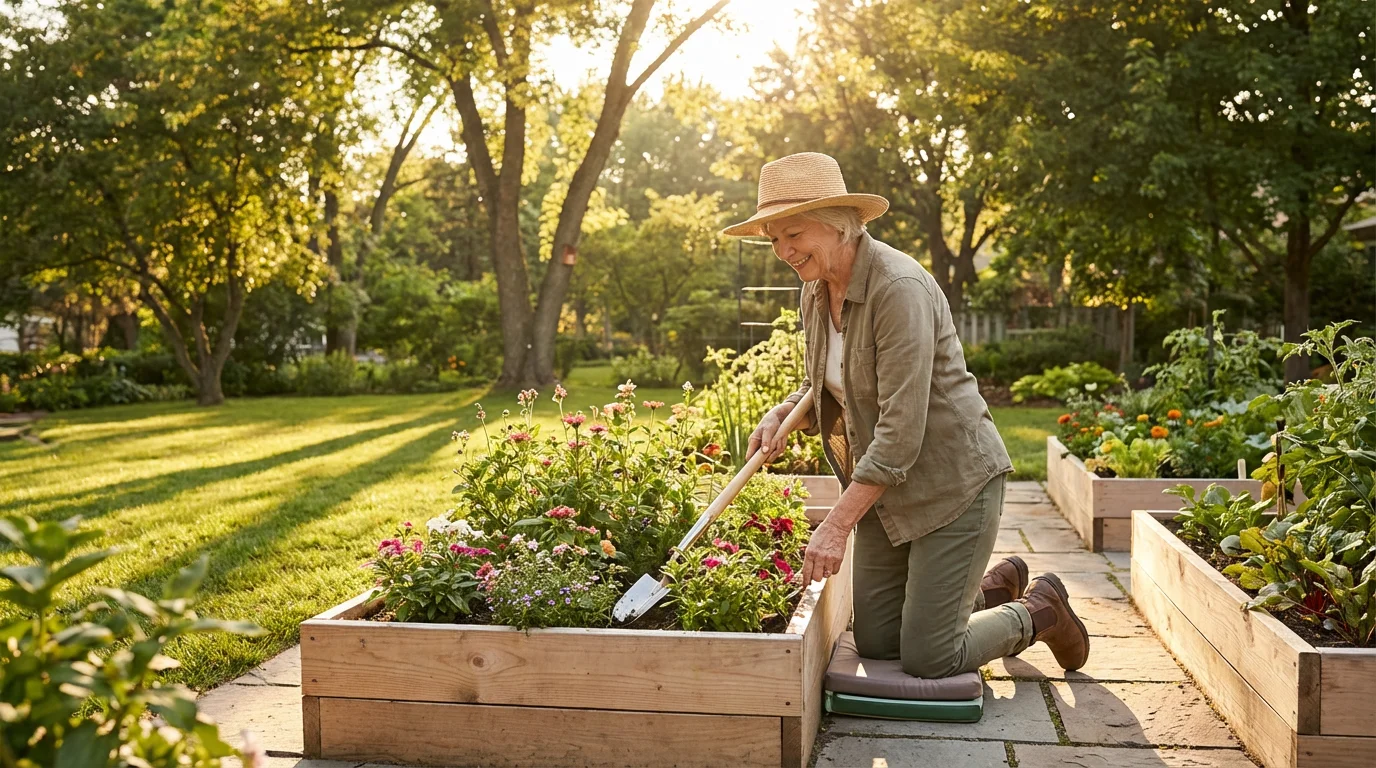
Deep, solid-sided ground boxes block a walker’s front wheels and footrests. That forces you to park sideways and lean past your balance point while weeding.
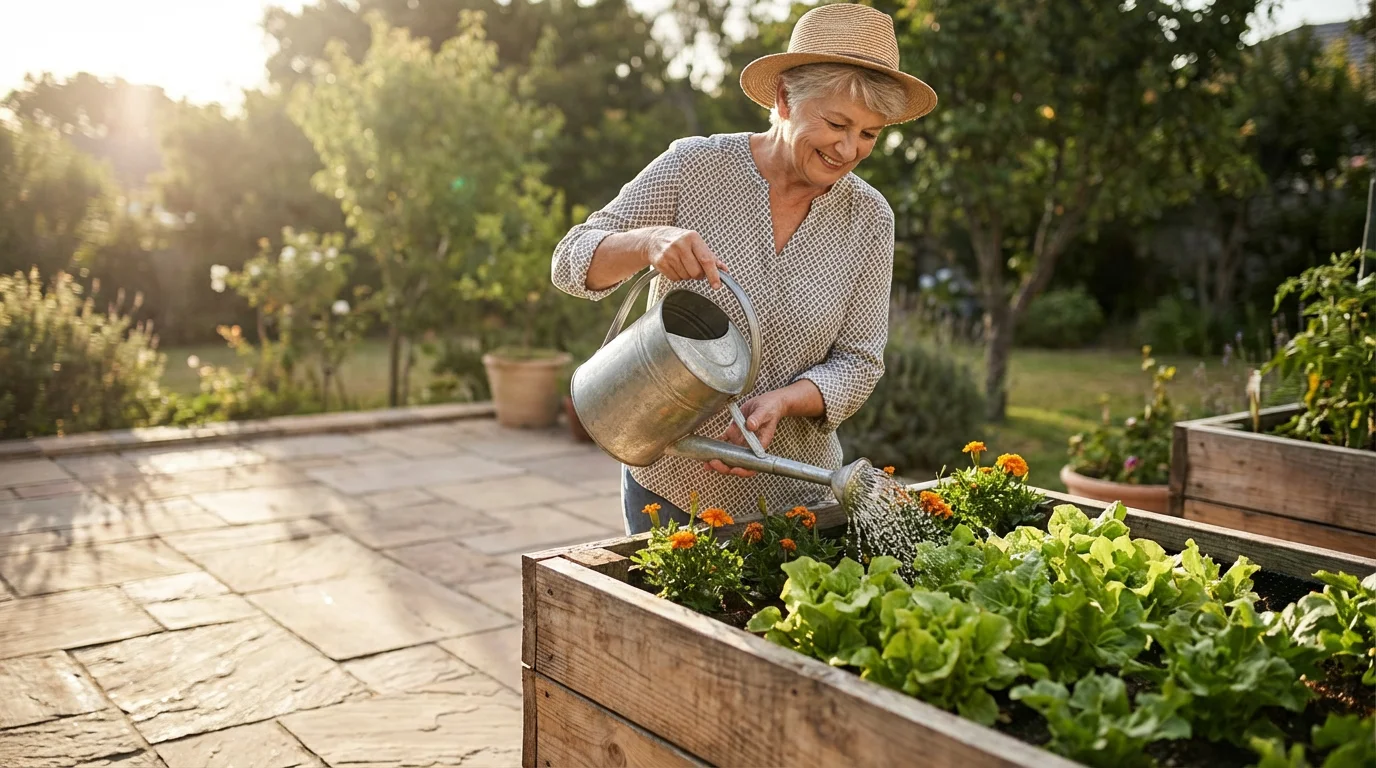
If you work seated on your walker bench, choose a tabletop bed 27 to 34 inches high with open legroom below. Shallow troughs suit lettuce, radishes, herbs, and flowers.
When standing beside locked brakes, NC State Extension recommends beds 24 to 30 inches high. A flat, wide cap board adds a tool shelf, brief seat, and push-off rim.
Keep open beds 3 to 4 feet wide when you can reach in from both sides. Beds against a wall should stay narrower, about one comfortable reach deep.
Pavers, compacted fine gravel, or packed mulch give steady wheel grip. Walk your empty walker through planned aisles first to confirm turning room at every bed end.
Smooth ground transitions protect balance indoors and out. Our guide to home modifications for aging in place covers ramps, rails, and exterior lighting.
Avoiding the soil-weight trap in deep patio boxes
Untreated cedar or redwood boards, concrete block, metal kits, and recycled-plastic kits all work outdoors. Cedar and redwood resist rot naturally, while block lasts longest.
Tall boxes take more soil than most buyers expect. A 4-by-8-foot bed filled 2 feet deep holds 4 × 8 × 2 = 64 cubic feet, about 2.4 cubic yards, or roughly 43 bags of the 1.5-cubic-foot size.
Hauling dozens of heavy bags around a walker invites back strain. Compare bulk delivery dumped near the patio against shallow tabletops that hold far less weight.
- Pick a level spot with 6 to 8 hours of sun near a faucet.
- Set the assembled frame in place and check it with a level.
- Line open bottoms with hardware cloth if gophers or voles tunnel nearby.
- Fill with topsoil and compost, not plain yard dirt.
Wheeled patio containers and lightweight mixes for tight corners
On tight patios without permanent aisles, large pots on wheeled plant caddies keep walking lanes clear. Set empty pots on caddies before filling, because wet mix is too heavy to lift.
Rolling pots glide out of harsh afternoon sun or pull beside your walker seat for trimming. Keep caddies on level stone and check stability before leaning on a rim.
For container tomatoes, Iowa State University Extension recommends determinate or dwarf cherry varieties in a lightweight soilless potting mix. Yard soil compacts in pots and adds weight.
Easy flowers brighten corners without stooping. Start marigolds and zinnias from seed in sunny pots, grow hostas in shade, or try succulents and ornamental grasses to cut watering.
Long-reach and ratcheting tools that spare grip and balance
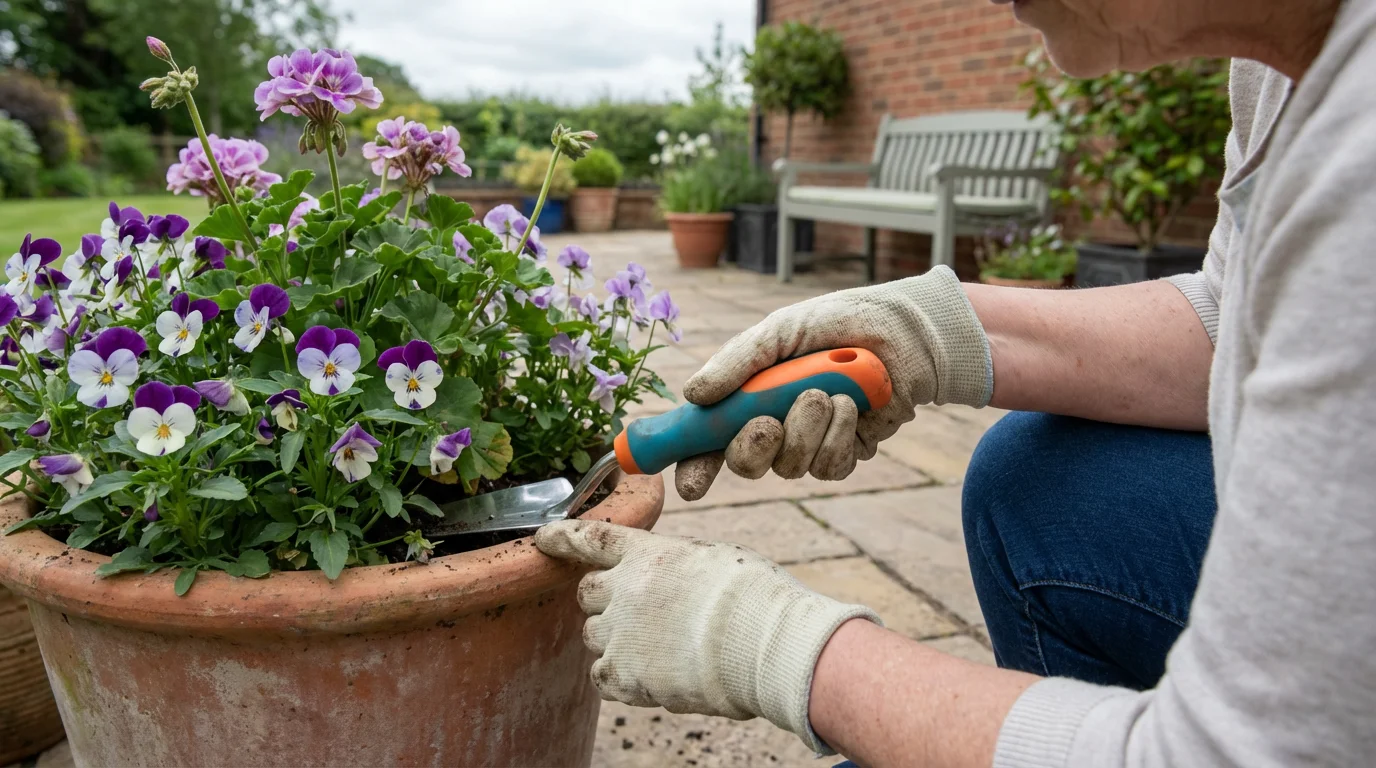
When one hand stays on a walker for stability, tools need built-in leverage. Longer shafts and cushioned grips protect stiff wrists, sore knuckles, and lower backs.
The Arthritis Foundation’s garden tool guidance favors long-reach tools of 31 inches or more to cultivate without stooping. Foam kneelers that flip into benches with side handles help you rise safely.
For weak or painful hands, Penn State Extension’s advice for aging gardeners points to tools that let leverage do the work:
- Ratcheting pruners: cut stems in several small squeezes instead of one hard squeeze.
- Telescoping pruners: reach high branches from flat ground so you stay off ladders.
- Fulcrum weeders: rest on soil and lever roots out as you press down.
- Quick-release hose connectors: snap on and off without twisting stiff threads.
Thick, padded handles ease finger pressure indoors and out. Our guide to adaptive kitchen tools for arthritis explains what grip shapes to look for.
Keep tools in a rolling cart or on hooks beside your beds to skip shed trips. A lightweight cart also moves mulch and harvests alongside your walker.
Compact vegetables and herbs that crop at reach height
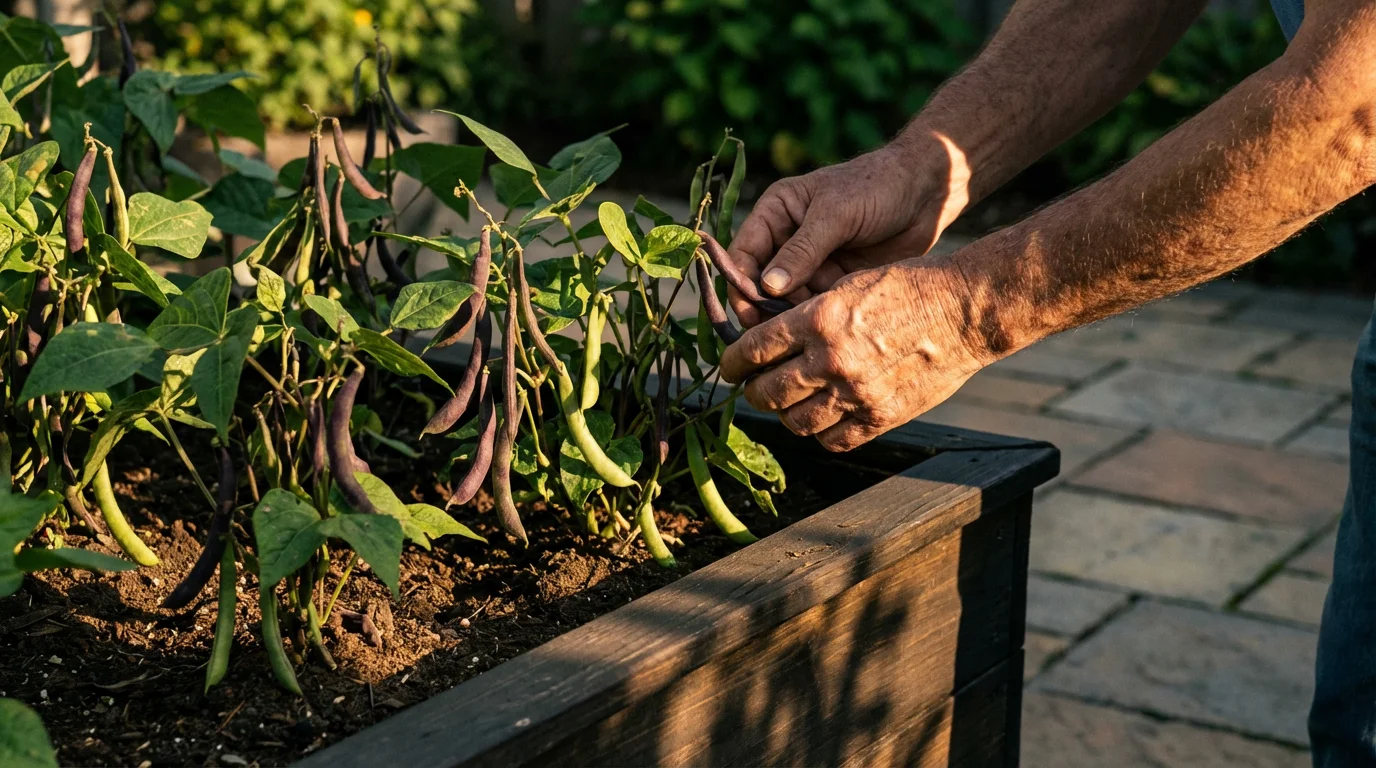
Sprawling vines and tall trellises catch walker wheels and force overhead reaches. Compact bush crops keep leaves and pods neatly inside the planter frame at bed height.
- Leafy greens (lettuce, spinach, kale): pick outer leaves for weeks, even in partial shade.
- Bush beans: produce generous crops at waist level without poles.
- Determinate or dwarf cherry tomatoes: stop at a set height and need little staking.
- Peppers (bell and chili): low-fuss in pots or raised beds.
- Radishes and carrots: radishes mature fast; carrots need a deep bed.
- Herbs (rosemary, thyme, mint): tough once established; keep mint in its own pot.
Skip pumpkins, sprawling winter squash, and tall pole crops unless you choose compact bush squash. Heavy vines crowd turning space and require awkward lifting.
Grouping beds near the door with drip lines and sun safety
Dragging hoses across patio stone creates wet trip hazards for walker wheels. Grouping daily herbs and salad pots closest to the door cuts walking distance.
A 2- to 4-inch layer of organic mulch such as shredded leaves, straw, or wood chips blocks weeds and holds moisture. Soaker hoses or drip lines on a battery timer water roots without puddling paths.
- Garden in zones: keep herbs and greens nearest the door, slower crops farther out.
- Plant in small batches: sow a short row of lettuce every two weeks.
- Weed small: seedlings pull out before tough roots anchor into the mix.
- Split chores: work several short sessions a week instead of one long session.
Work outdoors in the morning or evening. MedlinePlus advises limiting sun between 10 a.m. and 4 p.m., wearing a wide-brimmed hat and protective clothing, and using broad-spectrum sunscreen of SPF 30 or higher.
- Keep water at the beds and drink regularly, even before feeling thirsty.
- Stop for pain, dizziness, or unusual shortness of breath.
- Wear closed-toe shoes with grip, plus gloves against cuts and blisters.
- Carry a phone and tell someone when you head outside, especially if living alone.
- Stretch gently for a few minutes before and after gardening.
If you have arthritis, a joint replacement, heart disease, or balance problems, ask your doctor or a physical or occupational therapist which movements and session lengths suit you.
How patio gardening counts toward weekly exercise and social time
A garden needs no manicured finish to keep paying off. The CDC classifies gardening and digging as muscle-strengthening and multicomponent activity toward the 150 minutes of moderate activity recommended weekly for adults 65 and older.
The memory link is promising but observational. In the 16-year Dubbo Study of 2,805 Australians aged 60 and over, people who gardened daily had a 36% lower risk of dementia.
Studies like this show an association, not proof that gardening prevents dementia. The movement, daylight, and steady daily routine remain worthwhile on their own.
When your patio lacks room for raised beds, community gardens often reserve waist-high plots with paved paths. Your local Area Agency on Aging or senior center can point you to senior gardening clubs.
If you no longer drive, senior transportation options such as dial-a-ride shuttles can get you to a plot and back.

1 Comment
Comments are closed.