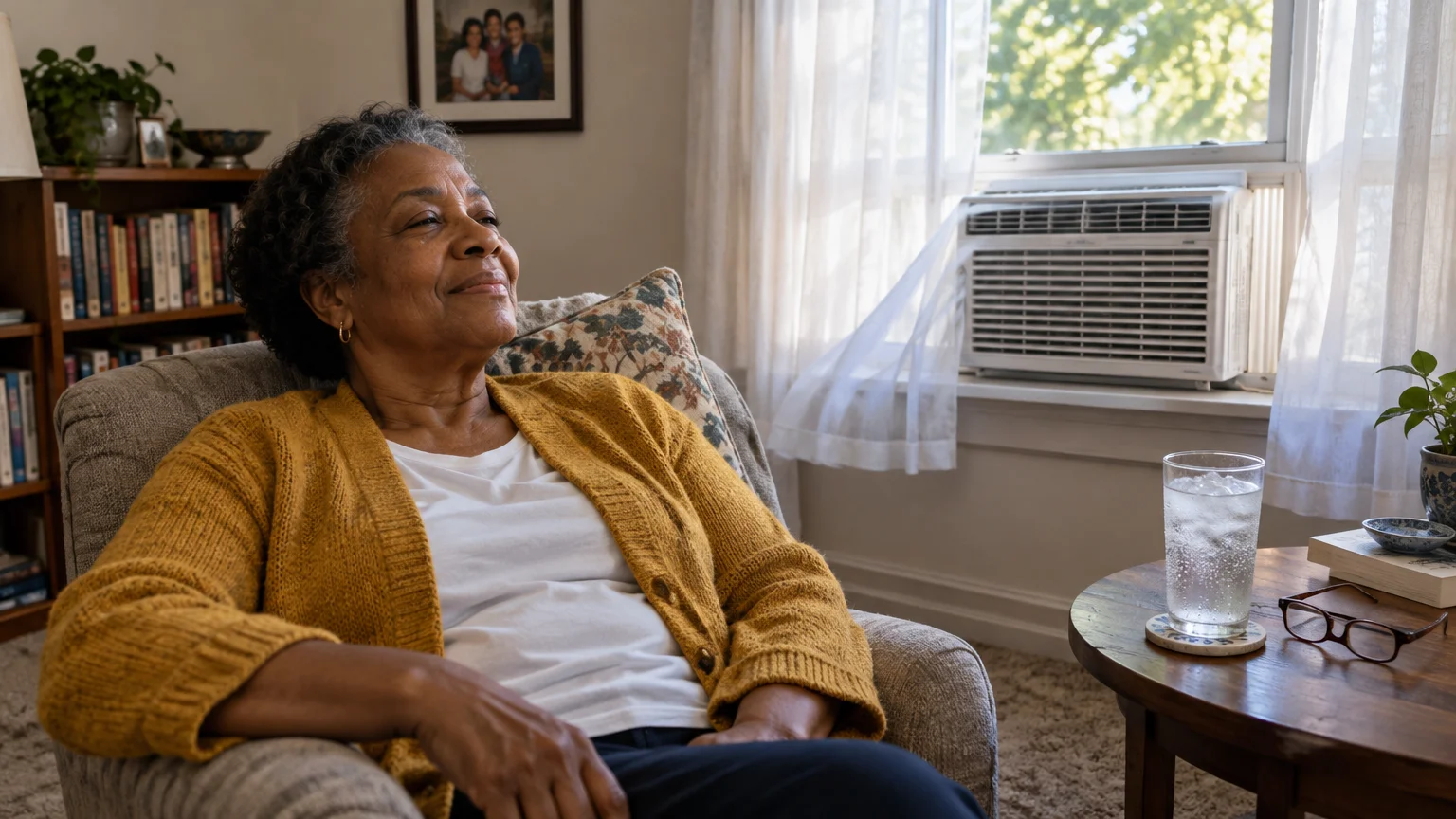
If you are an older tenant managing Chronic Obstructive Pulmonary Disease (COPD), federal cooling funds can install a free window air conditioner in your home this summer. You do not need to buy equipment or pay an installer.
Most applicants believe the Low Income Home Energy Assistance Program (LIHEAP) only covers winter heating bills. Submitting a targeted medical certification locks in emergency cooling before county supply inventories run out.
This guide shows you how to obtain the doctor’s paperwork, satisfy landlord requirements, and claim your cooling crisis grant before summer heat arrives.
In this guide9 sections
- Understanding LIHEAP Cooling Crisis Grants and Equipment Rules
- Eligibility Criteria: Income Caps and Categorical Qualification
- The Medical Certification Form: Securing Your Doctor’s Sign-Off for COPD
- Apartment Living: Landlord Approvals and Installation Logistics
- Step-by-Step: How to Apply Before Seasonal Equipment Runs Out
- Comparing State Programs: Benefit Caps, Frequency, and Deadlines
- A Worked Example: Fixed-Income Tenant Securing an 8,000 BTU Unit
- What to Do If Your Local Program Exhausts Funding
- Frequently Asked Questions
Understanding LIHEAP Cooling Crisis Grants and Equipment Rules
The federal government funds LIHEAP through the Department of Health and Human Services. States manage their own distribution through regional Community Action Agencies and social service departments.
In addition to standalone air conditioning, homeowners and eligible renters often lower bills long-term by applying for the Weatherization Assistance Program to seal drafty windows.
While heating programs receive the bulk of federal allocations, cooling crisis grants serve households facing acute health risks from high temperatures. Extreme heat directly inflames damaged bronchial passages, making indoor climate control an urgent health necessity.
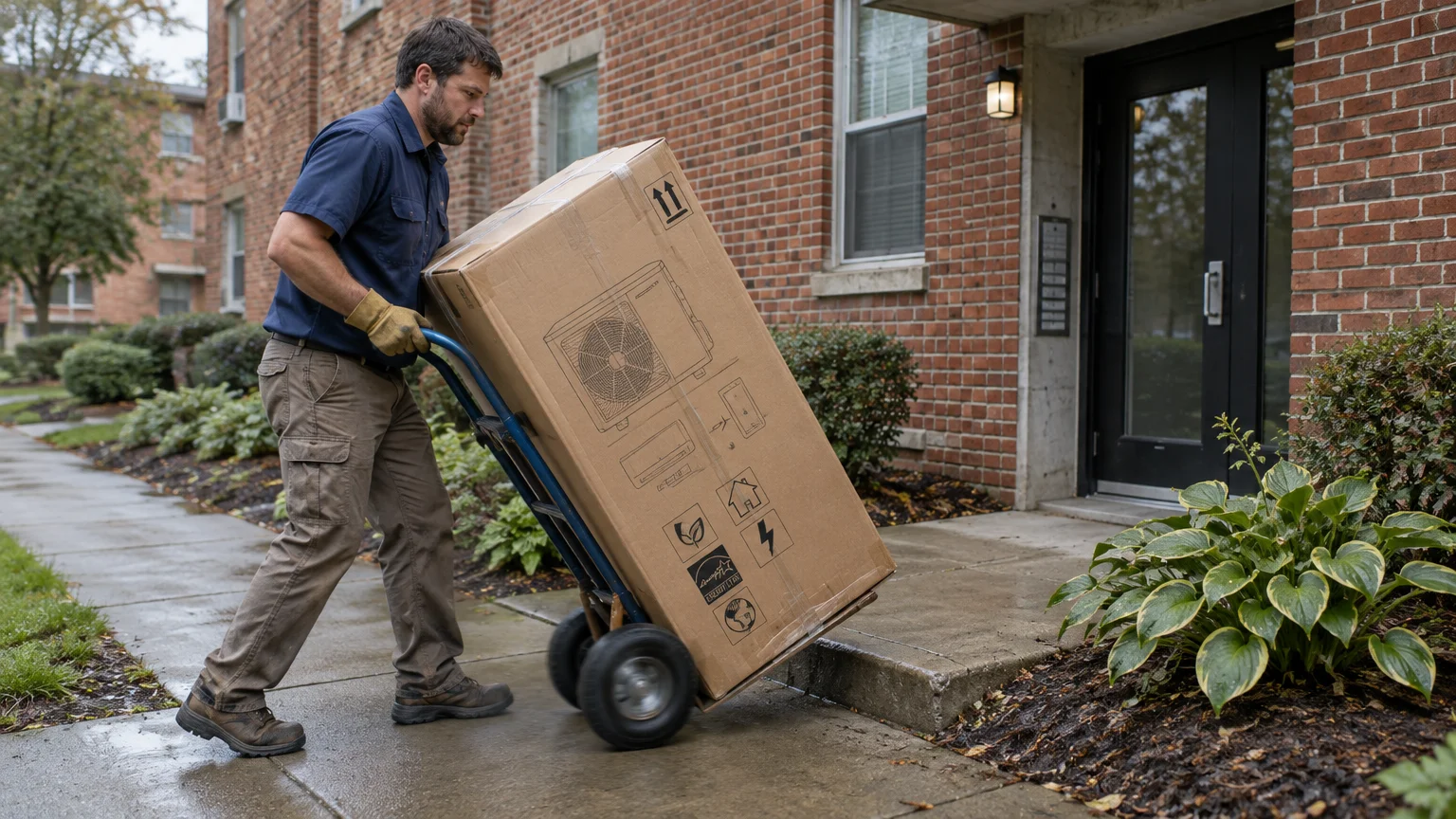
LIHEAP does not mail cash or reimbursement checks to purchase appliances at retail stores. Instead, authorized program contractors deliver, mount, and secure approved cooling units directly into your living space.
These initiatives provide brand-new, ENERGY STAR certified window units or portable units. The equipment remains yours, provided you follow program retention guidelines and keep the appliance in your primary residence.

Eligibility Criteria: Income Caps and Categorical Qualification
Federal law caps standard LIHEAP eligibility at the higher of 150 percent of the Federal Poverty Guidelines or 60 percent of your state’s median income. States maintain the legal authority to set lower thresholds based on annual funding levels.
Enrolling in these qualifying programs often unlocks other utility discounts too, such as low-cost internet programs for seniors.
To see what other relief options exist where you reside, consult our guide to state-specific benefits for seniors.
You can verify current state-specific thresholds on Benefits.gov before collecting your paperwork. Most single-person households qualifying for assistance earn less than $1,800 to $2,200 per month in gross income.
Many seniors qualify automatically without submitting income verification worksheets. Federal guidelines designate this streamlined path as categorical eligibility.
If you receive benefits from certain federal safety-net programs, your local agency waives detailed financial reviews. Automatic qualification commonly applies to recipients of the following programs:
- Supplemental Security Income (SSI) for low-income seniors and individuals with disabilities
- Supplemental Nutrition Assistance Program (SNAP) food assistance benefits
- Temporary Assistance for Needy Families (TANF) cash assistance
- Certain means-tested Veterans Pension programs administered by the Department of Veterans Affairs
Households containing an adult aged 60 or older receive federal designation as vulnerable households. This status moves your application ahead of non-vulnerable households during intake processing.

The Medical Certification Form: Securing Your Doctor’s Sign-Off for COPD
While some states waive medical notes for adults aged 60 and older, submitting a medical certification gives you a major advantage. It moves your file directly into the crisis cooling queue before standard inventory depletes.
Seniors managing chronic lung ailments may also offset inhaler and prescription expenses through pharmaceutical assistance programs.
If you lack regular insurance or an established physician to complete the form, free healthcare clinics for seniors can often assist with required clinical evaluations.
When summer humidity rises, stagnant indoor air traps particulate matter and reduces oxygen availability. For someone living with COPD or emphysema, indoor heat above 80 degrees Fahrenheit can trigger dangerous respiratory failure.
State agencies require medical certifications to be signed by a state-licensed medical professional. Your documentation must come from one of the following licensed practitioners:
- Medical Doctor (MD) or Doctor of Osteopathic Medicine (DO)
- Board-certified Physician Assistant (PA)
- Licensed Nurse Practitioner (NP)
- Treating pulmonologist or clinical respiratory specialist
The medical provider must complete your agency’s designated medical verification form or issue a statement on official clinic letterhead. The written statement must contain explicit phrasing connecting indoor temperature regulation to disease management.
Your physician must state that you carry a chronic, heat-sensitive medical condition that worsens under elevated indoor heat. They must specifically state that mechanical air conditioning is medically necessary to prevent hospitalization.
You can schedule a focused evaluation with your physician to review your respiratory plan and complete this form. Routine clinical visits for chronic condition management receive coverage through Medicare.gov under standard Part B benefits.
While COPD represents one of the primary qualifying respiratory diagnoses, agencies approve medical certifications for several severe health issues:
- Severe asthma requiring daily maintenance inhalers or nebulizer treatments
- Congestive heart failure (CHF) and advanced cardiovascular disease
- End-stage renal disease (ESRD) requiring home or clinical dialysis
- Neurological conditions affecting body temperature regulation, including multiple sclerosis
Apartment Living: Landlord Approvals and Installation Logistics
Living in a rented apartment adds specific procedural steps that homeowners bypass. Community Action Agencies will not install equipment into rental housing without written landlord permission.
If you share an apartment, establishing clear agreements on how to split utility bills with a roommate helps cover the seasonal bump in electricity costs.
If your landlord unlawfully refuses reasonable medical accommodations or threatens lease termination, free legal aid for seniors can help defend your tenant rights.
Tenants struggling with wider lease expenses can also explore broader housing assistance programs for seniors to ease overall monthly rent.
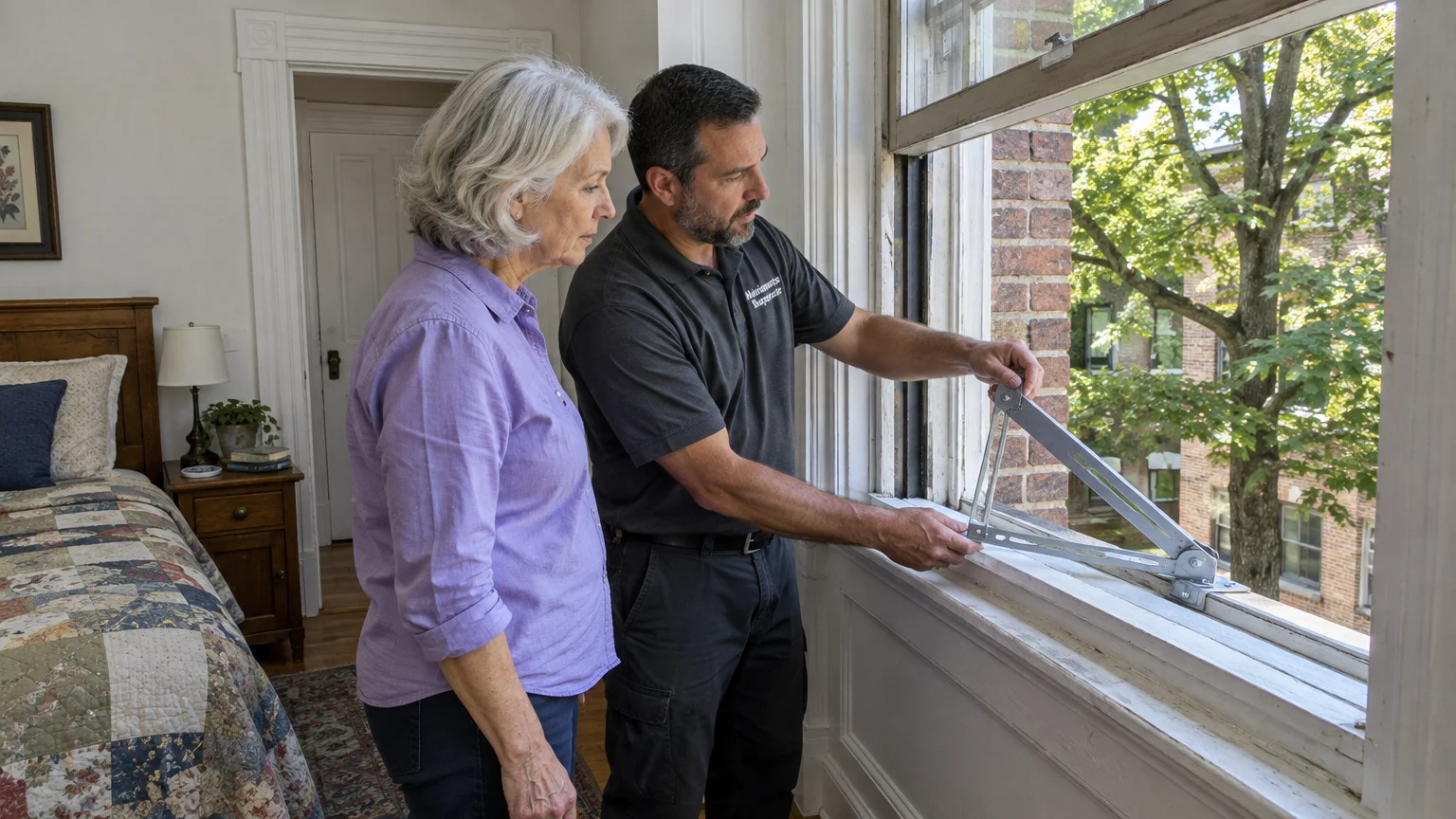
The program provides a standardized landlord agreement form with your application packet. This document protects the property owner while authorizing licensed technicians to mount brackets into window frames.
Landlords must agree not to increase your rent or alter your lease terms due to the equipment installation. They must also agree that the air conditioner belongs to your household rather than the building.
Electrical safety presents a critical hurdle in older multi-family apartment buildings. Most LIHEAP-supplied window units draw between 8 and 12 amps on standard 115-volt residential electrical circuits.
Ensure that your target window sits within six feet of a grounded, three-prong electrical outlet. Technicians strictly prohibit extension cords because continuous electrical loads can trigger serious fire hazards.
Before submitting your apartment details to the agency, confirm these essential physical setup requirements:
- Measure window openings to confirm width falls between 22 and 36 inches
- Verify that the window opens vertically; horizontal sliders require special portable cooling units
- Inspect the exterior sill for structural rot or metal decay that could prevent bracket anchoring
- Identify a dedicated 15-amp wall outlet located within reach of the unit’s factory power cord
- Secure your building manager’s signature on the agency installation release waiver
Step-by-Step: How to Apply Before Seasonal Equipment Runs Out
Cooling crisis funds operate on a strict first-come, first-served allocation model. When your county agency exhausts its seasonal equipment budget, staff must turn away eligible applicants until the next calendar year.
If you need a ride to drop off your application or visit a Community Action Agency office, check into local transportation assistance for seniors.
Follow this systematic sequence to complete your filing before regional supply pipelines close:
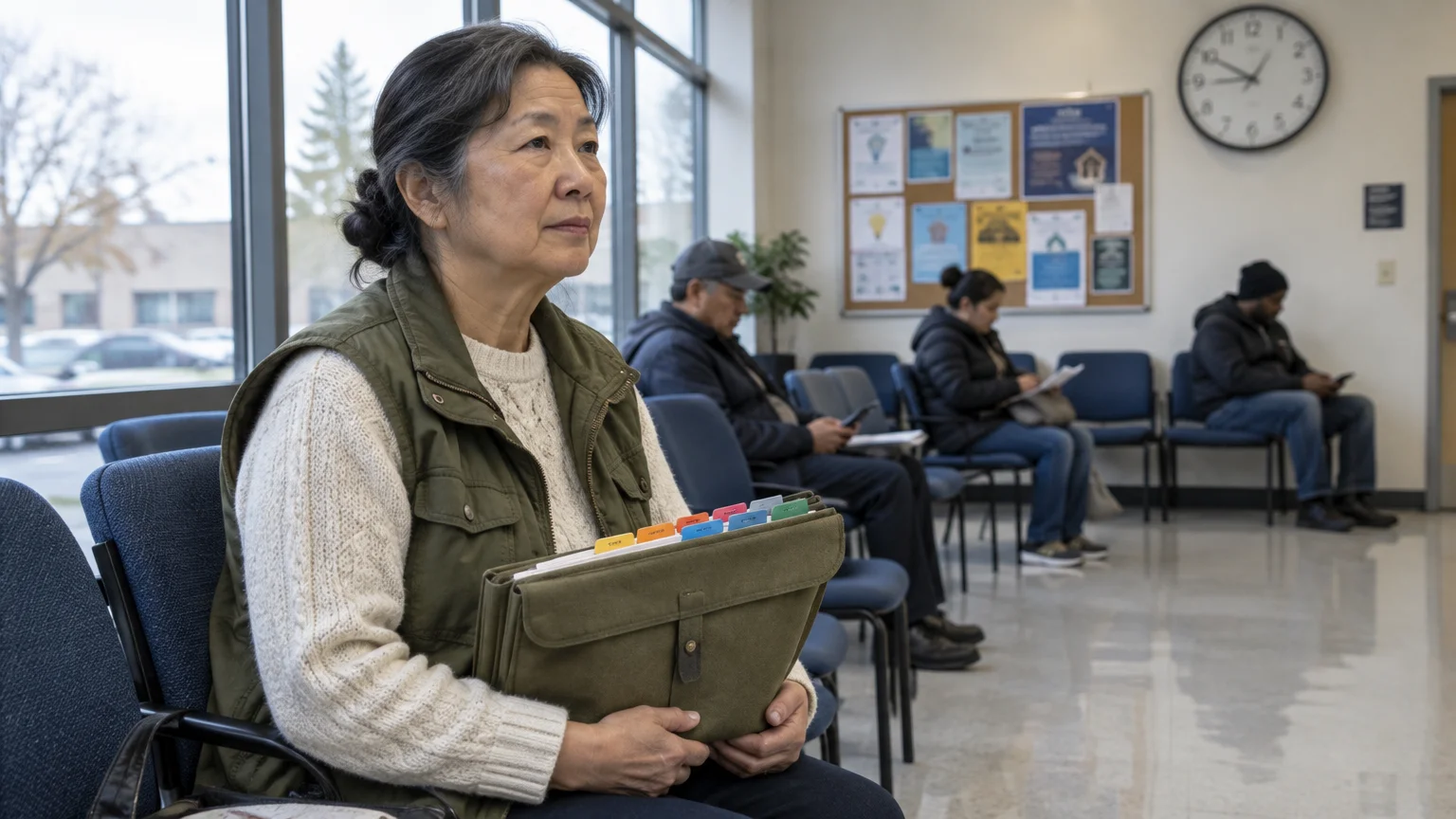
- Download or pick up the Cooling Assistance application and Medical Certification form from your local Community Action Agency in early spring.
- Take the medical form to your primary care doctor or pulmonologist to sign and date with your formal COPD diagnosis.
- Present the Landlord Permission Form to your property manager and collect their signed approval for exterior bracket installation.
- Assemble your identity, residency, and financial documents, including your latest electric utility statement and proof of current income.
- Submit your completed packet on opening day through your local agency’s drop box, priority intake portal, or certified mail.
- Confirm application receipt by phone within five business days to verify that no forms or signatures were missed.
Do not wait for a July heatwave to initiate this paperwork. Processing takes between two and four weeks, and agencies often exhaust equipment stockpiles before summer officially begins.

Comparing State Programs: Benefit Caps, Frequency, and Deadlines
Because federal statutes provide wide latitude to state administrators, cooling components vary significantly across state lines. The amount of aid, the replacement cycle, and application dates depend on where you live.
In certain regions, cooling grants can be paired with larger home modernization incentives, like evaluating the cost to switch to an electric heat pump.
Once summer ends, preparing early and budgeting for winter heating on a fixed income can keep utility bills manageable all year long.
In New York, the Home Energy Assistance Program (HEAP) cooling component provides comprehensive hardware support, covering both appliance procurement and professional installation. If your window requires a wall sleeve unit, the benefit cap increases automatically.
Ohio operates a dedicated Summer Crisis Program through its Community Action network. Eligible households receive one air conditioning unit or fan, provided they have not received hardware assistance within the previous three years.
The following comparison table breaks down specific program parameters, spending allowances, and application timeframes across representative state programs:
| State Program | Equipment Allowance Cap | Replacement Frequency | Annual Intake Window | Medical Waiver Rules |
|---|---|---|---|---|
| New York HEAP Cooling | Up to $800 ($1,000 for sleeve units) | Once every 5 years | Mid-April until funds exhaust | Age 60+ waives medical form requirement |
| Ohio Summer Crisis Program | Up to $500 (one unit plus utility credit) | Once every 3 years | July 1 through September 30 | Age 60+ qualifies without doctor documentation |
| Texas CEAP Crisis Cooling | Up to $1,600 (unit repair or replacement) | Once every 3 years | Rolling seasonal entry (March-October) | Prioritizes medically certified respiratory patients |
| Pennsylvania LIHEAP Crisis | Up to $1,000 (cooling repair or provision) | Annual crisis limit applies | Variable summer activation window | Requires physician documentation of health risk |
Always review your local county office guidelines every March. Regional administrators can modify annual operating windows based on unspent balances from the prior winter heating season.
A Worked Example: Fixed-Income Tenant Securing an 8,000 BTU Unit
Consider the situation of an 80-year-old tenant named Arthur, who lives in a 410-square-foot, third-floor apartment. Arthur relies on a fixed Social Security retirement benefit of $1,460 per month and carries a diagnosis of stage 2 COPD.
During prior summer months, Arthur relied solely on an oscillating fan. The warm air continually exacerbated his breathing difficulties, leading to two hospital emergency room visits during a late-July heatwave.
On April 10, Arthur picked up the cooling application and medical necessity sheet from his county Community Action Agency. His gross income placed him at roughly 118 percent of the Federal Poverty Guidelines, well below his state’s 150 percent cutoff.
Arthur scheduled an appointment with his pulmonologist on April 14. The doctor filled out the medical form, explicitly noting Arthur’s reduced lung capacity and certifying that indoor temperatures above 78 degrees trigger severe dyspnea.
Arthur’s landlord signed the equipment installation waiver on April 17, confirming permission for window-sill mounting brackets. Arthur delivered the fully completed packet to his intake office on April 21.
On May 8, the agency issued an official approval voucher. The agency assigned an authorized local HVAC technician to complete the job on May 19.
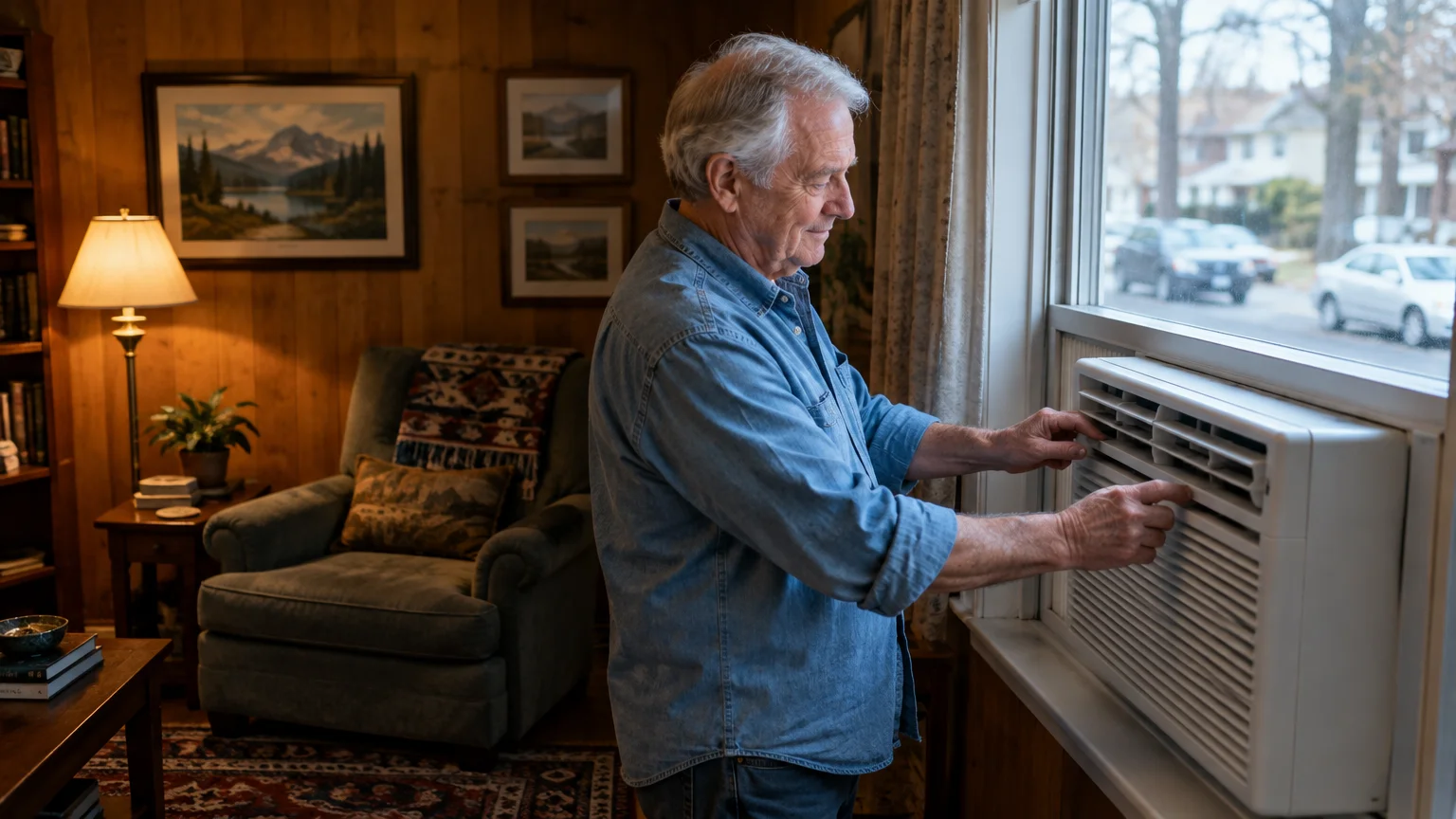
The technician installed an 8,000 BTU ENERGY STAR window unit rated to cool up to 350 square feet. The vendor secured the exterior support bracket, sealed the accordion panels with foam insulation, and demonstrated the digital thermostat settings.
The state program covered the full retail price of the $360 appliance and the $280 professional installation fee. Arthur paid zero dollars out of pocket and entered June with a safely cooled living area.

What to Do If Your Local Program Exhausts Funding
If your local agency depletes its cooling crisis funds before evaluating your application, do not give up. Several backup networks provide cooling equipment to medically fragile seniors throughout the summer months.
Your local Area Agency on Aging maintains access to emergency wrap-around dollars designated for home-bound older adults. You can reach your regional coordinator through the national Eldercare Locator network.
These agencies manage discrete discretionary grants that supply air conditioning equipment directly to individuals who cannot endure severe heat. Caseworkers can also connect you to independent charitable funds operating in your area.
If you encounter closed LIHEAP cooling rosters, contact these alternative resources immediately:
- Local Area Agencies on Aging (AAA) emergency equipment relief funds
- Catholic Charities or the Society of St. Vincent de Paul crisis utility programs
- Your municipal electric utility company’s medical baseline and equipment grant divisions
- Local health department fan and cooling appliance distribution initiatives
- Veterans service organizations, such as the American Legion or VFW, for former service members
Keep your signed medical certification form on file at home. Most alternative programs require the exact same proof of medical necessity before authorizing emergency equipment grants.
Frequently Asked Questions
Can I get a free air conditioner if my landlord includes electric service in my monthly rent?
Yes, you can qualify in most states even if you do not pay an electric utility company directly. Your landlord must sign a form confirming rent does not change and authorizing appliance installation.
How often can my household receive a new air conditioner through LIHEAP?
Most states limit appliance distribution to once every three to five years per household. You cannot receive a replacement unit if you currently possess a working air conditioner provided by the program during that cycle.
What happens if my apartment only has windows that slide horizontally?
If your windows cannot safely support a standard hanging window unit, inform the agency intake worker. Qualified agencies can supply a free portable floor air conditioner with an adjustable window exhaust kit instead.
Does Medicare cover the cost of a home air conditioner if my doctor writes a prescription?
Standard Medicare Part A and Part B do not classify air conditioners as Durable Medical Equipment (DME). They will not purchase the appliance, which is why state LIHEAP cooling programs remain essential.
Do I have to pay the contractor for installing mounting brackets or safety equipment?
No, the authorized vendor receives payment directly from the state grant for hardware and installation labor. You should never pay cash or accept separate service bills from an official program contractor.
Disclaimer: This article is for informational purposes only. Benefits, programs, and regulations can change.
We encourage readers to verify current information with official government sources and consult with qualified professionals for personalized advice.