If you are 63 and living on a tight fixed income, serving as a senior companion lets you earn a non-taxable hourly stipend while helping isolated neighbors. You can take home extra cash each month without jeopardizing your current public benefits.
Unlike standard part-time wages, federal law under the Domestic Volunteer Service Act strictly forbids government agencies from counting this stipend against your SNAP food stamps or subsidized housing rent.
Here is how you qualify, calculate your allowable deductions, and secure an open volunteer placement in your county.
In this guide9 sections
- Understanding Senior Companion Program Hourly Stipends
- AmeriCorps Seniors Companion Income Limit and Guidelines
- Using the 50 Percent Medical Expense Deduction
- Worked Example: How a 63-Year-Old Qualifies
- Legal Protection: Senior Companion Stipend SNAP Exemption and Housing
- Weekly Hours, Mileage Reimbursement, and Program Perks
- Comparing Senior Companion Stipends to Traditional Part-Time Jobs
- How to Apply Step-by-Step
- Frequently Asked Questions

Understanding Senior Companion Program Hourly Stipends
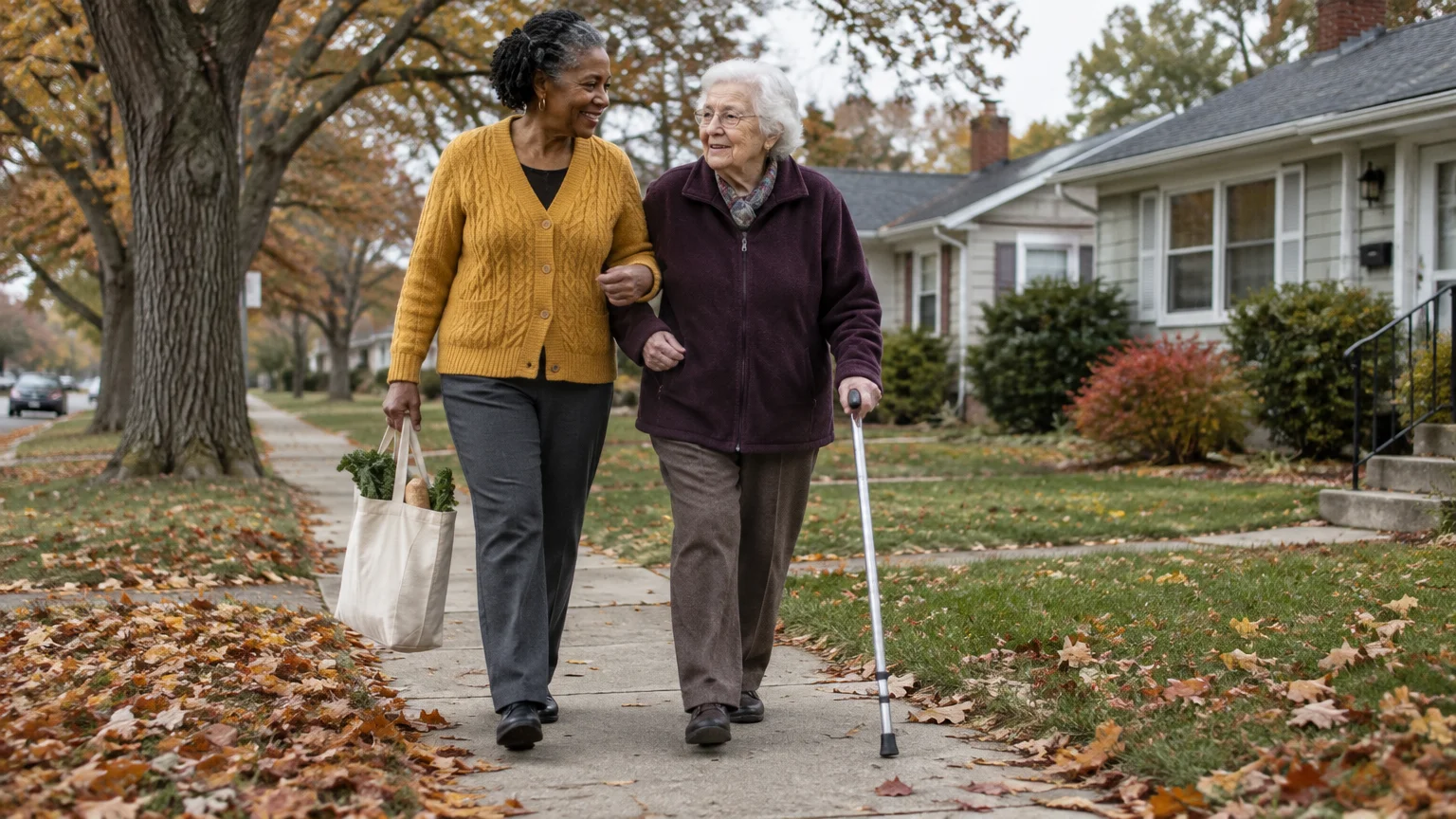
The Senior Companion Program is an initiative funded through AmeriCorps Seniors. It connects adults aged 55 and older with frail peers who need modest daily assistance to remain living independently in their own homes.
These peer services also provide valuable respite for relatives who may be balancing duties through the National Family Caregiver Support Program.
The federal baseline pay is a senior companion program hourly stipend of $4.00 per service hour. Rather than an hourly wage, the federal government treats this payment as an expense reimbursement allowance.
Under the AmeriCorps Seniors Final Rule effective October 1, 2024 (89 FR 70542), local sponsor organizations can now supplement this federal base. Starting in fiscal year 2025 grant cycles, local agencies can use non-federal funding to pay higher hourly amounts.
Because federal regulations classify you as a volunteer rather than an employee under 45 CFR § 2551.45, you owe zero payroll taxes. Local programs do not withhold FICA taxes for Social Security or Medicare from your payments.
According to guidance from the Internal Revenue Service, you do not report these volunteer stipends as taxable income on your annual federal tax return. Every dollar you earn during your service hours stays directly in your pocket.
Sponsoring agencies track your hours through regular biweekly or monthly time logs. You receive your stipend payments on a predictable schedule through direct deposit or paper check.

AmeriCorps Seniors Companion Income Limit and Guidelines
To receive the hourly stipend, you must satisfy age and income benchmarks set by federal law. You must be at least 55 years old under 45 CFR § 2551.41.
Many of these local sponsor agencies also administer programs funded through the Older Americans Act to support independent living.
You must also meet the americorps seniors companion income limit outlined in 45 CFR § 2551.43. Your total household income cannot exceed 200 percent of the Department of Health and Human Services poverty guidelines.
These income thresholds adjust annually to reflect changes in the cost of living. For a single individual living alone in the 48 contiguous states, 200 percent of the federal poverty guideline is $30,120 per year.
For a two-person household, the annual limit rises to $40,880. Sponsoring agencies in Alaska and Hawaii use higher state-specific guidelines to account for local living costs.
When your local sponsor reviews your intake documents, they examine your gross household income from several standard sources:
- Social Security retirement checks and disability payments
- Private employer pensions and union retirement annuities
- Supplemental Security Income (SSI) disbursements
- Taxable distributions from savings, certificates of deposit, or retirement funds
- Wages earned from seasonal, temporary, or part-time work
Individuals with household incomes above 200 percent of the poverty level can still serve as Senior Companions. However, federal rules require them to serve as non-stipended volunteers who do not receive hourly pay.

Using the 50 Percent Medical Expense Deduction
Many older adults assume their fixed Social Security benefits push them over the income limit. Fortunately, federal regulations provide an essential deduction that can reduce your countable income.
Lowering your utility burden through the Weatherization Assistance Program can further free up household funds for out-of-pocket medical needs.
Under 45 CFR § 2551.43(c), local project directors must deduct your unreimbursed, out-of-pocket medical expenses from your gross income. You can deduct allowable expenses up to 50 percent of the applicable income limit.
For a single individual with an income cap of $30,120, the maximum allowable medical expense deduction is $15,060 per year. This provision enables seniors with significant healthcare bills to qualify easily.
You can deduct any ongoing healthcare costs that you paid directly during the prior 12 months without insurance reimbursement:
- Medicare Part B monthly premiums withheld from your Social Security checks
- Medicare Part D prescription drug plan premiums and Medigap insurance policies
- Prescription drug copayments and maintenance medications
- Dental visits, routine cleanings, tooth extractions, and dentures
- Eye exams, prescription reading glasses, and contact lenses
- Hearing examinations, specialized hearing aids, and replacement batteries
- Documented transportation expenses for medical visits and therapy appointments
You verify these deductions by showing copies of your pharmacy receipts, insurance premium statements, and doctor bills. Your intake coordinator subtracts these eligible expenses from your gross annual income before comparing it to the poverty ceiling.

Worked Example: How a 63-Year-Old Qualifies
To see how the income formula works, review this scenario involving Clara, a 63-year-old widow living alone in Ohio. Clara wants to spend 20 hours each week visiting isolated peers in her county.
Because these payments are non-taxable stipends rather than earned wages, they do not trigger Social Security earnings limits before full retirement age.
Clara receives a gross monthly Social Security survivor benefit of $2,700, which equals $32,400 per year. Because the single-person income threshold is $30,120, Clara appears $2,280 over the limit on paper.
During her intake appointment, Clara submits documentation showing her out-of-pocket healthcare expenses over the last 12 months:
- Annual Medicare Part B premiums ($174.70 monthly): $2,096.40
- Prescription drug copayments ($85.00 monthly): $1,020.00
- Annual dental cleanings and replacement prescription glasses: $600.00
Clara’s total unreimbursed medical expenses equal $3,716.40 for the year. This total sits well below the maximum allowable medical deduction cap of $15,060.
The program coordinator subtracts $3,716.40 from Clara’s gross income of $32,400.00. This leaves Clara with an adjusted countable income of $28,683.60.
Because $28,683.60 is less than the $30,120 poverty cutoff, Clara qualifies for the full hourly stipend. Her healthcare expenses successfully bridged the gap.
Clara commits to 20 hours of peer companionship each week, totaling 80 hours per month. At the federal $4.00 baseline rate, Clara takes home $320.00 in tax-free monthly stipends.
If her local sponsor uses local grant funding to pay $4.50 per hour, Clara receives $360.00 per month. If she serves 15 hours weekly instead, she earns $240.00 per month at the base rate.

Legal Protection: Senior Companion Stipend SNAP Exemption and Housing
Older adults living on modest incomes frequently worry that extra earnings will reduce their monthly food assistance or raise their rent. With ordinary employment, that concern is valid.
Because qualifying for SNAP protects your low-income standing, you can also easily secure communications relief through the Lifeline discount program.
However, federal law treats Senior Companion stipends differently from conventional wages. Under Section 404(f)(1) of the Domestic Volunteer Service Act of 1973 (42 U.S.C. § 5044(f)(1)), these stipends cannot be treated as income or wages for any administrative purpose.
The senior companion stipend snap exemption ensures that state agencies cannot count your stipend payments when calculating food assistance. Your monthly SNAP allotment remains unchanged regardless of your volunteer earnings.
The federal statutory shield documented on Benefits.gov extends this absolute exclusion across multiple essential assistance programs:
- Supplemental Nutrition Assistance Program (SNAP food stamps)
- HUD Section 8 housing vouchers and public housing rent formulas
- Supplemental Security Income (SSI) monthly benefit payments
- Medicaid eligibility and Medicare Savings Programs (including QMB and SLMB)
- Low-Income Home Energy Assistance Program (LIHEAP utility help)
Under federal housing regulations, public housing authorities cannot include these stipends in your annual income calculation. As a result, your subsidized rent will not increase by a single dollar.
When you recertify your SNAP or housing assistance, provide a copy of your volunteer appointment letter. Ask your program coordinator to include the statutory citation 42 U.S.C. § 5044(f)(1) on official letterhead.
This verification letter reminds agency caseworkers that federal law prohibits them from counting your stipend as income. It safeguards your vital safety-net benefits from clerical errors.

Weekly Hours, Mileage Reimbursement, and Program Perks
The Senior Companion Program accommodates your physical stamina and schedule. Volunteers must serve a minimum of 5 hours per week up to a maximum of 40 hours per week.
Most participants choose a middle schedule of 15 to 20 hours each week. You arrange your visits with your program coordinator and clients, typically visiting two or three peers on set days.
Beyond the core hourly stipend, enrolled volunteers receive comprehensive financial protections and reimbursements:
- Mileage reimbursement for driving to client homes, or free public transit passes
- Full stipend pay during pre-service orientation and monthly training meetings
- Supplemental accident, personal liability, and excess auto insurance under 45 CFR § 2551.46
- An annual physical examination allowance to verify your health
- A daily meal stipend or voucher during scheduled service shifts
Under a 2024 update to 45 CFR § 2551.46(a), local project sponsors can pay stipends for up to 7 calendar days of emergency administrative leave. This payment requires no special federal approval.
If severe snowstorms close volunteer stations or your client enters the hospital temporarily, your income stays stable. You receive your regular weekly stipend while your coordinator arranges alternative tasks.

Comparing Senior Companion Stipends to Traditional Part-Time Jobs
Earning extra money through a commercial part-time job often creates a financial penalty known as the benefits cliff. Conventional wages can quickly disqualify you from medical, food, and housing subsidies.
If you prefer paid workforce training over volunteer service, consider looking into the Senior Community Service Employment Program (SCSEP) as an alternative option.
If you are seeking competitive hourly wages and workforce training rather than volunteer stipends, exploring the Senior Community Service Employment Program offers a viable alternative.
Because the Senior Companion Program provides statutorily protected stipends, its net financial value often exceeds that of retail work. You avoid payroll taxes and maintain all public benefit allowances.
The table below compares the financial and legal realities of Senior Companion service against traditional options:
| Feature | Senior Companion Program | Retail Part-Time Job | Standard Unpaid Volunteering |
|---|---|---|---|
| Hourly Compensation | $4.00 base (supplementable) | $12.00 to $15.00 hourly wage | $0.00 (Unpaid) |
| Federal Tax Liability | 100% Tax-Exempt | Subject to Income and FICA Tax | Not Applicable |
| SNAP Benefit Impact | Zero reduction (statutory exemption) | Reduces monthly food stamps | Zero impact |
| Subsidized Rent Impact | Zero rent increase | Increases rent by ~30% of income | Zero impact |
| Travel Reimbursement | Reimbursed mileage or bus pass | Unreimbursed commuter costs | Rarely reimbursed |
| Specialized Insurance | Free supplemental coverage | Standard worker policies | Rarely provided |
If you work 20 hours a month in retail at $15.00 per hour, you gross $300.00. However, payroll taxes immediately claim approximately $22.95 of that amount.
That extra $300.00 in countable earnings can trigger a $100.00 cut in SNAP benefits and raise your subsidized rent by $90.00. After expenses, you keep only $87.05 of your earnings.
By contrast, serving 75 hours in the Senior Companion Program at $4.00 per hour earns you $300.00. You keep the entire $300.00 because taxes and benefit cuts do not apply.

How to Apply Step-by-Step
Local community action agencies, senior centers, and charitable non-profits manage local Senior Companion placements. Following an organized series of steps helps you secure a placement quickly.
- Locate your county sponsor: Use the Eldercare Locator to identify the designated AmeriCorps Seniors project sponsor operating in your local area.
- Gather income and health records: Assemble your annual Social Security award letter, pension statements, bank records, and pharmacy receipts showing your out-of-pocket medical expenses.
- Submit the formal application: Fill out the local sponsor’s intake packet with your contact details, personal interests, transportation access, and desired weekly service hours.
- Complete the intake interview: Meet with the volunteer coordinator to calculate your income deductions, review program rules, and identify client matches.
- Pass mandatory background screenings: Complete federal screening checks, which include a National Sex Offender Public Website check, state criminal repository checks, and FBI fingerprinting.
- Attend paid orientation training: Complete 20 hours of paid pre-service training covering communication techniques, boundaries, client safety, and daily activity reporting.
After finishing your pre-service orientation, your coordinator introduces you to your assigned client. You begin regular home visits, providing meaningful companionship while earning dependable, protected income.
Frequently Asked Questions
Can I receive the stipend if my income exceeds the 200 percent poverty guideline?
No, federal regulations restrict stipends to individuals whose income falls below 200 percent of poverty after deducting out-of-pocket medical costs. You can still serve as an unpaid volunteer companion.
Will my senior companion stipend reduce my Social Security retirement check?
No, the Social Security Administration classifies your stipend as a volunteer expense reimbursement rather than earned wages. Your monthly retirement or survivor benefits remain completely unchanged.
What happens if my assigned client enters the hospital?
Your sponsor can assign you alternative volunteer tasks or grant up to 7 calendar days of paid administrative leave. You continue receiving your stipend while your coordinator plans your next assignment.
Do I have to pay state income tax on my senior companion stipend?
In almost all states, your stipend is fully exempt from state income tax because federal law classifies it as non-taxable. Verify your specific state reporting guidelines with your local sponsor coordinator.
Can I serve as a paid companion to my spouse or a family member?
Federal rules strictly prohibit volunteers from serving as paid companions to members of their immediate family or household. Sponsoring agencies match you with unrelated older adults living in your community.
Disclaimer: This article is for informational purposes only, as program regulations can change over time. Verify current rules with official government sources and consult qualified professionals for personalized guidance.