If you are 65, manage diabetes, and lack vision insurance, you can receive a comprehensive dilated eye exam without paying a dime out of pocket. The EyeCare America program connects eligible older adults directly with volunteer ophthalmologists across the country.
Unlike standard discount cards that merely reduce frame prices, this initiative completely waives your Medicare deductibles and copayments for medical eye exams. You receive diagnostic screening and up to one year of follow-up care at zero personal expense.
Qualifying requires meeting three specific rules regarding your insurance type, doctor visit history, and residency status.
In this guide9 sections
- What Is the EyeCare America Program?
- Eligibility Rules for Seniors Seeking Care
- Covered Medical Services Versus Excluded Routine Care
- Worked Cost Scenario: Diabetic Retinal Exam
- Comparing Senior Vision Care Assistance Options
- Step-by-Step Application and Appointment Guide
- Why Missing Diabetic Retinal Exams Threatens Vision
- Alternative Assistance When You Do Not Qualify
- Frequently Asked Questions

What Is the EyeCare America Program?
EyeCare America operates as a public service initiative under the Foundation of the American Academy of Ophthalmology. Medical doctors created the program in 1985 to reduce preventable blindness among older Americans.
More than 2,750 licensed ophthalmologists volunteer their professional services through this program nationwide. To date, these medical specialists have assisted more than two million individuals with free or fully covered medical eye assessments.
The Knights Templar Eye Foundation co-sponsors the initiative, alongside corporate support from Alcon. Their joint funding ensures that administrative coordination remains free for all participating seniors.
It is important to understand the medical credentials behind this program. Ophthalmologists are medical doctors (MDs) or doctors of osteopathic medicine (DOs) who diagnose and treat complex eye diseases.
They differ from retail optometrists or opticians who primarily evaluate vision sharpness and sell eyeglasses. Through this program, you consult a physician equipped to detect serious systemic and ocular conditions.

Eligibility Rules for Seniors Seeking Care
EyeCare America sets precise boundaries to ensure appointments reach those with the greatest medical need. The program historically targeted adults aged 65 and older, though guidelines expanded in April 2025 to admit adults age 18 and older.
Because your eyes will be dilated during the exam, consider coordinating with senior transportation services to arrange a safe ride home.
Despite the wider age window, the program retains strict operational criteria for every participant. Meeting each standard is necessary before the system assigns you to a local volunteer ophthalmologist.
To qualify for this senior medical eye assessment, you must meet the following baseline requirements:
- You must be a legal resident or citizen of the United States.
- You must be age 65 or older to enter through the senior track.
- You must not have seen an ophthalmologist within the past three years (36 consecutive months).
- You must not belong to a Health Maintenance Organization (HMO) or Preferred Provider Organization (PPO).
- You must not possess optical coverage through the Department of Veterans Affairs (VA) or private commercial vision plans.
- You must have never received an eye examination from an EyeCare America volunteer doctor in the past.
The three-year rule represents the most common hurdle for older adults. If you saw an optometrist at an optical retail chain last year for glasses, you may still qualify.
However, an evaluation by a medical eye doctor (ophthalmologist) during the preceding 36 months disqualifies you. The organization reserves its volunteer appointments for seniors who have completely fallen out of regular medical care.
Insurance restrictions also function strictly. If your primary health coverage mandates that you use an internal HMO network, the program cannot process your referral.
Covered Medical Services Versus Excluded Routine Care
EyeCare America focuses entirely on medical eye care rather than retail optical goods. Understanding what the program covers prevents unexpected surprises during your appointment.
If your diagnosis requires expensive ongoing eye medications, exploring pharmaceutical assistance programs can help offset those out-of-pocket prescription expenses.
Understanding the limits of Medicare vision care coverage can help clarify why volunteer programs are often necessary for routine preventative checks.
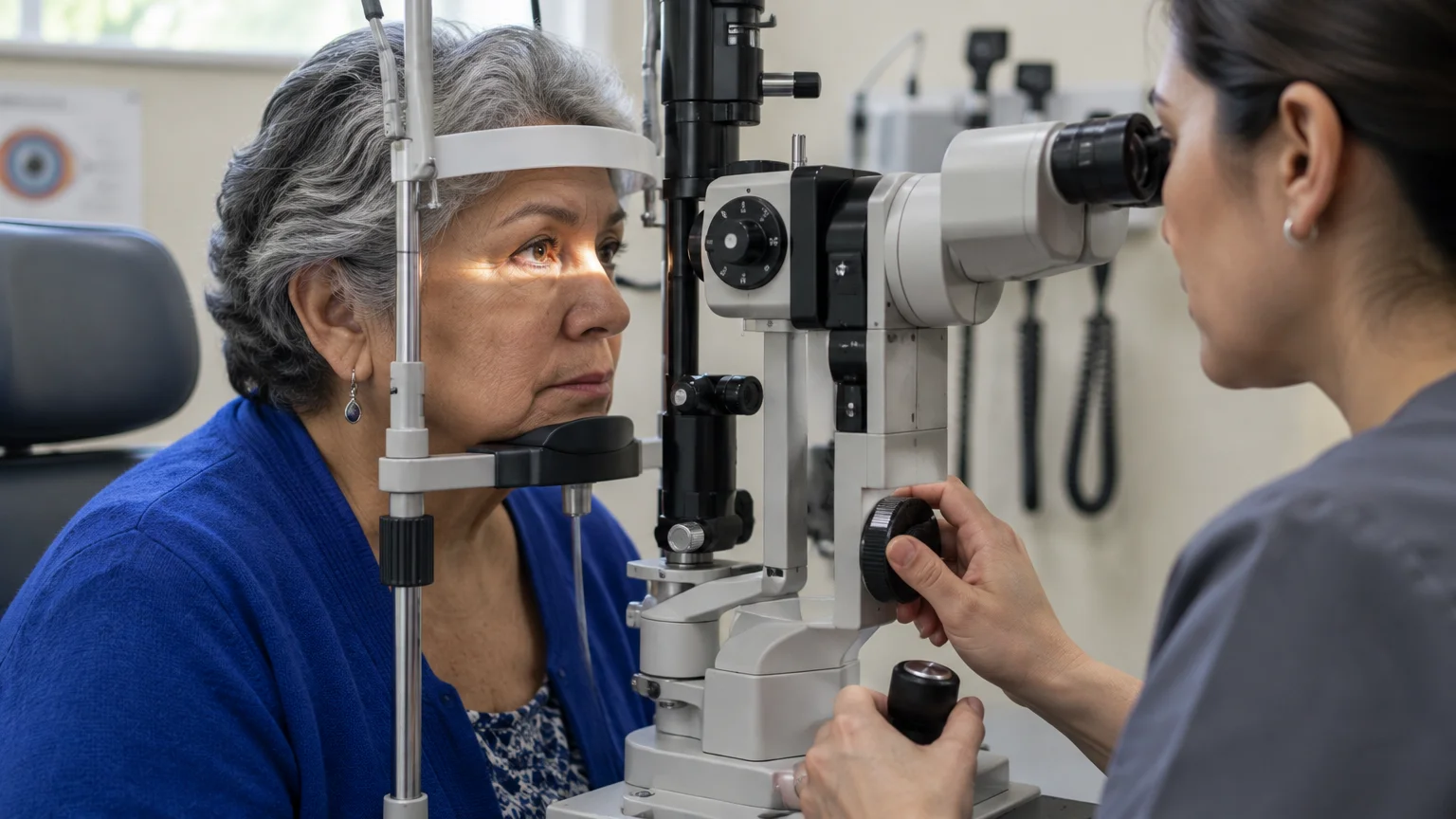
The core service provided is a comprehensive, dilated medical eye exam. The physician examines your retina, optic nerve, lens, and internal eye pressure to diagnose chronic medical issues.
The program covers specific medical clinical services during your enrollment period:
- One initial comprehensive dilated medical eye examination by an ophthalmologist.
- Evaluation and diagnosis for diabetic retinopathy, glaucoma, macular degeneration, and cataracts.
- Up to one full year of follow-up medical physician care for any condition diagnosed during that opening appointment.
- Complete waiver of all copayments, coinsurance, and deductibles associated with covered physician visits.
While the medical physician visits cost you nothing, the program excludes retail optical items. You must plan separately for your eyeglasses and prescription medications.
EyeCare America excludes the following diagnostic, surgical, and retail items:
- Routine refractive eye examinations designed solely to determine eyeglass or contact lens prescriptions.
- Eyeglass frames, corrective lenses, and contact lens fittings.
- Prescription medications, including daily eye drops and antibiotic ointments.
- Outpatient hospital fees, surgical facility charges, and anesthesiologist billing.
- Laser surgeries, retinal injections, and surgical operations.
If your doctor identifies a cataract or severe glaucoma requiring surgery, they will explain your medical options. The volunteer agreement covers clinical physician management, but facility and surgical costs fall under your standard insurance or hospital financial aid.
Worked Cost Scenario: Diabetic Retinal Exam
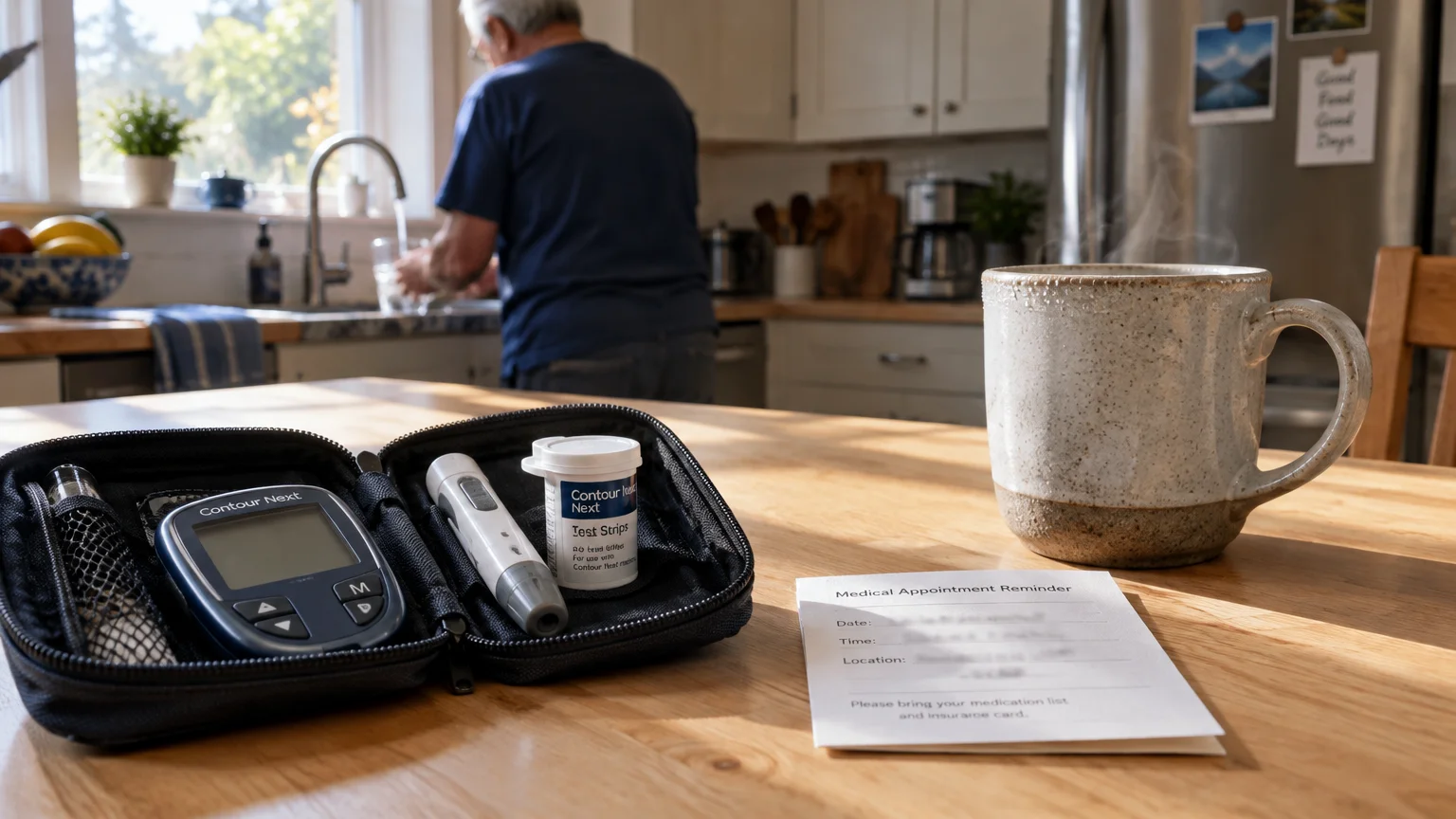
Consider Arthur, a 65-year-old retiree managing Type 2 diabetes on a fixed income of $1,850 per month. Arthur carries Traditional Medicare Part A and Part B, but he has no secondary vision plan and has not visited an eye clinic in 38 months.
Arthur needs an urgent dilated retinal screening because high blood sugar can damage microvessels in the retina without causing early pain. If Arthur schedules an appointment with an independent specialist outside this program, standard billing applies.
The typical out-of-pocket costs Arthur faces without EyeCare America break down as follows:
- New Patient Comprehensive Medical Eye Exam (CPT 92004): $245.00 billed charge.
- Annual Medicare Part B Deductible: $257.00 (applied if Arthur has not used outpatient services yet this calendar year).
- Medicare Part B Coinsurance (20% of approved amount): $38.40.
- Specialized Diagnostic Fundus Photography (CPT 92250): $82.00.
- Estimated Total Out-of-Pocket Expense for Arthur: $257.00 to $365.40.
For Arthur, spending $300 represents more than 15 percent of his total monthly income. As a result, he delays care, increasing his risk of irreversible vision loss.
Now examine Arthur’s financial ledger when he applies through the EyeCare America program. The assigned ophthalmologist bills Medicare directly using Arthur’s Part B details.
Under program rules, the volunteer physician agrees to accept the Medicare reimbursement as payment in full. The doctor contractually waives the 20% coinsurance and waives any unmet portion of Arthur’s Part B deductible.
Arthur pays exactly $0.00 at the check-in desk, and he receives no balance billing in the mail. If the exam reveals early diabetic retinopathy, Arthur receives physician checkups for the next 12 months at that same $0.00 out-of-pocket cost.

Comparing Senior Vision Care Assistance Options
When searching for eye care assistance, you must distinguish between programs that cover physical medical pathology and plans that merely subsidize glasses. Different programs address distinct clinical and financial needs.
Similarly, seniors who need low-cost oral healthcare can look into donated dental services that operate volunteer clinician networks nationwide.
The table below compares four common avenues available to seniors who require eye examinations and ongoing eye health management.
| Assistance Pathway | Typical Patient Out-of-Pocket Cost | Prior Care Gap Requirement | Eyeglass Prescription Included? | Follow-up Medical Care Duration |
|---|---|---|---|---|
| EyeCare America Senior Program | $0.00 (Copays and deductibles waived) | 36 consecutive months without an ophthalmologist | No (Medical diagnosis only) | Up to 12 months for diagnosed conditions |
| Traditional Medicare Part B Alone | 20% coinsurance plus annual deductible | None | No (Except after specific cataract surgery) | Standard fee-for-service ongoing care |
| Community Health Centers (FQHC) | $20.00 to $50.00 based on sliding scale | None | Varies by clinic location | Continuous primary clinical management |
| Retail Optical Chain Exam | $60.00 to $130.00 cash payment | None | Yes (Standard refractive prescription) | None (Single visit retail service) |
Retail optical centers provide inexpensive refractive tests, but their staff rarely provide extended clinical management for severe ocular diseases. Traditional Medicare covers medical problems, but out-of-pocket coinsurance can accumulate quickly.
EyeCare America offers the only national framework that delivers specialized physician care with zero out-of-pocket liability for uninsured or underinsured qualifying seniors.

Step-by-Step Application and Appointment Guide
Securing an appointment through the program requires following an established digital intake process. The system connects you directly with a local volunteer doctor based on your home zip code.
Follow these concrete steps to obtain your examination voucher and book your appointment:
- Confirm your timeline: Verify through your records that you have not sat in an ophthalmologist’s examination chair in the last 36 months.
- Access the Online Referral Center: Visit the official portal via the Foundation of the American Academy of Ophthalmology or call 877-887-6327 for telephone guidance.
- Complete the medical questionnaire: Answer questions regarding your age, current vision symptoms, systemic conditions such as diabetes, and your existing insurance policies.
- Receive your doctor assignment: The database matches you with an enrolled volunteer ophthalmologist within your regional driving radius and issues a referral letter.
- Schedule your appointment: Call the assigned doctor’s office within the timeframe stated on your referral slip, and clearly inform the receptionist that you hold an EyeCare America voucher.
- Attend the dilated examination: Bring your identification and your Traditional Medicare card if enrolled, and arrange for a driver due to temporary blurry vision caused by pupil dilation.
- Submit your compliance survey: Complete the EyeCare America Patient Survey and return it within 45 days after your appointment to keep the program operational.
Always present your referral paperwork to the front-desk staff immediately upon arrival. This documentation prevents the clinic’s billing department from processing your chart as a standard commercial visit.
If you possess Traditional Medicare, hand your card to the clerk alongside your voucher. The clinic bills Medicare directly, but the voucher instructs the billing department to write off every patient-responsibility code.

Why Missing Diabetic Retinal Exams Threatens Vision
For a 65-year-old managing diabetes, skipping dilated eye exams for two or more years carries significant risk. According to the American Academy of Ophthalmology, one in six Americans aged 65 and older suffers from vision impairment that standard eyeglasses cannot correct.
Diabetes damages the tiny blood vessels lining the back of your retina over time. In its early stages, diabetic retinopathy causes neither physical pain nor noticeable changes in your central vision.
You can read clearly while microscopic blood vessels steadily leak fluid and lipids into your retinal tissues. By the time you notice blurred vision or dark floating spots, significant cellular damage has already occurred.
A dilated eye exam allows the ophthalmologist to look directly through your widened pupil using high-magnification lenses. This physical inspection reveals vascular changes years before your sight begins to deteriorate.
Contact a medical specialist immediately if you experience any of these progressive ocular warning signs:
- Sudden showers of dark spots or cobweb-like floaters drifting across your field of vision.
- Flashes of light that appear in your peripheral vision without an external light source.
- A dark curtain, veil, or shadow spreading across your visual field.
- Fluctuating vision that changes dramatically from morning to evening.
Medical intervention stops diabetic damage in its tracks when doctors identify problems early. Laser treatments, medications, and tighter blood sugar management protect your independence and keep you driving safely.
Alternative Assistance When You Do Not Qualify
You might discover that you do not qualify for EyeCare America due to having seen an eye doctor two years ago or holding an active HMO plan. If you find yourself in this situation, several alternative programs offer low-cost medical and refractive eye care.
If you need affordable eye exams or glasses, evaluate these established assistance options:
- Community Health Centers: Federally Qualified Health Centers offer medical eye assessments with fees calculated using your monthly income.
- Lions Clubs International: Local chapters frequently purchase prescription eyeglasses for low-income seniors and provide vouchers for local vision screenings.
- Medical University Eye Clinics: Academic teaching hospitals operate resident clinics that offer medical exams at deeply discounted baseline rates.
- State Division of Blind Services: State agencies assist individuals facing severe vision loss with adaptive tools, medical evaluations, and independent living training.
You can locate localized support programs by searching the Eldercare Locator directory maintained by the Administration for Community Living. Operators connect seniors directly with local Area Agencies on Aging that coordinate medical transportation and healthcare grants.
Furthermore, checking federal benefit listings on the Benefits.gov benefit locator can reveal state-specific healthcare support tailored to low-income households. Many states run supplemental medical pools for individuals living on fixed Social Security incomes.
Finally, review your standard medical coverage rules directly through the official Medicare.gov website. While Medicare Part B excludes routine eyeglasses, it specifically covers annual diabetic retinal exams for all patients diagnosed with diabetes, subject to standard coinsurance rules.
Frequently Asked Questions
Does EyeCare America give me free eyeglasses?
No, the program does not supply, manufacture, or pay for prescription eyeglasses or contact lenses. It exclusively covers medical examinations, disease diagnosis, and physician follow-up care for ocular conditions.
Can I apply if I currently have Medicare Advantage?
If your Medicare Advantage plan operates as an HMO or PPO, you do not qualify for the program. However, seniors enrolled in Traditional Medicare Part A and Part B without HMO restrictions qualify fully.
What happens if I need eye surgery after my exam?
The program covers the ophthalmologist’s clinical follow-up care for up to one year, but it excludes surgery fees. Surgical facility fees, anesthesia, and laser center costs must be billed through standard insurance or hospital financial hardship programs.
How often can an eligible senior use EyeCare America?
EyeCare America provides services once per lifetime per participant. If you received care from an EyeCare America volunteer doctor in the past, you cannot apply for another referral.
Why do I have to wait 45 days to return the survey?
You do not have to wait 45 days; rather, you must return the survey within 45 days after your exam. Returning the evaluation promptly confirms your appointment took place and keeps volunteer doctors active in the network.
Disclaimer: This article is for informational purposes only. Benefits, programs, and regulations can change.
We encourage readers to verify current information with official government sources and consult with qualified professionals for personalized advice.