
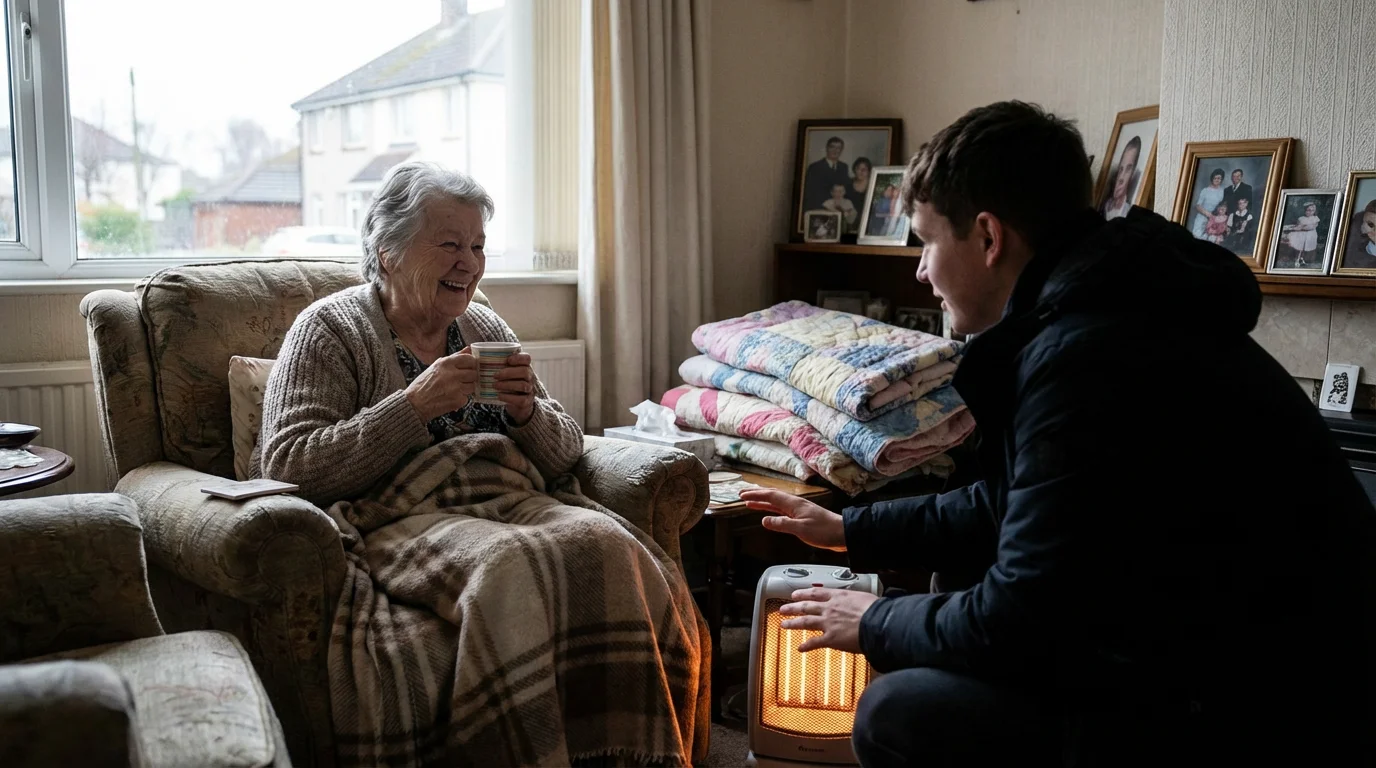
If you are a single retiree age 70 living on Social Security near the $1,995 monthly federal cutoff, the Low Income Home Energy Assistance Program (LIHEAP) can pay part of your energy bills directly to your utility or fuel dealer.
When January cost-of-living adjustments raise checks before states update static poverty charts, retirees within a few hundred dollars of the cap face avoidable denials. Checking which months count, state median limits and gross benefit records protects your eligibility.
Why the post-COLA window and state chart timing create a hidden LIHEAP trap
LIHEAP is a federal block grant from the HHS Administration for Children and Families that funds heating, cooling, crisis and weatherization help. States, tribes and territories set benefit amounts, seasons and rules within federal law.
Federal law caps eligibility at the higher of 150% of the federal poverty guidelines or 60% of your state’s median income. States may set a lower cutoff, though never below 110% of the poverty guideline.
The 2026 HHS poverty guidelines are $15,960 for one person and $21,640 for two in the 48 contiguous states and D.C., with higher limits in Alaska and Hawaii. At 150%, one person qualifies up to $23,940 annually ($1,995 monthly).
At 150%, a two-person household qualifies up to $32,460 a year ($2,705 monthly). For three people with a $27,320 guideline, 150% reaches $40,980 a year ($3,415 monthly).
A single retiree age 70 with $1,900 a month in gross Social Security has $22,800 a year, qualifying under the $23,940 limit. You must also add pensions, IRA withdrawals and wages of anyone else in the household.
Two timing problems trap seniors close to that line. Social Security rises each January with the cost-of-living adjustment, while states adopt new poverty guidelines on their own schedule.
A program-year chart may still list older, lower numbers in winter, pushing a post-COLA check past a static cap. Meanwhile, many states use 60% of state median income, which is higher than 150% of poverty.
Agencies also count gross Social Security before the 2027 Medicare Part B premium of $209.40 a month is deducted, unless your office says otherwise. Sending bank statements showing only net deposits stalls reviews.
What to gather and check on your accounts before you open the form
Pull these records from your accounts and verify your local agency rules before you start the application.
- Gross Social Security verification letter: Download a benefit verification letter from your my Social Security account showing your full benefit before the 2027 Medicare Part B deduction of $209.40.
- Prior-month benefit records: Keep earlier monthly statements handy if your agency counts prior months instead of your new January check.
- State income chart and cutoff rule: Check USA.gov’s help with utility bills page or energyhelp.us to find your office and see whether it uses 60% of state median income or an older poverty chart.
- Lookback months and senior dates: On that agency page, confirm which income months count and any early filing window for adults age 60 or older.
- Automatic-eligibility award letters: Pull current notices for SSI, SNAP food benefits, TANF or qualifying needs-tested veterans benefits.
- Other household income: Gather statements for pensions, IRA withdrawals and wages of anyone else in the home.
- Utility and identity documents: Ready your latest utility bill or fuel receipt, any shutoff notice, photo ID and household Social Security numbers if requested.
Treat your state or local agency’s published chart as the final word on dollar cutoffs.
How to use those records to beat the post-COLA squeeze
Enter your documents in this order when applying online, by mail or in person so a narrow margin does not stall your file.
- Lead with automatic eligibility: Check yes if anyone in the home receives SNAP, SSI, TANF or qualifying veterans benefits, and attach that letter alongside your benefit verification letter.
- Use an early age-60 window: Households with a member age 60 or older are a federal priority group, and early filing in fall or winter can secure approval before January benefits rise.
- Confirm lookback months after January: If you are within a few hundred dollars of your state’s limit, ask which months of income the office counts or when it adopts 2027 guidelines.
- Enter gross Social Security, not bank deposits: Copy the pre-Medicare-Part-B figure from your Social Security letter, then list pensions, IRA withdrawals and other resident income separately.
- Request a senior review: Ask your local Area Agency on Aging to review your packet for free before submitting.
- Save copies and confirm your bill credit: Keep dated copies of every page, then check your energy bill within a billing cycle or two.
If an approved credit is missing after a billing cycle or two, call with your filing date and account number. Ask the same agency about the Weatherization Assistance Program for free insulation and sealing.
The Department of Energy explains how to apply for weatherization, and LIHEAP households are often eligible.
Choosing between regular seasonal credits, crisis aid and weatherization
Filing a regular seasonal application when your heat is already off can leave you waiting several weeks. Compare the three local tracks before you apply.
| Program track | When you apply | Decision speed | What it covers |
|---|---|---|---|
| Regular heating or cooling benefit | During your state’s winter or summer season | Several weeks | Direct credit sent to your utility, oil or propane account |
| Crisis assistance | Often year-round while funds last | Within 48 hours, or 18 hours if life-threatening | Shutoff notice, cut-off service, empty tank or broken furnace |
| Weatherization assistance | Ongoing through local agencies | Varies locally | Free home insulation and air sealing |
Federal law requires action within 48 hours on an eligible crisis application, or 18 hours if life-threatening. Crisis aid often runs year-round after regular seasons close, though funds can run out.
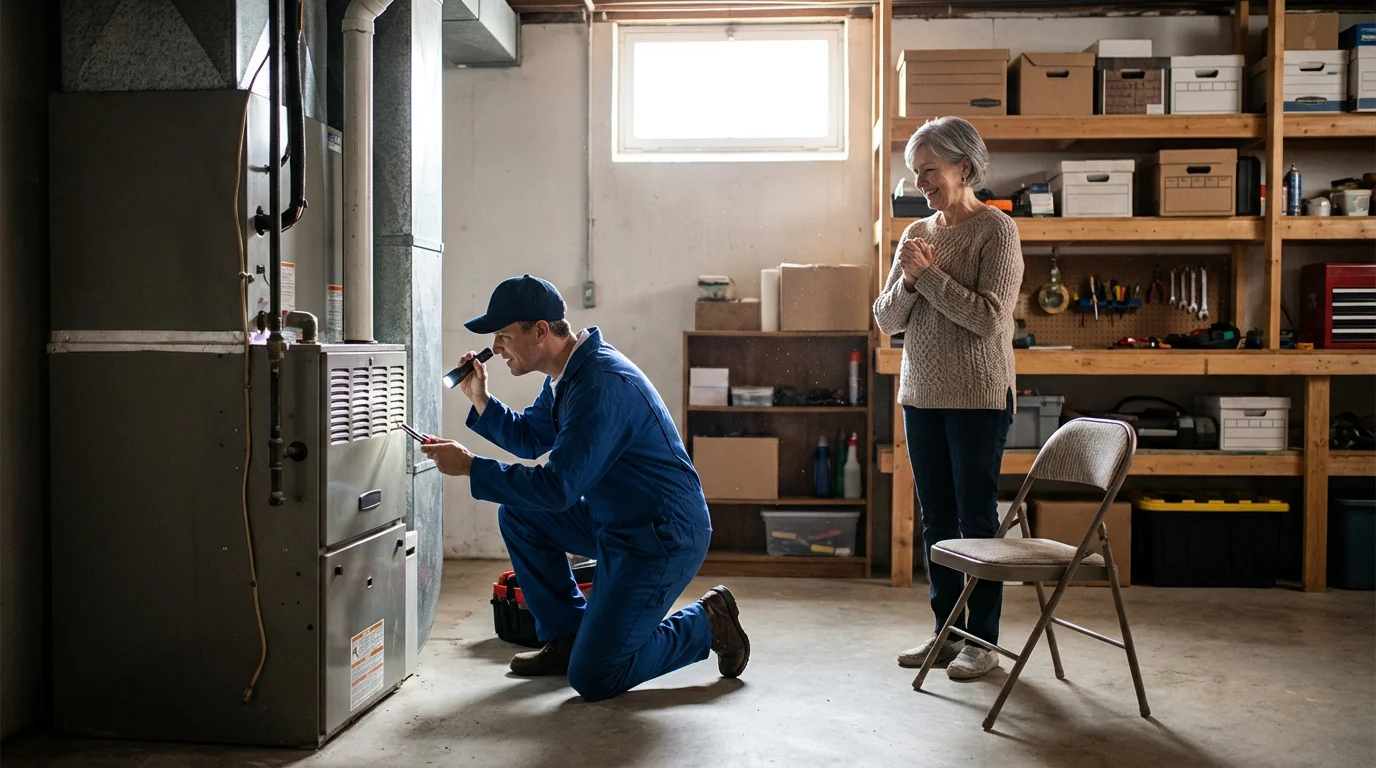
When calling for crisis help, say you are 60 or older and state the emergency plainly, such as no heat. The National Institute on Aging warns that older adults can develop hypothermia indoors in a home that only feels cool.
Keep your shutoff notice or fuel statement beside the phone when you call. Most LIHEAP help arrives as a credit on your utility, oil or propane account, not a check to you.
Summer cooling programs and window air conditioner rules in select states
Cooling aid is optional for states, so options vary locally. Some states credit summer electric bills, while a few install a window air conditioner or fan for eligible older households.
- New York HEAP Cooling Assistance: Supplies and installs a window or portable air conditioner or fan for eligible homes, with a limit on frequency. The state’s HEAP page lists current dollar caps and how a member age 60 or older qualifies.
- Ohio Summer Crisis Program: Ohio’s Summer Crisis Program runs July 1 to September 30 each year and pays up to $500 ($800 for unregulated utilities) toward electric bills, central air repair or a unit once every three years. Age 60 or older waives medical documentation.
Do not buy an air conditioner at a store expecting cash reimbursement where states provide equipment. Approved contractors usually deliver and install the unit directly.
Renters typically need written landlord permission first, and younger applicants usually need a doctor’s statement for conditions like COPD or heart failure. Because equipment is often first-come, first-served, apply when your summer window opens rather than waiting for a heat wave.
Fixing a post-COLA or gross-vs-net denial and bridging closed funds
States must offer a fair hearing if your application is denied or delayed. Read your notice for the reason and deadline, then send a written hearing request and keep a copy.
Common fixable denials stem from missing documents, omitted household income or net bank deposits listed instead of gross Social Security. For a post-COLA denial, verify whether the office used an older poverty chart or wrong lookback months.
Attach your Social Security verification letter, missing income records or lookback proof to your hearing request. You can also reapply once your state adopts the 2027 poverty guidelines.
For appeal help, check free legal aid for seniors or USA.gov’s guide to finding affordable legal aid. Advocates can help verify which state income cap applies.
If funds close for the season, ask your utility about payment plans and low-income rates, or read budgeting for winter heating on a fixed income. Confirm every cutoff directly with your state LIHEAP office, which makes the final eligibility decision.
3 Comments
Comments are closed.