
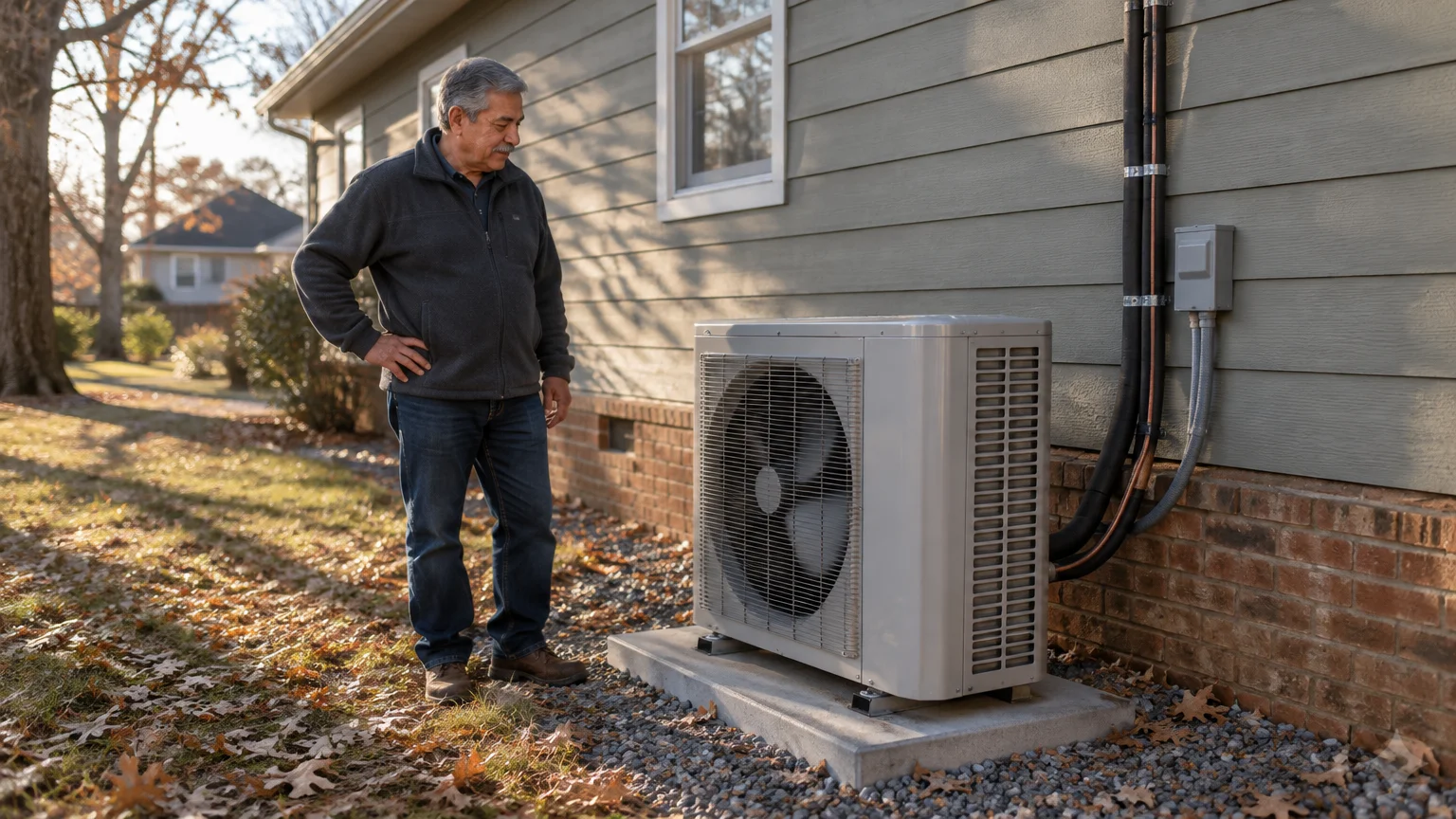
Replacing your failing gas furnace with an electric heat pump can eliminate heating fuel bills and supply central cooling through a single unit. For a 68-year-old managing a 1,200-square-foot ranch on a fixed retirement budget, total switchover costs hinge entirely on electrical panel readiness.
Upgrading to energy-efficient appliances is just one component of cutting retirement costs through simple adjustments to preserve your monthly savings.
Most contractor quotes rely on the federal Section 25C tax credit, yet retirees with minimal taxable income receive zero benefit from that non-refundable provision. The true path to affordability requires pairing state point-of-sale discounts with precise equipment sizing.
This guide calculates your actual out-of-pocket costs and ongoing winter utility bills so you can decide before your 24-year-old furnace breaks midwinter.
In this guide10 sections
- Upfront Equipment and Installation Costs
- Electrical Panel Upgrades and Hidden Wiring Costs
- The Section 25C Tax Credit Trap for Seniors
- Slashing Costs With Point-of-Sale State Rebates
- Worked Example: Net Out-of-Pocket Cost for a 1,200 Sq Ft Ranch
- Equipment and Fuel Cost Comparison
- Monthly Winter Bills: Natural Gas Versus Heat Pump Operating Costs
- Dual-Fuel Hybrid Systems: When to Keep a Gas Backup
- Step-by-Step Plan for a Cost-Effective Heat Pump Switch
- Frequently Asked Questions
Upfront Equipment and Installation Costs
Replacing an aging residential gas furnace with a central ducted heat pump typically costs between $6,000 and $15,500 for equipment and basic installation. The national median for standard single-story installations sits near $10,500.
If large mechanical replacements feel overwhelming, consider the broader financial picture of downsizing your home in retirement before investing in major infrastructure.
Low-income seniors who cannot afford a full HVAC conversion right away can explore qualifying for free air conditioners through LIHEAP for immediate seasonal relief.
A heat pump functions as a two-in-one system. It extracts heat from outdoor air to warm your home during winter and reverses the process in summer to provide air conditioning.
If you have an old air conditioner alongside a 24-year-old gas furnace, a heat pump replaces both machines at once. This dual functionality avoids paying two separate equipment installation fees over the next decade.
Your base contractor invoice depends on several physical characteristics of your home and chosen equipment:
- Heating capacity: Sizing needs range from 2.0 to 3.0 tons for homes between 1,000 and 1,500 square feet.
- Efficiency ratings: Standard 15.2 SEER2 systems cost substantially less than advanced variable-speed cold-climate units rated above 18 SEER2.
- Refrigerant lines: Older lines running from the basement or utility closet to the outdoor pad may require replacement to match modern refrigerants.
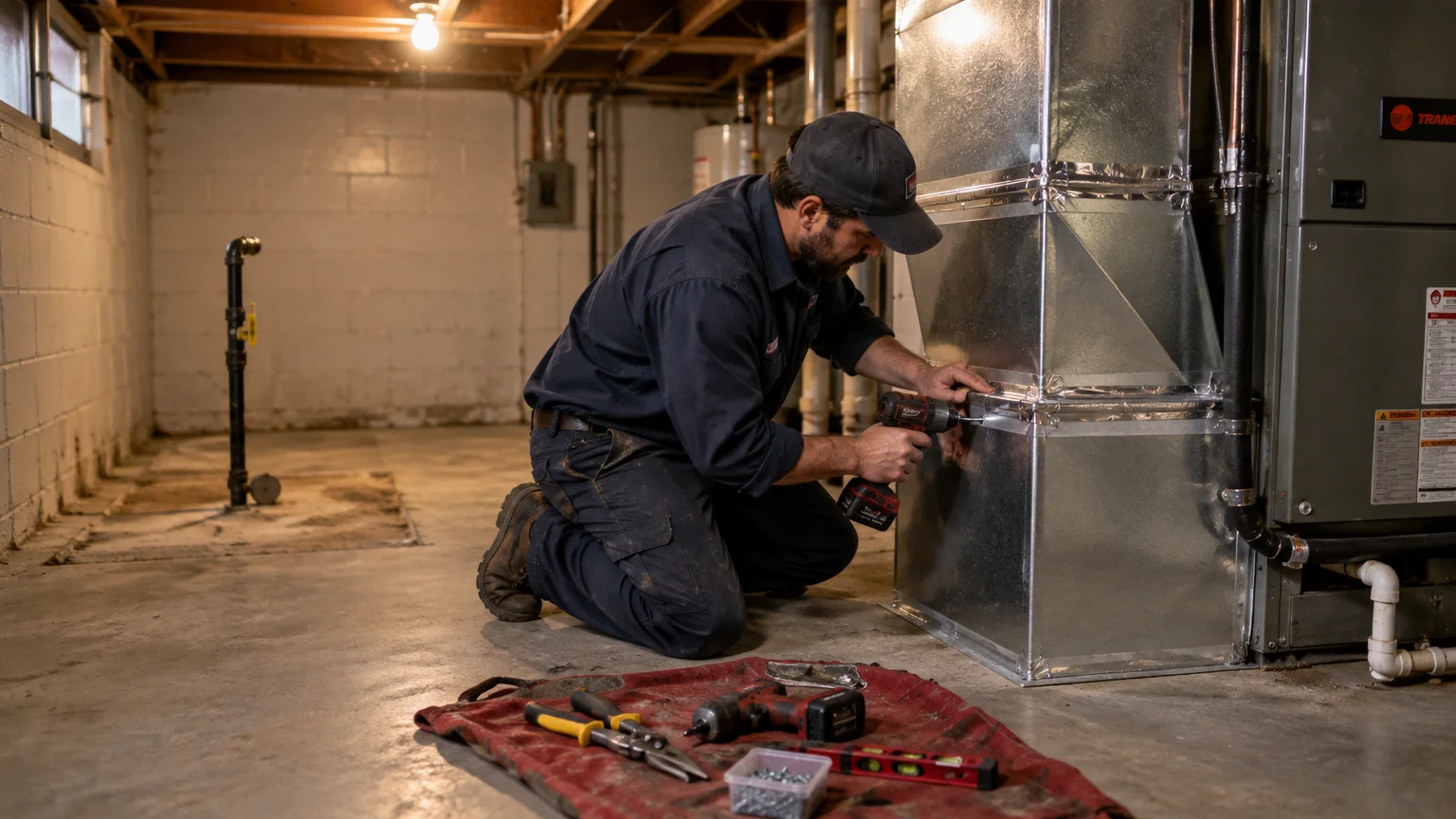
- Ductwork modifications: Adapting the existing furnace plenum to fit the new indoor air handler coil requires custom sheet-metal fabrication.
Contractors often present top-tier models with proprietary thermostats and modulating compressors. A single-stage or two-stage heat pump often satisfies practical heating demands at a fraction of the hardware price.
Electrical Panel Upgrades and Hidden Wiring Costs
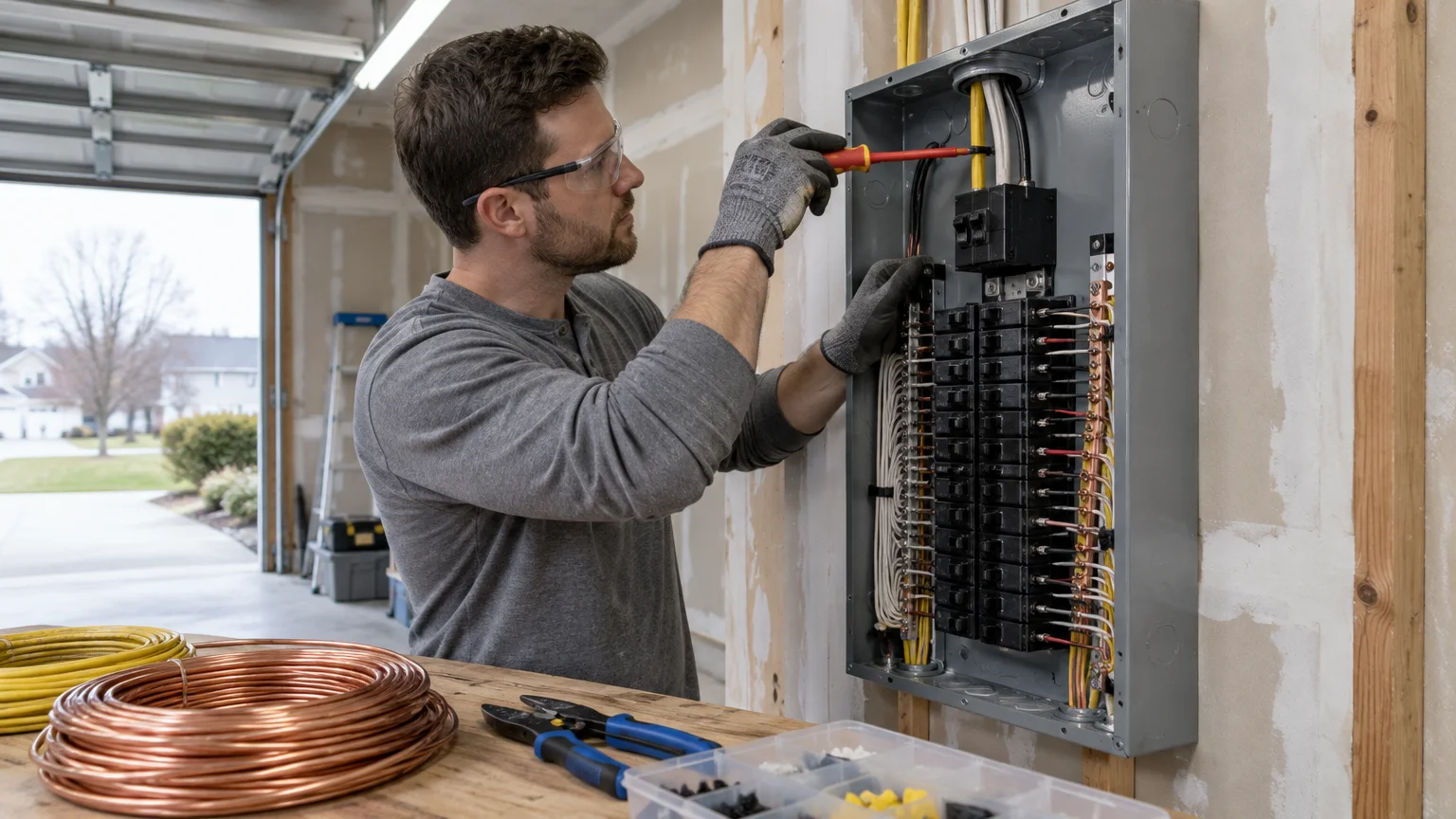
The largest unexpected expense for retirees switching away from natural gas involves the main electrical service panel. Homes built before 1980 frequently run on 100-amp electrical service.
Homeowners scheduling electrical work often bundle other safety upgrades at the same time, such as converting a bathtub to a walk-in shower for long-term comfort.
Upgrading essential utilities also creates an opportunity to coordinate other home modifications for accessibility while licensed contractors are already on site.
Natural gas furnaces require minimal electrical power, utilizing standard 120-volt circuits only to run the circulation blower fan and electronic ignition. An electric heat pump operates large compressor motors and supplemental electric resistance heat strips.
These electric components require a dedicated 240-volt circuit drawing 30 to 60 amps. Adding this equipment to a 100-amp box running an electric stove or dryer will overload the panel.
Upgrading your electrical service to 200 amps costs between $1,500 and $4,000. This project requires a licensed electrician, local permits, and utility coordination to drop power lines during replacement.
Watch for several early warning signs that indicate your home requires an electrical upgrade before heating installation:
- The main circuit breaker on your panel displays “100” or lacks a single master shutoff switch.
- Your home contains an obsolete fuse box or outdated panel brands such as Zinsco or Federal Pacific Electric.
- No empty breaker slots remain inside the panel door for adding double-pole 240-volt circuits.
- The outdoor meter base lacks modern grounding rods driven into the soil outside your foundation.
Factor this work into your initial estimates. Failing to inspect the electrical panel early can stall your project halfway through installation when inspectors deny final permits.

The Section 25C Tax Credit Trap for Seniors
HVAC sales representatives routinely subtract up to $2,000 from initial project estimates by citing the federal Energy Efficient Home Improvement Credit. This incentive is codified under Section 25C of the Internal Revenue Code.
While federal tax breaks may offer limited relief, seniors can often lower housing overhead by claiming property tax exemptions for older homeowners in their local municipality.
The federal policy allows homeowners to claim 30% of project costs up to a hard cap of $2,000 for qualifying heat pumps. However, many retirees discover this advertised savings vanishes at tax time.
According to the Internal Revenue Service, the Section 25C energy credit is strictly non-refundable and cannot carry forward to future filing years. Non-refundable credits can only reduce existing federal income tax liability down to zero.
Consider a 68-year-old retiree living on $25,000 in annual Social Security benefits alongside modest distributions from a traditional IRA. The standard deduction eliminates most or all federal taxable income for single filers and married couples in this bracket.
When your year-end federal tax liability totals $0, your Section 25C credit value also equals $0. The IRS will not issue a refund check for unused credit balances.
Understanding these rules prevents unexpected cash deficits when financing equipment based on contractor promises:
- The credit never pays cash directly to you or your equipment installer.
- You cannot claim the credit across multiple tax years to capture unused amounts.
- You must file IRS Form 5695 alongside Form 1040 to verify equipment eligibility.
- Heat pumps must meet Consortium for Energy Efficiency (CEE) highest tier standards to qualify for any credit amount.
Retirees managing a strict replacing gas furnace with heat pump budget should not count on federal tax credits unless a tax professional confirms sufficient liability.
Slashing Costs With Point-of-Sale State Rebates
While federal tax credits fail to help low-liability households, state-level electrification programs provide direct financial relief. The Home Electrification and Appliance Rebates (HEAR), formerly known as HEEHRA, offer upfront discounts.
Low-income retirees exploring these efficiency grants can also look into broader housing assistance programs for seniors to ease housing-related burdens.
In addition to appliance rebates, applying for the Weatherization Assistance Program can fund free insulation upgrades that reduce the heating capacity your new heat pump requires.
These rebates operate at the point of sale. The participating contractor deducts the rebate amount directly from your final invoice rather than making you wait for tax season.
Eligibility depends on your household income relative to your county Area Median Income (AMI). The program specifically targets low- and moderate-income households to accelerate energy transition projects.
Program guidelines establish two distinct funding brackets for qualifying residential property owners:
- Low-Income (Under 80% AMI): Covers 100% of purchase and installation costs up to an $8,000 cap for heat pumps.
- Moderate-Income (80% to 150% AMI): Covers 50% of purchase and installation costs up to a $4,000 cap for heat pumps.
- Electrical Panel Support: Provides up to $4,000 for service panel upgrades needed to support heat pump equipment.
- Wiring Allowances: Supplies up to $2,500 for new dedicated circuit wiring run through crawlspaces or attics.
You can verify income eligibility criteria through Benefits.gov or your state energy office website. These funds feature a lifetime household cap of $14,000 across all electrification improvements.
Working with an enrolled contractor is essential. State programs disburse rebate funds only to licensed installers registered within the state administrative portal.
Worked Example: Net Out-of-Pocket Cost for a 1,200 Sq Ft Ranch
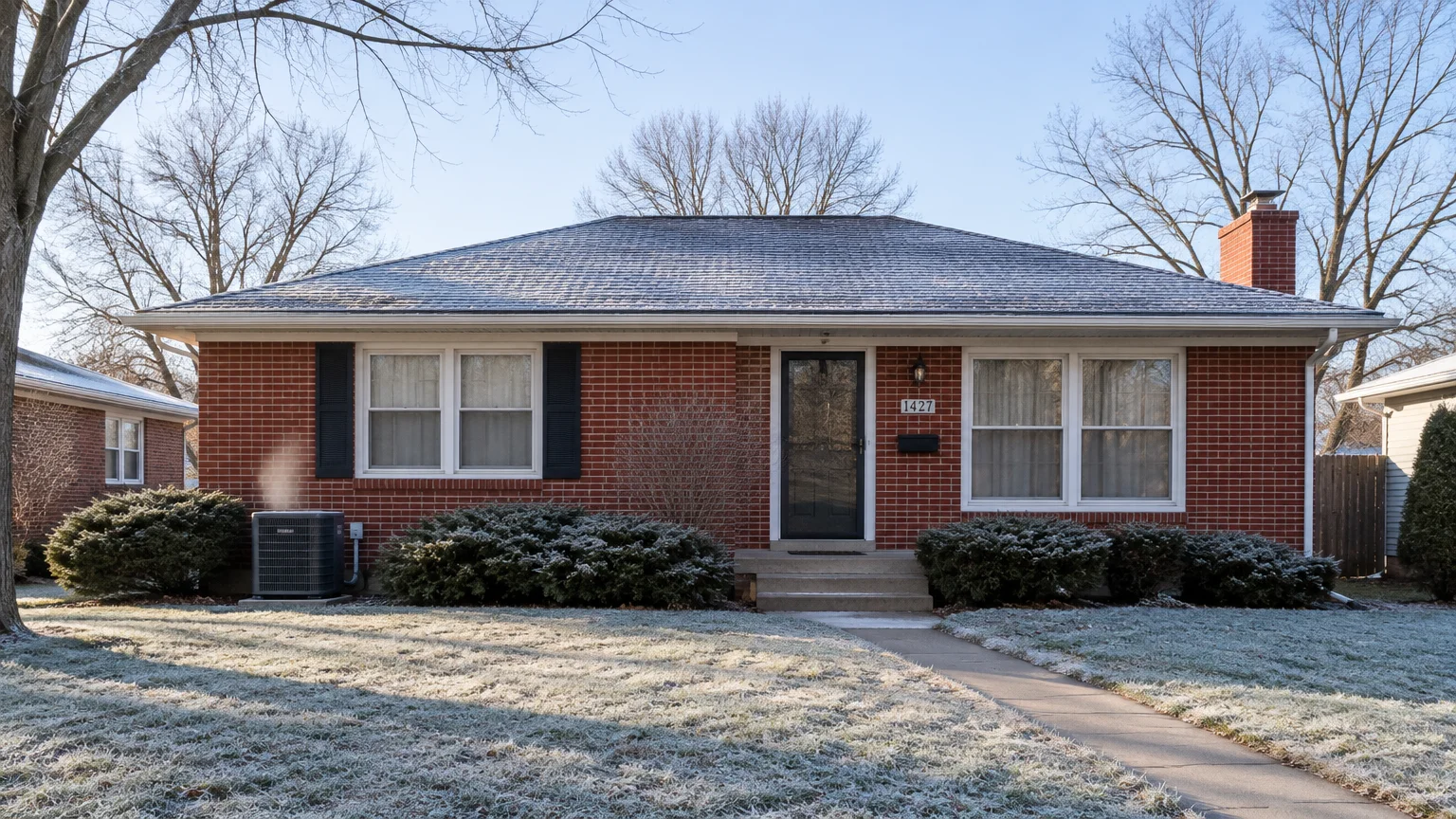
To understand the true math, examine a realistic scenario for a 68-year-old homeowner living in a 1,200-square-foot ranch home. The house retains its original 1970s 100-amp electrical panel and a 24-year-old gas furnace.
For retirees sharing household living costs, learning how to split utility bills fairly helps keep winter heating expenses manageable for everyone under one roof.
If residual heating expenses remain tight during winter months, seniors can seek support through LIHEAP energy assistance programs to manage seasonal spikes.
The owner lives on a fixed income of $2,300 monthly from Social Security and a small pension. This income places the household at 65% of the local Area Median Income, qualifying for full low-income state rebates.
The contractor specifies a cold-climate 2.5-ton inverter heat pump rated at 16 SEER2 and 9.0 HSPF2. The installation requires a 200-amp electrical panel replacement and a dedicated 40-amp circuit run to the outdoor unit.
The gross contractor invoice breaks down as follows:
- 2.5-ton heat pump equipment and indoor air handler: $6,400
- Installation labor, plenum fabrication, and permit fees: $3,800
- 200-amp service panel upgrade: $2,800
- Dedicated 240-volt wiring run to outdoor unit: $600
- Gross Total Project Cost: $13,600
Next, apply the available incentives based on the homeowner’s financial profile. The Section 25C federal tax credit yields $0 because the owner owes no federal income tax after the standard deduction.
However, state point-of-sale rebates apply directly to the invoice:
- Heat pump rebate (100% of equipment/labor up to cap): -$8,000
- Electrical panel rebate (100% of panel cost up to cap): -$2,800
- Electrical wiring rebate (100% of dedicated circuit wiring): -$600
- Total Rebates Applied: -$11,400
Subtracting $11,400 in direct rebates from the $13,600 gross invoice leaves an actual out-of-pocket expense of $2,200. This structured stacking reduces the upfront equipment switch to an affordable sum for a fixed-income budget.
Equipment and Fuel Cost Comparison
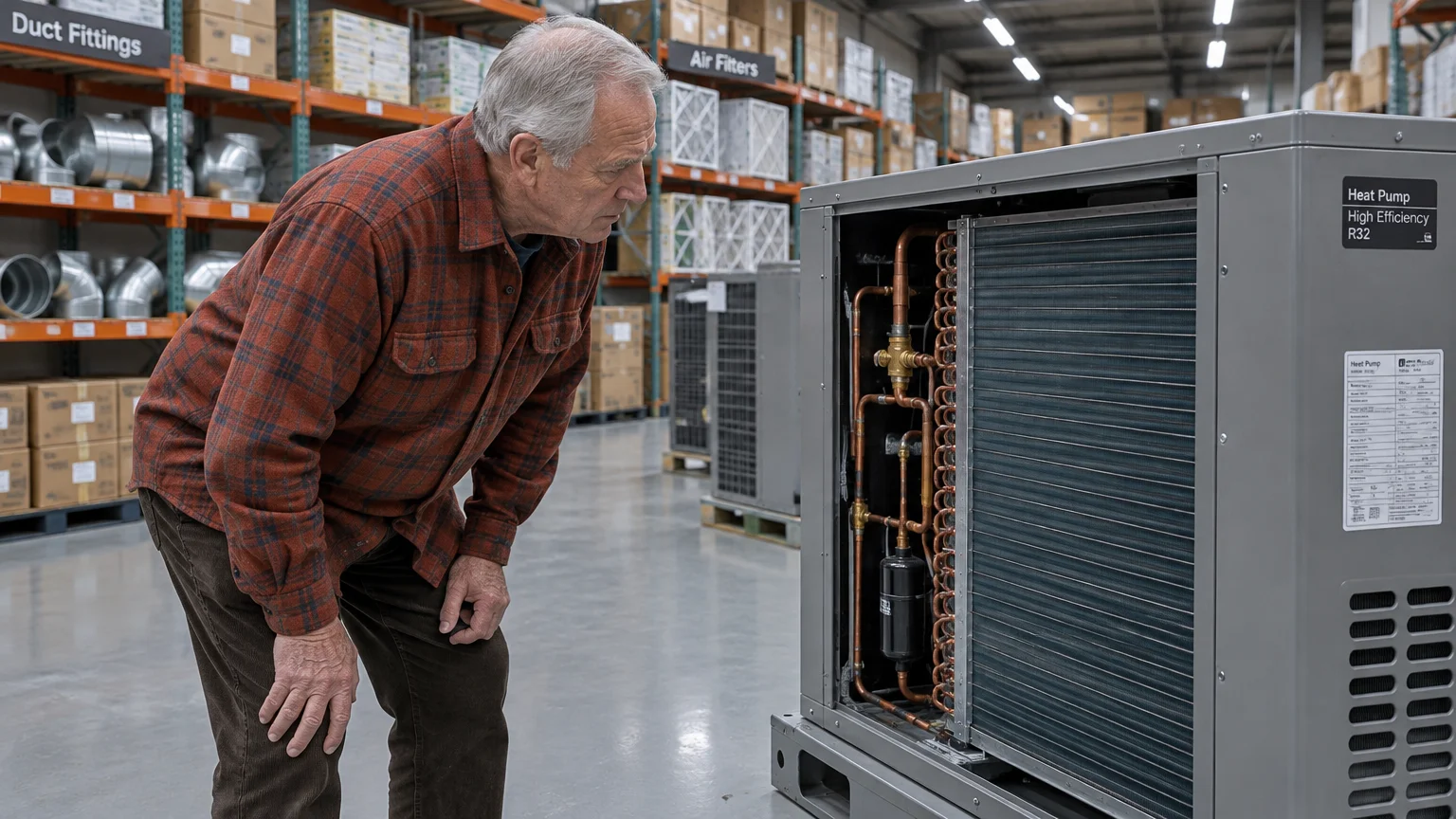
Homeowners facing an equipment failure must evaluate replacement paths side by side. Sticking with natural gas carries lower electrical requirements but forfeits point-of-sale electrification grants.
Balancing long-term equipment upgrades with practical retirement lifestyle adjustments helps protect fixed monthly cash flow.
The following table compares equipment choices for a standard 1,200-square-foot single-story layout requiring 30,000 BTUs of winter heating capacity.
| System Configuration | Gross Installed Cost | Electrical Upgrades Needed | Est. Winter Fuel Bill | Net Low-Income Out-of-Pocket |
|---|---|---|---|---|
| Standard 80% Gas Furnace + 13 SEER AC | $8,200 | None ($0) | $115 / month | $8,200 |
| All-Electric Cold-Climate Heat Pump (2.5-Ton) | $13,600 | 200-Amp Panel ($3,400) | $145 / month | $2,200 |
| Dual-Fuel System (80% Gas + 15 SEER2 Heat Pump) | $12,400 | Subpanel / Circuit ($900) | $105 / month | $8,400 |
Notice the gross cost for an all-electric system appears highest before accounting for incentives. Stacking point-of-sale rebates makes the all-electric transition substantially cheaper upfront than buying a standard replacement furnace.
Dual-fuel installations often miss out on full electrification rebates because state programs prioritize complete gas disconnection. Homeowners should verify whether partial electrification qualifies for state rebates before ordering equipment.
Monthly Winter Bills: Natural Gas Versus Heat Pump Operating Costs
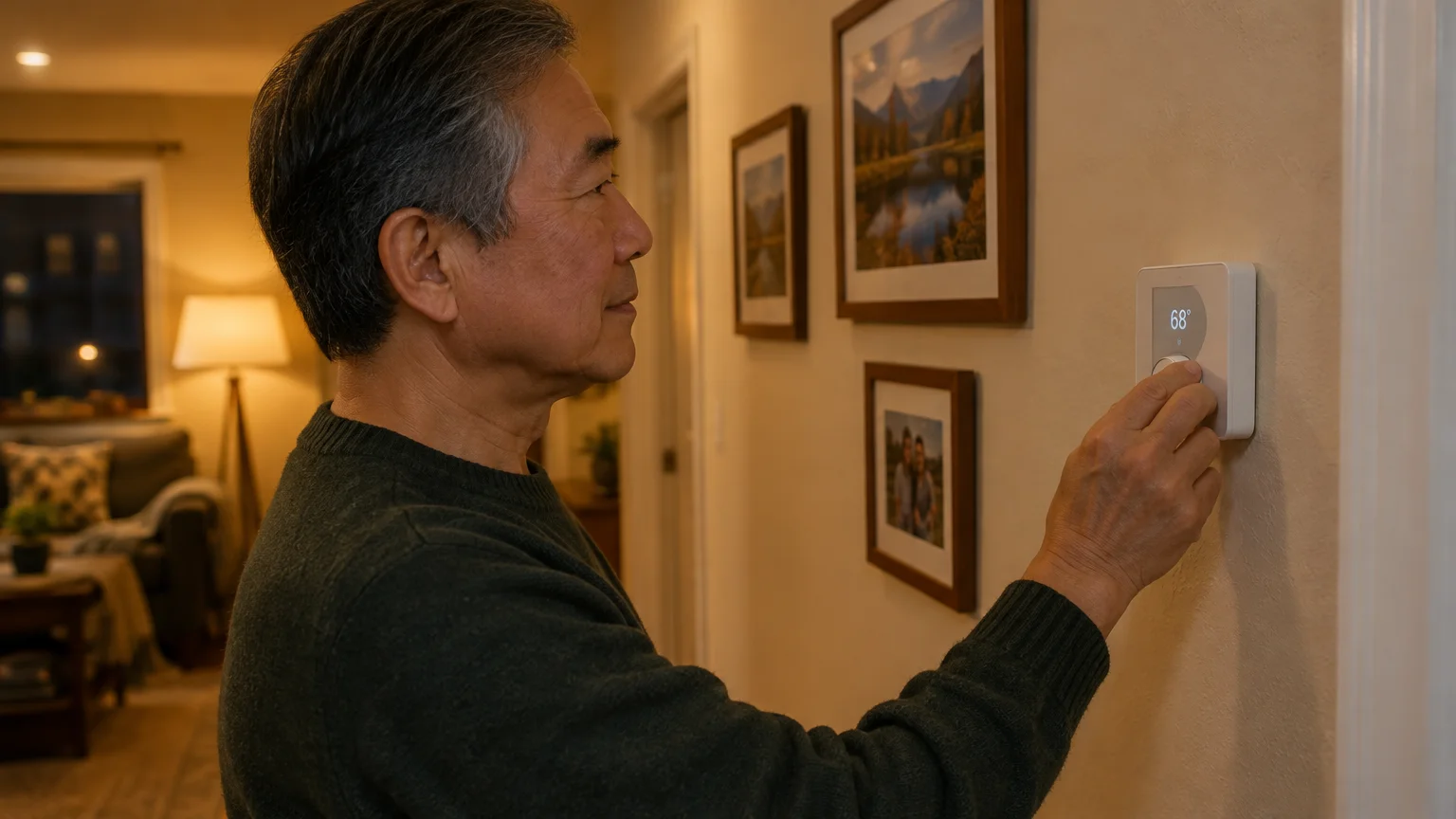
While upfront savings can be substantial, monthly operating expenses depend strictly on regional utility rate disparities. A heat pump produces two to three times more heat energy than the electricity it consumes.
This operating efficiency is measured as a Coefficient of Performance (COP). Modern heat pumps maintain a COP of 2.5 to 3.5 in moderate temperatures, dropping toward 2.0 when outdoor air dips below 15 degrees Fahrenheit.
Despite this efficiency, electricity costs significantly more per unit of delivered energy than natural gas in many states. One therm of natural gas contains roughly 29.3 kilowatt-hours of equivalent heat energy.
If natural gas costs $1.20 per therm and residential electricity costs $0.18 per kilowatt-hour, heating with an electric heat pump can cost 20% to 30% more per month during deep cold snaps. Conversely, regions with high gas costs and cheap hydro power see immediate winter bill reductions.
Retirees concerned about utility costs should review utility aid resources through NCOA BenefitsCheckUp to locate regional rate discounts and winter heating assistance.
Keep these operating factors in mind before disconnecting gas service:
- Natural gas carries fixed monthly meter connection fees ($15 to $35) regardless of usage volume.
- Electric resistance backup strips draw up to 10 kilowatts per hour when temperatures plunge below your system’s balance point.
- Variable-capacity inverter compressors reduce energy consumption by avoiding hard cycling during mild autumn and spring days.
Evaluating both your electric rate tariff and winter gas bills prevents unexpected winter budget strain after completing installation.
Dual-Fuel Hybrid Systems: When to Keep a Gas Backup
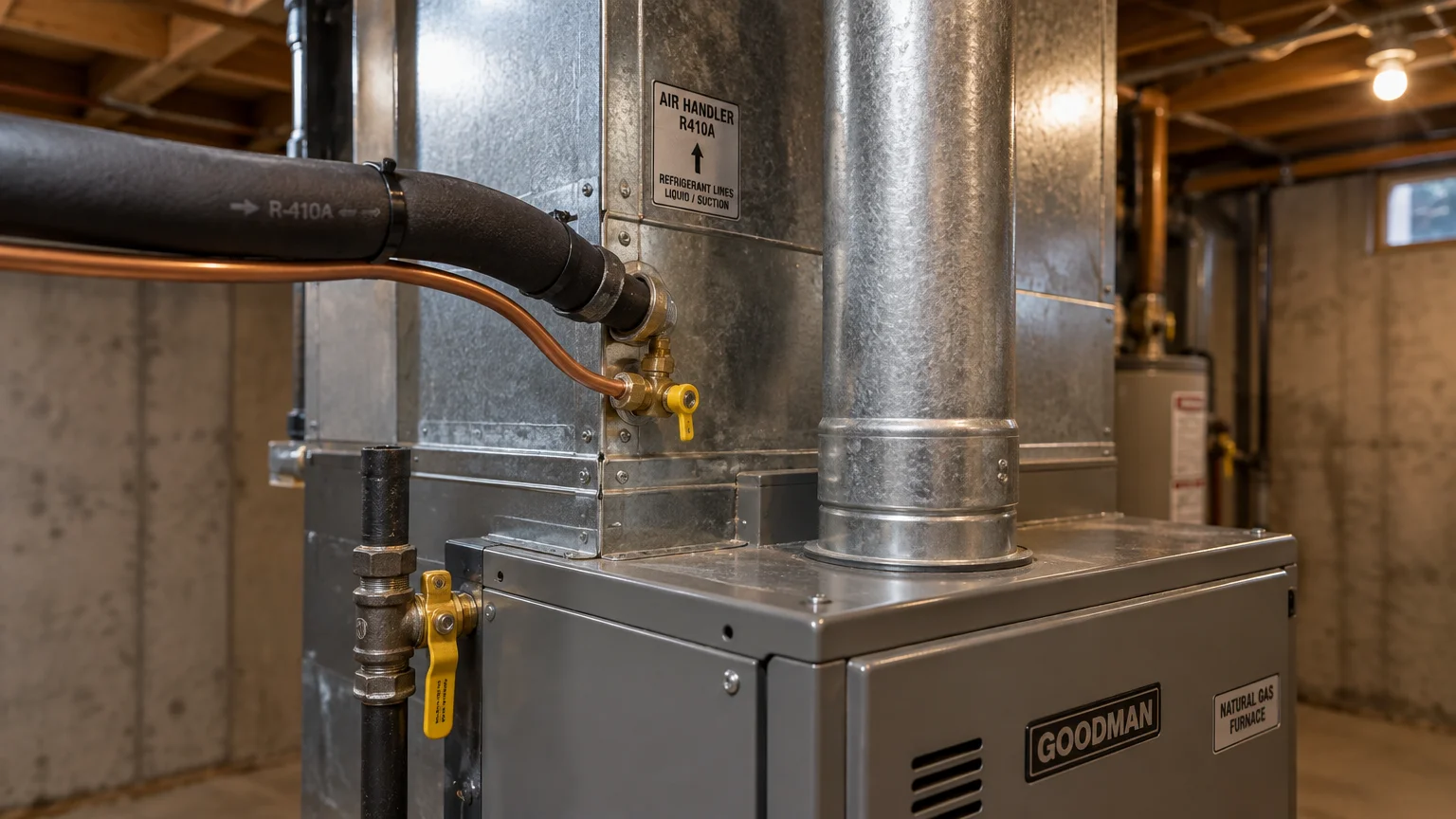
For seniors living in northern climates, a dual-fuel hybrid system offers a practical middle ground. This design matches an electric heat pump outdoor unit with a natural gas furnace indoors.
The heat pump heats your home efficiently during mild weather between 35 and 60 degrees Fahrenheit. When outdoor temperatures drop into freezing territory, the smart thermostat automatically switches heating duties to the gas furnace.
This automated handoff prevents the heat pump from engaging expensive electric resistance heat strips. It also eliminates the need to run heavy electrical circuits to the indoor air handler.
A dual-fuel configuration delivers distinct operational advantages for older ranch homes:
- You can frequently retain an existing 100-amp electrical panel by avoiding high-draw electric resistance heater coils.
- Indoor supply air temperatures remain high (115°F to 125°F) during freezing weather, matching the heating comfort of traditional furnaces.
- You retain the flexibility to switch fuels if local gas or electric tariffs fluctuate wildly.
The main financial trade-off involves state rebates. Many state HEAR rebate offices require total natural gas decommissioning to disburse full $8,000 rebates.
If you choose dual-fuel, balance the loss of state incentives against the savings gained by skipping a 200-amp electrical panel replacement.

Step-by-Step Plan for a Cost-Effective Heat Pump Switch
Transitioning away from an aging gas furnace requires careful sequencing to ensure you capture every available discount. Rushing into an emergency purchase during a winter breakdown limits your rebate opportunities.
Follow this practical process to keep your heating upgrade organized and affordable:
- Audit your electric service: Check your home breaker box to verify total amperage service before requesting equipment bids.
- Verify your Area Median Income: Check local county income thresholds through state energy offices to establish your point-of-sale rebate percentage.
- Consult your tax preparer: Confirm whether your annual taxable income generates sufficient tax liability to claim any portion of the 25C tax credit.
- Select registered contractors: Solicit three written quotes exclusively from HVAC installers enrolled in your state’s clean energy rebate directory.
- Demand a Manual J load calculation: Ensure the contractor sizes your heat pump to your actual home dimensions rather than simply matching your old furnace rating.
- Evaluate gas service fees: Determine whether keeping your natural gas meter active for cooking or water heating makes financial sense.
Taking these deliberate steps ensures you capture point-of-sale funding, prevent electrical overloads, and protect your retirement budget from unexpected costs.
Frequently Asked Questions
Can I claim the Section 25C tax credit if Social Security is my only income?
No. The Section 25C credit is strictly non-refundable, meaning it only reduces existing federal tax liability. If your Social Security benefits and standard deduction leave you with zero federal income tax owed, you cannot receive any money from this credit.
Will an electric heat pump increase my winter utility bills compared to natural gas?
Your bills may increase if you live in an area with high electricity rates and cheap natural gas. In regions where electricity exceeds $0.20 per kilowatt-hour, running an electric heat pump can cost more per month during freezing conditions than burning pipeline natural gas.
How much does a 200-amp electrical panel upgrade add to the installation cost?
Upgrading an obsolete 100-amp panel to a 200-amp service panel typically adds between $1,500 and $4,000 to your total project cost. Low-income state rebates can cover up to $4,000 of this specific electrical upgrade expense.
What size heat pump does a 1,200-square-foot ranch home need?
Most 1,200-square-foot homes require a 2.0-ton to 2.5-ton heat pump system. A professional contractor should perform an exact Manual J calculation to verify sizing based on your local climate, ceiling height, and insulation levels.
Should I remove my old natural gas line completely when switching to electric?
Capping the interior branch line to the furnace is standard practice. Avoid terminating your entire gas utility account unless you also replace gas water heaters and stoves, as reconnecting natural gas service later incurs substantial utility fees.
Disclaimer: This article is for informational purposes only. Benefits, programs, and regulations can change.
We encourage readers to verify current information with official government sources and consult with qualified professionals for personalized advice.



1 Comment