

Struggling with vacuum-sealed lids and safety caps should not force you out of your kitchen at age 72. Swapping standard utensils for zero-torque kitchen tools protects damaged joint cartilage and restores your mealtime independence immediately.
Being able to easily prepare fresh groceries also allows older adults to maximize nutrition assistance programs like SNAP benefits for seniors.
Making subtle changes to your cooking space is a key part of broader home modifications for aging in place.
Most commercial gadget sets fail because they still force inflamed fingers to pinch and twist against resisting surfaces. Real joint relief comes from transferring rotational force into larger arm muscles or permanent cabinet structures.
This guide evaluates high-leverage jar openers, push-down dispensers, and compact electric tools built specifically for limited hand strength and modest counter space.
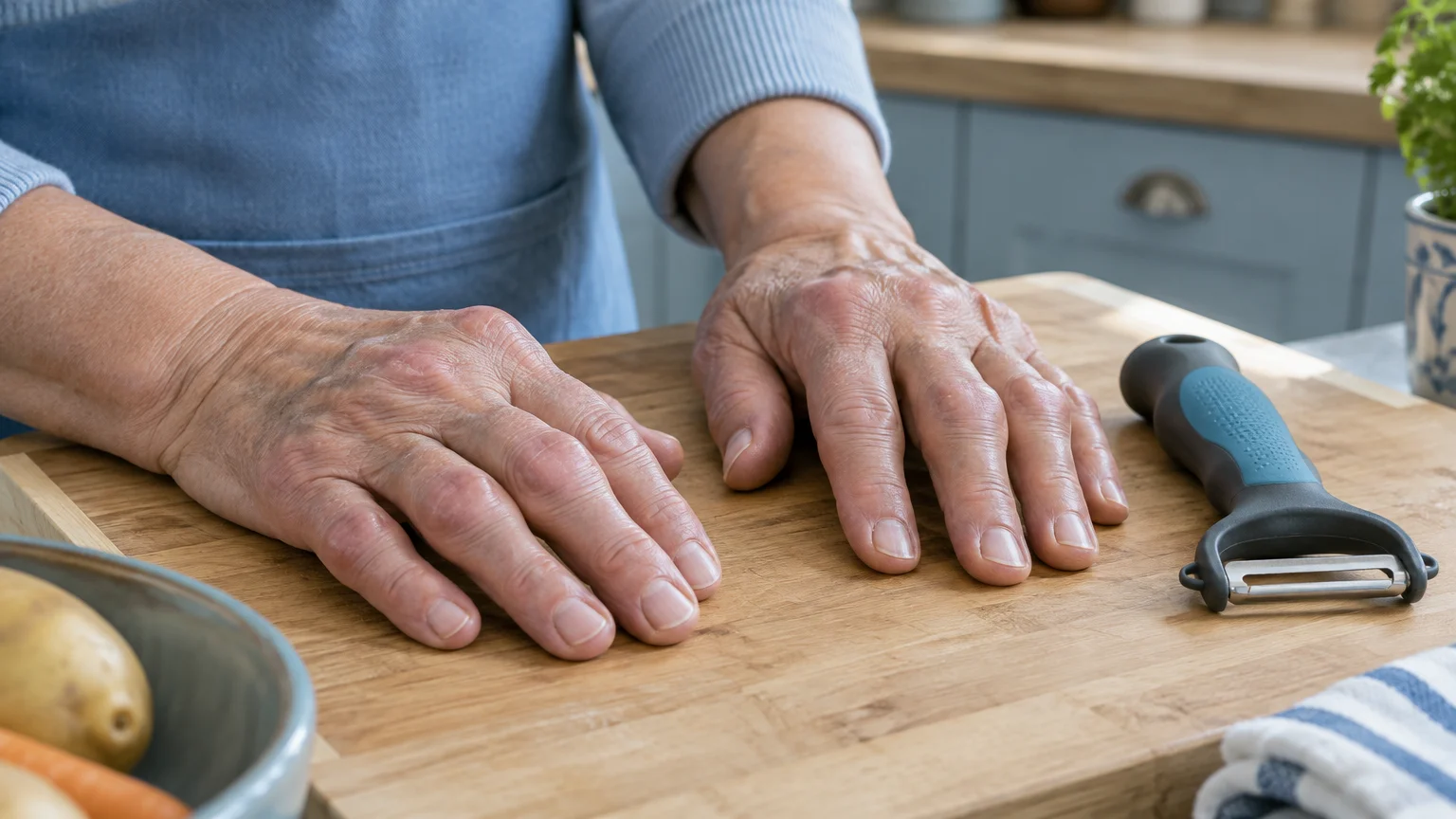
The Mechanics of Hand Arthritis in the Kitchen
Data from the Centers for Disease Control and Prevention shows that roughly 50 percent of U.S. adults aged 65 and older have doctor-diagnosed arthritis. That represents a significant portion of the 53 million American adults managing chronic joint stiffness.
Protecting your joints ensures you can continue cooking with confidence, whether preparing solitary meals or bringing a dish to a monthly neighborhood supper club.
Similar joint-sparing ergonomic strategies can also be applied outdoors when practicing low-strain senior gardening.
Osteoarthritis frequently targets the carpometacarpal joint at the base of your thumb. This joint absorbs excessive pressure whenever you twist a stubborn pickle jar or pry open a tuna can.
Rheumatoid arthritis attacks the synovial lining of finger knuckles, making lateral pinching motions agonizing. Forcing a tight grip aggravates inflammation and can accelerate permanent joint deformity over time.
Standard kitchen tasks rely heavily on static pinch grip strength. Opening a sealed vacuum jar requires up to 40 inch-pounds of torque, yet severe hand arthritis often reduces torque output below 15 inch-pounds.
Joint-protection principles show that larger joints must shoulder the workload whenever smaller joints fail. You should rely on forearm leverage, mechanical gear reductions, or wall-anchored brackets instead of bare fingertips.
- Distribute physical weight across the entire palm rather than relying on the index finger and thumb.
- Avoid prolonged static pinching that compresses the basal thumb joint.
- Use push-down levers rather than twisting dials to control kitchen appliances.
- Select tools that feature thick, contoured rubber grips to widen your functional grip diameter.
- Keep your wrist in a neutral, straight alignment during heavy slicing or opening chores.
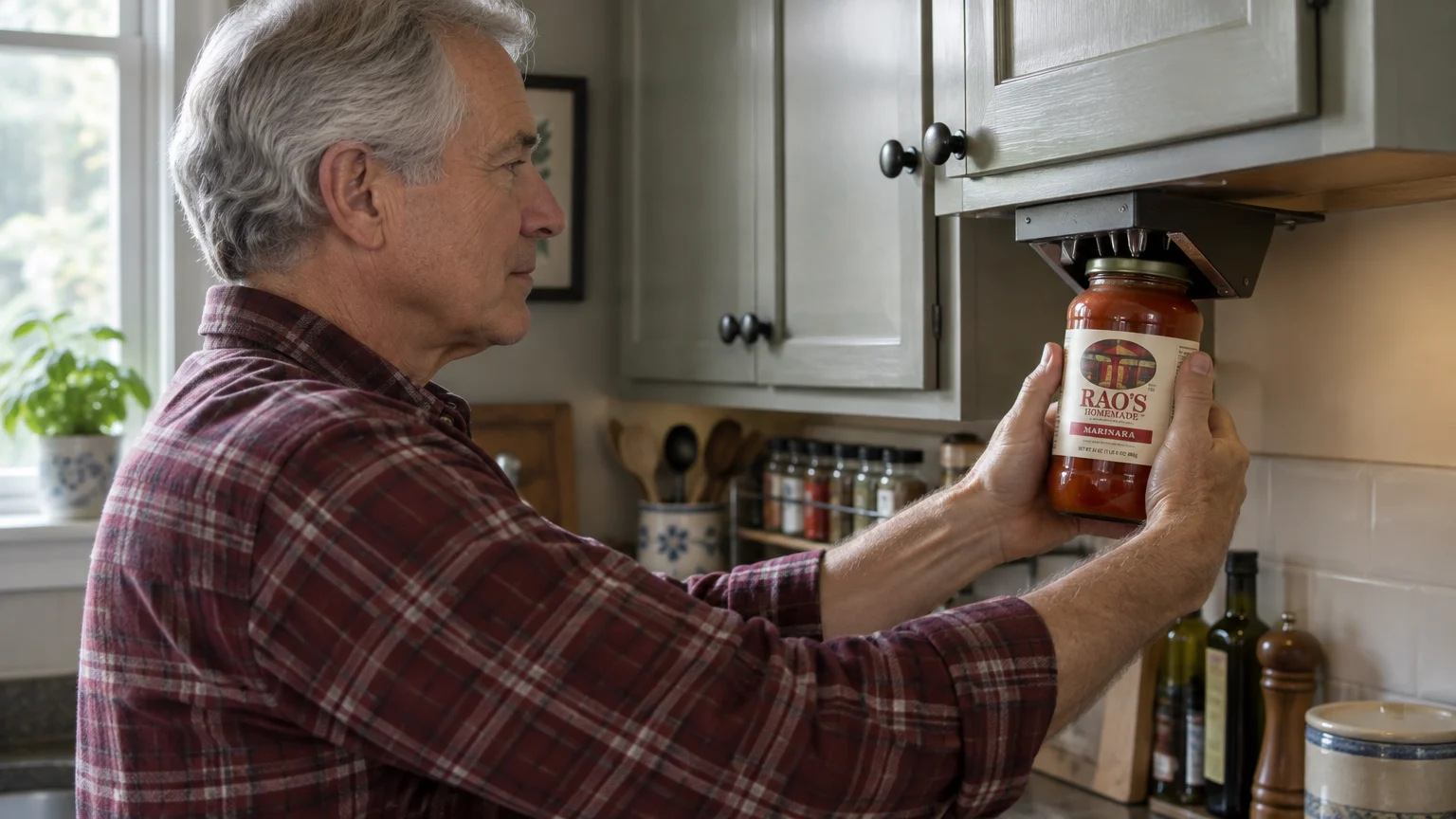
Under-Cabinet Jar Openers Versus Handheld Grippers
A manual adaptive jar opener arthritis tool should eliminate rotational stress on fingers. Handheld silicone cones and rubber strap wrenches cost between $7 and $15, but they still require a firm, two-handed squeeze.
Investing in durable, long-lasting aids protects your physical independence while cutting unnecessary retirement costs caused by discarded, unopenable groceries.
Securing heavy kitchen devices securely is just one aspect of conducting regular essential home safety checks throughout your residence.
If you lack sufficient squeeze strength, handheld grippers simply slip around the smooth glass jar lid. They demand bilateral hand tension that many people over 70 cannot generate comfortably.
Under-cabinet V-shaped jar openers solve this mechanical problem by anchoring the tool to your home. Units like the EZ Off or The Grip mount to the underside of upper kitchen cabinets using two or three screws.
These devices use dual metal carbon-steel teeth arranged in a narrowing V-channel. You slide the jar lid into the wedge until the teeth bite into the metal rim.
Because the cabinet holds the lid stationary, you hold the bottom of the jar with both palms. You turn the jar body using your larger forearm and shoulder muscles, eliminating direct finger strain.
- Locate an upper cabinet section directly above a clutter-free work surface.
- Fasten the V-shaped bracket to the cabinet underside using the included half-inch wood screws.
- Hold the sealed jar using both hands around the glass base.
- Push the jar lid straight into the teeth of the V-channel until it wedges firmly.
- Rotate the jar body counterclockwise with your arms while keeping your wrists rigid.
Push-button electric countertop jar openers offer another hands-free alternative for $25 to $45. Devices like the RoboTwist sit directly on top of the jar and clamp down automatically.
Electric models work well for standard mayonnaise and pickle jars. However, they require battery maintenance and will struggle on tall, narrow bottles or ultra-wide preserve containers.
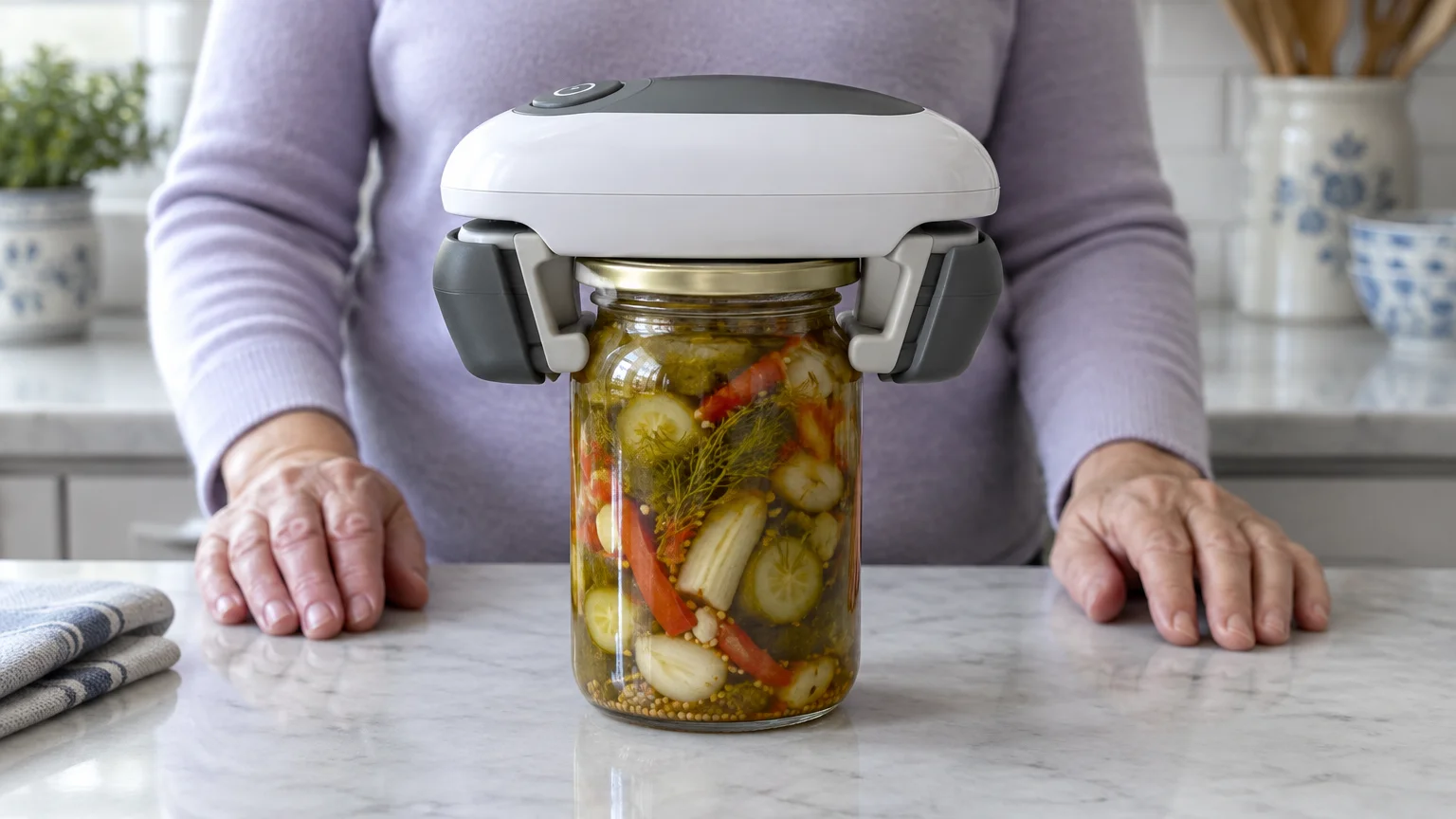
Comparing Adaptive Jar Opening Systems
Selecting the right opening tool depends on your measurable grip force, remaining counter footprint, and budget. The table below evaluates the primary adaptive options against physical strength requirements and space limitations.
Much like adopting senior-friendly tech throughout your living space, automated appliances eliminate unnecessary daily physical strain.
| Tool System | Required Grip Force | Counter Space Needed | Retail Price Range | Primary Joint Motion |
|---|---|---|---|---|
| Under-Cabinet V-Grip (e.g., EZ Off) | 0 lbs (Forearm push only) | 0 sq inches (Mounted overhead) | $12.00 – $20.00 | Shoulder and forearm rotation |
| Automatic Hands-Free (e.g., RoboTwist) | 0 lbs (Push-button start) | 25 sq inches (Storage footprint) | $28.00 – $42.00 | Index finger press |
| Multi-Lever Strap Wrench | 12–18 lbs (Manual squeeze) | 10 sq inches (Drawer storage) | $9.00 – $16.00 | Bilateral pinch and wrist twist |
| Silicone Dycem Non-Slip Pad | 15–22 lbs (Direct downward palm force) | 0 sq inches (Rolls into drawer) | $7.00 – $13.00 | Downward palm compression |
Under-cabinet units excel for small kitchens because they do not consume precious prep counters. They remain ready for immediate daily use without digging through drawers or replacing alkaline batteries.
If you live in a rental unit where cabinet drilling is restricted, choose an automatic push-button jar opener. Pair it with a non-slip silicone mat beneath the jar base to stop the container from spinning during motor activation.

Electric Can Openers for Tight Kitchen Counters
Manual rotary can openers torture arthritic fingers. Pincering the metal handles together requires sustained grip tension, while turning the small butterfly key grinds the thumb joint.
A dependable opener allows you to easily buy canned staples in bulk as part of smart grocery shopping strategies for retirees.
When purchasing small home appliances, be sure to take advantage of available senior discounts at major retailers to reduce out-of-pocket costs.
Upgrading to modern arthritis kitchen tools seniors rely on eliminates this repetitive strain entirely. Electric openers divide into two distinct formats: traditional tall countertop towers and compact, side-cutting walkaway models.
Countertop tower openers occupy 30 to 45 square inches of valuable surface area. In older modular homes or small senior apartments, counter space is often at an extreme premium.
Compact walkaway can openers like the Hamilton Beach Smooth Touch or cordless battery-operated units rest on top of the can. You touch a single large button, and internal gears pull the blade around the rim automatically.
Side-cutting mechanisms slice through the outside rim of the metal container rather than puncturing the top lid. This method leaves a smooth, dull rim that eliminates dangerous jagged metal edges.
- Select openers featuring broad push-down top paddles rather than small toggle switches.
- Look for side-cut models that leave dull edges to prevent cuts on thin, delicate senior skin.
- Prioritize units with strong magnetic lid holders so you do not have to pry the metal cover free manually.
- Check that the unit accommodates standard 15-ounce soup cans as well as heavy 28-ounce crushed tomato cans.
Cordless battery-operated can openers slip into a shallow kitchen drawer when not in use. They measure roughly 6 inches long and weigh less than 8 ounces, making them portable and discreet.
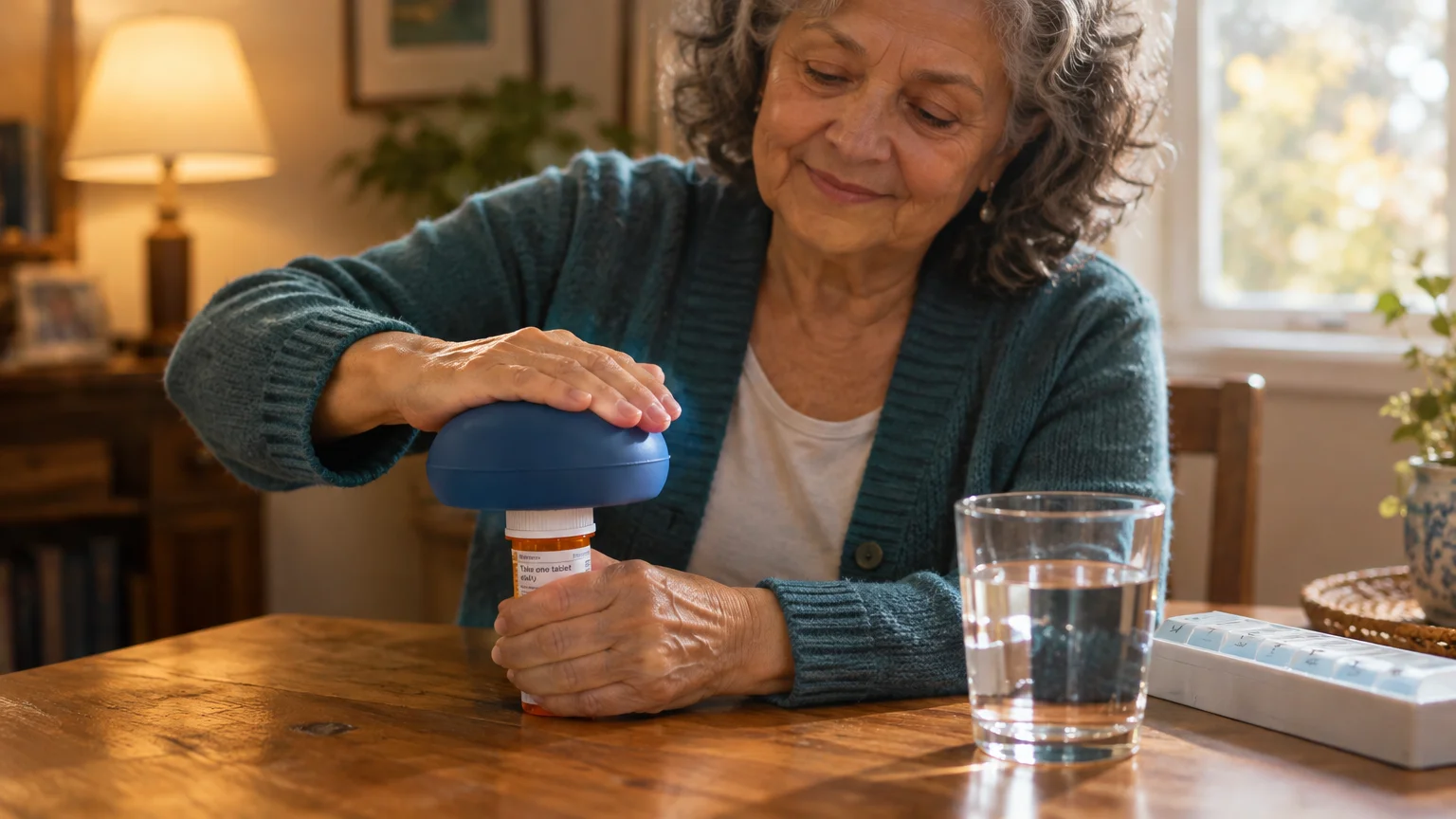
Managing Prescription Bottles and Daily Medication Caps
Managing multiple daily medications becomes difficult when child-resistant push-and-twist vials lock your joints. Pushing down while rotating a ribbed plastic cap requires complex multi-directional force that inflamed finger joints cannot sustain.
Many retirees invest in an external pill bottle opener weak hands can handle. These rubberized cap turners fit over standard bottle tops to multiply leverage and widen your grip circumference.
Push-down cap turners like the Dycem bottle opener feature a soft inner lining that grips cap ridges. You press down with your whole forearm and twist your torso to crack the safety seal.
You can also eliminate safety caps entirely under federal law. The Poison Prevention Packaging Act of 1970 (16 CFR Part 1700) protects your right to receive easy-open prescription packaging.
- Visit your retail or mail-order pharmacy counter in person or call your dispensing pharmacist.
- Request a non-child-resistant prescription packaging waiver under federal regulations.
- Sign the pharmacy blanket waiver form to document your permanent packaging preference.
- Confirm that subsequent refills arrive with reversible caps or simple snap-off plastic lids.
- Store all non-safety medication containers out of reach of visiting grandchildren or household pets.
For over-the-counter vitamins and bulk supplements, transfer pills into a weekly push-button pill organizer. Models featuring large spring-loaded release levers pop open with light pressure from a single finger.
Adaptive Cutlery and Food Preparation Tools
Dicing onions, slicing meat, and peeling root vegetables demand severe downward wrist pressure when using standard knives. Dull chef knives force you to lean into the blade, straining your wrists, elbows, and shoulders.
Using lightweight, high-leverage prep tools makes it much simpler to chop ingredients when tackling nutritious meal prep for one.
Equipping yourself with ergonomic utensils makes tackling easy retirement meal prep far less physically demanding.
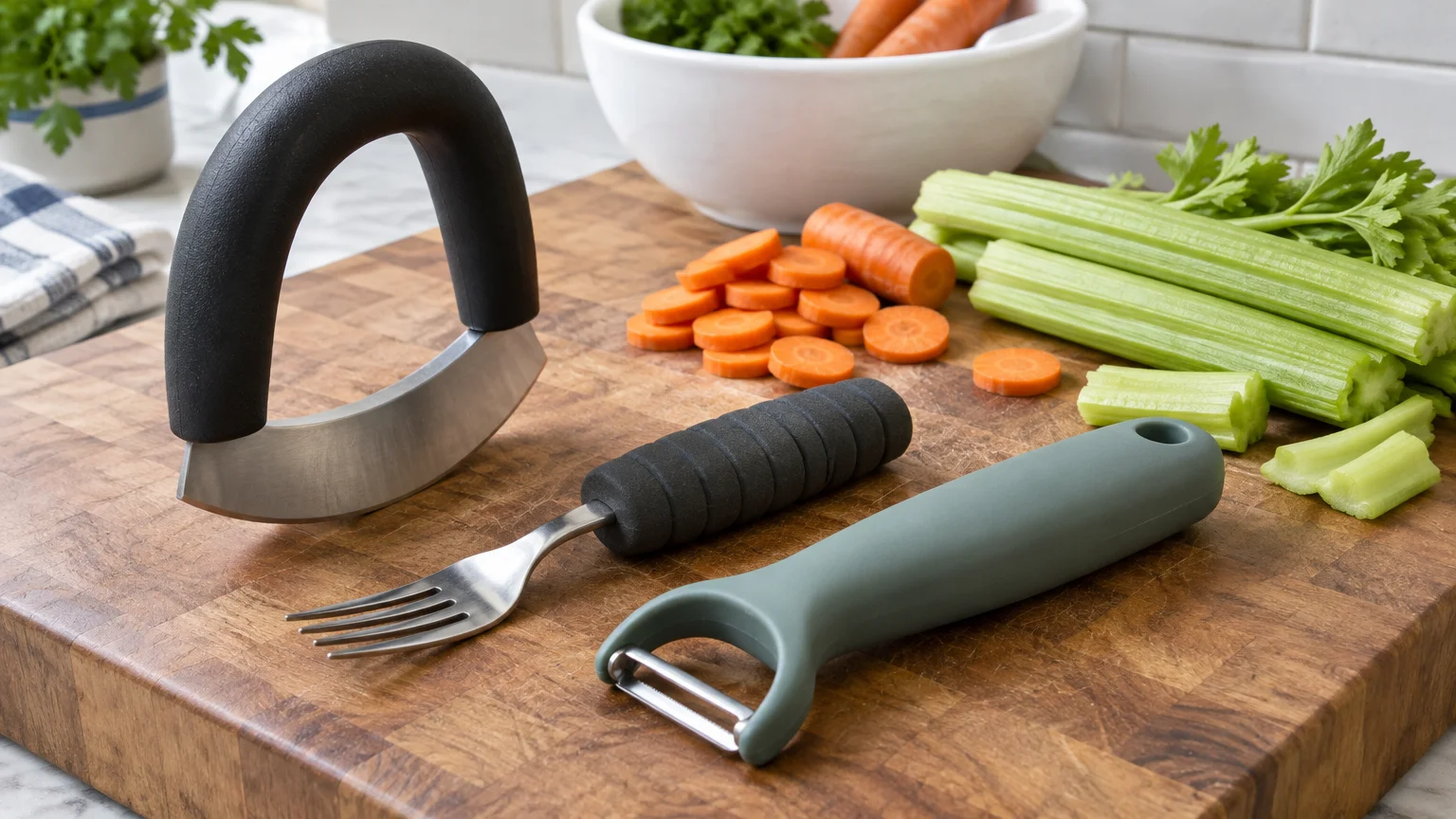
Ergonomic rocker knives replace horizontal sawing with a gentle vertical rocking motion. These knives feature an upright, vertical handle positioned directly above a curved semicircular blade.
You push down using upper-body weight, letting the blade roll across vegetables and cooked proteins. The vertical grip keeps your wrist locked in a straight, neutral posture throughout food prep.
Built-up cutlery sets provide immediate relief during meals. Utensils with thick rubber handles—measuring 1.25 to 1.5 inches in diameter—reduce the grip closure required to hold a fork or spoon.
Look for products recognized by independent evaluation programs. The Arthritis Foundation operates the Ease of Use Certified program, which tests products with usability experts to confirm they require minimal joint torque.
- Slide cylindrical foam tubing over existing vegetable peelers, toothbrushes, and spoons to expand their handles cheaply.
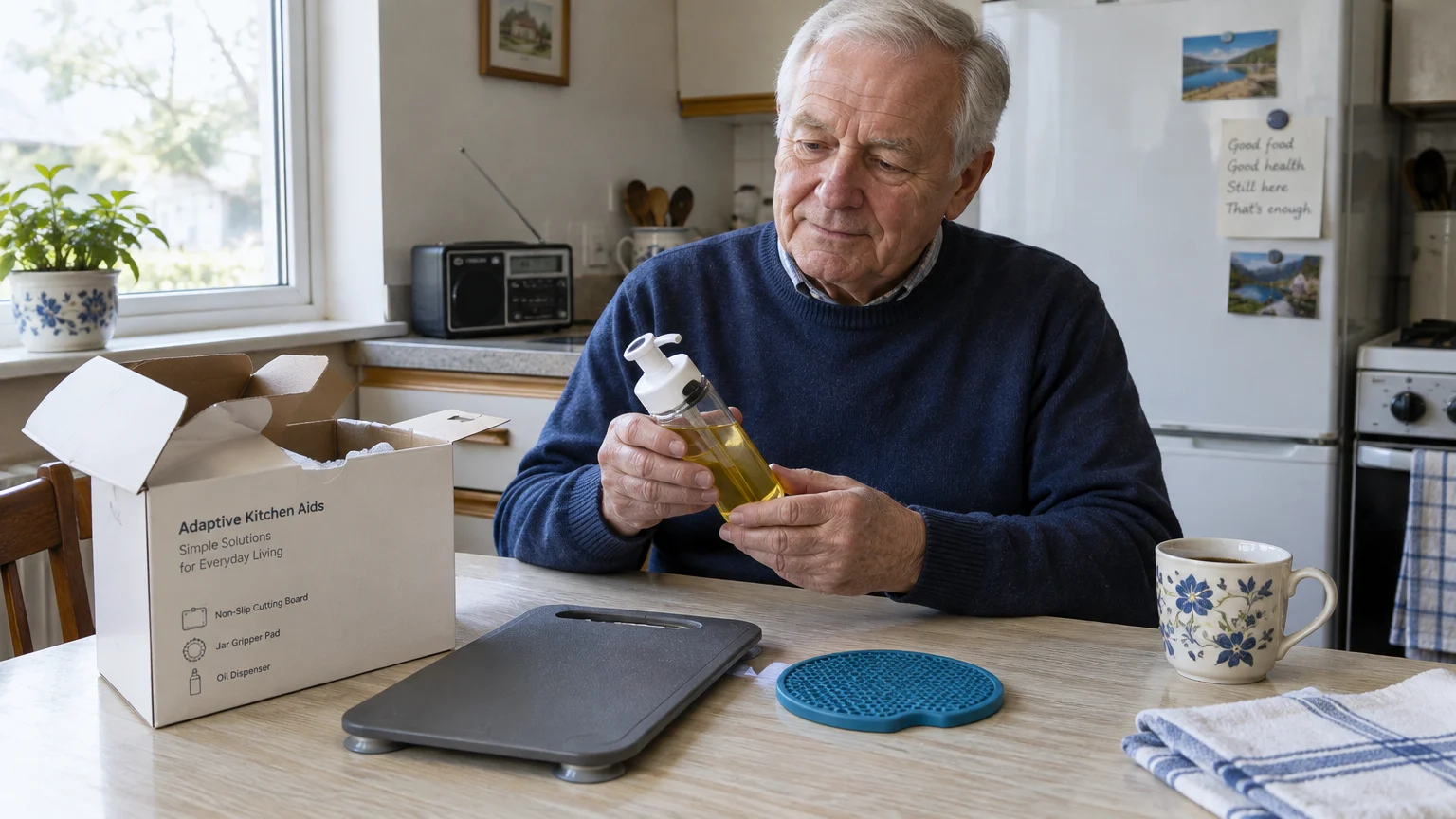
- Use a silicone Dycem non-slip mat beneath cutting boards to stop them from sliding across slick laminate counters.
- Invest in a stainless-steel rocker knife with an ergonomic T-handle for effortless single-handed dicing.
- Replace stiff hand graters with tabletop rotary drum graters operated by a large turning crank.
Lightweight plastic or bamboo cutting boards with integrated corner guards also secure food items. Corner barriers keep bread slices or halved apples from sliding away while you cut.
A Worked Budget and Setup Scenario for Fixed-Income Kitchens
Consider Margaret, a 72-year-old retiree managing osteoarthritis in both thumbs on a fixed monthly Social Security benefit of $1,840. She lives in a senior apartment with a 65-square-foot kitchen featuring just 24 linear inches of open counter space.
Margaret set an out-of-pocket setup budget of $85.00 to upgrade her kitchen safely without sacrificing monthly grocery funds. She needed tools that preserved counter space and eliminated thumb pinching.
First, she purchased an EZ Off under-cabinet jar opener for $14.95. Mounting the 7.2-inch triangular bracket beneath her upper cabinet took 12 minutes and consumed exactly zero inches of counter space.
Second, she selected a Hamilton Beach Smooth Touch walkaway electric can opener for $29.99. It measures 5.1 by 4.8 inches, leaving over 19 inches of usable counter prep space beside her sink.
Third, she purchased an 8-by-14-inch non-slip silicone preparation mat for $11.50. This mat anchors mixing bowls, cutting boards, and smooth pill bottles securely.
Fourth, she bought a seven-day push-button medication dispenser with spring-loaded release tabs for $10.20. She then signed a federal blanket waiver at her pharmacy to receive snap-caps at no additional charge ($0.00).
Margaret spent a total of $66.64 out of her $85.00 budget, keeping $18.36 in reserve. Her new setup eliminates all thumb-pinching torque while keeping her limited countertops clean and clear.
How to Pay for Daily Living Aids on a Budget
Paying for adaptive tools can strain a strict monthly retirement budget. Navigating available insurance programs and community benefits ensures you do not spend unnecessary cash out of pocket.
Original Medicare Part B does not cover adaptive kitchen utensils or jar openers. Under statutory rules outlined at Medicare.gov, the federal program classifies kitchen aids as convenience items rather than medically necessary Durable Medical Equipment.
However, many private Medicare Advantage (Part C) plans provide quarterly Over-the-Counter allowances. These benefits deposit between $25 and $100 per quarter onto a pre-funded card for health products and daily living aids.
You can also use Health Savings Accounts (HSAs) or Flexible Spending Accounts (FSAs) to buy specialized eating and cooking equipment. Your primary care physician may need to write a simple Letter of Medical Necessity detailing your joint diagnosis.
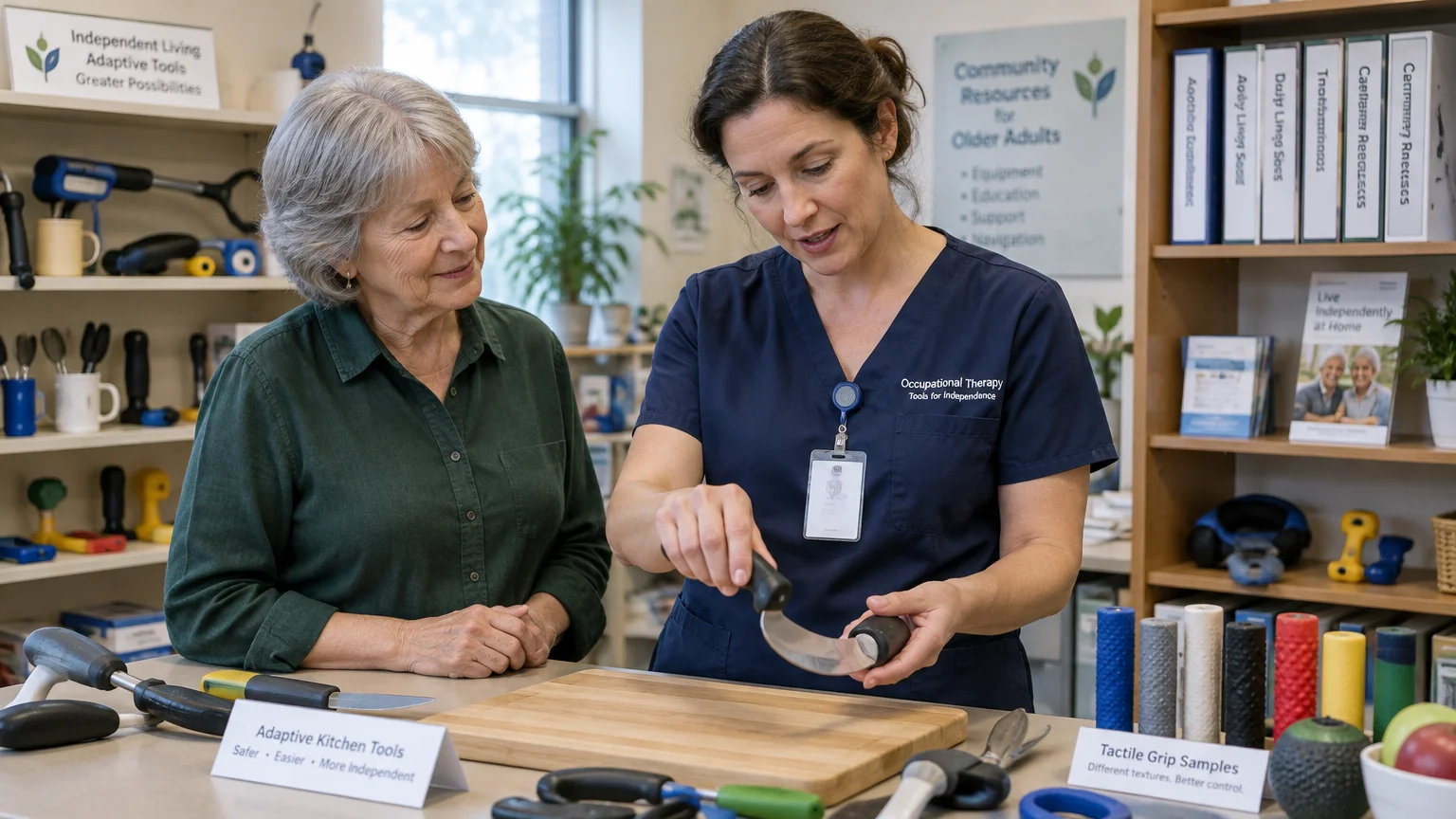
Local community resources can connect you with assistive device loan closets. You can consult the Eldercare Locator to find your local Area Agency on Aging, which often distributes assistive aids to low-income seniors.
Educational articles and independent home modification guides published by AARP also provide checklists for arranging accessible kitchens safely. Reviewing these options prevents costly missteps before ordering new hardware.
- Check your Medicare Advantage member portal to see if adaptive kitchen utensils appear in your OTC catalog.
- Contact your local Area Agency on Aging to locate community assistive technology lending closets.
- Ask your occupational therapist for a formal Letter of Medical Necessity before submitting FSA or HSA claims.
- Compare retail prices across medical supply outlets and regular department stores to avoid inflated specialty markups.
Frequently Asked Questions
Does Medicare pay for adaptive kitchen tools?
Original Medicare Part B does not pay for adaptive kitchen tools, classifying them as non-covered convenience items rather than durable medical equipment. However, many Medicare Advantage plans offer quarterly over-the-counter allowances that cover daily living aids.
How do under-cabinet jar openers work without slipping?
Under-cabinet openers use dual carbon-steel teeth arranged in a narrowing V-channel beneath an upper cabinet. Sliding the jar forward forces the teeth to bite into the metal lid, letting you turn the jar using both arms.
Can my local pharmacy legally give me non-childproof pill bottles?
Under the federal Poison Prevention Packaging Act of 1970, adult patients can request easy-open packaging. You can sign a blanket waiver at your pharmacy so all future prescription refills arrive with snap-off caps.
What is the difference between top-cut and side-cut electric can openers?
Top-cut openers drop a cutting wheel through the upper lid, leaving sharp edges and often dropping the metal lid into your food. Side-cut openers slice through the outer seam, producing a dull, touchable edge that prevents cuts.
Are silicone jar grippers effective for severe arthritis?
Silicone grippers improve surface traction, but they still require users to exert significant downward pressure and rotational twisting force. For severe arthritis, under-cabinet mounted openers or electric push-button units offer far better joint protection.
Disclaimer: This article is for informational purposes only. Benefits, programs, and regulations can change.
We encourage readers to verify current information with official government sources and consult with qualified professionals for personalized advice.



1 Comment