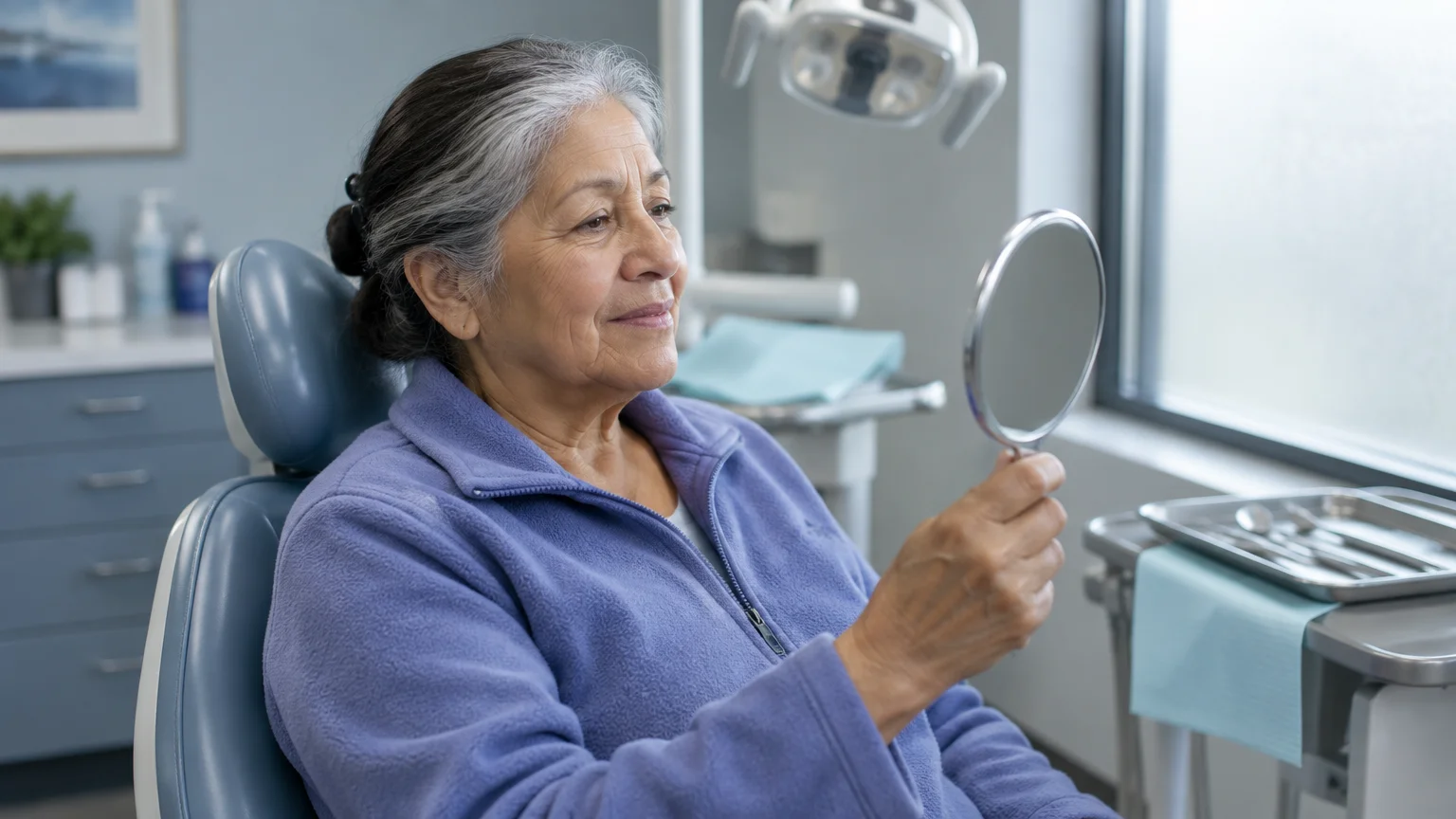
If you are 72, living on a modest Social Security check, and suffering from damaged teeth, private dentures costing $1,500 to $4,000 are out of reach. Original Medicare offers no routine dental benefits to help you pay for extractions or dentures.
While you may earn slightly too much for Medicaid, volunteer networks cover full lab-fabricated dentures at zero cost. Your approval hinges entirely on how you document non-covered medical expenses during the coordinator screening.
The Donated Dental Services program provides this comprehensive restorative treatment through thousands of volunteer dentists across the country.
In this guide10 sections
- What Is the Donated Dental Services Program?
- Core Eligibility Requirements for Seniors
- Income Limits and the Medicaid Coverage Gap
- What Dental Treatments Are Covered vs. Excluded
- The Step-by-Step Application and Intake Process
- State Waiting Lists, Freezes, and Managing Delays
- Worked Financial Example: A 72-Year-Old Senior’s DDS Journey
- Comparing Senior Dental Care Options
- Alternative Community Resources When Waitlists Are Closed
- Frequently Asked Questions
What Is the Donated Dental Services Program?
Dental Lifeline Network established the Donated Dental Services (DDS) program in 1985 to treat individuals with severe dental needs. It operates across all 50 states as a specialized charitable healthcare bridge.
Rather than operating out of mobile vans or temporary field clinics, DDS connects patients directly with established private practices. You receive treatment in a standard dental office from a licensed dental professional.
Volunteer dentists perform comprehensive restorative care in their own operatories during regular business hours. They donate their professional time, surgical expertise, and clinical supplies without billing the patient.
Since its founding, the program has delivered more than $500 million in donated treatment to over 170,000 vulnerable individuals across America. It represents the largest charitable dental network in the country.
The national network relies on approximately 12,000 to 15,000 volunteer dentists and more than 3,300 commercial dental laboratories. These partners coordinate care to resolve long-standing oral neglect.
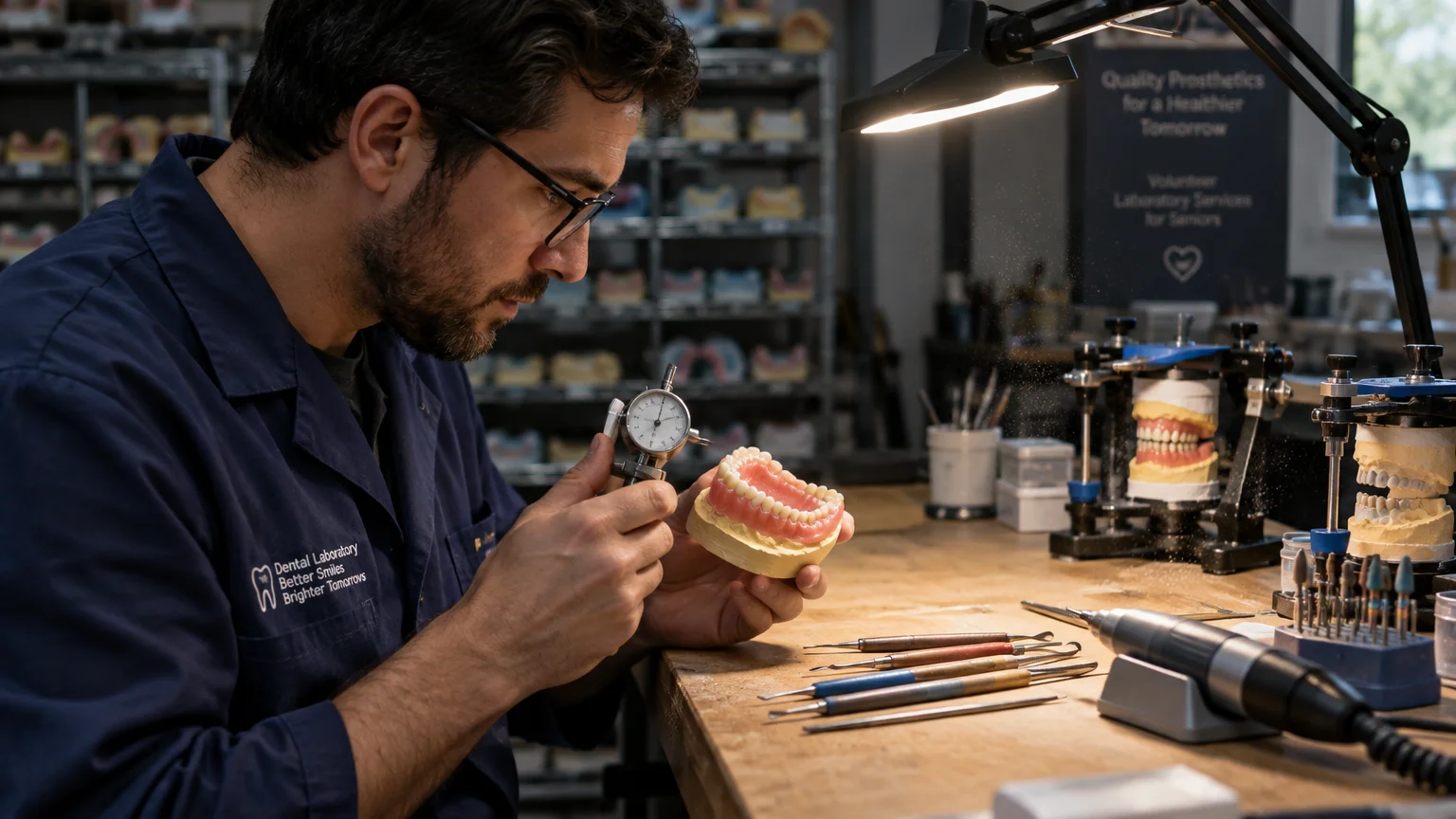
Commercial dental laboratories participate by custom-fabricating crowns, bridges, and removable dentures completely free of charge. This laboratory partnership makes free prosthetic rehabilitation possible for low-income seniors.
Core Eligibility Requirements for Seniors
Program rules ensure that donated clinical hours benefit individuals who have exhausted all other practical options. The program is not an open clinic for routine preventative cleanings.
Similarly, seniors needing vision assistance can explore free eye exams through EyeCare America program guidelines for supplemental specialty care.
DDS limits admission to applicants who fulfill at least one of three primary qualifying categories:
- Adults aged 65 or older who lack financial resources for essential dental treatment.
- Individuals with a permanent, documented physical or intellectual disability that limits employment.
- Medically fragile patients needing oral clearance prior to chemotherapy, cardiovascular surgery, or organ transplants.
In addition to meeting the age or medical threshold, you must prove severe financial need. You cannot possess private dental insurance or employer retiree dental coverage.
You must also show that you do not qualify for comprehensive dental benefits through state Medicaid. If your state offers Medicaid adult dental, you must exhaust those statutory benefits first.
According to the Centers for Disease Control and Prevention Oral Health Surveillance Report, 15.2% of Americans aged 65 and older have lost all permanent teeth. Untreated tooth decay remains widespread among seniors.
That tooth loss rate climbs to 29.8% among seniors living below the federal poverty line. This disparity highlights the acute need for volunteer dental care elderly programs nationwide.
Income Limits and the Medicaid Coverage Gap
Many older adults discover that their modest Social Security retirement checks leave them in a frustrating coverage blind spot. Earning $1,600 to $2,200 per month often places you just above state Medicaid limits.
Understanding how to pay for major dental work on a fixed income can help retirees evaluate their financial choices before charity care becomes necessary.
Routine dental care receives zero assistance from standard Medicare coverage. You cannot turn to your red, white, and blue card for dentures.
As outlined on Medicare.gov, Original Medicare Part A and Part B exclude routine cleanings, fillings, tooth extractions, and dentures. Coverage applies only to rare, medically integrated oral exams before major organ transplants.
Meanwhile, commercial dental coverage often proves useless for major reconstruction. Most individual dental insurance policies enforce 12-month waiting periods and strict annual payout caps of $1,000 to $1,500.
Fortunately, DDS intake coordinators do not rely on an inflexible federal poverty line when reviewing applications. They look at your entire monthly budget rather than gross earnings alone.
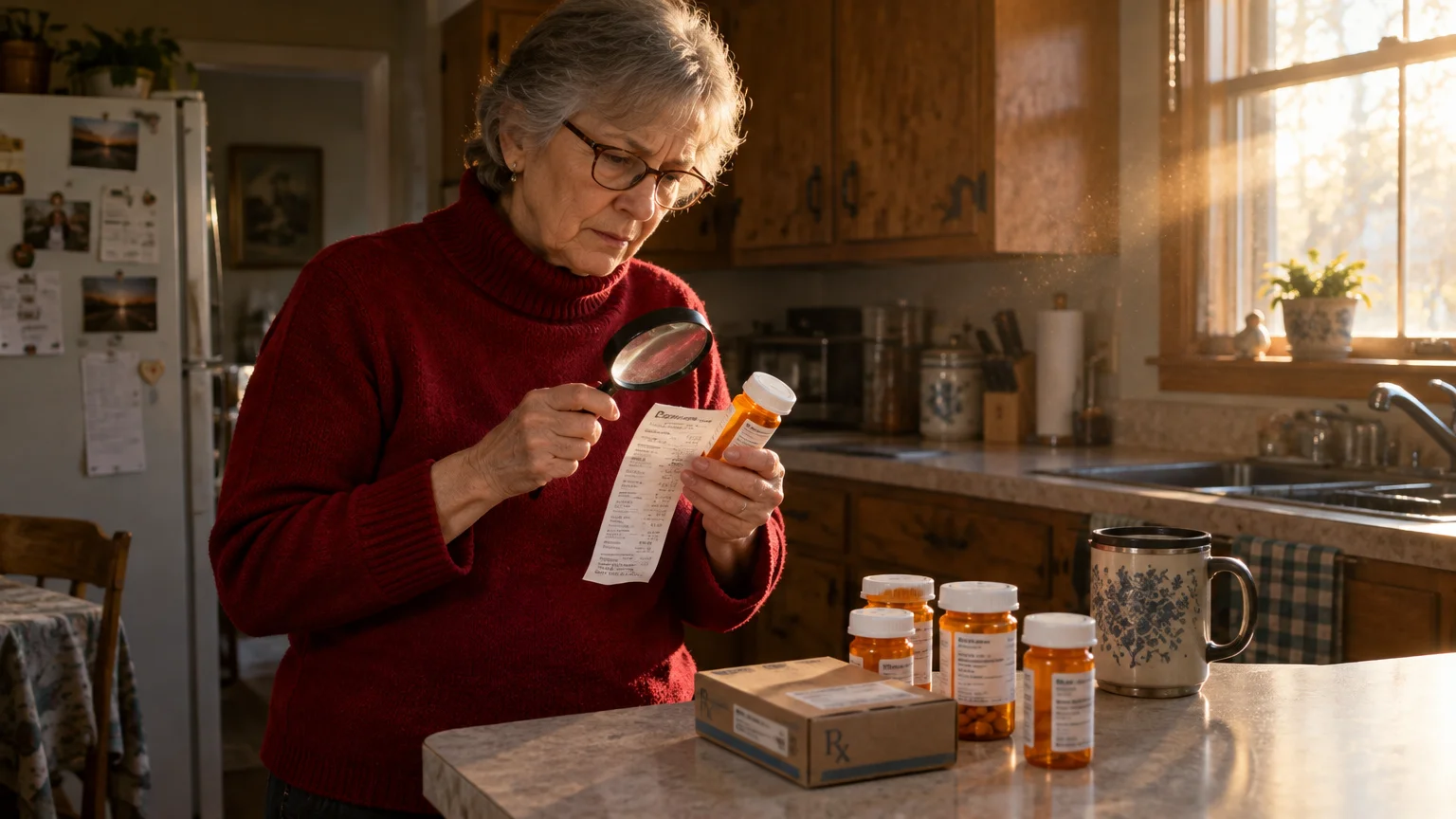
Coordinators calculate your realistic disposable income by subtracting recurring out-of-pocket costs from your monthly Social Security benefit. This policy allows seniors who are technically above Medicaid limits to qualify.
Coordinators consider several vital financial deductions during the initial intake review:
- Monthly Medicare Part B and Part D prescription drug premium deductions.
- Out-of-pocket co-payments for vital daily medications and specialized diabetes or cardiac supplies.
- Monthly housing expenses, including rent, mortgage payments, property taxes, and required heating utilities.
- Documented medical equipment expenses such as hearing aid payments, oxygen concentrators, and mobility gear.
What Dental Treatments Are Covered vs. Excluded
DDS aims to restore basic chewing ability, eliminate chronic oral infection, and provide durable dentures. Patients receive a tailored, comprehensive treatment plan rather than quick temporary patches.
While routine extractions are excluded, rare hospital-based trauma procedures show how dental accidents trigger Medicare Part A coverage for emergency stabilization.
Your assigned dentist performs all clinical steps needed to stabilize your mouth before taking impressions for dentures. This holistic approach ensures long-term oral stability.
The program covers an extensive scope of essential dental services:
- Comprehensive oral diagnostic evaluations and full-mouth diagnostic dental X-rays.
- Simple and complex surgical extractions for broken, decayed, or abscessed natural teeth.
- Composite and amalgam tooth fillings to eliminate active dental decay on salvageable teeth.
- Deep periodontal scaling and root planing to stabilize supporting gums and bone structure.
- Full upper and lower acrylic dentures fabricated by partner commercial dental laboratories.
- Cast-metal or resin partial dentures to replace multiple missing teeth while preserving remaining dentition.
- Professional denture relines, adjustments, and repairs for ill-fitting existing prosthetics.
Because volunteer dentist hours and lab donations are finite, the network excludes costly elective treatments. Understanding these exclusions prevents mismatched expectations during your clinical assessment.
Review these specific treatment exclusions before submitting your application materials:
- Dental implants, implant-retained overdentures, and associated surgical bone grafting procedures.
- Cosmetic veneers, tooth bonding, and cosmetic enamel whitening treatments.
- Orthodontic treatments, including adult clear aligners and traditional wire braces.
- Immediate emergency walk-in extractions for acute toothaches on an unscheduled basis.
The Step-by-Step Application and Intake Process
Applying for volunteer dental treatment requires precision and organized documentation. Submitting an incomplete form delays review by several months.
Consulting a state-specific benefits directory for seniors can help locate regional grants and local aging agency programs.
Follow these structured steps to complete your donated dental services application correctly:
- Visit the Dental Lifeline Network website to check if your specific state program is currently accepting new applications.
- Download and print your state-specific Donated Dental Services application form using black ink.
- Attach your annual Social Security statement or recent award letter showing your exact gross monthly income.
- Gather three months of bank statements and documentation showing your recurring monthly pharmacy and medical expenses.
- Mail or securely submit your completed application packet directly to the regional intake coordinator listed on the form.
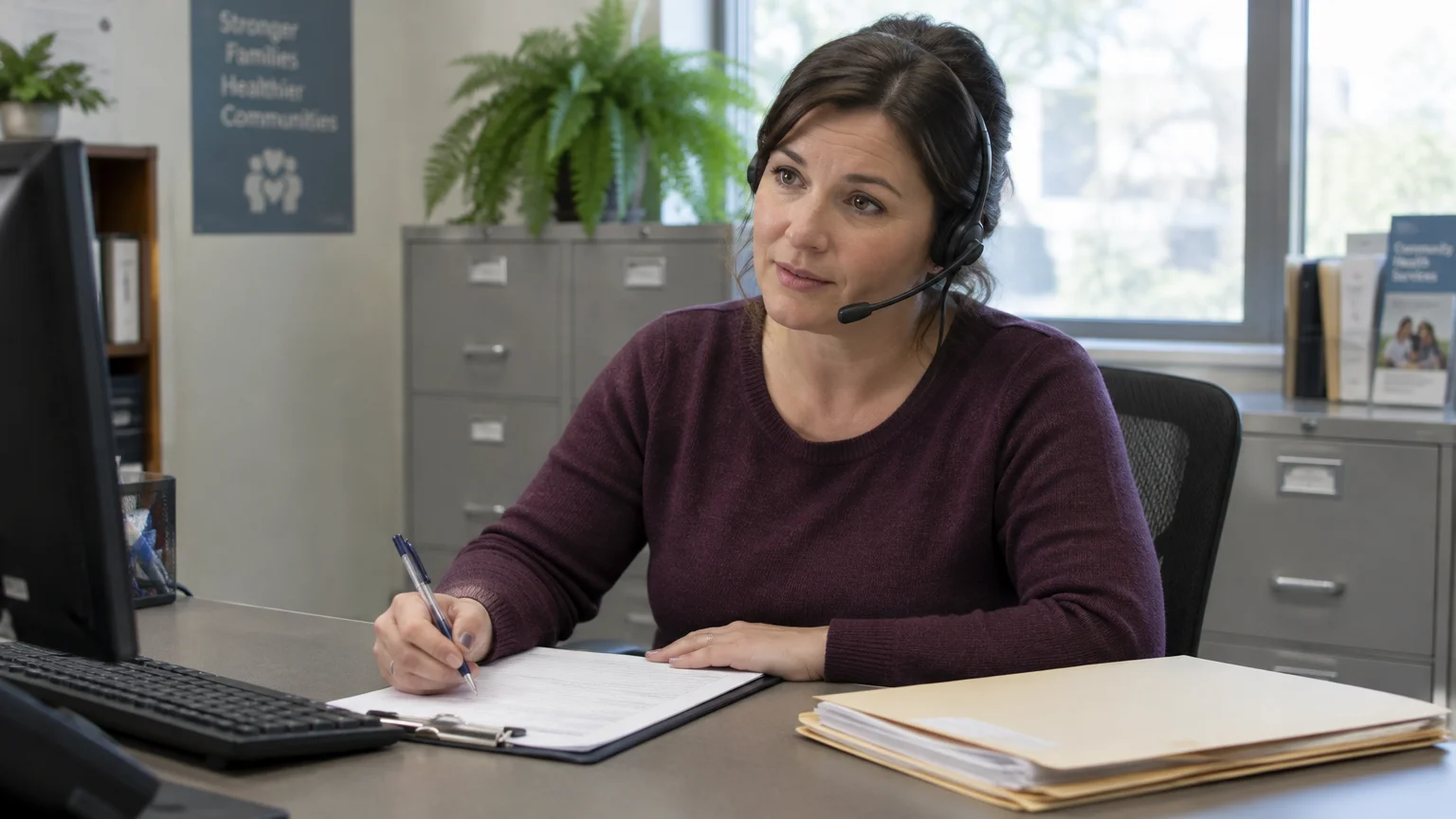
- Complete your detailed telephone screening interview when the coordinator calls to evaluate your financial need.
- Attend your initial dental consultation once a local participating private dentist accepts your file.
Be ready to discuss how missing or decayed teeth impact your ability to eat, chew, and manage proper nutrition. Personal descriptions of physical discomfort and chewing limitations help coordinators prioritize severe cases.
If you need help gathering documentation, the federal Eldercare Locator service connects seniors with local support specialists. Your Area Agency on Aging can help print forms and compile bank records.
Preparing these documents in advance prevents processing delays when your file reaches an intake coordinator:
- Proof of age, such as a state driver’s license, non-driver identification card, or birth certificate.
- Complete copies of your most recent federal income tax return, or a written verification of non-filing status.
- Itemized receipts for out-of-pocket medical bills and recurring pharmacy co-payments from the past 90 days.
- Written medical clearance letters from your primary physician if you have severe cardiovascular or metabolic conditions.
State Waiting Lists, Freezes, and Managing Delays
High demand and a limited supply of volunteer dentists create significant waitlists across many states. DDS is designed for comprehensive rehabilitation rather than emergency care.
If your local DDS program is temporarily frozen, looking into free healthcare clinics for seniors accessing affordable care offers an immediate alternative for basic evaluations.
Waiting times typically extend between six months and eighteen months from application approval to your first dentist appointment. Urban counties often experience longer backlogs than rural districts.
State coordinators frequently freeze new applications when existing waiting lists reach capacity for a given region. A freeze allows coordinators to match existing applicants before accepting new files.
When an application freeze occurs, the state page on the Dental Lifeline Network portal marks the program as temporarily closed. You must wait until the intake window reopens before submitting paperwork.
Practice these specific actions while your name remains on a regional waiting list:
- Answer all telephone calls from unfamiliar numbers, as intake coordinators often call from private administrative lines.
- Notify your coordinator immediately if your residential address, telephone number, or financial standing changes.
- Inform the intake office if your oral health worsens significantly, such as developing facial swelling or severe pain.
- Maintain gentle daily oral hygiene on your remaining natural teeth using fluoride toothpaste and warm water rinses.
Worked Financial Example: A 72-Year-Old Senior’s DDS Journey
Reviewing a concrete scenario illustrates how the financial intake screening functions in real life. Arthur is a 72-year-old retired clerk living in Franklin County, Ohio.
He suffers from eight broken teeth and severe chewing difficulty, but private dental care remains completely unaffordable. He cannot eat solid foods without experiencing gum pain.
A private practice quoted Arthur $3,650 to extract his remaining broken upper teeth and create a complete upper denture. That private quote represented nearly two full months of his total gross income.
Arthur receives $1,850 per month in Social Security benefits, totaling $22,200 per year. Because Ohio Medicaid set its individual monthly income cap at $1,751, Arthur was denied Medicaid benefits.
On April 14, Arthur submitted his DDS application, listing his fixed monthly income and non-discretionary expenses:
- Gross monthly Social Security income: $1,850.00.
- Medicare Part B standard monthly premium deduction: $174.70.
- Prescription drug co-pays for diabetes and hypertension: $155.00.
- Monthly apartment rent: $875.00.
- Essential utilities (electricity, water, heating gas): $185.00.
Arthur documented $1,389.70 in non-negotiable living and healthcare costs. This left him with only $460.30 each month for groceries and basic personal care.
The regional coordinator approved Arthur’s financial profile on June 18 and placed him on the Franklin County waiting list. On October 22, a participating private dentist in Columbus accepted Arthur’s file for volunteer care.
The dentist extracted Arthur’s six non-restorable upper teeth across two visits in November. A partner commercial dental laboratory fabricated a custom complete upper acrylic denture at zero cost to Arthur.
Arthur received his final denture fitting on January 15, saving $3,650 in out-of-pocket medical bills. He can now chew nutritious foods without discomfort or infection.
Comparing Senior Dental Care Options
If DDS is temporarily frozen in your area, evaluating other low-cost programs helps you make informed care choices. Different charitable and sliding-scale providers handle distinct types of dental work.
The table below compares common low-cost clinical paths available to low-income older adults:
| Program Name | Typical Patient Cost | Average Wait Time | Scope for Dentures | Eligibility Basis |
|---|---|---|---|---|
| Donated Dental Services (DDS) | $0 (100% donated care) | 6 to 18 months | Full and partial dentures included | Age 65+, disability, or medically fragile with financial need |
| Community Health Centers (FQHCs) | Sliding scale ($30–$250) | 2 to 8 weeks | Basic extractions; limited denture labs | Household income relative to Federal Poverty Guidelines |
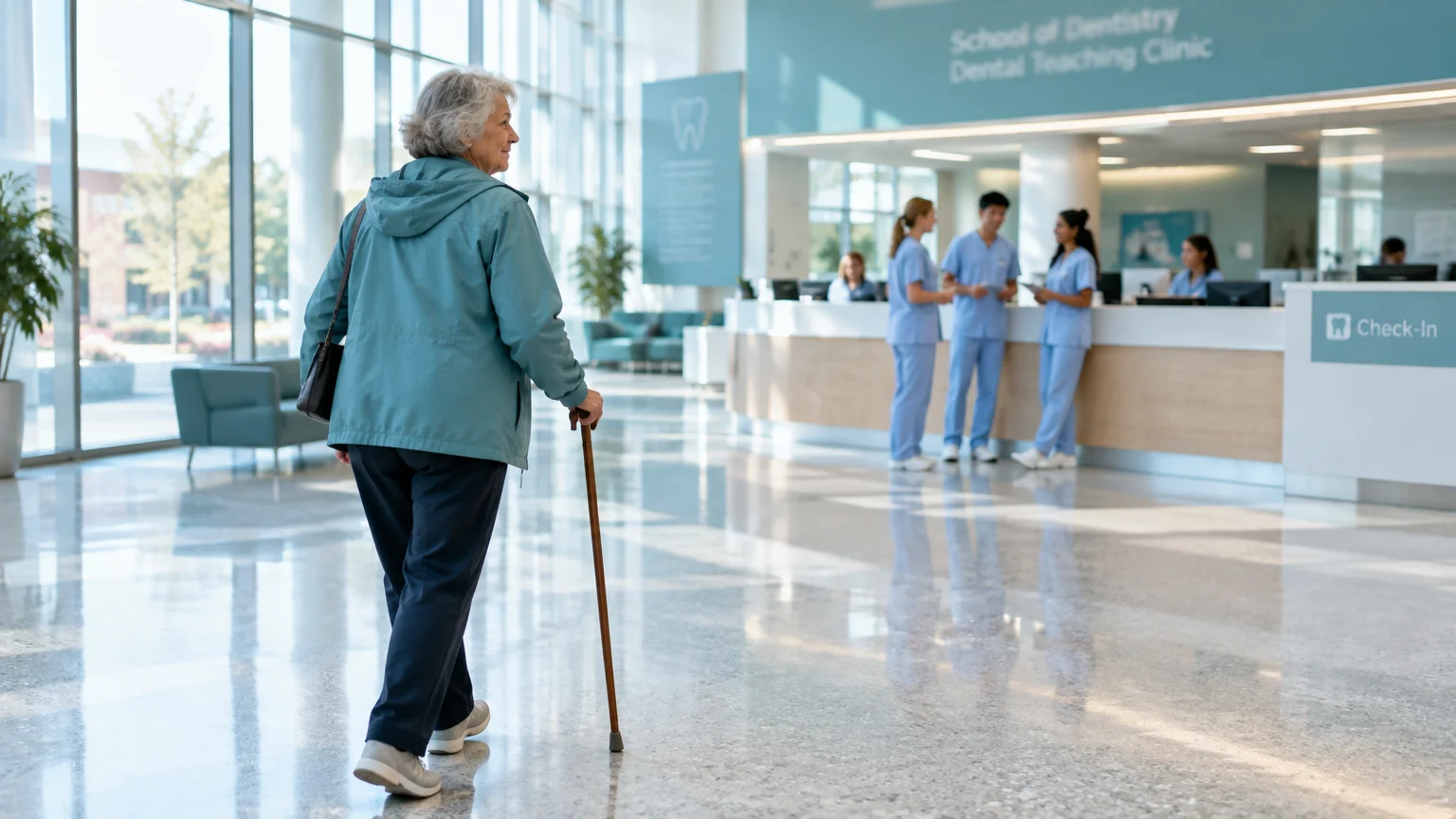
| University Dental Schools | 30% to 50% below private rates | 4 to 12 weeks | Full and partial dentures available | Open to general public; screening exam required |
| Dental Hygiene College Clinics | $10 to $30 flat fee | 1 to 3 weeks | Cleanings and exams only; no prosthetics | Open to general public seeking preventative care |
The federal benefits clearinghouse at Benefits.gov provides updated details on state-administered healthcare resources. You can check state-specific programs that subsidize oral healthcare.
Alternative Community Resources When Waitlists Are Closed
When DDS application portals temporarily shut down, seniors must explore immediate localized dental resources. You do not have to endure dental pain while waiting for state programs to reopen.
Consider these proven community alternatives for free dentures low income seniors and restorative care:
- Federally Qualified Health Centers (FQHCs) provide restorative care and sliding-fee scales based on household income.
- Accredited dental school clinics provide comprehensive care supervised by licensed faculty at 30% to 50% below standard fees.
- State Mission of Mercy (MOM) two-day free dental clinics provide free extractions and fillings on a first-come basis.
- County Area Agencies on Aging often distribute senior dental grant vouchers funded by local government programs.
- Dental hygiene training colleges offer dental examinations and thorough cleanings for nominal fees between $10 and $25.
Contacting multiple community clinics ensures you maintain oral health while awaiting comprehensive volunteer denture programs. Local public health departments can guide you toward emergency extraction vouchers when infections arise.
Frequently Asked Questions
Does Donated Dental Services cover dental implants for seniors?
No, the Donated Dental Services program does not cover dental implants or implant-supported prosthetics under any circumstances. The program focuses strictly on essential, cost-effective restorative treatments such as extractions, fillings, and traditional removable dentures.
Can I apply for Donated Dental Services if I have Medicare?
Yes, having Medicare Part A or Part B does not disqualify you from DDS. Because Original Medicare excludes routine dental cleanings, extractions, and dentures, coordinators evaluate you as an uninsured dental patient.
How long does the Donated Dental Services application process take?
Application processing and matching typically take between six months and eighteen months. Total turnaround time depends on the volunteer dentist capacity and laboratory availability in your specific home county.
What should I do if my state has frozen new DDS applications?
Check the Dental Lifeline Network portal on the first day of each month to see if application intake has reopened. In the meantime, contact local community health centers or dental schools for low-cost sliding-scale care.
Will I have to pay any laboratory fees for my dentures?
No, participating commercial dental laboratories fabricate complete and partial dentures at zero charge for approved DDS patients. The entire course of treatment, including extractions and prosthetic fittings, is completely free.
Disclaimer: This article is for informational purposes only. Benefits, programs, and regulations can change.
We encourage readers to verify current information with official government sources and consult with qualified professionals for personalized advice.