
Facing a $7,500 dental bill for crowns and extractions on a fixed Social Security income can derail your monthly budget. You do not have to drain your emergency savings or take on high-interest credit card debt to restore your teeth.
Original Medicare excludes restorative dentistry, and private insurance caps leave you paying thousands out of pocket. You can cut complex treatment costs by up to 70% by matching specific procedures to community health centers and university clinics.
This guide analyzes your real out-of-pocket costs dollar for dollar across every clinical alternative available to older adults.
In this guide9 sections
- Why Medicare Denies Major Dental Claims
- The Real Cost of Extensive Dental Procedures
- Three Primary Payment Paths Compared
- Federally Qualified Health Centers and Sliding-Fee Scales
- Accredited Dental School Clinics for Crowns and Implants
- Standalone Indemnity Dental Insurance and Coverage Limits
- Worked Example: Resolving a $7,500 Treatment Plan
- Charitable and Safety-Net Alternatives for Seniors
- Frequently Asked Questions

Why Medicare Denies Major Dental Claims
Federal law prohibits Original Medicare from paying for standard dental care. Section 1862(a)(12) of the Social Security Act excludes routine cleanings, fillings, tooth extractions, and dentures from Part A and Part B coverage.
Medicare Part B covers dental extractions only in rare, medically necessary situations. The Centers for Medicare & Medicaid Services permits billing when oral infections threaten open-heart surgery, organ transplants, or chemotherapy treatments.
You can review these specific exclusions directly on the Medicare.gov dental coverage rules page. Outside of those acute medical exceptions, Medicare will not pay to fix broken teeth or replace missing molars.
Many retirees switch to Medicare Advantage plans hoping to solve this problem. While roughly 98% of these commercial plans offer supplemental dental benefits, they impose strict annual payment limits.
Most Medicare Advantage plans cap annual dental payouts between $1,000 and $1,500. A single porcelain crown or surgical extraction can exhaust that allowance in a single appointment, leaving you with the remaining balance.

The Real Cost of Extensive Dental Procedures
Private dental practices set fees based on local commercial overhead and laboratory expenses. These standard market rates quickly overwhelm a fixed monthly retirement check.
Factoring these clinical fees into your broader retirement healthcare budget is essential to prevent sudden medical debt.
When you need multiple restorations, fees multiply rapidly across several appointments. Routine private clinic pricing across the United States typically falls within the following ranges:
- Single porcelain or ceramic crown: $1,100 to $1,800 per tooth
- Simple tooth extraction: $150 to $350 per tooth
- Surgical tooth extraction with bone preservation: $300 to $650 per tooth
- Single dental implant including post, abutment, and crown: $3,000 to $5,500
- Complete conventional dentures for both upper and lower arches: $2,000 to $4,200
- Implant-supported snap-in overdentures: $8,000 to $16,000 per arch
The average Social Security retirement benefit pays roughly $1,900 per month. A treatment plan requiring two extractions and three crowns costs around $7,500, equal to nearly four months of total income.
Paying these prices out of pocket forces many retirees to skip essential treatment. Postponing care leads to severe bone loss, systemic infections, and higher emergency medical bills later.

Three Primary Payment Paths Compared
To secure low cost dental fixed income options, you must compare alternatives using exact dollar figures. Different providers excel at specific types of dental procedures.
The following table compares the three most common low-cost clinical pathways available to retirees facing extensive restorative dental work.
| Provider Model | Pricing Structure | Average Crown Cost | Average Extraction Cost | Wait Times |
|---|---|---|---|---|
| Federally Qualified Health Centers (FQHCs) | Sliding-fee scale based on Federal Poverty Level | $250 – $600 (when offered) | $35 – $120 | 2 to 8 weeks |
| Accredited Dental School Clinics (CODA) | Fixed discounted fees (30% to 50% below market) | $550 – $850 | $75 – $160 | 4 to 12 weeks |
| Individual Indemnity Dental Insurance | Monthly premium with 50% coinsurance and caps | $600 – $900 copay (after deductible) | $75 – $175 copay | 6 to 12 month waiting period |
Community health centers provide the cheapest emergency extractions and infection control. However, university clinics offer the most reliable path for advanced laboratory work like crowns, bridges, and dental school clinic implants.
Commercial dental insurance policies look attractive initially but deliver limited savings on extensive treatment plans. High monthly premiums and low annual maximums often produce negative financial returns for older adults.

Federally Qualified Health Centers and Sliding-Fee Scales
Federally Qualified Health Centers receive federal grants under Section 330 of the Public Health Service Act. Federal law requires these clinics to treat all patients regardless of insurance coverage or ability to pay.
These community clinics use sliding-fee discount schedules tied directly to the federal poverty guidelines. If your annual household income falls below 200% of the poverty line, you receive steep statutory fee reductions.
Income verification requires specific financial documentation during intake. You should bring the following items to your initial appointment:
- Social Security monthly benefit statement (Form SSA-1099 or award letter)
- Most recent federal tax return or non-filing verification letter
- Bank statements from the past three consecutive months
- State-issued driver’s license or non-driver photo identification card
- Proof of residential address, such as a utility or telephone bill
Retirees earning under 100% of the poverty line often pay a nominal fee of $20 to $40 for an extraction. Those between 101% and 200% pay discounted percentages of standard clinic fees.
FQHCs excel at dental hygiene, periodontal scaling, and surgical extractions. Most community clinics do not manufacture complex crowns or place surgical implants due to limited in-house laboratory capacity.

Accredited Dental School Clinics for Crowns and Implants
The Commission on Dental Accreditation oversees roughly 70 accredited dental institutions across the United States. These academic centers train pre-doctoral dental students and post-graduate specialty residents.
Because students perform the physical procedures under the supervision of licensed dental professors, prices drop substantially. You generally pay 30% to 50% less than private clinic prices for advanced restorative procedures.
Academic institutions operate two distinct clinical levels for treating public patients. Selecting the right clinical tier determines your total out-of-pocket savings:
- Pre-doctoral student clinics: Dental students complete treatments to earn graduation credits at the lowest available prices, offering crowns for $550 to $700.
- Post-doctoral specialty clinics: Licensed dentists training in prosthodontics or oral surgery perform complex surgeries and dental school clinic implants at 25% to 35% discounts.
- Dental hygiene training programs: Community college hygiene clinics provide dental exams, full-mouth cleanings, and digital X-rays for flat fees between $25 and $60.
Academic clinics involve an appointment time trade-off. A crown prep that takes 60 minutes in private practice can take three hours at a dental school because licensed faculty must inspect every step.
If you have flexible retirement hours and need affordable dental work seniors can trust, dental schools provide exceptional clinical value. Their materials and lab fabrication meet rigorous university teaching standards.

Standalone Indemnity Dental Insurance and Coverage Limits
Purchasing individual dental insurance after age 65 rarely covers the cost of major oral surgery. Most standalone senior dental policies cost between $40 and $65 per month in premiums.
Much like budgeting for hearing aids outside Medicare, navigating routine dental exclusions requires looking beyond standard commercial policies.
These individual contracts usually enforce a standard 100-80-50 benefit structure. Preventive cleanings receive 100% coverage, simple fillings receive 80% coverage, and major restorative services receive only 50% coverage.
Insurance contracts also include protective clauses that limit payouts for new policyholders. Before purchasing an individual dental plan, examine these three restrictive policy provisions:
- Restorative waiting periods: Insurers make you pay premiums for 6 to 12 months before paying a penny toward crowns, bridges, or dentures.
- Strict annual benefit maximums: Most plans cap total payouts at $1,000 to $1,500 per calendar year, regardless of your total dental expenses.
- Missing tooth clauses: Policies frequently deny coverage for replacing any tooth extracted prior to your policy effective date.
Consider the real math of an insurance policy with a $1,200 annual cap. If you pay $600 in annual premiums plus a $100 deductible, the insurer covers a maximum of $500 in net dental expenses.
A dental savings discount card often outperforms traditional insurance for retirees. These discount programs charge a yearly fee of $100 to $180, enforce no waiting periods, and reduce private specialist fees by 20% to 50%.

Worked Example: Resolving a $7,500 Treatment Plan
Consider a 67-year-old retiree living on $2,100 per month in Social Security benefits ($25,200 annually). A private dentist presents a $7,500 treatment plan to eliminate pain and restore chewing function.
The private practice breakdown includes comprehensive digital X-rays ($250), full-mouth periodontal scaling ($950), two surgical extractions ($800), and three porcelain-fused-to-metal crowns ($5,500). The total estimate equals $7,500.
Instead of financing the entire bill through high-interest healthcare credit cards, the retiree splits the procedures across specialized low-cost facilities. Here is the exact clinical sequence:
- Diagnostic baseline and hygiene: The retiree visits a local community college hygiene clinic for full-mouth digital X-rays and deep scaling, paying a flat rate of $60.
- Infection control and extractions: The retiree transfers the digital X-rays to an FQHC community health center. Based on an income of $25,200, sliding-fee discounts reduce the two surgical extractions to $110 total.
- Laboratory restorations: The retiree takes the healed extraction records to an accredited university dental school clinic. Pre-doctoral dental students complete the three crowns for $650 each, totaling $1,950.
By unbundling the commercial treatment plan, the retiree pays a combined out-of-pocket cost of $2,120. This strategic approach saves $5,380 without sacrificing care quality.
The retiree spreads the $2,120 expense across four months of recovery time. This phased approach keeps out-of-pocket spending around $530 per month, preserving retirement savings.
Charitable and Safety-Net Alternatives for Seniors
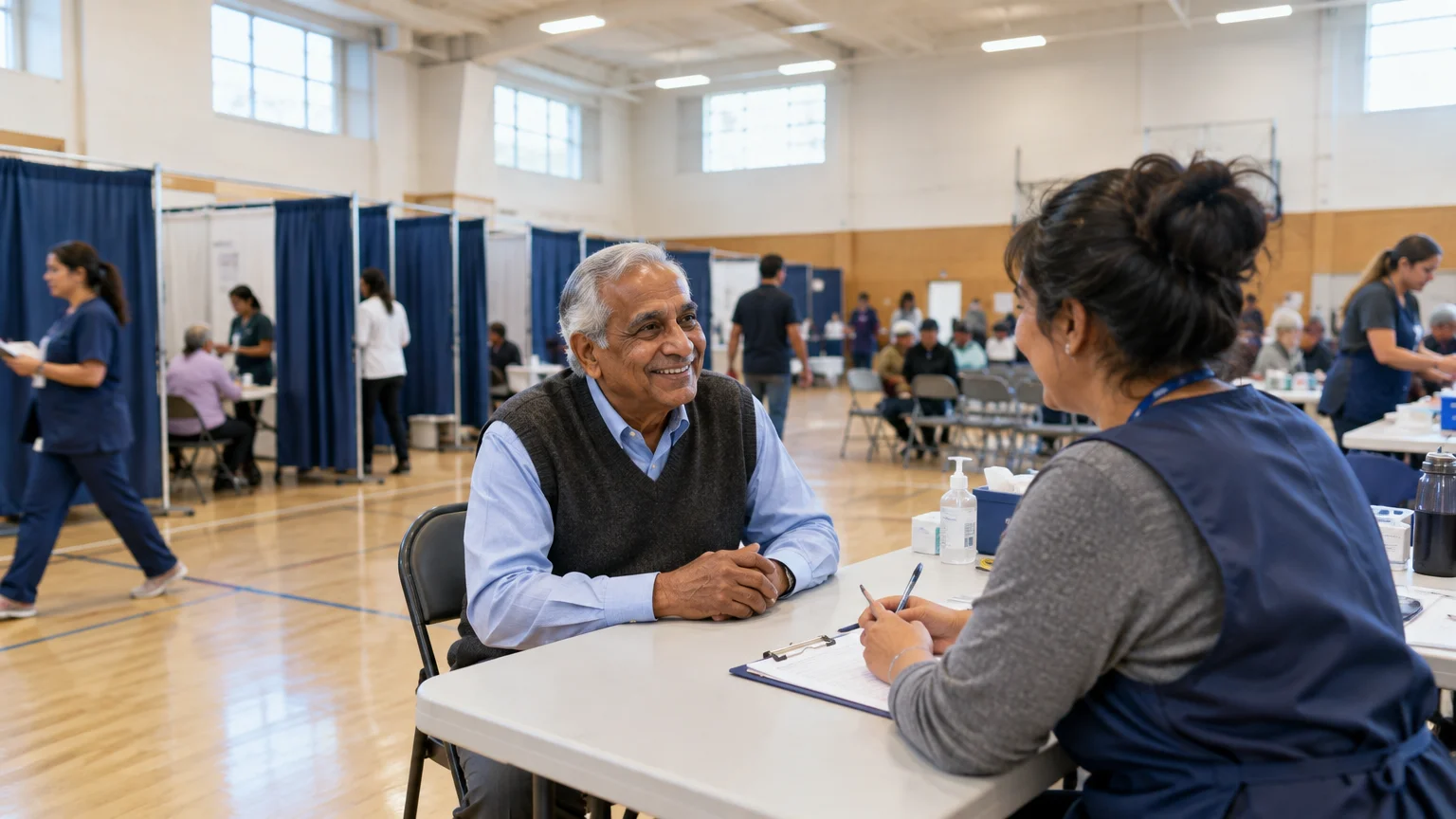
Older adults living near the federal poverty line with severe medical conditions can access specialized safety-net programs. These programs provide completely free or deeply subsidized treatment through philanthropic networks.
Qualifying seniors facing severe dental challenges can also seek help through volunteer dental care programs across the country.
You can discover nearby municipal grants and supplemental food or healthcare funds through the federal Benefits.gov resources portal. Combining local assistance programs helps protect your monthly retirement cash flow.
If you cannot afford sliding-scale fees or university clinic rates, contact these established dental safety-net programs:
- Dental Lifeline Network: The Donated Dental Services program coordinates 15,000 volunteer dentists nationwide to provide comprehensive treatment to adults age 65 and older who have no financial resources.
- Mission of Mercy: Regional non-profit groups host two-day weekend clinics offering free walk-in tooth extractions, basic fillings, and cleanings on a first-come, first-served basis.
- Program of All-Inclusive Care for the Elderly (PACE): Dually eligible Medicare and Medicaid beneficiaries who require nursing-home-level care receive comprehensive dental coverage with $0 copayments.
To locate your regional Area Agency on Aging and check local PACE availability, search the national Eldercare Locator directory. Local caseworkers can connect you directly with municipal dental emergency funds.
State branches of the Donated Dental Services program frequently close their waiting lists due to heavy demand. Submit your paperwork as soon as lists open to secure a position in line.
Frequently Asked Questions
Does Medicare Advantage cover dental implants?
Most Medicare Advantage plans exclude dental implants from coverage. The few plans that list implant benefits enforce strict annual caps between $1,000 and $2,000, leaving you responsible for remaining surgical costs.
How do I qualify for sliding-scale dental fees?
You qualify by providing proof of household income below 200% of the federal poverty guidelines to a federally funded clinic. Bring your Social Security 1099, recent tax return, and bank statements to prove eligibility.
Why are dental schools so much cheaper than private dentists?
Dental schools receive educational subsidies and prioritize clinical student training over corporate profit margins. You pay reduced laboratory and facility fees in exchange for longer, faculty-monitored appointment times.
Can I negotiate dental treatment costs with a private dentist?
Many private practices offer a 10% to 20% discount if you pay the full balance in cash upfront. Ask the clinic billing coordinator if they match the local Fair Health Consumer benchmark rates.
Disclaimer: This article is for informational purposes only. Benefits, programs, and regulations can change.
We encourage readers to verify current information with official government sources and consult with qualified professionals for personalized advice.



1 Comment