
If you slip on icy steps at age 70, fracture your jaw, and lose four front teeth, Medicare will not abandon you. Original Medicare covers inpatient jaw reconstruction and traumatic tooth extractions despite its strict ban on routine dental care.
This coverage activates only when severe facial trauma requires formal hospital inpatient admission. The hospital stay and bone repairs qualify for payment because stabilizing your fractured jaw represents an urgent medical necessity rather than basic dentistry.
Understanding how Medicare Part A and Part B divide these trauma bills protects your retirement savings from catastrophic out-of-pocket costs.
In this guide9 sections
- The Statutory Dental Exclusion and the Trauma Exception
- The Inpatient Admission Prerequisite for Part A
- Covered Trauma Procedures and Surgical Limits
- How Billing Splits Between Part A and Part B
- Worked Financial Example: Out-of-Pocket Costs for an Icy Fall
- Where Coverage Ends: The Post-Stabilization Rule
- CMS Billing Rules and the KX Modifier
- Five Action Steps After a Facial Injury
- Frequently Asked Questions

The Statutory Dental Exclusion and the Trauma Exception
Section 1862(a)(12) of the Social Security Act generally prohibits Medicare from paying for dental services. It bars coverage for routine cleanings, fillings, dentures, and standard extractions.
An exception exists when dental work directly supports the surgical treatment of a severe medical condition. Facial trauma from an accidental fall falls squarely under this clinical rule.
When you break your jawbone, your oral structures become part of a complex medical injury. Treating damaged facial bones takes priority over standard dental exclusions.
As outlined in the official guidelines published on Medicare.gov, Medicare covers dental services that are integral to broader, medically necessary treatments. Severe jaw fractures demand immediate orthopedic intervention.
Medicare classifies reduction of a shattered mandible as a medical procedure. Surgeons cannot align fractured bones properly if loose tooth roots remain trapped inside fracture lines.
Because these extractions are essential for bone healing, Medicare covers them under traumatic injury rules. You receive coverage because the hospital treats a broken skeleton, not a dental decay problem.

The Inpatient Admission Prerequisite for Part A
Medicare Part A does not pay for hospital care simply because you arrive in an ambulance. Part A activates only after a doctor writes a formal order admitting you as an inpatient.
Should billing errors occur regarding your hospital status or facility charges, reviewing a guide to filing a claim with Medicare will help you resolve payment discrepancies with CMS.
Understanding what Medicare Part A actually covers during inpatient hospital stays can clarify which facility expenses qualify for reimbursement.
If hospital staff place you in an emergency bed under observation status, Part A provides zero coverage. In that scenario, Medicare bills all outpatient facility charges under Part B instead.
This admission status makes a dramatic financial difference during trauma treatment. Inpatient status triggers Part A coverage for your hospital room, nursing care, meals, and operating facilities.
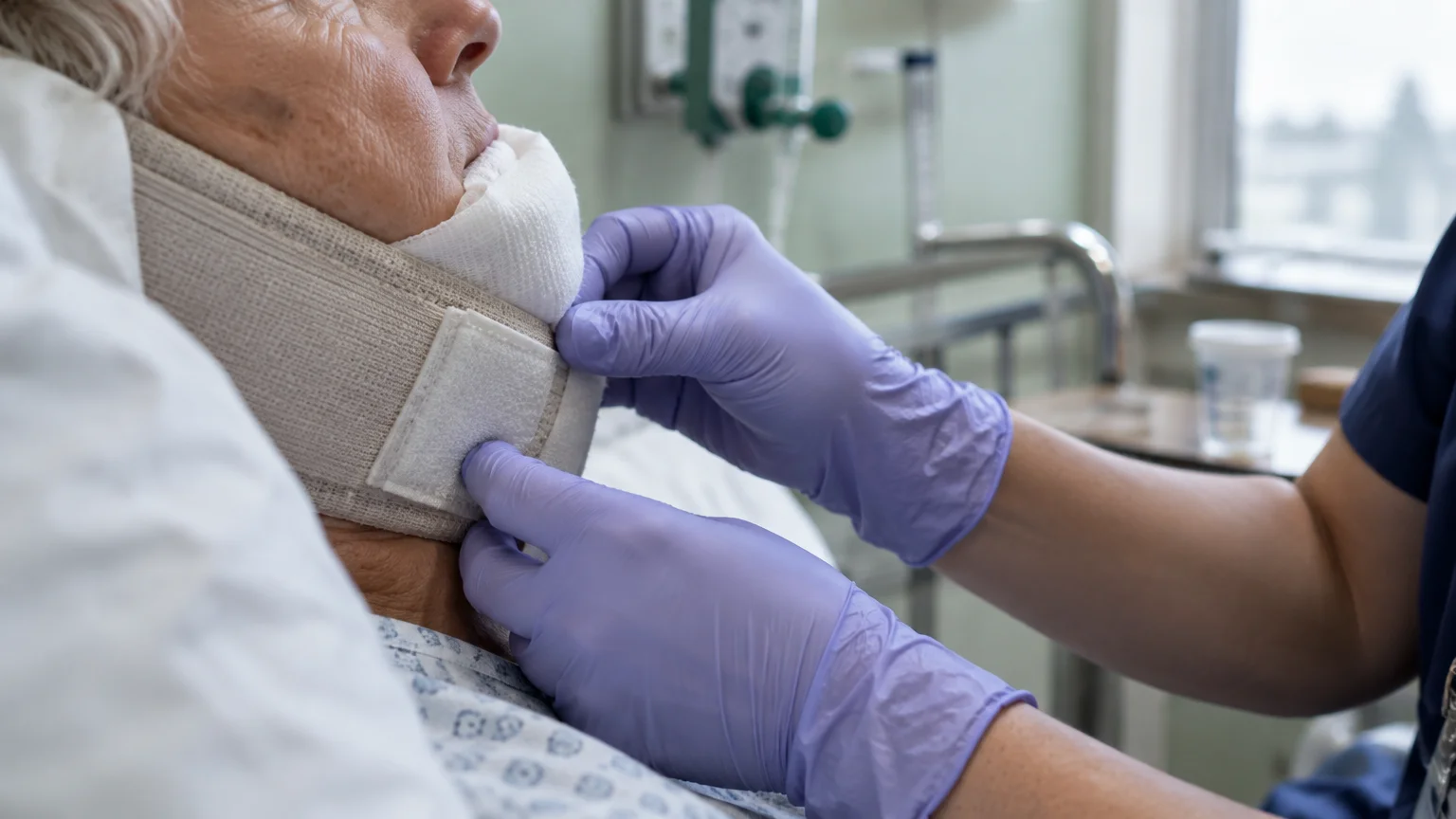
Surgeons must admit trauma patients when jaw repair requires complex general anesthesia and overnight post-surgical monitoring. Severe airway swelling from fractured jawbones often justifies formal inpatient admission.
To qualify for Part A facility payment during dental trauma, your medical case must meet specific clinical criteria:
- A licensed physician or oral maxillofacial surgeon must sign a formal inpatient admission order.
- The medical severity of your facial trauma must require round-the-clock inpatient nursing care.
- Your surgical procedure must require an acute care operating room rather than an outpatient chair.
- The hospital must expect your recovery to span at least two consecutive midnights.
Always ask the hospital billing office to confirm your exact admission status. Ensuring formal inpatient admission protects you from surprise outpatient facility deductibles.
Covered Trauma Procedures and Surgical Limits
Medicare emergency dental coverage accidental injury medicare rules cover only procedures required to stabilize facial bones. Federal regulations do not cover general cosmetic restoration.
For teeth broken outside the trauma line that require extensive non-covered restorative care, exploring how to pay for major dental work on a fixed income can help retirees manage unexpected out-of-pocket bills.
When a surgeon operates on a shattered jaw, Medicare approves procedures that restore skeletal alignment. The primary surgical goal is restoring structural bone integrity and preventing osteomyelitis.
Surgeons frequently perform several intertwined procedures during an inpatient trauma reconstruction. Medicare approves these specific interventions when treating acute trauma:
- Open reduction with internal fixation (ORIF) using titanium miniplates and surgical screws.
- Closed reduction of mandibular or maxillary fractures using intermaxillary fixation wires.
- Surgical placement of arch bars and dental splints to immobilize your bite during bone healing.
- Extraction of broken tooth roots embedded directly inside the jawbone fracture line.
- Debridement of damaged soft tissue and bone fragments within the traumatic wound bed.
Medicare covers these extractions because infected root fragments in a fracture line stop bone fusion. Removing them is an orthopedic necessity rather than an elective extraction.
However, Medicare draws a strict line against repairing teeth outside the direct fracture line. The program limits approval strictly to structures that interfere with bone stabilization.
Medicare excludes several common restorative services following an accident:
- Bonding or root canals for chipped teeth located away from the fracture site.
- Placement of temporary aesthetic crowns over broken front teeth.
- Periodontal cleanings performed during the hospital trauma stay.
- Routine restorative fillings for pre-existing dental cavities.

How Billing Splits Between Part A and Part B
Treating severe dental trauma in a hospital produces two distinct billing categories. Medicare splits these expenses between Part A hospital insurance and Part B medical insurance.
When reviewing your supplemental policy options, comparing Medigap vs. Medicare Advantage can highlight which insurance model offers better protection against high inpatient cost-sharing.
Medicare Part A covers the physical hospital building, the trauma room, and inpatient nursing care. It also pays for medications administered while admitted and surgical equipment used during operations.
Medicare Part B covers the individual doctors who treat your injuries. This includes your oral maxillofacial surgeon, anesthesiologist, surgical assistants, and diagnostic radiologists.
Understanding these distinct coverage parts helps you track your financial obligations. Each part carries separate deductibles and coinsurance rules under Original Medicare.
| Setting and Billing Category | Medicare Coverage Part | Patient Financial Liability (2026 Rates) | Eligible Surgical and Facility Services |
|---|---|---|---|
| Inpatient Trauma Admission | Part A | $1,736 deductible per benefit period ($0 coinsurance days 1–60) | Hospital bed, trauma nursing, surgical suite, acute medications |
| Inpatient Surgical Professional Fee | Part B | $283 annual deductible, plus 20% of approved charges | Oral surgeon operative fee, anesthesiologist, radiologist |
| Outpatient Observation Facility | Part B | 20% coinsurance for each individual outpatient hospital service | Emergency room bed, diagnostic CT scans, outpatient monitoring |
| Post-Trauma Dental Clinic | Excluded | 100% of all costs (Medicare pays $0) | Dental implants, abutments, porcelain crowns, bridges, dentures |
If you carry a Medicare Supplement plan, such as Medigap Plan G, your policy covers the Part A deductible. It also pays your 20% Part B coinsurance for the surgeon.
Without Medigap, you must pay both the Part A hospital deductible and all Part B coinsurance amounts out of pocket.
Worked Financial Example: Out-of-Pocket Costs for an Icy Fall
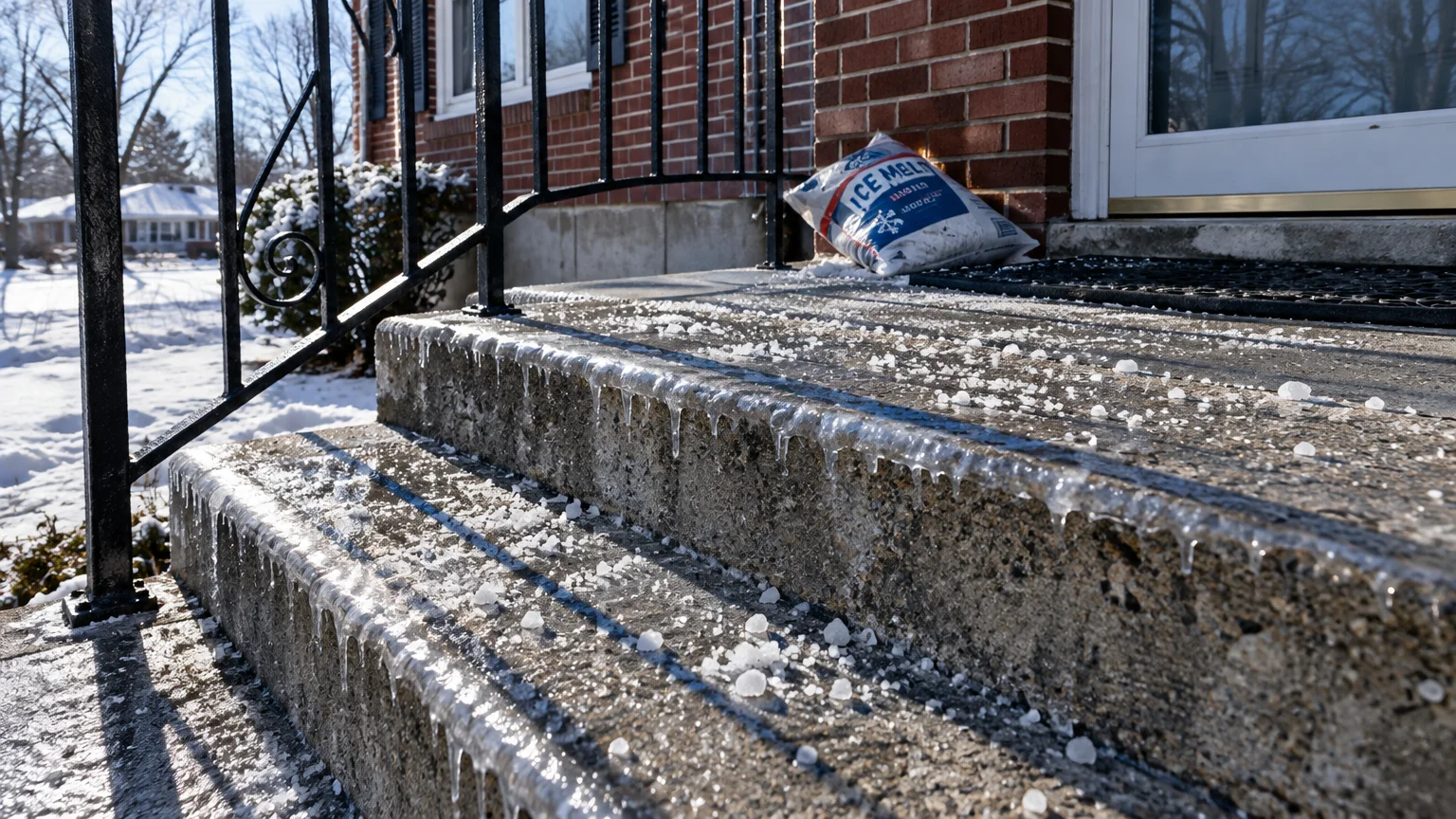
Consider the practical case of a 70-year-old retiree living on a fixed income of $2,400 per month. On January 15, 2026, you slip on icy concrete porch steps outside your home.
If subsequent dental replacement and prosthetics are not covered by Medicare, you might look into free dental care options through donated dental programs designed for eligible seniors.
In many severe accidents, understanding Medicare coverage for ambulance transport is equally important when moving between emergency departments and specialized trauma surgical centers.
The impact breaks your lower jaw in two places and knocks out four front teeth. Paramedics transport you to an acute trauma center, where an oral maxillofacial surgeon admits you as an inpatient.
You spend three days in the hospital. The surgical team installs titanium plates along your mandible and removes the broken root fragments from your lower jawbone.
The total billed charges from the hospital and surgical team reach $52,800. Here is how Original Medicare calculates your actual out-of-pocket costs using 2026 benefit rates:
Your hospital facility fee totals $44,500 under Part A. You owe the 2026 Medicare Part A inpatient deductible of $1,736, while Medicare pays the remaining $42,764.
Because your inpatient stay lasted only three days, your Part A coinsurance is $0. Days 1 through 60 require no daily coinsurance charges.
Your oral surgeon bills $4,800 under Part B, but Medicare establishes an approved rate of $2,600. Assuming you have not yet paid your 2026 Part B deductible, you pay the first $283.
This leaves $2,317 of the approved surgical fee. You pay the standard 20% Part B coinsurance on this remaining amount, which equals $463.40.
The hospital anesthesiologist bills an approved fee of $920 under Part B. You pay 20% coinsurance for anesthesia services, which comes to $184.00.
Adding these expenses together determines your final medical out-of-pocket total for the hospitalization:
- Medicare Part A Inpatient Deductible: $1,736.00
- Medicare Part B Annual Medical Deductible: $283.00
- Oral Surgeon 20% Part B Coinsurance: $463.40
- Anesthesiologist 20% Part B Coinsurance: $184.00
- Total Medically Necessary Treatment Cost: $2,666.40
Medicare covers over $49,000 of your emergency trauma care. However, your financial obligations change significantly once you leave the hospital.
Where Coverage Ends: The Post-Stabilization Rule
Medicare coverage terminates immediately once your jawbone heals and acute medical trauma ends. Federal law enforces a strict post-stabilization dental exclusion.
When restorative treatments are excluded, learning how to pay for major dental work on a fixed income can help you plan for bridges or implants without depleting your savings.
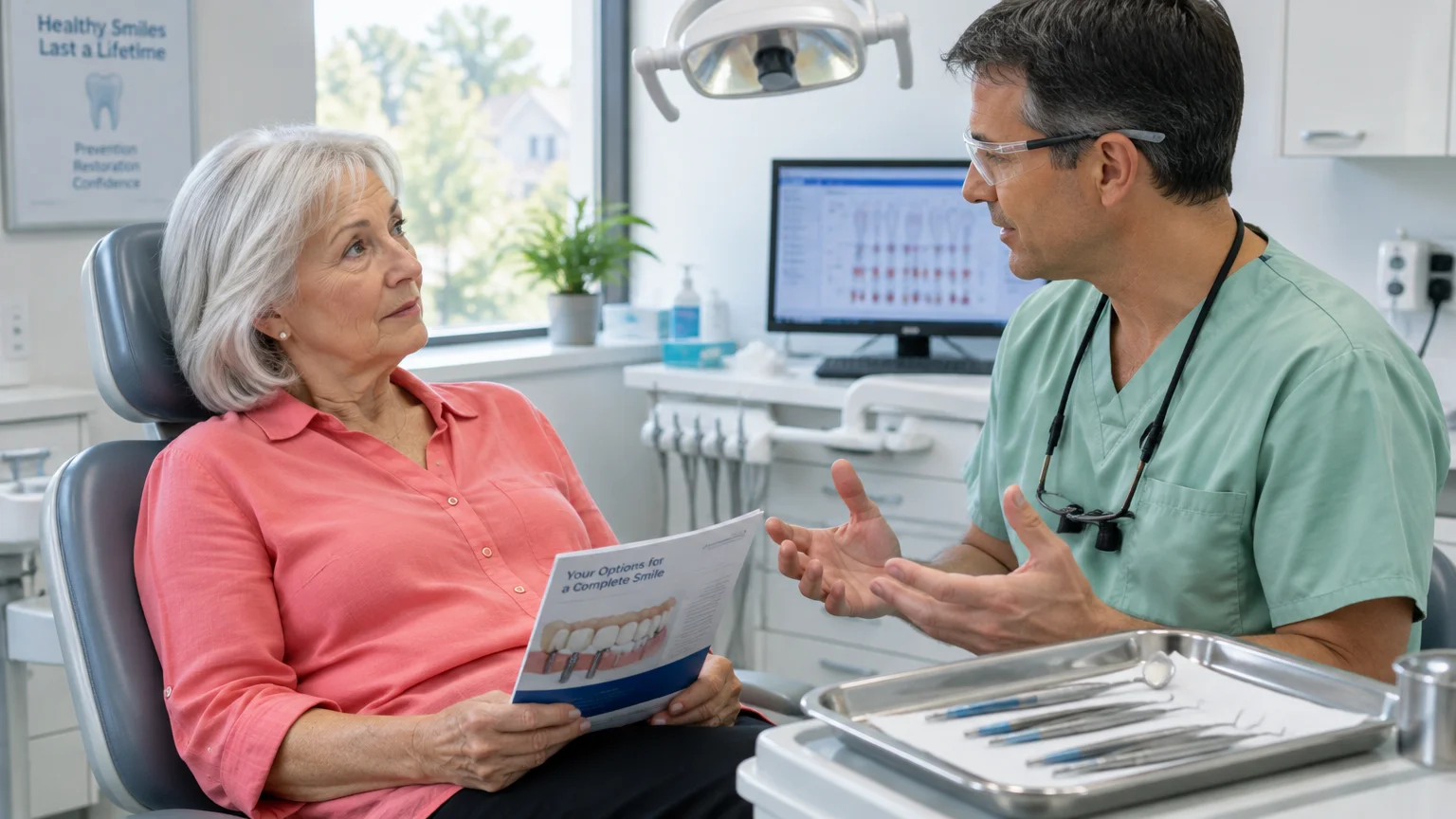
Medicare will not pay to replace the four teeth knocked out during your accident. The program considers replacement teeth, dental implants, and prosthetic bridges to be routine dental care.
Many retirees assume that because Medicare covered the traumatic extractions, it will replace the lost teeth. Unfortunately, Medicare regulations forbid payment for prosthetic tooth replacement.
Replacing four front teeth with titanium implants and a permanent bridge typically costs between $12,000 and $18,000. You must fund this restorative care yourself or explore private dental insurance.
If you face unexpected healthcare bills, consult the Consumer Financial Protection Bureau healthcare payment guides for strategies on managing medical debt.
Never assume your oral surgeon can bill tooth replacements to Medicare later. The program denies every dental implant claim submitted for cosmetic or masticatory restoration.
Understanding this boundary allows you to budget realistically for dental restorations. Your immediate hospital bills receive coverage, but long-term restorative dental work remains your financial responsibility.

CMS Billing Rules and the KX Modifier
Hospitals must follow rigid billing protocols when submitting claims for emergency dental trauma. Improperly submitted paperwork causes immediate claim rejections for beneficiaries.
The Centers for Medicare and Medicaid Services enforces strict coding updates for medically linked dental procedures. Providers must connect dental interventions directly to qualifying medical trauma diagnoses.
Surgeons must document qualifying International Classification of Diseases (ICD-10) trauma codes on every claim form. For example, codes like S02.6 identify specific fractures of the mandible.
In addition to medical diagnosis codes, billing specialists must append the KX modifier to dental procedure codes. The KX modifier legally certifies that the dental work was medically necessary.
To avoid Medicare claim denials, hospital billing packages must contain several clinical documents:
- Operative notes describing why tooth extractions were required to align the fractured jaw.
- Pre-operative and post-operative radiographic imaging showing the fracture line through tooth sockets.
- Primary ICD-10 medical trauma codes linked directly to each extracted tooth root.
- The official KX modifier appended to all dental surgical codes on the CMS-1500 or UB-04 form.
- The written inpatient admission order signed by the attending trauma surgeon.
If Medicare denies your claim, request an itemized billing review from the hospital ombudsman. Denials usually stem from a missing KX modifier rather than actual lack of coverage.

Five Action Steps After a Facial Injury
Taking decisive steps immediately after an accidental fall protects your physical health and your financial stability. Follow this sequence if you or a loved one suffers facial trauma:
- Request emergency transport to a Level 1 or Level 2 acute trauma center. These regional facilities maintain on-call oral and maxillofacial surgical teams trained in inpatient trauma admissions.
- Confirm your formal inpatient admission status directly with hospital patient registration. Ensure an attending doctor signs an inpatient admission order rather than placing you under outpatient observation.
- Instruct your oral surgeon to document that all extractions were necessary to repair the jaw fracture. Operative notes must state clearly that root fragments compromised bone stabilization.
- Verify that the hospital billing department includes qualifying ICD-10 trauma codes and the KX modifier. Review your Medicare Summary Notice to ensure the hospital billed Part A and Part B correctly.
- Locate community dental resources for long-term tooth replacement. Check the NCOA BenefitsCheckUp tool to find local grants, dental school clinics, and non-profit dental programs.
Frequently Asked Questions
Does Medicare Part A pay to replace teeth knocked out in an accident?
No, Medicare Part A does not pay for dental implants, bridges, or dentures. Part A covers only inpatient facility costs and surgical repairs needed to stabilize fractured facial bones.
What happens if the hospital keeps me under observation status?
If the hospital classifies you under observation status, Medicare Part A will not cover your stay. Medicare bills all hospital facility fees under Part B, leaving you responsible for multiple 20% coinsurance charges.
Does Medicare cover extractions if my jaw is bruised but not broken?
No, Medicare will not cover dental extractions if you only have soft tissue bruising. Federal law requires a severe medical diagnosis, such as a jaw fracture, to trigger medical coverage exceptions.
Can an oral surgeon bill Medicare Part B directly for trauma repair?
Yes, licensed oral and maxillofacial surgeons who enroll in Medicare can bill Part B for medically necessary trauma surgeries. Part B pays 80% of the approved rate after you meet your annual deductible.
Disclaimer: This article is for informational purposes only. Benefits, programs, and regulations can change.
We encourage readers to verify current information with official government sources and consult with qualified professionals for personalized advice.