

Original Medicare excludes routine hearing exams and hearing aids completely under federal law. If you have mild-to-moderate hearing loss at age 65, you face an immediate choice between retail clinics and over-the-counter options.
Uncovered medical and device fees represent some of the most common expenses that derail retirement plans if you do not plan ahead.
Traditional audiology clinics bundle hardware with multi-year service packages that push total bills beyond $3,500. You can save thousands of dollars by separating device costs from clinical service fees.
Pairing affordable devices with selective clinical testing delivers clear speech comprehension without exhausting your retirement savings. Understanding equipment limits and professional fees gives you full control over your budget.
In this guide8 sections
- The Medicare Coverage Gap: What Original Medicare and Part C Actually Pay
- Comparing Hardware: Cost of OTC Hearing Aids vs Prescription
- Acoustic Amplification Limits and Diagnostic Red Flags
- Demanding Transparency: Unbundled Hearing Aid Pricing Explained
- Five-Year Ownership Model: Budgeting for Hearing Aids on a Fixed Income
- Tax Deductions, HSAs, and Alternative Relief Programs
- Step-by-Step Buying Strategy for Cost-Conscious Retirees
- Frequently Asked Questions

The Medicare Coverage Gap: What Original Medicare and Part C Actually Pay
Many new retirees assume Medicare covers standard sensory care like vision, dental, and hearing. In reality, Section 1862(a)(7) of the Social Security Act explicitly prohibits Original Medicare from paying for hearing aids.
Learning effective strategies for maximizing your Medicare benefits can help you identify supplemental programs that offset other everyday healthcare expenses.
Much like navigating Medicare vision coverage rules, enrollees often face unexpected out-of-pocket limits for sensory health services.
Medicare Part B covers diagnostic hearing exams only under strict circumstances. A physician must order the test specifically to evaluate conditions like acoustic trauma, vertigo, or sudden asymmetrical hearing decline.
If you schedule a test simply to obtain a hearing aid fitting, you must pay the full bill yourself. Official policies outlined on Medicare.gov confirm that routine auditory screenings remain an out-of-pocket expense.
Medicare Advantage plans frequently market supplemental hearing allowances to attract new enrollees. These commercial Part C programs rarely provide unlimited or comprehensive hardware coverage.
A typical Medicare Advantage benefit caps reimbursements between $500 and $2,000 every one to three years. Many plans also require you to order restricted hardware tiers through contracted third-party corporate networks.
You can identify the real value of your Medicare Advantage hearing rider by examining four specific rules:
- Annual allowance maximums per ear versus lifetime maximums per pair.
- Mandatory copayment tiers that charge $700 to $1,500 per ear for basic hardware.
- Restricted networks that prevent you from working with independent local clinics.
- Replacement cycle waiting periods, which typically enforce a 36-month delay between upgrades.
Relying solely on Medicare leaves you exposed to substantial financial surprises. Establishing a personal budget outside government entitlement programs provides the only reliable path to long-term hearing health.
Comparing Hardware: Cost of OTC Hearing Aids vs Prescription
The Food and Drug Administration established an over-the-counter regulatory tier for adult hearing devices in October 2022. This federal rule allows adults with perceived mild-to-moderate hearing impairment to buy devices without medical prescriptions.
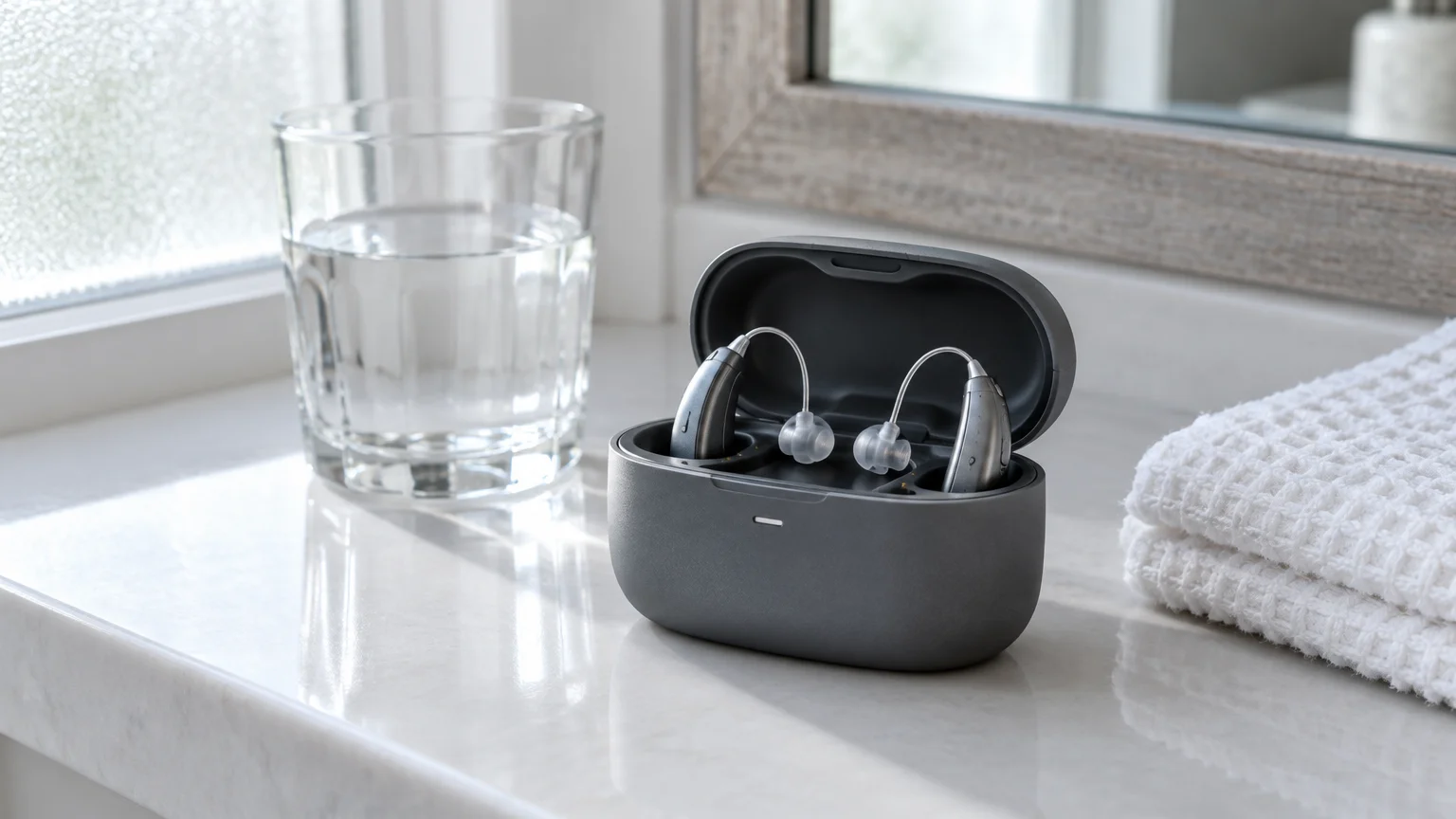
Understanding the cost of otc hearing aids vs prescription systems requires analyzing retail hardware tiers. Over-the-counter options sell for $200 to $1,500 per pair, while prescription clinic devices average $4,000 to $4,700.
Prescription devices feature personalized programming based on multi-frequency bone and air conduction evaluations. In contrast, entry-level OTC models utilize pre-set acoustic profiles that boost high-frequency sounds uniformly.
Self-fitting OTC models bridge this performance gap using automated calibration tools. Models like the Lexie B2 or Sony CRE-C10 use smartphone applications to measure your frequency responses in each ear.
| Device Category | Upfront Pair Cost | Amplification Target | Standard Warranty | Service Model |
|---|---|---|---|---|
| Entry OTC (e.g., Go Hearing) | $199 – $399 | Mild high-frequency loss | 1 Year Limited | Direct customer support |
| Self-Fitting OTC (e.g., Lexie B2, Jabra) | $799 – $1,599 | Mild-to-moderate loss | 1 Year Repair / Replace | App-guided calibration |
| Prescription Entry (Clinic) | $2,500 – $3,500 | Mild-to-severe loss | 2 to 3 Years Comprehensive | Bundled clinical visits |
| Prescription Premium (Clinic) | $4,500 – $7,500 | Mild-to-profound loss | 3 Years + Loss / Damage | Unlimited adjustments |
The price difference between OTC and clinic models stems heavily from professional clinic overhead. A prescription unit includes compensation for doctor-level audiological adjustments, rent, and specialized clinical software.
High-end clinic devices also feature sophisticated beamforming directional microphones and advanced sound processing chips. These systems filter complex background noise in loud banquet halls better than compact retail amplifiers.
Retirees spending most of their time in quiet environments rarely need advanced multi-thousand-dollar background processors. Basic conversations, television viewing, and telephone calls match the design specifications of lower-cost OTC devices.

Acoustic Amplification Limits and Diagnostic Red Flags
Federal guidelines cap acoustic amplification outputs on all over-the-counter devices. The FDA limits general OTC sound output to 111 decibels sound pressure level (SPL) under standard test environments.
Low-income older adults can also check free healthcare clinics for seniors to access subsidized physical exams and initial auditory checks.
Devices equipped with automated volume limiting and real-time compression can operate up to 117 decibels SPL. These sound barriers protect remaining hair cells in your inner ear from noise-induced acoustic trauma.
These hard limits mean OTC units cannot amplify sounds enough for moderate-to-severe hearing damage. If you suffer from flat sensory loss exceeding 50 decibels across mid frequencies, OTC units will sound thin and distorted.
Prescription systems deliver high-frequency outputs exceeding 130 decibels SPL when necessary. Licensed providers modify these thresholds based on prescriptive targets like the NAL-NL2 fitting formula.
You must schedule an examination with an ear, nose, and throat doctor if you experience specific warning symptoms:
- Asymmetrical hearing loss where one ear perceives speech noticeably worse than the other.
- Sudden drops in auditory clarity occurring over a few hours or days.
- Persistent unilateral tinnitus ringing localized entirely within one ear canal.
- Physical ear pain, discharge, dizziness, balance disorientation, or impacted cerumen obstructions.
Purchasing an OTC device without ruling out medical causes can leave serious conditions untreated. Benign acoustic neuroma tumors and middle-ear fluid require medical care rather than commercial sound amplification.
A comprehensive diagnostic exam from an audiologist costs roughly $125 to $200 out-of-pocket. Paying for this standalone evaluation provides diagnostic certainty before you spend money on retail or prescription hardware.

Demanding Transparency: Unbundled Hearing Aid Pricing Explained
Traditional audiology centers bundle hardware purchases with three full years of clinical care. That model forces you to prepay for dozens of cleanings, warranty handlings, and adjustments you might never use.
If your doctor ordered an audiology exam for an underlying condition that was rejected, reviewing how to appeal a Medicare coverage denial may help recover diagnostic fees.
Transitioning to unbundled hearing aid pricing splits equipment expenses cleanly from professional medical fees. Under an unbundled contract, you pay fair market value for the physical aids and purchase clinical visits individually.
An average clinic charges $3,600 for a pair of prescription mid-tier receiver-in-canal hearing aids. In an unbundled environment, that same hardware invoice drops to approximately $1,600 to $1,800.
Clinical fees under an à la carte medical model follow predictable local service rates:
- Comprehensive diagnostic air and bone conduction evaluation: $125 to $195.
- Real-Ear Measurement (REM) verification and probe-microphone fitting: $150 to $250.
- Follow-up programming optimization and EQ adjustment appointment: $75 to $150.
- Deep ultrasonic earwax removal and receiver cleaning service: $50 to $90.
Consider the real usage patterns of a typical 65-year-old retiree managing mild-to-moderate hearing decline. Most patients visit their provider twice during initial fitting weeks and once annually for maintenance checks.
Over a three-year span, an independent wearer attends roughly five total clinical appointments. Under bundled billing, those five appointments cost you upwards of $1,800, creating an effective cost of $360 per visit.
Paying unbundled rates for five visits totals roughly $650, which cuts your professional costs by nearly two-thirds. You can request unbundled cost estimates from independent private audiologists in your local community.
Certain independent audiology clinics will even perform Real-Ear Measurements on self-fitting OTC units for an hourly fee. That hybrid approach pairs $800 retail hardware with professional verification tests for less than $1,100.

Five-Year Ownership Model: Budgeting for Hearing Aids on a Fixed Income
Hearing aids are operational medical machines exposed daily to skin moisture, earwax, and physical drops. Expect every digital device to require complete replacement every three to seven years.
Just as with managing dental procedures on a fixed income, planning for replacement hardware requires building a dedicated sinking fund.
Effective budgeting for hearing aids fixed income requires analyzing multi-year ownership costs rather than retail prices alone. You must budget for consumables, dome replacements, wax guards, and battery replenishments.
Modern hearing devices feature either built-in lithium-ion rechargeable cells or disposable zinc-air button cells. Lithium batteries degrade after 30 to 48 months, frequently requiring factory case replacements that cost $150 to $250.
Disposable zinc-air cells (size 312 or size 13) cost roughly $0.50 each when purchased in bulk. A wearer changing batteries every six days spends approximately $60 per year on device power.
Here is a five-year financial projection comparing three realistic device trajectories for a 65-year-old retiree:
- Scenario A: Premium Bundled Clinic System ($3,600 initial purchase)
- Hardware and 3 years unlimited service: $3,600
- Years 4 and 5 service fees (2 visits/year @ $125): $500
- Replacement wax guards and cleaning domes: $100
- Lithium battery factory replacement at Year 4: $250
- Total 5-Year Outlay: $4,450 ($890 per year / $74.16 monthly reserve)
- Scenario B: Unbundled Prescription System ($1,800 hardware purchase)
- Hardware with 2-year manufacturer parts warranty: $1,800
- Diagnostic exam and initial Real-Ear Measurement: $325
- Pay-as-you-go follow-up visits (4 visits over 5 years): $450
- Replacement consumables and filters: $100
- Factory battery rebuild at Year 4: $200
- Total 5-Year Outlay: $2,875 ($575 per year / $47.91 monthly reserve)
- Scenario C: Advanced Self-Fitting OTC System ($899 initial purchase)
- Hardware with 1-year warranty: $899
- Standalone audiology diagnostic hearing check: $150
- One professional REM verification visit: $175
- Maintenance supplies and OEM receiver replacements: $150
- Out-of-warranty hardware replacement at Year 3.5: $899
- Total 5-Year Outlay: $2,273 ($454.60 per year / $37.88 monthly reserve)
“Beware of little expenses; a small leak will sink a great ship.” — Benjamin Franklin
Setting aside a small monthly reserve preserves your financial stability when equipment issues arise. A retiree selecting Scenario C needs to transfer just $38 each month into a dedicated medical fund.
That structured allocation prevents emergency credit card charges when sound receivers fail or plastic acoustic domes tear. Treat your auditory care as a regular recurring monthly line item alongside your utilities.

Tax Deductions, HSAs, and Alternative Relief Programs
The federal tax code offers relief for seniors purchasing expensive hearing health equipment out-of-pocket. The Internal Revenue Service classifies hearing aids, adjustments, batteries, and repair services as qualified medical expenses.
Under IRS Publication 502, medical expenses become tax-deductible when total costs exceed 7.5% of your Adjusted Gross Income (AGI). You can verify itemization criteria directly on IRS.gov when preparing annual returns.
A retiree with an adjusted gross income of $40,000 must clear a medical expense hurdle of $3,000. Purchasing a $3,600 clinic hearing system surpasses that threshold, allowing you to deduct the remaining $600 from income.
If you maintain a Health Savings Account (HSA) or Flexible Spending Account (FSA), you can access better savings. You can pay for both OTC hearing aids and prescription hearing aids using completely tax-free dollars.
Withdrawing pre-tax funds lowers the effective hardware price by an amount equal to your marginal income tax rate. A retiree in the 22% tax bracket buying a $1,000 OTC aid saves $220 in federal taxes.
Low-income seniors who cannot afford retail hardware can evaluate community-based assistance options:
- The National Council on Aging provides an eligibility lookup engine at BenefitsCheckUp.org to identify regional hearing grants.
- Veterans enrolled in the VA health system receive free comprehensive audiology exams, premium prescription hearing aids, and repair supplies.
- State Vocational Rehabilitation Agencies provide free auditory equipment to seniors working part-time or seeking employment.
- Nonprofit groups like the Lions Club International operate hearing aid recycling and refurbishment initiatives for qualified low-income applicants.
Investigating these non-Medicare resources can prevent you from compromising on necessary auditory support. Check qualification limits across these programs before liquidating personal investments to pay private clinic charges.

Step-by-Step Buying Strategy for Cost-Conscious Retirees
Securing the right hearing technology without overpaying requires a methodical, step-by-step approach. Avoid making spontaneous buying decisions at retail outlets or high-pressure neighborhood clinic seminars.
- Obtain an independent diagnostic audiogram. Book an appointment with an independent clinic and request a standalone hearing test. Tell the provider you only want diagnostic testing without hardware sales proposals.
- Examine your frequency chart. Confirm whether your auditory deficits fall within mild-to-moderate thresholds (25 to 55 dB drops). Look for balanced responses across both ears between 500 Hz and 4,000 Hz.
- Test an OTC device during an open trial period. Purchase a high-quality self-fitting OTC model backed by a 45-day money-back guarantee. Try the device in quiet home spaces before evaluating sound performance in restaurants.
- Verify fit with Real-Ear Measurement. If clarity remains muffled, pay an independent audiologist for a one-hour verification visit. That test ensures the miniature receiver sits properly relative to your ear drum.
- Request unbundled clinic pricing if OTC fails. If severe auditory drops require prescription units, ask local clinics for an unbundled pricing breakdown. Decline multi-year service bundles you do not plan to use.
- Confirm repair warranties and return policies. Ensure your purchase contract guarantees zero restocking fees on returns within 30 days. Verify the cost of replacement hardware if you misplace an ear piece.
Following this measured roadmap protects your monthly budget while restoring your conversational connections. Methodical choices guarantee you spend money only on equipment and services that produce noticeable improvements.
Frequently Asked Questions
Can I use my Health Savings Account to buy over-the-counter hearing aids?
Yes, the IRS classifies all FDA-registered over-the-counter hearing aids as eligible medical care expenses. You can use pre-tax funds from an HSA or FSA for both the devices and replacement maintenance supplies.
Why are prescription hearing aids so much more expensive than OTC models?
Prescription prices include bundled doctor clinical fees, custom software programming, long warranties, and advanced sound processors. Over-the-counter models save money by shifting the testing, programming, and routine maintenance onto the customer.
How do I know if my hearing loss is too severe for OTC devices?
If you cannot understand spoken conversations in quiet rooms or struggle to hear emergency vehicle sirens, OTC devices may be insufficient. Severe losses exceeding 55 to 60 decibels require the high acoustic outputs of prescription hearing systems.
Will Medicare Advantage cover my hearing aid costs entirely?
Medicare Advantage plans rarely pay the full price of hearing devices. Most plans provide allowances between $500 and $2,000, leaving you responsible for copayments, coinsurance, and visits outside their contracted networks.
What should I do if a clinic refuses to unbundle their pricing?
You can contact other independent audiology clinics in your region to find providers that bill à la carte. Many independent practitioners now embrace unbundled fee structures to support budget-conscious seniors.
Disclaimer: This article is for informational purposes only. Benefits, programs, and regulations can change.
We encourage readers to verify current information with official government sources and consult with qualified professionals for personalized advice.


