
An unexpected $2,000 veterinary estimate can shatter a monthly retirement budget in minutes. You can resolve immediate treatment costs without emptying your savings or taking on predatory debt by strategically combining targeted hardship grants.
Sudden pet illness is one of several surprising expenses that can derail retirement planning when not accounted for in advance.
While most conventional advice pushes high-interest medical credit cards, stacking specific non-profit emergency funds against itemized clinic estimates protects your fixed income. This guide details rapid-approval funding programs and contract negotiations before authorizing treatment.
Acting decisively during intake determines whether your pension remains intact while your pet receives lifesaving care.
In this guide8 sections
- Immediate Steps: Handling the First Two Hours at the Emergency Clinic
- The Hidden Risks of Deferred-Interest Veterinary Financing
- Top Emergency Veterinary Assistance Grants with Fast Approval
- Comparison of Emergency Funding and Credit Options
- University Veterinary Hospitals and Low-Cost Alternatives
- Worked Example: Settling a $2,150 Emergency Foreign-Body Bill
- Protecting Your Household Budget and Retirement Benefits
- Frequently Asked Questions
Immediate Steps: Handling the First Two Hours at the Emergency Clinic
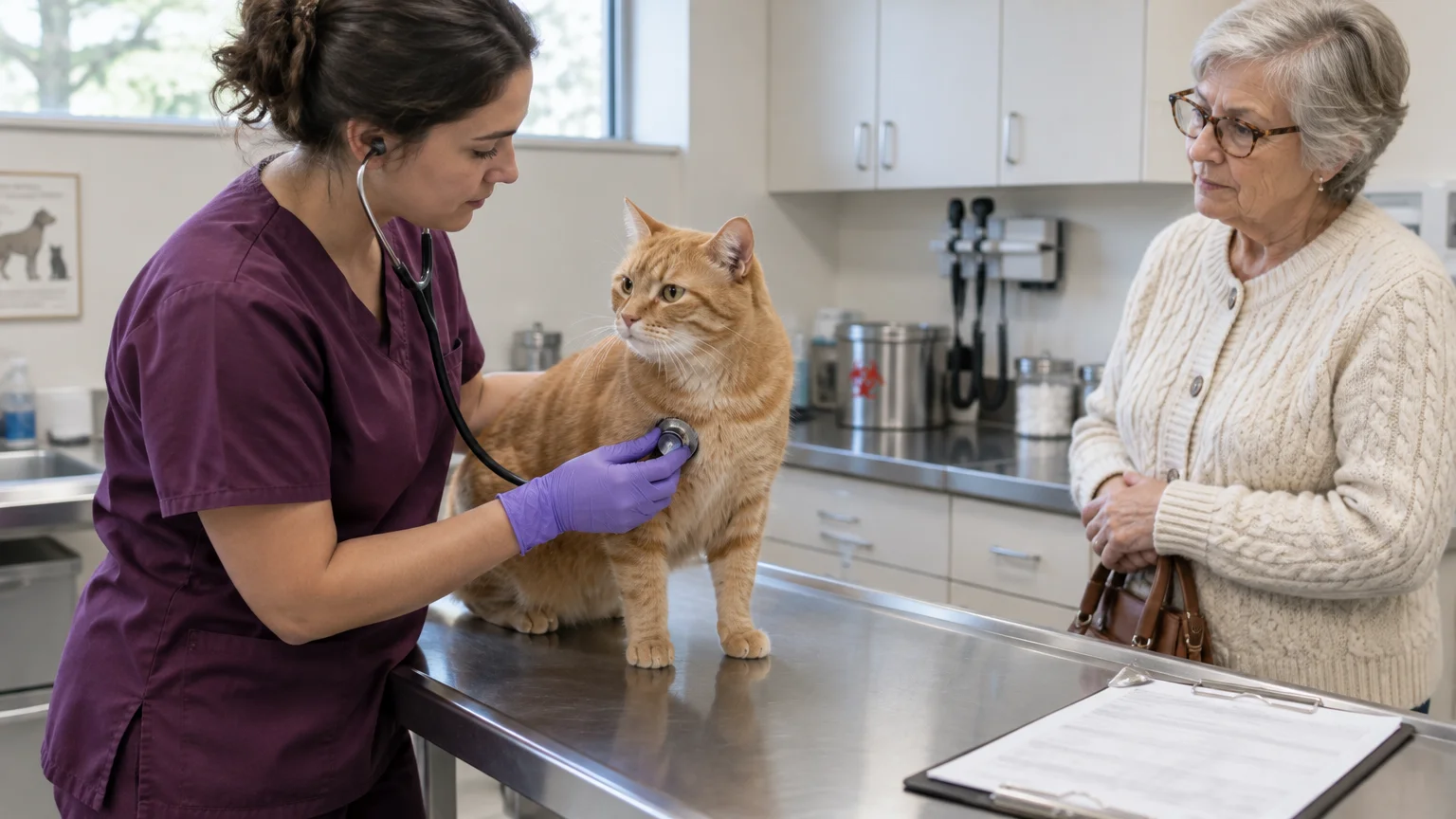
Emergency rooms charge immediate triage fees before running diagnostic panels. According to veterinary industry benchmarks, base exam fees range between $107 and $246 for dogs and $113 to $260 for cats.
This initial fee covers only physical stabilization and vital checks. Any subsequent blood panels, radiographs, or ultrasounds add hundreds of dollars to your running invoice.
You must establish control of the financial discussion the moment you enter the examination room. Follow this protocol to prevent open-ended diagnostic authorizations:
- Request an itemized estimate showing both high-end and low-end cost projections before authorizing diagnostics.
- Ask the clinician to separate immediate stabilization measures from non-urgent diagnostic testing.
- Inquire whether outpatient stabilization allows you to transfer your pet to a primary-care clinic the following morning.
- Request that the attending veterinarian write an official clinical diagnosis and prognosis statement on clinic letterhead immediately.
That written prognosis serves as your golden ticket for non-profit grant applications. Without an official prognosis confirming that treatment offers a good outcome, charitable funds cannot release money.
Make clear to the triage coordinator that you live on a fixed pension. Many veterinary hospitals maintain discretionary director funds that staff can apply only when clients state clear hardship upfront.

The Hidden Risks of Deferred-Interest Veterinary Financing
Veterinary intake desks frequently hand distress-stricken pet owners a brochure for medical credit lines. While financing solves immediate cash shortfalls, specific contract structures carry severe risks for retirees.
Managing surprise debts requires understanding your true retirement expenses so you never commit to unaffordable monthly installments.
CareCredit offers promotional terms of 6, 12, 18, or 24 months with no interest on purchases of $200 or more. However, this arrangement uses deferred interest rather than true 0% interest.
If you leave even a one-dollar balance when the promotional period ends, the lender assesses interest retroactively to the original transaction date. The standard purchase APR stands at 32.99%, with penalty rates reaching 39.99%.
According to the Consumer Financial Protection Bureau, deferred interest promotions frequently trap consumers who miscalculate their monthly installment schedules.
Scratchpay offers an alternative financing structure operating as a closed-end installment loan. Their plans run from 3 to 24 months with APRs ranging from 0% to 36%.
Unlike credit cards, Scratchpay never charges retroactive interest penalties if you carry a balance past a target date. You pay only the agreed interest on the remaining principal balance.
Choosing between these options requires honest assessment of your monthly pension cash flow:
- Use deferred-interest promotions only if your guaranteed monthly surplus pays the entire balance before the final promotional month.
- Choose fixed installment loans if your budget requires predictable monthly payments without retroactive default penalties.
- Avoid using general unsecured personal credit cards carrying standard revolving interest rates above 24%.

Top Emergency Veterinary Assistance Grants with Fast Approval
Charitable organizations provide emergency vet bill help seniors can access directly during medical crises. These programs disburse funds directly to the treating veterinary hospital rather than issuing cash to pet owners.
RedRover Relief provides Urgent Care grants averaging $250 to $300, capped at $500. This program addresses life-threatening emergencies where a veterinarian confirms a good prognosis.
You must apply online while your pet is actively receiving care or awaiting surgery. RedRover typically responds to urgent applications within hours during regular operating schedules.
Frankie’s Friends operates a national fund awarding grants up to $2,000 per household. Their funding targets family-owned pets needing lifesaving emergency or specialty surgical care.
Frankie’s Friends requires an established diagnosis, an itemized clinic estimate, and confirmation that the treating facility does not belong to a corporate entity with internal charity funds.
The Bow Wow Buddies Foundation assists dogs exclusively, offering medical treatment grants up to $1,500. Their average award sits at approximately $1,100 for curable, emergency conditions.
Understanding program exclusions prevents dangerous delays when seeking veterinary assistance funds low income households rely upon. A major misconception involves The Pet Fund.
The Pet Fund provides grants up to $500, but their program explicitly excludes emergency or urgent care. They finance only non-urgent, chronic medical management like cancer chemotherapy, maintaining a lengthy waitlist.
For ongoing assistance, the Meals on Wheels “Loves Pets” initiative delivers critical support. Backed by PetSmart Charities, participating local chapters provide pet food, basic wellness care, and localized emergency medical subsidies.
Contact your regional chapter to determine whether their local program includes veterinary financial vouchers for enrolled seniors.

Comparison of Emergency Funding and Credit Options
Evaluating your financing and grant options side-by-side helps you match the right program to your clinic timeline. The table below outlines key parameters for emergency funding sources:
| Assistance Source | Maximum Funding | Approval Timeline | Repayment Obligation | Primary Restriction |
|---|---|---|---|---|
| RedRover Relief Urgent Care | Up to $500 ($250-$300 avg) | 24 to 48 hours | $0 (Non-repayable grant) | Life-threatening illness with good prognosis; clinic must accept direct check. |
| Frankie’s Friends National Fund | Up to $2,000 per pet | 24 to 48 business hours | $0 (Non-repayable grant) | Lifesaving care; clinic cannot have corporate charity arm. |
| Bow Wow Buddies Foundation | Up to $1,500 ($1,100 avg) | 3 to 5 business days | $0 (Non-repayable grant) | Dogs only; curable conditions; requires strict income verification. |
| Scratchpay Installment Loan | Up to $10,000 (credit-based) | Instant (under 5 minutes) | 0% to 36% fixed APR | Treating clinic must be an enrolled partner facility. |
| CareCredit Healthcare Card | Credit limit varies | Instant (under 5 minutes) | 0% promo (or 32.99% retroactive APR) | Requires full payoff before promo ends to avoid retroactive interest. |
Combining multiple non-repayable grants with a small installment loan often covers total procedure costs without stressing your pension.

University Veterinary Hospitals and Low-Cost Alternatives
Academic veterinary institutions offer specialized medical technology alongside structured financial assistance options. Most states host at least one accredited veterinary college operating a 24-hour emergency hospital.
Much like navigating major dental work expenses on a fixed income, seeking academic teaching facilities provides top-tier care at steep discounts.
Teaching hospitals frequently deliver complex surgical care at rates 20% to 30% below private emergency facilities. Senior veterinary students assist licensed faculty specialists, lowering total operational labor overhead.
University clinics frequently maintain donor-funded compassionate care endowments. Social workers on clinical hospital staff evaluate financial hardship to allocate these endowments to qualifying pension holders.
When seeking treatment at academic or non-profit centers, use these strategic approaches:
- Request to speak with the hospital social worker or veterinary financial counselor immediately upon admission.
- Ask if your pet qualifies for active clinical research trials evaluating new treatments for trauma or disease.
- Transfer your stabilized pet from a private emergency hospital to the university clinic to lower daily hospitalization rates.
- Inquire about outpatient recovery protocols that avoid expensive overnight monitoring charges.
Non-profit humane societies and municipal shelters also operate low-cost outpatient clinics. While few run overnight emergency wards, many handle urgent wound care, stabilization, and minor surgeries during regular hours.
Filling pet prescriptions through human retail pharmacies dramatically reduces discharge medication costs. Retail chains accept discount drug coupons for pet medications like antibiotics, pain management drugs, and heart medications.

Worked Example: Settling a $2,150 Emergency Foreign-Body Bill
Examining a real-world scenario demonstrates how stacking assistance options eliminates financial crisis. Consider Mary, a 65-year-old pet owner living on a fixed pension of $1,850 per month.
Her nine-year-old terrier ingested a peach pit, resulting in acute intestinal obstruction. The private emergency clinic presented an itemized surgical estimate totaling $2,150.
Mary executed the following funding strategy before authorizing the surgical procedure:
- Itemized estimate review: Mary asked the surgeon to remove elective post-operative blood screens scheduled for day two, reducing the estimate to $1,900.
- RedRover Relief application: Mary submitted an urgent online request from the lobby, securing an approved grant of $300 paid directly to the clinic.
- Frankie’s Friends submission: Her veterinarian verified a good surgical prognosis, securing a $1,000 emergency grant commitment.
- In-house clinic concession: Mary explained her pension budget to the clinic manager, receiving a 10% senior hardship discount worth $150 off the remaining balance.
- Residual balance resolution: Mary financed the remaining $450 balance through a 12-month Scratchpay plan at $41 per month.
This structured approach reduced Mary’s out-of-pocket payment on the night of admission from $2,150 to zero dollars. Her monthly pension easily accommodated the predictable $41 monthly installment.
Her dog recovered completely from surgery within two weeks. Mary preserved her core emergency savings while keeping her monthly budget balanced.

Protecting Your Household Budget and Retirement Benefits
Veterinary inflation consistently outpaces baseline economic cost increases. Bureau of Labor Statistics data shows veterinary services inflation running between 4.8% and 7.4% annually across recent economic cycles.
Research from the University of Michigan National Poll on Healthy Aging, supported by AARP, reveals that 55% of adults aged 50 to 80 own pets.
The financial burden falls heavily on fixed incomes. Among older non-owners, 23% identify veterinary care and general upkeep costs as their primary reason for not having a companion animal.
More alarming, Meals on Wheels research reports that over 20% of low-income homebound seniors sacrifice personal food or medication to afford animal medical care.
You must never jeopardize your own physical health or essential nutrition to cover unexpected veterinary invoices. Comprehensive pet care on fixed income requires protecting your primary household cash flow first.
Free up room in your monthly pension by verifying every public senior assistance program available to you. Screen your eligibility on the NCOA BenefitsCheckUp platform to reduce non-pet utility and healthcare expenses.
Build long-term resilience against unexpected pet medical bills using these proactive household habits:
- Establish a dedicated pet medical sinking fund, depositing $25 to $50 monthly into a high-yield savings account.
- Schedule biannual preventative blood panels to catch organ decline before acute medical collapse occurs.
- Compare monthly pet wellness plans against high-deductible accident-only insurance policies designed for catastrophic events.
- Request generic human-equivalent prescriptions whenever your pet requires long-term maintenance medications.
Frequently Asked Questions
Can an emergency vet clinic refuse treatment if I cannot pay the deposit upfront?
Emergency clinics are legally obligated to stabilize an animal in critical distress, but they are not required to provide comprehensive treatment without payment. They can discharge or recommend euthanasia once immediate suffering is alleviated if you cannot pay.
How do I apply for emergency veterinary assistance funds while sitting in the clinic?
Use your smartphone to complete online grant forms with RedRover or Frankie’s Friends immediately during intake. Have the clinic email you the written itemized estimate and diagnosis letter so you can upload them instantly.
Will taking out emergency pet financing affect my Social Security or pension benefits?
Financing options like CareCredit or Scratchpay are consumer debt and do not count as income. They have no impact on your Social Security, pension payments, or eligibility for income-tested benefits like SNAP.
What should I do if my local emergency clinic does not accept payment plans?
Request that the staff stabilize your pet for transfer, then locate an accredited non-profit shelter clinic or veterinary teaching hospital nearby. Alternatively, apply for third-party financing like Scratchpay, which pays the clinic directly upon approval.
Are veterinary assistance grants considered taxable income by the IRS?
Charitable grants paid directly to veterinary hospitals on your behalf are considered non-taxable gifts. Because you never receive the funds directly into your personal bank account, they do not trigger income tax liability.
Disclaimer: This article is for informational purposes only. Benefits, programs, and regulations can change.
We encourage readers to verify current information with official government sources and consult with qualified professionals for personalized advice.



1 Comment