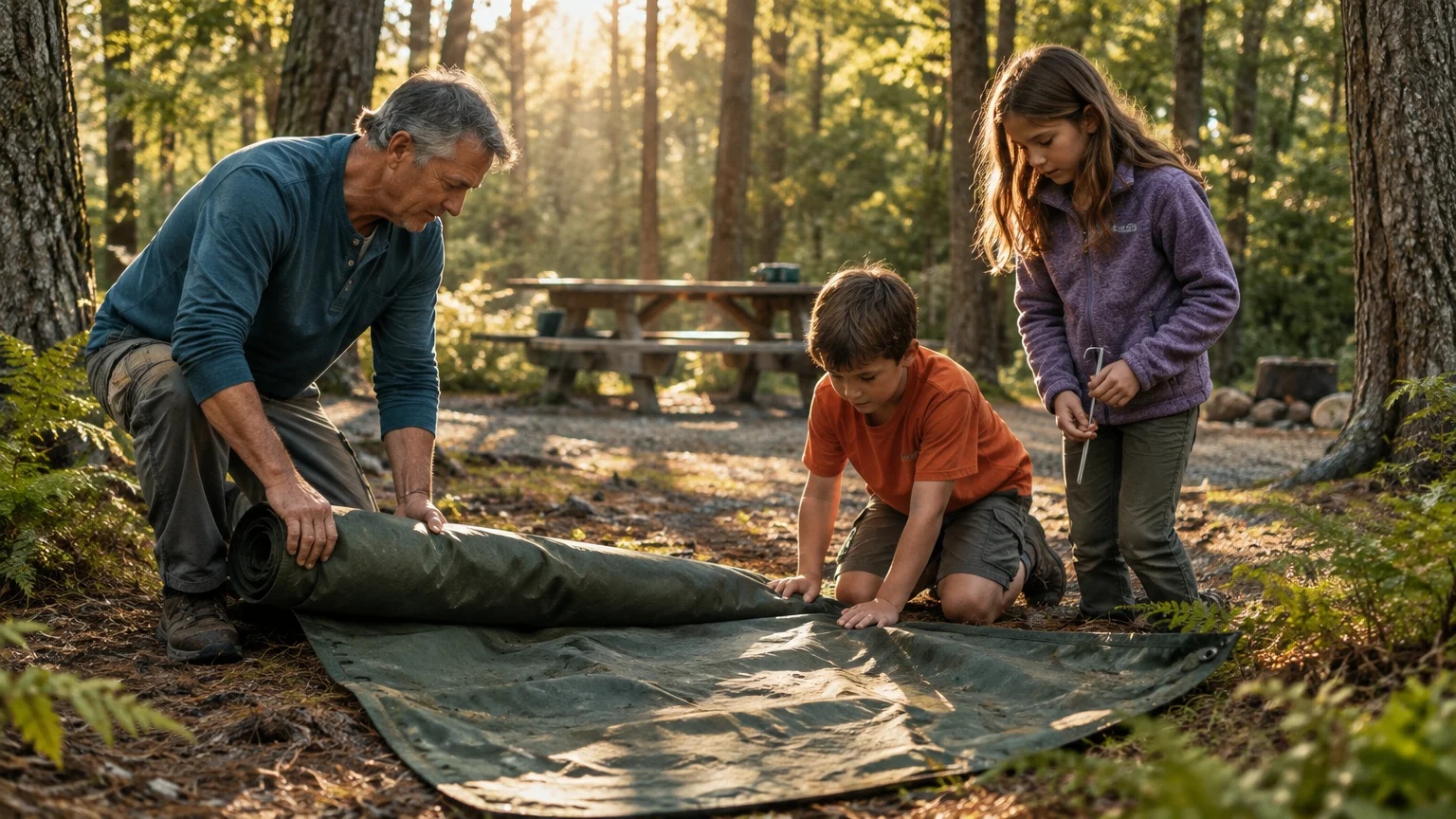
Grandparents over 60 taking young grandchildren to a state park without their parents face different hurdles than weekend family campers. KOA’s family camping research found that 37% of camping grandparents take their grandchildren on at least one camping trip without the parents.
Standard advice to book Friday-to-Sunday trips in quiet outer loops backfires when one grandparent supervises alone. A Sunday-to-Tuesday stay 50 to 100 feet from the bathhouse secures midweek senior discounts, cuts loop traffic, and simplifies nighttime walks and medical routines.
Documents, discount cards, and medical records to gather before booking
Your federal America the Beautiful Senior Pass covers national parks and federal lands, not state park campsites. Gather your state residency proof, reservation portal login, campground map, and each grandchild’s paperwork before choosing dates.
Check these accounts, cards, and forms at home before you reserve a campsite:
- State senior discount proof: Locate your state photo ID or senior program card, such as Florida residency proof at age 65 and older or Ohio’s Golden Buckeye Card for residents 60 and older.
- Official state booking login: Create an account on your state park reservation portal, whether state-run or a system like ReserveAmerica, and verify your senior profile status.
- Campground PDF map: Download the campsite map to inspect bathhouse distance, loop traffic, water spigots, electric posts, and terrain hazards.
- Signed parental consent form: Have parents complete the American College of Emergency Physicians free consent to treat form and medical history form for children, and check state notary rules.
- Insurance cards and contacts: Copy the front and back of each child’s insurance card with parent and pediatrician phone numbers.
- Pediatric medication sheet: List allergies, tetanus and recent vaccinations, and pediatrician-reviewed daily or rescue dosing steps.
- Your prescription schedule: Write out your own daily medications and dosing times to keep routines separate.
Seal every signed form, insurance copy, and contact sheet inside a zip bag in your glove box. Save clear photos of every page on your phone as an immediate backup.
How to use state booking portals and campground maps to pick your site
Each state sets its own age rule, residency rule, and discounted nights for camping. Compare how state-run portals and multi-state booking systems verify eligibility before you enter dates at checkout.
| Park System or Portal Type | Eligibility Rule | Midweek Rate Structure | Step-by-Step Discount Verification |
|---|---|---|---|
| Florida State Parks (state portal) | Residents age 65 and older | Half off base campsite fees | Log in on the official state site, pick midweek dates, check for the lower rate at checkout, and carry ID. |
| Ohio State Parks (state portal) | Residents age 60 and older with Golden Buckeye Card | 50% off Sunday through Thursday ($15 on a $30 base fee) | Get the card via the Department of Aging, enter card details on the state portal, verify Sunday-to-Tuesday pricing drops, and bring the card. |
| Other state portals and ReserveAmerica-type systems | Varies by state age and residency rules | Many states reserve top discounts for weeknights | Check the state agency’s discount page first, verify profile code versus ranger check-in rules, and book on the official site. |
| America the Beautiful Senior Pass | Federal senior passholders | No state campsite discount | Use for national parks and federal lands only; it will not lower state campground fees. |
Florida gives residents 65 and older half off base campsite fees when you show proof of eligibility. Ohio ties its camping discount to the Golden Buckeye Card, which residents 60 and older can get through the Department of Aging.
In Ohio, the 50% cardholder discount applies Sunday through Thursday nights, lowering a $30 base fee to $15 a night. During summer break, a Sunday-to-Tuesday booking captures those lower weeknight rates in quieter campgrounds.
Follow these steps on any official state reservation portal so your senior discount applies before you pay:
- Check the agency rules: Review our state park senior camping discounts guide and your state park site for age, residency, and weeknight terms.
- Update your portal profile: Log in to the official state portal or contracted booking system and add any required senior ID or program card number.
- Test Sunday-to-Tuesday dates: Check the itemized nightly total before paying, since weeknight-only discounts often drop off if weekend nights stay in the cart.
- Bring physical proof: Carry your photo ID and state senior card in your wallet for ranger check-in.
Once your dates are set, review the campground map using National Park Service guidance on matching your campsite and activities to the physical abilities of everyone in your group.
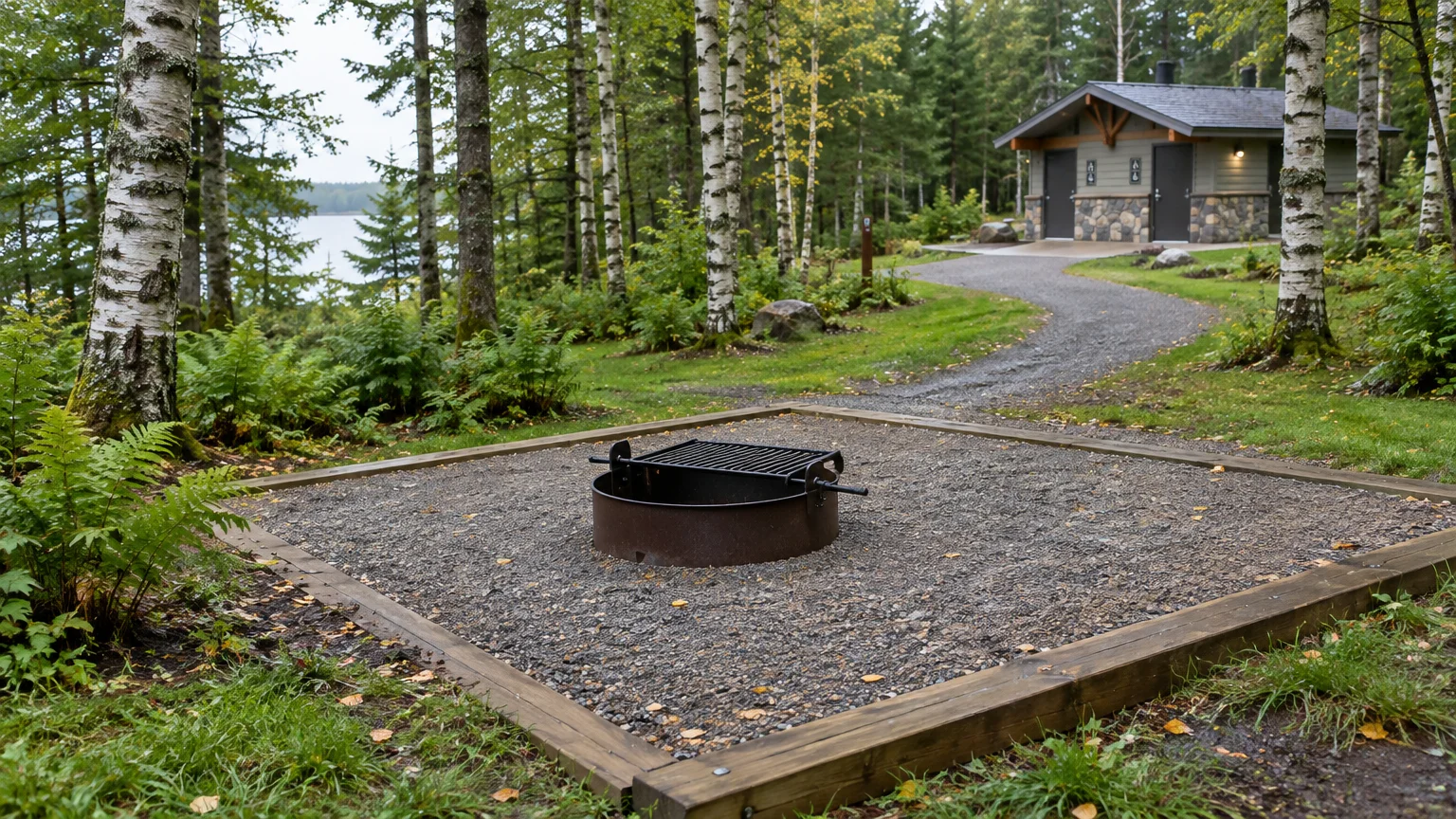
Use these map checks to pick a flat, visible site you can supervise from your chair:
- 50 to 100 feet from the bathhouse: Close enough for quick nighttime walks without sitting beside bright lights and slamming doors.
- Dead-end loop placement: Away from the main campground road so fewer cars pass play areas.
- Clear terrain boundaries: Away from steep drop-offs, deep creeks, or open lakefront water.
- Level pad and shade: Flat ground, shade trees, and a gravel tent pad with an anchored fire ring.
- Electric hookup post: Power for a tent fan, phone charger, or small light.
Check the map distance from your loop to short trails starting right from camp. Our guide to trail walking and easy hiking over 60 covers supportive footwear and steady pacing.
Campsite setup and cooler prep that spare knees and backs
Supervising grandchildren alone requires real sleep and minimal bending or kneeling. Build your camp around standing upright, getting out of bed easily, and prepping simple meals at home.
- Stand-up cabin tent: Tall enough to stand inside so you never dress on your knees.
- Raised folding cot: Pair with a foam topper to stay off cold ground and stand easily.
- Children’s padded beds: Inflatable mattresses over insulated pads with household sheets and blankets instead of mummy bags.
- Tent floor and fan: An outdoor rug for traction and a battery tent fan with a built-in light.
- Screened picnic canopy: A 10-by-10-foot instant screened canopy over the table blocks wasps and shields crafts and games from rain.
Chop vegetables and portion cheese into labeled bags at home for foil-packet meals the children can assemble themselves. A skillet, grill grate, and heavy-duty foil let you cook dinner in minutes.
Pack your cooler with block ice, which melts more slowly than cubes. Keep perishables at 40 degrees Fahrenheit or below, and seal raw meat on the bottom.
Before dark, line up slip-on shoes and a red-light headlamp by the tent door for each person. Red light keeps everyone’s night vision intact and avoids waking neighboring campers on bathhouse trips.
Medication separation, first aid, and arrival boundaries
Sharing a small tent with grandchildren creates medication mix-up risks if adult prescriptions and children’s remedies sit together. Lock, label, and schedule every dose before the first evening.
Put this storage and timing system in place as soon as you unpack:
- Lock adult prescriptions: Keep your bottles inside a waterproof, child-resistant container out of reach.
- Daypack first aid kit: Carry tick tweezers, picaridin insect repellent, children’s antihistamine, hydrocortisone cream, bandages, antiseptic wipes, gauze, and burn gel.
- Separate phone alarms: Set distinct alarms for your medications and any pediatrician-reviewed daily or rescue medicine.
- Paper dose log: Record every child’s dose on the glove-box sheet so times stay exact.
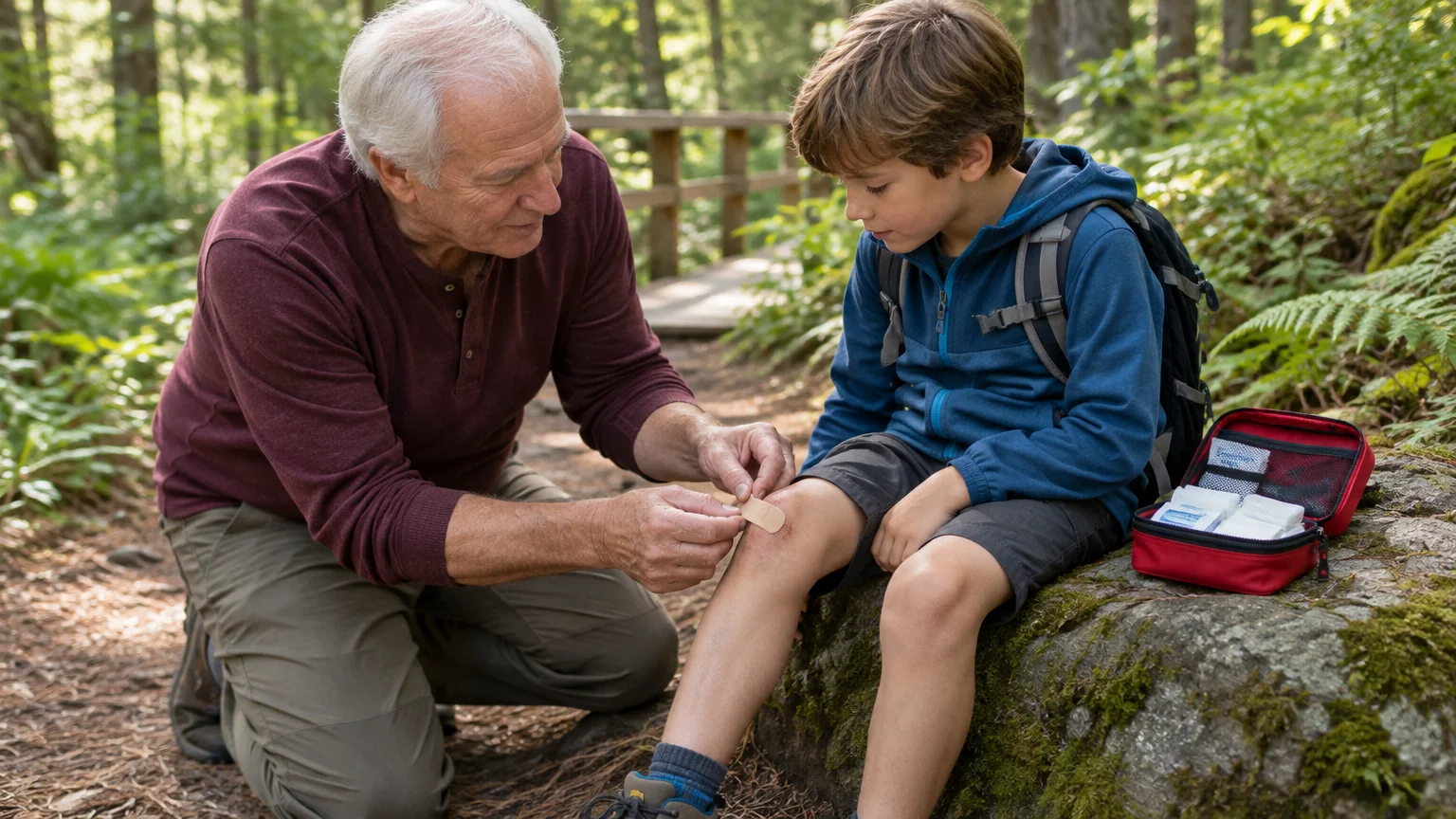
Without a parent present, an emergency room may delay non-emergency care for a minor. Grab your glove-box consent packet and phone photos before driving out if an injury needs medical attention.
Walk the campsite boundaries with the children before unloading gear. Kids follow limits more reliably when they hear clear rules once at the start:
- Three-foot fire circle: Mark a three-foot perimeter around the fire ring with no running, pushing, or reaching inside.
- Breakaway whistle lanyard: Have each child wear a whistle and blow three blasts while staying put if they lose sight of camp.
- Refillable water bottles: Keep each child’s bottle topped up at park drinking water spigots.
- Certified local firewood: Buy firewood at or near the park so invasive pests do not spread.
Do a tick check on each child every evening using a flashlight. Check behind the knees, along the waistband, in the armpits, and along the hairline.
Pacing Junior Ranger activities and bedtime routines
Stop at the visitor center or camp office on day one for free Junior Ranger activity booklets. Children who finish the prompts often earn a badge or certificate without long car rides.
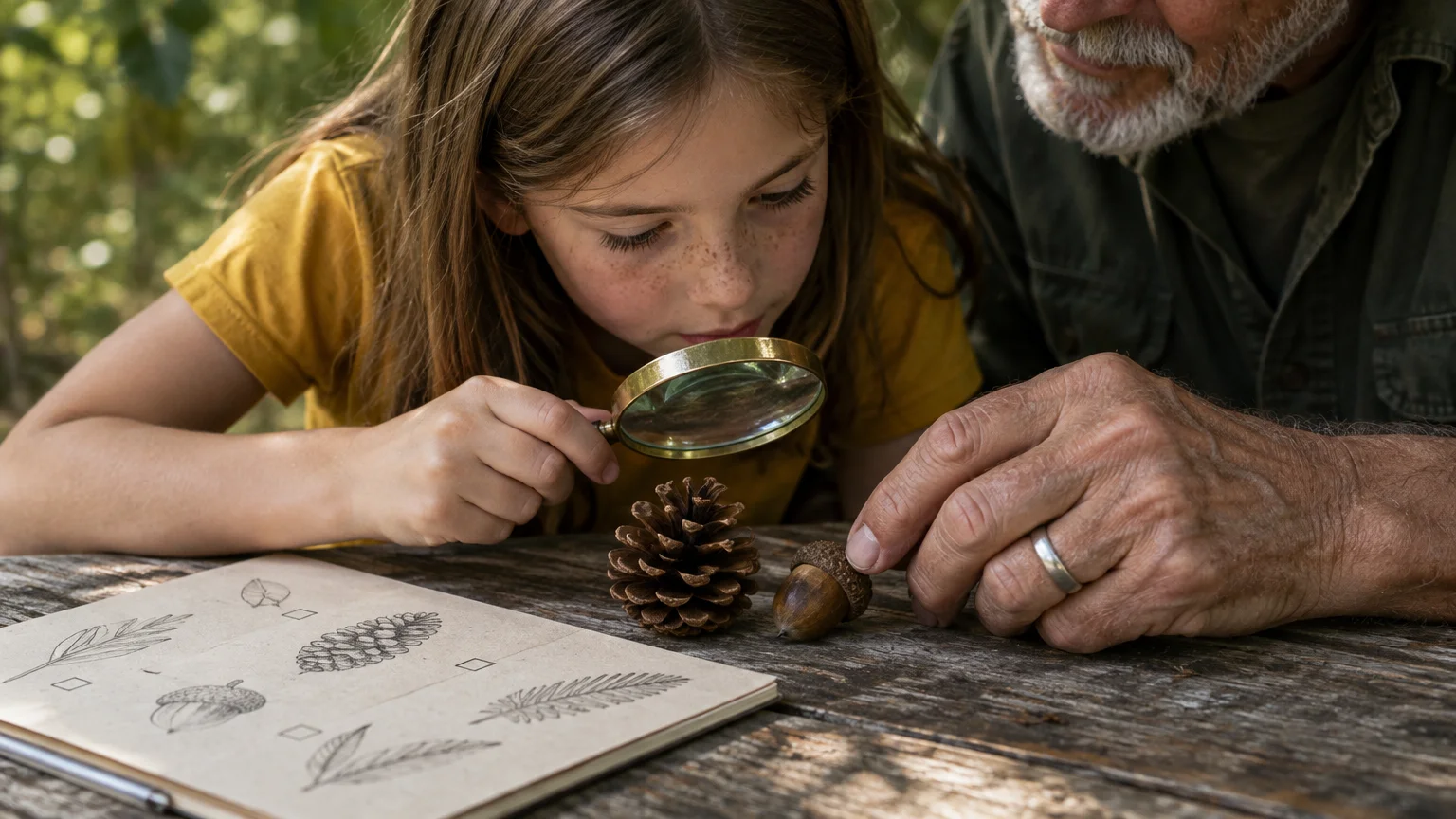
Between ranger programs, give each child a magnifying glass, a notebook, and starter binoculars for slow walks near camp. Our guide to starting bird watching lists beginner species and easy apps.
Ask the children to share their notebooks before dinner while you cook. A finished booklet and ranger badge give them something proud and screen-free to show their parents.
Homesickness usually arrives at bedtime once the campground grows quiet. Bring a familiar pillow or blanket, follow their home bedtime routine, and agree with parents beforehand whether a brief call home helps.
Start with one night close to home as a fair test of everyone’s stamina and sleep. Once that trip goes well, a Sunday-to-Tuesday reservation gives you a quieter, lower-cost next outing.