Retired couples managing stiff knees or balance concerns can see the Rockies, the Sierra Nevada, and the Pacific coast on Amtrak without driving mountain passes. Someone else handles steep grades while you watch roadless canyons roll past your window.
Generic rail advice pushes end-to-end sleepers or eastbound runs that add stair climbs and lose canyon daylight to delays. Boarding westbound from Denver, matching the route to your stamina, and booking a lower-level roomette protects your joints while claiming Amtrak’s 10% discount at 65.
Western rail routes compared by daylight, stairs, and park transfers
Western Superliner routes differ in hours aboard, canyon daylight reliability, and station-to-park transfers. Check each option below against your comfort on stairs and swaying walkways before booking nonrefundable sleeper space.
| Route | Endpoints and time | Daylight and direction | Lounge and park link | Knee or balance fit |
|---|---|---|---|---|
| California Zephyr | Chicago to Emeryville; 2,438 miles, about 51 hours | Westbound leaves Denver around 8 a.m. for canyon daylight; eastbound risks delays | No Denver lounge; no direct park bus | Board westbound in Denver for one night, or ride a day segment |
| Coast Starlight | Seattle to Los Angeles; 1,377 miles, about 35 hours | Coastal run between San Luis Obispo and Santa Barbara; Mount Shasta north | Portland and Los Angeles lounges; no park bus | Shortest full route; fewer hours swaying |
| Empire Builder | Chicago to Seattle or Portland; about 2,200 miles, about 46 hours | Montana prairie and Glacier’s southern edge | Chicago and Portland lounges; West and summer East Glacier | Good for Glacier with lodge station pickup |
| Southwest Chief | Chicago to Los Angeles; 2,265 miles, about 43 hours | Raton Pass and New Mexico mesas | Chicago and Los Angeles lounges; Flagstaff or Williams | Easiest car-free Grand Canyon South Rim access |
Choose the Zephyr for mountain canyons, the Coast Starlight for coastal views with fewer nights aboard, the Empire Builder for Glacier, and the Southwest Chief for mesas and the Grand Canyon.
Why boarding the California Zephyr westbound in Denver protects canyon daylight
Boarding westbound Train 5 at Denver Union Station around 8 a.m. skips flatland miles and puts the Front Range climb in morning light. Always confirm the timetable on Amtrak’s route page before planning because schedules change.
Out of Denver, Train 5 runs through the 6.2-mile Moffat Tunnel, peaking near 9,239 feet before emerging at Winter Park near the Colorado River headwaters. Afternoon tracks trace Byers Canyon, roadless Gore Canyon, and Glenwood Canyon, where walls rise roughly 1,300 feet.
Ruby Canyon on the Colorado-Utah line arrives in late afternoon light westbound, though winter trips may pass after dark. The train crosses Utah and Nevada overnight and climbs Donner Pass in the Sierra Nevada the next morning.
Eastbound Train 6 covers the same ground in reverse, crossing the Sierra early and reaching Colorado on day two. Because it has already run over 1,000 miles, freight delays can push Colorado’s canyons into evening darkness.
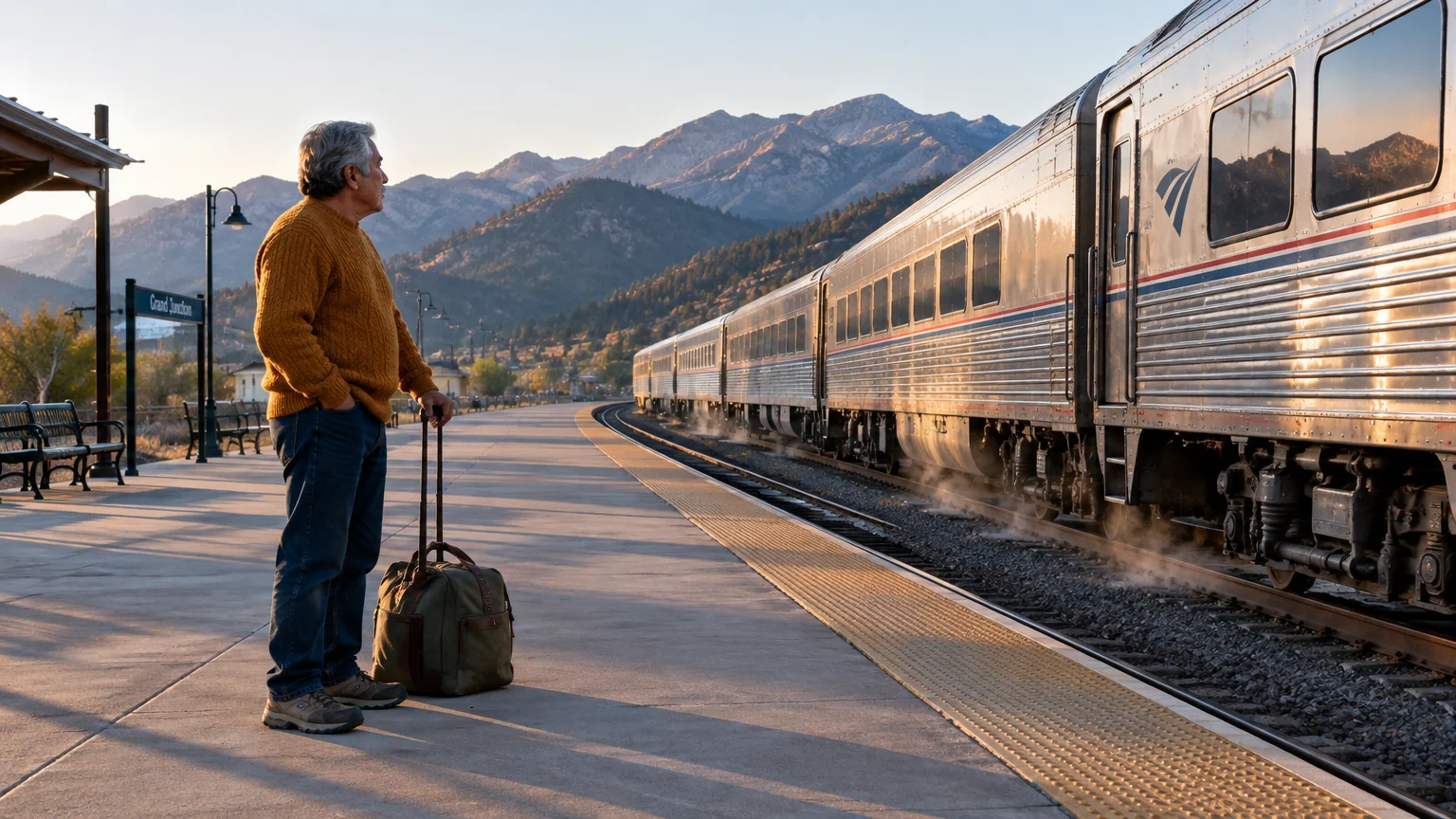
Two shorter daytime rides skip sleeping-car stairs completely on a coach ticket. Take Denver to Grand Junction for Colorado’s canyons, or ride Reno to Sacramento for the Sierra crossing.
Denver Union Station lacks a Metropolitan Lounge, unlike Chicago Union Station, Portland, and Los Angeles. For hotel beds instead of berths, Rocky Mountaineer runs a daylight-only two-day trip from Denver to Moab via Glenwood Springs at far higher fares on its site.
Coast Starlight, Empire Builder, and Southwest Chief transfers without driving
Couples worn down by multi-day train sway often prefer the Coast Starlight between Seattle and Los Angeles, taking about 35 hours over 1,377 miles. Its coastal stretch between San Luis Obispo and Santa Barbara hugs shoreline Highway 101 skips, with Mount Shasta north.
Because the Coast Starlight has no direct park connection, you avoid hauling bags onto depot shuttle buses. Sleeper tickets also grant Metropolitan Lounge seating in Portland and Los Angeles before boarding.
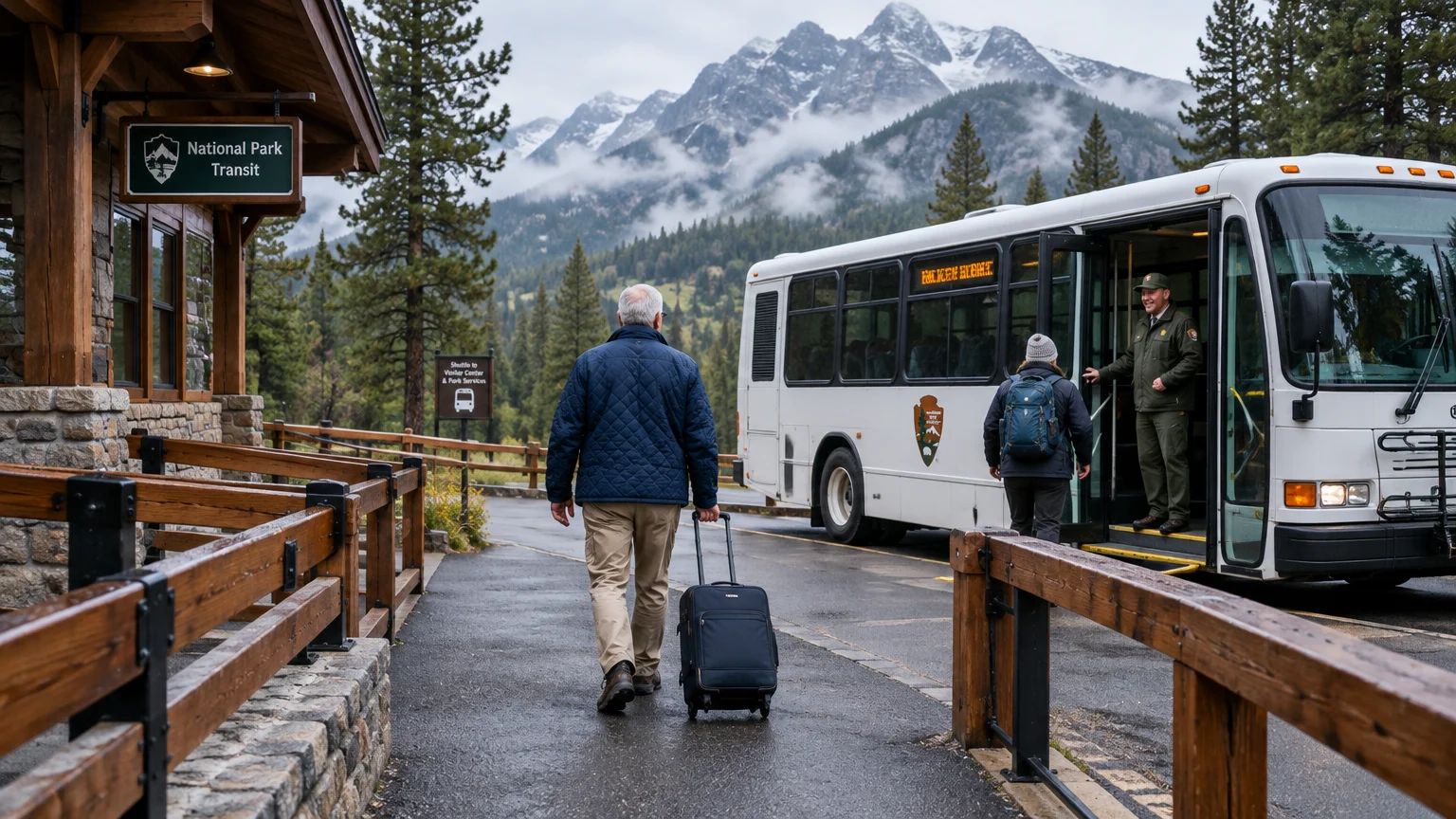
On the Empire Builder, stops at West Glacier and summer-only East Glacier Park require local transport into the park. Ask lodges or local operators when booking your room whether they provide station pickup.
The National Park Service’s guide to getting around Glacier lists seasonal shuttles and car-free tours. In 2026, the Logan Pass shuttle ran as a ticketed express service from Apgar, Lake McDonald Lodge, and St. Mary, so confirm next season’s dates first.
On the Southwest Chief, Flagstaff connects to South Rim shuttles, including Groome Transportation listed on its site. You can also stop in Williams west of Flagstaff and ride the Grand Canyon Railway straight to the South Rim’s historic village.
- Confirm seasonal park shuttle dates first, then book your train to the gateway station.
- Reserve lodging with depot pickup or a stop on a shuttle route.
- Leave wide connection buffers because long-distance trains can run hours late.
- Buy required shuttle tickets early and carry your park pass.
Rail arrival does not waive entrance fees, but U.S. citizens and permanent residents 62 and older can use a Senior Pass, $20 for a year or $80 for life. Buying steps appear in our National Park Senior Pass guide.
Securing lower-level roomettes, accessible bedrooms, and attendant meal delivery
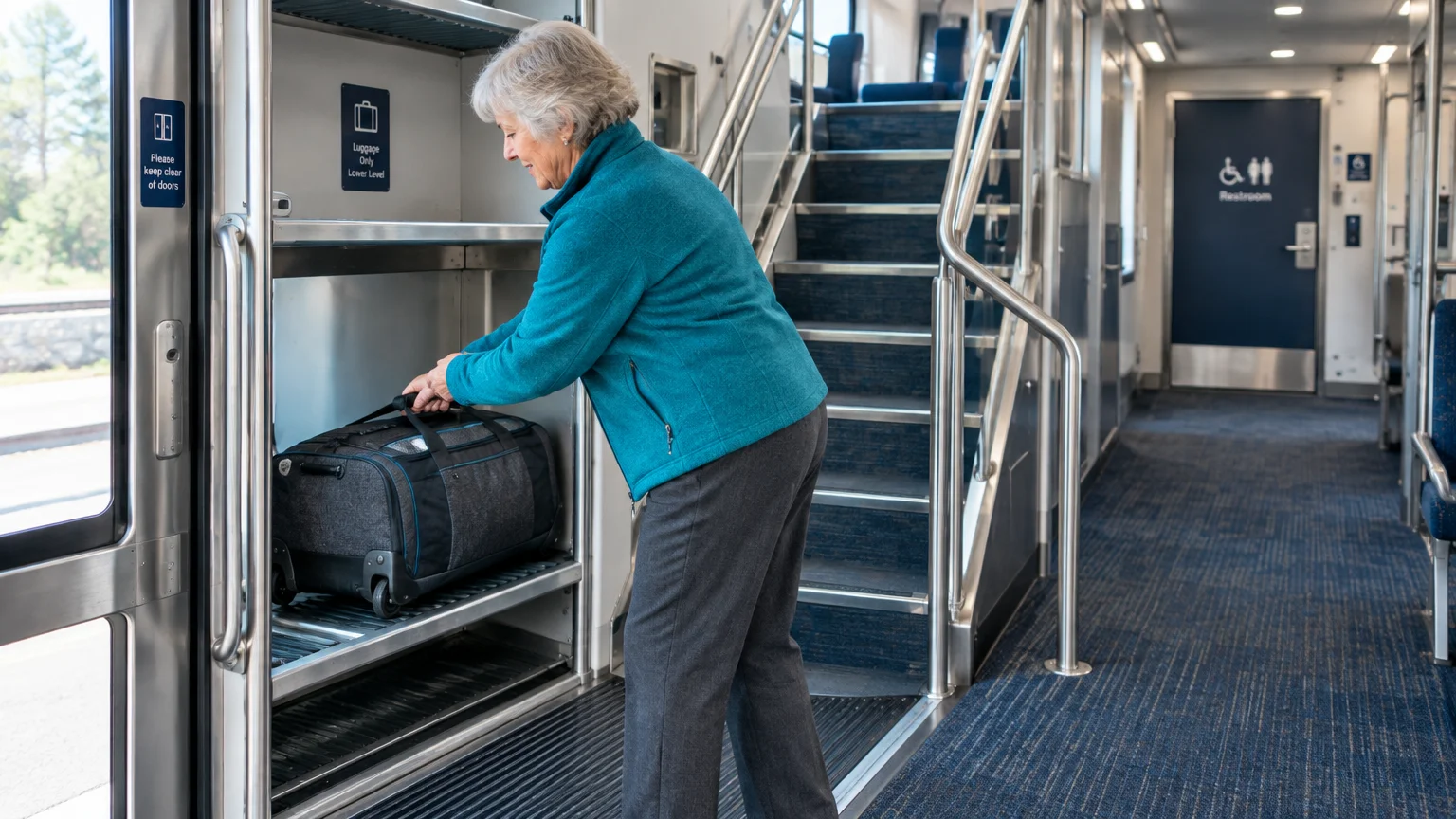
Superliner cars have two levels linked by a narrow, curving staircase. Boarding doors, shared restrooms, large luggage racks, lower-level roomettes, and accessible bedrooms sit downstairs, while car-to-car walkways, the dining car, and the Sightseer Lounge sit upstairs.
Online checkout often defaults to upper-level cabins, so request a lower-level roomette from an Amtrak reservation agent if stairs strain your knees. Lower-level rooms skip stairs for boarding and restrooms, though dining and lounge cars remain upstairs.
Each Superliner sleeper also holds one lower-level accessible bedroom with wheelchair space and a private accessible restroom. Amtrak reserves these rooms for passengers with disabilities, releases unsold ones closer to departure, and discounts fares for a disabled traveler and one companion.
Confirm the disability discount percentage, accessible-bedroom release window, and boarding help rules on Amtrak’s Accessible Travel Services page before booking. Follow these steps from reservation through boarding:
- Search up to 11 months ahead with the senior passenger type selected while lower-level inventory remains open.
- Call Amtrak reservations if checkout shows only upper-level cabins and ask for a lower-level roomette, or check Accessible Travel Services for an accessible bedroom.
- Check two free large bags per traveler at staffed stations, or leave big suitcases on the lower-level rack.
- Ask your sleeping car attendant at boarding for meal delivery to your roomette so you skip dining-car stairs.
- Pack a soft overnight bag. A small duffel fits the tight floor space left once roomette berths drop.
- Bring layers. Big lounge windows warm up in sun and cool quickly after dark.
- Keep medicines close. Checked bags stay out of reach all trip, so use a weekly pill organizer across time zones.
- Wear slip-resistant shoes. Walkways between cars sway on mountain curves, so hold handrails as you move.
Claiming Sightseer Lounge swivel seats without tiring your legs
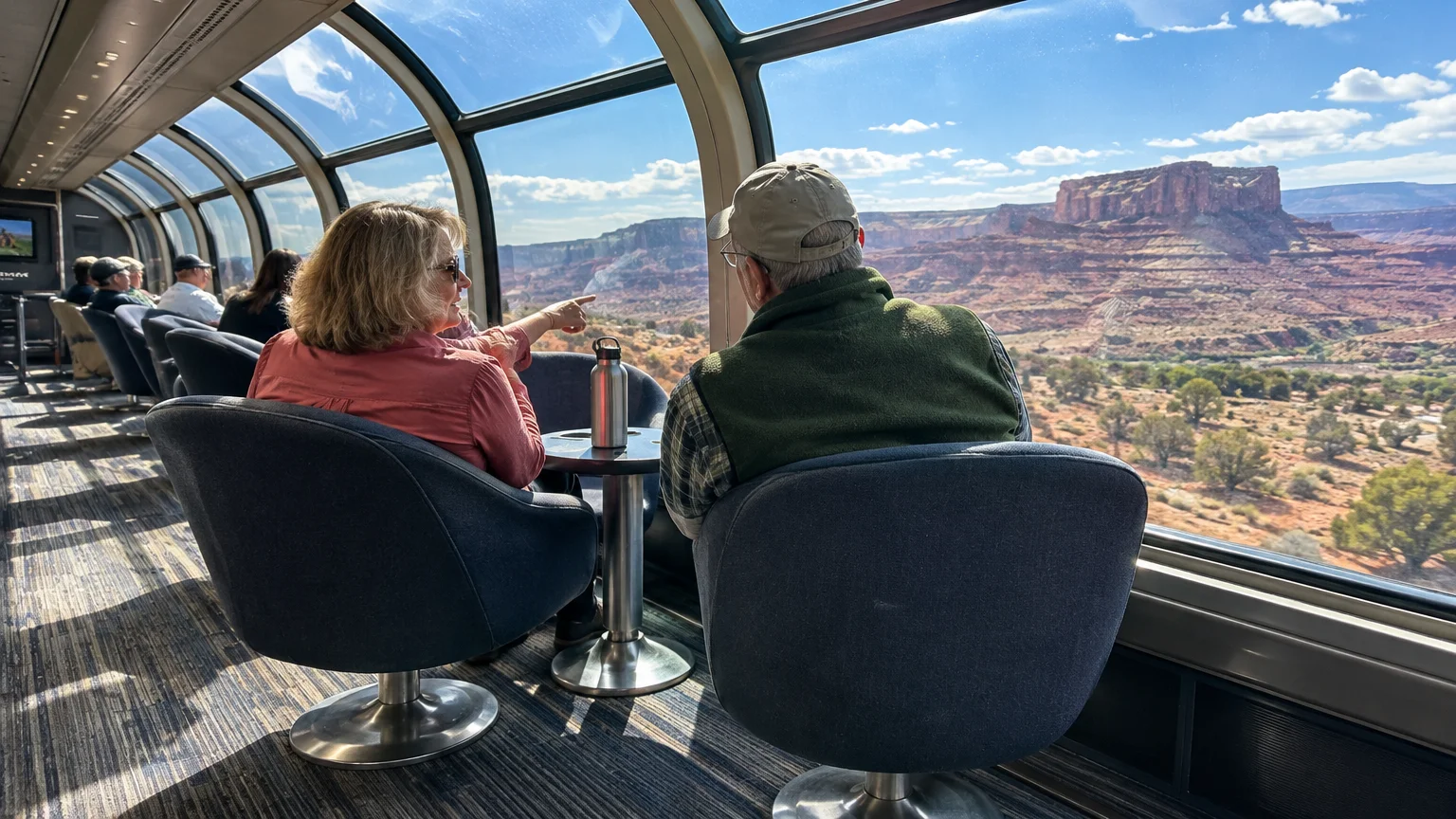
Superliner trains carry a Sightseer Lounge car with curved ceiling windows and outward-facing seats. Seating is unreserved and first-come, first-served, while a lower-level café sells coffee, snacks, and drinks.
- Arrive before canyon miles. Head to the lounge once boarding settles at Denver, Grand Junction, or Reno.
- Pick swivel chairs. Turning seats follow the winding Colorado River without standing up.
- Split café runs. One partner walks downstairs for coffee while the other keeps your chairs.
- Shift dining slots. Ask the dining attendant for an earlier or later meal time outside mountain stretches.
- Rest on flat miles. Nap across Nebraska and eastern Colorado, keep bags at your feet, and share front chairs.
Senior discount math, roomette value, and cross-border Medicare rules
Amtrak gives travelers 65 and older 10% off most rail fares, starting at age 60 on joint VIA Rail Canada trains. Select senior pricing, carry ID, and read our Amtrak Senior Discount Guide for exclusions.
On cross-border trips into Canada, Medicare generally does not pay for care in Canada. Review how coverage works once you leave the country before booking any international rail segment.
The 10% discount reduces the rail fare only, never the sleeper room charge, and some sale fares exclude it. A Superliner Roomette gives two travelers facing seats converting to upper and lower berths, shared restrooms and a shower, plus dining car meals.
Coach riders buy café food, while Amtrak sells tickets up to 11 months ahead, when lowest summer and fall roomette fares remain open. A sample Denver-to-Emeryville roomette with a $150 rail fare each and a $750 room charge prices out like this:
- Rail fare: 2 x $150 = $300
- Senior discount: 10% of $300 = $30 off
- Roomette charge (no discount): $750
- Total: $300 – $30 + $750 = $1,020, or $510 per person
That $1,020 covers more than 30 hours aboard, one night’s berth, and up to four meals each from day-one lunch through day-two lunch. Compare that against fuel, motel nights, and restaurant bills in budgeting a cross-country train trip.