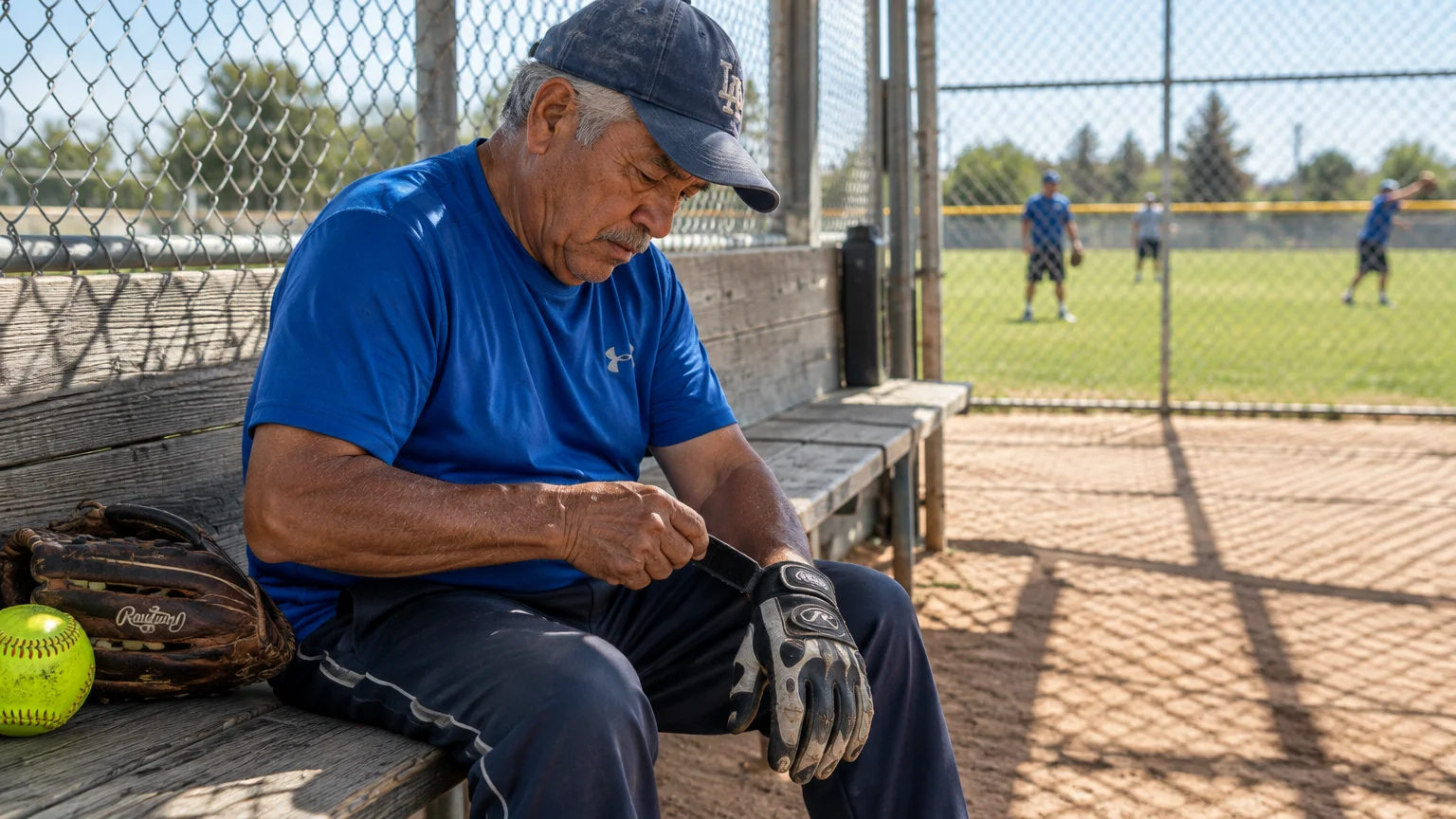
A 66-year-old retiree returning to competitive slow-pitch on a modest budget faces a clear choice between local recreation and tournament travel. The best decision for your first year back is skipping tournament play entirely to focus on municipal league ball.
Rushing into tournament travel creates heavy equipment and travel expenses before your body adjusts to competitive play. Starting in a weekday municipal league gives your muscles time to adapt while keeping your first-season budget under control.
Age brackets and skill classes for returning ballplayers
Senior slow-pitch involves a large network of active players across the country. Senior Softball-USA, citing Sports & Fitness Industry Association data, counts more than 1.3 million senior and masters slow-pitch players in the U.S.
Tournament softball sorts players into five-year age brackets such as 60+, 65+ and 70+. SSUSA uses the age you reach during the calendar year, so someone turning 65 in December can play 65+ all season.
For a 66-year-old player, this calendar rule guarantees that opposing rosters do not include younger athletes. Tournament organizers also divide brackets by skill ratings, separating recreational teams from squads with former college competitors.
Municipal programs run on simpler arrangements. Many parks departments organize a combined 55+ or 60+ league on weekday mornings, offering balanced competition near home without the demands of weekend road trips.
Testing your skills in a weekday morning league lets you gauge your stamina against peers. You can always evaluate sanctioned tournament rosters once you complete a full local season.
Field rules that protect aging joints on the basepaths
Returning to competitive base running after years away places sudden stress on older knees and hips. The SSUSA official rulebook sets out these field markings to prevent collisions between runners and defensive fielders.
The standard diamond layout features a double first base, a commitment line, a separate scoring line, and a strike mat. These boundaries remove physical tags and high-speed slides from regular play.
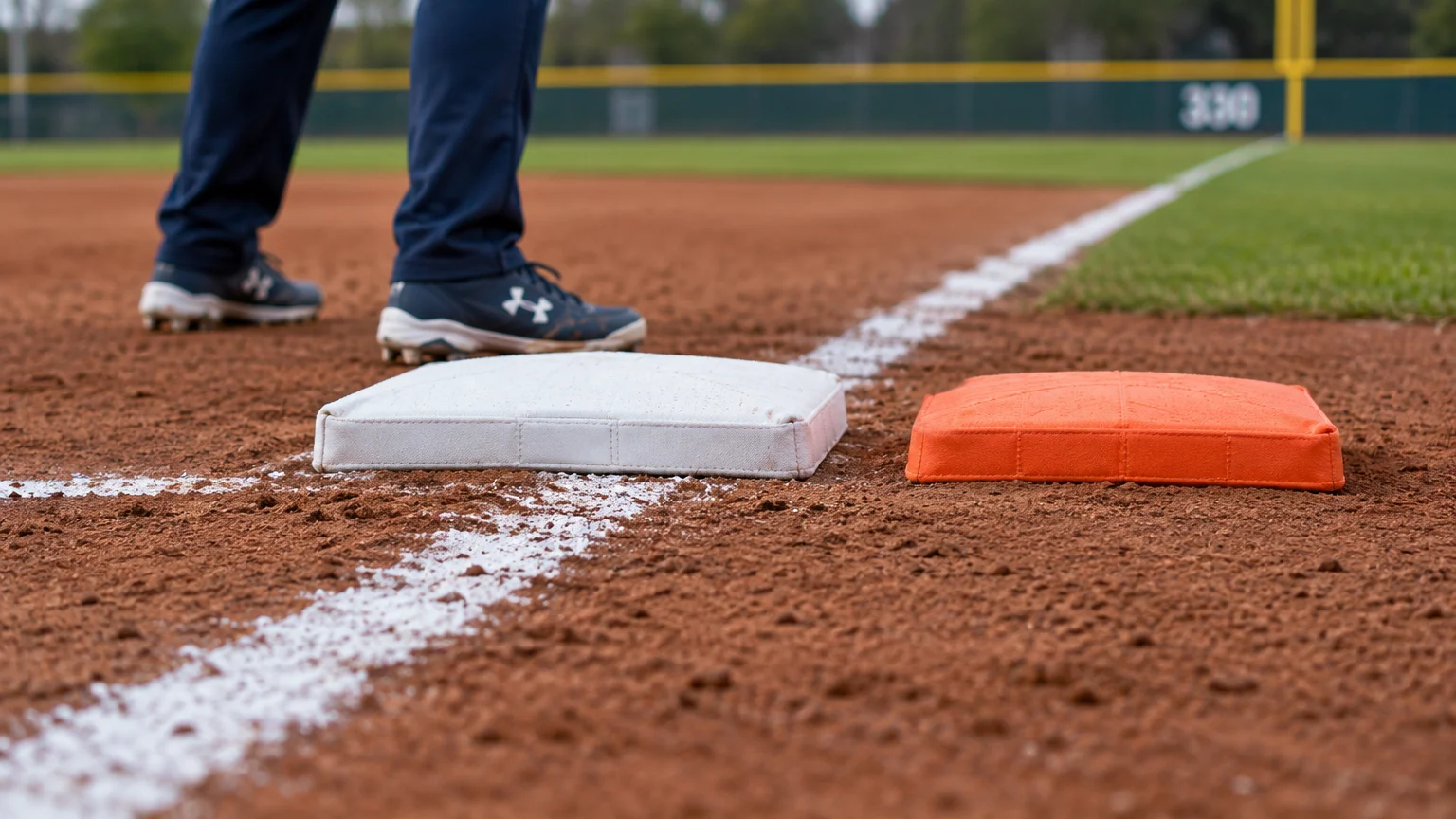
First base pairs two distinct bags side by side. The infielder covers the white bag in fair territory, while the runner steps on the orange bag in foul ground to avoid contact.
A commitment line sits on the dirt between third base and home plate. Once a runner crosses this line, retreating to third base is illegal, requiring a continuous sprint toward home.
Runners never touch home plate to score. Instead, the runner crosses a scoring line or touches a separate scoring plate while the catcher fields throws at home plate for a force out.
Touching home plate or the strike mat instead of the scoring line results in an immediate out under SSUSA rules. Municipal leagues often adapt these markings, so ask for your local park rule sheet.
Umpires determine balls and strikes using a strike mat behind home plate based on official arc limits. Rules also permit courtesy runners, allowing our 66-year-old ballplayer to bat without sprinting on sore legs.
The bat certification conflict between city parks and tournaments
Equipment purchases represent the greatest financial hazard for a returning senior player. The bat is especially easy to get wrong because tournament standards clash directly with municipal park rules.
The SSUSA bat policy allows bats tested at the NTS Chesapeake lab to a Bat Performance Factor of 1.21 or below. These models must display an official SSUSA or NTS certification stamp.
Local recreation leagues follow different authority. The 2026 USA Softball rulebook establishes separate certification marks for municipal play, banning high-performance senior bats that carry only the 1.21 BPF stamp.
Buying an SSUSA bat before your local season begins creates an expensive trap. If you purchase that tournament model, park umpires will disallow it, forcing you to purchase a second bat for city games.
Always review the SSUSA approved bat list, last updated in September 2026, alongside your city recreation guidelines. Selecting a bat certified under both rulebooks prevents redundant spending.
Senior leagues typically use a 12-inch ball rated .44 COR and 375 compression. This ball flies differently than the .52/300 ball used in other adult leagues, making league-approved practice balls necessary.
Defensive safety also matters on the field. SSUSA Rule 6.17 establishes protective standards for pitchers, who face batted balls at close distance and often wear face protection and shin guards.
Third basemen also frequently wear fielding masks for protection against sharp line drives. Players should select turf shoes or molded cleats rather than metal spikes, paired with a glove between 12.5 to 14 inches.
First-year equipment expenses and tournament travel costs
A 66-year-old retiree managing a seasonal budget must weigh initial startup fees carefully. Combining municipal play with national tournament registration drives up costs during your first season back.
The table below breaks down the estimated gear and registration numbers for a dual-roster player in an initial season.
| Item | Example cost |
|---|---|
| SSUSA player card, one season (2026) | $40 |
| City league fee, one season | $65 |
| Two jerseys and a cap | $55 |
| SSUSA-approved senior bat | $250 |
| Turf shoes and glove | $150 |
| Six practice softballs | $40 |
| First-season total | $600 |
The $40 card fee comes from the 2026 SSUSA player registration form. Uniforms, balls, and protective gear account for typical retail prices.
This $600 first-season total includes $250 for a senior bat that local municipal games might prohibit. Playing only in a city league requires just the $65 league fee alongside basic footwear, glove, and legal municipal equipment.
In a second season, reusing your gear leaves only the card, the league fee, and balls: $40 + $65 + $40 = $145. However, out-of-town tournaments add fuel, food, and lodging expenses on top of league participation.
Setting up a travel sinking fund helps players prepare for tournament weekends later. Sticking to municipal diamonds in year one protects your retirement budget while you test your physical endurance.
Local games also demand less time. A morning doubleheader at the city park occupies just a few hours, leaving your afternoons free without hotel stays.
Physical conditioning and Medicare coverage before practice
Early-season injuries frequently disrupt returning players who attempt explosive sprints too quickly. Strained hamstrings, calf tightness, and sore throwing shoulders occur when older muscles face sudden high-intensity competition.
Orthopaedic surgeons’ guidance for older adults starting exercise emphasizes gradual conditioning and thorough warm-ups before entering competitive games. Taking several weeks to condition your arms and legs minimizes the danger of tendon pulls.
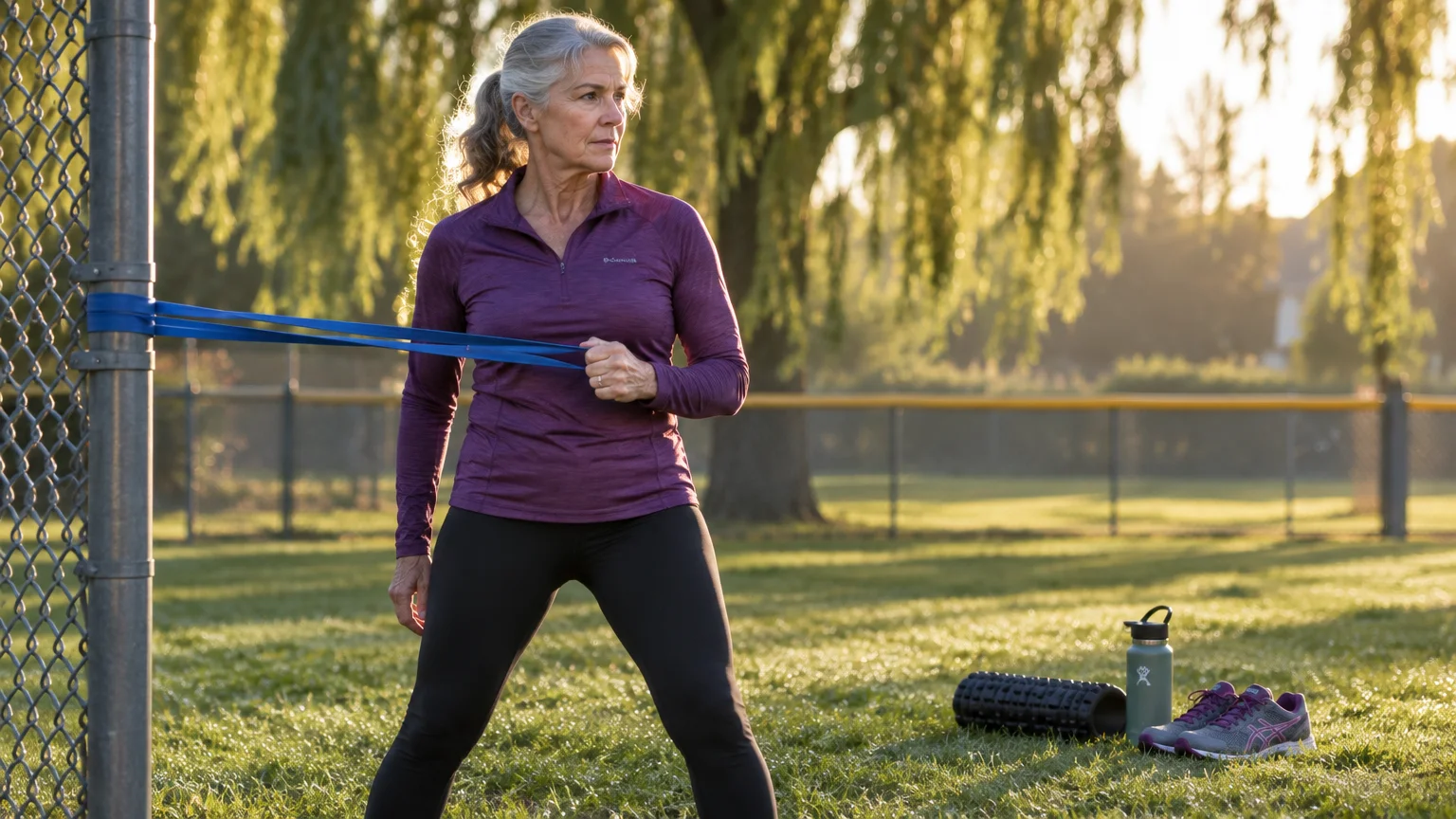
- Five to ten minutes of brisk walking, high-knee marching and leg swings before you throw or run.
- Light resistance-band rotations for the throwing shoulder on non-game days.
- Chair squats to build the leg strength you need to stop and start.
- Short, easy sprints on grass in the weeks before the opener, building up slowly.
Hot summer doubleheaders increase dehydration and heat stress on municipal fields. Carry plenty of water, wear sunscreen and a cap, and step off the field if you experience dizziness or chest discomfort.
Schedule a medical discussion before your first practice if you manage joint stiffness or heart concerns. The yearly wellness visit under Medicare Part B focuses on preventive planning, so inform your physician about your softball plans.
Roster spots in municipal leagues versus national senior games
Finding a roster spot begins by contacting your local recreation office. Municipal staff can direct you toward 55+, 60+ or 65+ teams that practice on weekday mornings.
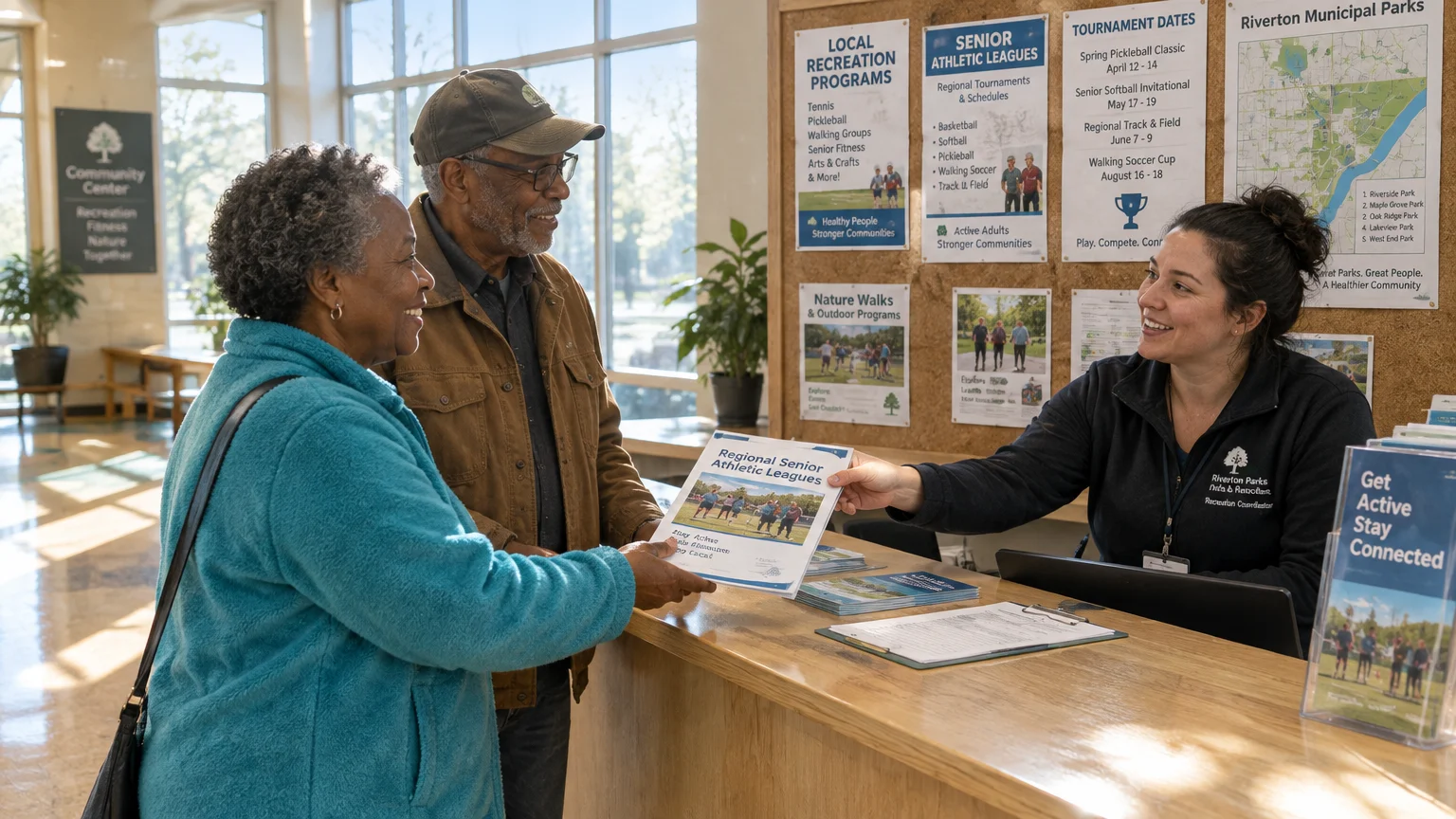
- Call your city or county parks and recreation department and ask about 55+, 60+ or 65+ slow-pitch leagues; many play weekday mornings.
- Visit local fields when senior games are on and ask a manager whether the team needs players. Pitchers and catchers are often in demand.
- Register with SSUSA if your team plays sanctioned tournaments; your player card records your age bracket.
- Buy your bat last, once you know which leagues’ stamps it must carry.
Once you finish a season locally, you can consider larger competitive circuits. The National Senior Games require teams to qualify through state Senior Games held in even-numbered years.
Another prominent destination is the Huntsman World Senior Games, held each October in St. George, Utah. The tournament welcomes players without qualifying rounds.
Their Men’s softball division features 50+, 55+, 60+, 65+, 70+, 74+, 79+ and 84+ divisions, placing 11 fielders on defense in 65+ games. Women’s brackets also field 11 players.
Small brackets sometimes combine, as occurred with the 79+ and 84+ groups in 2026. For those considering seasonal travel or retirement moves, our guide to relocating to St. George, Utah in retirement outlines housing and community details.
If recurring knee or shoulder stiffness prevents comfortable base running, beginner pickleball leagues for over-60s provide low-impact athletic recreation. Starting locally in softball ensures you enjoy the game while keeping expenses low.