
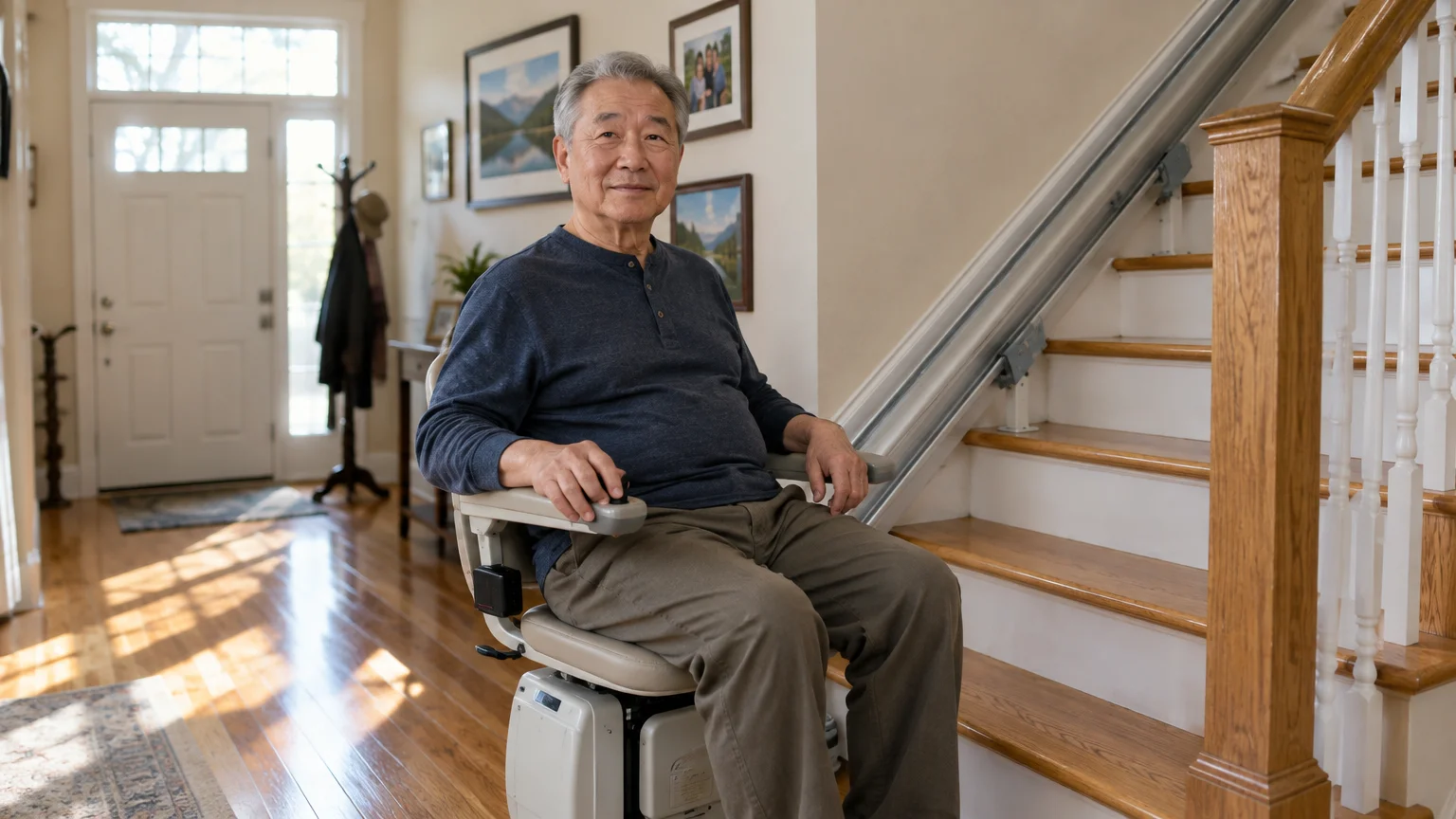
Living alone in a two-story home makes stair safety essential for your daily independence. Installing a mechanical lift removes severe joint strain and prevents hazardous falls on steep steps.
Installing two straight lifts saves thousands over a custom curved rail, but transferring seats on a landing creates a solitary fall hazard. A certified pre-owned curved lift eliminates that dangerous midpoint transfer while protecting your savings.
This guide details equipment pricing, installation mechanics, weight thresholds, and factory warranty terms for your two-story home.
In this guide8 sections
- Comparing Straight vs Curved Stair Lift Mechanics
- Stair Lift Cost Two Story Configurations
- Weight Capacities and Heavy-Duty Specifications
- Installing Home Stair Chair Systems: Site Prep and Process
- Used Stair Lift Options and Refurbished Warranties
- Medicare Coverage, Veteran Grants, and Tax Rules
- Worked Example: Two-Story Staircase Expense Breakdown
- Frequently Asked Questions
Comparing Straight vs Curved Stair Lift Mechanics
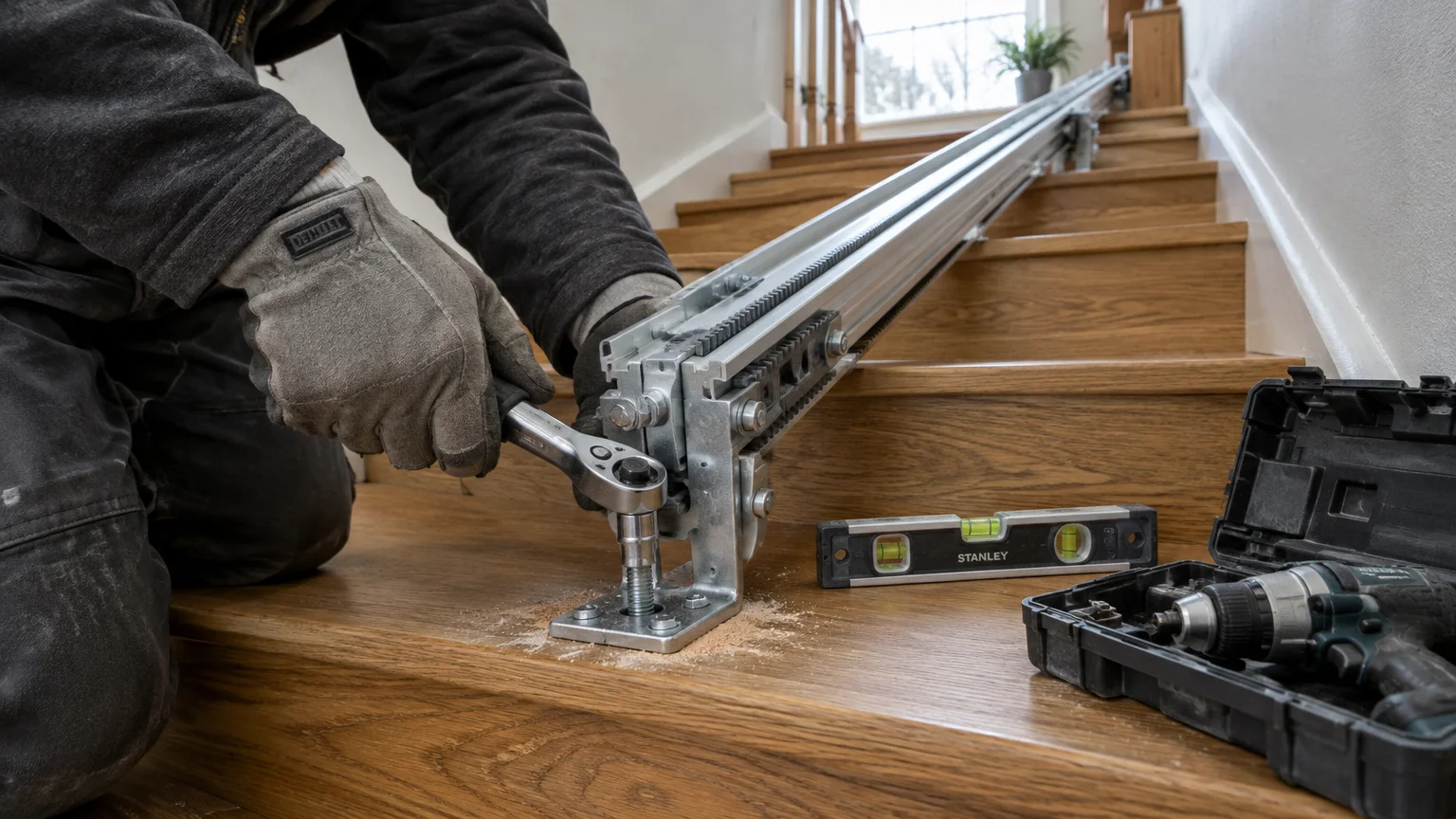
A straight stair lift operates on a standardized, single-piece aluminum rail. Technicians bolt the rail directly into your stair treads rather than your drywall.
Straight rails require no custom manufacturing. Installers cut standard factory extrusions on-site to match the exact length of your staircase.
A curved stair lift requires custom engineering. Manufacturers design these rails to follow the unique contour of staircases with turns, intermediate landings, or pie-shaped steps.
Curved systems use modular tubular steel or custom-bent twin rails. Factory technicians bend each rail to millimeter precision using photogrammetric surveys of your home.
When weighing a straight vs curved stair lift, track mechanics dictate both pricing and scheduling. Standard straight systems install in hours, whereas curved tracks demand extended fabrication times.
- Straight lift drive system: Uses a rack-and-pinion steel gear strip mounted along an aluminum track.
- Curved lift drive system: Employs internal dual-cable drives or concealed gear racks inside rounded steel tubes.
- Straight track fabrication: Stock rails cut to size from inventory in the technician’s van.
- Curved track fabrication: Custom factory bending requiring digital 3D photography measurements.
- Lead time variance: Straight units arrive within 2 to 5 business days; custom curved units require 3 to 6 weeks.
Stair Lift Cost Two Story Configurations
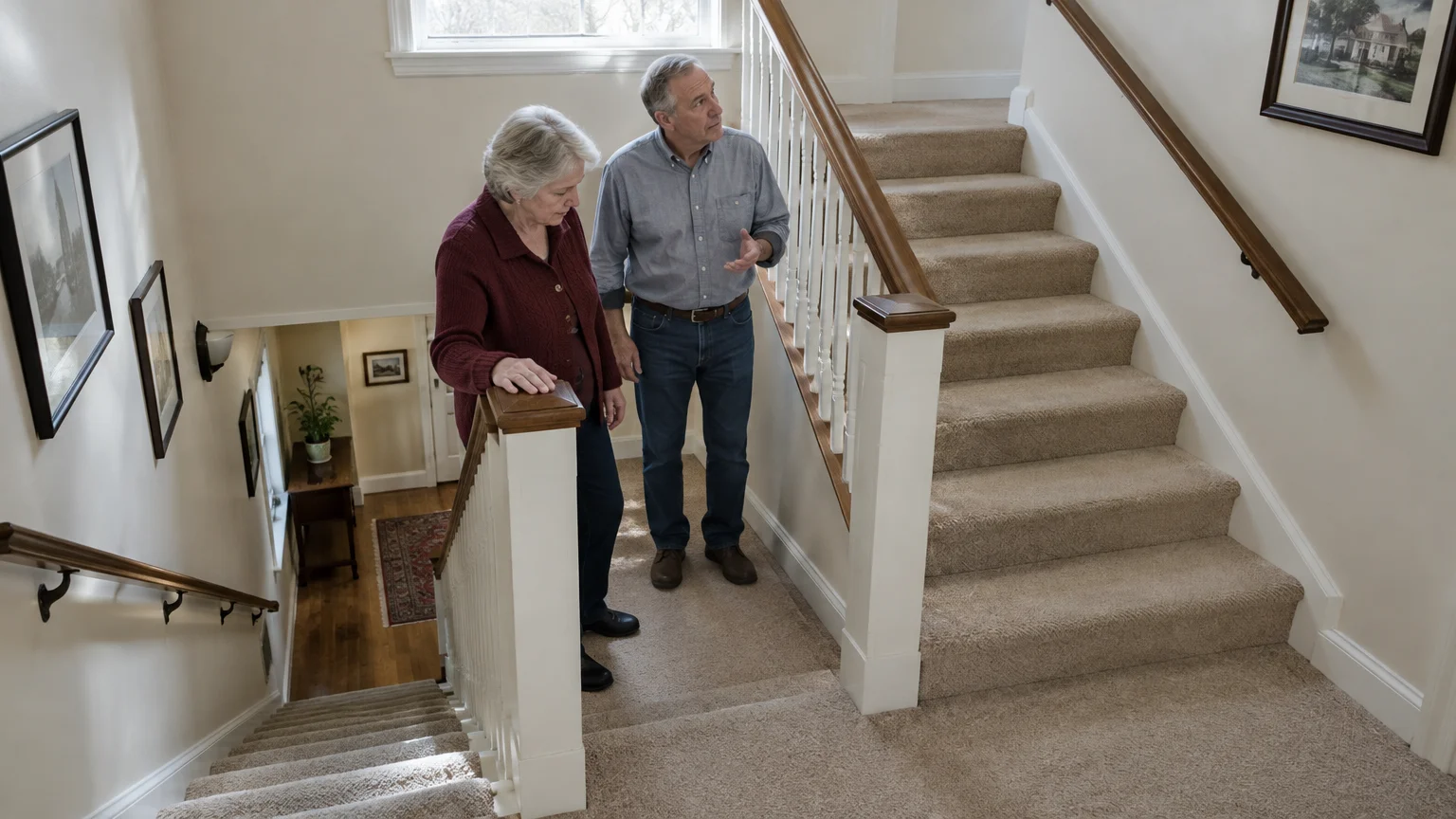
Two-story houses present distinct architectural challenges. If your stairs climb straight from the first floor to the second without turns, a single straight lift solves the problem.
A stair lift is often combined with other key home modifications for accessibility to keep your entire floor plan functional.
A standard straight installation runs between $2,500 and $5,500. This price covers the chair carriage, straight rail segments, factory charging stations, and basic professional labor.
Many two-story homes feature an intermediate landing with a 90-degree or 180-degree turn. In this layout, you face a major mechanical choice.
You can purchase two separate straight lifts, placing one on each flight. This stair lift cost two story setup totals between $5,000 and $8,000 fully installed.
However, running two straight lifts requires you to stand up and switch seats midway. For a 75-year-old living alone, standing unassisted on an intermediate landing carries severe fall risks.
A continuous curved stair lift solves this transfer issue. The custom rail glides across the flat landing and continues up the second flight without stopping.
Continuous curved systems range from $9,500 to $16,000 or more. The higher investment buys absolute safety by keeping you seated from the bottom floor to the top hallway.
- Single continuous flight (12 to 14 steps): $2,500 to $5,500 total installed cost.
- Two straight lifts (split flight with landing): $5,000 to $8,000 total installed cost.
- Custom curved rail (continuous run around landings): $9,500 to $16,000+ total installed cost.
- Spiral staircase custom lift: $13,000 to $19,000 total installed cost due to specialized rail curvature.
Weight Capacities and Heavy-Duty Specifications
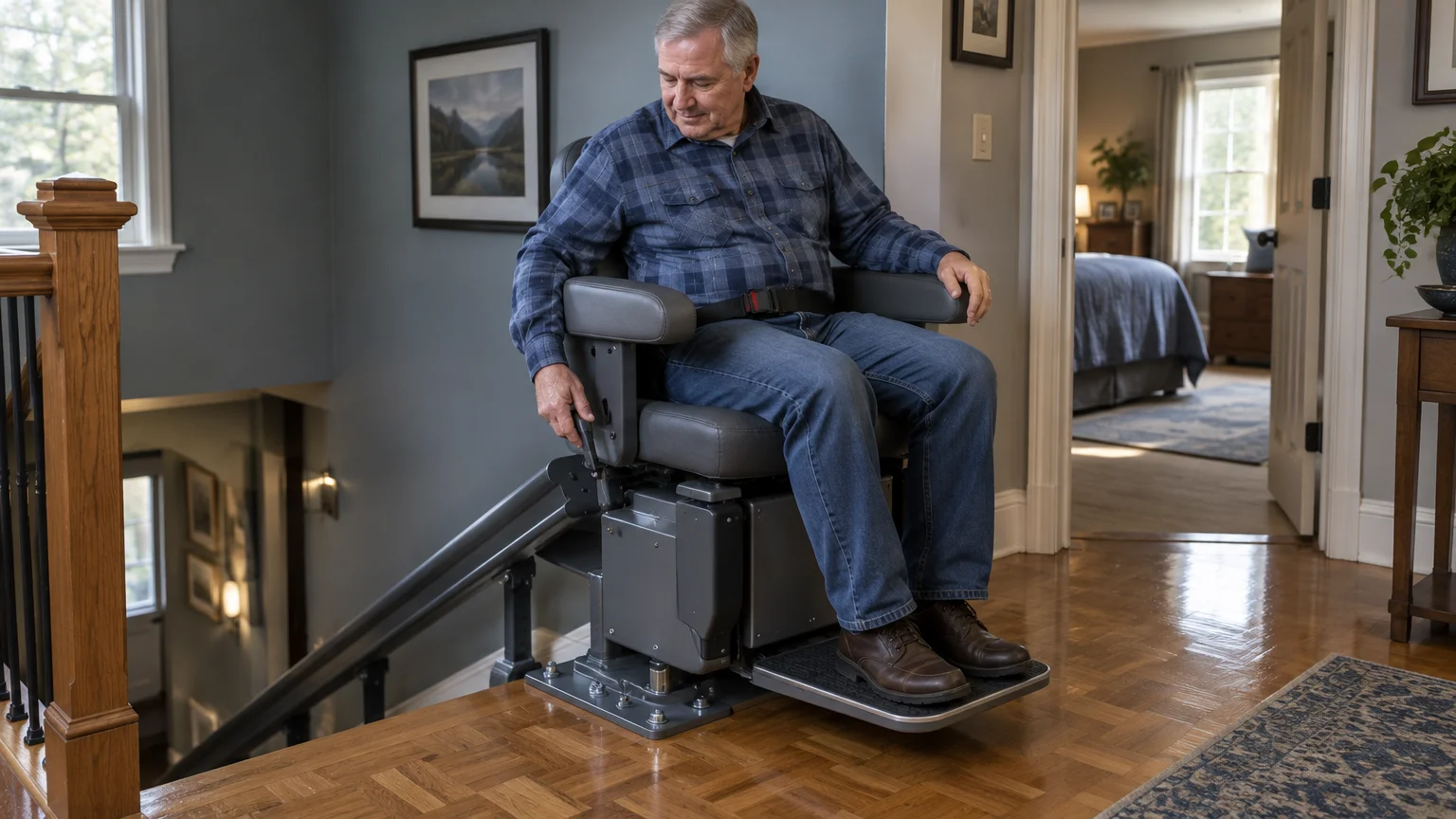
Standard stair lifts support between 250 and 350 pounds. These models use standard chassis frames and compact 24-volt direct-current electric motors.
Pairing mobility lifts on stairs with converting a bathtub to a walk-in shower addresses the two highest fall-risk zones in multi-level houses.
Exceeding the manufacturer weight rating causes motor overheating and strains the mechanical gearbox. It also risks tripping internal emergency governor brakes, stranding you between floors.
Heavy-duty and bariatric models support between 400 and 600 pounds. These models feature wider steel chassis frames, reinforced footrests, and heavy-torque motors.
Heavy-duty straight lifts typically add $500 to $1,500 to baseline equipment pricing. Heavy-duty curved lifts carry substantial premiums due to specialized track reinforcement requirements.
| Lift Configuration | Standard Weight Capacity | Typical Installed Price | Standard Seat Width | Track Profile Width |
|---|---|---|---|---|
| Standard Straight Lift (e.g., Bruno Elan SRE-3050) | 300 lbs | $2,800 – $3,600 | 19 inches | 5 inches from wall |
| Heavy-Duty Straight Lift (e.g., Bruno Elite SRE-2010) | 400 lbs | $4,200 – $5,400 | 21.5 inches | 7 inches from wall |
| Standard Custom Curved (e.g., Bruno CRE-2110) | 350 lbs | $9,500 – $14,500 | 20 inches | 7.5 inches from wall |
| Bariatric Custom Curved (e.g., Handicare Freecurve HD) | 440 lbs | $13,500 – $17,500 | 22 inches | 8.5 inches from wall |
| Factory Refurbished Straight (Certified Pre-Owned) | 300 – 350 lbs | $1,800 – $2,600 | 19 inches | 5 inches from wall |
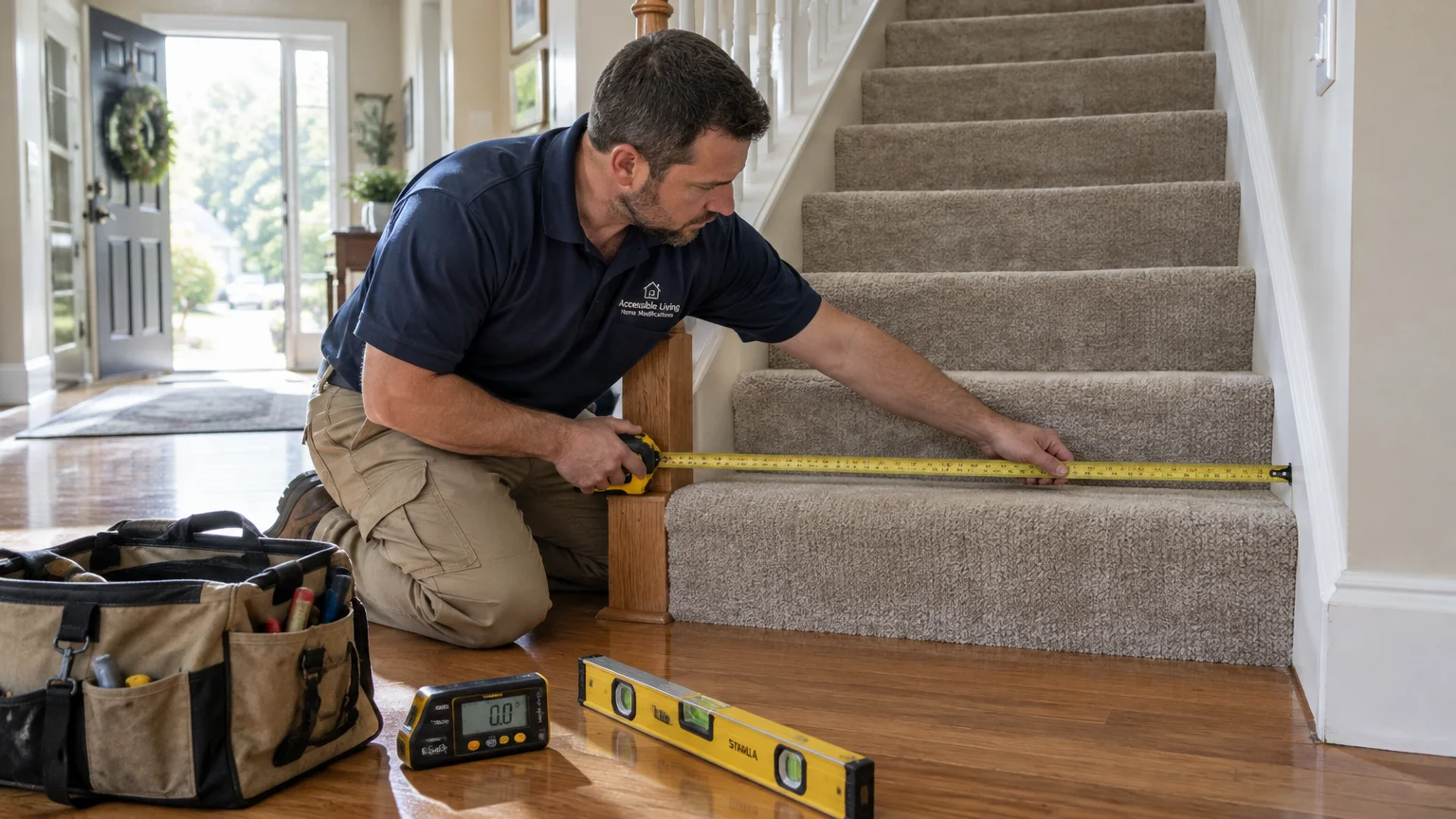
Installing Home Stair Chair Systems: Site Prep and Process
When installing home stair chair equipment, physical dimensions dictate system compatibility. Your staircase must meet strict structural width and clearance standards.
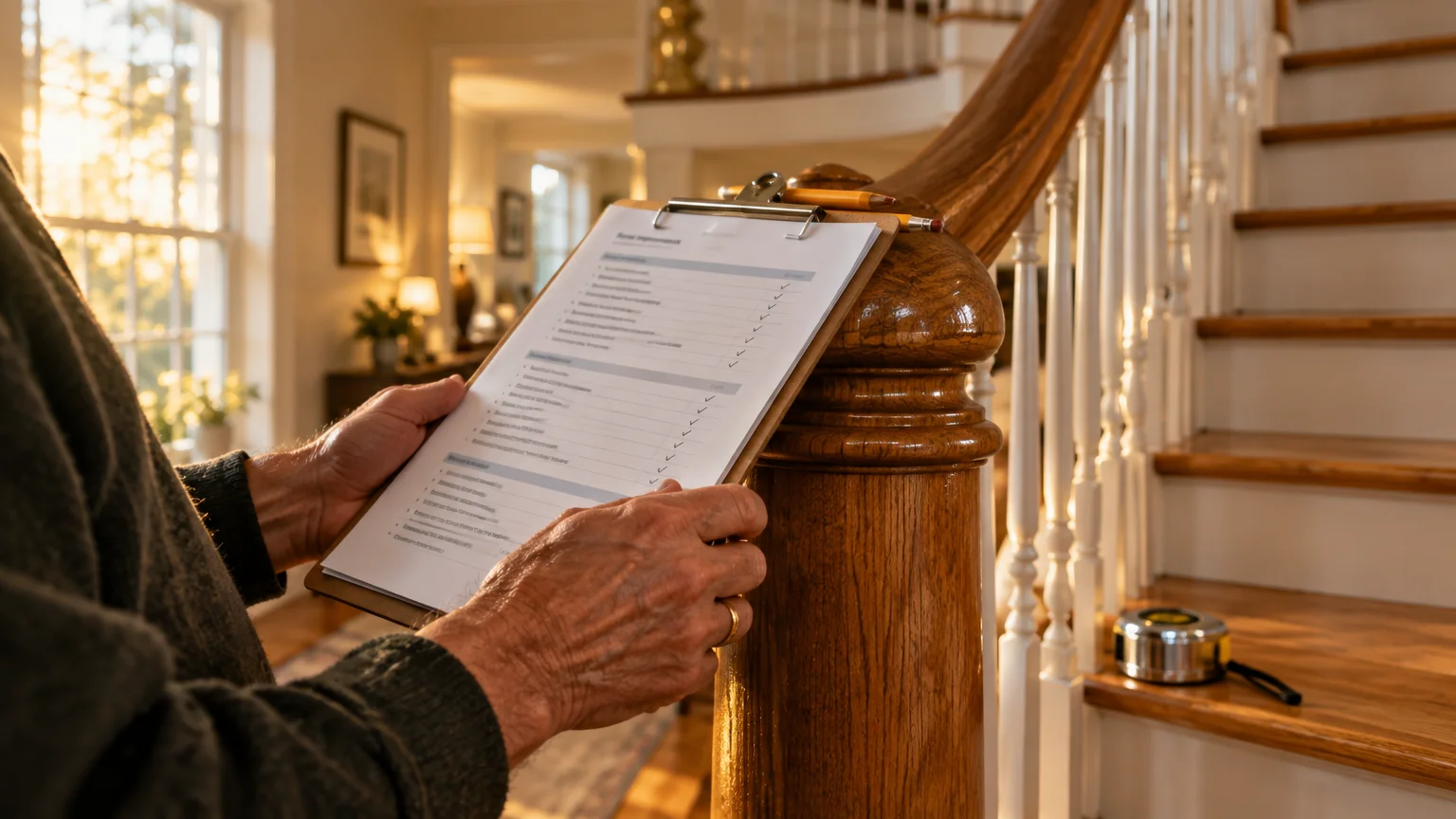
Before starting installation, conducting routine home safety checks ensures railings and stair supports are structurally sound.
Most local building codes require a minimum staircase width of 32 to 36 inches. The stair carriage and rail occupy between 11 and 14 inches when folded against the wall.
If your staircase measures under 30 inches wide, standard seated chairs will cause your knees to strike the opposing wall. Specialized perch seats or offset swivel brackets resolve this clearance barrier.
The installation process requires an accessible standard 120-volt household electrical outlet. The lift plugs into this outlet continuously to keep its internal 24-volt batteries charged.
- Digital rail survey: The technician measures riser heights, tread depths, and angle pitches with laser photogrammetry.
- Track bracket anchoring: Installers screw heavy-gauge steel clamping brackets into structural stair treads using 3-inch lag screws.
- Rail mounting and leveling: Workers secure extruded rail sections onto the brackets, checking track level at every joint.
- Carriage mounting: Technicians slide the motorized chair assembly onto the track teeth and connect mechanical stop blocks.
- Electrical hookup: The installer mounts charging docks at top and bottom limits and connects the continuous trickle charger.
- Safety sensor testing: The technician tests under-pan footrest obstruction switches, safety seat belts, and emergency mechanical stop mechanisms.
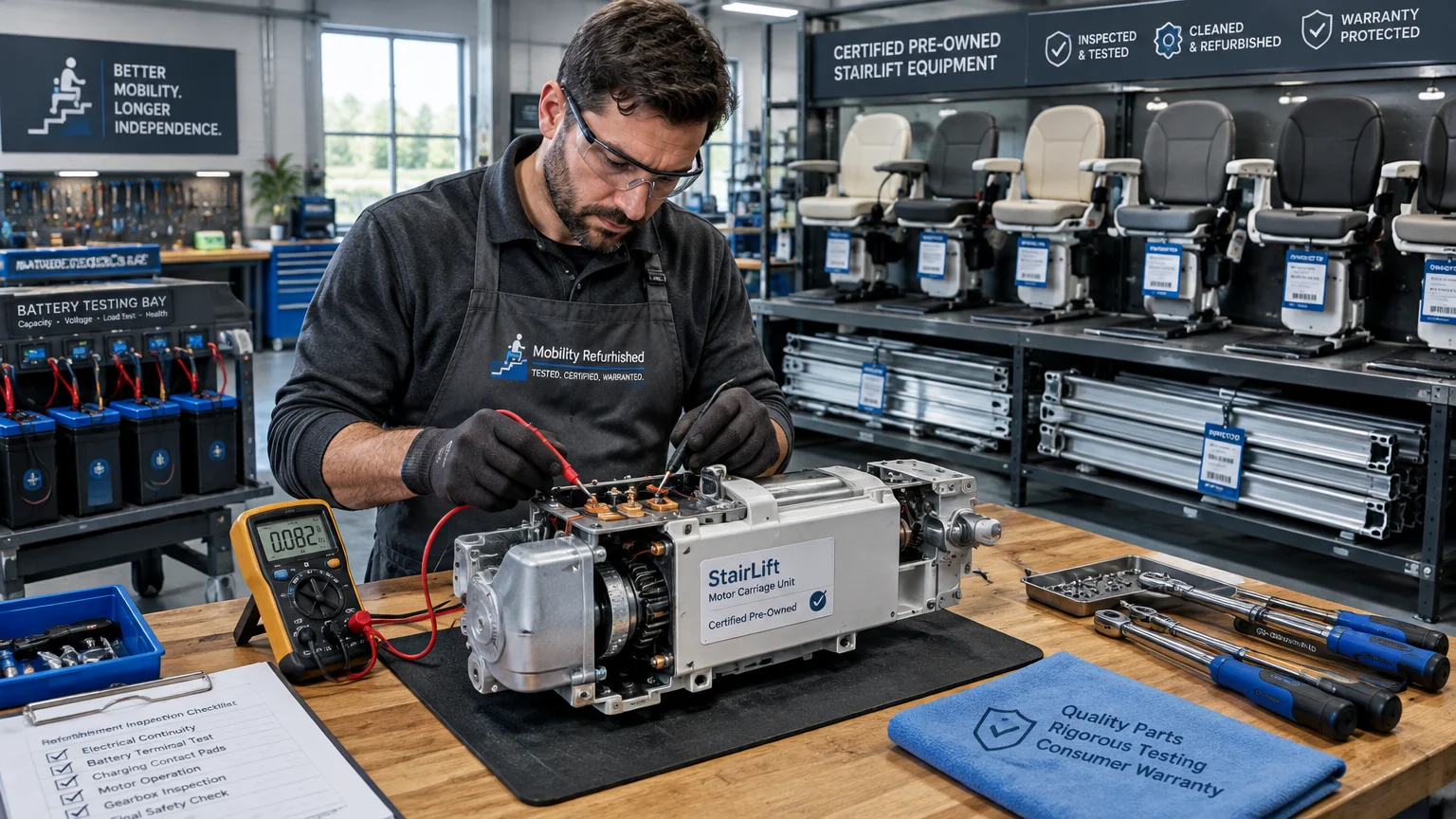
Used Stair Lift Options and Refurbished Warranties
Buying a second-hand stair lift offers substantial upfront savings. However, buying from classified websites carries severe physical and financial hazards.
Private sellers cannot safely recut or certify custom curved tracks to fit your unique floor plan. Curved rails must fit your staircase dimensions to within millimeters.
A straight track can be shortened, but buying without professional evaluation exposes you to worn gear teeth or dead batteries. Replacement battery sets cost $120 to $250 without labor.
Instead, purchase certified pre-owned units directly through licensed regional mobility dealers. Authorized dealers test motor load, replace drive gears, and install brand-new battery cells.
Dealer-refurbished straight lifts cost between $1,800 and $2,800 installed. This cuts retail pricing by roughly 30 to 45 percent while maintaining equipment safety.
Scrutinize the refurbished warranty terms before signing a contract. Private sales provide zero coverage, while reputable dealers offer specific mechanical protections.
- Major drive train coverage: Look for at least 1 to 3 years of coverage on the motor and gearbox.
- Battery replacement terms: Demand a written 90-day to 1-year warranty on newly installed battery packs.
- Circuit board and electronics: Secure a minimum 1-year guarantee on electronic relays and control switches.
- Labor callback terms: Verify that the dealer covers labor service calls for the first 60 to 90 days after installation.
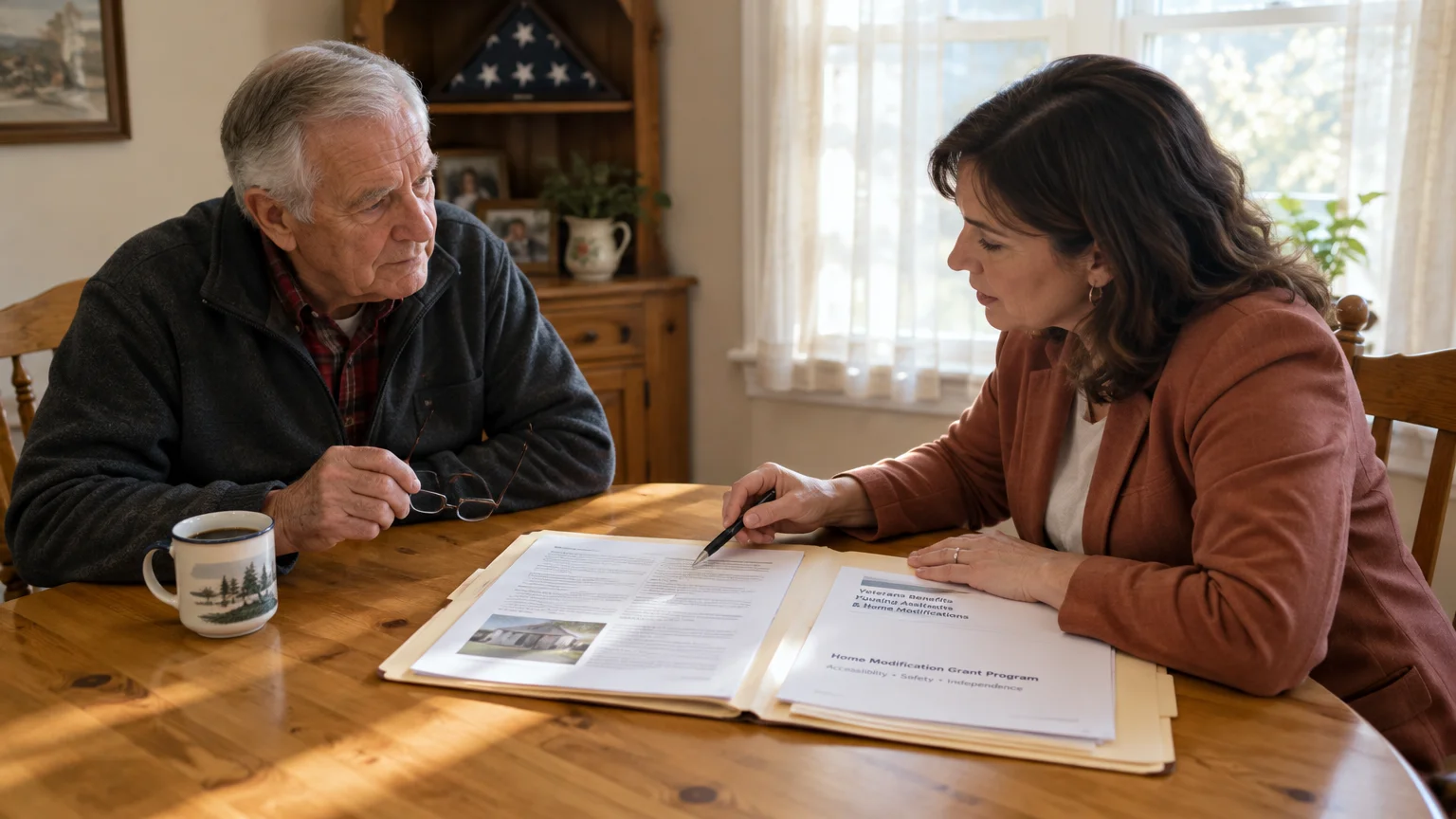
Medicare Coverage, Veteran Grants, and Tax Rules
Many seniors assume federal health programs pay for home stair lifts. The reality requires careful financial planning.
Original Medicare Part A and Part B provide zero reimbursement for stair lifts. According to Medicare.gov, the program classifies stair lifts as home modifications rather than Durable Medical Equipment.
Some Medicare Advantage plans offer supplemental home-safety benefits. These allowances rarely exceed $500 to $1,500 toward structural accessibility equipment.
Wartime military veterans hold stronger funding options through the Department of Veterans Affairs. Veterans with mobility limitations can apply for specific adaptation grants.
The VA Home Improvements and Structural Alterations grant provides up to $6,800 for service-connected conditions. For non-service-connected conditions, the lifetime cap is $2,000.
To locate state-funded assistance programs or regional loans, consult the Eldercare Locator. This public service links you with local Area Agencies on Aging that coordinate independent living funding.
Federal tax law provides valuable financial relief for private installations. You can treat medically necessary stair lifts as capital medical expenses on your annual tax return.
Under guidance from the IRS in Publication 502, medical expenses are deductible if they exceed 7.5 percent of your adjusted gross income. Because stair lifts rarely increase the appraised value of a home, you can usually deduct the full equipment and labor fee.
Worked Example: Two-Story Staircase Expense Breakdown
Consider a 75-year-old homeowner living alone with an adjusted gross income of $42,000 per year. The home features a split-level staircase with 8 lower steps, a flat 48-inch square landing, and 6 upper steps.
The homeowner must choose between two distinct options: two straight lifts with a mid-landing seat transfer, or a single custom continuous curved lift. An electrician must also install a dedicated outlet.
The local licensed electrician charges $275 to install a 120-volt outlet near the staircase baseboard. The physical installation occurs over a single day.
Evaluating the hard dollar numbers clarifies the real financial tradeoff between both options.
- Option 1 (Two Refurbished Straight Lifts): Two straight units at $2,200 each ($4,400) plus $275 electrical labor equals $4,675 total expense.
- Option 2 (One Custom Curved Lift): Custom curved system with 90-degree bend ($11,200) plus $275 electrical work equals $11,475 total expense.
- The IRS deduction baseline: 7.5 percent of $42,000 adjusted gross income equals $3,150.
- Option 1 net deductible amount: $4,675 minus $3,150 yields $1,525 in deductible medical expenses on Schedule A.
- Option 2 net deductible amount: $11,475 minus $3,150 yields $8,325 in deductible medical expenses on Schedule A.
Option 1 saves $6,800 in direct out-of-pocket cash up front. However, Option 1 forces an unassisted 75-year-old to stand, pivot 90 degrees, and sit down on a narrow middle landing.
If leg weakness causes an unassisted fall on that flat landing, the medical costs will far exceed the initial $6,800 equipment savings. Option 2 provides continuous transit from hallway to hallway without physical transfer.
Frequently Asked Questions
Does a stair lift damage my staircase or wall during installation?
No, stair lifts do not attach to walls. Technicians screw support brackets directly into the structural wooden stair treads using standard lag bolts, leaving walls untouched.
What happens to my stair lift during a municipal power outage?
Modern stair lifts run on internal 24-volt battery packs charged continuously by your wall power. If household power fails, fully charged batteries deliver 15 to 25 complete trips up and down.
Can other family members still walk up the stairs normally?
Yes, standard lift seats, armrests, and footplates fold upward against the track. When folded, the chassis protrudes only 11 to 14 inches, leaving sufficient corridor room for normal foot traffic.
How often does a home stair lift require professional service?
Manufacturers recommend an annual tune-up to inspect safety brakes, lubricate track teeth, check rack rollers, and test battery charge retention. An annual service call averages $100 to $200.
Can I install a straight stair lift myself to save labor costs?
Self-installation voids factory warranties and risks mechanical failure from incorrect track alignment. Professional installation ensures exact bracket torque and validates critical emergency stop sensors.
Disclaimer: This article is for informational purposes only. Benefits, programs, and regulations can change.
We encourage readers to verify current information with official government sources and consult with qualified professionals for personalized advice.


