
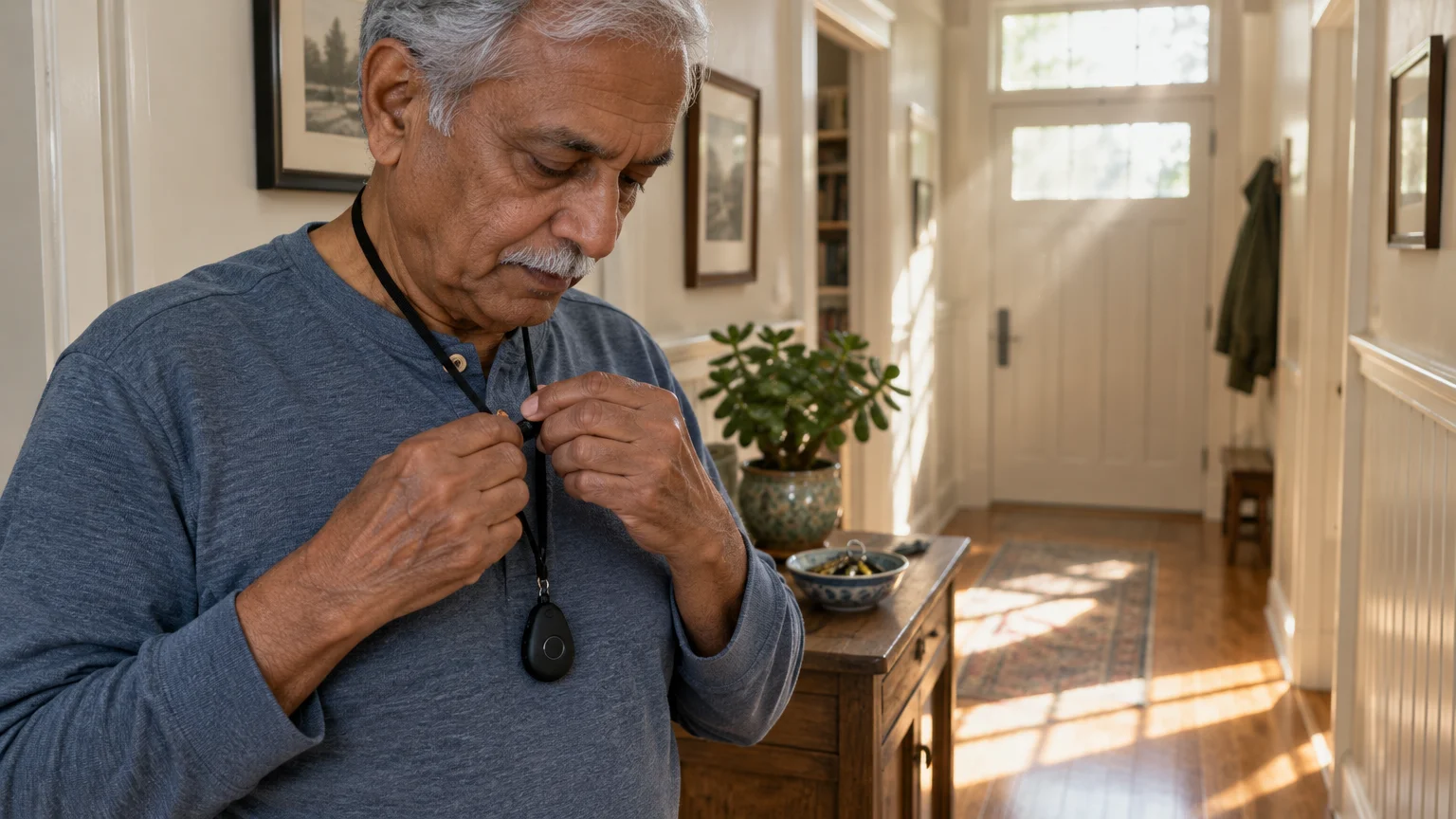
If you live alone at age 70, recurring commercial alarm fees can quickly drain your fixed retirement income. An unmonitored fall detection alert eliminates monthly bills entirely by contacting family or 911 directly.
Most buying guides overlook a major technical hazard: unmonitored devices can trap emergency calls in a family member’s voicemail unless you program strict keypress confirmation codes.
Choosing between an auto-dial medical pendant and a commercial monitoring service comes down to balancing monthly hardware independence against guaranteed human dispatch when you cannot speak.
In this guide8 sections
- The True Three-Year Cost: Subscription Services vs. Direct Hardware
- How Unmonitored Systems Route Emergency Calls
- Monitored Call Centers: Dispatch Speed and Emergency Triage
- Detection Accuracy: Medical Pendants Compared to Smartwatches
- Step-by-Step: Programming an Unmonitored Pendant Safely
- Insurance Coverage Realities: Medicare, Medicaid, and Tax Accounts
- Decision Framework: Matching Alert Systems to Your Lifestyle
- Frequently Asked Questions
The True Three-Year Cost: Subscription Services vs. Direct Hardware
Commercial medical alert providers advertise low starter rates, but recurring monthly charges accumulate rapidly over years of retirement.
Most monitored plans charge between $20 and $60 each month just for standard line connectivity.
Automatic fall detection is rarely included in base packages; companies typically bill an extra $5 to $10 every month for the sensor.
Consider a realistic 36-month cost projection for a 70-year-old using a mobile monitored pendant like the Medical Guardian MGMini.
The cellular plan costs $39.95 per month, while fall detection adds $10.00 monthly, generating a combined recurring cost of $49.95 per month.
Over three years, your monthly subscription charges total $1,798.20.
Adding a $49.95 activation fee and a $149.95 hardware purchase brings your full 36-month investment to $1,998.10.
Now evaluate a landline-based auto dial medical pendant such as the LogicMark Freedom Alert.
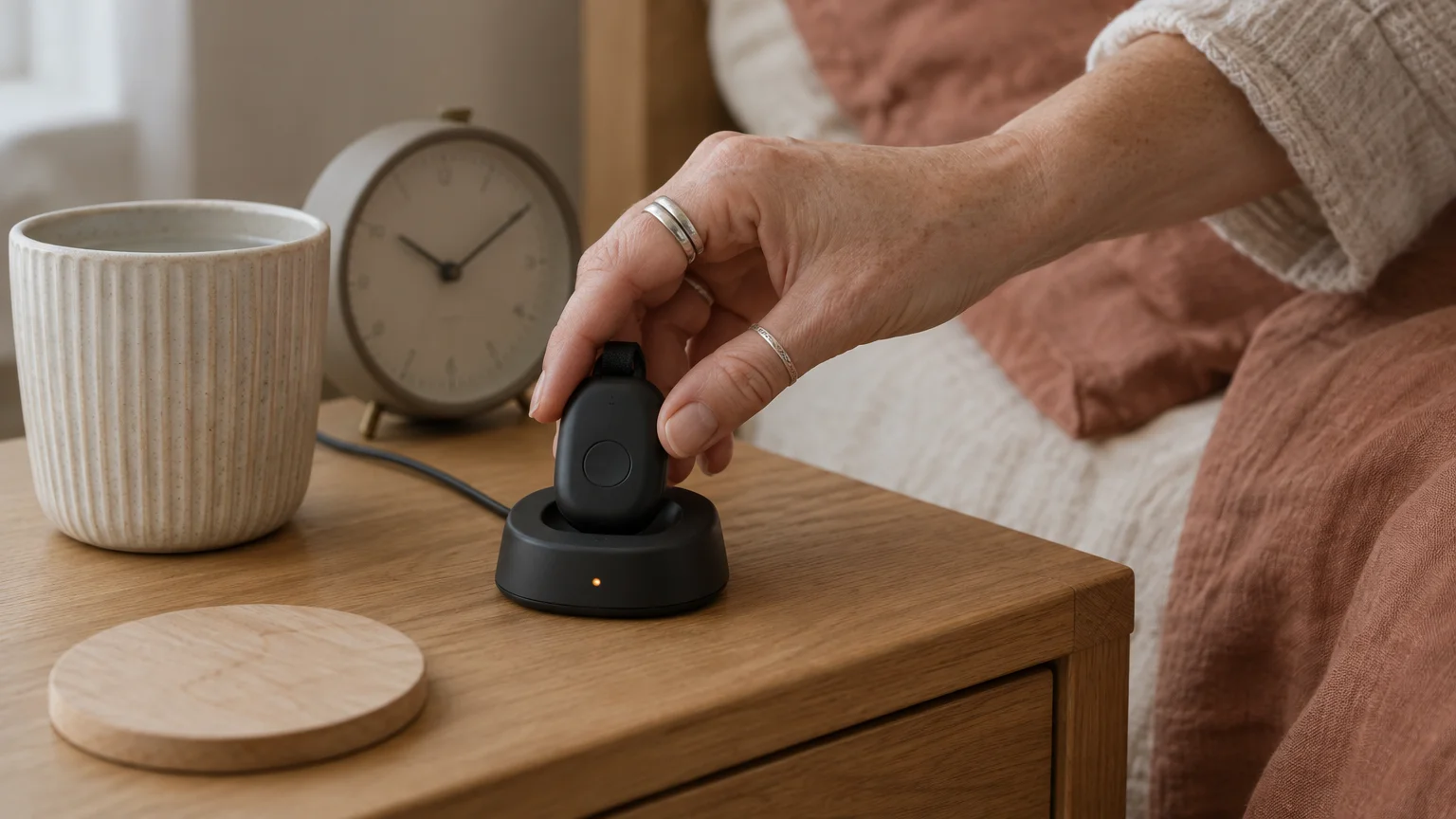
You pay a one-time equipment cost of $169.95 with zero ongoing subscription fees for the life of the unit.
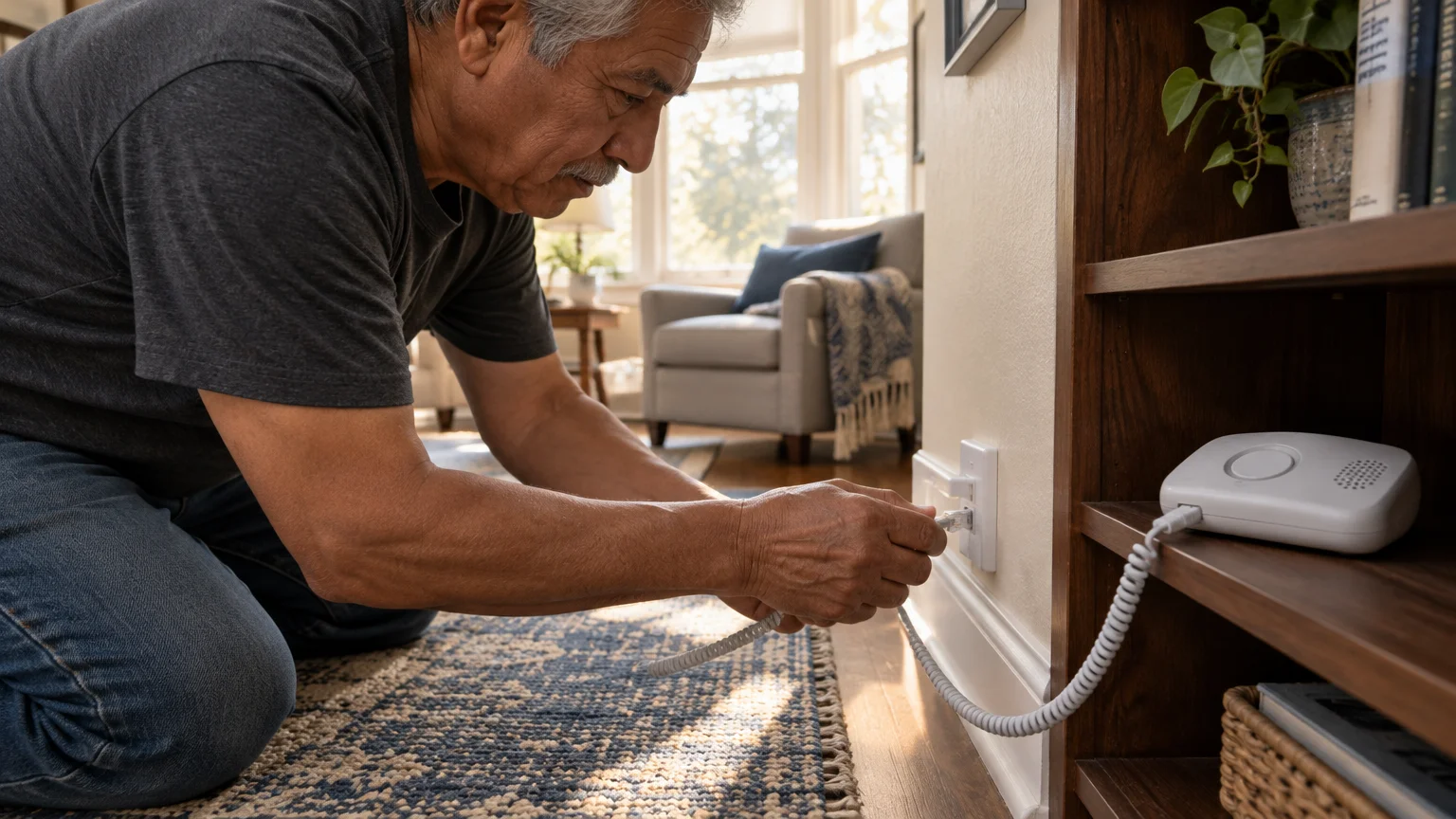
Because the base station plugs directly into your existing home telephone wall jack, your recurring monitoring expense remains exactly $0.00.
Over three years, the unmonitored landline pendant saves you $1,828.15 compared to commercial monitoring.
If you want mobile coverage away from home without a subscription, cellular unmonitored hardware offers a practical middle ground.
Standalone 4G LTE emergency pendants sell online for approximately $129.00 upfront.
You supply an emergency SIM card from a discount carrier like SpeedTalk Mobile or Red Pocket for $5.00 per month.
Over 36 months, your cellular airtime costs $180.00, resulting in a total three-year expenditure of $309.00.
This cellular unmonitored setup keeps $1,689.10 in your pocket compared to standard commercial subscriptions.
How Unmonitored Systems Route Emergency Calls
An unmonitored fall detection alert does not link to an outsourced commercial call center.
Many older adults pair these alert devices with daily senior check-in calls to guarantee consistent morning contact with family members.
Instead, the hardware functions as a programmable emergency telephone dialer.
When you press the help button or the sensor detects a heavy impact, the device dials your pre-programmed emergency contact list.
Most units store between three and five contact numbers, starting with nearby relatives, trusted neighbors, or local caregivers.
A high-output speakerphone embedded directly inside the pendant enables two-way voice communication from across the room.
However, unmonitored systems face a critical failure point known as the voicemail trap.
If your primary contact fails to answer, their cellular carrier greeting answers the incoming emergency call automatically.
A basic dialer cannot distinguish between a live human voice and a recorded answering machine.
The device plays its pre-recorded distress message into the voicemail box, concludes the call, and never dials contact number two.
To bypass this danger, you must buy hardware equipped with interactive keypress confirmation.
This feature requires the call recipient to press a designated digit, such as 5, on their telephone keypad to accept the emergency broadcast.
If the device does not receive the tone signal within fifteen seconds, it disconnects immediately and dials your next contact.
Federal regulations also restrict direct calls to emergency personnel.
The Federal Communications Commission (FCC) prohibits devices from transmitting automated, pre-recorded messages directly to 911 dispatch lines without live interaction.
Legally compliant unmonitored devices must support live two-way voice audio so dispatchers can verify the emergency before sending assistance.
Monitored Call Centers: Dispatch Speed and Emergency Triage
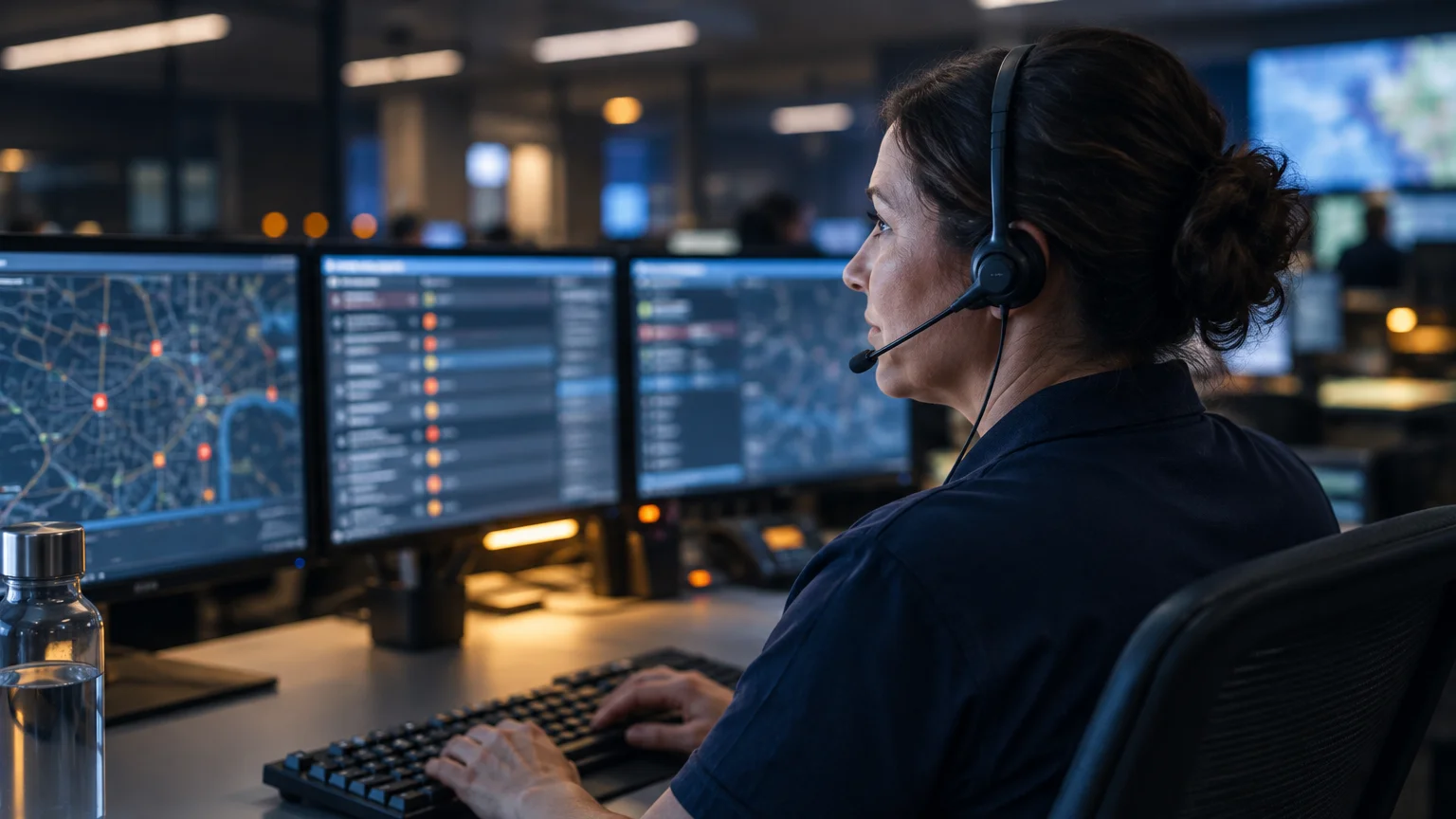
Commercial alert systems justify their monthly fees by staffing dedicated monitoring centers twenty-four hours a day.
These professional dispatch protocols mirror the emergency workflows used by modern home security systems for seniors.
Certified dispatch facilities adhere to strict Underwriters Laboratories (UL) standards to guarantee backup power, redundancy, and continuous uptime.
When an alert triggers, an operator connects over the pendant speaker within thirty to forty-five seconds.
Professional operators provide vital emergency triage that family members cannot always deliver.
Data from the Centers for Disease Control and Prevention indicates that only one in five falls causes a broken bone or severe head injury.
Many falls leave older adults physically unhurt but unable to lift themselves off the floor.
A commercial operator evaluates your physical condition calmly and can telephone your designated neighbor rather than calling local EMS.
This distinction prevents unnecessary and expensive emergency room transport bills.
When you do suffer a serious injury or lose consciousness, the operator dispatches local paramedics without delay.
The monitoring facility holds your complete emergency profile, including chronic medical diagnoses, medication lists, and front door lockbox codes.
Dispatchers share the lockbox combination with first responders so firefighters do not damage your door frame during forced entry.

Detection Accuracy: Medical Pendants Compared to Smartwatches
Fall detection technology relies on internal sensors that measure velocity, barometric pressure, and physical impact.
Similarly, replacing loose floor mats with non-slip bathroom rugs drastically lowers the likelihood of falls on slick tile surfaces.
Installing adequate nighttime walkway lighting can help eliminate the trips and stumbles that occur on dark paths to the bathroom.
A three-axis accelerometer measures sudden acceleration changes, while a barometric sensor monitors rapid drops in elevation.
The internal microprocessor looks for a sharp descent followed immediately by a hard impact and a period of immobility.
No automated system detects 100 percent of falls.
Gradual slips, such as sliding slowly off a recliner or bed onto the rug, often fail to generate the velocity needed to activate the sensor.
Wearable pendants resting on your sternum achieve higher detection accuracy than devices worn on your wrist.
Your chest represents your body’s center of mass, providing stable motion tracking during a sudden collapse.
Wrists move constantly during everyday tasks like washing dishes, sweeping floors, or gesticulating during conversation.
Consumer smartwatches, including the Apple Watch SE, use sophisticated algorithms to filter out arm movements.
However, smartwatches introduce a substantial operational liability: frequent battery depletion.
An Apple Watch requires charging every twenty-four to thirty-six hours.
If you leave your watch on the nightstand to charge while sleeping, you lose protection during nighttime bathroom visits.
In contrast, dedicated medical alert pendants feature batteries that operate for three to seven days between charges.
Landline unmonitored pendants utilize replaceable lithium coin batteries that last up to six months in standby mode.
| Device Model | Monthly Fee | Upfront Cost | Sensor Location | Battery Runtime | Emergency Destination |
|---|---|---|---|---|---|
| LogicMark Freedom Alert | $0.00 | $169.95 | Lanyard / Sternum | Up to 6 months (Replaceable) | Custom Contacts or Direct 911 |
| Guardian Alert 911 | $0.00 | $149.95 | Lanyard / Belt Clip | Up to 12 months (Replaceable) | Local 911 Dispatch Only |
| Medical Guardian MGMini | $49.95 | $149.95 | Lanyard / Belt Clip | Up to 5 days (Rechargeable) | UL-Certified Call Center |
| Apple Watch SE (Cellular) | $10.00 (Carrier) | $299.00 | Wrist Band | Up to 18 hours (Rechargeable) | Custom Contacts and 911 |

Step-by-Step: Programming an Unmonitored Pendant Safely
If you choose a medical alert without monthly fee obligations, proper setup determines whether the system works during a crisis.
Installing hardware such as key lockboxes is a simple step within broader home modifications for aging in place.
Testing your alert range works well alongside other essential home safety checks like inspecting smoke alarms and clearing hallway hazards.
Follow these steps to configure an unmonitored fall detection alert correctly:
- Organize your contact hierarchy: Enter numbers for people who live within a fifteen-minute drive of your home. Place your closest neighbor first, followed by nearby family members.
- Enable the confirmation handshake: Access the system menu and activate interactive keypress confirmation. Ensure that anyone answering must press a specific number key to acknowledge the transmission.
- Establish 911 as the final fallback: Program 911 as the terminal number in the dial sequence. If your family members miss the call, the device automatically routes to professional emergency dispatchers.
- Conduct full-coverage range testing: Walk through every room in your house, including the basement and garage, while pressing the system test button. Confirm that the base station receives signals clearly through all walls.
- Install an outdoor mechanical lockbox: Place a sturdy lockbox containing a spare house key near your front porch. Provide the four-digit combination code to all contacts programmed into your pendant.
“An ounce of prevention is worth a pound of cure.” — Benjamin Franklin
Taking thirty minutes to program these settings prevents technical failures when seconds count.
Verify your contact phone numbers every six months to confirm no one has changed cellular carriers or telephone lines.
Insurance Coverage Realities: Medicare, Medicaid, and Tax Accounts
Many seniors assume Medicare covers personal emergency response systems, but traditional rules are restrictive.
Comparing Medigap and Medicare Advantage options can help clarify which plan structures offer allowances for safety and wellness devices.
Original Medicare (Part A and Part B) does not pay for fall alert pendants or recurring monitoring services.
The Centers for Medicare & Medicaid Services does not classify personal emergency response systems as Durable Medical Equipment.
You can confirm these specific equipment exclusions directly on Medicare.gov before purchasing hardware.
However, private Medicare Advantage plans (Part C) frequently offer supplemental health allowances.
Some Medicare Advantage policies provide an annual flex card allowance that reimburses the cost of monitored or unmonitored safety pendants.
Review your plan’s annual Evidence of Coverage document to see if fall hardware qualifies under your wellness benefits.
Medicaid programs offer broader financial support for low-income seniors through Home and Community-Based Services waivers.
These state-administered waivers regularly pay equipment and service fees to help older adults remain safely in their homes.
You can identify local waiver programs by contacting your Area Agency on Aging through the Eldercare Locator service.
Additionally, you can pay for fall detection devices using tax-free dollars from a Health Savings Account or Flexible Spending Account.
The Internal Revenue Service permits this expense if a licensed physician signs a Letter of Medical Necessity documenting your fall risk.
Advocacy organizations like AARP provide comprehensive guides explaining how independent living tools integrate with local community resources.

Decision Framework: Matching Alert Systems to Your Lifestyle
Selecting the right protection requires an honest assessment of your health profile, daily habits, and local family support.
An unmonitored auto dial medical pendant works exceptionally well if your situation meets specific criteria:
- You have two or more reliable family members or neighbors living within ten to fifteen minutes of your home.
- You live on a fixed income and refuse to pay recurring monthly subscription fees.
- You spend ninety percent of your time inside your house or immediate yard.
- You manage your daily medication and mobility routines without significant cognitive impairment.
- Your primary telephone service uses a stable landline or reliable 4G LTE cellular coverage.
Conversely, a commercial monitored alert service is the safer choice under different circumstances:
- You live alone and have no friends, neighbors, or relatives residing in your immediate town.
- You have a medical diagnosis causing frequent fainting, seizures, or sudden loss of consciousness.
- You travel frequently, take public transit, or spend extensive time walking outdoors alone.
- Your adult children live in different time zones or cannot answer emergency phone calls during working hours.
- You want trained operators to manage EMS communications and coordinate front door lockbox entry codes.
Weigh the ongoing financial expense against your real-world support network before signing an annual contract.
Frequently Asked Questions
Can an unmonitored fall alert call 911 directly?
Yes, many unmonitored models can dial 911 directly. However, the Federal Communications Commission requires the unit to feature two-way voice communication so dispatchers can confirm the emergency before sending assistance.
What happens if an unmonitored alert reaches an answering machine?
Basic dialers may treat voicemail greetings as answered calls and stop dialing. You must select hardware with interactive keypress confirmation, which forces the answering recipient to press a number key to accept the call.
Does Medicare pay for medical alerts without monthly fees?
Original Medicare does not cover alert systems because they are not considered Durable Medical Equipment. Some private Medicare Advantage plans offer supplemental wellness allowances that cover hardware purchases.
Are smartwatches as reliable as auto-dial pendants for fall detection?
Smartwatches detect hard falls effectively, but their wrist placement increases false alarms from everyday arm movements. Furthermore, smartwatches require daily charging, leaving you unprotected if the battery dies overnight.
Do unmonitored medical alerts work during electrical power outages?
Most landline base stations include backup batteries that operate for twelve to thirty-six hours during power loss. The wireless pendants themselves run on independent batteries unaffected by household electrical failures.
Disclaimer: This article is for informational purposes only. Benefits, programs, and regulations can change.
We encourage readers to verify current information with official government sources and consult with qualified professionals for personalized advice.



1 Comment