
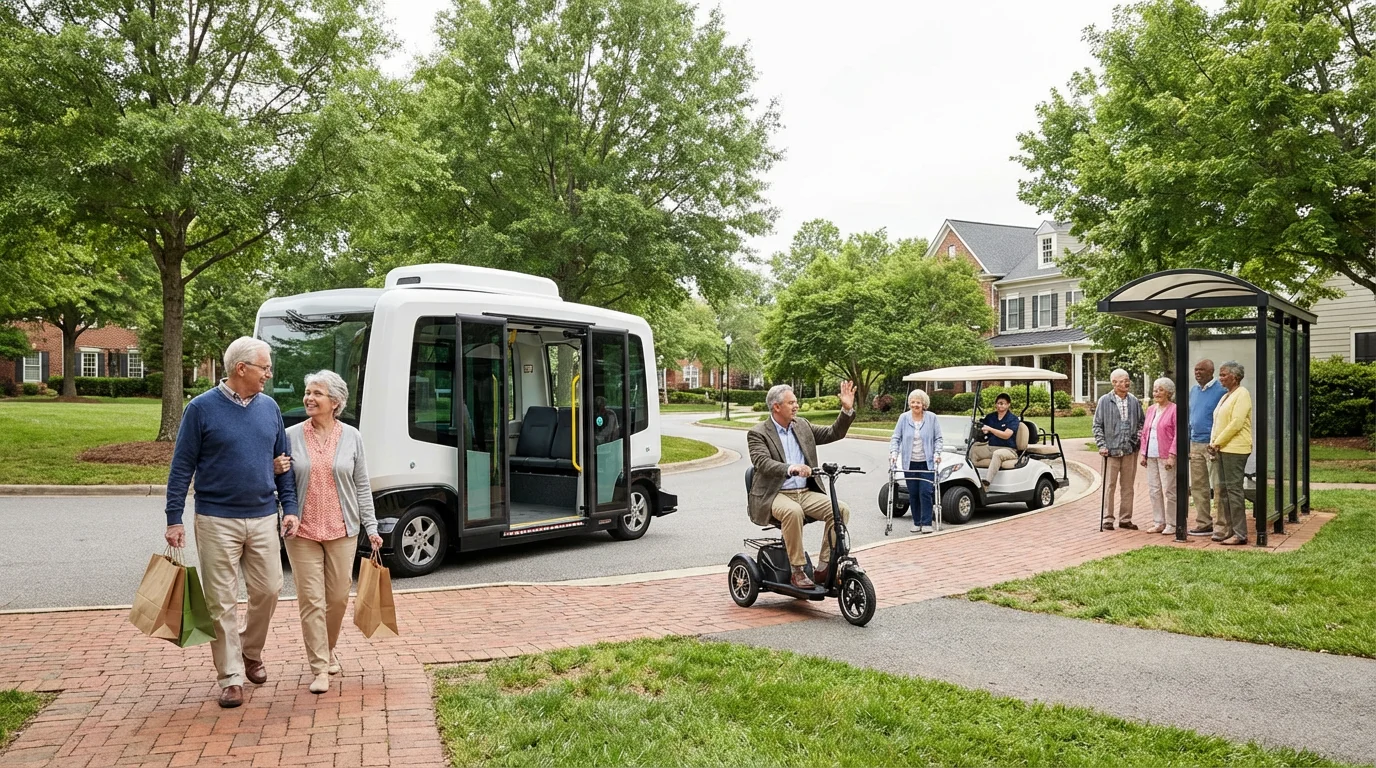
If you have stopped driving or plan to, most communities offer four kinds of rides: discounted buses and trains, ADA paratransit, rideshare or taxi, and volunteer or senior-center drivers. Each suits different trips, and most people end up using two or three.
Rides to medical care have their own routes through Medicaid, some Medicare Advantage plans and the VA. The quickest way to learn what runs near you is a single phone call, covered first below.
Giving up the keys is common. USAging estimates that about 600,000 older adults stop driving each year, and transportation is the top reason people contact the Eldercare Locator.
AAA Foundation for Traffic Safety research on driving cessation linked giving up the car to declines in health, including more depressive symptoms. That is a good reason to set up a ride plan before you need it.
If you are still deciding when to stop, see our guide to driving in retirement and knowing when to stop.
One call to find local rides: Eldercare Locator, 211 or your Area Agency on Aging
Call the Eldercare Locator at 1-800-677-1116 or search eldercare.acl.gov by ZIP code. It connects you to your local Area Agency on Aging, which funds or coordinates most senior ride programs.
You can also dial 2-1-1 from most US phones for a local community services line that keeps lists of ride programs, including church and charity drivers.
To screen yourself online, the USAGov Benefit Finder covers federal programs and links to state agencies. NCOA’s BenefitsCheckUp screens for state and local senior programs, including transit vouchers and community ride services.
When you reach a program, these questions sort out quickly whether it fits:
- Who qualifies: age, disability, income or county of residence?
- How far ahead must I book, and are weekend or evening rides available?
- What does a trip cost, and is a donation expected?
- Will the driver help me to the door, and can a companion ride?
- Does it cross county lines or go to specialists in another town?
Bus and rail fares: the federal half-fare rule for off-peak trips
Transit agencies that receive federal urbanized-area formula funding must charge older riders, riders with disabilities and anyone showing a Medicare card no more than half the peak fare during off-peak hours.
For example, if the regular peak bus fare is $2.50, an off-peak trip on a reduced fare can cost no more than $1.25. Many agencies go further, with lower starting ages, free rides or capped monthly passes.
Most agencies ask you to get their own reduced-fare card once, using a photo ID or Medicare card as proof. Ask the agency’s customer service line whether it also offers free travel training, where staff ride a route with you the first time.

ADA paratransit: who qualifies and what the agency must provide
Age alone does not qualify you. Under the federal ADA paratransit eligibility standards, you qualify if a disability or health condition prevents you from using the accessible bus or train on your own.
That covers three situations: you cannot find your way through the system independently, you cannot board an accessible vehicle, or your condition keeps you from getting to or from the stop.
Where a city runs fixed-route buses, its paratransit must serve trips within three-quarters of a mile of those routes, on the same days and hours. You must be able to book by the day before.
The fare can be no more than twice the regular fixed-route fare, so a $2.50 bus fare means at most $5.00 for paratransit. A personal care attendant rides free, and one companion may ride at the same fare.
You apply through the transit agency, often with a form from a health professional and an in-person assessment. If the agency has not decided within 21 days of a complete application, it must treat you as eligible until it does.
Approval also travels with you. Other US transit systems must give a visitor with paratransit eligibility service for up to 21 days a year.
Booking Uber or Lyft without a smartphone app
Rideshare is the most flexible option for same-day or evening trips, but you pay the full market fare. Both Uber and Lyft let riders schedule pickups in advance, which helps for appointments.
If you do not use the app, a relative can book for you. Uber describes a family profile that lets an account holder request and pay for rides for family members, with trip details sent to the rider.
Phone concierge services fill the gap for people without smartphones. GoGoGrandparent, for example, lets you call a number to book an Uber or Lyft through its operators, and it charges its own fees on top of the fare, listed on its website.
Organizations can also book for you. Uber Central and Lyft’s business and health ride tools let clinics, senior communities and agencies order rides, and you get a call or text when the car arrives, so ask your doctor’s office or senior center.
Lyft has also introduced Lyft Silver, an app mode for riders 65 and older with larger text and simpler screens. Check Lyft’s own pages for where it is offered.
Before getting in, confirm the plate, car and driver name. Book only through the company’s official app or a service you looked up yourself, since fake ride offers are a common route for scams aimed at older adults.

Volunteer drivers, senior center vans and taxi vouchers
Many counties and senior centers run dial-a-ride vans that pick you up at home for shopping, meals and appointments. The National Aging and Disability Transportation Center’s consumer guide explains how these demand-response services differ from ADA paratransit.
Volunteer driver programs, often run by faith groups or nonprofits, are usually free or ask for a donation. Drivers often help you to the door and may wait during an appointment, but seats are limited, so book as early as allowed.
Some Area Agencies on Aging and counties hand out taxi vouchers or subsidized ride credits, often based on age or income. Ask about these on the same call where you ask about vans.

Getting to medical appointments: Medicare, Medicaid and VA rides
Original Medicare does not pay for routine rides to the doctor. Part B covers ambulance transport only when other transportation could endanger your health, and scheduled non-emergency trips need a doctor’s written order.
Our article on ambulance rides between facilities explains those rules in more detail.
Many Medicare Advantage plans add rides as an extra benefit, often a set number of one-way trips a year. Check your plan’s Evidence of Coverage or call the plan, since these benefits can change every January.
If you compare plans in the fall partly for rides, a State Health Insurance Assistance Program counselor (shiphelp.org) can check plan transportation benefits with you for free.
Medicaid must ensure transportation to covered care for enrollees with no other way to get there, including people with both Medicare and Medicaid. You book through your state’s Medicaid ride broker or managed care plan, often several days ahead.
Enrolled veterans can ask about the VA’s Veterans Transportation Program, which provides rides to VA medical facilities and help with travel reimbursement. Our guide to veteran benefits for seniors covers who qualifies for VA health care.
Which ride option fits which trip
| Option | Best for | How to book | Cost |
|---|---|---|---|
| Bus or rail | Regular errands if you can reach a stop | Agency trip planner; reduced-fare card | At most half the peak fare off-peak at federally funded agencies |
| ADA paratransit | A disability keeps you off the bus | Apply first, then book by the day before | No more than twice the bus fare |
| Uber, Lyft or taxi | Same-day, evening or out-of-area trips | App, family profile, phone concierge or scheduled ride | Market fare, plus any concierge fee |
| Volunteer driver or senior van | Appointments and shopping with door help | Senior center or Area Agency on Aging | Often free or a donation |
| Medicaid ride | Medicaid-covered care | State ride broker or Medicaid plan | Paid by Medicaid |
| VA transportation | Care at VA facilities | Transportation office at your VA facility | Free for eligible veterans |
Keep the numbers for your transit agency, paratransit line, one rideshare backup and your Medicaid, plan or VA ride line in one list by the phone. Your plan or state Medicaid office has the final word on which medical rides it pays for.



4 Comments
Comments are closed.