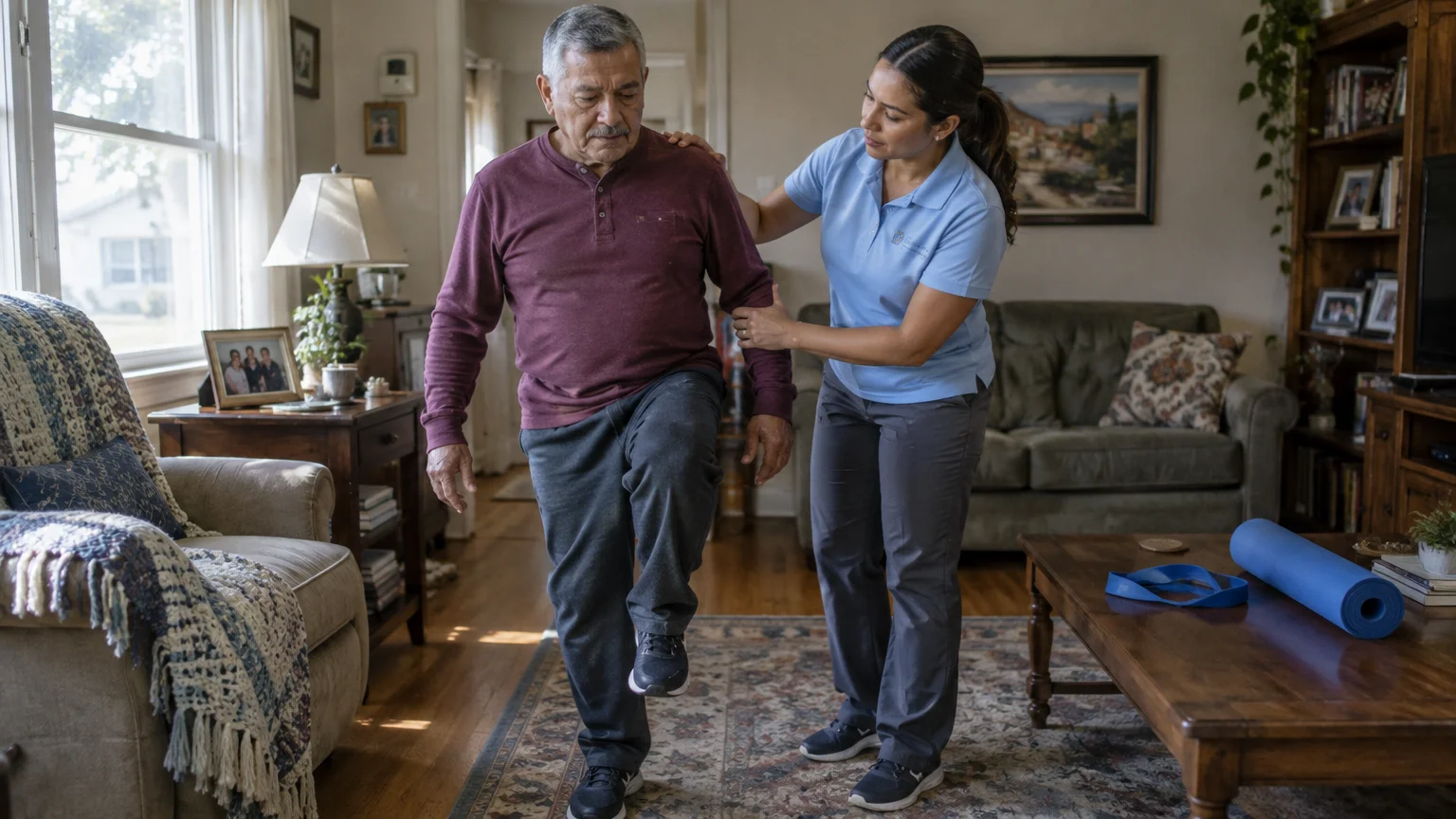
If you recently had knee replacement surgery, walking to your driveway might feel manageable, but driving to an outpatient clinic remains impossible. Traditional Medicare covers licensed physical therapists who deliver care directly inside your private living room even if you are not strictly homebound.
Many seniors assume receiving therapy at home requires meeting strict homebound rules under Medicare Part A. Medicare Part B mobile physical therapy operates under outpatient rules, letting mobile therapists treat you in your residence without forcing you to remain confined indoors.
In this guide8 sections
- The Two Medicare Pathways for In-Home Physical Therapy
- The Homebound Rule: Part A vs Part B Differences
- Comparing Part A Home Health vs Part B In-Home Therapy
- Coverage Limits, KX Modifiers, and Medical Reviews
- Cost Breakdown and Billing Codes: A Knee Surgery Scenario
- Why Medicare Prohibits Simultaneous Part A and Part B Care
- Step-by-Step Guide to Booking In-Home Outpatient Therapy
- Frequently Asked Questions
The Two Medicare Pathways for In-Home Physical Therapy
Medicare offers two distinct payment routes for physical therapy delivered where you live. Knowing which path funds your treatment determines your out-of-pocket costs and physician documentation requirements.
If you are enrolled in private managed care, be aware that Medicare Advantage networks and referrals may impose additional prior authorization rules on in-home visits.
Understanding your treatment settings is an essential part of maximizing your Medicare benefits during post-operative recovery.
Medicare Part A pays for physical therapy through the formal Home Health benefit. This pathway requires you to be certified as homebound by an attending medical doctor.
Medicare Part A covers 100% of approved therapy charges, leaving you with a $0 copay. However, your physician must document that leaving home requires taxing effort and ongoing assistance.
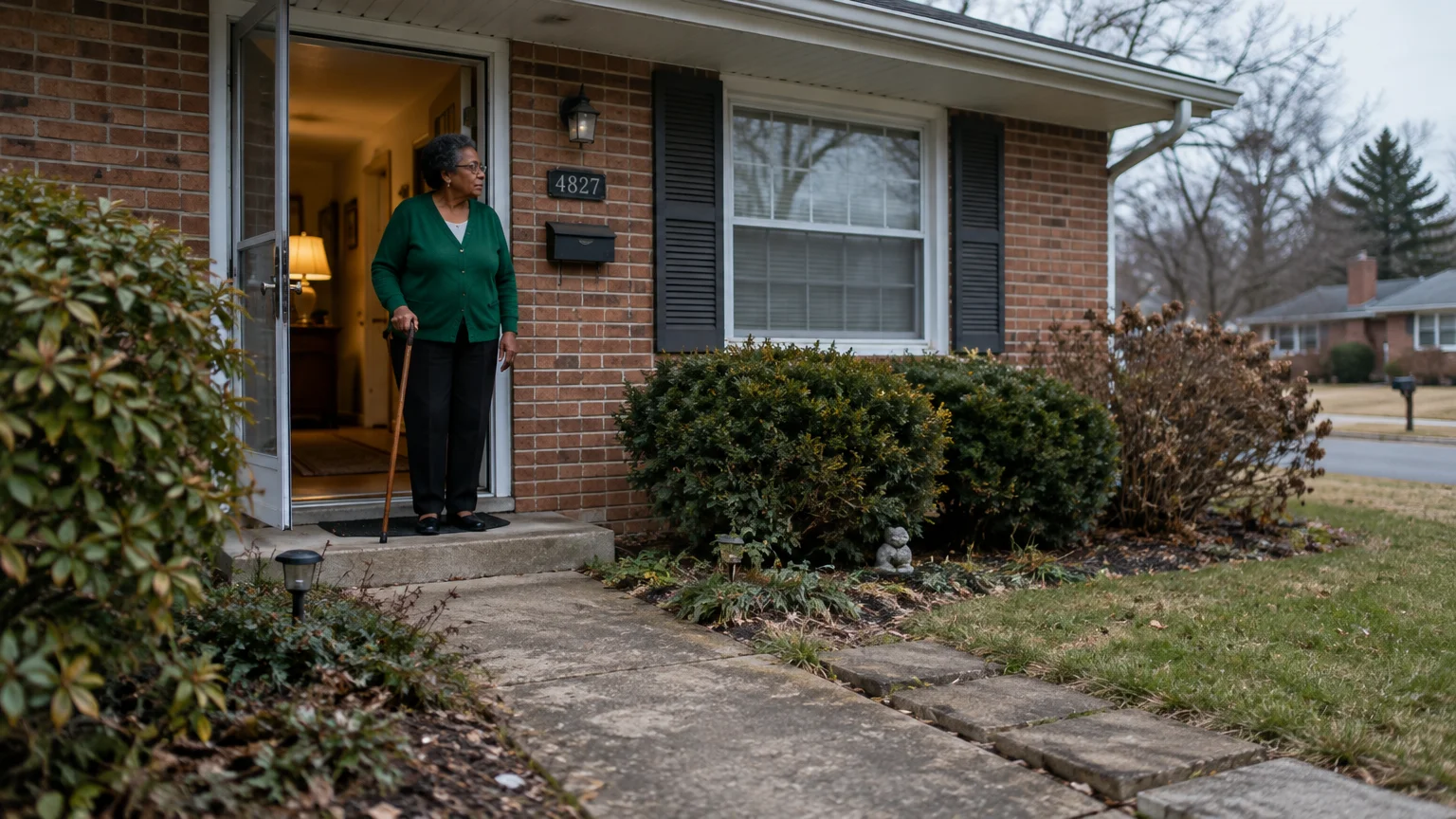
Medicare Part B covers outpatient physical therapy in a home setting through mobile therapy practices. This arrangement treats your private living room as an outpatient clinic extension.
Under Part B, you do not need to meet any homebound definition. You simply pay standard outpatient cost-sharing amounts for every in-home appointment you complete.
Both programs deliver skilled physical rehabilitation straight to your door. The difference centers entirely on your mobility status outside the house and how your therapist bills Medicare.
Before scheduling care, verify whether the treating provider bills under Part A or Part B. That single administrative distinction dictates your financial responsibility and clinical qualification criteria.
The Homebound Rule: Part A vs Part B Differences
The standard definition of homebound status confuses many recovering seniors. Under Medicare Part A regulations, you qualify as homebound only if leaving home requires taxing, considerable effort.
Ensuring your outpatient coverage is active requires navigating Medicare enrollment periods properly before planning elective procedures.
You must also require supportive devices like walkers or crutches, special transportation, or physical help from another individual. Leaving home must happen infrequently and for short durations, such as attending religious services or doctor appointments.
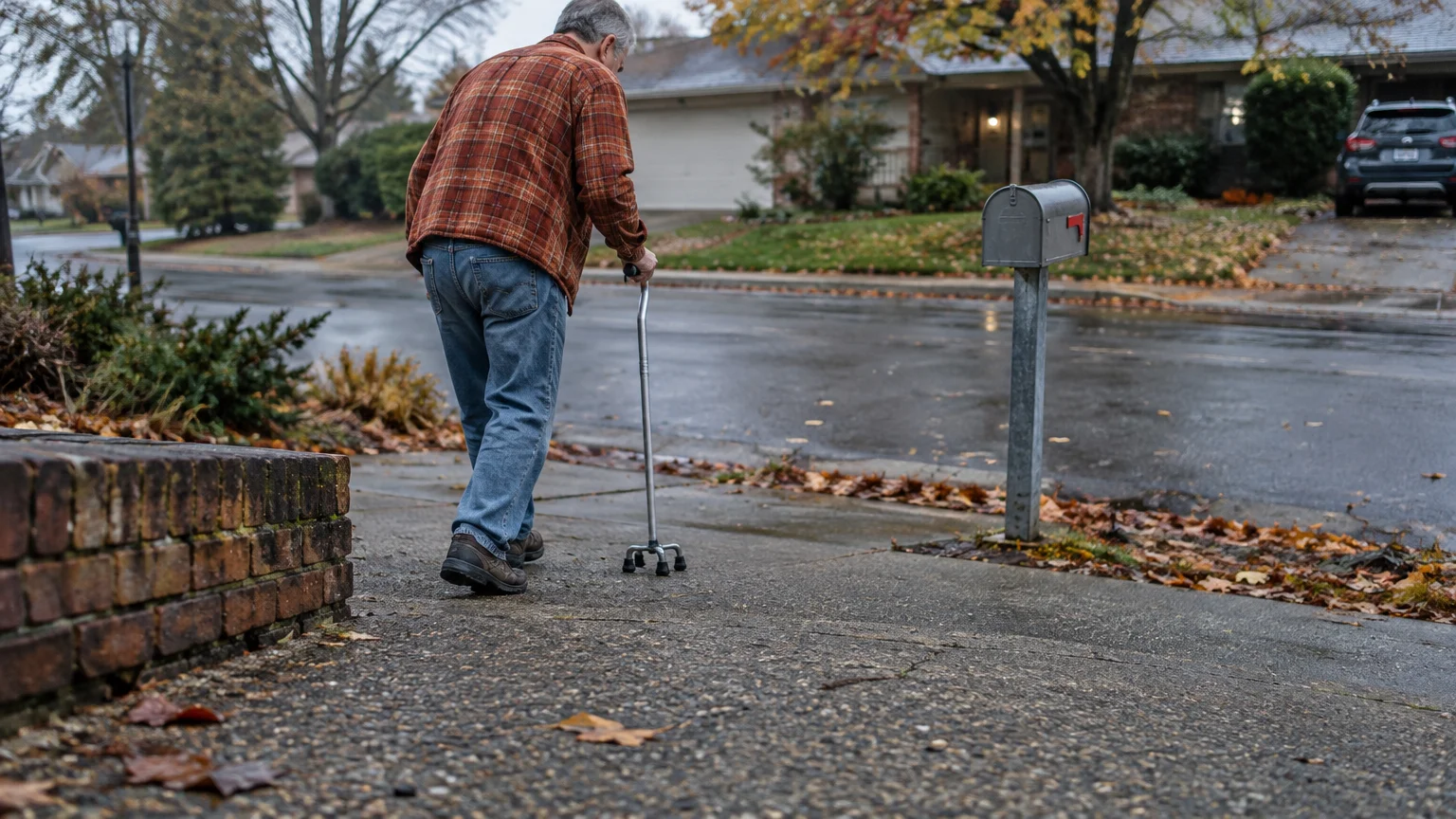
Consider a 75-year-old recovering from knee surgery who walks out to the mailbox using a cane. That patient can sit on the front porch and step into the driveway without severe distress.
Because they can leave the house without taxing physical strain, they often fail the strict Part A homebound certification. Yet, that same individual cannot bend their knee enough to drive a car safely to an outpatient clinic.
This common gap leaves thousands of recovering seniors stranded without transportation. Fortunately, Medicare.gov outlines that Part B outpatient benefits bypass all homebound criteria completely.
A mobile physical therapist billing Medicare Part B uses Place of Service Code 12 on your claim. That billing code indicates a private residence rather than a commercial office building.
You can qualify for Part B mobile care under several practical daily circumstances:
- You lack reliable transportation to an outpatient rehabilitation center.
- Driving presents a safety hazard following your orthopedic surgical procedure.
- You experience severe fatigue that prevents long clinic visits but allows home exercises.
- You need functional rehabilitation tailored to your specific staircases, bathrooms, and furniture.
- You care for an ailing spouse and cannot leave the home for extended appointments.
Under Medicare Part B mobile physical therapy, your therapist evaluates your mobility in the exact environment where you live. This clinical approach builds strength and mobility where you need it most.
Comparing Part A Home Health vs Part B In-Home Therapy
Choosing between Part A and Part B changes your clinical scheduling, out-of-pocket expenses, and provider options. The following comparison outlines the practical differences between both Medicare pathways.
| Feature | Medicare Part A (Home Health) | Medicare Part B (Mobile Outpatient) |
|---|---|---|
| Homebound Status | Mandatory; certified by physician | Not required; zero travel restrictions |
| Patient Coinsurance | $0 per session (100% covered) | 20% of Medicare-approved charges |
| Annual Deductible | No Part A deductible for home health | Standard Part B deductible applies |
| Place of Service Code | Billed through Home Health Agency (TOB 32X) | Place of Service 12 (Home) |
| Therapy Spending Caps | Governed by home health episode limits | Subject to KX modifier thresholds |
| Assistant Supervision | Supervised under home health agency rules | General supervision permitted under CMS rules |
Under Part B, you trade a small copayment for total freedom of movement. You can go out to lunch or run errands without jeopardizing your physical therapy coverage.
Part A agencies must monitor your community outings closely. If Medicare auditors discover you leave home regularly for social gatherings, they can deny the agency’s Part A claims retroactively.

Coverage Limits, KX Modifiers, and Medical Reviews
Many seniors worry about running out of covered therapy sessions before regaining full function. The Bipartisan Budget Act of 2018 permanently repealed the hard annual therapy caps that once limited care.
Today, Medicare places no fixed ceiling on medically necessary physical therapy. You can receive therapy for as long as your clinical condition requires skilled intervention.
Instead of hard caps, Medicare enforces annual spending thresholds that require administrative confirmation. Once your therapy costs exceed these figures, your therapist must attach a KX modifier to claims.
The KX modifier serves as a legal attestation from your physical therapist. It confirms your continued treatment remains medically reasonable and necessary for your recovery.
The annual combined threshold for physical therapy and speech-language pathology adjusts regularly for inflation:
- The 2024 combined threshold was $2,330.
- The 2025 combined threshold is $2,410.
- The 2026 combined threshold rises to $2,480.
If your rehabilitation exceeds these dollar amounts, your sessions do not automatically stop. Your therapist simply documents your progress in detail and adds the KX modifier to your paperwork.
CMS also enforces a separate targeted medical review threshold set at $3,000 through calendar year 2027. Claims exceeding $3,000 may undergo scrutiny by Medicare auditors to confirm documentation accuracy.
As long as your medical records show functional goals and measurable progress, Medicare pays claims above $3,000. Your therapist handles this documentation behind the scenes during regular reassessments.
CMS regulations permanently allow general supervision of Physical Therapist Assistants by licensed physical therapists in private practices. This regulatory update allows mobile practices to dispatch qualified assistants directly to your residence efficiently.

Cost Breakdown and Billing Codes: A Knee Surgery Scenario
To understand what mobile physical therapy costs, review this realistic scenario for a 75-year-old patient. Our patient is recovering from a right total knee arthroplasty and cannot drive for six weeks.
Beneficiaries balancing copayments against network restrictions often weigh Medigap vs. Medicare Advantage when budgeting for ongoing rehabilitation therapy.
While most therapists bill Medicare directly, learning the basics of filing a claim with Medicare ensures you can resolve unexpected billing errors quickly.
Their orthopedic surgeon prescribes in-home physical therapy at two sessions per week for six weeks. This treatment plan totals 12 home visits.
Because the patient can walk into the backyard to water plants, they use Part B mobile therapy. The physical therapist evaluates the knee and delivers three treatment units per visit using standard billing codes.
Medicare uses standardized Current Procedural Terminology codes to calculate allowable fees for physical therapy:
- CPT 97162: Physical therapy evaluation of moderate complexity ($115.00 Medicare allowable fee).
- CPT 97110: Therapeutic exercise to develop strength and range of motion (30 minutes; $68.00 allowable fee).
- CPT 97116: Gait training to improve walking and balance (15 minutes; $34.00 allowable fee).
During the initial evaluation visit, the mobile therapist bills CPT 97162. For the remaining 11 treatment visits, the therapist bills two units of CPT 97110 and one unit of CPT 97116 ($102.00 per visit).
The total Medicare-approved cost for all 12 sessions equals $1,237.00 ($115.00 evaluation plus $1,122.00 for subsequent treatments). Now consider how Medicare deductible and coinsurance rules calculate your personal out-of-pocket expenses.
Assume this treatment occurs at the beginning of 2025, and you have not met your Part B deductible. The annual Part B deductible was $240 in 2024, rises to $257 in 2025, and reaches $283 in 2026.
Under 2025 rates, you pay the $257.00 deductible first. That leaves an unpaid balance of $980.00 from the total $1,237.00 allowable charges.
You pay a 20% coinsurance on the remaining $980.00 balance, which equals $196.00. Your total out-of-pocket expense for 12 home therapy visits comes to $453.00.
If you have a supplemental Medigap policy, such as Plan G, your plan pays the $196.00 coinsurance. In that case, your total expense equals only the $257.00 Part B deductible.
If you already met your annual deductible earlier in the year, you pay only the 20% coinsurance. That reduces your out-of-pocket expense to approximately $247.40 for all 12 in-home sessions.

Why Medicare Prohibits Simultaneous Part A and Part B Care
Medicare enforces strict rules against double billing when receiving clinical care at home. You cannot receive Medicare Part B mobile physical therapy while enrolled in an active Part A Home Health plan.
Individuals with severe chronic conditions managing multiple care programs may also explore Medicare Special Needs Plans for specialized coordination.
This restriction applies even if your Part A services do not include physical therapy. If a home health nurse visits once a week for wound care under Part A, Medicare considers you enrolled.
Under CMS consolidated billing regulations, the home health agency holds exclusive billing rights for your care. Any Part B outpatient therapy billed during an open Part A episode faces immediate claim denial.
If you want a mobile Part B physical therapist to treat you, you must follow clear administrative steps:
- Contact your home health agency case manager to review your current care plan.
- Confirm whether your skilled nursing or Part A therapy services have concluded.
- Request a formal, written discharge notice from the Part A home health agency.
- Verify the discharge date recorded in Medicare’s common working file.
- Schedule your Part B mobile physical therapy start date after your official discharge date.
Skipping this discharge process leaves you vulnerable to unexpected medical bills. Independent mobile therapists cannot bill Medicare successfully until the Part A agency closes your file.
Always ask your home health agency for written confirmation when they complete their services. That documentation protects you from administrative billing conflicts between providers.

Step-by-Step Guide to Booking In-Home Outpatient Therapy
Securing outpatient physical therapy in a home setting requires finding the right provider. You must look for mobile physical therapy private practices rather than standard home health agencies.
Always confirm the credentials of any visiting provider to protect your benefits and avoid Medicare fraud or scams.
Follow these concrete steps to establish mobile physical therapy care in your home:
- Ask your orthopedic surgeon or primary physician for a physical therapy prescription. Ensure the order reads: “Physical therapy evaluation and treatment, outpatient physical therapy in home setting.”
- Visit federal support programs through Eldercare Locator to identify local aging service providers who partner with mobile rehabilitation groups.
- Search online directories for mobile outpatient physical therapy practices operating in your zip code.
- Call prospective practices and ask if they bill traditional Medicare Part B directly using Place of Service 12.
- Confirm that the practice accepts Medicare assignment so you are not billed excess charges.
- Provide your therapist with your doctor’s written referral and your secondary insurance card before your first appointment.
- Clear a safe exercise area in your living room with sturdy furniture and clear walking pathways.
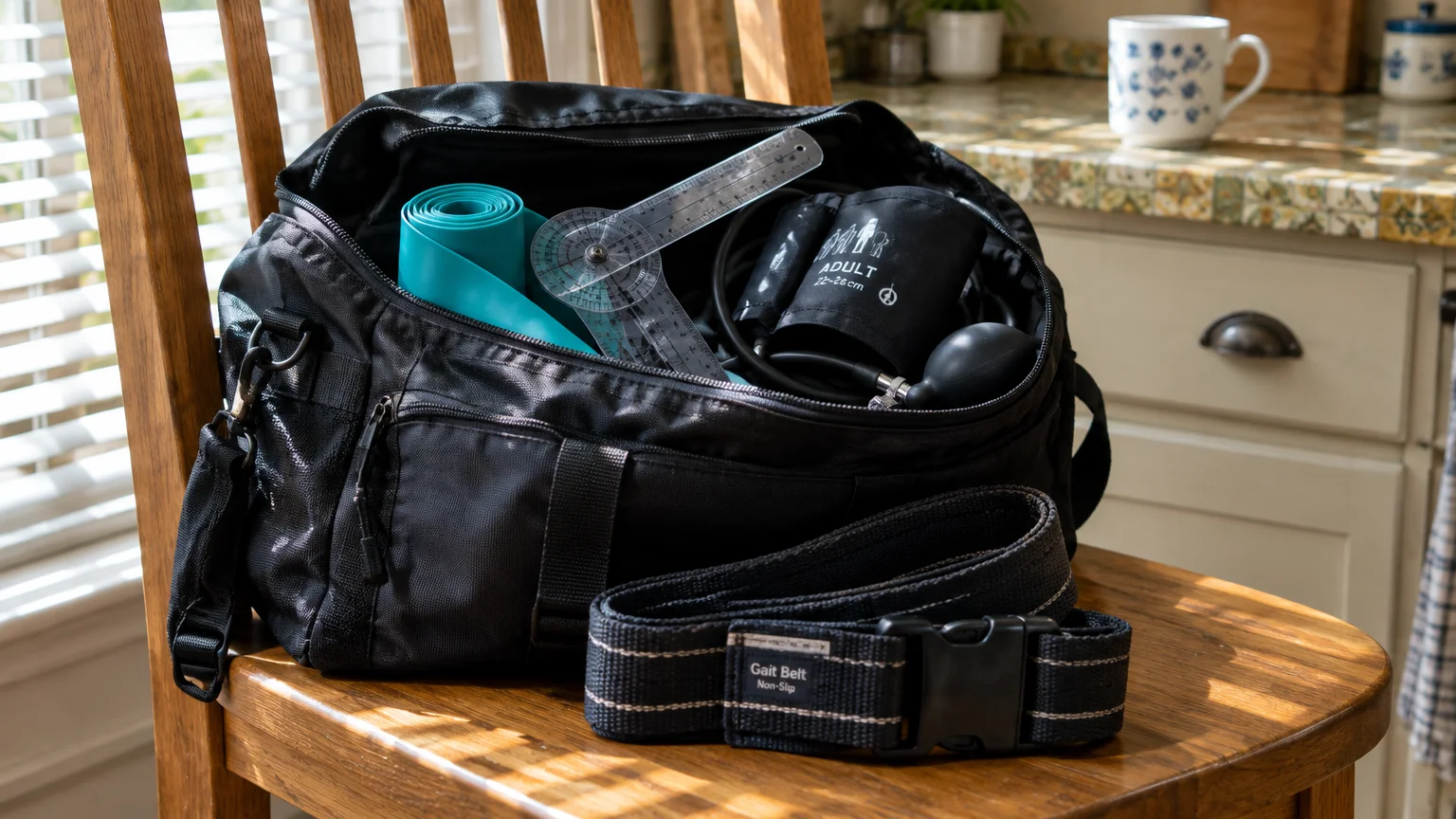
Many mobile therapists bring portable equipment directly into your home. They carry treatment tables, resistance bands, balance foam pads, and blood pressure monitors.
You can also check available community support options through Benefits.gov to see if supplemental aid helps pay for therapy equipment. Taking these practical steps helps you start recovery quickly without getting behind the wheel.
Frequently Asked Questions
Do I have to be homebound to get physical therapy at home under Medicare Part B?
No, Medicare Part B does not require you to be homebound. Any beneficiary can receive outpatient physical therapy in a home setting if a physician prescribes the care and it is medically necessary.
How much do I pay for mobile physical therapy under Medicare Part B?
You pay a 20% coinsurance of the Medicare-approved amount after meeting your annual Part B deductible. A Medigap policy typically covers this 20% coinsurance charge.
Can I get Part B physical therapy if a nurse visits me under Part A?
No, Medicare prohibits billing Part B outpatient therapy during an active Part A home health episode. You must be fully discharged from Part A home care before Part B mobile therapy begins.
Is there a cap on how many physical therapy sessions Medicare pays for?
Medicare does not place hard caps on medically necessary therapy sessions. Your therapist must add a KX modifier to claims once your care exceeds annual spending thresholds.
What doctor order do I need for in-home outpatient physical therapy?
Your physician must write a prescription for physical therapy evaluation and treatment. The order should state that care will take place in an outpatient home setting.
Disclaimer: This article is for informational purposes only. Benefits, programs, and regulations can change.
We encourage readers to verify current information with official government sources and consult with qualified professionals for personalized advice.