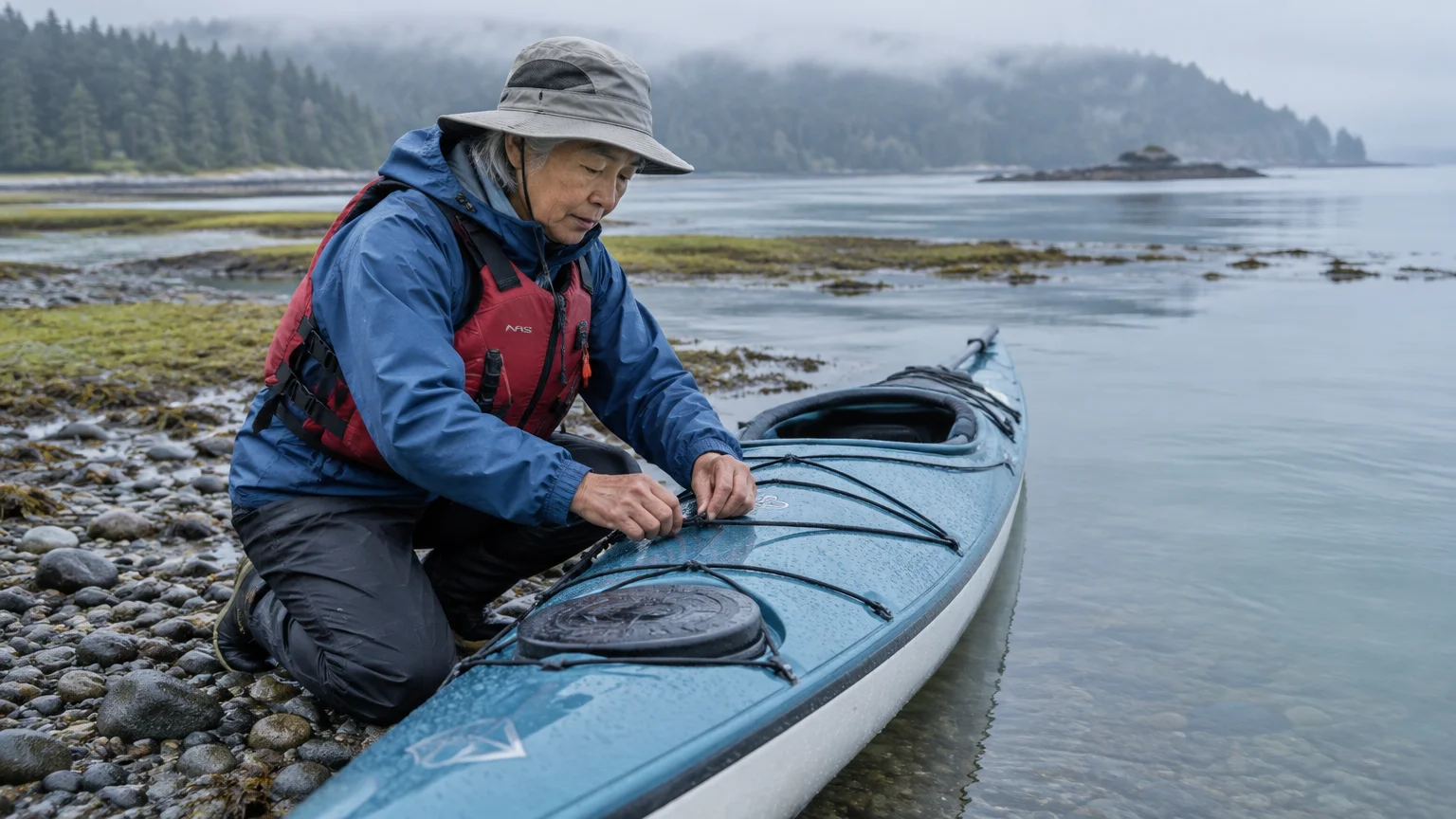
A retiree in their 60s or 70s with stiff hips, tight hamstrings, or lower-back wear often hesitates before paddling sheltered bays. Most soreness comes from boat fit and posture, not missing stamina.
Outfitters routinely push older adults toward wide recreational or sit-on-top kayaks for dockside steadiness, yet those hulls strain rotator cuffs and compress lower-back discs. A fitted 12- to 14.5-foot sit-inside touring kayak protects your spine and glides on torso power.
| Hull type | Who it fits best | Joint and spine effect | Handling and safety |
|---|---|---|---|
| Wide recreational kayak | Paddlers taking brief, calm outings near shore. | Wide reach strains rotator cuffs; soft seats encourage slouching. | Moves slowly, wanders in breezes, often lacks sealed bulkheads. |
| Sit-on-top kayak | Warm-water paddlers avoiding an enclosed cockpit. | No thigh braces for hip control; pooled spray stiffens hips. | Sits in spray; deep-water re-entry taxes tired arms. |
| 12- to 14.5-foot touring kayak | Retirees paddling sheltered coastal bays for hours. | Adjustable backband supports the lumbar curve; thigh braces engage hips. | Tracks straight in light chop and keeps gear dry. |
Why wide recreational and sit-on-top kayaks strain older joints
Rental docks recommend wide recreational kayaks because they feel steady before launch. Once moving, extra beam forces your blade far from your ribs, lifting elbows and irritating rotator cuffs while soft, high seat backs encourage lower-back slouching.
Recreational hulls also wander in coastal crosswinds and commonly lack sealed bow and stern bulkheads. If chop washes over the rim, an unsealed boat swamps quickly and becomes hard to empty ashore.
Sit-on-top kayaks eliminate enclosed cockpits, yet straight-legged seating removes thigh contact and forces shoulders to steer. Pooled spray chills stiff hips, and pulling yourself back onto slick plastic from deep water demands heavy upper-body pressing.
Hip-flexor and hamstring checks before choosing a touring cockpit
A 12- to 14.5-foot touring kayak with a 24- to 26-inch beam keeps strokes close to your ribs. Before committing, test whether your hamstrings and hip flexors tolerate a seated cockpit posture.
Sit upright on a flat floor with legs extended and knees bent slightly outward as they would sit under thigh braces. If tight hamstrings pull your tailbone under and round your lower back, prioritize a long cockpit opening and firm lumbar backband.
Next, sit on a low cushion, lift each knee gently toward your chest, and step one leg over a low bench. Smooth hip-flexor clearance without groin pinching shows you can clear a cockpit rim during a beach straddle launch.
For solo car-topping, makers list the 12-foot Eddyline Sky 120 (formerly the Skylark) at 41 pounds and $1,799, and the 14.5-foot Dagger Stratos 14.5 S at 53 pounds and about $1,549.
Wilderness Systems lists the 14-foot Tsunami 140 at about 53 to 57.5 pounds by version for about $1,549. Demo any model at an outfitter first, and pair your car with a wheeled cart and loading roller.
Fitting a touring cockpit and stroke to protect shoulders
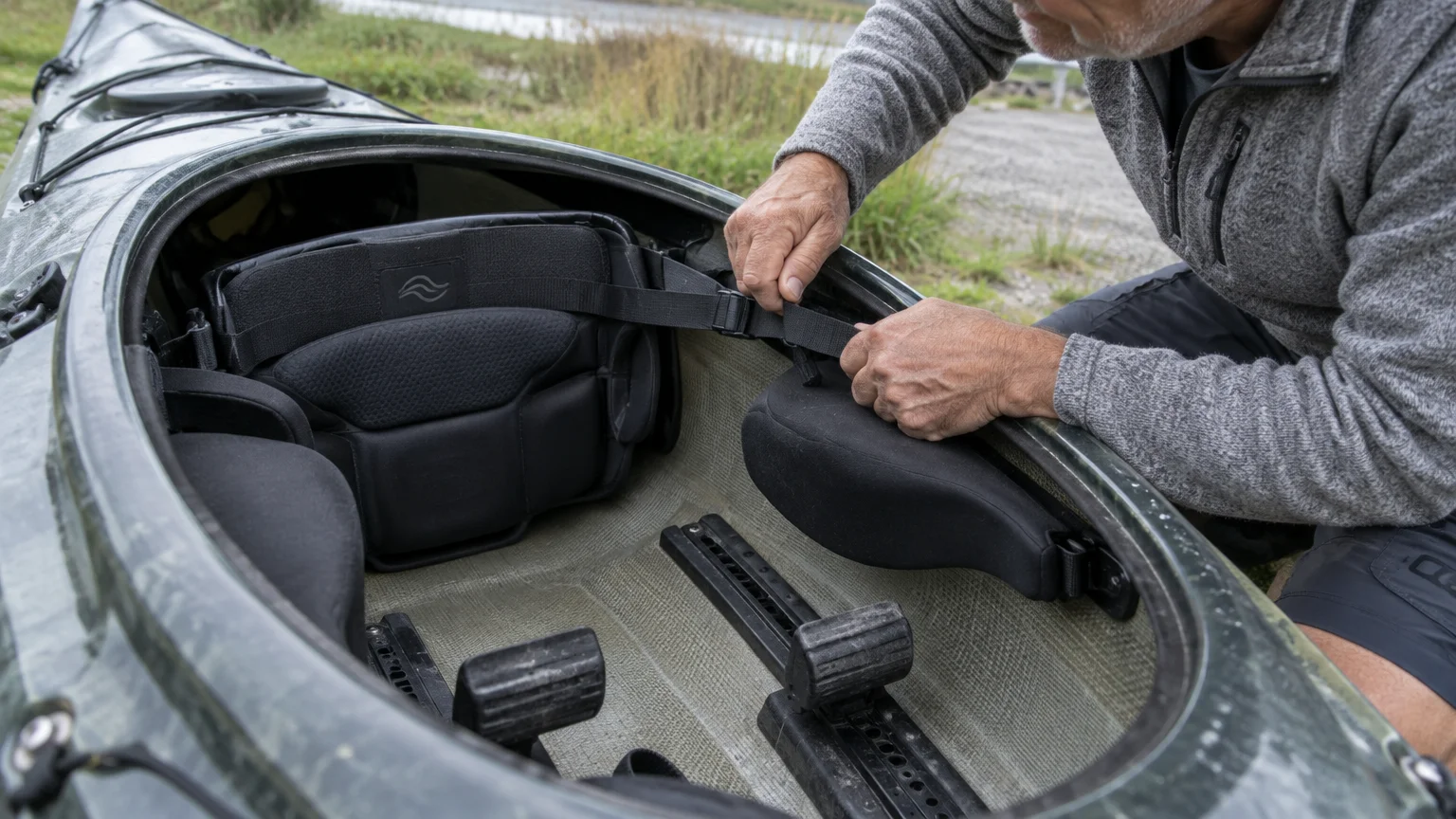
Dialing in cockpit contact points on land prevents slouching and shoulder strain. Check these seven features when testing a hull:
- Adjustable backband: a firm band that supports your lower back instead of a floppy seat back.
- Padded thigh braces: let hips and core steer rather than your shoulders.
- Adjustable foot pegs: set so knees bend slightly outward beneath the braces.
- Bow and stern bulkheads: sealed compartments that keep the kayak afloat if flooded.
- Deck lines: perimeter lines you or a rescuer can grab.
- Skeg or rudder: a drop-down fin that reduces weathercocking and correction strokes.
- Long cockpit opening: lets you sit on the back deck and slide legs inside.
Two-piece touring paddles adjust from 0 to about 60 degrees of feather to slice headwinds, though twisting irritates wrists. Set feather to 0 degrees with a lightweight, sized shaft, and use a torso-powered low-angle stroke:
- Hold the shaft slightly wider than shoulder width with a loose grip.
- Keep your control wrist straight as the blade enters.
- Rotate your ribcage toward the blade instead of reaching with your arm.
- Drive forward with your trunk while pressing gently against the same-side foot peg.
- Keep hands below shoulder height to spare rotator cuffs.
- Relax the fingers of your pushing top hand.
Because paddling focuses on the trunk and upper body, pair windy off-days with trail walking and easy hiking.
Timing bay routes with NOAA tides and the Rule of Twelfths
Fighting tidal current drains energy fast. Start each route check with NOAA tide predictions for your launch station.
Most bays rise or fall over roughly six hours, though parts of the Gulf Coast see one high and one low daily. Over a six-hour cycle, the Rule of Twelfths estimates each hour’s level change:
- Hour 1: 1/12
- Hour 2: 2/12
- Hour 3: 3/12
- Hour 4: 3/12
- Hour 5: 2/12
- Hour 6: 1/12
Half the shift happens in the middle two hours, when currents peak, while calmer water surrounds tide turns. Check NOAA tidal current predictions too, since slack flow often differs from high or low tide.
Cross channel mouths near slack water, ride early flow out, and rest ashore during peak middle hours. Avoid paddling when wind opposes current, which builds steep, choppy waves.
Straddle launches, Coast Guard safety gear and wet-exit practice
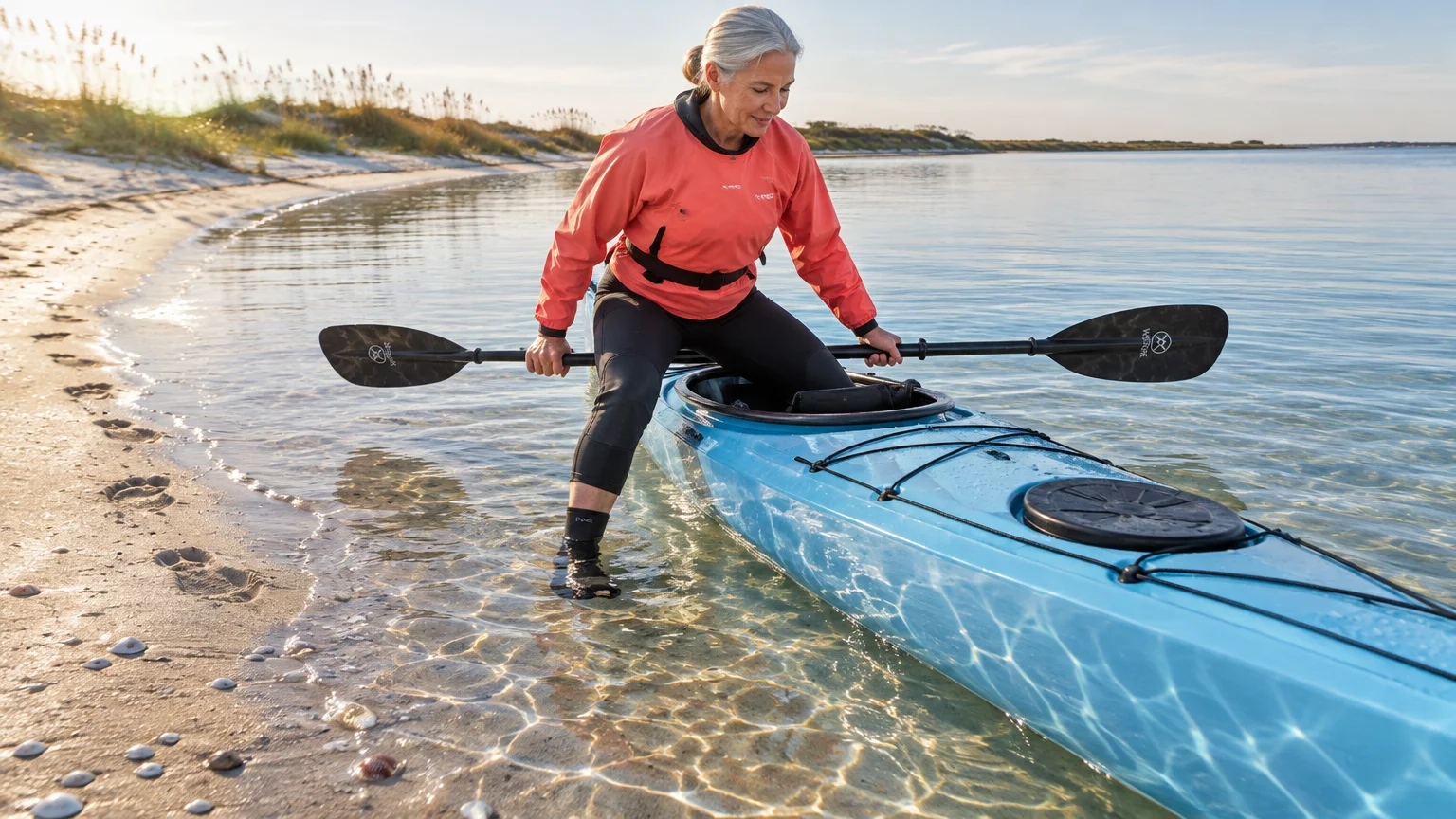
Stepping sideways into a floating kayak strains hips and risks a capsize. Use a shallow straddle launch on firm sand:
- Float the boat in shin-deep water with the bow pointing out.
- Straddle the cockpit with one foot on each side.
- Sit onto the seat while both feet stay planted on the sand.
- Swing your legs inside one at a time.
From a low floating dock, lay your paddle shaft behind the cockpit rim with one blade flat on the dock. Grip shaft and rim together, step into the cockpit center, sit, and bring your second leg inside.
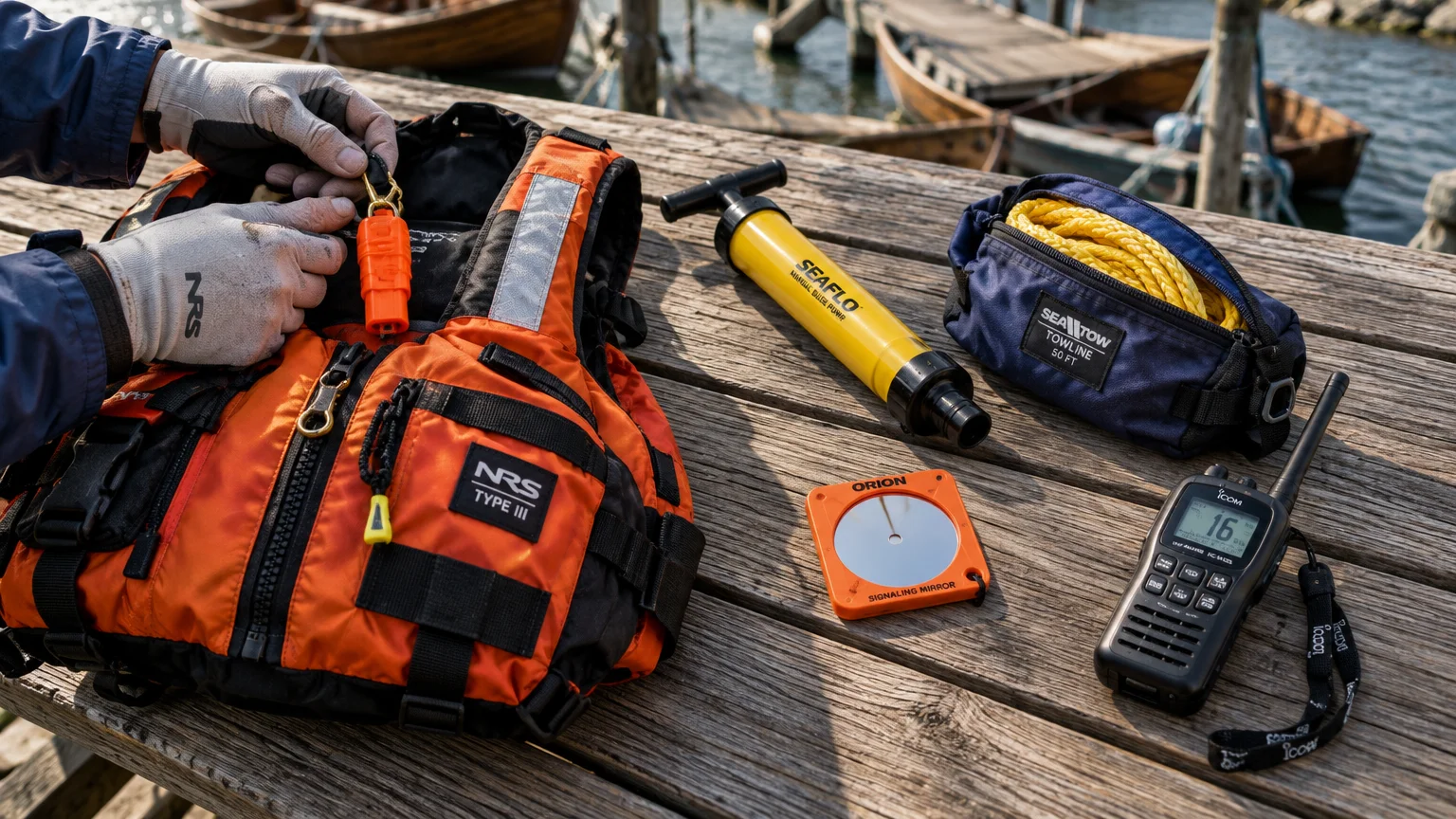
Federal rules classify kayaks as vessels under Coast Guard equipment requirements for paddlecraft. Carry these mandatory items alongside state rules:
- Life jacket: a fitted USCG-approved wearable paddling vest with large armholes and a high back.
- Sound device: a whistle clipped to your vest.
- Light after dark: a white light shown between sunset and sunrise.
- Night distress signals: approved coastal night signals if paddling after sunset.
Pack a paddle float, manual bilge pump, floating VHF radio tuned to channel 16, waterproof phone case, and dry bag with warm layers. Always dress for water temperature rather than air temperature.
Leave a float plan with someone ashore listing your route, boat colors, and check-in time. Build water confidence through an instructor-led wet exit or a masters swimming program.
Fort De Soto trip timing and senior launch fees
Matching tide timing with agency fee rules keeps outings smooth. Suppose a 67-year-old paddler and two friends plan a December trip at Pinellas County’s Fort De Soto Park in Florida, where federal passes do not apply.
Tide tables show low water at 8:15 a.m., high water at 2:30 p.m., and a 2.4-foot range. Water rises roughly 0.2 feet in hour one, then 0.6 feet each in hours three and four, from 10:20 a.m. to 12:25 p.m.
After checking the current station for slack timing, they follow this schedule:
- 8:30 a.m.: arrive, unload, check radio, confirm float plan.
- 9:00 to 10:30: paddle 3 nautical miles at 2 knots with early flood.
- 10:30 to 1:00: rest and eat ashore during peak flow.
- 1:00 to 2:30: paddle 3 nautical miles back against fading current.
- 2:45 p.m.: load and depart.
That leaves 3 hours paddling and over 6 hours parked. From December 1, 2026, Fort De Soto parking is $3.50 an hour, capped at $12 a day, replacing the earlier $6 fee.
Six hours at $3.50 equals $21, so the $12 cap applies, or $4 each split three ways. Regulars can buy Pinellas County’s 65+ annual senior pass for $70 plus tax, paying for itself on the sixth visit.
At federal launches, the America the Beautiful Senior Pass, open to US citizens and permanent residents 62 and older for $80 for life or $20 a year, covers entry and discounts some ramps.
It covers entry to Everglades National Park’s coastal canoe and kayak trails. See our National Park Senior Pass guide and state park senior discounts roundup for local rules.
Ask your doctor about any heart, shoulder, or balance condition first, and book a lesson with an American Canoe Association certified instructor.