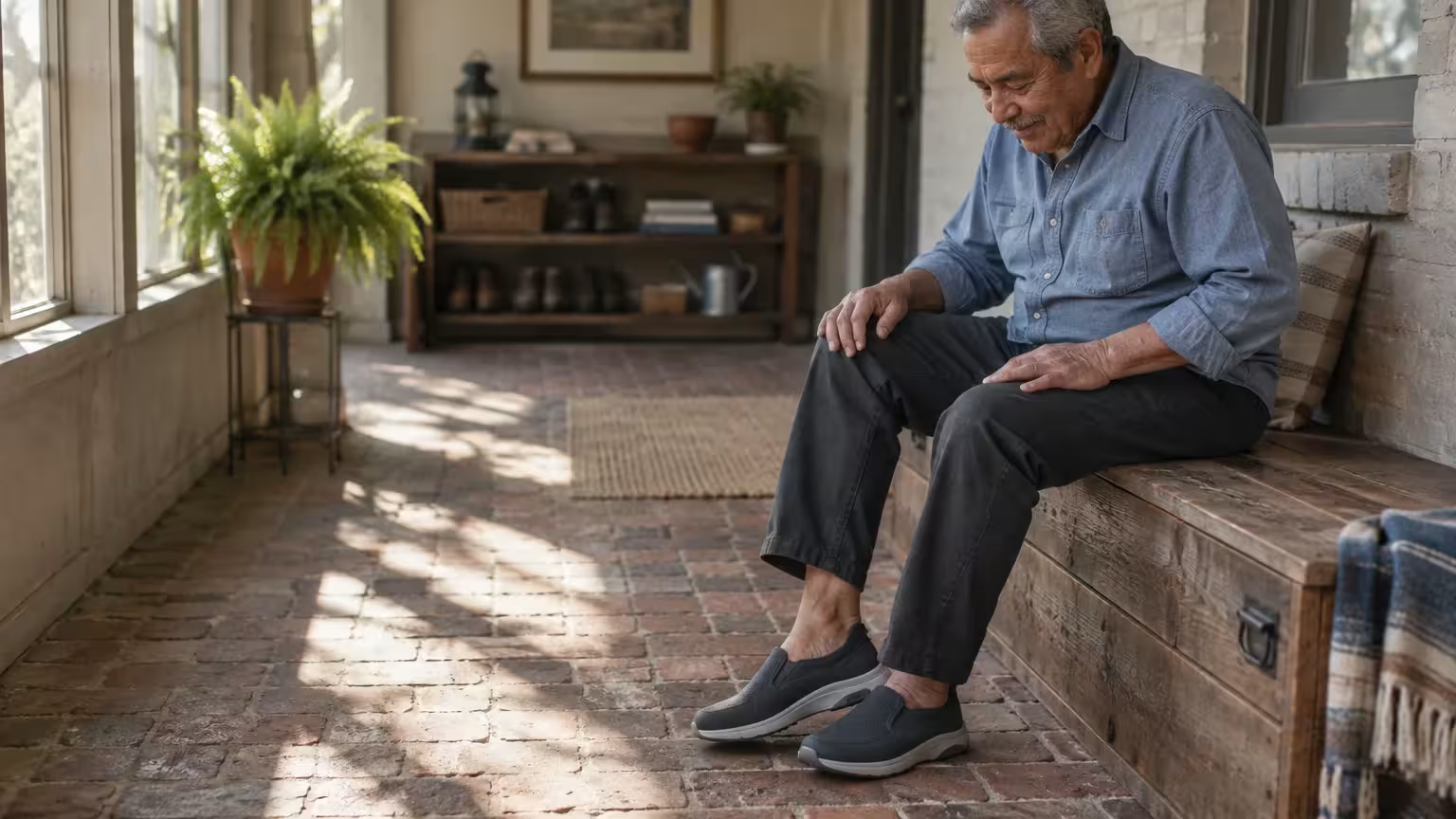
For a 72-year-old retiree managing non-diabetic diurnal leg swelling, shoes that fit at breakfast can pinch painfully by late afternoon. Ankle girth starts at 9.5 inches in the morning and expands as gravity pulls fluid down.
By late afternoon, that ankle girth reaches 10.75 inches, creating a gain of 1.25 inches. Sizing up in length backfires, so the true solution requires matching foot length while expanding depth and width up to 4E.
Recognizing Diurnal Swelling Patterns and Medical Warning Signs
Diurnal swelling builds during waking hours as fluid settles downward. Persistent swelling of the lower legs affects about 19% to 20% of US adults 51 and older in Health and Retirement Study data, and the odds rise sharply after age 70.
For our 72-year-old retiree, weak veins allow fluid to pool around the ankles during normal daily movement. MedlinePlus lists common causes in older adults, including weak leg veins, some medicines, and long periods of sitting or standing.
Some physical symptoms signal an emergency rather than a footwear issue. Call 911 if swelling comes with shortness of breath or chest pain.
Contact a doctor promptly about new swelling, swelling in only one leg, or a leg that is red, warm, or painful. A clinician must evaluate sudden changes before you adjust your shoes.
Compression stockings help some individuals manage fluid buildup. They are not safe for everyone, so wear them only if your clinician recommends them.
Why Sizing Up from a 10 D to an 11 Increases Fall Risk
When an ankle gains 1.25 inches across the instep, buying a larger size sounds like an easy fix. Moving from a men’s 10 D to a men’s 11 adds length, but swelling adds volume instead of foot length.
A men’s 11 leaves empty space in front of the toes while the upper fabric still binds across the swollen instep. That mismatch creates dangerous instability during daily walking.
The heel slips up with each step, which rubs painful blisters and loosens your footing. At the same time, the extended toe catches on rug edges, stair edges, and raised outdoor pavement.
A longer shoe also misaligns internal support structures. The arch support sits in the wrong place under your foot, reducing stability when stepping forward.
The National Institute on Aging links foot pain and unsafe footwear to falls and advises sturdy, well-fitting shoes with non-slip soles. Keeping your true length of 10 while adding width prevents trips and blisters.
Shoe Features That Accommodate 1.25 Inches of Instep Swelling
Accommodating an instep that expands from 9.5 inches to 10.75 inches requires specialized construction. Shoes must provide extra interior depth, broader widths, and flexible closures rather than extra length.
Extra depth provides a deeper interior chamber. Many designs include a removable filler layer or insole you can take out in the afternoon when your feet are at their largest.
Stretch uppers provide forgiving space over tender spots. Knit or neoprene-type fabric gives over swollen areas, whereas traditional leather stretches little and keeps pressing against the skin.
Adjustable hook-and-loop straps open wide for simple entry and allow refastening at a looser position later in the day. Smooth interior linings eliminate harsh interior seams where swollen skin can rub.
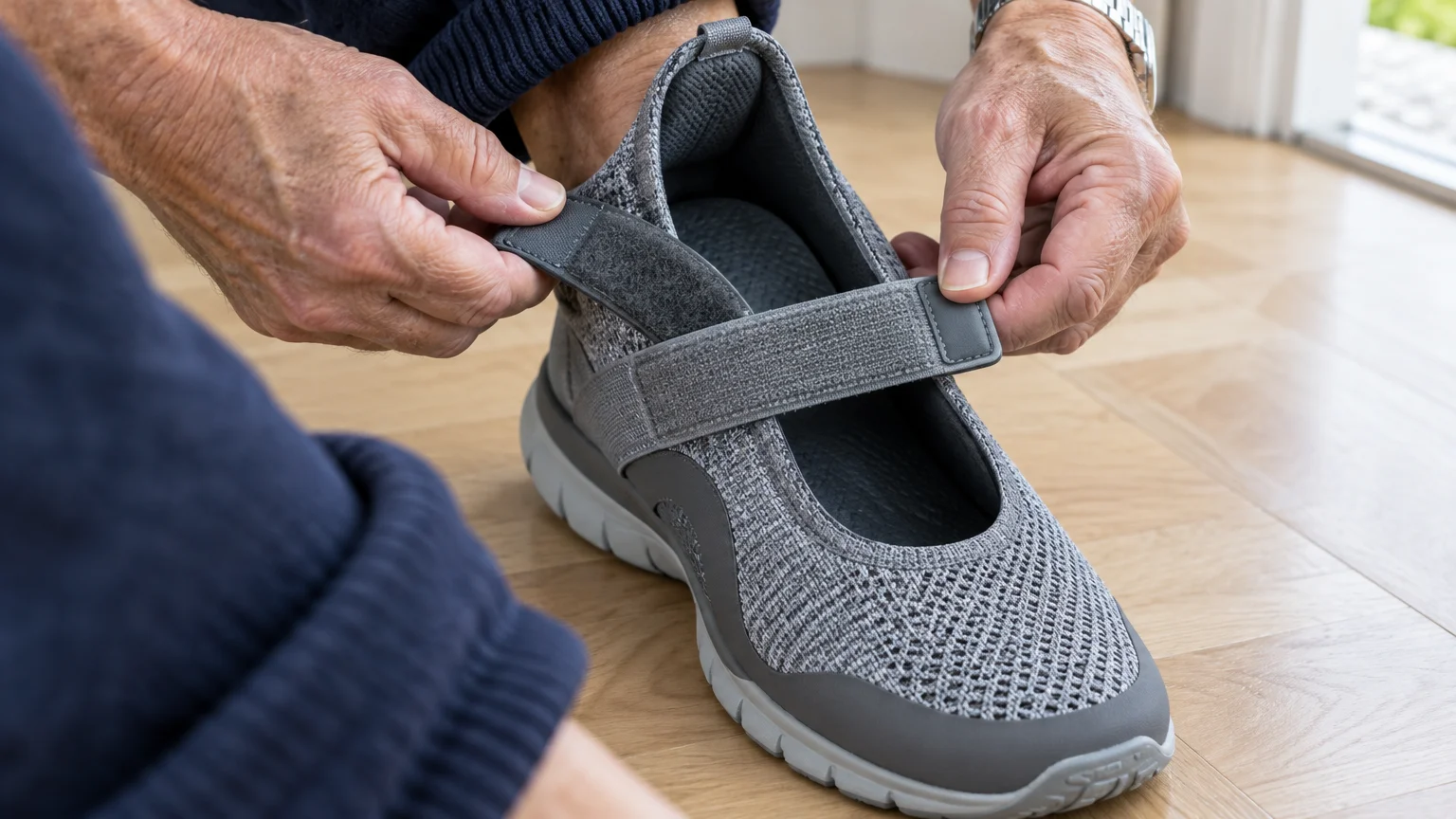
Strap extenders attach to an existing tab to add reach when a strap no longer closes across a swollen instep. Check that the maker sells one for your model before counting on it.
Easy entry must never compromise personal balance. The APMA’s three-step shoe check says the heel counter should resist squeezing, the shoe should bend only at the ball of the foot, and it should not twist through the middle.
Run that test on any hands-free step-in design. If the back of the heel feels soft once your foot is inside, it may not hold your heel steady.
Measuring the 10.75-Inch Afternoon Peak Accurately
Measuring feet at the wrong hour produces shoes that squeeze painfully before dinner. Because our 72-year-old retiree experiences diurnal swelling, measurements must capture the maximum afternoon expansion.
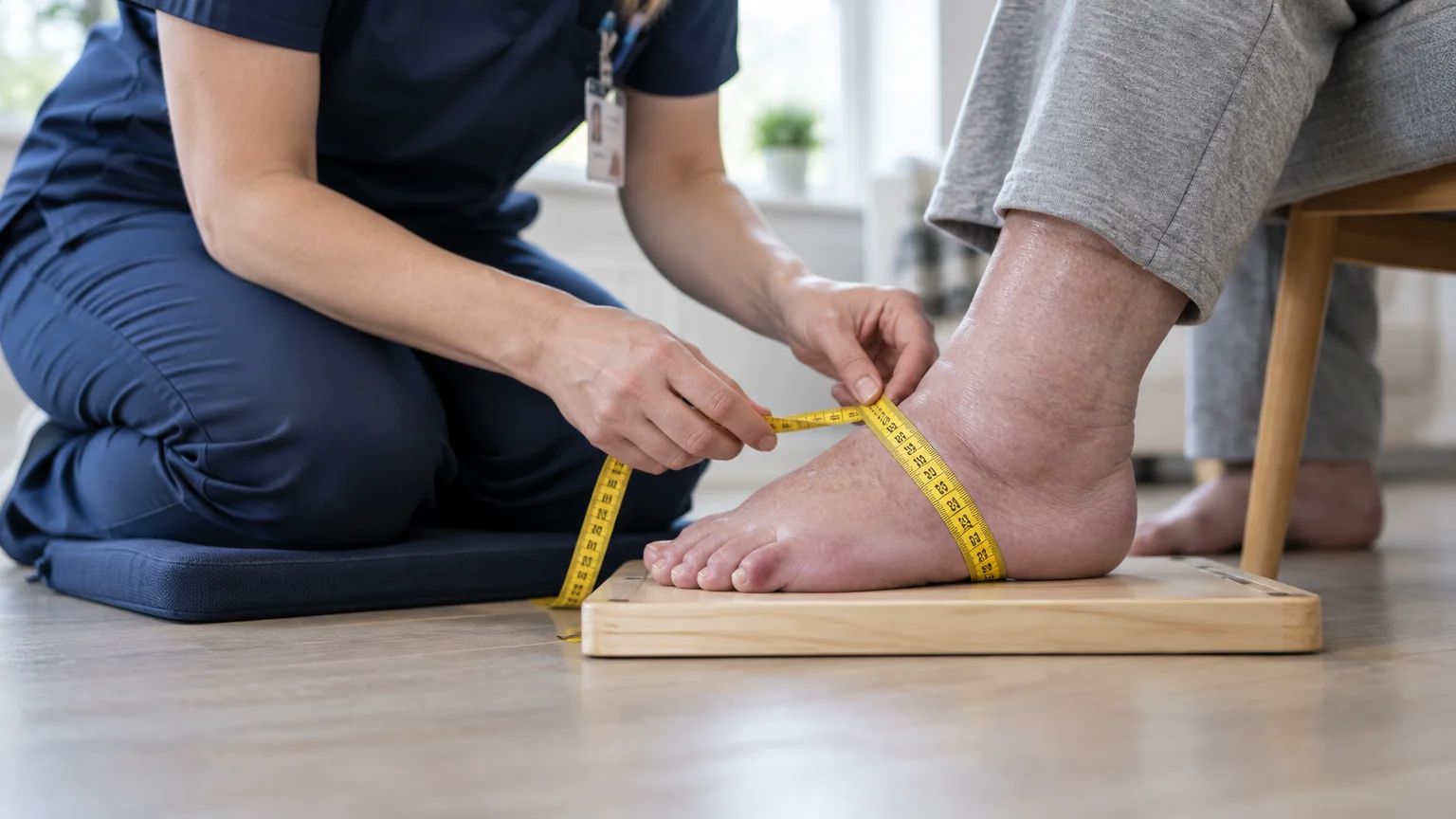
Measure late in the day when swelling peaks, rather than right after getting out of bed. Wear the exact socks or prescribed compression stockings you plan to wear with the shoes.
Sit with both feet flat on the floor. With a flexible tape, record length from heel to longest toe, girth around the ball of the foot, and girth around the instep.
Width letters indicate room around the ball of the foot. Standard women’s width is B and standard men’s width is D, while shoes for swelling commonly come in 2E and 4E, and some lines go to 6E.
Our retiree may need a 4E even with average bone width, because the shoe must wrap around the fluid swelling. Match your numbers to the manufacturer’s specific chart, choosing 4E when between sizes.
Test new shoes indoors on carpet for about ten minutes. Take them off to check for red marks or dents along the instep and toes, keeping the box and tags intact for returns.
Out-of-Pocket Footwear Options from $25 to $170
Because non-diabetic diurnal swelling does not qualify for insurance coverage, every purchase comes out of the household budget. Adaptive models range from about $25 for a deep indoor bootie to $170 for an extra-depth walking shoe.
Hands-free step-in sneakers from Orthofeet, such as Kita or Yari, list from $129 to $160 at makers’ listed prices. They offer easy entry for retirees who struggle to bend over their feet.
The Pedors Classic uses a four-way stretch upper the company lists at $149, which suits swelling that changes during the day.
If hammertoes or a brace require even more vertical room, the Pedors Stretch Walker is a separate extra-depth model at $170. Both Pedors designs provide adjustable closures across the instep.
Propét’s Tour Walker Strap lists at $107.49, with sale prices often falling to $40 to $95. A firmer strap shoe like this suits people who still walk outdoors on uneven paths.
For indoor wear, Silverts Deep and Wide Diabetic Bootie Slippers sell for $25 to $31, offering deep space for heavy swelling. Their closed backs and textured soles prevent the slippage common with loose slippers.
Silverts Open-Toe Adjustable Slippers list at $65 to $70 for swollen toes or wound dressings indoors. Smooth foam or slick leather soles raise fall risks, so always select textured rubber outsoles.
Budgeting the $174 Total Without Medicare Part B
Managing diurnal swelling requires facing Medicare rules directly. Medicare Part B covers therapeutic shoes and inserts only if you have diabetes and severe diabetic foot disease.
Swelling alone, without diabetes and a qualifying foot condition, does not qualify for Medicare payment, even with a doctor’s prescription. Non-diabetic retirees must pay entirely out of pocket.
When Medicare covers shoes for diabetes, it pays for one pair of extra-depth shoes plus three pairs of inserts yearly, or custom-molded shoes with two extra pairs of inserts.
Under Part B, qualifying beneficiaries pay 20% of the Medicare-approved amount after meeting the Part B deductible, which is $283 in 2026. If the deductible were met and an approved amount were $150, the patient share would be $30.
CMS set the 2027 Part B deductible at $292. Our guide to what Part B covers and what it costs explains how the deductible and coinsurance work across outpatient benefits.
Medicare Advantage plans must provide this diabetic shoe benefit too, but may require network suppliers. Free counselors through your State Health Insurance Assistance Program at shiphelp.org can explain plan details.
For our 72-year-old retiree, a $149 extra-depth walking shoe plus a $25 deep bootie for indoors comes to $174. Without diabetes, Medicare covers zero dollars of that $174 total, making realistic budgeting essential.
Dressing Aids and Home Safety for Daily Foot Care
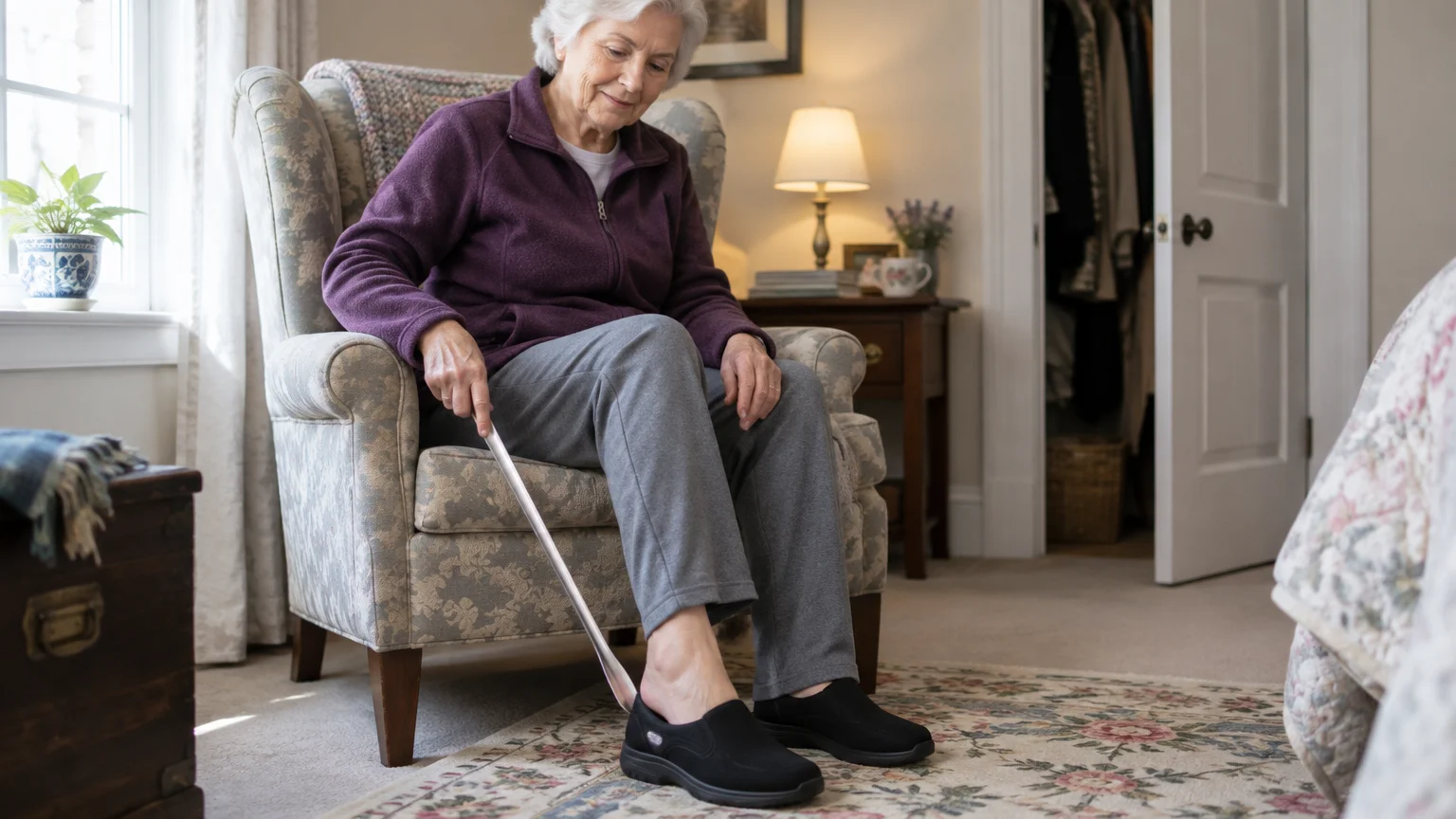
Putting on a size 10 4E shoe should not require painful bending or balancing on one foot. Dress while sitting in a sturdy chair with arms rather than perching on the edge of the bed.
A long-handled shoehorn guides your heel into the shoe without crushing the heel counter. A sock aid helps pull socks smoothly over a 10.75-inch swollen ankle without strain.
Your local Area Agency on Aging can often point you to occupational therapy and equipment loan programs that lend dressing aids at little or no cost.
Raising your legs also provides comfort as fluid settles. MedlinePlus suggests raising your legs above heart level while lying down to ease swelling, which can help shoes fit better later in the day.
Inside the house, combine supportive slip-ons with slip-resistant environments. Place non-slip bathroom rugs on slick floors and maintain good walkway lighting to reduce evening fall risks.
Inspect shoe treads regularly and replace adaptive shoes when the rubber wears smooth or the heel counter softens. If shoes leave indentations even after loosening straps, consult a physician promptly.