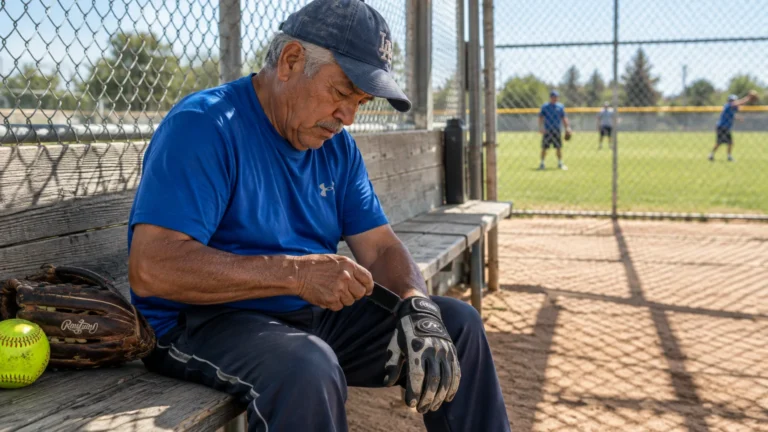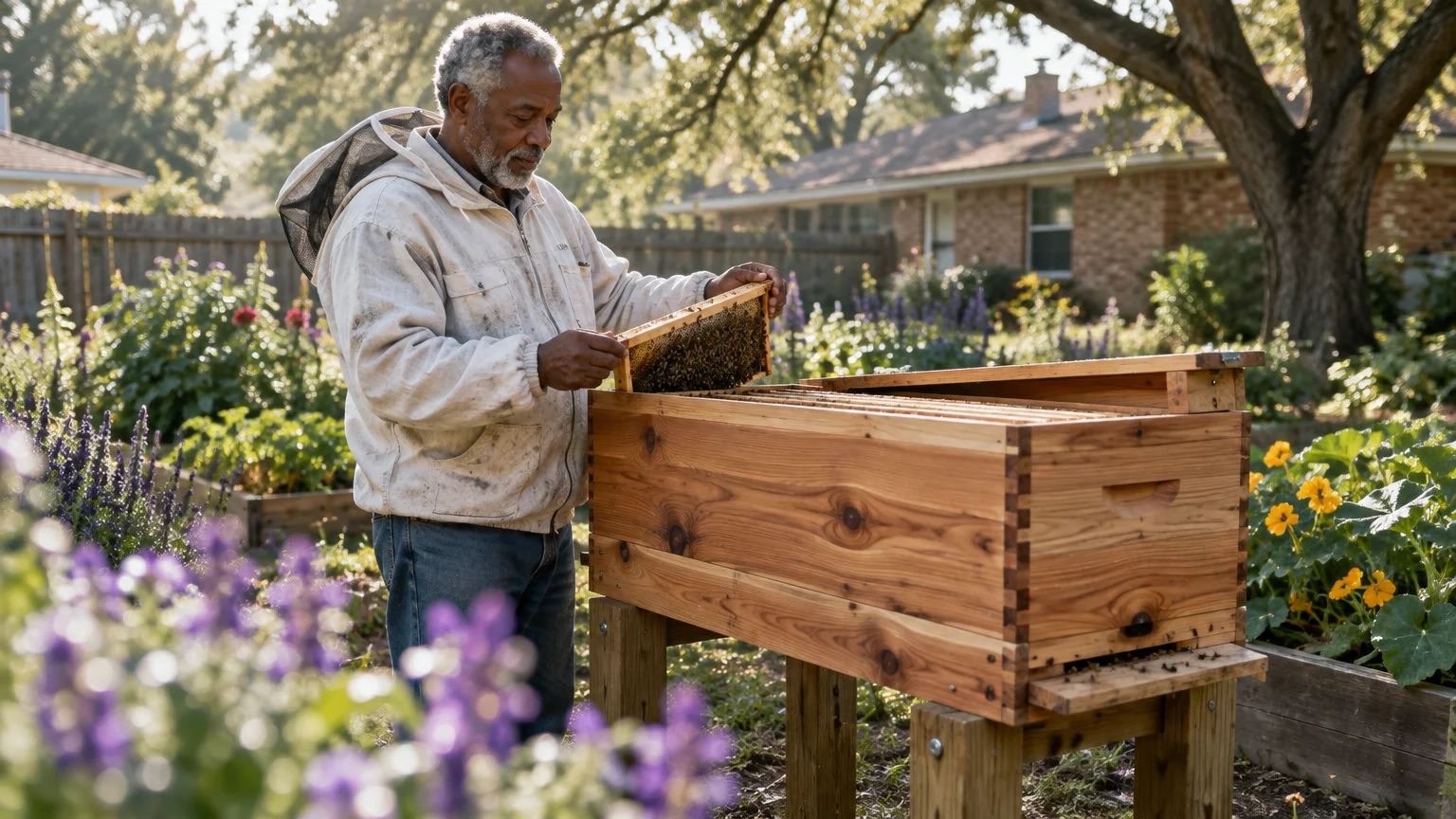
Backyard beekeeping gives a retiree with joint stiffness or back strain an active outdoor routine on a suburban lot. Expect $600 to $1,200 to start one hive, 30 to 60 minutes every week or two in season, and no honey until year two.
Standard advice often pushes retirees toward 8-frame boxes or top-bar hives, yet both create avoidable snags. A waist-high horizontal Langstroth hive keeps every lift under 10 pounds while taking standard local nucs, starting with local approvals before buying gear.
Clearing local rules, HOA covenants, and sting safety before winter ends
First, verify that bees are legal at your address and safe for your health before spending a dollar. City codes can cap hive counts, require setbacks, or ban apiaries.
Search for “bees” or “apiary” on your city or county site, Municode, or American Legal Publishing, then confirm with planning or county Cooperative Extension staff.
Check homeowners association covenants too, since an HOA can ban hives or require screening even where cities permit them. Mentioning your plan to next-door neighbors heads off complaints.
Talk with your doctor about sting risks, especially with heart or lung problems, and review signs of anaphylaxis requiring 911. If prescribed an auto-injector, check how your Medicare Part D plan covers it.
Deadline: Finish code checks, HOA review, and your doctor visit before January reservations open.
Form or account touched: Municipal zoning inquiry, HOA approval request, and Medicare Part D pharmacy benefit.
Check before moving on: Confirm written HOA permission and keep an active auto-injector ready if advised.
Choosing a waist-high horizontal hive and reserving a local nuc in winter
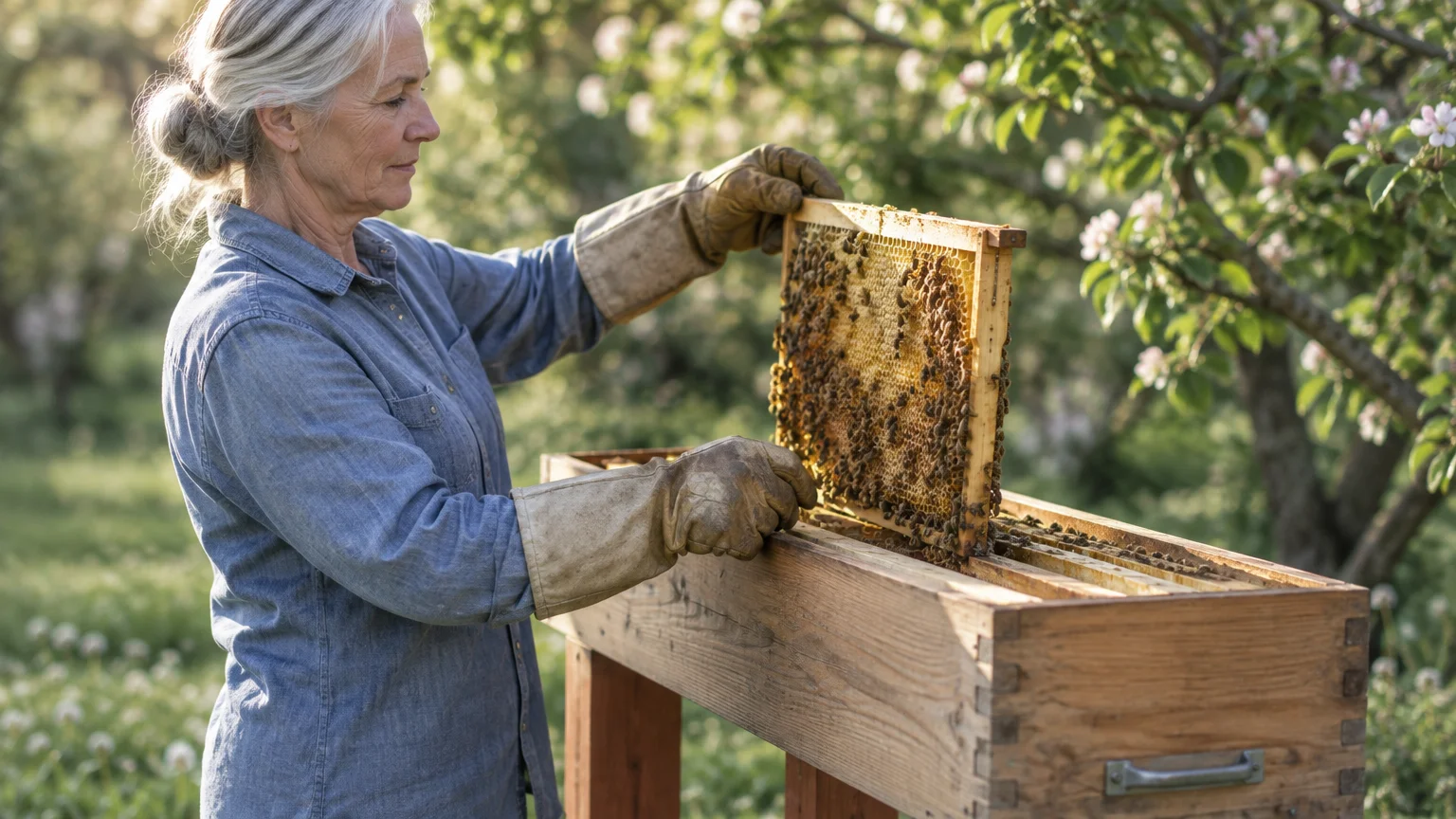
Second, pick equipment that protects your back and reserve local bees in January or February. Utah State University Extension compares stacked Langstroth, horizontal top-bar and 8-frame setups for reducing lift weight.
Comparing all four hive styles shows why a horizontal Langstroth fits best:
- Standard 10-frame Langstroth: Deep boxes weigh 70 to 90 pounds and honey supers 50 to 60 pounds, forcing heavy lifting.
- 8-frame Langstroth medium: Stacked boxes drop the heaviest lift to roughly 35 to 45 pounds, still taxing older backs.
- Top-bar hive: Light and inexpensive without frames, yet comb is fragile and standard local nucs will not fit.
- Horizontal (long) Langstroth: Waist-high legs keep lifts to one deep frame under 10 pounds while taking standard local nucs and mentor frames.
Horizontal hives cannot grow upward when strong colonies expand, so check space often in spring to prevent swarming.
One setup runs $600 to $1,200 in year one, then roughly $100 to $150 yearly for sugar, treatments, and parts. A worked horizontal budget equals $340 + $65 + $135 + $45 + $220 + $85 = $890:
- Horizontal hive body on legs: $340
- Thirty assembled deep frames with foundation: $65
- Ventilated jacket with veil, plus gloves: $135
- Smoker and hive tool: $45
- Five-frame nucleus colony (nuc): $220
- Feeders, sugar, and entrance reducer: $85
Building the box at a community woodworking shop saves around $150, while avoiding used woodenware prevents American foulbrood. Order a five-frame nuc with a laying queen and drawn comb rather than a 3-pound package of roughly 10,000 loose bees.
Ask a local club for trusted suppliers, noting that starting with two hives to share brood frames roughly doubles setup costs.
Deadline: Place equipment orders and reserve your local nuc in January or February.
Form or account touched: Supplier order form, club nuc reservation, and personal hobby budget.
Check before moving on: Verify your five-frame nuc uses standard deep frames matching your horizontal box.
Staging the flyway barrier, water basin, and state registration before spring delivery
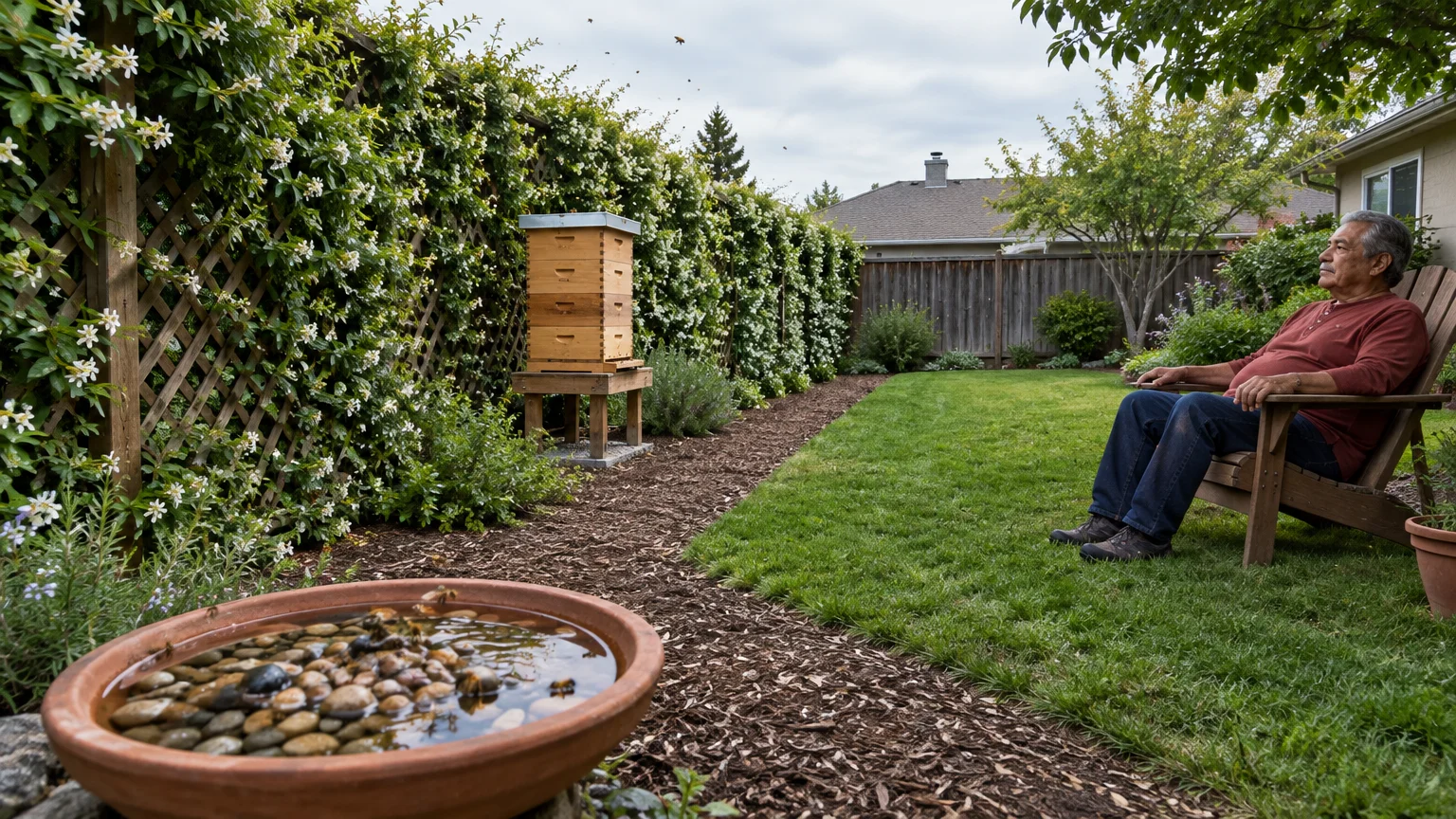
Third, stage your yard and file state paperwork before bees arrive. University of Florida Extension’s Good Neighbor Guidelines for siting honey bee colonies cover flight barriers and water on suburban lots.
- Face the entrance south or southeast for morning sun, away from patios, sidewalks, and pools.
- Place a solid fence or dense hedge about 6 feet tall ahead of the entrance so bees fly overhead.
- Set the hive level on pavers with room to stand beside or behind it.
Fill a shallow water basin with stones, marbles, or floating corks before pickup so bees do not adopt neighbors’ pools. Growing blooms using senior-friendly gardening raised beds also supports foraging without bending.
Register your hives if required using the Apiary Inspectors of America directory of state apiary programs and inspection services, then update neighbors next door.
Deadline: Finish yard staging, neighbor updates, and state registration before spring nuc pickup.
Form or account touched: State Department of Agriculture apiary registration filing.
Check before moving on: Confirm the hive sits level on pavers, the 6-foot screen stands firm, and the water basin is full.
Installing your nuc and inspecting frames at waist height through summer
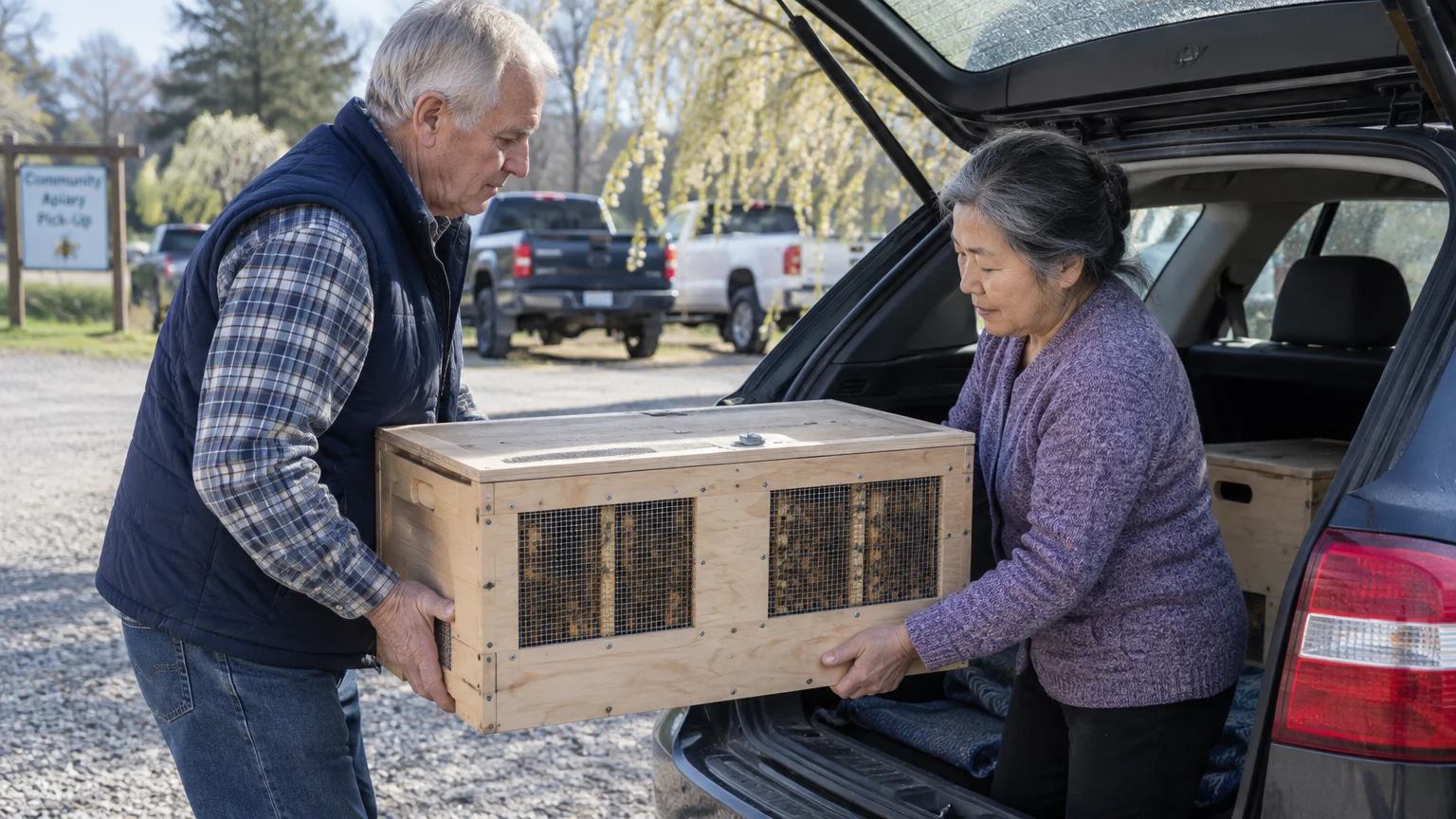
Fourth, collect your screened nuc on a cool morning and move the five frames into the center of your horizontal hive that day. Keep their original order and feed 1:1 sugar-water syrup.
Penn State Extension’s beekeeping basics detail first-year care. Inspect for 30 to 60 minutes every one to two weeks from spring into summer on warm, sunny afternoons.
Standing beside the waist-high hive lets you lift one frame at a time without twisting your back. Check spring space often to prevent swarming, and requeen with gentle stock if a colony turns defensive.
Deadline: Transfer frames on pickup day and inspect every one to two weeks into summer.
Form or account touched: Personal hive notebook tracking queen laying, comb growth, and syrup refills.
Check before moving on: Confirm eggs or larvae are present, bees use your basin, and empty frames sit ready.
Counting and treating Varroa mites before late-summer winter bees hatch
Fifth, measure Varroa mites monthly from late spring through fall. In the Auburn University and Apiary Inspectors of America survey, beekeepers lost 55.6% of their colonies over 2024-25, including 40.2% over winter.
Run an alcohol wash monthly because mite levels cannot be judged by sight:
- Scoop roughly half a cup of bees, about 300, from a brood frame without the queen.
- Shake them in rubbing alcohol for about one minute to knock mites loose.
- Count dislodged mites; extension programs often treat at 2 to 3 mites per 100 bees, or 6 to 9 in the sample.
Treatments include oxalic acid, formic acid, thymol, and amitraz, and following label temperature and honey rules is legally required. Treating right after late-summer harvest protects winter bees, while setting aside $220 yearly cushions colony losses.
Deadline: Run monthly washes from late spring through fall, treating right after late-summer harvest.
Form or account touched: Hive treatment log and a $220 annual colony replacement reserve.
Check before moving on: Re-test after treatment to confirm counts fall below 2 to 3 mites per 100 bees.
Harvesting crush-and-strain honey, reporting hobby income, and winterizing
Sixth, harvest only surplus honey in autumn starting year two, leaving 40 to 60 pounds for winter. Bees use 6 to 8 pounds of honey or syrup per pound of wax.
Healthy year-two colonies often yield 30 to 60 pounds of surplus, or roughly 2.5 to 5 gallons at 12 pounds per gallon. Skip a costly spinning extractor and use crush-and-strain:
- Cut capped comb into a food-grade bucket and crush it with a clean potato masher.
- Pour the mash through a fine nylon strainer bag into a bucket with a honey gate.
- Let bubbles and wax rise for a day, then fill clean jars from the gate.
Bees must rebuild crushed comb next year, while leftover wax makes candles or wood polish. Review the IRS rules on the difference between a hobby and a business before selling jars.
Report hobby sales on Schedule 1 of Form 1040 without deducting gear, and check state Department of Agriculture cottage food and labeling rules, or ask a tax pro if sales grow.
Leave the hive closed in winter, tipping up the back to check weight, and lean on local club classes for winter support.
Deadline: Complete extraction and winter checks in autumn before freezing weather arrives.
Form or account touched: IRS Form 1040 Schedule 1 and state cottage food or labeling records.
Check before moving on: Confirm 40 to 60 pounds of winter honey remain and jars meet state labeling rules before any sale.