
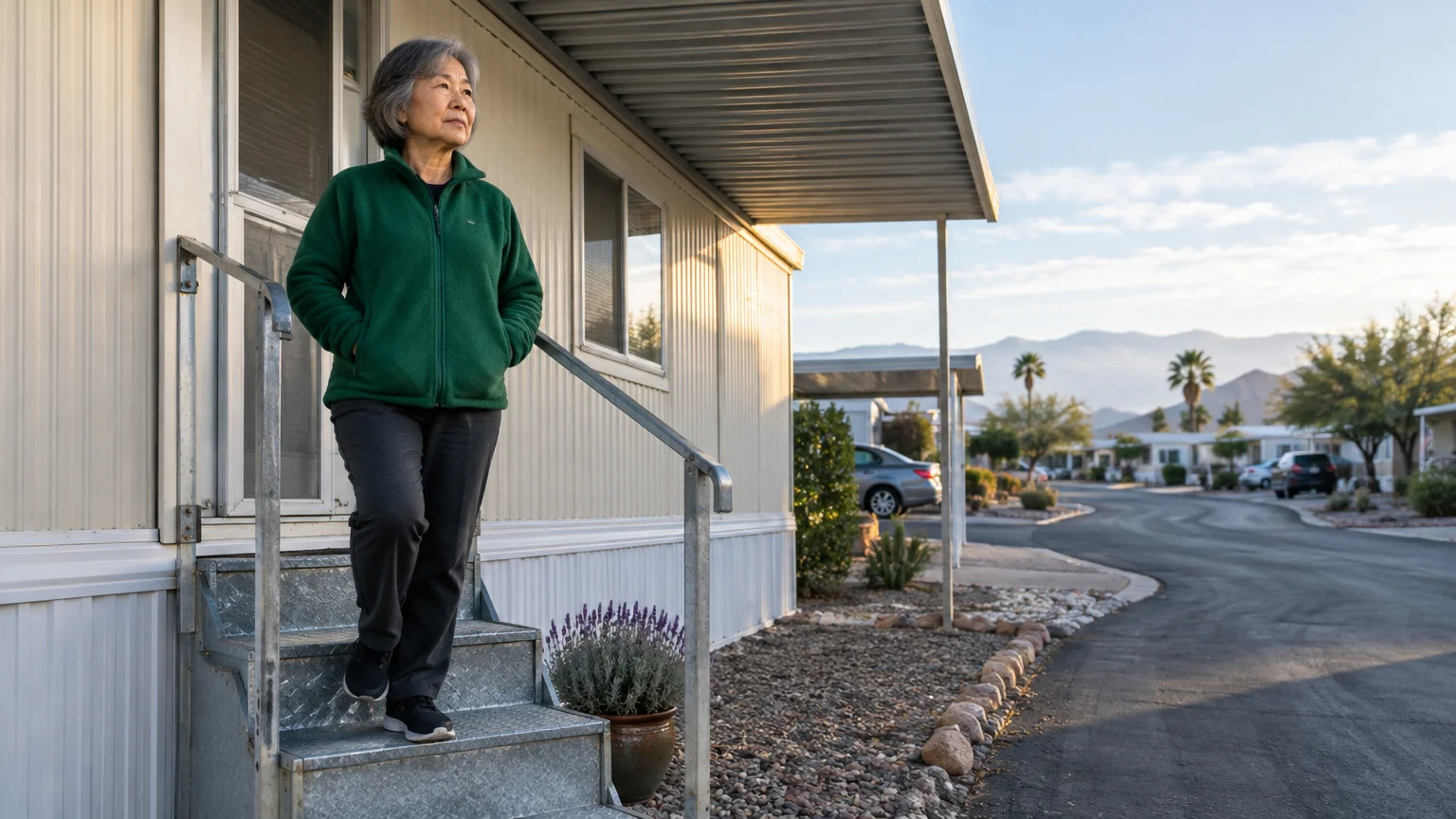
An unexpected ground rent increase can quickly dismantle a fixed monthly budget of $1,750. You do not have to absorb an 8% rate hike quietly or assume you are powerless against community management.
State statutes give manufactured homeowners direct legal leverage to contest pass-through capital improvement fees before they take effect. You can freeze arbitrary increases through statutory mediation by organizing a simple majority of your park neighbors.
This guide provides the exact timeline, budget adjustments, and legal procedures required to contest unreasonable lot rent increases in your community.
In this guide9 sections
- The Financial Reality of Lot Rent Increases on a Fixed Income
- State Manufactured Housing Rent Stabilization Statutes
- Challenging Capital Improvement Pass-Through Fees
- How to Form an Effective Park Homeowners Association
- Step-by-Step Guide to Contesting an Unreasonable Rent Increase
- Worked Example: Challenging an 8 Percent Rent Increase
- Immediate Budget Tactics and Senior Assistance Programs
- Long-Term Solutions: Resident-Owned Communities
- Frequently Asked Questions
The Financial Reality of Lot Rent Increases on a Fixed Income
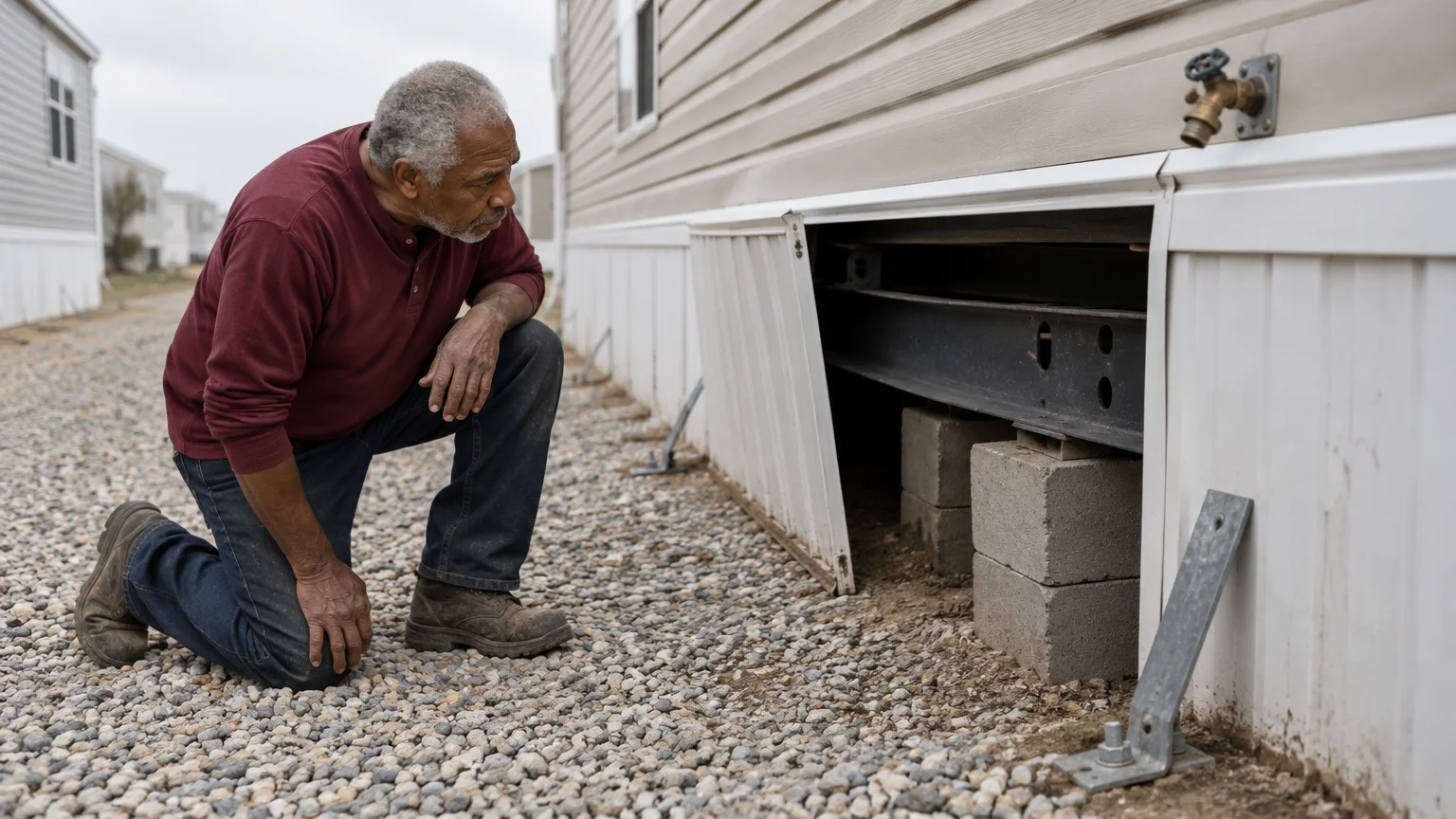
Roughly 3.2 million adults aged 60 and older live in manufactured homes across the United States. Many of these retirees own their physical structures debt-free.
Many seniors chose manufactured housing while downsizing their home in retirement, only to face unexpected ongoing community fees.
According to research published by the Consumer Financial Protection Bureau, older residents in land-lease communities remain as housing-cost burdened as traditional apartment renters. The land beneath the home remains an ongoing operational cost.
Relocating a manufactured home to avoid a rent hike is rarely a feasible alternative for seniors. Moving a single-wide home typically costs between $5,000 and $15,000.
Transporting a double-wide home often exceeds $15,000 to $25,000. Furthermore, most modern parks refuse to accept units built prior to the federal HUD code standard established on June 15, 1976.
This physical immobility gives corporate park operators significant pricing power over older residents. When management raises lot rent by 8%, an older adult on a fixed Social Security check must absorb that cost immediately.
Understanding your rights under state landlord-tenant laws is the first line of defense against these sudden monthly increases.

State Manufactured Housing Rent Stabilization Statutes
Landlord-tenant regulations for mobile home parks vary sharply by state. While some states offer little protection beyond advance notice, several major states enforce statutory caps on ground rent adjustments.
In addition to rent stabilization rules, look into state relief options like a property tax freeze for low-income seniors to minimize other ongoing home expenses.
In New York, Real Property Law Section 233-b caps annual lot rent increases at 3%. Park owners can only raise rent up to 6% if they prove justifiable operating cost increases or capital improvements.
New York residents have a strict 90-day window from the notice date to challenge any increase exceeding 3% in local court.
California enforces statewide protections under Civil Code Section 798.30.5 (enacted via Assembly Bill 978). This statute limits annual increases to 3% plus the local Consumer Price Index, with an absolute maximum cap of 5%.
California park operators must also provide at least 90 days of advance written notice before adjusting rental rates.
Florida takes a procedural approach under Florida Statutes Chapter 723. The law mandates a 90-day written notice and establishes a formal statutory mediation system when a majority of homeowners contest an increase.
Colorado regulates community operators through C.R.S. Section 38-12-200.1.
Landlords must give 60 days of advance notice and can only implement one rent increase per 12-month period.
The Colorado Mobile Home Park Oversight Program actively investigates landlord violations and enforces statutory compliance without requiring residents to hire private attorneys.
| State and Statute | Notice Period Required | Annual Rent Ceiling Formula | Statutory Resident Challenge Method |
|---|---|---|---|
| New York (RPL § 233-b) | 90 Days | 3% standard cap (up to 6% with court-approved capital expenses) | Court petition filed within 90 days of notice |
| California (Civil Code § 798.30.5) | 90 Days | Lower of 5% or 3% plus local Consumer Price Index (CPI) | Civil court action or municipal rent board appeal |
| Florida (F.S. Chapter 723) | 90 Days | Market rate subject to “reasonableness” standard | Mandatory statutory mediation via 51% resident petition |
| Colorado (C.R.S. § 38-12-200.1) | 60 Days | One increase per 12 months; no statewide percentage cap | Administrative complaint to Mobile Home Park Oversight Program |

Challenging Capital Improvement Pass-Through Fees
Park owners frequently mask excessive rent hikes by labeling them as capital improvement pass-through charges. You must distinguish between legitimate community upgrades and deferred routine maintenance.
Unchecked park expenses often force difficult trade-offs with essential seasonal utilities, such as budgeting for winter heating on a fixed income.
A capital improvement adds permanent value or extends the useful life of community property. Examples include installing a new community water filtration system or replacing failing electrical transformers.
Routine maintenance includes patching potholes, trimming trees, painting clubhouses, or repairing standard pool plumbing. State statutes prohibit landlords from billing routine operational upkeep as capital improvement pass-throughs.
Review every notice carefully to identify unallowable fee additions. Common items requiring scrutiny include:
- Repairing existing asphalt streets rather than installing entirely new road foundations.
- Fixing clubhouse heating and air conditioning units instead of purchasing new high-efficiency systems.
- Billing park-wide tree trimming services that belong in ordinary operational budgets.
- Charging current tenants for deferred maintenance neglected by previous park owners.
- Failing to amortize the expense over the useful life of the installed improvement.
When park owners amortize a project, they must spread the cost across all occupied lots over five to fifteen years. Billing the full expense inside a single year violates standard municipal accounting practices.

How to Form an Effective Park Homeowners Association
Individual complaints rarely convince corporate landlords to withdraw lot rent hikes. Collective negotiation through a formal homeowners association gives residents statutory standing.
This process shares many similarities with how condo owners handle sudden HOA fee increases when challenging board decisions.
Most state laws, including Florida Chapter 723, require participation from 51% of affected home-owning residents to trigger legal protections. Achieving this threshold requires direct, methodical community organizing.
- Obtain a complete map and lot roster of your community to track every home site.
- Host an informal meeting at the community center or a neighbor’s home to discuss the rent notice.
- Draft simple association bylaws establishing elected officers, including a president, secretary, and treasurer.
- Collect signed membership forms from at least 51% of registered home owners in the park.
- Register the association with your state department of state or corporate division as a non-profit entity.
- Open a formal bank account in the association’s name to manage community legal funds.
Keep detailed records of every resident signature and date. Park owners often challenge the validity of association rosters during dispute proceedings.
Appoint an executive negotiating committee of three to five articulate, detail-oriented residents. This committee will represent the community during all formal discussions with management.

Step-by-Step Guide to Contesting an Unreasonable Rent Increase
Once your homeowners association represents a majority of the park, follow a strict procedural timeline to contest the increase. Missing statutory deadlines can forfeit your legal rights.
- Review the written rent notice immediately upon receipt to confirm it complies with statutory timing rules.
- Issue a formal written request to park management demanding itemized accounting for the rent increase.
- Compare the landlord’s operational figures against local Consumer Price Index data and regional market rates.
- Hold a general association vote to officially reject the proposed rate adjustment.
- Send a certified letter with return receipt requested notifying the landlord of the formal dispute.
- File a petition for statutory mediation with your state housing agency before the notice period expires.
- Attend the formal mediation hearing alongside your committee and present comparative cost evidence.
During mediation, focus directly on unreasonable operational charges and unamortized capital pass-throughs. Presenting organized financial records creates substantial pressure on landlords to settle.
If mediation fails, consult with legal aid services specializing in manufactured housing law to assess formal administrative or court options.

Worked Example: Challenging an 8 Percent Rent Increase
Consider the practical scenario of a 70-year-old resident living in a 55+ community on a fixed monthly income of $1,750. The current monthly ground rent is $650.
Proactively auditing and negotiating lower everyday bills can also help preserve cash flow while challenging complex landlord fees.
Park management delivers a notice announcing an 8% ground rent increase, which adds $52 per month ($624 annually). The new rent would become $702 per month.
Management attributes the $52 hike to two items: a $22 adjustment for general inflation and a $30 pass-through fee for repaving the clubhouse parking lot. Management states the repaving cost $36,000 across the park’s 100 occupied lots over 12 months.
The newly formed park association reviews the documentation and discovers two significant legal defects in the landlord’s calculations:
- The parking lot work was simple crack sealing and resurfacing, which state regulations classify as routine maintenance rather than a capital improvement.
- Even if classified as a capital improvement, state guidelines require amortizing parking surfaces over a 15-year useful life rather than a 1-year period.
Amortizing the $36,000 project over 15 years results in an annual cost of $2,400 across the entire park. Divided by 100 lots, the legitimate pass-through fee is only $24 per lot per year, or $2.00 per month.
During statutory mediation, the association presents these figures alongside quotes from local asphalt contractors. Management agrees to remove the routine maintenance charge and correctly amortize the legitimate expenses.
The revised increase drops from $52 to $24 per month ($22 inflation plus $2 amortized capital fee). The new lot rent is set at $674 per month instead of $702.
This adjustment saves the retiree $28 each month, preserving $336 per year on their fixed budget.

Immediate Budget Tactics and Senior Assistance Programs
While an association negotiates or mediates a rent increase, you must protect your household finances from immediate disruption. Never ignore a rent notice while waiting for a dispute to resolve.
Pairing rent mitigation with state assistance when budgeting for winter heating provides additional monthly breathing room for energy expenses.
Qualifying seniors can also explore applying for a property tax freeze to lower municipal tax burdens on their manufactured home structures.
Paying your undisputed rent amount on time prevents management from issuing a three-day or five-day default notice. If allowed by state statute, deposit the disputed increase amount into a designated bank escrow account.
You can also offset housing costs by accessing public benefits that lower your other monthly living expenses. Many eligible seniors overlook programs that free up critical cash flow:
- The Supplemental Nutrition Assistance Program (SNAP) provides monthly food assistance, offsetting grocery expenses to balance housing costs.
- The Low-Income Home Energy Assistance Program (LIHEAP) offers direct grants to pay winter heating and summer electric bills.
- Local property tax circuit-breaker programs provide property tax credits or rebates for low-income seniors who own their manufactured homes.
- The Medicare Savings Program helps pay monthly Part B premiums, restoring up to $174.70 or more to your monthly check.
To identify programs you qualify for, use NCOA’s BenefitsCheckUp tool to run a comprehensive benefits screening. You can also contact the Eldercare Locator community resources directory to connect with your local Area Agency on Aging.
These supportive programs can provide hundreds of dollars in breathing room while your community association works to stabilize ground rent costs.

Long-Term Solutions: Resident-Owned Communities
Contesting individual rent hikes provides immediate relief, but corporate landlords often repeat the process every few years. The most secure long-term defense against lot rent inflation is purchasing the park land as a community cooperative.
Under the Resident-Owned Community (ROC) model, homeowners form a housing cooperative that purchases the underlying land when the park goes up for sale. Non-profit organizations such as ROC USA provide technical assistance and specialized financing to facilitate these transactions.
More than 300 manufactured home communities across the United States have converted to resident-owned cooperatives. In a resident-owned park, lot rent adjustments reflect only the actual cost of operating and maintaining the infrastructure.
Transitioning to an ownership model offers several distinct advantages for older residents:
- Ground rent increases stabilize because there is no corporate profit margin or third-party investor dividend requirement.
- Residents vote democratically on all major infrastructure improvements, budgets, and park rules.
- Community members cannot face eviction due to land redevelopment or rezoning for commercial use.
- Home values inside resident-owned communities typically appreciate faster than homes located in investor-owned land-lease parks.
Several states, including Massachusetts, New Hampshire, and Colorado, require park owners to give residents advance notice and the right of first refusal when listing a park for sale. Preparing your community association early positions residents to purchase the land when the opportunity arises.
Frequently Asked Questions
Can park management raise lot rent if you own your home outright?
Yes. Even if your manufactured home has zero mortgage balance, you lease the underlying ground from the park owner.
You remain bound by the lease agreement, park rules, and state tenancy statutes regarding ground rent adjustments.
What qualifies as an invalid rent increase notice?
An increase notice is invalid if it fails to provide the full statutory notice period required by your state, lacks written documentation, or omits mandatory itemized accounting for capital improvement pass-through charges.
Can a park landlord evict you for organizing a homeowners association?
No. Most state manufactured home statutes explicitly prohibit landlord retaliation against tenants who organize, join, or participate in a resident association to address park conditions or rent disputes.
How does statutory mediation work in a mobile home park dispute?
Statutory mediation requires both the park owner and an elected resident committee to meet with a state-certified mediator. The landlord must provide accounting evidence to defend the increase while residents negotiate for lower figures or extended phase-in periods.
What happens if a resident refuses to pay a contested rent increase?
Withholding rent entirely can trigger an immediate eviction action. Instead, residents in formal disputes typically pay the undisputed base rent and deposit the contested increase amount into an approved escrow account until mediation or court proceedings conclude.
Disclaimer: This article is for informational purposes only. Benefits, programs, and regulations can change.
We encourage readers to verify current information with official government sources and consult with qualified professionals for personalized advice.


