

A sudden multi-thousand-dollar condominium assessment can disrupt a retirement budget built on fixed monthly income. You can resolve unexpected association charges without draining your emergency savings or jeopardizing your home.
Mainstream advice tells retirees to tap high-interest personal credit or pull lump sums from retirement accounts. Auditing reserve studies, negotiating association installment plans, and accessing municipal deferred repair programs resolve the debt while keeping your cash intact.
Take control by evaluating board financial records, proposing structured repayment terms, and tapping local government programs designed for older homeowners.
In this guide9 sections
- Why Condo Dues and Special Assessments Spike in Retirement
- Audit the Assessment: Examining Reserve Studies and Association Records
- Negotiating an HOA Installment Plan to Protect Cash Flow
- Municipal Deferred Repair Loans and Government Relief Programs
- Worked Example: Resolving a $4,000 Roof Assessment on a Fixed Income
- Financial Options for Sudden Condo Dues Compared
- Insurance Check: When Loss Assessment Coverage Applies
- Long-Term Budget Defense Against Rising HOA Dues
- Frequently Asked Questions
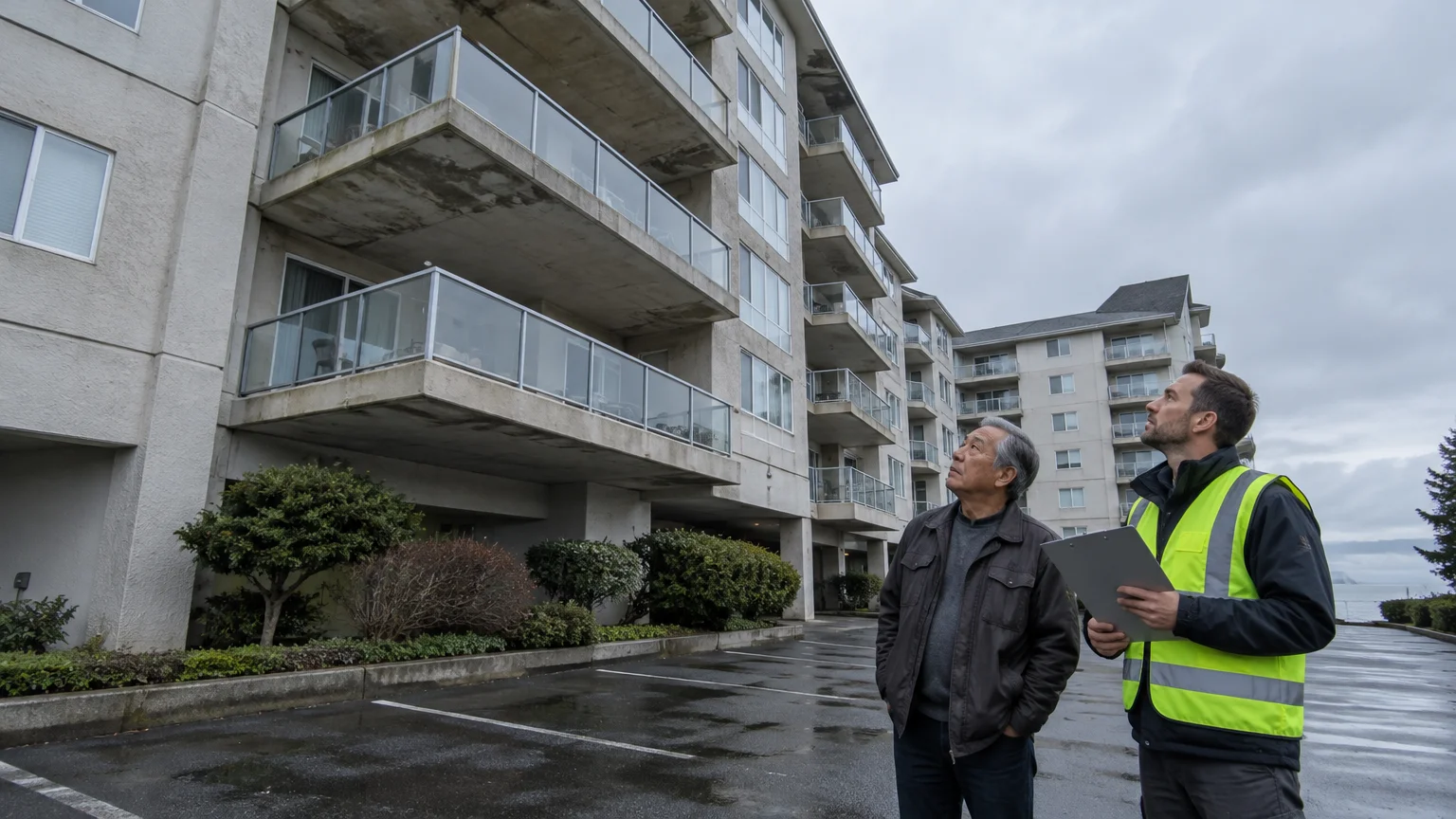
Why Condo Dues and Special Assessments Spike in Retirement
Roughly 77 million Americans live in community associations across the country. Attached condominiums make up approximately 38% of those homes.
While the national median association fee is $135 monthly, attached condominiums typically demand $200 to $600 each month. Urban mid-rise and coastal condominiums frequently exceed $1,000 per month.
Surveys from the Community Associations Institute show that 93% of associations experienced recent property and casualty insurance increases. These spikes forced 71% of boards to raise regular dues and 31% to issue sudden special assessments.
Mortgage lending standards create additional financial pressure on association boards. Effective August 3, 2026, Fannie Mae eliminated its Limited Review process, requiring Full Reviews of association financial reserves for conventional mortgage approvals.
Beginning January 4, 2027, Fannie Mae and Freddie Mac require associations to allocate at least 15% of annual budgets to capital reserves. Associations facing deficits must raise dues to maintain mortgage eligibility and protect property values.
State safety laws also mandate larger reserve accounts. For example, Florida requires associations with buildings three stories or higher to complete Structural Integrity Reserve Studies and bans boards from waiving reserve contributions.

Audit the Assessment: Examining Reserve Studies and Association Records
When your association board announces a $4,000 roof assessment, do not write a check immediately. You possess a legal right to review the financial documentation supporting the charge.
Association boards must provide owners access to financial records under state law. Request the current reserve study and the prior two years of operating budgets from your property manager.
A formal reserve study evaluates the expected lifespan and replacement cost of every major building component. It reveals whether the board budgeted for the roof over its normal 20-year lifespan or neglected regular savings.
Check your condominium declaration of covenants, conditions, and restrictions (CC&Rs) for assessment limits. Many governing documents cap unvoted emergency assessments at 5% of the annual budget without owner approval.
Review the board meeting minutes where trustees approved the assessment. Trustees must follow formal notice and quorum rules outlined in your bylaws for any special levy to remain legally enforceable.
Request these specific records in writing from your property manager:
- The most recent 30-year reserve study prepared by an accredited engineer or reserve specialist.
- Copies of all competitive bids submitted by licensed roofing contractors for the project.
- Current bank and brokerage statements for all operating and capital reserve accounts.
- Approved meeting minutes detailing the formal trustee vote authorising the special assessment.
- The association insurance policy declaration page showing deductibles and coverage limits.
Examine contractor proposals to verify the board obtained multiple independent bids. Boards that award large construction contracts without competing estimates may violate their fiduciary responsibilities under state law.

Negotiating an HOA Installment Plan to Protect Cash Flow
Most condominium declarations grant the board discretionary authority to structure payment schedules. Boards rarely advertise these plans because collecting monthly payments creates administrative work.
Submit a formal written payment request before the initial assessment due date. Late charges, interest penalties, and legal collection fees begin accruing immediately once you miss the primary deadline.
Propose a specific repayment schedule that fits your monthly retirement income. For example, request splitting a $4,000 assessment into 24 monthly installments of $166.67 rather than paying the full balance upfront.
Follow these steps to propose an installment agreement to your board:
- Review your association CC&Rs to identify the board hardship policies and payment procedures.
- Calculate your monthly discretionary surplus after paying essential housing, food, and medical expenses.
- Write a formal letter requesting a 12-month or 24-month payment arrangement.
- Offer automatic clearing house bank drafts to eliminate association administrative friction.
- Request a written waiver of administrative financing surcharges and late penalty fees.
Offer automatic bank drafts to reduce processing burdens for the management company. Setting up direct bank transfers demonstrates your commitment to fulfilling the obligation.
Association boards generally prefer steady installment payments over costly collection lawsuits. Legal foreclosure actions require substantial retainer fees that associations cannot always recoup quickly.

Municipal Deferred Repair Loans and Government Relief Programs
When your monthly cash flow cannot absorb an installment plan, municipal assistance can fill the gap. Many local agencies offer home repair loans tailored to older residents on fixed incomes.
Local governments use federal Community Development Block Grants to fund senior deferred-payment repair loans. These public programs offer 0% interest loans with zero mandatory monthly payments.
The loan balance remains deferred until you sell the condominium, transfer property ownership, or refinance. This structure resolves your immediate association assessment without draining your monthly retirement funds.
You can search for local housing rehabilitation programs on Benefits.gov. In addition, the Eldercare Locator connects older homeowners with county agencies that manage local emergency repair funds.
Prepare to satisfy these standard criteria when applying for municipal repair assistance:
- Proof of age confirming you are at least 62 or 65 years old.
- Household income documentation showing earnings below 80% of your county Area Median Income.
- Proof of primary residence and owner-occupancy for at least one full year.
- A certified copy of the association special assessment notice identifying the structural repair.
- Current bank statements and Social Security benefit verification letters.
Contact your municipal housing department directly to request a condominium repair application. Staff members can confirm local income thresholds and help you assemble required tax documents.
Some municipalities require the association board to verify the structural necessity of the roof work before releasing funds. Provide your program officer with the property manager contact details immediately to speed approval.

Worked Example: Resolving a $4,000 Roof Assessment on a Fixed Income
Consider Evelyn, a 67-year-old retired clerk living in an attached condominium. Her sole monthly income is a $2,150 Social Security benefit.
Evelyn spends $340 on monthly HOA fees, $180 on utilities, and $1,480 on living costs, insurance, and medical prescriptions. Her remaining disposable surplus is exactly $150 each month.
In October 2026, her board issued a mandatory $4,000 assessment for emergency roof repairs due in 60 days. Paying the assessment in cash would leave her with only $200 in total savings.
Evelyn resolved the debt using a structured evaluation process:
- She audited the reserve study and confirmed the board properly voted on the repair.
- She requested a 24-month installment plan of $166.67 from the board.
- The board countered with a 12-month limit of $333.33, exceeding her $150 surplus.
- She contacted her municipal housing division to apply for a senior deferred loan.
- Her $25,800 annual income qualified under the county 50% Area Median Income limit of $36,200.
- The county approved a 0% interest deferred loan paid directly to the association.
The municipal program satisfied the full $4,000 balance before the payment deadline. Evelyn kept her $4,200 savings balance intact, paid zero monthly loan fees, and avoided HOA penalties.

Financial Options for Sudden Condo Dues Compared
Evaluating financing options side by side helps you select the lowest-cost solution for your household budget. The table below outlines five common methods for resolving a sudden condominium assessment.
Homeowners exploring alternatives to tapping equity through a line of credit might also consider how understanding reverse mortgages compares for long-term housing stability.
| Funding Option | Upfront Cash Required | Monthly Payment Impact | Financing Cost | Processing Timeline |
|---|---|---|---|---|
| Board Installment Plan | $0 to $333 | $167 to $334 per month | 0% to 8% administrative interest | 7 to 14 days |
| Municipal Deferred Loan | $0 | $0 per month | 0% interest (repaid at sale) | 30 to 60 days |
| Home Equity Line of Credit | $150 to $500 in closing costs | $30 to $50 interest-only monthly | 7.5% to 9.5% variable interest | 30 to 45 days |
| Personal Unsecured Loan | $0 | $135 to $190 per month | 10.0% to 18.0% fixed interest | 1 to 3 days |
| Emergency Cash Savings | $4,000 lump sum | $0 per month | Lost interest earnings | Immediate |
High-interest personal credit produces severe monthly strain on fixed incomes. Low-cost deferred public financing or direct association payment plans offer far safer alternatives for retirees.
Avoid liquidating pre-tax retirement accounts like traditional IRAs to satisfy a sudden assessment. Unplanned withdrawals can trigger taxable income spikes and potentially raise your Medicare Part B monthly premiums.

Insurance Check: When Loss Assessment Coverage Applies
Many condominium owners assume their personal homeowner insurance policy covers any sudden association assessment. Standard HO-6 policies only pay for assessments caused by covered insurance perils, such as fire or windstorm damage.
Insurance carriers exclude assessments resulting from routine building maintenance, wear and tear, or operating budget deficits. Aging roofs requiring standard replacement do not qualify for insurance reimbursements.
Standard HO-6 policies typically provide a default loss assessment limit of only $1,000. If storm damage generates a large assessment, that baseline coverage falls short.
You can increase your loss assessment endorsement to $25,000 or $50,000 for roughly $50 to $100 per year. This inexpensive upgrade protects you if severe weather causes structural damage beyond master policy caps.
Guidance published by the Consumer Financial Protection Bureau details homeowner rights and credit disclosures regarding emergency property expenses.
Review these critical insurance terms on your policy documents:
- Master policy property deductible limits that could trigger special levies on owners.
- Specific perils covered under your personal HO-6 loss assessment endorsement rider.
- Filing deadlines for submitting assessment reimbursement claims to your insurer.
- Exclusions regarding foundation movement, water seepage, and normal mechanical wear.

Long-Term Budget Defense Against Rising HOA Dues
Protecting your retirement budget requires ongoing oversight of your condominium association finances. Attending annual budget workshops helps you spot funding shortfalls months before boards issue emergency bills.
Request the association annual reserve study update every autumn. Healthy associations maintain reserve balances funded at 70% or higher relative to estimated building depreciation.
Review monthly financial statements to ensure trustees transfer the required budgeted funds into capital accounts. Boards that divert reserve funds into operating accounts create severe assessment risks for owners.
Use these proactive steps to safeguard your retirement income from future assessment spikes:
- Attend monthly board meetings when trustees review contractor bids and facility reports.
- Examine annual draft budgets 30 days before trustees vote on proposed increases.
- Vote against operating proposals that waive or reduce annual capital reserve funding.
- Join the association budget or building committee to assist with financial planning.
- Track state legislative updates that mandate structural inspections and reserve minimums.
Proactive oversight ensures you anticipate dues adjustments months before formal payment notices arrive in your mailbox.
Frequently Asked Questions
Can an HOA force me to pay a special assessment immediately?
Governing documents dictate assessment due dates, but state statutes require reasonable advance notice. Boards possess authority to place property liens if owners ignore notices without arranging approved payment terms.
What happens if I cannot afford a condo fee increase on Social Security?
Contact your association board immediately to request a multi-month installment plan. You can also apply for municipal deferred-payment home repair loans that defer repayment until you sell the home.
Does homeowner insurance cover an assessment for a roof replacement?
HO-6 loss assessment insurance only covers assessments triggered by covered property perils like severe storms. Standard insurance policies exclude assessments caused by normal aging, wear, or deferred roof maintenance.
Can an association board issue a special assessment without an owner vote?
Most governing documents permit boards to levy assessments for emergency structural repairs without owner approval. However, bylaws often require owner votes if non-emergency capital assessments exceed 5% of the annual budget.
How do new mortgage rules affect my monthly condo fees?
Lending rules require associations to allocate 15% of annual budgets to capital reserves to remain warrantable. Underfunded associations must raise regular dues to satisfy these standards and support buyer mortgage eligibility.
Disclaimer: This article is for informational purposes only. Benefits, programs, and regulations can change.
We encourage readers to verify current information with official government sources and consult with qualified professionals for personalized advice.


