
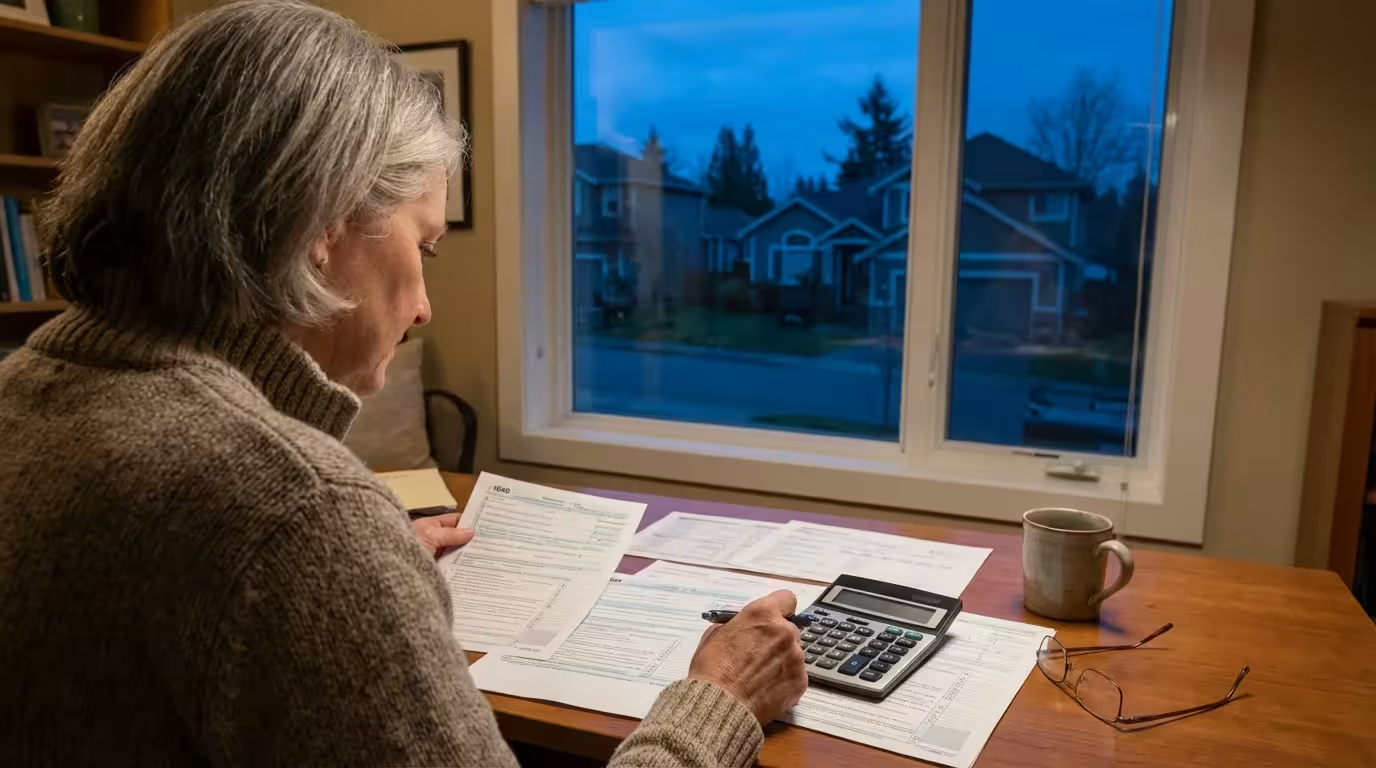
Property tax relief for older homeowners comes from your state and county, not the federal government. In most places you get it only if you apply.
Turning 65 does not change your bill on its own.
Most relief works in one of four ways: a larger homestead exemption, a freeze on your value or tax, an income-based “circuit breaker” credit, or a deferral secured by a lien. Separately, any homeowner can appeal an assessment that looks too high.
Four kinds of senior property tax relief and what each one changes
- Enhanced homestead exemption. Removes a set dollar amount of your home’s value from taxation, often a larger amount once you reach 65. What you save depends on your local tax rate.
- Assessment freeze or tax ceiling. Locks your assessed value, or the tax dollars themselves, at the year you qualify. A value freeze still lets your bill rise if local tax rates go up.
- Circuit breaker credit. Pays back part of your property tax when it is high compared with your income. It usually arrives as a state rebate or a state income tax credit.
- Deferral. Postpones the tax. The unpaid amount, usually plus interest, becomes a lien repaid when the home is sold or transferred or the owner dies.
The first three reduce what you owe. Deferral does not; it moves the bill to you later or to your estate.
Many states let you combine an exemption with a freeze. Disabled veterans often qualify for a separate, larger exemption, covered in our guide to veteran benefits for senior citizens.
Senior property tax relief in six states, side by side
These six programs show how the four types work in practice. Income limits are adjusted often, so confirm the current figure on your state’s form before applying.
| State and program | How it works | Who qualifies | Where to apply |
|---|---|---|---|
| Texas: over-65 homestead exemption and school tax ceiling | $60,000 added to the $140,000 general school exemption ($200,000 total); school-district tax frozen at the year you qualify | Age 65 or older, home is your residence; no income test | County appraisal district |
| Florida: additional homestead exemption for persons 65 and older | Extra exemption on top of the regular homestead exemption, only where the county or city has adopted it | Age 65 or older with household income under a limit adjusted each year | County property appraiser |
| New York: Enhanced STAR | School tax relief, paid as a credit check or, for long-time recipients, an exemption on the bill | Age 65 or older with income under a state limit set each year | NY Department of Taxation and Finance |
| Illinois: Senior Citizens Assessment Freeze Homestead Exemption | Freezes the assessed value at a base year; tax rates still apply | Age 65 or older, household income $75,000 or less for tax year 2026, Social Security counted | Chief county assessment officer, Form PTAX-340, every year |
| Washington: senior citizens and people with disabilities exemption, plus deferral | Freezes taxable value and exempts the home from some levies; deferral is a separate program | Older or disabled homeowners under a county income threshold | County assessor |
| California: Property Tax Postponement | State postpones current-year taxes and records a lien on the home | Older, blind or disabled homeowners with limited income and enough equity | California State Controller’s Office |
Two other well-known circuit breakers are Michigan’s homestead property tax credit, claimed with the state income tax return, and Pennsylvania’s Property Tax/Rent Rebate Program. Both return part of the tax to qualifying lower-income homeowners.
Texas over-65 example: what $200,000 in school exemptions saves
In Texas, the $60,000 over-65 school exemption stacks on the $140,000 general homestead exemption, so $200,000 comes off your school-district taxable value. You also get a ceiling that freezes school-district taxes at the amount for the year you qualify.
Take a home appraised at $300,000 and a school tax rate of $1.00 per $100 of value. Under 65: $300,000 minus $140,000 is $160,000, taxed at 1%, or $1,600.
At 65 or older: $300,000 minus $200,000 is $100,000, taxed at 1%, or $1,000. That is $600 a year less, and the ceiling keeps that $1,000 from rising later unless you add major improvements.
City and county taxes are not covered by the school ceiling. They are frozen only where those local governments have adopted their own over-65 freeze, so ask your appraisal district which ones have.
Illinois freeze: Social Security counts toward the $75,000 limit
Income tests are where many applicants go wrong. Some states start from federal adjusted gross income, which leaves out untaxed Social Security; others count every dollar you receive.
Illinois is in the second group. Its assessment freeze caps household income at $75,000 for tax year 2026, and Form PTAX-340 adds back all Social Security and SSI benefits.
Washington sets disposable income thresholds county by county for its senior and disability exemption and its deferral program. Read the income definition on your state’s form before deciding you earn too much.
Property tax deferral: a lien on the home, not a tax cut
Deferral programs such as California’s Property Tax Postponement let qualifying older homeowners put off current taxes. The state records a lien, and the deferred amount, usually with interest, is repaid when the home is sold or transferred or the owner dies.
Deferral can keep you in the home through a cash squeeze, but it shrinks the equity left for you or your heirs. It works much like a small, single-purpose reverse mortgage, so compare the two before signing either.
Most programs end the deferral when you stop living in the home, including a move into long-term care. An elder law attorney can explain how the lien fits with your estate plan.
How to apply for a senior exemption or freeze in your county

- Find the right office. Exemptions and freezes go to the county assessor, property appraiser or appraisal district. State credits and rebates go to the state revenue department. Your assessment notice names the local office.
- Check the age date. Many programs test your age as of a set date in the tax year, so confirm whether you qualify this year or next.
- Gather proof. Bring ID showing your birth date, the deed, and proof the home is your main residence. For income-tested programs, add your federal return, Form SSA-1099 and any 1099-R.
- File by the deadline on the form. Missing it usually means waiting a year. Some states allow late filing for past years; many do not.
- Ask about renewal. Basic homestead exemptions often renew automatically. Income-tested programs, such as the Illinois freeze, must be refiled or re-proved every year.
- Check your next bill. The exemption should be listed by name. If it is missing, call the office before the bill is due.
If you are unsure what your area offers, USA.gov’s benefit finder and the National Council on Aging’s housing help guide and BenefitsCheckUp screen for state and local programs. Your local Area Agency on Aging can often help with forms.
How to appeal an inflated county assessment
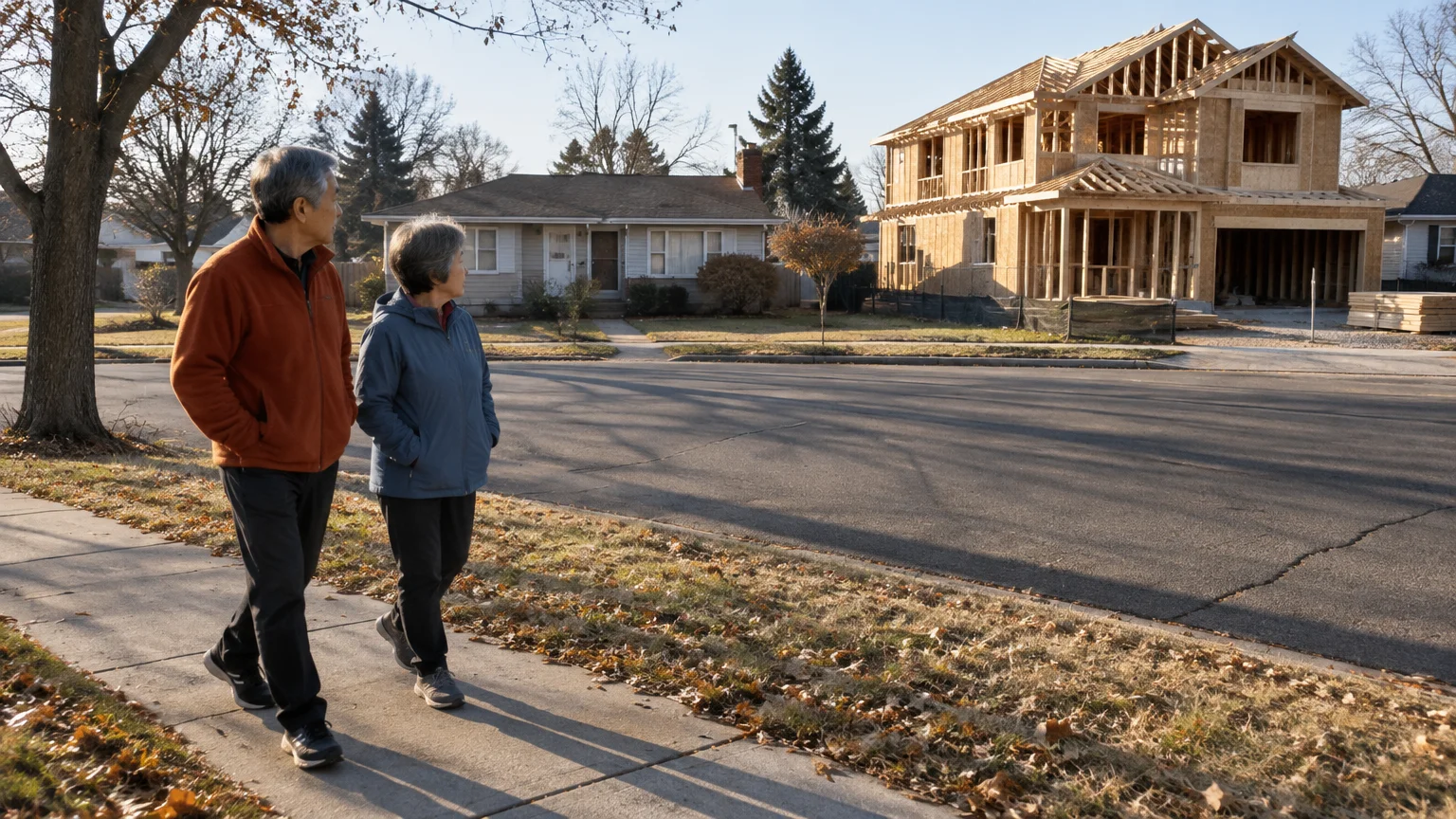
An exemption shrinks the taxable value; an appeal fixes the value itself. If the assessor has your home above what it would sell for, every program above starts from too high a number.
- Read the notice when it arrives. It shows the assessed value and the appeal deadline, which can be only a few weeks away.
- Check your property record card. Compare its square footage, bedrooms, bathrooms, basement finish and outbuildings with what actually exists.
- Find three to five recent sales of similar homes nearby. Assessor websites and county recorder records list sale prices.
- Ask for an informal review. Many assessors correct clear errors at this stage without a hearing.
- File the formal appeal with the board named on your notice, such as a county board of review in Illinois or an appraisal review board in Texas. Include comparables and photos.
- Keep paying the bill while the appeal is open. If you win, the overpayment is refunded or credited.
Be wary of mailers offering to cut your taxes for an upfront fee. Filing your own appeal usually costs little or nothing, and the assessor’s office will explain the steps.
Budgeting for property tax once the mortgage escrow ends
While you had a mortgage, the lender likely collected property tax monthly through escrow and paid the county. After payoff, the bill comes to you, often in one or two large installments, and late payment brings penalties.

A sinking fund prevents the shock. Divide your last annual bill by 12, add a cushion for increases, and set up an automatic monthly transfer to a separate savings account.
With a $4,800 annual bill, $4,800 divided by 12 is $400 a month. A 5% cushion makes it $420, or $5,040 a year.
If escrow also paid homeowners insurance, add that premium to the same transfer.
Reset the amount whenever a new assessment arrives, as part of a yearly budget review. Any leftover cushion carries forward toward next year’s increase.
Deducting property tax on your 2026 federal return
Property tax is deductible only if you itemize on Schedule A, and only in the year it is actually paid, whether you pay directly or through escrow.
For 2026, the state and local tax deduction is capped at $40,400 per return ($20,200 married filing separately). The cap shrinks for modified AGI above $505,000, to no less than $10,000.
Many retirees still come out ahead with the standard deduction, as explained in our guide to tax credits and deductions for seniors.
Your county assessor or appraisal district decides which exemptions you qualify for; a tax professional can tell you whether itemizing helps.


2 Comments
Comments are closed.