
For an older renter living with osteoarthritis, turning a smooth round brass doorknob on a rental apartment door can turn daily routines into sharp pain. Living in a leased home means you cannot simply remodel doors without considering lease terms and landlord permission.
Federal rules give disabled tenants enforceable rights to modify inaccessible door hardware, but landlords frequently push back over building security, master keys, and property damage. Choosing the right hardware strategy keeps you comfortable while avoiding lease disputes.
| Hardware Option | Best Rental Situation | Landlord Approval Needed? | Impact on Existing Locks | Move-Out Obligation |
|---|---|---|---|---|
| Slip-on or clamp-on sleeve extender | Interior rooms or short-term leases where hand strength is moderate | No written notice or approval needed | Leaves the existing lock mechanism untouched inside the door | Slips off in seconds with no restoration or repair |
| Full interior lever set (passage or privacy) | Bedrooms and bathrooms where existing latches stick or grind | Yes, written modification notice under federal rules | Replaces latch and trim; needs original knob hole and backset | Restore original round knobs and latches at lease end |
| Grade 2 keyed exterior entry lever | Front entry doors requiring single-handed access and high security | Yes, formal approval required due to building master keys | Must match building keyway or accept separate deadbolt keys | Restore original lockset or transfer new keys to landlord |
Matching your door hardware to your physical grip and rental lease
A round knob needs two actions that stiff hands struggle to deliver: a tight pinch grip and a twisting wrist. Both actions place heavy pressure directly on the joint at the base of the thumb.
Cold weather makes smooth metal harder to turn, raising the force needed to enter your home.
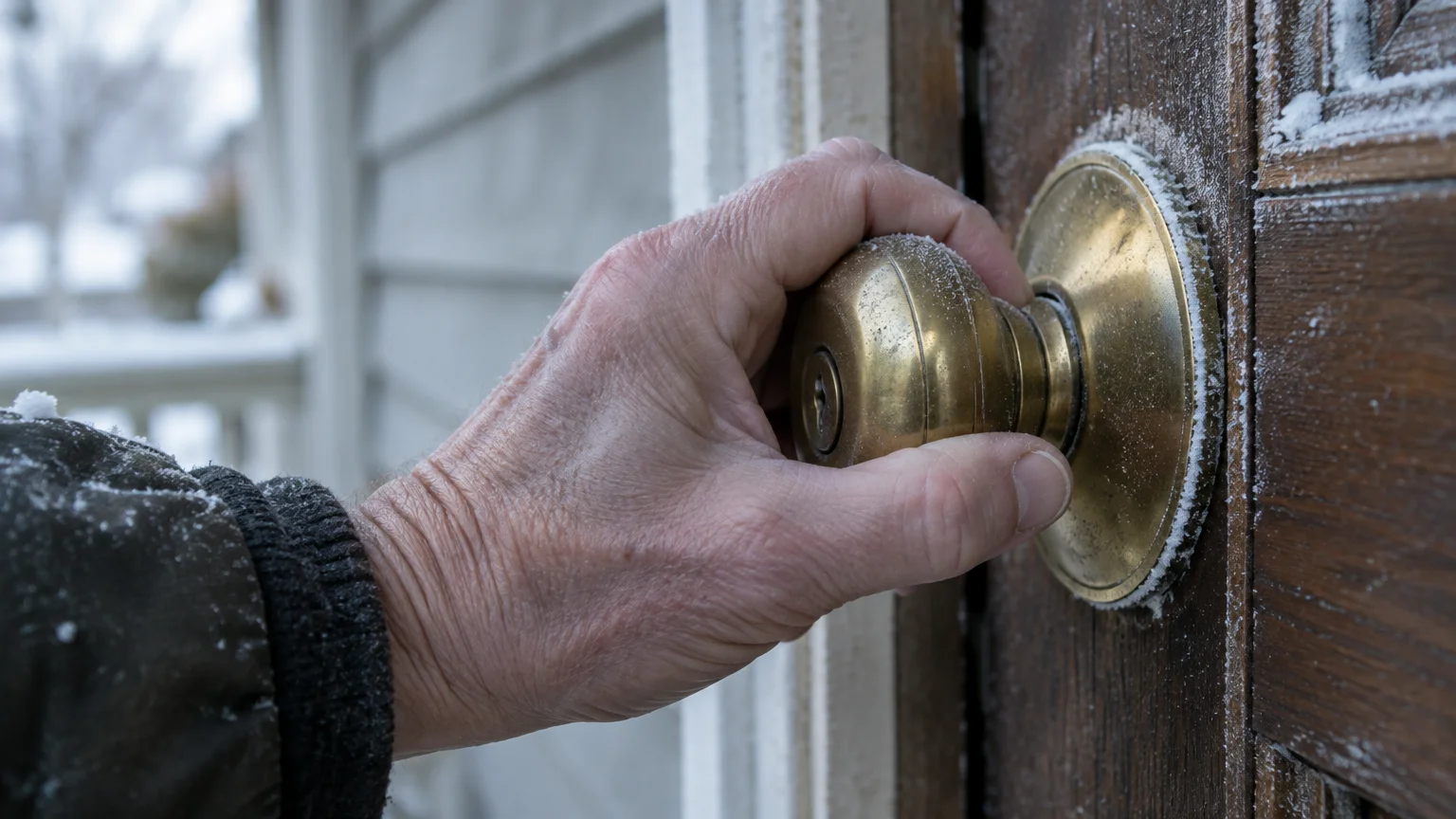
A lever turns that difficult twisting grip into an easy downward press. You can operate a lever using a flat palm, an elbow, or a forearm when carrying packages.
Swapping hardware is one of the simplest steps in making a home easier to age in, particularly when paired with lever-style faucets. The National Institute on Aging’s home safety checklist recommends replacing round doorknobs with levers for this exact reason.
The ADA standard for accessible hardware in residential units
Private rental buildings do not always have to follow public commercial accessibility rules, but federal accessibility standards provide clear guidance when selecting replacement levers.
Under section 309.4 of the ADA Standards, accessible hardware must operate with one hand without tight grasping, pinching, or twisting of the wrist. The mechanism must require no more than 5 pounds of force to operate.
The door hardware rule in section 404.2.7 specifies an operable height between 34 to 48 inches above the finished floor. Standard residential pre-drilled knob holes sit within that range, allowing you to use existing openings.
Hardware packaging lists an ANSI/BHMA durability rating. Grade 1 indicates heavy commercial hardware, Grade 2 covers light commercial and superior residential use, and Grade 3 represents basic residential grade.
For exterior entry doors used daily, Grade 2 hardware offers reliable latching without binding. Schlage’s Accent keyed entry lever provides Grade 2 durability and adjusts to standard door dimensions.
Slip-on extenders for no-tool rental modifications
Extenders fit directly over an existing round doorknob and add an extended lever arm. Flexible rubber or silicone sleeves stretch over the knob, while clamp-on units screw firmly around the exterior perimeter.
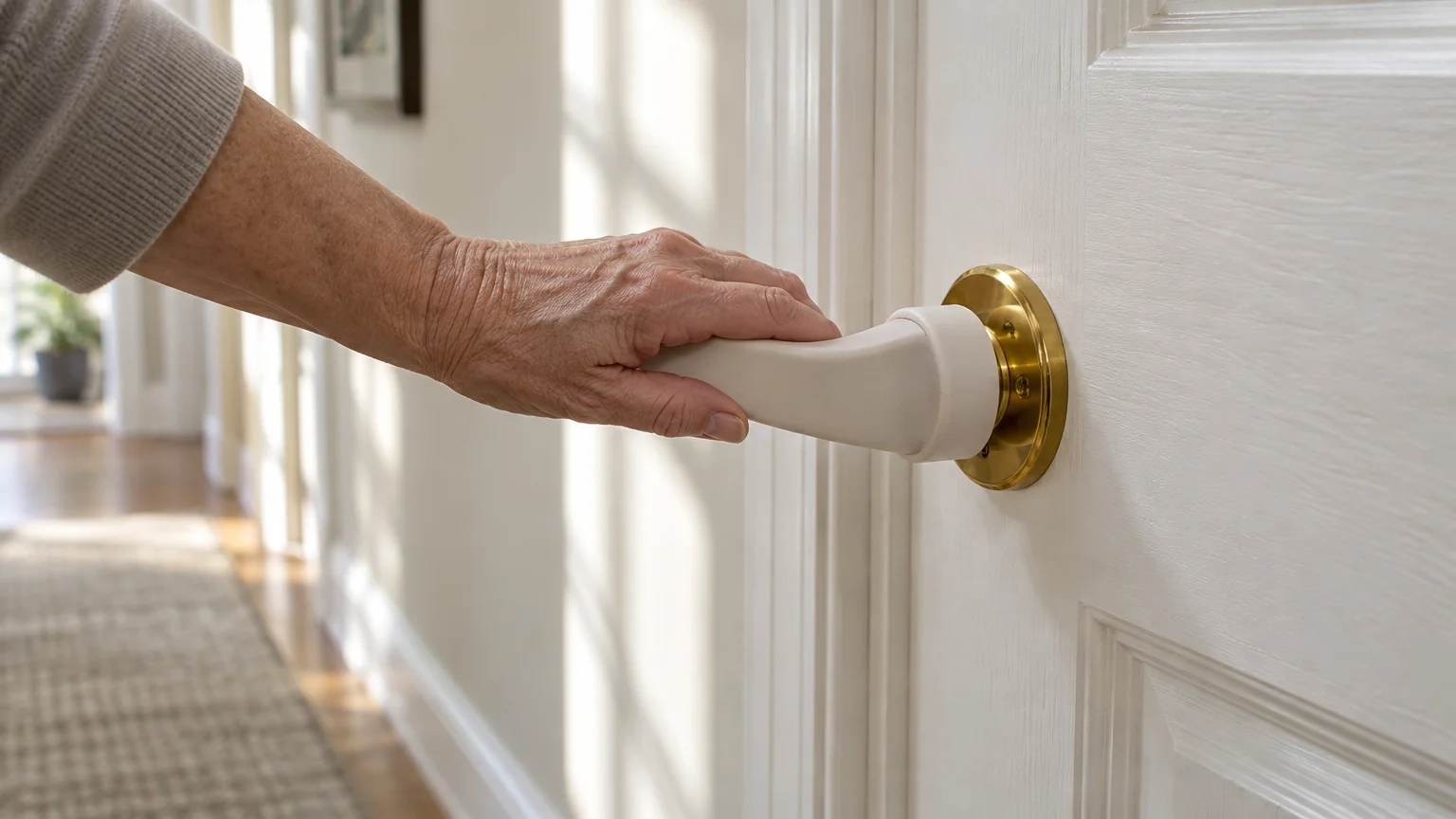
They install in minutes without tools, leave the landlord’s original lock intact, and pull off when moving. Because they do not modify the physical door, landlords cannot prohibit them under standard lease clauses.
The limitation lies in the underlying latch mechanism. If an old internal latch grinds or catches inside the frame, an extender merely adds leverage without fixing internal mechanical friction.
Installing full lever sets on interior bedroom and bathroom doors
Installing a complete lever set removes sticky internal latches entirely. Follow the manufacturer instructions closely, such as Schlage’s quick start guide for its F-Series knobs and levers, since screw placements and handing vary.
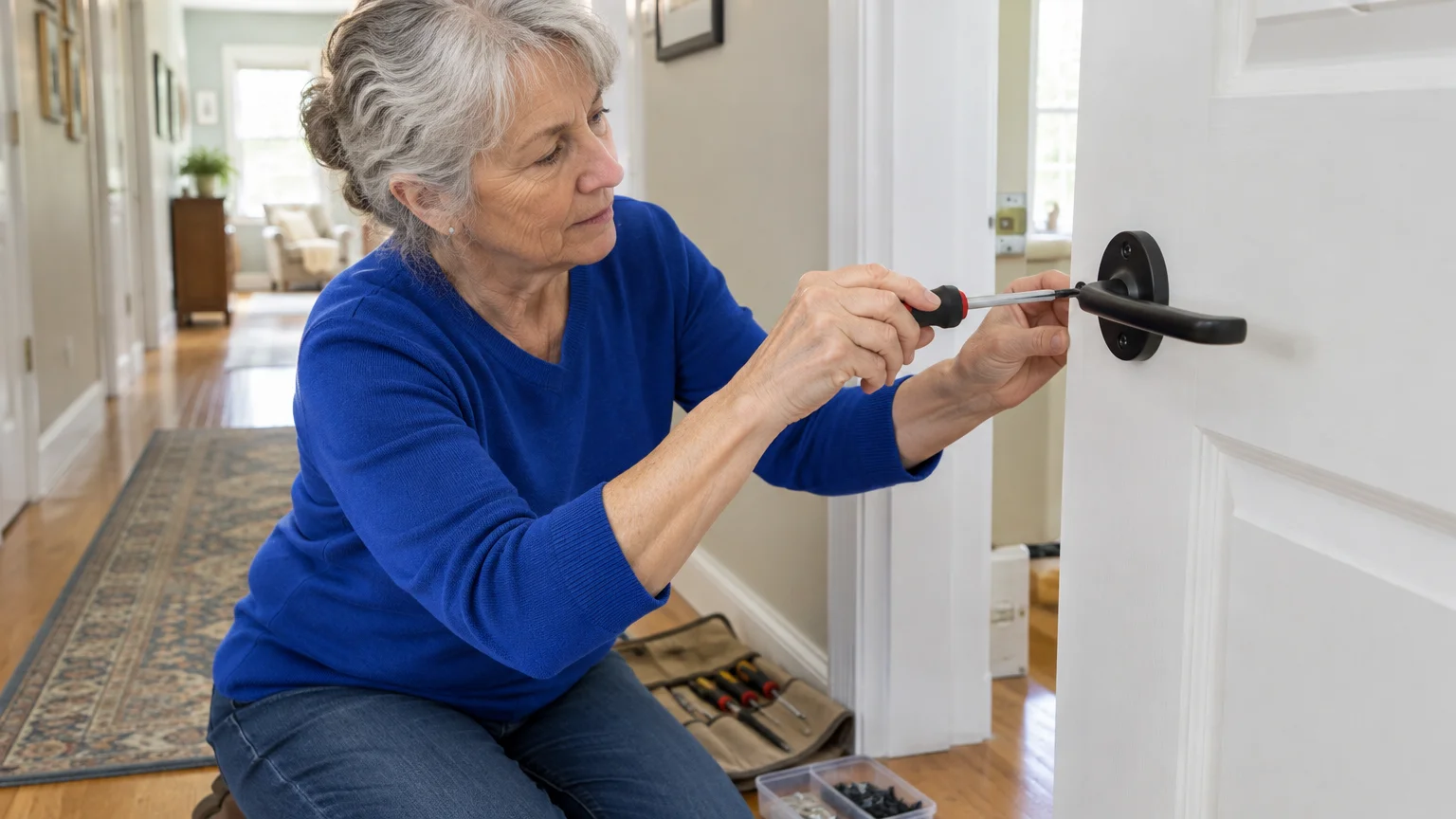
Gather basic tools before starting. Most standard doors need only a screwdriver and well under an hour to finish.
- Phillips screwdriver, where a #2 fits most door screws
- Flat screwdriver to gently pry loose stubborn escutcheon plates
- Tape measure
- Wood glue and toothpicks to repair stripped wood screw holes
- New lever set containing the replacement latch, strike plate, and screws
Eight steps replace an interior round knob with an accessible lever handle:
- Measure the backset distance from the door edge to the center of the knob hole, which measures 2-3/8 or 2-3/4 inches.
- Remove the old knobs by loosening the two mounting screws on the interior rosette plate.
- Unscrew the two screws holding the latch plate on the door edge and withdraw the old latch.
- Adjust the replacement latch to match your measured backset, orienting the bevel toward the door frame strike plate.
- Fasten the latch faceplate until it sits flush against the edge of the door.
- Insert the exterior lever assembly through the hole, aligning the square spindle through the central latch hub.
- Position the interior lever, start screws by hand to avoid cross-threading, and tighten them evenly.
- Check that the lever points horizontally toward the hinge side and latches cleanly into the strike plate.
Levers with curved returns point back toward the door face, preventing stray purse straps or loose robe sleeves from snagging. If screw holes in the frame are loose, insert glue-soaked toothpicks into the opening and trim flush before driving screws.
Requesting reasonable modifications under the Fair Housing Act
Under federal regulations outlined in 24 CFR 100.203, landlords cannot refuse reasonable modifications necessary for a tenant with a disability to enjoy their home. The tenant pays for installation in standard private rental housing.
A landlord may request reasonable technical descriptions of the hardware and confirmation that work will meet workmanlike standards. Landlords may also require interior alterations to be returned to their original state at move-out.
Send your modification notice in writing, explain that arthritis limits hand function, and detail the lever hardware you plan to install. Ask property management whether master key protocols require an authorized building locksmith to install keyed exterior locks.
Pack the original knobs, latch assemblies, strike plates, and mounting screws into labeled bags for storage. Keeping all original parts ensures full security deposit return when your lease concludes.
If you live in subsidized units covered by Section 504, the housing provider may be required to fund the modification directly. Our guide to housing assistance programs for seniors covers rules across federally assisted rental developments.
Planning project costs and subsidy programs for rental hardware
Consider a typical rental layout featuring two exterior doors, two bathrooms, and two bedrooms. Exterior entries require keyed levers, bathrooms use privacy levers with push-button locks, and bedrooms accept privacy or passage levers.
Grade 2 keyed entry levers, including Schlage Accent, Latitude, or Davlin designs, cost around $50 to $60 each. Outfitting two entry doors totals $100 to $120 for hardware.
Interior passage and privacy handles cost less, running around $30 each. Four interior levers add $120, bringing complete materials for six doors to roughly $220 to $240.
If purchasing keyed hardware, select keyed-alike packages so a single key operates every entry lock. Remember to supply an updated key copy for your emergency lockbox for paramedics.
Renters seeking financial help often look to tax deductions, but the tax math rarely works. While IRS Publication 502 allows accessible hardware modifications to count as deductible medical expenses, you must itemize deductions on Schedule A.
Tax deductions apply only to medical costs exceeding 7.5% of adjusted gross income, meaning an income of $40,000 requires $3,000 in qualifying expenses before any deduction begins. Because the 2026 standard deduction includes an additional $2,050 for a single filer 65 or older, most retirees do not itemize.
Local grant programs provide realistic financial assistance. Many Area Agencies on Aging manage chore and minor home modification programs covering hardware labor costs.
Eligible veterans can seek assistance through the VA Home Improvements and Structural Alterations (HISA) grant program. HISA provides up to $6,800 for service-connected disabilities or veterans rated 50% or more service-connected, and up to $2,000 for non-service-connected conditions.
Consult our guide on veteran benefits for senior citizens before purchasing equipment.