
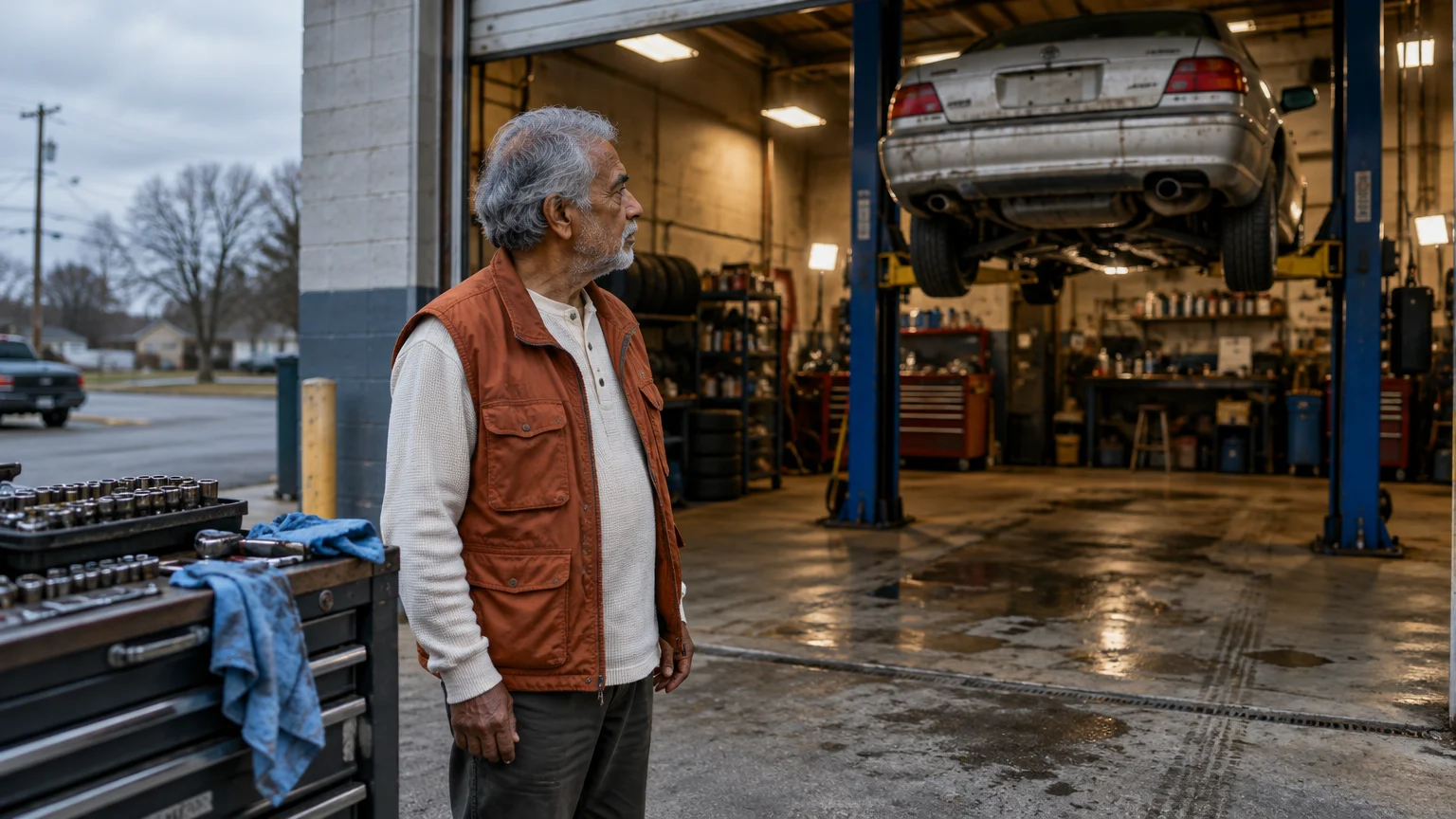
A $3,200 repair quote can feel like an immediate signal to trade in your aging vehicle. For a retiree living on a $2,200 monthly Social Security benefit, writing that check feels intimidating.
Replacing your car triggers financing costs and insurance spikes that drain your monthly budget far faster than a single repair. Repairing an older vehicle beats buying a replacement as long as the amortized repair cost stays below the monthly price of used financing.
This guide breaks down the exact math to show you whether to fix your car or replace it.
In this guide9 sections
- The 70-Year-Old Driver Dilemma: A Real-World Scenario
- The Cash-Flow Amortization Threshold
- The Hidden Costs of Buying a Used Vehicle
- The 50 Percent Rule and Mechanical Benchmarks
- Side-by-Side Comparison: Repair Versus Replacement
- Practical Strategies to Lower Your Mechanic Bill
- Six Steps to Take Before Approving an Expensive Repair
- Alternative Transportation Strategies for Low-Mileage Retirees
- Frequently Asked Questions
The 70-Year-Old Driver Dilemma: A Real-World Scenario
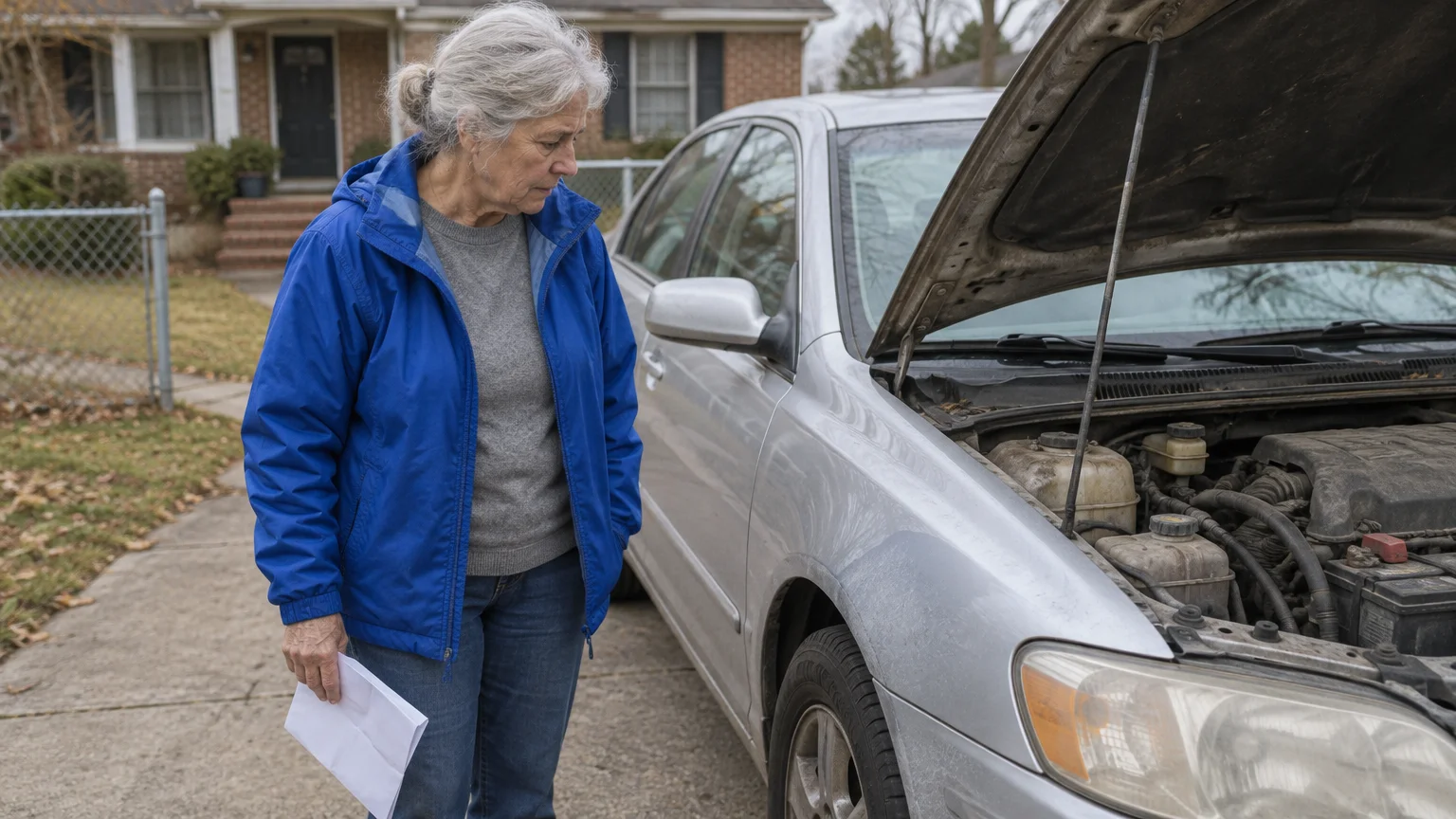
Consider Margaret, a 70-year-old widow who drives a 2011 sedan with 128,000 miles on the odometer. Her household depends on a $2,200 monthly benefit from the Social Security Administration.
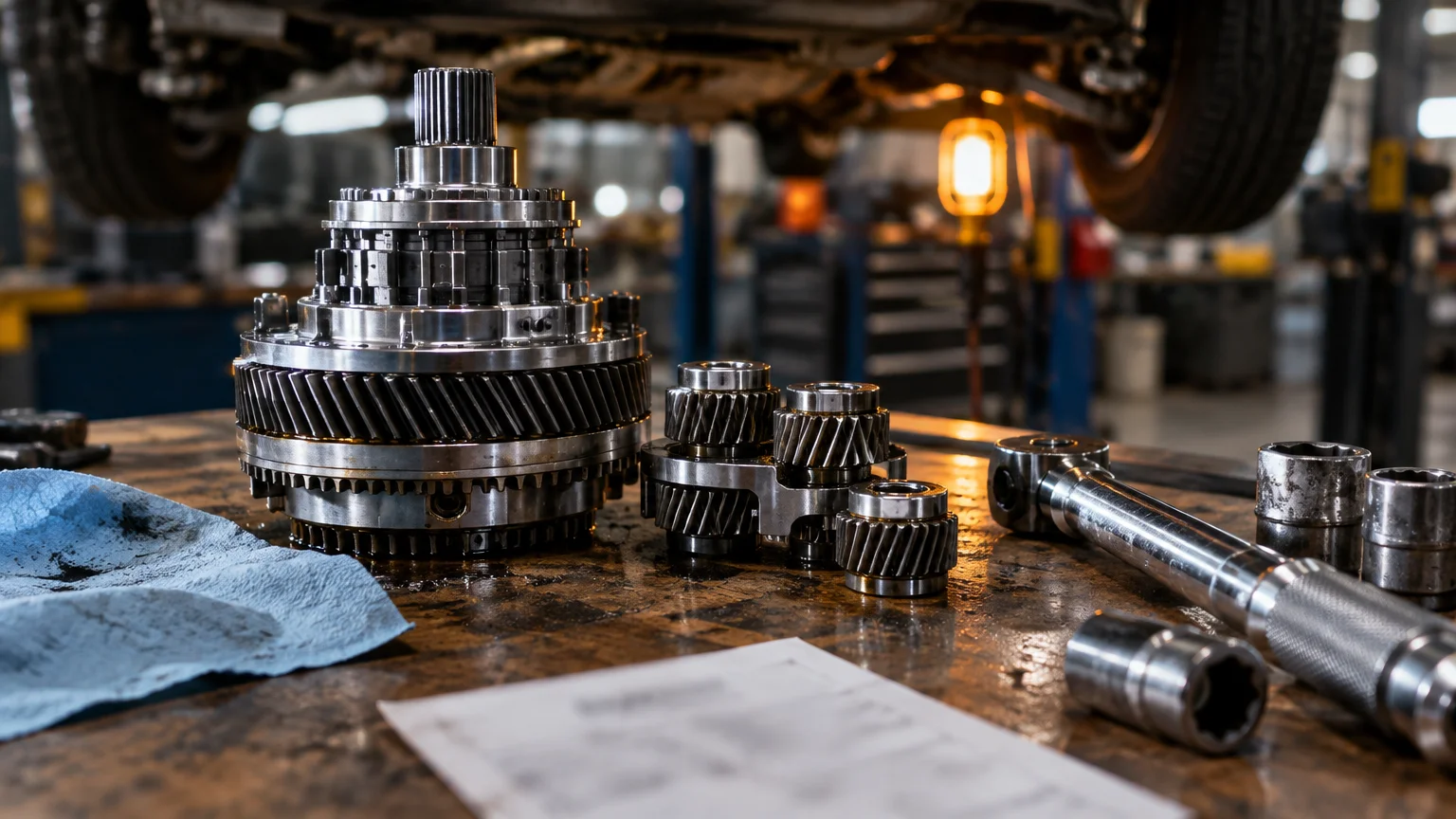
During an inspection, her mechanic reveals severe internal transmission slipping and worn front suspension struts. The written estimate demands $3,200 to complete the repair work.
Margaret maintains $4,500 in total liquid savings inside her bank checking and savings accounts. Paying that bill wipes out more than 70 percent of her financial safety net immediately.
At a local dealership, a salesperson offers her $1,000 as trade-in equity toward a 2019 compact crossover priced at $23,500. The salesperson promises that modern engineering will permanently eliminate unexpected garage visits.
Financing the newer vehicle sounds comforting because it preserves her bank balance this week. Yet taking on a five-year auto loan introduces a long-term drain on fixed monthly income.
Retirees must make the senior car replacement decision using cold cash-flow analysis rather than fear. When you calculate the true carrying costs, trading in the older car creates massive long-term losses.
The Cash-Flow Amortization Threshold
To evaluate whether an expensive repair makes sense, amortize the bill across a realistic operating window. Amortization means dividing the lump-sum invoice across the months the repair buys you.
Dividing a $3,200 transmission overhaul across 12 months produces an effective cost of $266.67 per month. If the repair keeps your car running for 24 months, the cost drops to $133.33 each month.
Compare that figure to prevailing auto financing obligations. According to recent Experian automotive finance reports, the average monthly payment for a used vehicle sits between $525 and $542.
Used automobile loans also carry aggressive financing charges. Average used car loan interest rates currently range from 11.19 percent to 12.01 percent.
The Consumer Financial Protection Bureau advises older borrowers that high-interest automotive loans can rapidly crowd out essential spending for food, utilities, and healthcare.
You can identify your breakeven threshold with basic division. Divide the mechanic’s total repair quote by the realistic monthly payment of a replacement vehicle.
Dividing Margaret’s $3,200 repair quote by a typical $525 used car loan payment yields a breakeven threshold of 6.1 months.
If the mechanic’s repair keeps Margaret’s car rolling safely for just seven months, she wins financially. Every single month she drives past that mark leaves $525 directly in her pocket.
For smaller repairs, the breakeven math proves even more decisive. A $1,200 brake and alternator repair achieves breakeven against a used car payment in fewer than 10 weeks.

The Hidden Costs of Buying a Used Vehicle
Car shoppers often focus strictly on vehicle sticker prices while overlooking ancillary purchase expenses. Acquiring a replacement vehicle introduces four immediate financial obligations that permanently reduce monthly retirement funds.
- Mandatory Full-Coverage Insurance: Lenders require collision and comprehensive coverage with low deductibles, dramatically raising monthly premiums.
- Government Taxes and Registration Fees: State sales tax, title charges, and dealer processing fees easily add $1,500 to $2,500 to your loan.
- Cumulative Interest Expenses: Financing a $22,500 used vehicle over 60 months at 11.5 percent APR adds over $7,200 in total interest charges.
- Pending Maintenance Cycles: Pre-owned vehicles aged four to six years frequently require new tires, brake rotors, or transmission flushes within 12 months.
Insurance rate increases hit older drivers particularly hard. Maintaining liability coverage on an older, fully depreciated automobile might cost only $75 per month.
Adding full coverage on a newer financed vehicle pushes those monthly premiums to $175 or more. That insurance hike represents a pure $1,200 annual increase in fixed overhead.
Pairing a $535 loan payment with a $100 insurance jump creates a new commitment of $635 per month. For a senior receiving $2,200 in monthly Social Security, that single obligation consumes 28.8 percent of gross income.
By contrast, paying for a mechanical repair protects your existing low insurance baseline. Once the mechanic finishes the work, your ongoing monthly living expenses remain completely unchanged.
The 50 Percent Rule and Mechanical Benchmarks
Traditional personal finance guides frequently promote the 50 percent rule for automotive decisions. This benchmark instructs owners to sell any vehicle if a single repair estimate exceeds half of its current market value.
Margaret’s 2011 sedan carries an estimated market value of $4,500. A $3,200 repair quote equals 71 percent of that value, which seemingly triggers an automatic replacement mandate.
However, the 50 percent benchmark fails retirees who live on fixed pensions or Social Security. Resale value measures what a stranger pays for your title, not the practical utility the vehicle provides.
If a $3,200 repair gives you two years of reliable transit, your monthly transportation cost is only $133. You cannot find, finance, and insure any reliable replacement vehicle for that modest amount.
Rather than relying on market valuation, judge the vehicle by the specific mechanical component requiring replacement. Certain repairs provide lasting reliability, while other defects signal total mechanical failure.
- Favorable Repairs: Modular components like alternators, starters, water pumps, fuel pumps, and complete brake assemblies restore predictable performance.
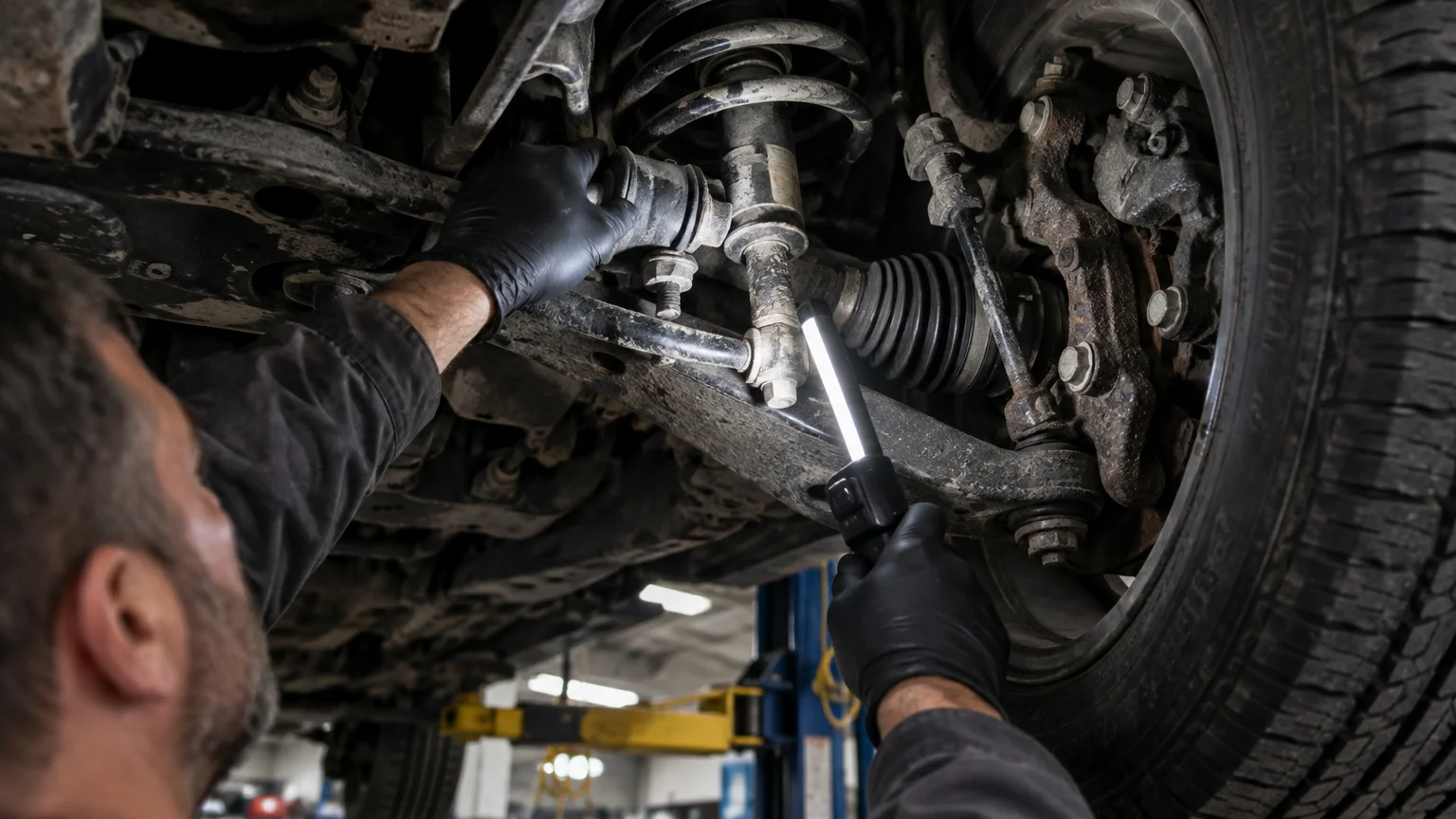
- Suspension and Steering Refreshes: Struts, ball joints, and tie rods naturally degrade over time and do not indicate core engine trouble.
- Remanufactured Transmissions: Installing a quality rebuilt transmission often includes a nationwide 3-year warranty, securing reliable driving for several years.
- Unfavorable Defect (Severe Rust): Corroded subframes, rusted floorboards, or deteriorating unibody structures compromise passenger crash safety and cannot be repaired cost-effectively.
- Unfavorable Defect (Electronic Harness Failures): Intermittent wiring faults or water-damaged computer modules cause recurring electrical shutdowns that require costly diagnostic hours.
- Unfavorable Defect (Catastrophic Engine Block Damage): Cracked engine blocks or warped cylinder heads on neglected motors rarely warrant major rebuild investments.
Data from S&P Global Mobility demonstrates that the average passenger vehicle on American roadways has reached 12.6 to 12.8 years of age. Modern vehicles can easily reach 200,000 miles when owners replace wear items conscientiously.

Side-by-Side Financial Comparison: Repair Versus Replacement
Comparing the exact cash requirements across several choices brings clarity to your decision. The table below analyzes total expenses for a retiree over a 24-month timeframe.
| Expense Category | Option 1: Repair 2011 Sedan | Option 2: Finance 2019 Used Crossover | Option 3: Finance 2024 New Compact |
|---|---|---|---|
| Upfront Cash Outflow | $3,200 (Repair bill) | $2,000 (Down payment + fees) | $3,500 (Down payment + fees) |
| Monthly Finance Payment | $0 | $535 (60 mos @ 11.5% APR) | $745 (60 mos @ 6.5% APR) |
| Monthly Auto Insurance | $75 (Liability only) | $175 (Full coverage mandate) | $210 (Full coverage mandate) |
| Two-Year Finance Total | $0 | $12,840 | $17,880 |
| Two-Year Insurance Total | $1,800 | $4,200 | $5,040 |
| Total 24-Month Cash Drain | $5,000 | $19,040 | $26,420 |
| Portion of $2,200 Monthly Income | 9.5% (Amortized over 24 mos) | 32.3% of total monthly income | 43.4% of total monthly income |
The financial disparity between these paths is substantial. Over two years, repairing your current car saves more than $14,000 compared to purchasing a late-model used vehicle.
AAA research reveals that annual vehicle depreciation costs new vehicle owners over $4,300 each year. With an older automobile, that depreciation has already occurred, saving you thousands in hidden wealth erosion.
Committing 32 percent of a modest retirement income to a single vehicle creates dangerous financial stress. Protecting your liquid cash flow through targeted repairs leaves room for food, medication, and home utilities.
“A penny saved is a penny earned.” — Benjamin Franklin

Practical Strategies to Lower Your Mechanic Bill
Never accept an initial auto repair estimate as an unchangeable final price. You can reduce repair costs substantially by employing several consumer negotiation strategies before signing work orders.
Applying standard strategies for negotiating household bills can also yield immediate savings on parts and hourly mechanic labor.
- Ask for Good-Used or Remanufactured Parts: Salvage parts or certified rebuilt components often cost 40 to 60 percent less than original equipment manufacturer items.
- Inquire About Cash Discounts: Independent mechanics pay 2 to 3 percent in card processing fees; many offer modest labor discounts if you pay by cash or debit.
- Separate Necessary Work from Recommended Add-Ons: Shops frequently bundle vital safety repairs with elective services like fluid flushes or cabin filter replacements.
- Compare Independent Labor Rates: Dealership labor often exceeds $175 per hour, while independent certified mechanics frequently charge between $100 and $130 per hour.
- Supply Your Own Parts Carefully: Some independent repair shops permit customers to supply their own components purchased through reputable online auto suppliers.
Applying these strategies to a major mechanical quote can reduce a $3,200 repair down to $2,400 or $2,600. That difference protects critical savings for any senior trying to repair old car fixed income budgets.
Six Steps to Take Before Approving an Expensive Repair
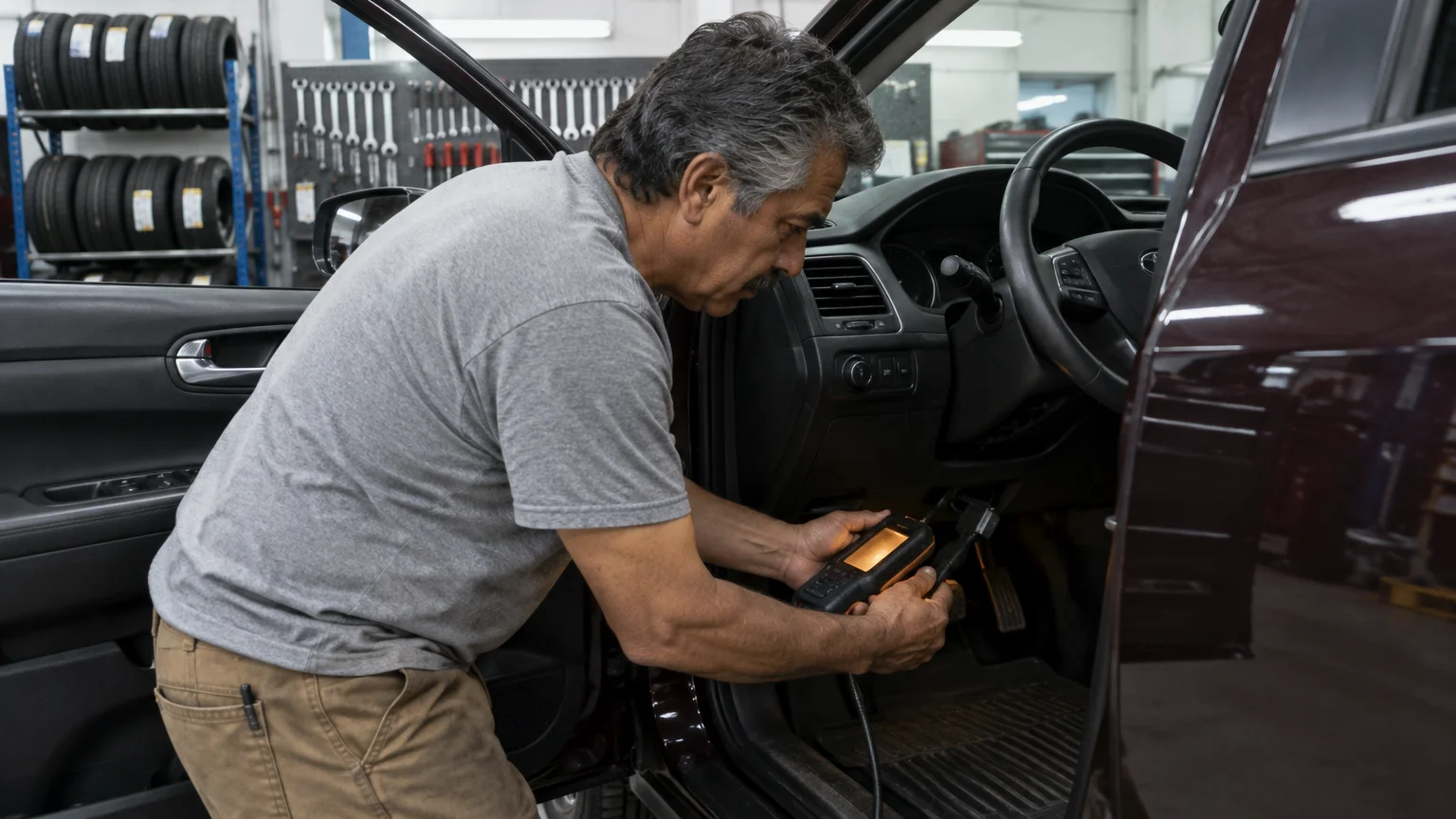
Before you authorize an automotive repair shop to disassemble your car, follow a disciplined verification process. These sequential steps protect your retirement savings from inaccurate diagnostics and unnecessary work.
- Order a Full Multi-Point Inspection: Pay an independent shop $100 to evaluate the engine, brakes, frame, and electrical systems before touching the primary issue.
- Obtain a Written Second Opinion: Transport the vehicle to a second independent mechanic to verify the diagnostic trouble codes and confirm part pricing.
- Investigate Factory Technical Service Bulletins: Search government safety databases to ensure your vehicle problem is not covered under an extended manufacturer warranty campaign.
- Prioritize Safety Over Comfort: Fix mechanical systems that stop, steer, or propel the car first, while postponing non-essential items like air conditioning or cosmetic trim.
- Request Written Warranties on Labor and Parts: Ensure the facility provides at least a 12-month or 12,000-mile warranty covering both the replacement parts and mechanical labor.
- Establish an Automated Monthly Sinking Fund: Transfer $100 each month into a separate bank account to handle future maintenance needs without depleting your primary savings.
Data from the Center for Retirement Research at Boston College indicates that unexpected expenses consume 10 percent of typical retiree income. Roughly 40 percent of senior households lack liquid savings to cover unexpected spending shocks.
Setting up an automated vehicle maintenance fund eliminates panic when components wear out. It gives you the financial leverage to repair your vehicle without resorting to high-interest personal loans.

Alternative Transportation Strategies for Low-Mileage Retirees
Before approving thousands of dollars in repairs, evaluate your actual monthly mileage. Many retirees drive fewer than 3,000 miles each year once they stop commuting to full-time employment.
For older adults considering giving up vehicle ownership entirely, exploring dedicated senior transportation options can eliminate car payments and maintenance altogether.
If your household maintains two vehicles, selling one car yields immediate recurring savings. Downsizing to a single car saves retirees $3,000 to $5,000 annually by eliminating redundant insurance, registration, and inspection bills.
Single seniors who drive very infrequently can also take advantage of community-based transit alternatives. These resources deliver convenient mobility without the heavy burdens of automobile ownership:
- Community Senior Van Programs: Local senior centers and municipal transit authorities organize affordable transit for doctor appointments and grocery trips.
- Area Agency on Aging Transportation: The federal Eldercare Locator connects seniors directly to county-sponsored transit programs and sliding-scale rides.
- On-Demand Rideshare Applications: Taking occasional rideshare trips for medical appointments usually costs less than $150 monthly, far below a car payment.
- Volunteer Transportation Services: Community initiatives organized through AARP and faith-based groups coordinate volunteer drivers for older adults who do not drive.
If you drive fewer than 1,500 miles annually, disposing of an aging car may be the most cost-effective move. But if you value spontaneous personal mobility, repairing your existing vehicle remains the smartest financial decision.
Frequently Asked Questions
How much should a retiree budget for car repairs each year?
A realistic benchmark is $1,200 to $1,500 annually for an older vehicle with over 100,000 miles. Setting aside $100 to $125 each month into a dedicated savings account creates a reliable buffer for routine maintenance and unexpected repairs.
Should I tap an IRA or 401(k) to pay for an emergency car repair?
Withdrawing funds from a traditional retirement account increases your taxable income for that calendar year. If your withdrawal bumps your total income, it could trigger taxes on your Social Security benefits or raise Medicare Part B premiums.
At what mileage does an older car become unsafe to drive?
Mileage alone does not determine vehicle safety. Modern vehicles regularly exceed 200,000 miles safely when structural frames remain free of rust and owners replace critical brake, tire, and suspension components on schedule.
Will buying a used car lower my insurance rates compared to an older car?
Replacing an older, paid-off car almost always increases your insurance costs. Lenders legally require collision and comprehensive coverage on financed cars, which typically doubles or triples your monthly insurance premiums.
What should I do if a repair shop finds secondary issues after starting work?
Demand an itemized written estimate and ask the technician to categorize the new findings by urgency. Authorize only safety-critical repairs immediately, and defer secondary cosmetic or minor mechanical items until your budget recovers.
Disclaimer: This article is for informational purposes only. Benefits, programs, and regulations can change.
We encourage readers to verify current information with official government sources and consult with qualified professionals for personalized advice.


