
If you live alone with severe diabetic neuropathy in a narrow-hallway home, Medicare Part B covers a power wheelchair only for indoor daily tasks. Requesting a chair for outdoor errands, church or the mailbox triggers an automatic denial.
Hallway width also cuts both ways under Medicare review, because citing tight rooms to rule out a scooter without proving a compact chair clears your doors stalls approval. After the 2027 Part B deductible of $292, you pay 20% of the approved amount.
Compare mobility tiers for severe neuropathy in a narrow home
Medicare reviewers apply National Coverage Determination 280.3 and the power mobility devices LCD (L33789) in strict order. Check your symptoms, caregiver help and room measurements against each row before your clinic visit.
| Mobility tier | Neuropathy and balance check | Narrow-home and caregiver test | Medicare approval gate |
|---|---|---|---|
| Cane or walker | Fails when foot numbness, foot drop or balance loss causes bathroom falls | Needs steady footing across thresholds and floors | Chart explains why indoor tasks remain unsafe |
| Manual wheelchair | Fails when weak grip or arm fatigue blocks self-propulsion | Needs someone at home to push if you cannot propel | Chart confirms no caregiver can push you |
| Scooter | Fails when weak trunk stability or arms prevent steering | Needs turning space tight hallways often lack | Chart documents trunk limits apart from room size |
| Group 2 power chair (such as K0823) | Fits neuropathy up to 300 pounds when controls are safe | Clears interior doors and turns near bed, sink and toilet | Visit, written order, home check and prior authorization |
| Group 3 chair or power seating | Limited to ALS, multiple sclerosis, myopathy or congenital skeletal deformity | Needs extra clearance and support for larger frames | PT or OT specialty exam plus certified supplier tech |
Skipping any row, such as omitting whether anyone at home can push a manual chair, gives Medicare’s contractor grounds to deny. Blaming narrow hallways for ruling out a scooter without proving a power chair fits creates the same barrier.
Chart notes that tie foot numbness to five indoor daily tasks
Medicare’s wheelchair and scooter coverage page requires proof that mobility limits block or endanger daily activities inside your home. You must also be able to operate the chair and transfer safely, or have someone always available to help.
Reviewers check five mobility-related activities of daily living, called MRADLs, in the usual places inside your home. Your practitioner’s notes must connect your loss of foot sensation and balance directly to these five tasks.
- Toileting: getting to the toilet, transferring and managing hygiene.
- Feeding: getting to where you prepare and eat meals.
- Dressing: reaching closets and drawers and getting dressed.
- Grooming: getting to the sink to wash, shave or brush your teeth.
- Bathing: getting into, using and leaving the shower or tub.
Vague chart phrases such as leg numbness or general weakness fail contractor review. For severe diabetic peripheral neuropathy, your chart needs recorded falls or near-falls reaching the bathroom, loss of sensation in the feet, grip strength and balance test results.
Your practitioner must also rule out a cane, walker, manual wheelchair and scooter step by step in the chart. Without an explicit note that you live alone with no caregiver to push a manual chair, reviewers deny the claim.

Under 42 CFR 410.38, your physician, nurse practitioner, physician assistant or clinical nurse specialist must hold a face-to-face visit within 6 months before writing the order. Medicare permits telehealth for this visit when its telehealth rules are met.
CMS replaced the older 45-day deadline with this 6-month window on January 1, 2020. Tell the clinic you are booking a mobility evaluation so staff schedule time for walking, strength and balance tests before signing the Standard Written Order.
Why Group 2 fits severe neuropathy better than Group 3
Most people approved for home use receive a Group 2 standard chair, such as code K0823, a captain’s-chair model rated up to 300 pounds. Group 2 bases are often smaller than heavy-duty frames, helping them clear tighter interior doorways.
Group 3 chairs offer stronger suspension and power seating, yet LCD L33789 restricts them to Group 2 qualifiers with a neurological condition such as ALS or multiple sclerosis, a myopathy or a congenital skeletal deformity. Severe diabetic peripheral neuropathy alone rarely meets Group 3 criteria.
Group 3 chairs and Group 2 chairs with power seating also need a specialty exam by a physical or occupational therapist or specially trained physician. A RESNA-certified Assistive Technology Professional at the supplier must help choose the chair.
Even for a standard Group 2 chair, asking for a physical or occupational therapy exam strengthens thin notes. Have that report added to your chart before the order is signed.
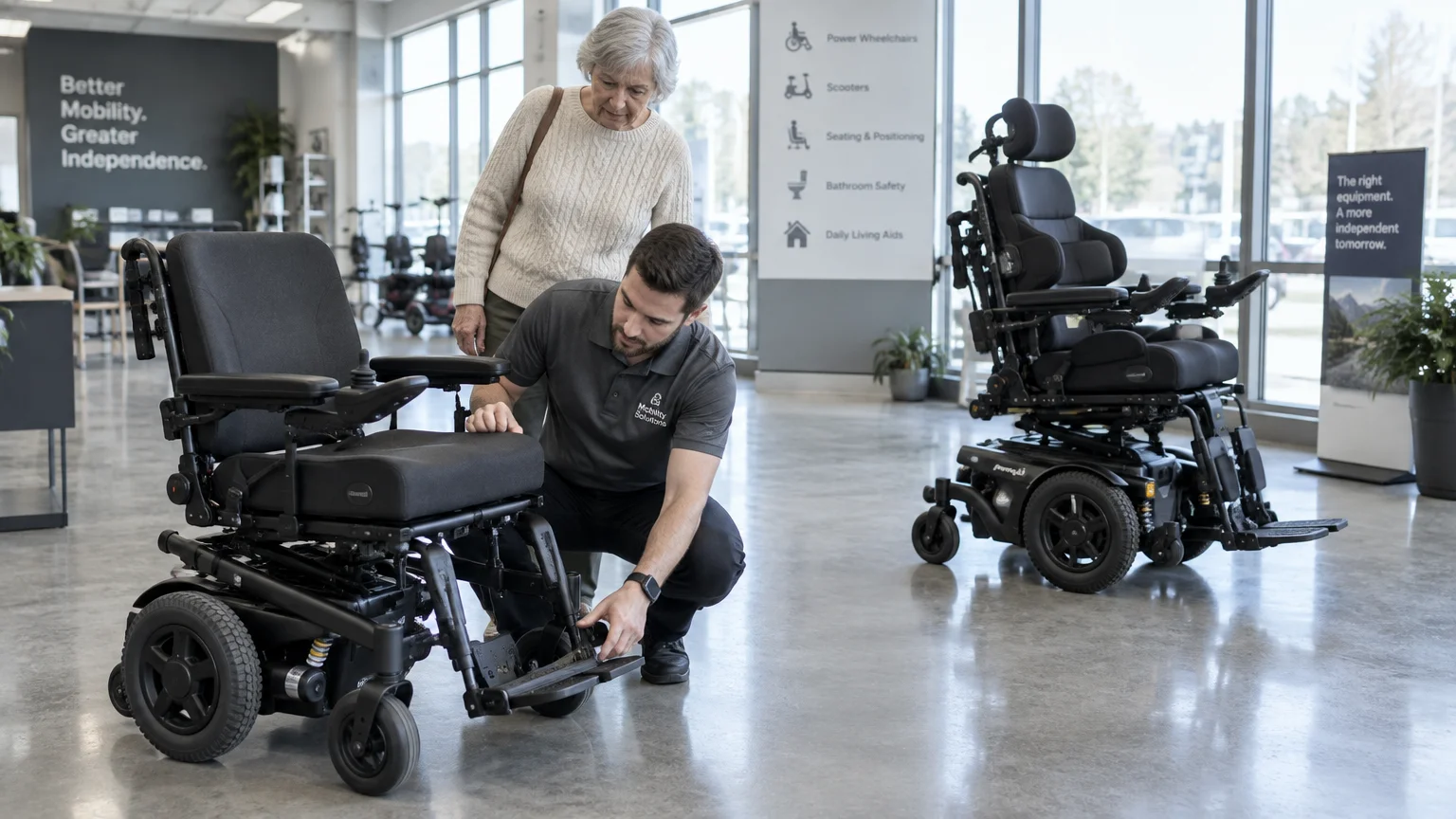
How updated chart notes overcome a hallway clearance denial
Medicare will not pay for a chair you cannot move through your rooms and turn where you bathe, dress and eat. Before or at delivery, the supplier must check doorways, turning space and floor surfaces.
Medicare sets no single doorway measurement because your specific chair must fit your layout. As a practical guide, federal ADA design standards use 32 inches of clear door width, a 60-inch turning circle and thresholds no higher than half an inch.
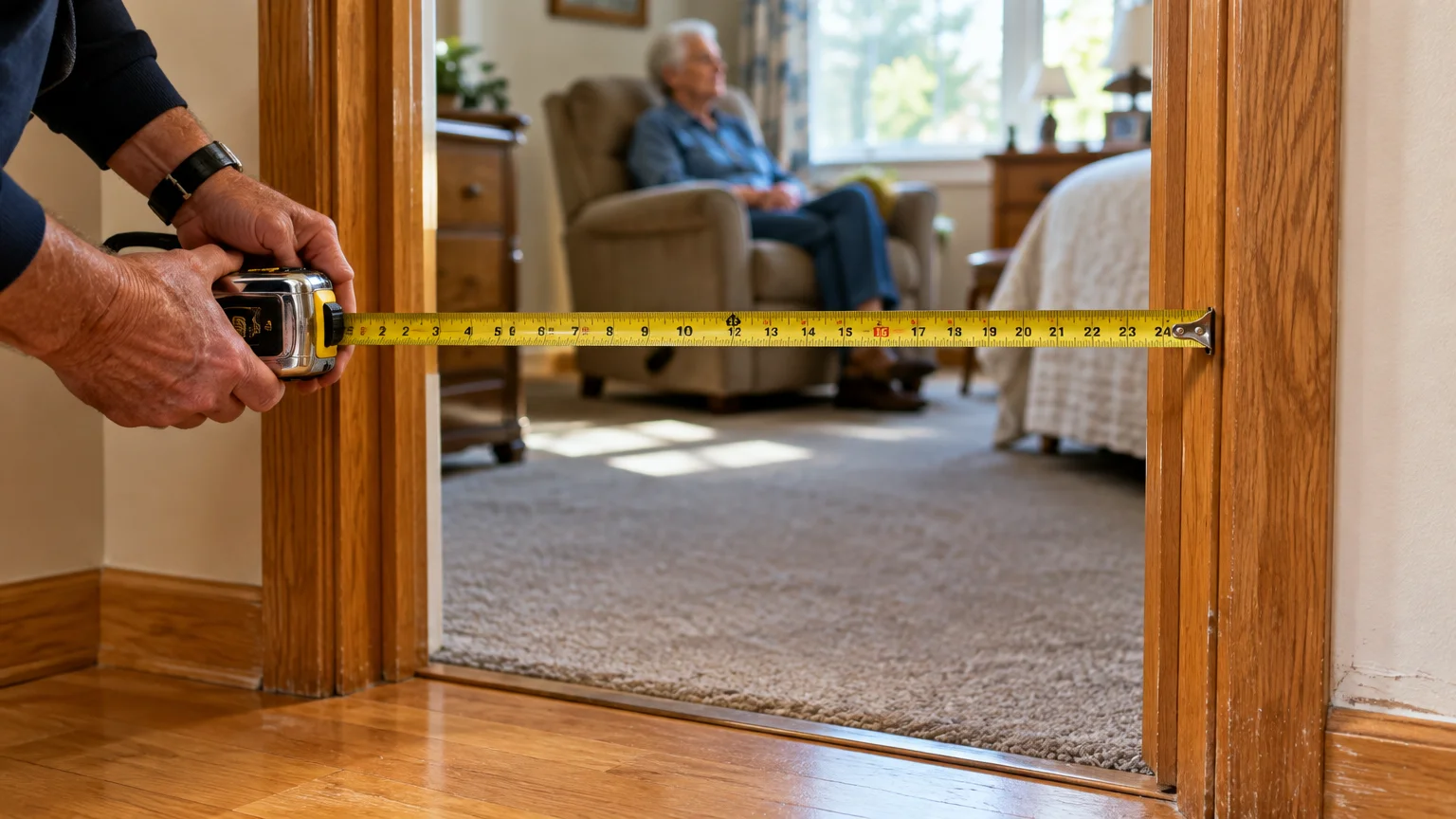
Narrow-hallway claims often stall at prior authorization when a physician’s initial chart rejects a scooter solely due to tight rooms. In that contractor review, the reviewer questions how a power wheelchair can clear the same hallway and issues an initial non-affirmation.
To overturn that denial, the physician amends the chart to document poor trunk stability and weak arms that disqualify a scooter regardless of hallway width. Updated notes also confirm a compact Group 2 chair restores safe indoor toileting, bathing and meal preparation.
At the same time, the supplier pairs those amended chart notes with room measurements showing the chosen K0823 chair clears interior doors and turns near the bed, sink and toilet. Simple low-cost adjustments often resolve tight clearances without structural remodeling:
- Tight doorways: install offset swing-clear hinges so doors open wider past the frame.
- Raised sills: add small threshold ramps where transitions rise above half an inch.
- Narrow turns: remove loose rugs and move hall furniture out of turning paths.
For larger doorway widening or bathroom changes, compare options and costs in our guide to home modifications for aging in place. If you cannot afford repairs, your local Area Agency on Aging can point you to nearby modification programs.
Seven steps from your mobility exam through prior authorization
Most standard Group 2 models appear on Medicare’s list of power wheelchairs that require prior authorization. Under 42 CFR 414.234, your supplier submits your records and Medicare’s contractor must affirm coverage before delivery.
Never accept delivery until the supplier confirms written affirmation, or Medicare denies the claim. Medicare Advantage plans use their own network suppliers and prior authorization rules, so see how to appeal an Advantage prior authorization if your plan refuses.
- Book a mobility visit and bring a list of unsafe indoor tasks and recent falls.
- Request a physical or occupational therapy evaluation, mandatory for Group 3 or power seating.
- Pick a Medicare-enrolled supplier accepting assignment, or your Advantage plan’s network supplier.
- Confirm your practitioner sent the Standard Written Order and exam notes within 6 months.
- Have the supplier check your home and complete any hinge, ramp or furniture changes.
- Wait for written prior authorization affirmation, resubmitting amended chart notes and measurements if questioned.
- Accept delivery, keep paperwork and check your Medicare Summary Notice.
Your 2027 Part B costs, 5-year replacement and appeal deadlines
In 2027, you first pay the $292 Part B deductible (up from the $283 Part B deductible in 2026), then 20% of the approved amount at a supplier accepting assignment. Check Medicare’s durable medical equipment supplier directory to avoid non-assigned suppliers that charge more.
Using an illustrative $3,450.00 approved amount with no deductible met elsewhere, subtracting $292.00 leaves $3,158.00. Medicare pays 80%, or $2,526.40, and you pay 20%, or $631.60, making your combined out-of-pocket total $923.60.
Standard power wheelchairs usually run as a monthly rental for 13 continuous months before ownership, with your 20% applying monthly. Most Medigap plans cover that 20%, though Plan G excludes the Part B deductible, and Qualified Medicare Beneficiary enrollees owe no cost-sharing.
During rental months, the supplier handles maintenance and repairs, and Part B helps pay for needed repairs once you own the chair at your 20% share. Replacement usually waits for the 5-year reasonable useful lifetime.
Earlier replacement is allowed if the chair is lost, stolen or damaged beyond repair in a specific incident, or if your condition changes and your practitioner writes a new order.
If a Medicare Summary Notice shows a denied claim after delivery, you have 120 days to request a redetermination using our guide to appealing a Medicare coverage denial. For free one-on-one counseling on an appeal, contact your State Health Insurance Assistance Program.