
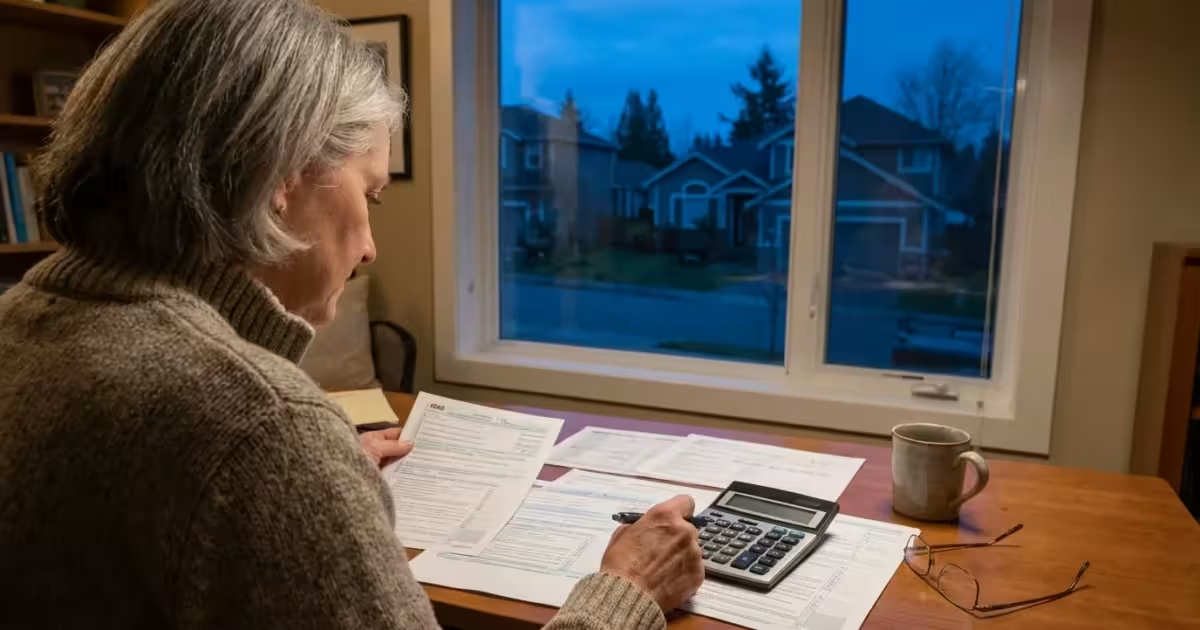
Property taxes represent a significant ongoing cost for homeowners, and for many seniors living on fixed incomes, this burden can feel increasingly heavy. As property values rise, so often do tax assessments, making it challenging to afford to stay in the home you have lived in for years. Fortunately, many states and local municipalities offer property tax exemptions specifically designed to provide relief for older adults. You can access these programs, significantly reducing your annual tax bill and helping you maintain your financial security in retirement.
Understanding these exemptions and how to apply for them puts money back in your pocket. This guide provides practical, actionable insights into senior property tax relief, helping you navigate the process with confidence.

Understanding Property Taxes and Their Impact on Seniors
Property taxes fund essential local services such as schools, police and fire departments, libraries, and road maintenance. Local governments assess these taxes based on your property’s assessed value. Assessors determine this value through various methods, often involving market comparisons and property characteristics.
For seniors, especially those on a fixed income, property taxes can become a disproportionate expense. Even if you paid off your mortgage, property taxes remain a recurring bill. Your income may not increase with rising property values, leading to a financial strain that jeopardizes your ability to stay in your home. According to recent data, property taxes often rank among the highest recurring costs for homeowners, second only to mortgage payments for those who still have them.
For example, if you purchased your home 30 years ago for $100,000, its current market value might be $400,000. While this appreciation is beneficial for your net worth, it also means your property tax bill could be four times higher than when you first bought the house. Many seniors live on retirement income, Social Security benefits, or pensions, which do not necessarily keep pace with the increasing cost of living, including property taxes. Seeking property tax relief becomes a necessary step for maintaining financial stability.

What Are Senior Property Tax Exemptions?
Senior property tax exemptions are specific programs designed to reduce the property tax burden for qualifying older homeowners. These exemptions come in various forms, but their core purpose is to help seniors afford to remain in their homes by lowering their annual property tax obligation. Each state and even individual counties or cities set their own rules for these programs, so what applies to your neighbor across state lines might be different for you.
Common types of senior exemptions include:
- Homestead Exemptions: Many states offer a general homestead exemption, which reduces the assessed value of your primary residence before calculating taxes. Seniors often receive an enhanced version of this exemption.
- Age-Based Exemptions: These exemptions activate once you reach a certain age, commonly 65 or older. They provide a specific reduction in your assessed value or a flat dollar amount off your tax bill.
- Income-Based Exemptions: Some programs tie the exemption amount to your household income. Lower-income seniors typically qualify for more significant relief. These are crucial for those living on limited retirement funds.
- Veteran and Disability Exemptions: If you are a senior veteran or have a disability, you may qualify for additional exemptions, often regardless of age. These can layer with senior-specific exemptions for even greater savings.
Understanding these different types helps you identify which programs might apply to your situation, guiding your search for how to apply for property tax relief.

Who Qualifies? Common Eligibility Criteria
Qualifying for senior property tax exemptions depends on meeting specific criteria set by your state and local government. While the exact requirements vary widely, several common factors determine your eligibility. Familiarizing yourself with these general guidelines helps you determine if you are a candidate for homeowner assistance.
Key eligibility criteria typically include:
- Age Requirements: Most senior exemptions require you to be at least 65 years old by a specific date, often January 1st of the tax year. Some jurisdictions may set the age lower, such as 60, or higher. You must verify the specific age cutoff in your area.
- Residency: The property must be your primary residence. This means you live there for the majority of the year and file your taxes from that address. Vacation homes or rental properties do not typically qualify.
- Homeownership Status: You must own the home and be listed on the property deed. If the home is owned jointly with a spouse, their age might also be a factor, or sometimes only one owner needs to meet the age requirement.
- Income Limits: Many senior exemptions include income restrictions. These limits ensure that the relief primarily benefits those who need it most. The income threshold varies significantly by location. For instance, one county might cap income at $40,000, while another allows up to $75,000. Your total household income, including Social Security, pensions, and investment income, typically counts toward this limit.
- Application Deadline: You must apply for the exemption by a specific annual deadline, usually in the early part of the year. Missing this deadline means you cannot receive the exemption for that tax year.
For example, in a hypothetical county, a senior must be 65 by January 1st, own and occupy their home, and have a total household income below $50,000 to qualify for a $5,000 reduction in their assessed home value. Knowing these details is crucial to successfully navigate the application process.

How to Find and Apply for Property Tax Relief
Applying for senior property tax exemptions can seem daunting, but breaking down the process into clear steps makes it manageable. The key is knowing where to look and what information you need to gather. Your local assessor’s office or tax commissioner is your primary resource for specific program details and application forms.
Here is a step-by-step guide on how to apply for property tax relief:
- Identify Your Local Tax Authority: Start by contacting your county’s tax assessor’s office, tax commissioner, or property appraiser’s office. Their website or a phone call provides information on available senior exemptions. You can also visit official government portals like Benefits.gov, which offers a robust search tool to find benefit programs by state and category, including homeowner assistance. Benefits.gov is an excellent starting point for exploring potential programs.
- Research Specific Programs: Ask about senior-specific property tax exemptions, homestead exemptions for seniors, and any income-based relief programs. Inquire about the exact eligibility criteria, including age, income limits, and residency requirements.
- Obtain Application Forms: Most offices provide application forms online or in person. Ensure you download or pick up the correct form for senior exemptions, as general homestead forms might not cover all specific senior benefits.
- Gather Required Documents: You typically need to provide documentation to prove your eligibility. This often includes:
- Proof of age (driver’s license, birth certificate)
- Proof of residency (utility bills, voter registration)
- Proof of income (tax returns, Social Security benefit statements, pension statements)
- Proof of homeownership (property deed, mortgage statement)
- If applicable, documentation for veteran or disability status
- Complete the Application Accurately: Fill out all sections of the form completely and truthfully. Double-check for any errors or omissions, as these can delay processing or lead to denial.
- Submit Before the Deadline: Pay close attention to the application deadline. Many jurisdictions have an annual cutoff, often in the spring. Submitting your application late means you will not receive the exemption for that tax year. Mail the application with enough time for delivery or submit it in person for a receipt.
- Verify Approval: After submission, you should receive notification of approval or denial. If approved, your next tax bill should reflect the exemption. If denied, the notification typically explains the reason, and you may have options to appeal or provide additional information.
For example, in your county, you might need to submit your application by March 15th, providing your state ID, last year’s tax return, and a copy of your deed. Missing that date means you wait until next year.

State-Specific Senior Property Tax Exemptions: Key Differences
The landscape of property tax exemptions for seniors varies dramatically from one state to another, and even between counties within the same state. There is no single federal program for property tax relief, making local research essential. Understanding these differences prevents confusion and helps you locate the most relevant assistance for your situation.
Here are key ways state and local programs can differ:
- Exemption Mechanisms: Some states offer a flat dollar reduction from your total tax bill, for instance, a $500 reduction. Other states provide a reduction in your home’s assessed value, such as exempting $25,000 from the assessed value before taxes are calculated. This means your savings depend on your local tax rate.
- Age Thresholds: While 65 is common, some states start eligibility at age 60, while others might require you to be 70 or older. Some also have tiered systems, offering more relief as you get older.
- Income Limits: This is one of the most variable criteria. States and localities set their own income caps, ranging from very low thresholds, often tied to a percentage of the area’s median income, to more generous limits that encompass a broader range of middle-income seniors. You must check your specific local income requirements.
- Recertification Requirements: Some exemptions require you to reapply or recertify your eligibility every year or every few years, especially if there are income components. Others might be a one-time application, with the exemption automatically renewing unless your circumstances change.
- Additional Criteria: A few states might include unique requirements, such as a minimum number of years you must have owned or resided in the property, or specific clauses for surviving spouses.
“The best way to save on property taxes is to know what programs your local government offers. Every dollar saved on taxes is a dollar available for your retirement.”
To illustrate, you might live in a state where a 65-year-old can deduct $50,000 from their assessed home value, provided their income is under $60,000. However, in an adjacent state, the same 65-year-old might only get a $100 annual tax credit, with an income limit of $30,000. These stark differences highlight the importance of focused, local research. Check official government websites or call your county’s tax office to get the precise details for your location.
Beyond Exemptions: Other Forms of Homeowner Assistance
While direct property tax exemptions are a primary form of relief, several other programs and strategies can help seniors manage their housing costs. These options offer additional homeowner assistance, often aimed at those who might not fully qualify for exemptions or who need further support.
Consider these alternative forms of relief:
- Property Tax Deferral Programs: Some states or localities allow eligible seniors to defer paying a portion of their property taxes until they sell their home, move, or pass away. The deferred taxes, plus interest, become a lien on the property. This can be a valuable option if you have substantial home equity but limited current income. Consult with the Consumer Financial Protection Bureau (CFPB) for guidance on reverse mortgages and other home equity considerations, as these can interact with tax deferral programs. CFPB offers resources on financial products impacting seniors.
- “Circuit Breaker” Programs: These programs cap the amount of property tax you pay based on a percentage of your income. If your property taxes exceed that percentage, the state or local government provides a refund or credit. This essentially “breaks the circuit” if your property taxes become too high relative to your income.
- Property Tax Freezes: A few jurisdictions offer tax freezes, where the assessed value of your home, or the tax amount itself, is frozen at a certain point, typically when you reach a specific age. This protects you from future increases in property values and corresponding tax hikes.
- Rebates and Credits: Some areas provide direct rebates or tax credits that you can claim on your state income tax return, offsetting a portion of the property taxes you paid. These might be based on income, age, or both.
- Home Repair and Energy Assistance: While not direct property tax relief, programs that help with home repairs, weatherization, or utility costs indirectly ease your financial burden, freeing up funds that might otherwise go towards property maintenance. Organizations like the National Council on Aging (NCOA) offer BenefitsCheckUp, a free service that helps you find programs that can save you money, including those related to housing and energy.
For example, if your property taxes are $4,000 and your income is $30,000, a circuit breaker program might stipulate that your taxes should not exceed 5% of your income, or $1,500. The program would then provide a credit or refund for the difference, which is $2,500 in this scenario.

Essential Tips for Maximizing Your Savings
Securing property tax exemptions and other forms of homeowner assistance involves proactive steps and careful attention to detail. You can maximize your savings and reduce your financial burden by following these essential tips.
Here’s how to ensure you receive all the property tax relief you deserve:
- Act Early and Don’t Wait: Do not wait until your tax bill arrives to inquire about exemptions. Research programs and apply well in advance of the annual deadlines. Many deadlines fall in early spring, requiring you to act in January or February.
- Keep Meticulous Records: Maintain an organized file of all important documents. This includes proof of age, income statements, property deeds, previous tax bills, and any correspondence with the tax assessor’s office. This preparation streamlines future applications or appeals.
- Review Your Assessment Annually: Even if you have an exemption, review your property tax assessment notice every year. Assessors can make errors, and sometimes your property’s value might be assessed higher than its actual market value. A lower assessment translates to lower taxes, even with exemptions.
- Understand Your Local Rules: Since property tax laws are hyper-local, thoroughly understand the specific regulations in your county and state. Do not assume what applies to a friend in a different area will apply to you. Call your local tax assessor directly if you have questions.
- Seek Professional Advice When Needed: If your situation is complex, or if you are unsure about your eligibility or the application process, consider consulting a tax advisor or an elder law attorney. They can offer personalized guidance and ensure you do not miss out on any benefits.
- Appeal If You Disagree: If you believe your property has been over-assessed, or if your exemption application is unfairly denied, you have the right to appeal. Most tax jurisdictions have a formal appeals process. Gather evidence, such as recent sales of comparable homes in your area, to support your case.
- Stay Informed About Program Changes: Property tax laws and exemption programs can change. Local governments sometimes introduce new benefits or modify existing ones. Stay informed by checking your tax assessor’s website periodically or subscribing to local government newsletters.
By actively managing your property tax situation, you maintain better control over your retirement finances and ensure your home remains an affordable place to live.
Frequently Asked Questions
Are there age restrictions for tax exemptions?
Yes, most senior property tax exemptions have age restrictions, commonly requiring you to be 65 years old by a specific date, such as January 1st of the tax year. Some jurisdictions might set the age higher or lower, for example, 60 or 70. You must verify the exact age requirement with your local tax assessor’s office.
How do I know if I qualify for homeowner assistance?
You qualify for homeowner assistance by meeting specific criteria, including age, income limits, and residency requirements, set by your state and local government. Contact your county’s tax assessor’s office, or visit Benefits.gov, to review the programs available in your area and their detailed eligibility rules. They provide specific guidance on whether you meet the criteria for property tax relief.
What documents do I need to apply for property tax relief?
You typically need to provide documents proving your age, residency, income, and homeownership. This includes a driver’s license or birth certificate for age, utility bills for residency, recent tax returns or Social Security statements for income, and your property deed for ownership. Always check with your local tax assessor for the precise list of required documents.
Can I receive multiple property tax exemptions?
Yes, in many cases, you can receive multiple exemptions if you meet the criteria for each. For example, you might qualify for a general homestead exemption, a senior-specific exemption, and a veteran or disability exemption. However, some exemptions may be mutually exclusive or offer enhanced benefits that negate the need for others. Your local tax authority clarifies how various exemptions can combine in your specific area.
What if my application for a senior exemption is denied?
If your application for a senior exemption is denied, you typically receive a denial notice explaining the reason. You then have the right to appeal this decision. Gather any additional documentation or information that supports your eligibility and follow the appeal process outlined by your local tax assessor’s office. This often involves submitting a formal appeal form and potentially attending a hearing.
Disclaimer: This article is for informational purposes only. Benefits, programs, and regulations can change. We encourage readers to verify current information with official government sources and consult with qualified professionals for personalized advice.








Leave a Reply